The last significant units of the Polish Army surrender near Luck. The Germans have taken 700,000 prisoners and the Soviets 200,000. Polish casualties have been severe. The Germans have lost 10,000 dead and 30,000 wounded. Many Poles have escaped and will find their way to the West. Although tank units have played a notable part in the campaign, it is interesting to note that the contemporary German official appreciation lay more stress on the traditional-style infantry battles. The tank forces are seen at this stage, except by enthusiasts like Guderian, as little more than useful auxiliaries who can help the infantry do the real work. The first plans for the attack in the west will reflect this official attitude. Meanwhile, the German 10th Army begins to redeploys from Poland to the west.
The Battle of Kock continues. The stiff Polish resistance forced General Otto to use all his forces for an assault. He was going to split Polish forces in two and destroy them. He decided that the 33rd Motorized Infantry Regiment supported by part of the divisional artillery would attack Annopol, Pieńki and Talczyn. This force was tasked with destroying the Polish 50th Infantry Division. The 93rd Motorized Infantry Regiment was ordered to capture Serokomla, and then Hordzież, and to destroy a defensive formation of the ‘Zaza’ cavalry division. The 66th Motorized Infantry Regiment entered the field of battle in the afternoon.
General Kleeberg thought that the main German advance would be toward the ‘Zaza’ cavalry division at Serokomla/Hordzież. He decided that part of the cavalry would fend off the German attack. The rest would join a counter-attack alongside the 50th Infantry Division on the right wing and rear of the 13th German Motorized Infantry Division. The 60th Infantry Division and the ‘Podlaska Cavalry Brigade’ would close off potential German attack routes. If this counter-attack was successful, the German division would be forced to withdraw behind the river Wieprz.
Between 07:50 and 09:30, two regiments of the 50th Infantry Division (the 180th and the 178th, less its 2nd battalion), attacked. They were supported by a howitzer battery. The attack was commanded by Lieutenant Colonel Gorzkowski. Initially successful, the Polish units were halted and then forced onto the defensive. The cavalry attack by the Uhlans was also stopped and forced to withdraw west of Wola Gułowska.
At 10:30, German artillery began to fire on Polish cavalry positions. The 93rd Motorized Infantry Regiment began an attack on the ‘Wilk’ battalion positions, inflicting heavy losses. The 33rd Motorized Infantry Regiment began a gradual attack on the Polish 50th Infantry Division.
After heavy fighting, the German advance was stopped. General Otto decided to support the 33rd Motorized Infantry Regiment with the 2nd Battalion of the 66th Motorized Infantry Regiment. German formations captured Wola Gułowska, but in the evening, they were forced to withdraw from the eastern part of the area and go on the defensive in the west part.
Hans Frank orders a “ruthless exploitation” of occupied Poland.
In a manifesto to the Polish nation, President Wladislas Raczwiewicz served formal notice today that he had assumed the power received from the hands of Ignace Moscicki, who resigned to permit the formation of a new government-in-exile in Paris.
Chancellor Hitler, supreme commander of German armed might which has just completed the conquest of Poland, will visit the defeated nation’s former capital, Warsaw, on Thursday.
The British 1st Corps of the British Expeditionary Force takes over responsibility for a section of the Franco-Belgian frontier.
All French forces except for a light screen have withdrawn from Germany and returned to French territory. French forces complete their withdrawal from advanced positions in German territory (the Warndt Forest and the Saarbrucken Salient).
On the Rhine-Moselle front in the last twenty-four hours operations were confined to scouting parties on both sides and several fruiless raids on the part of the Germans in the Moselle and Saarbruecken sectors. Both artilleries fired for several hours today in these zones.
Chamberlain dismisses recent German peace proposals outright. Prime Minister Chamberlain told a wildly cheering House of Commons today that Russo-German collaboration to liquidate the war had not changed Great Britain’s determination to “put an end to successive acts of German aggression” and that “no threat will ever induce this country or France to abandon the purpose for which they entered this struggle.” Mr. Chamberlain said that the government was ready to consider any proposal that held the prospect of a stable peace, but he warned that “no mere assurances from the present German Government could be accepted by us.”
Following the Prime Minister’s speech David Lloyd George, who as Prime Minister led Britain to victory in the last war, startled the House by a speech in which he counseled the Allies to move slowly while there still remained a chance of avoiding another slaughter. He did not actually advocate a compromise with Chancellor Hitler, but he did urge strongly that very careful consideration be given to any reasonable proposals for ending the hostilities and settling permanently the differences that divide the nations of the world. The words of the patriarchal elder statesman, envisaging the possibility of a world conference that would include Italy, Russia, and possibly the United States to discuss the restoration of Czecho-Slovakia as well as Poland in some form, the redistribution of colonies, and disarmament, fell like a bombshell in the House, whose members heard him through in silence.
Such was the importance that the government whips attached to the old war leader’s words, which they seemed to interpret as a sign of weakening in the face of the Nazi peace drive, that they prevailed upon the Prime Minister to make an immediate reply. Mr. Lloyd George had recommended strongly that propositions emanating from neutral countries like Russia and Italy be considered in a secret session of the Commons. Mr. Chamberlain, who had listened carefully to one of the bitterest critics of his appeasement policy, rejected flatly the proposed closed session, and said that a discussion of peace terms that had not been submitted was “premature,” pointing out that when a peace offer came it might be “one which no self-respecting government could consider.”
Britain enlists aliens. The order permits Czechs and Poles in the armed forces.
The Italian Occupational regime in Ethiopia ousts foreigners. Many of the expelled are Greek businessmen who lived in the African country for forty years.
Leon Trotsky says the United States will join the European conflict, saying only they can shift Russian support from Germany.
The number of foreign Ministers attending the diplomatic jamboree going on in Moscow was increased to three today when Lithuanian Foreign Minister Juozas Urbsys arrived at the Moscow airdrome at 5 P.M. to join the ranks of his Turkish and Latvian colleagues.
The Greek steam merchant Diamantis was torpedoed and sunk by the U-35, commanded by Kapitänleutnant Werner Lott, 40 miles west of the Scilly Islands in the eastern Atlantic Ocean (49°22′N 6°46′W). Because the ship’s lifeboats were not suited for use in bad weather, the U-35 took all 28 crew members aboard. Of the ship’s complement, all 28 survived and were picked up by the U-boat and landed the next day in Dingle Bay, Ireland. The 4,990-ton Diamantis was carrying manganese ore and was bound for Barrow-in-Furness, England.
The Reich intensifies seizures in the Baltic; at least eight Swedish ships are held.
Norwegian motor vessel Hoegh Transporter is sunk by mine off St. John Island, entrance to Singapore harbor; the two Americans among the passengers survive, one is uninjured.
The War at Sea, Tuesday, 3 October (naval-history.net)
Anti-aircraft cruisers CALCUTTA departed Grimsby on patrol and arrived back on the 4th, while CAIRO departed and arrived back later the same day.
Convoy OA.14 of seven ships departed Southend escorted by destroyers KELLY, KINGSTON, MONTROSE from the 3rd to 6th.
Convoy OB.14 departed Liverpool escorted by destroyers VANOC and WHIRLWIND until the 5th.
Convoy BC.8S departed Bristol Channel, escorted by destroyers EXMOUTH (S.O.) and EXPRESS. The convoy was also escorted by French large destroyers L’INDOMPTABLE, TRIOMPHANT and MILAN on the 4th and 5th, and arrived in the Loire on the 5th.
Convoy SA.10 of one cargo ship departed Southampton, escorted by destroyer ANTHONY, and reached Brest on the 4th.
Convoy FS.16 departed Methil, arriving at Southend on the 5th. There was no FN.16 convoy.
German destroyers HERMANN SCHOEMANN, FRIEDRICH IHN, ERICH STEINBRINCK and torpedo boats GREIF, FALKE and ALBATROS conducted anti-shipping patrols in the Kattegat and Skagerrak from the 3rd to 5th.
U.35 sank Greek steamer DIAMANTIS (4990grt) southwest of Ireland, 40 miles west of Skellig Rocks in 49 22N, 6 46W, and then landed the crew at Ballymore, Dingle Bay, Ireland.
Heavy cruisers SUSSEX and SHROPSHIRE, which departed Alexandria on the 2nd, left Suez on the 3rd for the Red Sea. They reached Aden on the 6th and departed the same day for duty in the Indian Ocean, arriving at Simonstown on the 13th.
Heavy cruiser CUMBERLAND and light cruiser DESPATCH departed Freetown for South America, with DESPATCH arriving at Bermuda on the 15th for docking.
Heavy cruiser BERWICK arrived at Halifax.
Destroyers GRENVILLE, GIPSY, GRENADE, GRIFFIN from Convoy Green 3 and DELIGHT and DECOY from other escort duties arrived at Malta. DELIGHT and DECOY departed the next day, while GRENADE and GRIFFIN left on the 5th to relieve destroyers DUCHESS and DEFENDER escorting convoy Blue 3. DUCHESS and DEFENDER reached Malta on the 5th.
Convoy SO.19 of armed merchant cruiser ALCANTARA (22,209grt) and steamers ATHLONE CASTLE (25,564grt), EMPRESS OF AUSTRALIA (21,833grt) and FRANCONIA (20,175grt) arrived at Gibraltar. Destroyers INGLEFIELD and IVANHOE arrived separately that day after being separated in heavy weather. From there, the convoy proceeded as Convoy Red 2 escorted by destroyers GREYHOUND and GLOWWORM, later joined by sister ships GRENVILLE and GIPSY.
Norwegian steamer HØEGH TRANSPORTER (4914grt) was sunk on a British defensive minefield off St John Island at the entrance to Singapore with the loss of one member of crew. The wreck and cargo were salved.
Today in Washington, President Roosevelt discussed the need for additional funds for the Export-Import Bank with Warren Pierson, its president; conferred with Acting Secretary Edison on technical details of the construction of submarines and new naval small boats; discussed Latin-American aviation conditions with Edward J. Noble, Under-Secretary of Commerce, and Robert Hinckley, chairman of the Civil Aeronautics Authority, and proposed legislation to curb excess war profits with Representatives headed by Jerry Voorhis of California.
At a press conference the President disclosed that he had instructed the War and Navy Departments to proceed with expenditures not authorized by statute for housing, hospitalization, and reconditioning of obsolete vessels.
The Senate met briefly and adjourned at 12:06 PM until noon tomorrow in respect for the late Senator Logan. The House was in recess.
The Administration’s proposed revision of the Neutrality Law was held out to the country tonight by Senator Norris of Nebraska as a means by which the United States may stay out of war, and yet help the side obviously favored by the American public in the clash of arms in Europe. The venerable liberal leader, himself one of the three remaining members of Congress who voted in 1917 against America’s entry into the World War, stepped straightway into a line of discussion that most Administration leaders have shunned, but which figures privately among them, nevertheless, as a factor in their endeavor to repeal the arms embargo. He spoke over a network of the National Broadcasting Company.
“It is self-evident today that England and France, fighting with their backs to the wall, are fighting not only the battle of humanity and civilization, but they are faced with foes ruthless and murderous in their dishonorable and unjustifiable procedure,” Senator Norris declared. “It is fortunate, therefore, that in following our legal rights as universally recognized we are able to enact a law which will more likely keep us out of the war and at the same time puts us on the side of humanity and civilization.”
Senator Norris’s and other radio addresses kept discussion on the neutrality issue going apace while the Senate debate was suspended, due to adjournment of that body in tribute to the memory of Senator Logan of Kentucky, who died this morning. Meanwhile, developments pointed to the possibility that the Administration might have to abandon all suggestion of credits to belligerents — short term or otherwise — in order to hold its forces in line for repeal of the arms embargo.
Agitation over provisions of the Pittman resolution permitting the President to extend the ordinary ninety-day commercial short-term credits for “cash and carry” transactions between the United States and warring nations ran higher during the Senate’s recess. Although Senator Byrnes of South Carolina, the Administration’s “field marshal” in the embargo repeal fight, disclaimed publicly any intention of abandoning the ninety-day credit clause, it was known that he and other Democratic leaders have contemplated trading away this, or several other minor parts of the Pittman resolution, if necessary to hold a safe majority. Senator McNary, the Republican leader, said that “quite a sentiment” was developing among the Democrats for jettisoning the limited credit provision.
Public sentiment for changing the Neutrality Act to permit shipment of arms on a cash-and-carry basis has increased sharply since President Roosevelt’s speech before Congress on September 21, according to a survey of the American Institute of Public Opinion, of which Dr. George Gallup is director. Some 62% now support the Neutrality Law revision.
Former U.S. president Herbert Hoover says the Allies cannot lose. They control the seas and can wait until their enemies are exhausted. England and France cannot be defeated, and the United States should keep out of the war, according to former President Herbert Hoover in an interview with Roy W. Howard, editor of The New York World-Telegram, which that newspaper published yesterday.
President Roosevelt ignores military budgets. He orders the Army and Navy to push their present expansion; Congress can approve it later. President Roosevelt disclosed today that he had ordered the War and Navy Departments to ignore statutory prohibitions against budgetary deficits growing out of unauthorized expenditures for army and navy housing, hospitalization and the reconditioning of obsolete vessels.
President Roosevelt urges labor peace; his plea is sent to the AFL convention. President Roosevelt, in a message to the annual convention of the American Federation of Labor, declared today that the labor peace efforts which he undertook last February “must be continued until a sound negotiated basis of peace between the labr groups is reached and agreed upon.”
The volume of cocoa trading is the third highest on record, with over 87,000 recorded contracts by the end of September.
Two hundred fifty corporations are invited to financially support the World Fair, asking them to allow their 300,000 employees to have one half or a full day off work with pay to attend the festivities.
Fritz Kuhn, leader of the German-American Bund, will make another attempt in New York Supreme Court today for a reduction of the $50,000 bail on which he was committed to the Tombs last Friday by Judge Cornelius F. Collins in General Sessions on his indictment in the alleged theft of about $14,500 of the bund’s funds.
The federal deficit, at the end of September, is over $976,000,000.
The U.S. Army ordered the purchase of 329 new tanks at a cost of nearly $6,000,000, official circles revealed. The tanks, described as of the latest type, will weigh nearly twelve tons and cost $17,790 each. They will be capable of relatively high speeds.
Frank Frisch abandons the broadcasting booth to return to managing, signing for 2 years with the Pirates. The announcement was made on the 30th, two days after Pie Traynor resigned as the manager of the Bucs.
The Panama Conference concluded with the adoption of a general declaration of neutrality of the American Republics. The Declaration of Panama, signed by the United States and several countries in the Americas, is established. It establishes a zone of neutrality within 300 to 1,000 nautical miles of the coast of the Americas.
Japanese casualties in the recent Mongolian frontier fighting totaled 18,000 killed, wounded and sick, and the Soviet-Mongolian losses were not less, according to Japanese military estimates. Conveying this information to the nation through the medium of the prefectural governors’ conference today, a War Office representative admitted that a “disastrous, bitter battle” was fought against Soviet forces not only numerically but mechanically far superior to their Japanese opponents.
The Japanese reverse was due to the Soviet’s great preponderance of mechanized units, some of which had been brought from Europe, according to this officer. He explained the truce of September 16 as the result of Japan’s policy of localizing those frontier incidents and the outbreak of the European war, which caused a change in the Soviet-Japan situation. The magnitude of those casualties had not been expected by the Japanese public. This evening’s headlines emphasize that the Soviet-Mongol fresh troops received a heavy blow.
According to the spokesman only skirmishes occurred on land during the earlier part of four months’ fighting, partly because of the natural features of the battleground and partly because both sides only possessed limited forces. Japanese aviators, however, are said to have inflicted heavy damages on the Soviet air force, the latter being inferior in quality though exceeding the Japanese forces in numbers.
“Late in August,” said the spokesman, “a large combined Soviet-Mongol force, armed with superior artillery and mechanized units, launched an offensive that developed into a disastrous big battle. In the Holumbair plain, entirely devoid of cover of all kinds, modern war paraphernalia was used. Fierce fighting raged for ten days, while Japanese repeatedly counterattacked an enemy numerically and mechanically far superior and inflicted serious damage.”
River gunboat Tutuila (PR-4) is damaged when she is accidentally rammed by Chungking Ferry Boat Co. Ferry No. 2 at Chungking, China.
Chinese troops captured Miluo and Xinshi near Changsha, Hunan Province, China.
Seeing that the Japanese assault on Changsha, Hunan Province, China was beginning to falter, an order for general counter offensive was given. Chinese troops pushed Japanese troops to Jinjing and Fulinpu, while Chinese aircraft bombed the Japanese airfield at Hankow (Wuhan), Hubei Province, China. Eight Chinese bombers raided the Japanese airfield at Hankow (today part of Wuhan) at 1:30 this afternoon, air force circles in Chungking revealed today. The raid was described as successful, and fifty Japanese bombers, out of 180 lined up on the field, were said to have been destroyed. All the Chinese planes were said to have returned safely to their base.
Japanese sources at Hankow were quoted by the United Press as stating that the Chinese had dropped nine bombs and had struck stores of gasoline at the airport, causing explosions that rocked the city.
This raid is the first Chinese air attack on a Japanese air base in Central China since the Japanese capture of Hankow last year. Meanwhile, Szechwan residents today soothed their nerves, frayed by five successive nights of Japanese air raids in many parts of the province. The raids have lasted from two to five hours each. Chengtu was attacked twice on Sunday night. The city was unharmed but a near-by field was bombed. Suifu, 150 miles west of Chungking and Luchow, 100 miles west, were bombed on Monday night. Meager reports say that the cities were not hit but that outlying fields were attacked.
In the land campaign a Chinese counter-attack, depending largely upon an assault on the Japanese left flank from the mountainous. districts northeast of Changsha, is reported to have halted the Japanese drive on the Hunan capital. The Japanese main line is said still to be twenty or thirty miles north of the city. A Japanese regiment that made a forced march from the main front in an encircling movement toward Yungan, twenty miles east of Changsha, is declared to have been annihilated.
A small Japanese column launched an attack from Fenghsin on the Nanchang front. in Kiangsi, toward Stushui in an effort to divert the Chinese forces on the flank of the Japanese attackers against Changsha. This column is said to have been forced to retreat by a Chinese assault on its units of communication.
The Chinese now appear determined to hold Changsha. They particularly desire to prove this Japanese offensive a failure, since it is believed to be designed to bring new Japanese gains to coincide with the inauguration of the Wan-Ching-wei puppet government. Documents are reported to have been found on the dead bodies of Japanese officers ordering the capture of Changsha within twenty days from the recent beginning of the offensive. If it failed, within that time, withdrawal would be necessary.
A Tokyo newspaper lays blame for the war on President Roosevelt.
The Norwegian cargo ship Høegh Transporter struck a mine off Saint John’s Island, Singapore and sank with the loss of one crew member. The ship was later salvaged
Dow Jones Industrial Average: 150.23 (-1.18)
Born:
“Bullet” Bob Armstrong, American pro wrestler (WWE Hall of Fame), in Marietta, Georgia (d. 2020).
Died:
Marvel Mills (“M.M.”) Logan, 65, U.S. Senator (D-Kentucky, 1931-1939).
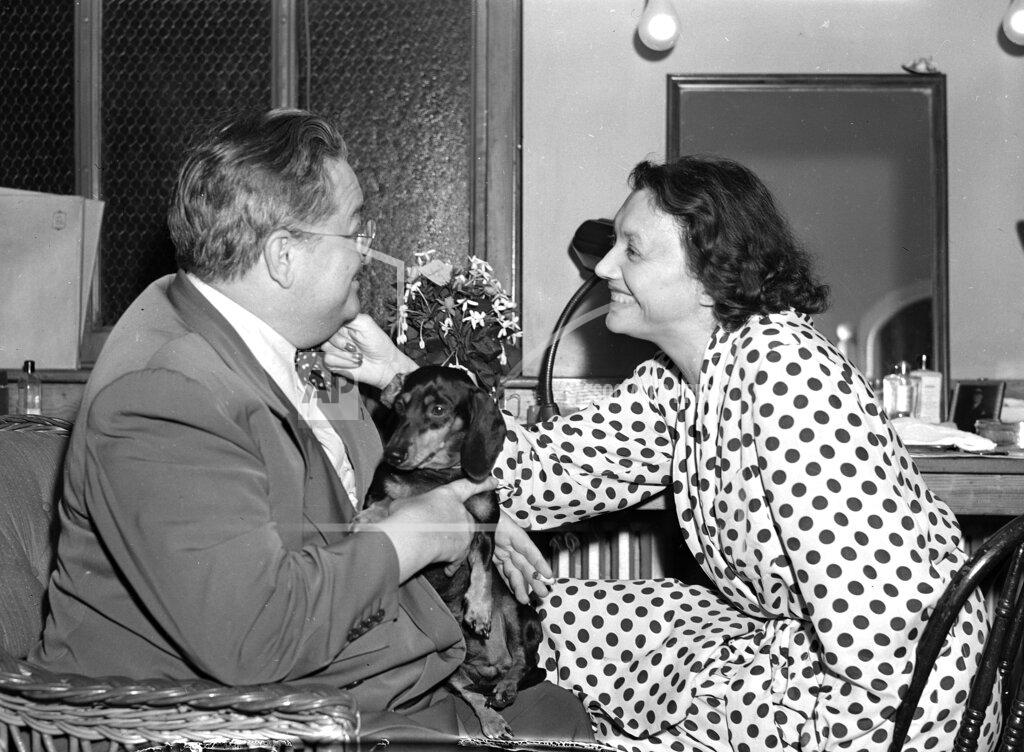
Fay Templeton, 73, American actress, singer and comedian.

 History Diaries