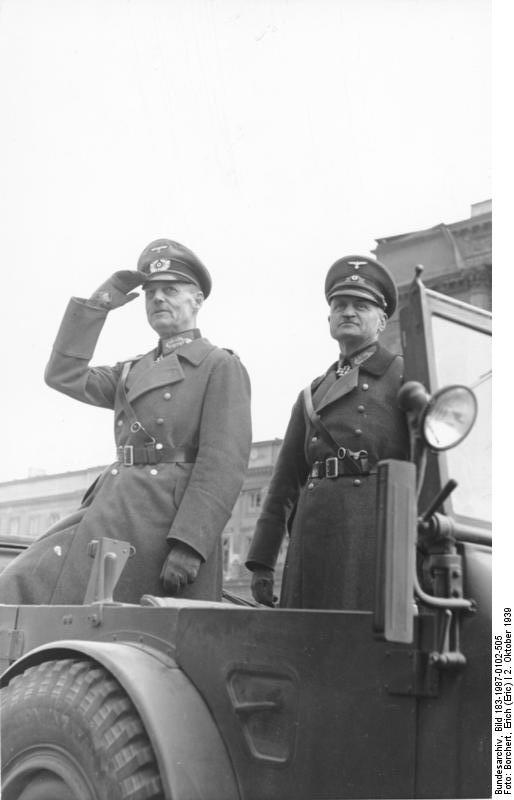
The Battle of Hel ended with the Fortified Region Hel unit surrendering to the Germans after holding out for three weeks against overwhelming odds. On 1 October 1939 the Polish Navy’s commander, Rear Admiral Józef Unrug, taking into account that the Polish outpost was running out of supplies and that no relief force would be coming, and in view of low troop morale, with two mutiny attempts having been quelled on 29 and 30 September, gave orders to capitulate. Some Polish soldiers attempted to flee across the Baltic Sea to Sweden on the remaining light craft and civilian vessels, but most were unsuccessful. The Germans occupied the Hel Peninsula on 2 October.
Polish battle casualties were light — some 50 dead and 150 wounded. About 3,600 Polish soldiers and sailors were taken prisoner. German losses were similar, estimated at a few dozen dead and wounded. Some remaining Polish light vessels, including light minelayers, gunboats, and noncombatant units such as tugboats, which were not sunk by air raids, may (sources vary) have been scuttled before the capitulation. Either way, most were either captured by the Germans or raised from the shallow waters and pressed into German service in subsequent weeks. After Hel’s surrender, the only organized military resistance in Poland was conducted by Independent Operational Group Polesie, which now fought the Battle of Kock
The Battle of Kock began. The Battle of Kock was the final battle in the invasion of Poland at the beginning of World War II in Europe. It took place between 2–5 October 1939, near the town of Kock, in Poland. The Polish Independent Operational Group Polesie, led by General Franciszek Kleeberg, fought the German XIV Motorized Corps, led by General Gustav Anton von Wietersheim. The Polish battle plan was disorganized due to few officers being available. The Wehrmacht had destroyed the Polish reserve and forced it to withdraw.
On 30 September, the commander of 10th Army, Walter von Reichenau, ordered his staff to plan the destruction of a large Polish force which was located between the Bug and Vistula rivers. This task would involve the XIV Motorized Corps. It was made up of the 29th Infantry Division (Wehrmacht), the 13th Motorized Infantry Division, and some independent units. Each German motorized division had a paper strength of 16445 soldiers, 2676 trucks and staff cars, 1944 motorcycles, and 18 armored cars.
On this day, General Gustav Anton von Wietersheim, the commander of the XIV Motorized Corps, knew that Polish forces were situated in the forests northwest of Kock. He believed that the commander of the Polish forces was unaware of Warsaw’s capitulation. The commander of the 13th Motorized Infantry Division, Generalleutnant Paul Otto, was of the opinion that the Polish forces had become so demoralized that they were incapable of combat, and that a single German battalion would be enough to disarm the Poles and take them to a prisoner of war camp. General Otto sent a force consisting of 3rd Battalion, 93rd Motorized Infantry Regiment supported by 8th Battery, 13th Regiment of Light Artillery. The battalion commander decided to divide his forces into two groups which were sent to Serokomla and Kock. He could count on help from the 93rd Motorized Infantry Regiment with some support forces which followed him.
At 08:30, a column of half-tracks and truck-mounted infantry came under fire from a guard platoon of No. 2 company of the ‘Wilk’ battalion. After a protracted engagement the German troops withdrew. The Polish 179th Infantry Regiment was alerted and moved to defensive positions near and in Kock. At about 11:00 the German lead elements attacked the Polish positions, which were now 2 battalions strong. In spite of supporting artillery fire, the attack failed. At dusk German motorcyclists appeared near the church in Kock and began firing, but subsequently withdrew when the fire was returned. A company of motorized infantry entered the village of Serokomla. This led to the beginning of a chaotic action between the Germans and Uhlans from the ‘Pils’ Cavalry Brigade, (commanded by Colonel Plisowski). The Poles were supported by an artillery unit from the same brigade. The Germans were forced to withdraw to the south of the village. German losses were 300–400 killed and wounded. Five officers, 180 NCOs and privates were captured by the Poles. Components of the ‘Pils’ cavalry brigade lost about 200 killed or wounded.
The Germans would renew the battle the following day, with heavy reinforcements…
The Marynarka Wojenna (Polish Navy) Jaskółka-class minesweepers ORP Czajka, ORP Rybitwa, and ORP Zuraw were scuttled at Hel. All were later salvaged by the Germans and entered Kriegsmarine service as Westernplatte, Rixhoft, and Oxhoft.
Chamberlain dismisses German peace proposals outright.
RAF planes perform night reconnaissance over Berlin and drop some leaflets.
Tribunals are established to process the 50,000 primarily German enemy aliens registered in London.
Britain’s first war ditty plays in night clubs, called “We’re Going to Hang out the Washing on the Siegfried Line.”
The British Embassy in Washington D.C. works up a priority list of U.S. armaments that Great Britain needs most desperately in case the US ban on exports was to “be amended.” Category 1 includes ‘Gun liners” and “Small arms ammunition, shell bodies, cartridge cases.” Further down the list is “Aircraft of all kinds.”
An agreement is reached with France to raise a Czech National Army in Exile.
Count Ciano, the Foreign Minister, returns from Germany without having yielded an inch as far as this country’s neutrality is concerned. That much is quite clear about this singularly negative visit to Berlin.
Pope Pius XII deplores moral decadence; he sees the trend reflected in pleas for annulments of marriage.
The Latvian Foreign Minister, M. Munters, arrives in Moscow for talks with Molotov. Molotov demands Soviet bases or else the USSR will occupy Latvia.
Prototype for the Ilyushin Il-2, world’s most-produced military airplane designed by Sergey Ilyushin, takes it first flight. Over 36,000 made for Soviet airforce in WWII.
In Washington, the German ambassador notifies the United States that merchant vessels must submit to visit and search, and that neutral merchant vessels refrain from suspicious actions when sighting German men-of-war and that they stop when summoned to do so. The Maritime Commission and State and Navy Department representatives who meet to contemplate the request consider it proper and should be complied with.
The Kriegsmarine armored ship Graf Spee claims four more merchant ships in the South Atlantic over October before heading into the southern Indian Ocean. To search for her, seven hunting groups are formed in the Atlantic and one in the Indian Ocean. In total the Royal and French Navies deploy three capital ships, four carriers and 16 cruisers.
The Finnish schooner Baltic struck a mine and sank in the Kattegat.
The War at Sea, Monday, 2 October (naval-history.net)
The Admiralty received their first notice that a German raider was operating off Pernambuco when news of the sinking of the CLEMENT by pocket battleship ADMIRAL GRAF SPEE reached England. They responded with the immediate dispatch of aircraft carrier ARK ROYAL and battlecruiser RENOWN to Freetown. ARK ROYAL and destroyers ASHANTI and FORESIGHT departed Loch Ewe on the evening of the 2nd, while RENOWN and destroyers TARTAR and BEDOUIN left Scapa Flow the same day, and joined at sea. Following their escort duties, the destroyers returned to Scapa Flow on the 4th. To relieve ARK ROYAL, FURIOUS, which was being used as a training aircraft carrier at Rosyth, was ordered to join the Home Fleet for operations at Loch Ewe. FURIOUS departed Rosyth on the 1st escorted by destroyers JERVIS, JUPITER, JAGUAR and STURDY. On the 2nd, JERVIS and JAGUAR attacked a submarine contact off Bell Rock, River Tay.
Light cruisers EFFINGHAM, EMERALD, ENTERPRISE departed Scapa Flow for Plymouth, where they arrived late on the 3rd. At Plymouth, EMERALD and ENTERPRISE embarked gold for transfer to Canada, while EFFINGHAM underwent repairs completed on the 9th.
The first of the UK to Gibraltar convoys, OG.1, of 37 ships was formed from two convoys. Light cruiser CERES departed Plymouth on the 1st to escort OG.1 to Gibraltar and act as convoy commodore. (1) OA.12G was escorted by CERES and destroyers IMPERIAL and ISIS, (2) OB.12G was escorted by destroyers ILEX and IMOGEN. The four destroyers were detached on the 3rd and joined convoy HG.1. On the 8th, the convoy was joined by destroyer VELOX from Gibraltar, when, still escorted by CERES, it arrived at Gibraltar.
Convoy FN.15 departed Southend, and arrived at Methil on the 4th. There was no convoy FN.16.
Convoy FS.16 departed Methil, and arrived at Southend on the 4th.
Destroyers KEITH and MONTROSE attacked a submarine contact in 50 17N, 1 30W.
Submarine SEAHORSE reported a submarine contact off the Firth of Tay in 50-31N, 2-22W.
Submarine H.34 and minesweeping trawler EURYALUS (renamed HOVERFLY, 242grt) departed Scapa Flow in an exercise together to see if trawlers could effectively patrol with submarines. The exercise proved ineffective.
French sloop AMIRAL MOUCHEZ, escorting French tanker LOT under tow, was missed by torpedoes 20 miles WNW of Cape d’Antifer, and counter-attacked at 2337.
Convoy BC.6S of steamers ADJUTANT, BAHARISTAN, BARON KINNAIRD, BARON MINTO, BELLEROPHON (Commodore), BIELA, CARINGORM, CUSTODIAN, DALEMOOR, DIPLOMAT, GOLDFINCH, HARMATTAN, JACINTH, MERKLAND, SANDHILL and TELAWNY departed the Loire escorted by destroyers VIVACIOUS, VISCOUNT, VANESSA, ELECTRA and ESCORT. The convoy safely arrived in Bristol Channel on the 3rd.
Convoy BC.7F of steamers BEN MY CHREE and LADY OF MANN departed the Loire without escort, and safely arrived in Barry Roads on the 3rd.
The U-boat service continued its survey of the approaches to Scapa Flow. On this date, U.10 was west of the Orkneys, U.20 and U.23 were approaching the area for patrol, and U.18 was departing Kiel for patrol in the area.
German Admiral Raeder removed prize restrictions for U-boats off French and British ports. On the 4th, this order was extended to include shipping as far west as 15°.
Steamer LINDISFARNE (1004grt) was challenged off Hook of Holland by Dutch seagoing torpedo boat Z.7. In the ensuing confusion, the ships collided. Light damaged was sustained by LINDISFARNE and Z.7 was undamaged.
The Polish base at Hel surrendered to German forces. Polish sloop KOMMENDANT PILSUDSKI, minesweepers RYBITWA, CZAJKA, ZURAW and three mine barges were scuttled by Polish forces. German forces were able to raise CZAJKA and ZURAW on the 3rd, renamed them WESTERNPLATTE and OXHOFT respectively, and assigned them to the 7th Mine Flotilla. Later KOMMENDANT PILSUDSKI, RYBITWA and MEWA were also raised and repaired as German HEISTERNEST, RIXHOFT and PUTZIG, respectively.
Finnish sailing vessel BALTIC (451grt) was sunk by a mine in the Sound.
Battleship RAMILLIES, light cruiser CAPETOWN, and destroyers KEPPEL and WATCHMAN departed Gibraltar to join liner ATHLONE CASTLE and escort her to Freetown. After leaving harbour, RAMILLIES suffered condenser problems and returned to Gibraltar with the destroyers. CAPETOWN continued on for seven hours, then suffered rudder defects, but was able to meet the liner and take her back to Gibraltar, both arriving on the 3rd.
Heavy cruiser CORNWALL departed Calcutta on escort duties to Singapore, and returned to Colombo, arriving on the 6th for docking.
Heavy cruiser YORK departed Halifax on escort duties, and arrived back on the 4th.
At this time, the South America Station was composed of heavy cruisers EXETER and CUMBERLAND operating as a Hunter Force, and light cruiser AJAX with destroyers HOTSPUR and HAVOCK covering outbound shipping from Rio de Janiero. After a sweep in the area of Ascension Island, CUMBERLAND, light cruiser NEPTUNE, and destroyers HYPERION and HUNTER arrived at Freetown.
Gunboats DRAGONFLY, GRASSHOPPER, APHIS, COCKCHAFER and LADYBIRD on the Yangtse were ordered to Singapore for duty as patrol boats and minesweepers in a move to free manpower and ships for Europe. This freed the 2nd Minesweeping Flotilla for transfer to the Mediterranean where they relieved the 3rd Flotilla, which in turn, transferred to Home Waters. The transfer also satisfied a Japanese government request of 5 September 1939 to remove these gunboats from Chinese territorial waters, a possible war-zone, to prevent any more incidents such as those involving CRICKET, SCARAB and the bombing of the USS PANAY in December 1937. A full list of gunboat movements follows:
In late October, APHIS and LADYBIRD departed Shanghai for Hong Kong, arrived at Saigon on the 29th, but returned to Shanghai as guardships in November where they stayed until the end of 1939.
In December, TERN, PETEREL, GNAT were also withdrawn from the Yangtse to Shanghai.
At the end of 1939, COCKCHAFER was at Nanking, GNAT at the Kiangyin Barrier, SCARAB at Shanghai, APHIS and LADYBIRD at Singapore to convert, and DRAGONFLY and GRASSHOPPER at Singapore.
On 2 January 1940, SCARAB and CRICKET were also withdrawn.
With the completion of this movement, only FALCON remained at Chungking, CRICKET and PETEREL at Shanghai, and GANNET and SANDPIPER laid up in January 1940 at Chungking and Changsha, respectively.
COCKCHAFER and GNAT had gone to Singapore then to the East Indies, APHIS and LADYBIRD departed Singapore on 1 March for the Mediterranean, and DRAGONFLY, SCORPION, GRASSHOPPER, SCARAB, TERN were employed around Singapore.
ROBIN was used as a boom defence vessel at Hong Kong and MANTIS was laid up prior to disposal.
Convoy SLF.3 departed Freetown unescorted and arrived at Liverpool on the 13th.
Praise and condemnation greeted the Administration’s proposal to repeal the arms embargo and substitute “cash-and-carry” commerce with belligerents when the momentous debate on American neutrality policy finally opened today in the historic Senate chamber. The praise came from Senator Pittman, author of the substitute for the present neutrality law, who termed the new provisions a surer guarantee of America’s continued peace. The condemnation came from Senator Borah, who saw in repeal of the embargo the first step toward this country’s involvement in war. The chairman of the Foreign Relations Committee and the veteran isolationist from Idaho shared the day at one of the most heavily attended sessions of the Senate since the court bill fight of 1937, and before galleries packed with every manner of spectator, from the humblest American citizen to the daughter of the President of Brazil.
Other Senate debaters sat by, awaiting their turn in a discussion which may run a month or more. Senator Connally will take up the fight tomorrow on behalf of the embargo repealists, and Senator Tobey will follow for the anti-repeal forces with a plan of his own to divide the two subjects contained in the resolution, embargo repeal and “cash-and-carry” commerce with warring nations. Administration leaders counted a total of sixty “paper” votes for the Pittman resolution, repeal and all, as the debate opened. Opening the case for the Administration, after other Senators had. spent fifteen minutes or more offering radio speeches and memorials on the subjects for printing in The Congressional Record, Senator Pittman declared that the present law handicapped the United States in its determination to stay out of the present European conflict. The embargo, he said, was actually working in an unneutral manner, denying to one side in the conflict the advantages which it otherwise would have under international law.
The tall Nevada Senator prefaced his explanation of the provisions of his substitute resolution with words. intended to reassure the Senate against the possible involvement in the European war. There is no cause for fear now, he said, that we will be drawn into the “brutal and widening conflict.” Yet, he continued, the Senate of the United States, as representatives of “a peace-loving, democratic people,” had no right to refuse to take into consideration that such a war, or one growing out of it, “may someday be brought to the gateway of our own country.” He did not fear such a contingency, he said, so long as the United States conformed to the precepts of international law and prevented its citizens from subjecting themselves to “destruction in the mad war raging in Europe.”
Support of President Roosevelt’s neutrality program and the substitution of “cash and carry” for the present embargo on sale of munitions to warring nations was pledged by the American Federation of Labor today through President William Green.
U.S. President Franklin Roosevelt rejected Japanese Prime Minister Konoe Fumimaro’s request to meet and discuss Pacific and Far Eastern questions until there was agreement on certain fundamental principles.
U.S. Congressman Martin Dies directs attacks on Reds in Chicago, seeing it as a radical hotbed.
A New Jersey ten-year-old girl is expelled from school for the second time for refusing to salute the flag. The child does so because her family belongs to the Jehovah Witness faith and they do not participate in this ritual.
The Ford Motor Company plans to produce 900,000 units of passenger and commercial cars in the Ford, Mercury and Lincoln-Zephyr lines in the 1940 model year, Edsel Ford said here today at the introduction of the new models at the Ford rotunda. Production this year was 687,600.
The Radio Corporation of America and the Farnsworth Television and Radio Corporation agree to share patents and the right to use each other’s inventions.
The Chief of Naval Operations, Admiral Harold R. Stark, instructs all planning agencies within the naval establishment to accord precedence to the preparation of ORANGE (Japan) war plans.
Revival of Sidney Howard’s Pulitzer Prize-winning 1924 stage drama “They Knew What They Wanted”, opens at the Empire Theatre, NYC; runs for 24 performances.
Louis Armstrong performs at Carnegie Hall, leading off with “When It’s Sleepy Time Down South.”
Canada’s exports increased in August, largely because of meat, fish, wood products, and metals.
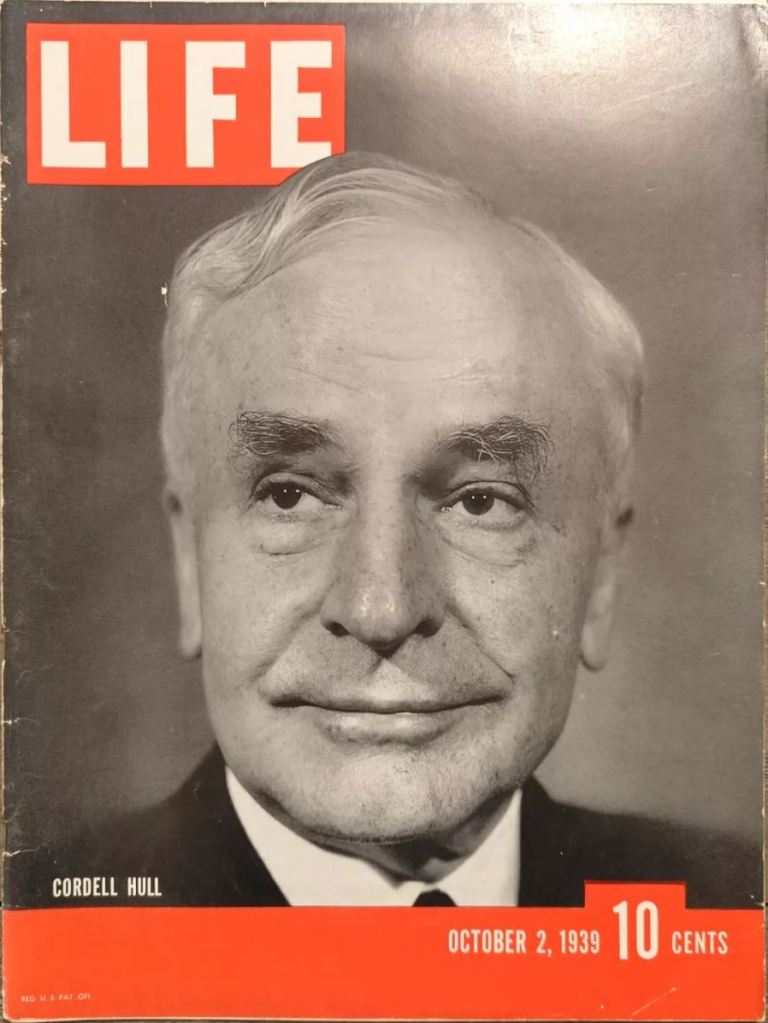
Further implementing the policy of increasing Latin-American trade during the European war, U.S. Secretary of State Hull announced tonight this government’s intention of negotiating a reciprocal trade treaty with Chile.
The All-India Nationalist Congress war subcommittee met today. It is believed it received Mohandas K. Gandhi’s report on his recent interview with the Viceroy, the Marquess of Linlithgow, and in the light of this discussed its final attitude toward participation in the European war.
Japanese columns driving southward along the Hankow-Canton Railway have smashed 19 Chinese divisions in one of the greatest battles of the Chinese-Japanese war, the Japanese Domei News Agency claimed today. The Chinese left more than 10,000 dead on the field, the news agency claimed. The 19 Chinese divisions were trapped in North Hunan Province in operations beginning Sept. 23, Domei said, and were finally “liquidated” in the last phases of the battle yesterday.
Domei said that in the first phase of the battle the main Chinese forces fell back on Tungting Lake, south of Hankow, and concentrated between the lake and the Wang Yang Mountains. Their first line was along the Sintsiang River and their second along the Mi River. These positions were broken when Japanese columns made surprise landings at two points on the east| shore of Lake Tungting and flanked the Chinese second line. Another Japanese column drove south from Tungcheng and still another, split into groups, drove south along a line to the westward.
Domei said Japanese planes bombed the Chinese airdrome at Taipingsze, southwest of Chengtu in Szechuan Province, at 5 AM today and shot down several Chinese planes and destroyed others in hangars on the ground. All Japanese planes returned safely to their base, it was claimed.
Conflicting Chinese and Japanese claims tonight obscured the progress of the Japanese drive for Changsha in Hunan Province. The Chinese reported a counterattack had forced the Japanese column to retreat fifteen miles after it reached the suburbs. The Chinese estimated that 20,000 Japanese had been killed or wounded in the last two weeks. The Japanese said nineteen Chinese divisions had been surrounded and “dealt a crushing blow.”
Japan stresses that peace is the aim in its policy. It wishes to stay out of the European war. Japan’s determination not to participate in the European war was reaffirmed today by Premier Nobuyuki Abe and Foreign Minister Kichisaburo Nomura at a conference of prefectural governors summoned to hear the new Cabinet’s policy.
Dow Jones Industrial Average: 151.41 (-1.13)
Born:
Yury Nikolayevich Glazkov, Soviet Air Force officer and cosmonaut (Soyuz 24, 1977), in Moscow, Russian SFSR, Soviet Union (d. 2008).
George Reed, American CFL Hall of Fame running back (CFL MVP, 1965, 1976; Grey Cup MVP, 1966; Saskatchewan Roughriders), in Vicksburg, Mississippi (d. 2023).
Paul Doyle, MLB pitcher (Atlanta Braves, California Angels, San Diego Padres), in Philadelphia, Pennsylvania (d. 2020).
Lolly Vegas [Candido Vasquez], American rock singer (Redbone – “Come And Get Your Love”), in Coalinga, California (d. 2010).
Died:
George Mundelein, 67, American Cardinal of the Roman Catholic Church.
Naval Construction:
The Royal Canadian Navy survey ship Acadia is recommissioned as training ship HMCS Acadia.
The Royal Canadian Navy auxiliary minesweeper HMCS Cape Beale is commissioned.
The U.S. Navy Sargo-class submarine USS Searaven (SS-196) is commissioned. Her first commanding officer is Lieutenant Lieutenant Thomas G. Reamy.
The Вое́нно-морско́й флот СССР (ВМФ) (Soviet Navy) Project 7-class (Gnevny-class) destroyer Besposhchadny (Беспощадный, “Merciless”) is commissioned.
The Вое́нно-морско́й флот СССР (ВМФ) (Soviet Navy) Project 7-class (Gnevny-class) destroyer Bezuprechny (Безупречный, “Irreproachable”) is completed.
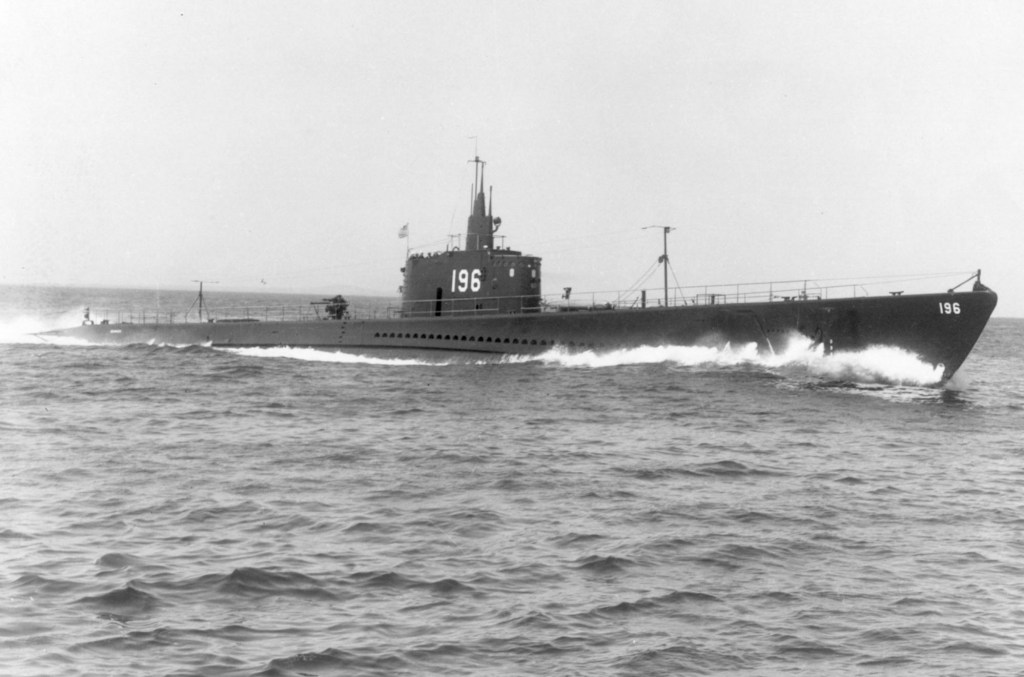
Searaven made 13 war patrols during World War II. JANAC credits Searaven with three sinkings of Japanese ships (20,492 total tons).
Searaven earned ten battle stars for World War II service.
Decommissioned 11 December 1946 after having been used in Operation Crossroads, the atomic bomb test at Bikini Atoll during which she only sustained negligible damage. Stricken 21 October 1948. Sunk as a target on 11 September 1948.
https://www.history.navy.mil/research/histories/ship-histories/danfs/s/searaven.html
 History Diaries