South Vietnamese Premier Major General Nguyễn Khánh announces that his government and U.S. authorities are revising the program that has been arming the Montagnards. In reference to the recent troubles with the tribesmen, he threatens to use force to put down any further disorder.
Khánh warned today that his caretaker Government would use force to put down any protests or strikes that threatened public order. A key element in his thinking previously was that the use of force by public authorities would only incur charges of harsh rule. But when the policy of Government laxness was put to a test late in August, street demonstrations got so far out of hand that the government fell. The Premier has issued a new warning in connection with threats of labor unrest in the capital similar to the general strike that paralyzed public utilities for a day last week. He also referred to political agitation in the coastal towns of the central part of South Vietnam where student demonstrations have been continuing in defiance of local law‐enforcement authorities. Shooting broke out between troops and street mobs in the town of Quy Nhơn last weekend. Premier Khanh attributed this agitation to Communist agents who he said intended to take over a provincial capital. “We will put them down by force,” he said.
Military intelligence reports from Quy Nhơn reveal that several hundred Việt Cộng guerrillas entered a nearby district town to join one of the anti-Government demonstrations. The Premier insisted today that the transitional Government he set up for only two months as a shaky alternative to threatening anarchy would end as scheduled by October 27. After the transition Premier Khánh would revert to being a military commander. He said the new regime would be made up of civilians. Although many observers have greeted this forecast with skepticism, Premier Khánh repeated it with conviction at a wide‐ranging news conference. He left alternatives, however. “All military officers who want to be politicians,” he said, “will have to get out of the armed forces.”
Observers have speculated that it is not out of the question that the Premier himself might resign as a general and head a civilian government. Asked directly whether he really intended to hand over the power he had seized in a bloodless coup d’état on January 30, Premier Khánh replied: “I have said it many times, but I will say it again: I am ready to give power back to a civilian government as soon as possible and will go back to my comrades in arms in the Vietnamese armed forces on October 27. “If the people want me in the Government, if they call on me to serve, I cannot refuse. But it must be truly the people who call on me, not through any representatives.” Thus the door was left open for a “draft.” American officials do not see any leader strong enough to replace Premier Khánh at this juncture. Premier Khánh spoke cheerfully and freely today. He seemed more relaxed and good humored than he has seemed at any other time since he stepped down as President in the August crisis.
He praised the strength of the armed forces in putting down this week’s revolt of mountain tribesmen in the central plateau. He also praised the efforts of American military advisers to mediate the revolt, thus belying the interpretations of local newspapers that he was holding the Americans partly to blame for the rebellion. The Premier said the tribesmen had been incited by “Communists and foreigners.” The Premier also spoke out against certain foreign correspondents who, he said, had distorted what has been going on in South Vietnam. “We will have to take appropriate measures against nonsensical articles,” he said. He seemed particularly disturbed by reports that said he had refused to travel outside Saigon by plane on one occasion because he feared that the Vietnamese Air Force might be against him.
All 80 people on board a Union de Transports Aériens flight were killed when the plane crashed into a mountain peak after taking off from Palma on the island of Majorca. The DC-6 had made several stops en route from Paris to Nouakchott in Mauritania, and departed from Palma at 4:14 a.m. and made its last contact with the Barcelona control tower at 5:10, giving no indication of trouble. Early accounts erroneously reported that the plane had fallen into the Mediterranean, roughly 45 miles (72 km) from Cartagena and the error would be repeated in reference books, including one account that “Although the crash area was searched by Spanish, French, British and Italian ships, neither survivors nor even wreckage of the doomed plane was ever discovered.” The day after its disappearance, however, the missing French plane was located on the side of Mount Alcazaba, where it had impacted at 8,200 feet (2,500 m) on the 11,000 foot (3,400 m) mountain.
Hundreds of policemen battled Irish republican demonstrators here tonight in the third successive evening of election violence stemming from Ireland’s old and bitter divisions. About 30 demonstrators were carted off to jail after having protested the removal by policemen of the Irish Republic’s flag, from their party headquarters. They had massed in the Streets about 9:30 PM defying helmeted policemen and armored cars. As midnight,, neared, the; rioters were joined by youngsters leaving pubs and dance halls and the number of arrests rose. The rioting developed into a series of running fights with the police.
Rioters flung Molotov cocktails (gasoline bombs) at armored police wagons but they exploded harmlessly. One policeman was wounded by a barrage of rocks. There were about 15 casualties from a charge by policemen armed with batons. The rioters threw in barricades to turn the back alleys into strongholds and the police sent in an armored truck with twin water cannons, but the water cannons proved ineffectual. The new rioting broke out despite appeals for calm by politicai and religious leaders. The night before 21 policemen and an undetermined number of civilians were injured and twenty‐two persons were ar rested.
remier Janos Kadar of Hungary today accused China of “causing much harm by trying to disrupt the unity of the Communist world movement.” Premier Kadar spoke at a mass meeting in Budapest honoring President Antonin Novotny of Czechoslovakia, who is on a state visit to Hungary. The Hungarian Premier said: “It is unpardonable, that some Communists consider their main task to consist of slanders against the Soviet Union.” In the speech, broadcast by the Budapest radio, he said he could “understand the reservations voiced by some Communist parties” concerning the forthcoming ideological conference in Moscow, but “we believe it is far better that something happens than nothing at all.” Therefore, he said, Hungary would send delegates to the conference in December.
A Communist Chinese musical, “The East Is Red,” was performed for the first time on a stage in Beijing and would gain widespread circulation the following year as a government-approved film about the Communist Revolution. People’s Daily would report the next day that the musical, using “our people’s favorite form of expression — singing and dancing — vividly portrayed the Chinese people, under the leadership of the Chinese Communists and Chairman Mao, engaged in their glorious journey of revolutionary battle and development.”
An American tourist in Paris was killed by a French woman who was committing suicide while both were visiting the Cathedral of Notre-Dame de Paris. Veronica McConnell, a 24 year old hospital technician, was fatally injured when 37-year old Denise Rey-Herne climbed over the balustrade of the 160 foot high north tower and jumped, killing both of them.
LIFE magazine photographer James Cobb Burke was killed in the eastern Himalayan mountains, when he fell 800 feet while taking pictures for an assignment.
Forty-five residents in an apartment building in Cairo were killed when the four-story dwelling collapsed without warning. The dead were residents of the slums of the capital city’s Deir el Malak district.
Congress cast aside two major Administration programs today in a drive for probable adjournment tomorrow. Health care for the aged under Social Security and aid for the depressed Appalachian, region were written off with finality as Administration leaders yielded to rank‐and‐file pressure for a quick windup of the long session. The House voted tonights to adjourn for the year at the close of business tomorrow. Members cheered as the adjournment resolution was called up.
The Senate has the power to change the date in considering the resolution but was not expected to do so. Both chambers agreed to meet at 11 AM tomorrow, an hour earlier than usual, with the idea of ending the session by nightfall. At one point in today’s maneuvering, President Johnson sought by telephone to salvage at least a modest victory on Appalachian aid but failed. His proposal, made, in phone calls to House Democratic leaders, was for authority to spend §800,000 for preliminary work on the program. The authority was to be included in an appropriation bill. The President’s second major rebuff, on health care, came when conferees failed to agree.
As Congress rapidly cleared its agenda for adjournment, major actions included these:
- The House approved and sent to the White House a §3.25 billion foreign‐aid appropriation bill.
- Both chambers gave final approval to the annual foreign aid. authorization bill, a separate measure that sets ceilings on outlays for the various aid categories.
- The Senate completed Congressional action on legislation for a three‐year extension of an expanded national defense education program.
- The House approved a compromise $1.1 billion bill providing funds for various programs that were not covered by regular appropriations voted earlier in the session.
The Senate rejected the compromise, however, and sent the measure back to the House tonight. The disagreement is expected to be settled tomorrow. The Senate’s objection was to the omission of a $5 million appropriation for public schools in the District of Columbia.
A hurricane drove its 120‐milean‐hour winds toward the Gulf Coast of Louisiana tonight.
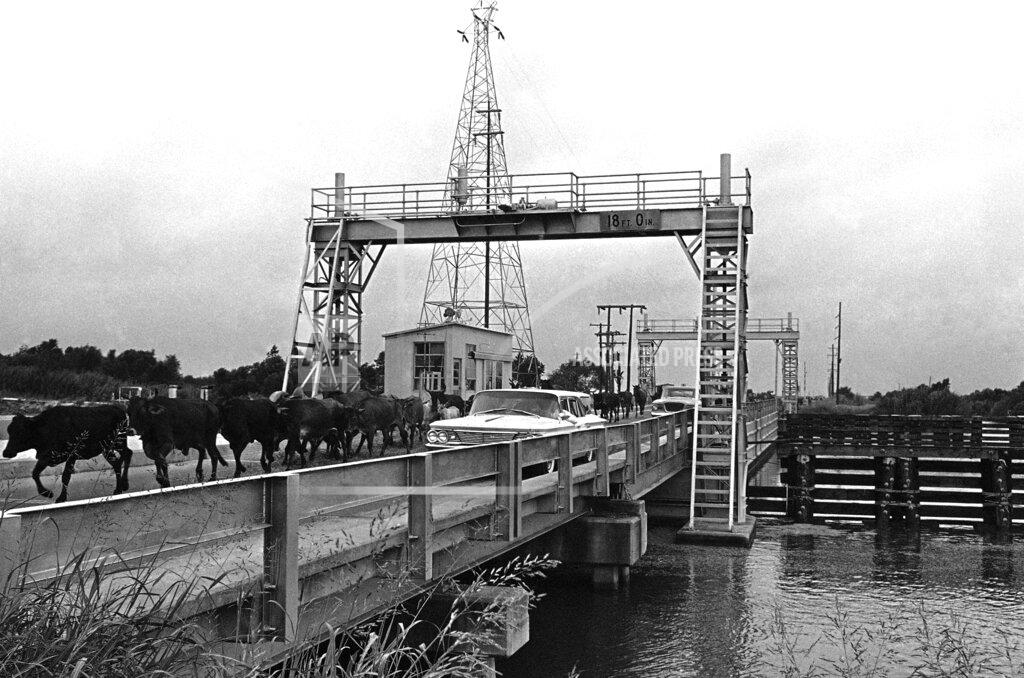
More than 125,000 persons had fled from the” coast as the massive storm called Hilda, bigger than all New England, churned northward through a raging Gulf of Mexico at a sluggish 6 mph. Refugees from the expected fury of the storm choked roads leading north, leaving the towns and villages in the probable path of the storm. Frank G. Spiess, Acting State Civil Defense Director, estimated that 125,000 persons had left the low‐lying coastal areas with the count not yet complete. It was probably the largest mass evacuation in the history of Louisiana, a state long accustomed to destructive hurricanes. As the storm headed north, its exact land target uncertain, the more than a million residents of southern Louisiana kept a constant watch on its progress.
The Weather Bureau’s latest advisory put the giant center of the hurricane about 185 miles south‐southwest of New Orleans. Late tonight the hurricane turned its winds toward New Orleans. The storm’s top winds had slacked off from 150 m.p.h. Inland shelters were rapidly filling beyond capacity as refugees. Cowboys herded cattle north out of Cameron Parish, where a hurricane in 1957 killed 500 persons and 35,000 head of stock. Governor John J. McKeithen ordered National Guard troops and civil defense forces “to check and double check” to make certain that Louisiana’s coastal areas were 100 percent evacuated before the storm struck. The giant storm with its buffeting gale winds covers 70,000 square miles.
A Federal grand jury returned two indictments today in connection with the slaying of three civil rights workers in Philadelphia, Mississippi. United States District Judge Sidney C. Mize ordered that the identity of the two persons indicted be kept secret until they could be placed under arrest. He ordered that the indictments be forwarded to the authorities of the Southern District of Mississippi” so that a Federal officer could arrest the defendants. The defendants, however, were reported to be residents of the Philadelphia area. They are to be arrested tomorrow and brought before the United States Commissioner in Meridian, Mississippi, for arraignment. The nature of the charge or charges was not immediately disclosed. It was known that the Justice Department had sought indictments under the Civil Rights Act of 1948, making it a Federal crime to deprive or conspire to deprive a person of his constitutional rights.
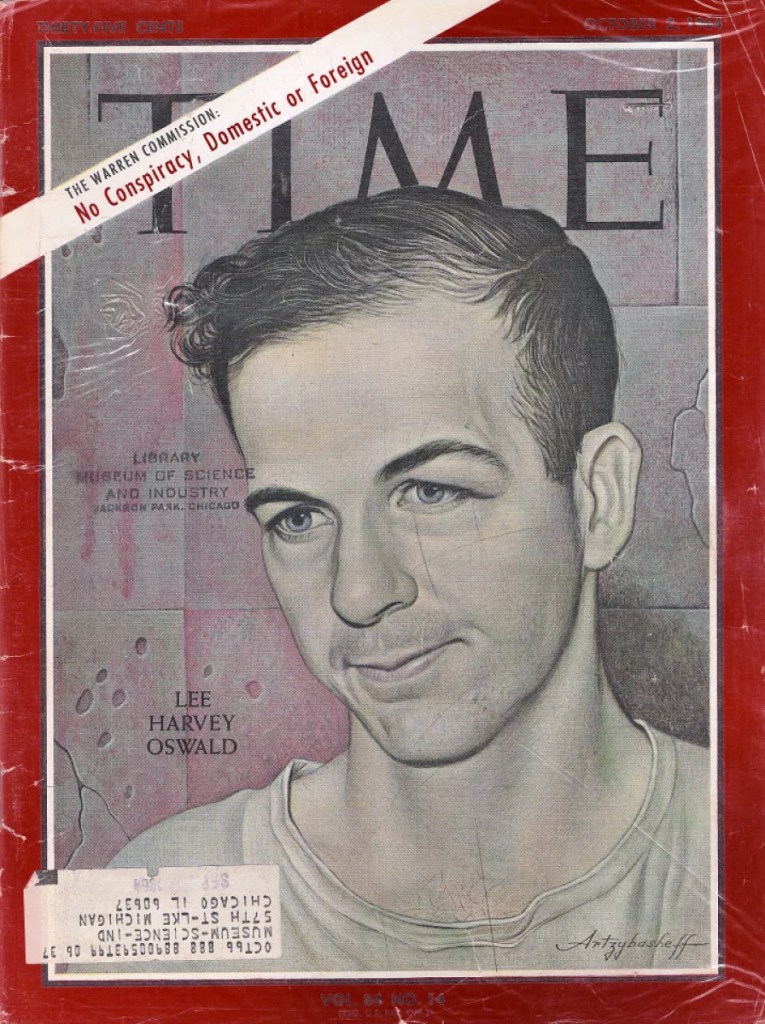
J. Edgar Hoover warned the Warren Commission against tightening protection of the President to the point where the nation would have “totalitarian security.” “I don’t think you can get absolute security without almost establishing a police state,” he said, “and we don’t want that.” Portions of the testimony of the director of the Federal Bureau of Investigation were printed in The Washington Evening Star today. The report said the bureau had taken “an unduly restrictive view of its role in preventive intelligence work” before President Kennedy’s assassination last November 22. It said a wiser view might have led the bureau to warn the Secret Service about Lee Harvey Oswald, who the commission concluded was the assassin.
The finding, that one man, without conspiracy, assassinated President Kennedy has evoked widespread skepticism and outright disbelief in many newspapers throughout the world. Editorial comment overseas on the Warren Commission’s report has varied greatly, not only between the political left and right in various countries but also from country to country. The most approving and trusting comment occurred in the nations of the British Commonwealth, in Scandinavia and West Germany. The press of Latin, Arab and Communist countries was the most doubtful. That summary of press reaction was issued today by the United States Information Agency. Interest in the Warren Commission’s findings remains great, the agency said, and other surveys will be made later.
The Kinks, created by English brothers Ray Davies and Dave Davies, released their first album. The self-titled album, The Kinks, included their first hit song, “You Really Got Me”.
The first New York Yankee team entrusted to the managership of Lawrence Peter (Yogi) Berra made the 29th Yankee pennant all but certain last night by turning back the Cleveland Indians, 5–2, at Yankee Stadium. This victory, put together by Whitey Ford’s four‐hit pitching,, Elston Howard’s two‐run double and Tom Tresh’s three run homer, made it mathematically impossible for the Yankees to lose first place during the regular schedule. It did not, however, automatically assure them of the championship. If they were to lose their two remaining games, and if the Chicago White Sox were to win all of theirs, the race would end in a tie and a two‐of‐three playoff would have to start Monday. Meanwhile, the Baltimore Orioles, who led the league through most of the second half of the season, were formally eliminated by the Yankee victory, even though they won their game last night.
Bill Skowron’s bases-filled single with nobody out in the ninth inning gave the Chicago White Sox a 5–4 victory tonight and a sweep of a double‐header with the Kansas City Athletics. The Sox, who won the opener, 3–2, still have a chance to tie for the pennant. The sweep was their 11th of the season and gave them their longest winning streak of the year, seven games. Hoyt Wilhelm, who got his 21st save of the season in the first game, posted his 12th victory in the finale after working only one inning.
The Baltimore Orioles score 6 runs in the 2nd to beat Detroit 10–4 in a fog-bound game. Tigers’ outfielders lose 2 routine fly balls in the O’s big inning. But the Yankees’ win eliminates the Orioles from the pennant race.
Felix Torres drove in three runs with a pair of singles as the Los Angeles Angels defeated the Minnesota Twins, 5–4, today. The victory enabled the Angeles to clinch at least a tie for fifth place in the American League.
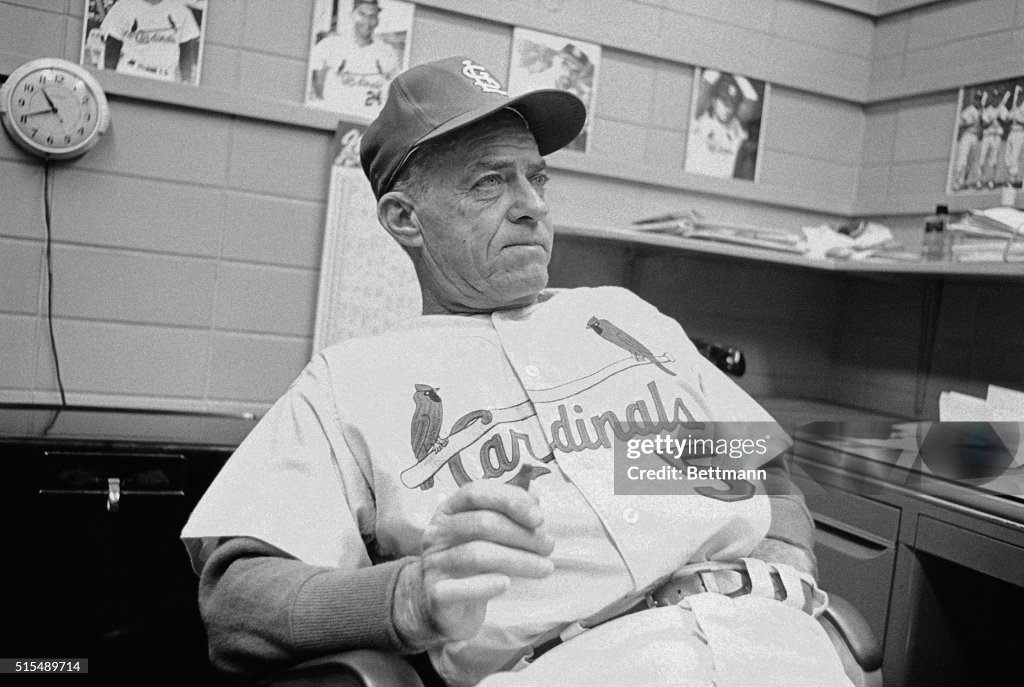
The New York Mets end an 8-game St. Louis Cardinals win streak when Al Jackson beats Bob Gibson 1–0, but the Cards remain a half game in front of the Reds. The Mets prolonged the pennant suspense when Jackson outpitched the “stopper” of the Cardinal staff, Gibson, who had won nine of his last 10 decisions and had lost to Casey Stengel’s team only once in his career.
With first place on the line, the Philadelphia Phillies win 4–3 in Cincinnati with the help of their 3rd triple play of the season (Alex Johnson to Bobby Wine to Tony Taylor to Vic Power), and snap their 10-game loss streak. The three triple plays is a NL season record. The Phils score 4 runs in the 8th off the Reds’ Jim O’Toole with the rally starting after a routine fly ball drops between Leo Cardenas and Pete Rose. Cardenas and O’Toole exchange angry words after the game and then start swinging.
The 4th-place San Francisco Giants barely stay in the pennant chase when Bob Bolin shuts out the Chicago Cubs, 9–0. The Giants must win two while St. Louis loses two and Cincinnati one in order to produce a four‐way tie for first place. Bolin was in trouble only in the first and seventh innings. Two men got on base in each of those frames, but each time he fanned the dangerous Ron Santo to get out of trouble.
The Houston Colts, with Rusty Staub hitting a home run and Sonny Jackson getting three singles, slammed 14 hits tonight and whipped the Los Angeles Dodgers, 6–1.
Bob Bailey and Roberto Clemente drove in two runs each tonight to pace the Pittsburgh Pirates to a 5–4 victory over the Milwaukee Braves after the Braves had won the opener in 10 innings, 3–2, for their eighth in a row.
Dow Jones Industrial Average: 872.65 (+0.65)
Born:
Sheila Echols, American track athlete (Olympic gold, 4 x 100m, 1988), in Memphis, Tennessee.
Héctor Villanueva, Puerto Rican MLB catcher, pinch hitter, and first baseman (Chicago Cubs, St. Louis Cardinals), in Rio Piedras, Puerto Rico.
Randy Byers, MLB pinch hitter and outfielder (San Diego Padres), in Bridgeton, New Jersey.
Steve Alvord, NFL defensive tackle (St. Louis-Phoenix Cardinals), in Bellingham, Washington.
Harvey Allen, NFL defensive back (Seattle Seahawks), in Los Angeles, California.

 History Diaries