The authority of South Vietnam’s Government has all but disappeared in the central region as continuing agitation by political and religious groups has made the populous lowlands susceptible to large‐scale Communist exploitation. The mounting unrest seems to at least some observers to be a more immediate threat to the United States‐backed war effort in South Vietnam than open military action by the Communists.
Discussing the military situation at a news conference today, Maxwell D. Taylor, the United States Ambassador, said that the Communist guerrillas were “militarily farther from success than ever and their men must know it.” But on the political side Mr. Taylor’s expressions of hope for the emergence of a solid government were overshadowed by continuing friction in the present caretaker regime of Premier Nguyễn Khánh.
Lieutenant General Trần Thiện Khiêm, a member of the ruling triumvirate, did not leave the country today as the Premier’s office had said yesterday that he would. It was explained that the powerful general had been given too short notice to prepare his trip. Informed sources gave clear indications, however, that General Khiêm was unhappy about being eased out by General Khánh and his new allies, the Buddhist leaders and a group of younger generals. It was now said that General Khiêm would depart Saturday on his tour of Britain, West Germany and other countries that are providing aid to South Vietnam. General Khiêm has been commander in chief of the armed forces and an important figure at the Premier’s side since January.
The three years of massive support to counter the insurgents has been based on a premise of a stable central Government in Saigon. This premise has been challenged in a month of violent upheavals.
Under-Secretary of State George Ball dictates a private 67-page memo this month that he sees as “a challenge to the assumptions of our current Vietnam policy.” in particular arguing that an intensified U.S. air war against North Vietnam would lead to a still greater escalation on both sides, leading, at the end of the road, to the direct intervention of China and nuclear war.’ As for the assumption behind the “domino theory” that a loss in Vietnam will inevitably lead to the loss of America’s credibility and so to the loss of a series of nations Ball concludes: ‘What we might gain by establishing the steadfastness of our commitments, we could lose by an erosion of confidence in our judgments.’ Ball sends copies of the memo to Rusk, McNamara and McGeorge Bundy, but no one bothers to send a copy to President Johnson until February 1965.
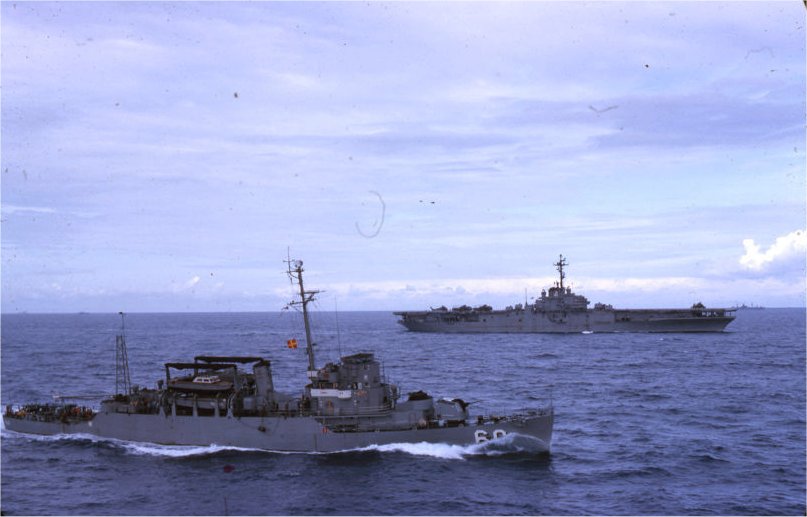
The instability of South Vietnam’s Government and the lack of progress against Communist-led guerrillas there have again revived debate in the Johnson Administration about the wisdom of somehow expanding the war. There appears to be no urgency in that debate at the moment. Nor does it revolve around any specific proposal for early action. The debate, however, has engaged the interest of some high-ranking officials in Washington. Echoes of it are heard in the discussion of such questions as when United States destroyers should undertake the next patrol mission along the coast of North Vietnam in the Gulf of Tonkin. At present, most senior officials here are taking their cue from President Johnson, who has said in private as well as in public, that neither United States nor South Vietnamese interests would be served by a “big offensive” against North Vietnam.
[Ed: Not until after the election, anyway…]
The New York Times opines:
“The Johnson Administration is once more reviewing its policy in Vietnam and once again it is deeply divided about how to proceed.
“There is general agreement at all levels of the Government that the political instability in South Vietnam is increasing. The division is between those Johnson aides who want to expand the war into Communist North Vietnam with the direct participation of U.S. troops and those who believe the risks of such a policy outweigh the advantages.
“It is easy to understand why this division runs so deep. What is not so easy to understand is why the Administration is pressing a review of the policy at this time. While the political situation in Saigon is said officially to be deteriorating, the Administration insists that there is no danger of collapse there in the foreseeable future, and Ambassador Maxwell Taylor has stated this week that the Communist military assault on South Vietnam is further from success now than ever before.
“If this is true, it is difficult to understand why some prominent officials, a few weeks before a national election, should be talking so openly about expanding the war, and not only advocating but almost lobbying for such a course of action.
“It is even possible now to hear officials of this Government talking casually about how easy it would be to “provoke an incident” in the Gulf of Tonkin that would justify an attack on North Vietnam, and thus, according to this thesis, enable the United States to bring strong military pressure on the Communists there to let up on their pressure on South Vietnam.”
Two United States Army helicopters were wrecked in an aerial collision today, and eight Americans aboard them were injured, two seriously. The craft came together while flying in close formation about 500 feet above the air strip at Pleiku, a mountain town 240 miles northeast of Saigon.
Both sides are now blatantly escalating their clandestine operations. Tactical units of the North Vietnamese Army are beginning a steady influx into the South over the Hồ Chí Minh Trail, while the United States continues to support the various groups operating under Oplan 34A.
Ambassador Maxwell D. Taylor said today that a nuclear explosion by the Chinese Communists would not affect the strategic picture in South Vietnam. In discounting the test’s role as a military factor, the former Chairman of the United States Joint Chiefs of Staff said there was always a long gap between the explosion of first nuclear device and a capability to deliver. Therefore, he said, the situation was one “in which the likelihood of dropping a bomb in South Vietnam would be very remote.” The ambassador was speaking at a news conference for Vietnamese reporters on the massive American involvement in South Vietnam. It was the first time in three years that an American ambassador had formally met the local press.
South Vietnam accused Prince Norodom Sihanouk of Cambodia today of collusion with the pro‐Communist Việt Cộng seeking the overthrow of the Saigon Government. The charges were made in a note to the Security Council. Enclosed were photocopies of a letter allegedly written by the Prince to a leader of the Vietnamese opposition residing in Paris. In its protest, South Vietnam said Cambodia was guilty of “blatant interference” in the internal affairs of Vietnam. It charged that the photocopy evidence showed the Cambodian leader was involved directly with anti‐Government rebels trying to bring South Vietnam under Communist sway. The note said that the Saigon Government regarded Cambodia’s action as gross interference and reserved the right to adopt “appropriate measures to meet this situation.”
Three Pathet Lao guards, assigned to one of the most enervating duties of the Laotian civil war, explained today why they had defected from the pro-Communists. They said at a news conference that they were outraged by North Vietnamese intervention in Laos. Officiais familiar with their case, however, suggested that they had merely become bored after two years of enforced inactivity.
On the first day they could apply for passes to visit relatives in East Germany, 32,156 residents of West Berlin applied at the 17 different offices in the city that issued the permits. Each pass entitled the bearer to one visit between October 30 and November 12, and two visits during Christmas and New Year.
The countries that have supplied troops for United Nations peace‐keeping forces have been invited to meet in Canada to help draw guidelines for future military operations. It is hoped that out of their experiences in the Congo, the Middle East and on the island of Cyprus will come some practical proposals for the proper conduct of a peace force formed by units from more than one nation. The Canadian Government is issuing the invitation for a meeting in Ottawa November 2 to 6. The conference is being organized to consider technical questions, steering clear of political issues. It is expected that the participating countries will draw on the expert advice of the military commanders who actually served under the United Nations flag.
A Cyprus Government delegation returned here from Moscow today and announced to cheering Greek Cypriots that “we are completely satisfied” with the Soviet military aid pact. Foreign Minister Spyros Kyprianou and Commerce Minister Andreas Araouzos were greeted at the airport by a crowd of, several thousand, whose enthusiastic demonstration seemed at least partly inspired by the local Communist party and other left‐wing groups. Mr. Kyprianou refused to disclose any details of the pact, which is reported to cover economic, political and military aid. He asserted that “no strings or conditions” were attached to the accord.
The Foreign Minister said he believed “sincerely that the Soviet aid not only constitutes a major factor in the defense of Cyprus but also an important contribution to the cause of peace.” The government had sought Soviet military aid after, the Turkish air strikes against the island last August. Ankara has supported the Turkish Cypriots who have been engaged in intermittent fighting with the Greek Cypriots since last December, when the government led by Archbishop Makarios attempted to eliminate constitutional rights of the Turkish minority.
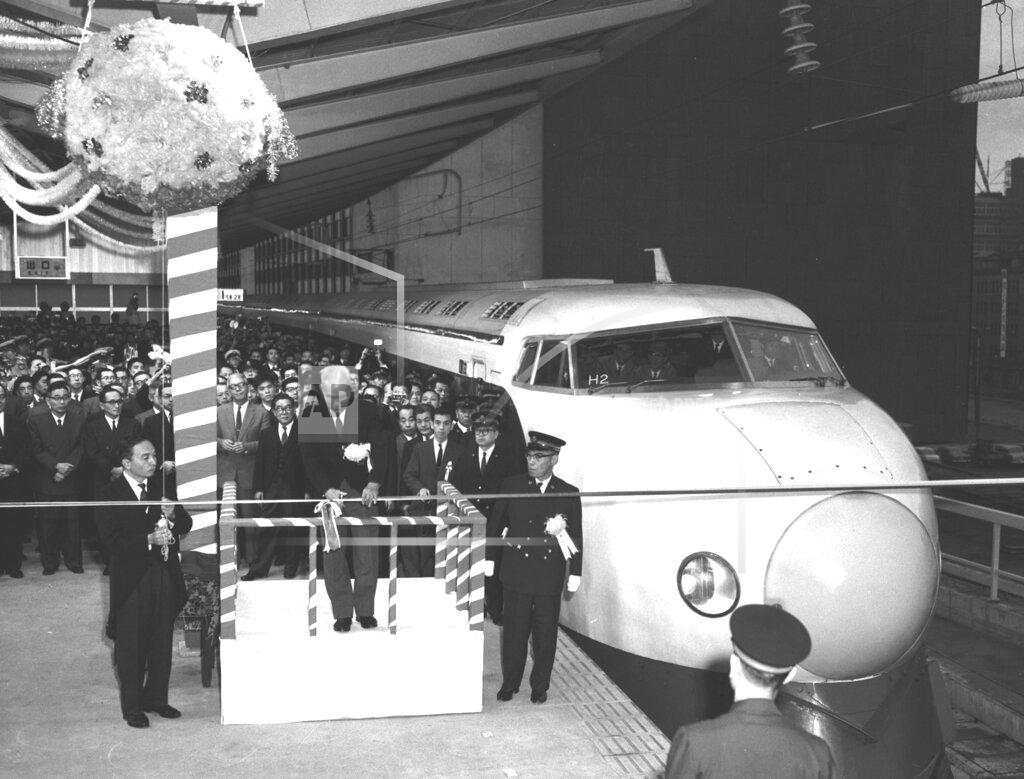
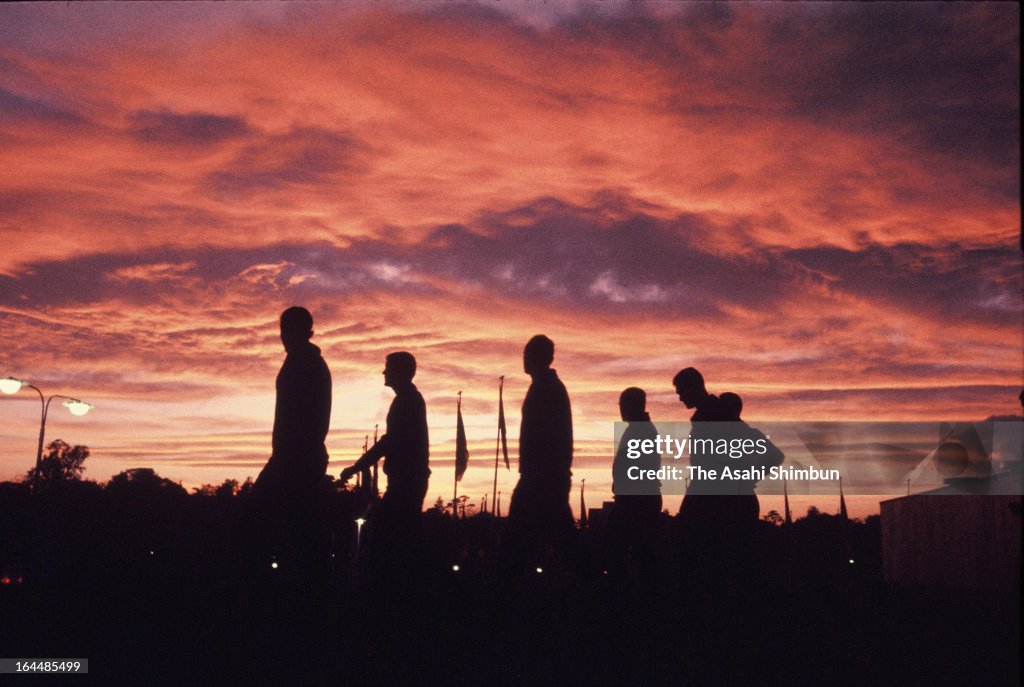
The Shinkansen high-speed rail system was inaugurated in Japan, beginning a trip on the line’s first section between Tokyo and Osaka. The initial speed for the 320 miles (510 km) trip was slower than expected, at 80 miles per hour (130 km/h).
A Federal Court restraining order halting the day‐old dock strike along the Atlantic and Gulf Coasts was signed last night. Acting on instructions from President Johnson, the Department of Justice filed papers seeking an injunction. Judge Frederick van Pelt Bryan signed a temporary 10‐day order at 8 PM sending the men back to the docks from Maine to Texas. Judge Bryan, who had been standing by awaiting the appearance of Assistant Attorney General John W. Douglas, called a hearing for 2 PM next Thursday for argument on an 80‐day injunction. The injunction process under the Taft‐Hartley Act is designed to give the disputing parties an 80‐day cooling‐off period. At the hearing next week the court could order that any strike be delayed 70 more days.
During the cooling‐off period mediators will continue seeking a solution on points where the bargainers have failed to agree. Federal officials said the speed of the injunction action was without parallel, as far as they could remember. Machinery for the action had been set up early yesterday. President Johnson put it in motion at 6:30 PM after receiving a report on the strike situation from Herbert Schmertz, chairman of a board of inquiry that had been named 24 hours earlier. The union was officially served with the restraining order just before 11 PM, and pickets began leaving the piers. A union meeting this morning will make plans for getting the men back to their jobs, but the cargo handling cannot get under way before 7 o’clock tonight.
House and Senate conferees on the foreign aid authorization ended: three days of negotiations today with an agreement amounting to an Administration victory. They knocked out several restrictions on the President’s use of foreign aid in furtherance of United States foreign policy. In another key action, they killed the Senate’s rider expressing the “sense of Congress” as favoring a “reasonable” delay in court‐ordered reapportionment or state legislatures. Among the restrictions on the President’s use of foreign aid that were rejected was a provision sponsored by Senator Karl E. Mundt, Republican of South Dakota. It would have drastically increased the interest rates on loans to countries for economic development. It would also have shortened maturity periods for such loans. The conference agreement killed a Senate amendment condemning the Soviet Union by name for its persecution of Jews and other minorities in that country.
The negotiators substituted language expressing Congressional repugnance oyer infringement of freedom of religion anywhere in the world and condemning “the persecution of any persons because of their religion.” House action denying an Administration request for more leeway in hiring was upheld by the conferees. The “Administration had sought authority for the foreign aid administrator to replace at least 100 incumbents in top positions in his agency and a larger number of other employes judged by him to be of marginal efficiency. All such personnel are protected in their Jobs by Civil Service rules. The conferees struck a Senate provision, opposed by the Administration, that would have amounted to a flat ban on any further economic or military aid to the Sukarno regime in Indonesia, including training of military men and police.
The Federal Communications Commission ruled today that any radio or television station carrying one of President Johnson’s news conferences in full must grant equal time to other Presidential candidates. The vote was 4 to 3 for this new and striking interpretation of the equal‐time law. The ruling will not affect any station’s right to carry excerpts from a Presidential news conference as part of a regular news program. The F.C.C, said stations could do so in the exercise of their “bona fide news judgment.”
The effect will be, however, to prevent virtually any broadcasting of the President’s news conferences in full. Any station that did so would have to grant equal air time not only to Senator Barry Goldwater of Arizona, the Republican nominee, but also to the nominees — perhaps up to 10 in number — of minor parties.
Because there is no practical way of editing a news conference as it occurs, live broadcasts will be most unlikely for the remainder of the campaign. In practice, the networks have seldom broadcast the President’s news conferences in full as they happened. In the majority today were the commission’s chairman, E. William Henry, and Robert T. Bartley, Robert E. Lee and Kenneth A. Cox. The dissenters were Rosei H. Hyde, Frederick W. Ford and Lee Loevinger. None of the seven was put on the commission by President Johnson. Three were named by President Kennedy, two by President Eisenhower and two by President Truman.
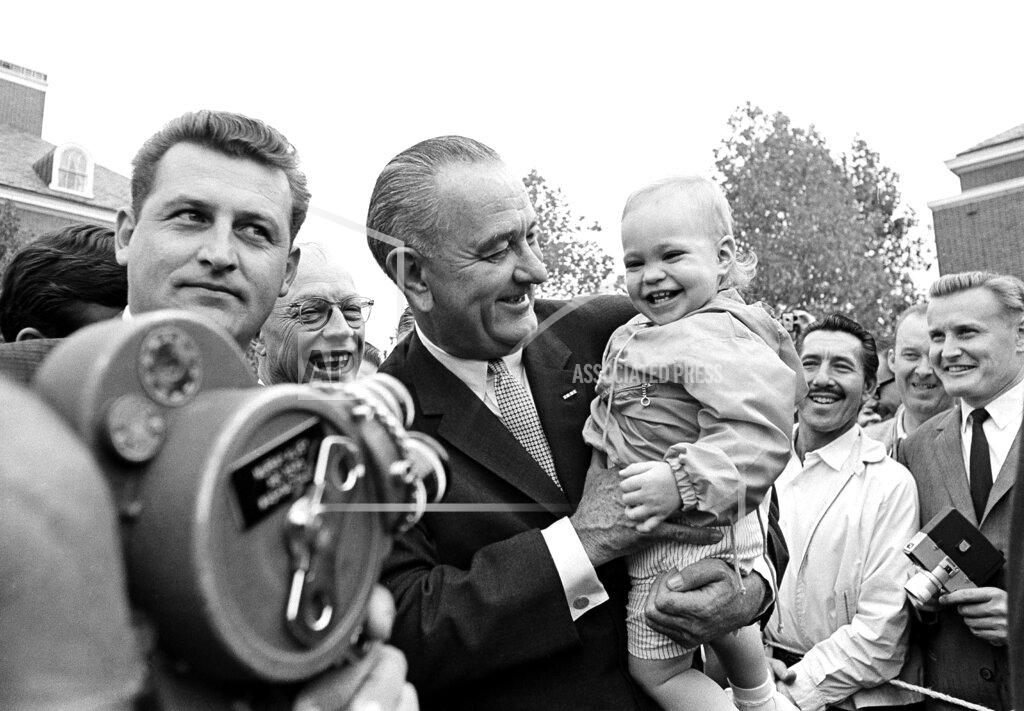
Presidential candidates and their running mates owe it to the nation to avoid “exposing themselves unnecessarily” to the danger of assassination, Mike Mansfield, the Senate majority leader, said today. Senator Mansfield’s admonition was the more pointed because of President Johnson’s performance today at the Johns Hopkins University in Baltimore, where a single rope separated him from a crowd estimated at more than 7,000. The President walked its length of more than three city blocks on the way to his waiting helicopter, repeatedly reaching over to shake hands and, once, to kiss a baby. It was the same during his recent swing through New England and before that on his visit to the Strategic Air Command headquarters in Omaha.
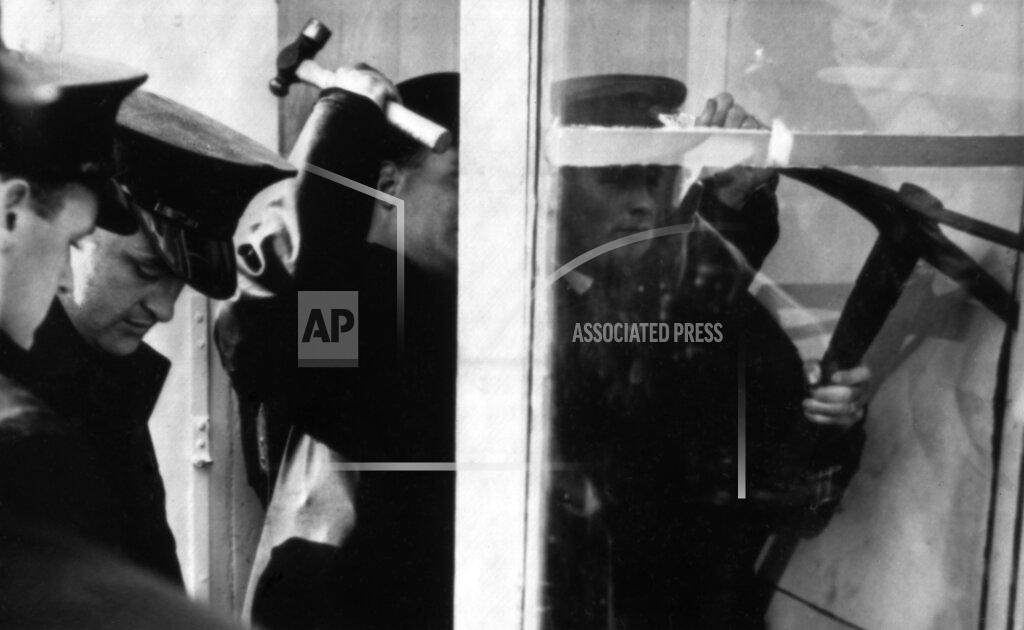
At the University of California, Berkeley, police attempted to arrest Jack Weinberg, a Congress of Racial Equality volunteer who had violated a university ban on activism at the Sather Gate and who had refused to show his student identification. Hundreds of protesters then blocked the police car, and 21 year-old UC-Berkeley junior Mario Savio stood on the car’s roof to address his fellow demonstrators, inaugurating the Free Speech Movement that would spread to other campuses.
Three white men were arrested today in connection with the recent bombings of two Black homes in McComb, Mississippi. Authorities confiscated from one of the suspects a store of arms, ammunition and two membership cards, one in the Ku Klux Klan and one in Americans for the Preservation of the White Race. It was the first time that the two organizations have been publicly linked with the violence that has raked Mississippi this year. Both have grown in membership in recent months. The Federal Bureau of Investigation considers the arrest a significant break in solving the wave of bombings and burnings of homes and churches in southwest Mississippi. More arrests are expected. The Justice Department and Governor Paul B. Johnson Jr. jointly announced the arrests, which were made in the McComb area by state and local authorities on the basis of information gathered by the FBI.
Only five days ago Governor Johnson, for the first time, put the full investigative resources of the state into the search for racial terrorists. Those arrested today were Paul Dewey Wilson, 25 years old, a maintenance employe of the Illinois Central Railroad in McComb; Ernest Frederick Zeeck, 25, a clerk in a McComb automobile accessory store; and Jimmy Prinston Wilson, 38, a service station employe in McComb. The suspects were held without bond pending a meeting of the Pike County Grand Jury next Monday. They were charged with unlawful use of explosives under a state law that sets a maximum penalty of death. All three were charged with the bombing of the home of Mrs. Alyene Quin, a restaurant operator who has been active in civil rights work, the night of September 20. The bomb blew off the front porch and interior wall in the front part of the house and shattered all windows. Mrs. Quin and her two children escaped injury.
There have been at least 16 bombings and four church burnings in the McComb area since last April.
The Rev. Dr. Martin Luther King Jr. announced today an expanded nonviolent course for the Southern Christian Leadership Conference. It will move the organization into a new sphere of civil rights activity. Dr. King made an hour‐long 5,000‐word annual report before 500 delegates attending the group’s eighth annual convention. He pledged a program of broad political action and political reform to fight basic social and economic problems of the Black. “Demonstrations can call attention to evil, arouse the conscience of the community,” Dr. King said, “but such demonstrations are not a program for removing evil itself.”
The wreckage of the American submarine USS Thresher was located, almost a year and a half after it sank during sea trials 220 miles (350 km) east of Cape Cod, killing all 129 people on board. U.S. Secretary of the Navy Paul H. Nitze disclosed later in the day that the bathyscape Trieste II had positively identified the lost vessel by its identifying number, 593, found on five different parts of the sub, which had broken up as it descended. The Thresher had sunk on April 10, 1963 with its entire crew and 17 civilians.
Mrs. Nelson A. Rockefeller, the wife of the Governor of New York, lost her suit today to gain custody of the children of her broken marriage with Dr. James Slater Murphy. Supreme Court Justice Joseph F. Gagliardi gave; Dr. Murphy, a virologist at the Rockefeller Institute, custody of all four children, including 4‐year‐old Melinda, who has been living since June with the Rockefellers at their Pocantico Hills estate. The older children — James, 13, Margaretta, 11, and Carol, 8 — have been with Dr. Murphy since the parents separated in February of last year. The judge said it would be “a mistake of the first magnitude” to separate any of the four children from the others.
The San Francisco cable cars are declared a national landmark.
The champagne had to stay on ice yesterday as the NewYork Yankees finally stumbled on their way to their 29th American League championship. Needing two victories to clinch the pennant, and leading, 2–1, in the ninth inning of the opener of a double‐header with the Detroit Tigers, they ran into a three‐run rally that ended in a 4–2 defeat. Detroit’s Dave Wickersham, in a bid for his 20th win, was ejected by umpire Bill Valentine in the 7th inning of his final start. Wickersham got the heave-ho for trying to get Valentine’s attention by grabbing his shoulder during an argument with Norm Cash. Mickey Lolich entered the 1–1 tie and earned the 4–2 Tigers’ win. Thus delayed and disappointed, the Yankees proceeded to lose the second game, 5–2, making only six hits off Dennis McLain, a rookie who scored his fourth victory. This was the first double‐header lost by the Yankees this year and left them still needing two victories or two White Sox defeats — or one of each — to clinch the pennant.
Dave McNally’s one-hitter keeps the Baltimore Orioles in the pennant race, 2½ games behind the Yankees. Don Lock’s double is the only Washington hit in the O’s 2-0 win over the Senators. The victory moved Baltimore to within a percentage point of second‐place Chiaçgo, with both clubs 2½ games behind the league‐leading New York Yankees. McNally allowed two walks through the first 6⅔ innings before Lock slammed a drive over Jack Brandt’s head to the center‐field fence. A walk to Roy Sievers and a wild pitch advanced both runners, then Ken Hunt flied out. Jerry Adair figured in both Oriole runs. In the third, he singled home Luis Aparicio, who had walked, stole his 58th base and moved to third on a wild pitch by loser Frank Kreutzer. Adair doubled and scored on another double by Brooks Robinson in the fifth.
The smallest crowd ever to attend a game at Fenway Park watches the Boston Red Sox, en route to their sixth consecutive losing season, beat the Cleveland Indians, 4-2, to snap a six-game slide. Dick Stuart drove in his 111th run of the season, and Dick Radatz made his 78th pitching appearance. The crowd of 306 paid patrons is less than half of the previous low at the Boston ballpark when only 674 fans showed up for a game against Kansas City last season.
Larry Stahl, a rookie, socked a tie‐breaking home run in the 12th inning today as the Kansas City Athletics beat Camilo Pascual and the Minnesota Twins, 5–4. The A’s had tied the score in the eighth with three runs following three Minnesota errors.
In the event of a tie at the end of the season, National League president Warren Giles flips a coin to determine the different possible playoff pairings, which includes six possibilities – two with two teams, three with three teams, and one with four teams. Reds’ president and general manager Bill DeWitt wins the first toss and chooses to play the Cardinals at home if Cincinnati prevails.
The Cincinnati Reds edged slowly up the National League mountain again tonight, beating the Pittsburgh Pirates, 5–4, with such aids as a wild pitch, a throwing error and a second-string catcher’s promise to, belt a home run for his 6‐day‐old baby. Whatever the means, the end result was this: The Reds gained on the idle St. Louis Cardinals and are only a half-game behind the league leaders. In a short but sloppy game before 7,081 fans at ugly little Crosley Field, the Reds snapped a 34‐inning scoreless streak and put themselves back in the pennant race. The most dramatic blow of the evening was Jim Coker’s sixth‐inning home run, a towering shot off the left‐field screen. It gave the Reds a 4–3 lead, and they never lost control after that.
Danny Murtaugh (80–82) resigned as manager of the Pirates for health reasons.
Juan Marichal kept the San Francisco Giants alive in the National League pennant race today by pitching a 6–3 victory over the Houston Colts. Marichal gave two runs in the first inning, then had to weather a bases‐filled jam in the fifth before he could post his 21st victory of the season against eight losses. Willie Mays, Willie McCovey, and Tom Haller drove in two runs each for the Giants while sending Chris Zachary down to his first major league loss.
At County Stadium, Ed Bailey belts a 1st-inning grand slam as the Atlanta Braves top the New York Mets, 7-3. Casey Stengel started Bill Wakefield who failed to last three innings. The grand slam by Bailey put the Mets behind, 4–1, and they never quite recovered. Preceding Bailey’s clout, Rico Carty and Lee Maye singled and Felipe Alou reached .base on a fielder’s choice when Charlie Smith dropped Wakefield’s throw for an attempted forceout at third base. The Mets managed to make it 4–3 with a pair of runs in the third. But Milwaukee came back with three in the bottom half of the inning on doubles by Bailey and Sandy Alomar, a single by Lou Klimchock, a walk to Denis Menke and pitcher Denny Lemaster’s sacrifice fly. Denny LeMaster won his 17th.
Ron Santo’s booming two‐run homer tonight helped give the Chicago Cubs a 4–3 victory over the Los Angeles Dodgers and again prevented Don Drysdale from gaining his 19th victory.
Dow Jones Industrial Average: 872 (-3.37)
Born:
Roberto Kelly, Panamanian MLB outfielder (All Star, 1992, 1993; New York Yankees, Cincinnati Reds, Atlanta Braves, Montreal Expos, Los Angeles Dodgers, Minnesota Twins, Seattle Mariners, Texas Rangers) and coach, in Panama City, Panama.
Roland Barbay, NFL nose tackle (Seattle Seahawks), in New Orleans, Louisiana.
Jonathan Sarfati, New Zealand chess player, scientist, and author (FIDE Master), in Ararat, Australia.
Max Matsuura, Japanese record producer and broadcaster, in Yokohama, Japan.
Harry Hill [as Matthew Keith Hall], English comedian, in Woking, England, United Kingdom.
Died:
Ernst Toch, 76, Austrian composer (Geographical Fugue), music theorist (Melodielehre), and Pulitzer Prize winner (1956).
 History Diaries