Hitler issued Directive No. 5, Partition of Poland:
The Supreme Commander Of The Armed Forces.
Berlin. 30th September, 1939. 8 copies
Directive No. 5
- As a result of the conclusion with Russia on 28th September 1939 of a Treaty Of Frontier Regulation And Friendship, my intention is to regulate the political form of former Polish territories lying within the German sphere of interest according to the following principles: (a) The new political frontiers of the Reich in the east will, generally speaking, comprise the former area of German settlement, and in addition those areas which have special value for military purposes, or for war economy, or for communications. Details of the frontier line have not yet been decided. I request that proposals in this matter be made to me through the High Command Of The Armed Forces. (b) The present demarcation line (Pisia-Narew-Vistula-San) will be constantly strengthened and built up as a line of military security towards the east. The garrisons necessary for this purpose will eventually be moved forward beyond the political frontier of the Reich. I likewise request that proposals for the details of the defence line be submitted to me through the High Command Of The Armed Forces. (c) The line laid down in our Treaty Of Frontier Regulation And Friendship with Russia, which will be defined in detail in an additional Protocol to the Treaty, is to be regarded as the limit of the German sphere of influence in relation to Russia. (d) The political organisation of the area between this line and the new political frontier of the German Reich will be decided by me.
- For the time being, the whole area of the former Polish State up to the line established by our Treaty Of Frontier Regulation And Friendship, including the Suwalki salient, will be an area of Military Government under Commander In Chief Army. I request Commander In Chief Army to submit to me, at an early date, proposals for dealing with the following problems: (a) The pacification of territory to be occupied. The time will be settled within the framework of the agreements reached in Moscow. (b) The occupation of the security line along the course of the former demarcation line. (c) The occupation of the whole territory by occupation troops. In this connection the smallest possible forces will be employed on pacification duties east of the demarcation line. Commander In Chief Air Force will leave in the east the forces which Commander In Chief Army requires to carry out these duties. (d) The division of the area of Military Government into Districts, or the extension of existing Military Districts to include newly acquired territories.
- In consequence of the latest political developments, the forces intended for East Prussia, in accordance with Directive No. 4, paragraph 4, last sentence, no longer need to be held in readiness.
- All limitations hitherto imposed on naval warfare against France are cancelled. The war at sea will be carried on against France just as against England. Trade War will in general be waged in accordance with Prize Law with the following exceptions: Merchant ships and troopships definitely established as being hostile may be attacked without warning. This also applies to ships sailing without lights in waters round England. Merchantmen which use their radio transmitters after being stopped will be fired upon. Attacks on passenger ships, or large ships which obviously carry considerable numbers of passengers in addition to cargo, are still forbidden.
- For air warfare in the west the restrictions hitherto in force remain valid. The frontier of the Reich will be crossed by aircraft only for purposes of local and combat reconnaissance, to attack artillery liaison planes and captive balloons, and, to a limited extent, for long range reconnaissance on the orders of Commander In Chief Air Force. Requests for long range reconnaissance on behalf of the Army are to be handled by direct liaison between Army and Air Force. The Air Force may also attack English and French warships in the North Sea, and prosecute Trade War in accordance with International Prize Law.
- The orders detailed in paragraphs 4 and 5 now become effective in place of those contained in paragraphs 5b and c and paragraph 7 of Directive No. 4.
(signed) Adolf Hitler.
The Battles of Parczew, Jabłoń and Milanów ended in a tactical Polish victory. The Soviets have lost about 170 dead, 300 wounded, and 100 POWs. Some of the POWs have joined the Poles.
The Battle of Hel approaches its climax. Beginning on 20 September 1939, after the Polish Army Pomorze had been defeated in the Battle of Tuchola Forest and after other Polish coastal strongholds had capitulated in the Battle of Westerplatte, Battle of Gdynia and the Battle of Kępa Oksywska, the Hel Fortified Area was the only substantial pocket of Polish military resistance left in northern Poland. It was also the site of the invasion’s only naval surface engagement. The Germans blockaded the defenders of the Hel Peninsula and did not launch major land operations until the end of September 1939. Some 2,800 Polish soldiers under Rear Admiral Włodzimierz Steyer, part of the Land Coastal Defence formation, defended the Hel Fortified Area.
The major German push took place on 30 September 1939. The German units assigned to take Hel, the 374th Infantry Regiment and the 207th Light Artillery Regiment, captured Chałupy on 30 September, and shortly afterward the Poles detonated their torpedo warheads at the Peninsula’s narrowest part, trying to block access — but the resulting damage was “less than expected”, though it wrecked the Peninsula’s railroad line. With food and morale dwindling, the Polish Navy’s commander, Rear Admiral Józef Unrug, gave the order the next day to capitulate.
The The Marynarka Wojenna (Polish Navy) Filin-class guard ship ORP Komendant Piłsudski was sunk by enemy action. Subsequently salvaged by the Germans and entered Kriegsmarine service as Heisternest.
The Polish government-in-exile was established in Paris. Władysław Raczkiewicz and Władysław Sikorski became president and prime minister, respectively. Polish President Ignacy Mościcki, interned in Rumania as a refugee, appoints by letter Władysław Raczkiewicz, who is safe in Paris as his successor. Raczkiewicz then appoints Wladyslaw Sikorski as the new Prime Minister and Commander-in-Chief of the Polish army in France.
Berlin troops are scheduled to enter Warsaw Monday so the Ministries of Interior and Propaganda ordered the display of flags on all of Berlin’s public buildings for a week following the occupation of the Polish capital.
Reinhard Heydrich becomes the leader of new Reich Main Security Office, RSHA.
German Minister of Ecclesiastical Affairs Hanns Kerrl sends word to all church authorities suggesting that all church bells should ring during the noon hour for seven days “out of grateful commemoration of the victory (over Poland) and of the dead.” About 400,000 of the 600,000 people classified as Jews in Germany have already fled the country. Of the 200,000 who remain, about 150,000 will die in the concentration camps.
General Gamelin issues orders for the French army to begin withdrawing from positions on the German border during the night. French forces on the French-German border fell back to the Maginot Line in anticipation of a German invasion.
Undaunted by the hitherto negative reaction of Paris and London to the German-Russian peace demand, which is intended to safeguard the war booty, the German Government continued. today to press its peace offensive for whatever effect it might have not only on allied statesmen but also on allied populations and neutrals, including the United States.
For that purpose the government announced two further steps today: it invited Count Ciano, Italian Foreign Minister, to come to Berlin tomorrow and it called the Reichstag to meet in the coming week “to receive a declaration of the Reich Government.”
According to official quarters, Count Ciano was invited in line with the German-Italian alliance, so that the Italian Government might be fully informed about what happened in Moscow and its significance, which is important enough in view of the open alarm expressed in the Italian press over the westward march of Bolshevism. Beyond that, however, it is also assumed that Chancellor Hitler and Foreign Minister Joachim von Ribbentrop will discuss with Count Ciano the possibilities and methods of transferring the peace offensive to the diplomatic field by establishing contacts between the warring powers, through the technically neutral Premier Mussolini, who, as in Munich last year, apparently is slated to be the deus ex machina.
And the climax of the peace offensive is likely to be reached when Herr Hitler delivers the “declaration of the Reich Government” in his speech before the Reichstag shortly afterward. What that declaration will contain besides the German version of the German-Russian collaboration is still unknown, but it is assumed that Herr Hitler will repeat his peace offers, and amplify them into a possibly larger and more precise peace program such as he presented before and during the brisk period of Germany’s rearmament and also in his sixteen points just before the invasion of Poland. At the same time, judging from precedent, it is assumed as a matter of course that the speech will bristle with abuse of “democratic warmongers” and dire threats of what will happen to them if the German-Russian peace offer is refused.
Germany notifies Britain that armed merchant ships will be treated like warships and sunk without warning. The decision is claimed to be based on incidents of British merchant ships attacking German submarines.
Deaths in automobile accidents in Britain at night in the month of September 1939 increased from 617 in the previous month to 1,130; night time blackout was blamed.
Britain arms big liners. Winston Churchill says 2,000 ships are to receive guns.
The British cabinet authorizes poison gas shipments to France for use if the Germans begin using chemical weapons.
British men between the ages of 20-22 become eligible for conscription.
The implications of the Soviet advance into Estonian territory in order to secure a strong foothold in the Baltic is now fully realized in Finland, Estonia’s immediate neighbor in the North Baltic, and the prospect is estimated as being far from reassuring.
The British steam merchant Clement was stopped by gunfire and after the crew abandoned ship was sunk by gunfire by the German pocket battleship Graf Spee’s 6 and 11 inch guns, in the Atlantic Ocean 75 nautical miles (139 km) southeast of Pernambuco, Brazil (9°05′S 34°05′W). The 5,051-ton Clement was carrying kerosene and was bound for Salvador, Brazil. The Graf Spee, in the Atlantic prior to the invasion of Poland, was ordered on September 26, 1939 to attack British merchant vessels and the Clement was its first victim.
The Swedish steam merchant Gun was stopped by gunfire and after the crew abandoned ship was torpedoed and sunk by the U-3, commanded by Kapitänleutnant Joachim Schepke, approximately 30 miles northwest of Hanstholm, Denmark. Of the ship’s complement, all 18 survived and were picked up by the Danish steam merchant Dagmar. The 1,198-ton Gun was carrying general cargo, including ammunition and was bound for Antwerp, Belgium.
The unescorted, unarmed and neutral steam merchant Vendia was stopped by gunfire and after the crew abandoned ship was torpedoed and sunk by the U-3 approximately 35 miles northwest of Hanstholm. Of the ship’s complement, 11 died and 6 survivors were picked up by the Danish steam merchant Svava. The 1,150-ton Vendia was carrying ballast and was bound for Clyde, United Kingdom.
At 2255 in the North Sea, U-3 sighted a British submarine and fired a torpedo at it, but missed.
The U.S. freighters Ethan Allen and Ipswich, detained by British authorities since September 20, were released. The cargo destined for Bremen and Hamburg, however, was seized and taken off the Ipswich.
For the month of September, 1939, German U-boats sank 50 Allied ships (200,728 tons) and damaged 2 ships (16,916 tons).
The War at Sea, Saturday, 30 September (naval-history.net)
German policy – prize regulations were lifted for German U-boats operating in the North Sea.
Western Atlantic – convoy HX.3 departed Halifax at 0800 escorted by Canadian destroyers HMCS Fraser and HMCS St Laurent, and was joined at sea by four unescorted steamers which had departed Halifax as HX.3S on the 29th. Heavy cruiser HMS Berwick patrolled five miles ahead of the convoy. The destroyers were detached on 1 October and Berwick on the 2nd. The convoy arrived at Liverpool on the 14th October.
Steamer Hartbridge (5080grt) was lost after grounding on Seal Island near Yarmouth, Nova Scotia.
Northern Patrol – light cruisers HMS Diomede and HMS Dunedin departed Scapa Flow for Northern Patrol duties, with Dunedin arriving back on 7 October.
British east coast – submarine HMS Thistle departed Scapa Flow for patrol in the North Sea and still on the 30th, unsuccessfully attacked a German submarine.
Submarine HMS H 34, on patrol with minesweeping trawler HMS Euryalus (242grt), fired torpedoes at U-3 at 0220, 15 miles north of Kinnaird Head, but all missed.
Destroyer HMS Jervis was damaged by destroyer HMS Jupiter berthing alongside at Rosyth. Jervis was repaired in three days at Rosyth.
Convoy FS.14 departed Methil, and arrived at Southend on 2 October.
Destroyer HMS Eskimo arrived in the Tyne for repairs at North Shields. These were completed on 6 October, Eskimo left on the 7th and arrived at Scapa Flow the same day.
Anti-aircraft cruiser HMS Calcutta, now assigned to the Humber Force, departed Grimsby on escort duties, arriving back on 1 October.
Convoy FN.14 departed Southend, and arrived at Methil on 2 October.
Danish waters – U-3 sank Danish steamer Vendia (1150grt) 35 miles NW of Hanstolm, Denmark, and Danish steamer Gun (1198grt) 30 miles NW of Hanstolm. Vendia lost 11 crew, while U-3 picked up six survivors and Danish steamer Svava (1193grt) rescued the rest. The crew of Gun was picked up by Danish steamer Dagmar (844grt).
German waters – destroyers Paul Jacobi and Bruno Heinemann, which had recently completed refitting and repairs at Wilhelmshaven, were attacked by British bombers in the German Bight, but neither was damaged. Destroyers of the 1st Flotilla in the Jade prepared to sail in support, but the attack ended before they sailed.
Dutch waters – Dutch minesweeper HrMs (HNMS) Jan Van Gelder was badly damaged by a mine off Terschelling, with three of her crew seriously injured.
English Channel – light cruiser HMS Ceres departed Plymouth on escort duties and arrived back later the same day.
Destroyer HMS Montrose attacked a submarine contact 31 miles south of Plymouth, and was joined in the search by destroyers HMS Achates, HMS Acheron, HMS Arrow, HMS Intrepid, and HMS Kingston.
UK-France convoys – BC.7S of 17 steamers, including Baron Maclay and New Texas (Cdre) departed Bristol Channel, escorted by destroyers HMS Vivacious, HMS Viscount, HMS Escort, and HMS Electra and arrived in the Loire on 2 October.
BC.7F of steamers Ben My Chree, Lady of Mann, and St Patrick departed Bristol Channel escorted by destroyers HMS Wakeful and HMS Venetia. The convoy arrived in the Loire on 1 October and was also escorted on that day by French large destroyers Le Fantasque, Le Terrible, and L’Audacieux.
Caribbean – convoy KJ.(B)1 departed Kingston, unescorted most of the way, but was joined by destroyer HMS Winchelsea from 12 to 14 October, when the convoy arrived in England. There was one other KJ.(B) convoy, KJ.(B)2 which departed Kingston on 8 October and arrived on the 22nd, also unescorted at the start. Both convoys consisted of three banana boats each.
Australian light cruiser HMAS Perth departed Kingston on patrol duties.
Mediterranean – Convoy Blue 3 departed Port Said with 24 ships. Destroyers HMS Duchess and HMS Defender and sloops HMS Grimsby and HMS Fowey provided escort from the 30th to 5 October, when off Malta Duchess and Defender were relieved by destroyers HMS Grenade and HMS Griffin. Grenade and Griffin detached off Algiers on the 8th to return to Malta and the convoy continued without escort from Algiers to Gibraltar.
Destroyers HMS Duncan, HMS Dainty, and HMS Daring, after calling at Colombo on the 17th 19th and Aden on the 26th 27th September, reached Suez to join the Mediterranean Fleet.
South Atlantic – German pocket battleship Admiral Graf Spee sank steamer Clement (5051grt) off Pernambuco IN 09 05S, 34 05W. The crew was put into boats until Graf Spee stopped Greek steamer Papalemos (3748grt) and put on board Clement’s Master and Chief Engineer. They were put ashore at Cape Verde Island on 9 October. One boat with 13 crew was picked up by Brazilian steamer Itatinga (2114grt) on 1 October and taken to Bahia, arriving on the 3rd. The other three boats with the rest of the crew reached Maceio on the 4th.
The contention that repeal of the embargo on exports of arms to belligerents is necessary to maintain the neutrality of the United States under international law which has obtained “from time immemorial” was made today in a formal report by the Foreign Relations Committee on the new neutrality bill which goes before the Senate for debate on Monday. The committee’s report represented the final presentation of the Administration stand for repeal of the current Neutrality Act, prior to an opening argument to be made on the floor by Senator Pittman, chairman of the committee, when the Senate convenes.
The principal immediate effect of the report was considered to be a further centralizing of the controversy over a change in neutrality legislation around the single question of whether there shall or shall not be an embargo. The report omitted any reference to the Johnson act, preventing loans to debtor nations in default, which promises to be the other major point of contention, since the proposed new law would authorize extension of ninety-day credits on so-called “cash and carry” sales.
Senator Johnson of California, veteran isolationist and author of the act blacklisting defaulters, today worked on an amendment to the proposed law that would strike out credits to defaulting nations, which include Great Britain and France. However, within the ranks of Administration strategists there developed a conflict of opinion on this issue. Senator Pittman stated his belief yesterday that the proposed law would nullify the Johnson Act in so far as ninety-day credits to belligerents were concerned.
On the other hand, Senator Thomas of Utah, co-author with Senators Pittman and Connally of the new bill, disputed Senator Pittman’s stand today on the ground. that the Johnson Act was never intended to affect commercial treaties. Senator Pittman said today he had changed his view to accord with that of Senator Thomas, but this did not alter Mr. Johnson’s stand.
The conflicts over the embargo question and the effect of the proposed law on the Johnson Act threatened to precipitate debate lasting for several weeks in the Senate, despite reiterated assurances by opponents of the new bill that they would not engage in a filibuster.
Expressed sentiment at the Capitol today indicated that the Administration forces have at this time a majority of the Senate, but that count of noses by leaders was based almost exclusively on the embargo question itself. It remained to be seen what force the new question of extending even limited credits to defaulting governments would exert on the repeal group. Senators Nye and Minton, in public speeches tonight, for the embargo and for repeal respectively, confidently predicted, in each case, victory for his side.
Both sides in Congress evade the real neutrality act issue. Tactical points in the debate overlook the defensive objectives in the repeal of the arms embargo.
Fifty-two percent of U.S. voters support a third term for President Roosevelt if strife continues.
Senator Burton K. Wheeler, who came to Massachusetts today for a special “welcome home” celebration, said in an interview that President Roosevelt was “liable” to be in the White House for a third term “whether or not we get into the war.”
President Roosevelt is neutral over his favorite in the World Series: the Yankees or Reds.
Resolutions submitted by C.I.O. unions in all parts of the country for consideration at the organization’s convention opening Oct. 9 in San Francisco reflect “virtually unanimous” sentiment for continuation of the New Deal through the re-election of President Roosevelt in 1940, according to James B. Carey, national secretary of the C.I.O.
Regulation of unrestricted recruiting of seasonal labor as one means of improving the condition of migratory workers in the Southwest and Pacific Coast was recommended by research workers today in a report to Colonel F.C. Harrington, Works Projects Administrator.
New York City Councilman Michael J. Quill, president of the Transport Workers Union, a C.I.O. affiliate, told unionized civil service workers yesterday that “Hitler is bad, but Chamberlain is just as bad.” Quill accused both, and Roosevelt, of wanting to “sell workers down the river.” Oddly [Ha!] he made no mention of Stalin or the Soviet Union in his diatribe.
A self-styled “charter member” of the Communist party of the United States told the House Committee Investigating un-Americanism today that “alleged political parties” in this country which are really agents of foreign governments” constitute huge potential spy rings. Joseph Zack, a New York garment worker who said he was a former agent of the Comintern, made that statement toward the close of a day of testimony concerning the Communist party’s penetration of the American labor movement. He agreed, in response to questions, that both the Communist party and the German-American Bund would be sources of “a wealth of information constantly going to Hitler and Stalin” in the event of the United States being drawn into a war.
Members of the Communist party “work only for Joe Stalin,” he said when Chairman Dies asked him whether they would be available for Russian espionage in this country. The witness told the committee that he considered it his “duty to expose” the Communist leadership in spite of his belief that the Soviet Government was holding his wife and young son as “hostages” in an effort to insure his silence. Mr. Zack related that he took his family to Russia when the Central Committee of the party sent him there in 1927 and that he left them in Moscow when he was sent to Venezuela by the Comintern two years later. Since then, he said, repeated efforts to get his wife and son out of Russia had failed. About three years ago he received a letter from his wife which convinced him that she was in a concentration camp.
Fritz Kuhn, leader of the German-American Bund, was jailed in the Tombs again yesterday after he failed in the Supreme Court to have his $50,000 bail reduced.
A 14-carat diamond ring, valued at $25,000 and inadvertently left in a bowl in a New York beauty parlor on Friday afternoon, was recovered yesterday afternoon by the police after it had lain in a potpourri of refuse for two hours and had been carried across the east side of Manhattan preparatory to being dumped in the East River.
Rear Admiral Hayne Ellis relieves Rear Admiral Alfred W. Johnson as Commander Atlantic Squadron on board the squadron’s flagship, battleship USS Texas (BB-35)
Vice Admiral Adolphus Andrews (Commander Scouting Force) assumes command of Hawaiian Detachment, breaking his flag in heavy cruiser USS Indianapolis (CA-35). Andrews will shift his flag to carrier USS Enterprise (CV-6) on October 3rd, prior to the detachment’s move to its operating base.
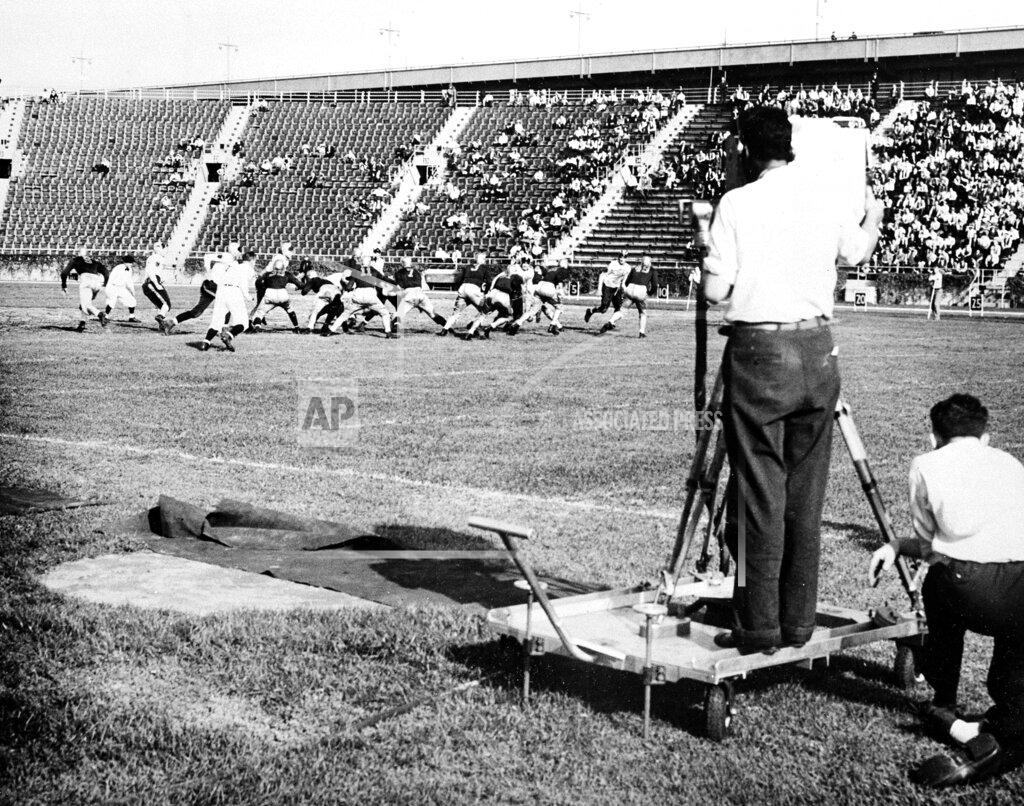
The Waynesburg vs. Fordham football game was broadcast on NBC, the first American football game ever televised.
Selected College Footall Scores today:
Alfred 7, Lehigh 0
Army 16, Furman 7
Beloit 6, Chicago 0
Brown 34, Rhode Island State 0
College of the Pacific 6, California 0
Dartmouth 41, St. Lawrence 9
Fordham 34, Waynesburg 7
Holy Cross 28, Manhattan 0
Illinois 0, Bradley Tech 0
Indiana 7, Nebraska 7
Iowa 41, South Dakota 0
Lafayette 33, Ursinus 0
Middlebury 7, Williams 0
Minnesota 62, Arizona 0
Miss State 19, Arkansas 0
Missouri 30, Colorado 0
Navy 31, William and Mary 6
N Carolina 36, Wake Forest 6
Notre Dame 3, Purdue 0
N.Y.U. 7, Colgate 6
Oklahoma 7, Southern Methodist 7
Oregon 7, So California 7
Oregon St 12, Stanford 0
Pittsburgh 27, Washington 6
Rutgers 13, Wesleyan 7
Texas 12, Florida 0
Texas A & M 14, Centenary 0
Tulane 7, Clemson 6
Vermont 7, Amherst 6
Wisconsin 14, Marquette 13
In a split with the St. Louis Browns, Chicago White Sox reliever Clint Brown sets a Major League record with his 61st relief appearance. Chicago takes the opener, 5–1, then drops the nitecap, 7–5. Roxie Lawson went the route for St. Louis in the first game and allowed only six hits, while his teammates pounded Lefty Lee Thornton for all their runs in the third inning. Gerald Walker’s eighth-inning home run with Eric McNair on base gave Chicago its margin of victory in the second game The White Sox retained a mathematical chance to tie for third place in the American League by defeating the Browns in the nightcap. If Cleveland should lose both games of a twin bill to the Tigers tomorrow, the last day of the season, Chicago could tie the Indians for third by winning its single game from the Browns.
The New York Yankees split with the Boston Red Sox, winning 5–4 before losing in 7 innings, 4–2. Steve Sundra (11–1) takes the loss for the Yankees after winning his first 11 decisions. He serves up a homer to Ted Williams (#31).
The Washington Senators beat the Philadelphia A’s, 9–5, behind rookie Joe Haynes pitching. He allows 11 hits, including native Philadelphian Al Brancato’s 1st Major League homer. A’s pinch hitter Elmer Valo walks, but at Connie Mack’s behest, official scorer Red Smith removes his name from the box score because Valo has not signed a Major League contract. (in 1972, Smith wrote a letter about this to Jim Charlton). Thus, Valo will later miss joining the four-decade list.
Hot Potato Hamlin wins his 20th, 5–1, in a 7 inning nitecap as the Brooklyn Dodgers sweep the Philadelphia Phillies. The Dodgers are led in the first game, a 14–5 smacking, by Gene Moore, who has a homer, 2 doubles and a single, and Cookie Lavagetto, with a single, double, triple and 2 walks. Mayor LaGuardia is in attendance to help push the Dodgers to 990,000 for the season. They will top a million tomorrow.
With not more than a few hours remaining of the season, the Chicago Cubs dropped into fourth place today when they lost the first game of a doubleheader with the St. Louis Cardinals, 7–5, and then won the second, 5–1. The Dodgers regained third place by beating the Phillies twice. The Cubs collapsed in the first game when Larry French was removed for a pinch hitter in the seventh. French’s successors could not stop the Cardinals, and in all they made thirteen hits off French, Earl Whitehill and Jack Russell. Bill Lee supplied the impetus for the Chicago triumph when he limited the Cardinals to four hits to win his nineteenth victory of the season. The Cubs made only six hits off Tom Sunkel and a rookie, Murray Dickson.
The Boston Bees downed the New York Giants, 3–2. Joe Callahan, Bees’ rookie, gained his first big league victory today. Making his first start, he held the Giants to eight hits to win.
The British cargo ship Hartbridge ran aground on Seal Island, Nova Scotia and was wrecked.
Labor and business groups call on the Mexican government to address food shortages.
The Japanese had advanced along a semi-circular front to within twenty miles of Changsha yesterday morning, according to late semi-official dispatches from Hunan received in Chungking tonight.
Ministry of Communications officials today deny reports that the French have again closed the Haiphong port to further Chinabound transit cargoes. Transit shipments to China were abruptly halted when the European War began but are now moving again.
Dow Jones Industrial Average: 152.54 (+2.38).
Born:
Len Cariou, Canadian actor (“Sweeney Todd”), in Winnipeg, Manitoba, Canada.
Jean-Marie Lehn, chemist and Nobel laureate, in Rosheim, France.
Naval Construction:
The Вое́нно-морско́й флот СССР (ВМФ) (Soviet Navy) “S” (Stalinec)-class (3rd group, Type IX-modified-2) submarine S-19 and S-20 are laid down by Sudomekh (Leningrad, U.S.S.R.) / Yard 196.
The U.S. Navy Folgal 58′ class motor torpedo boat USS PT-2 is launched by the Fogal Boat Yard (Miami, Florida, U.S.A.).
The Вое́нно-морско́й флот СССР (ВМФ) (Soviet Navy) Project 7U-class (Storozhevoy-class) destroyer Sposobny (Способный, “Capable”) is launched by 61 Kommunara (Nikolajev, U.S.S.R.) / Yard 200.
Halcyon-class minesweeper HMS Speedwell (J 87) is re-commissioned after a year in reserve.Her commanding officer is now Lieutenant Commander(retired) Frederick Richard Guy Maunsell, RN.
The Kriegsmarine (German Navy) auxiliary naval vessel Schiff 4 (later V 1801 Wandrahm and V 6114 Eismeer) is commissioned.
The Kriegsmarine (German Navy) vorpostenboot V 205 Hermann Bösch (later V 202 Hermann Bösch) is commissioned.
The Kriegsmarine (German Navy) vorpostenboot V 304 Breslau is commissioned.
The Kriegsmarine (German Navy) vorpostenboot V 305 Ostpreussen is commissioned.
The Royal Indian Navy auxiliary patrol vessel HMIS Bhadravati (FY 065) is commissioned. Her first commanding officer is Lieutenant Hugh Murray Clark, RIN.
The Royal Indian Navy auxiliary patrol vessel HMIS Ratnagiri (4.198) is commissioned. Her first commanding officer is Lieutenant (retired) Henry Morland, RIN.
 History Diaries