The South Vietnamese Government announced today that Lieutenant General Trần Thiện Khiêm, one of South Vietnam’s three ruling generals, is to leave the country tomorrow. His departure apparently will remove one source of friction around Premier Nguyễn Khánh. At the same time, the Premier announced other changes aimed at answering the demands for high‐level reform. General Khiêm is to tour several countries that are providing aid to South Vietnam in the fight against the Việt Cộng insurgents, the Government announcement said.
The withdrawal of the powerful general was one of the demands reported to have been put to Premier Khánh by Buddhist leaders and the young group of military commanders who saved the government during the abortive coup d’état of September 13. The announcement did not state which countries General Khiêm would visit or whether the United States would be among them. Nor was it said how long he would be away.
Premier Khánh, Major General Dương Văn Minh, and General Khiêm form the military triumvirate set up a month ago to make the transition between the presidential regime that had failed and some future form of government. Its legal status or functions were never clearly defined. Since the three generals were considered personally and politically incompatible, the triumvirate was less of an executive body than a convenient if ineffective symbol of government continuity.
The Premier accepted the resignations today of a Vice Premier in his caretaker government, Brigadier General Đỗ Mậu, as well as three other high aides. One of these, Colonel Phạm Ngọc Thảo, is also to leave tomorrow to take a position in the Vietnamese Embassy in Washington. The colonel is little known outside Vietnam although he was in the United States earlier this year. He was considered one of the shrewdest and most influential officials around Premier Khánh. Although he held the title of press officer to the Premier, he was in fact one of General Khanh’s closest policy advisers. Colonel Thảo, a former director of intelligence in the Indochinese war against the French was disliked and distrusted by other officers. But he has held important positions since the start of the American‐backed war effort against the Việt Cộng.
[Ed: Colonel Phạm Ngọc Thảo was a communist sleeper agent of the Việt Minh who infiltrated the Army of the Republic of Vietnam and also became a major provincial leader in South Vietnam. In 1962, he was made overseer of Ngô Đình Nhu’s Strategic Hamlet Program in South Vietnam and deliberately forced it forward at an unsustainable speed, causing the production of poorly equipped and poorly defended villages and the growth of rural resentment toward the regime of President Ngô Đình Diệm, Nhu’s elder brother. In light of the failed land reform efforts in North Vietnam, the Hanoi government welcomed Thao’s efforts to undermine Diệm.
Through intrigue, Thảo also helped destabilise and ultimately unseat two South Vietnamese regimes—Diem’s and the military junta of Khánh. As the Diệm regime began to unravel in 1963, Thảo was one of the officers planning a coup. His plot was ultimately integrated into the successful plot and his activities promoted infighting which weakened the government and distracted the military from fighting the Viet Cong insurgency. Throughout 1964 and 1965, as South Vietnam was struggling to establish a stable state after the ouster of Diệm, Thảo was involved in several intrigues and coup plots which diverted the government from implementing its programs. In 1965, he went into hiding after a failed attempt to seize power from Khánh and was sentenced to death in absentia. Although this coup also failed, the subsequent chaos forced Khánh’s junta to collapse. Thảo died the same year he was forced into hiding; it is believed that he was murdered after a bounty was placed on his head.
Thảo’s real identity as a sleeper agent was kept secret after the end of Vietnam War. One of the reasons was to protect Thảo’s family, which at that time had members living in the United States. His secret identity was eventually revealed and the unified Socialist Republic of Vietnam posthumously awarded him the title Hero of the People’s Armed Forces in 1995.]
“There will be no coup,” General Khanh said today when asked if he believed a segment of the military would attempt to unseat him before he could turn over the country to civilians. The Premier has said he and fellew members of the ruling triumvirate will step down October 27.
Prince Souvanna Phouma told the National Assembly today that his Government would recall its ambassador to North Vietnam. The Prince, Laos’s Premier, said that if Ambassador Thao Pheng did not heed the order, “we may dismiss him.” The Premier said later the move would not represent a break in diplomatic relations with the Communist government in Hanoi. Thao Pheng became ambassador to North Vietnam in February, 1963. He is considered in Vientiane to have strong leftist sympathies.
President Johnson plans to go to Europe, if elected, to begin an intensive personal campaign to break down East‐West antagonisms and ease international tensions. The President was said today to be hoping that the election would make clear that the United States wished to follow the diplomatic policies of his Administration, not those of Senator Barry Goldwater, the Republican candidate. Mr. Johnson assumes that this will be the case and thus hopes to take overseas a mandate to lay the groundwork for talks with Premier Khrushchev. The President would also talk with Western leaders. He wants to see President de Gaulle, not only to discuss international tensions but also to introduce a little warmth into the proper but chilly relations between the two countries. Mr. Johnson also envisions conversations with Chancellor Ludwig Erhard of West Germany and with whoever is Prime Minister of Britain after the October 15 election, either the incumbent, Sir Alec DouglasHome, or Harold Wilson, the Labor leader.
The President is considering beginning his post‐election mission in France, where two opportunities present themselves. The first is at a meeting of the quasi‐official group of members of Parliaments of the North Atlantic Treaty Organization countries in Paris in November. The second is at the meeting of the NATO Council itself in December. Thus far it was learned, no detailed plans have been made for the President’s diplomatic offensive for greater unity among and with the Europeans. Nor have any soundings been taken with the leaders of the countries involved. While the first moves may be made as early as November, it is known to be the President’s view that a Johnson‐Khrushchev meeting will not take place before 1965.
[Ed: Khruschev, of course, will not be around in 1965. He will be sent to the sticks this very month, as the rest of the conservative Soviet leadership has grown wary of his adventurism and erratic style. Leonid Brezhnev’s time is at hand.]
Armed Turkish Cypriot fighters built and manned new defensive positions and roadblocks today along the Nicosia‐Kyrenia road. Vehicles, including those of the United Nations, were stopped at the roadblocks and were searched. A squad of uniformed Turkish Cypriots engaged in drill along the road. The marked increase in Turkish Cypriot activity along the road came as the United Nations here sought a way out of the impasse on the agreement between Turkey and the international organization on opening the key road. Under that agreement, United Nations troops would patrol the road.
The show of force along the road by the Turkish Cypriots followed a statement last night by Archbishop Makarios, President of Cyprus. The President said he would not permit Turkey to rotate troops of the Turkish Army contingent hsre unless the road was opened in accordance with the agreement announced last week by U Thant, Secretary General of the United Nations. Archbishop Makarios reiterated his position tonight. He said that any agreement under which armed Turkish Cypriots would be permitted to use the road would not be acceptable to him. The agreement as announced by Mr. Thant provided in effect for the Turkish troops rotation in exchange for placing the Kyrenia road under exclusive United Nations command. That would open it to all civilian traffic and deny it to armed personnel other than the international peace force.
Feridun C. Erkin, the Turkish Foreign Minister, said today that if the United Nations General Assembly adopted a resolution giving Cyprus the right of self‐determination, the move would lead to war between Turkey and Greece. He said that if the Greek Cypriot majority chose enosis, or union with Greece, that would constitute a clear breach of the agreements that made the island independent.
The Secretary General, U Thant, has appealed to Turkey to show “no undue haste” in rotating troops of the 650‐man contingent she maintains in Cyprus.
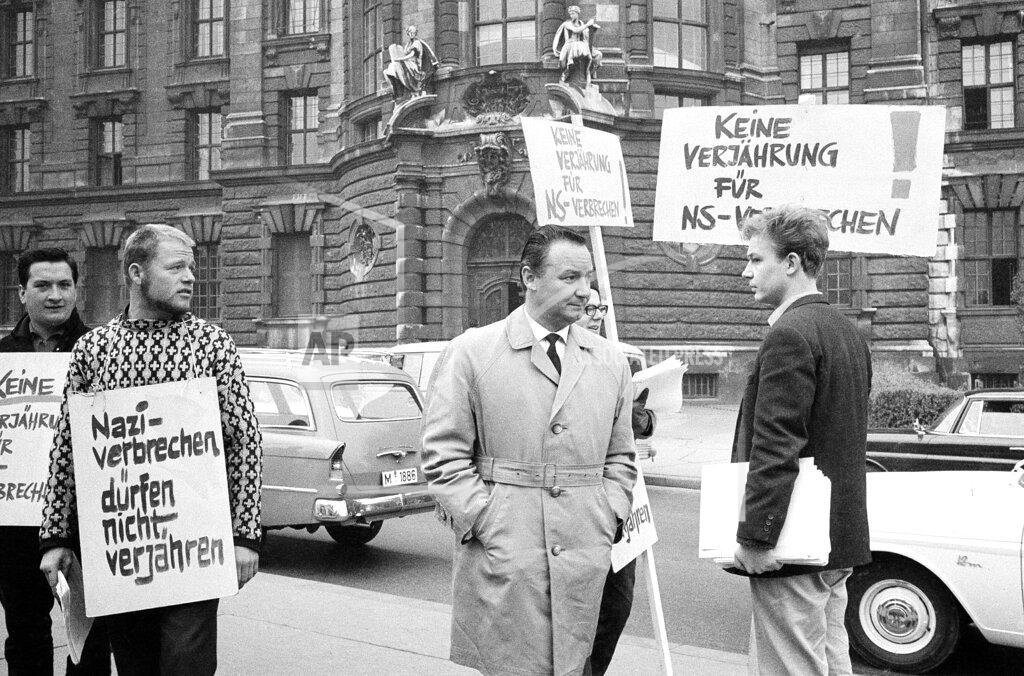
Karl Frederick Wolff, the highest‐ranking Nazi officer yet to be tried by a West German court, was convicted today on a charge that he had had a role in the slaughter of Jews. He was sentenced to 15 years at hard labor. Wolff, a former SS, or Elite Guard, major general and the wartime liaison man between Heinrich Himmler and Hitler, was found by a Munich court to have contributed to the murder of 300,000 Jews during World War II. Originally accused of complicity in the slayings, Wolff was found guilty on a lesser charge of having helped to provide railroad cars that carried the 300,000 Jews to Nazi extermination camps.
The Munich prosecutor had asked for life imprisonment, the severest penalty possible under West German law. Tight security measures were taken at the court today following an anonynous telephone call from someone speaking broken German who said that an attempt would be made to free Wolff if he were convicted. Extra police were detailed to guard the white‐haired ex‐Nazi and a new route was taken to and from the courthouse.
Throughout the trial, which began July 13, the 64‐year‐old defendant insisted that he was ignorant of the Nazi program to exterminate the Jews. However, the president of the Munich court said yesterday that Wolff, who was on intimate terms with both Hitler and Himmler, “was well aware of their murder plans.” Wolff had been kept under arest by the Allied authorities for about four years after World War H. However, because of his role in helping to arrange the surrender of German troops in northern Italy in 1945, he escaped prosecution at the Nuremberg war crimes trials of the top Nazi leaders.
East Germany has taken several militant steps that are held to be a request for more than §100 million in economic aid from West Germany. The East German regime, which regards its aid requests as the Western payoff in a tacit East‐West bargain, has threatened to interfere with highway traffic between West Germany and West Berlin if they are not fulfilled. The East German demands were made Friday at the interzonal trade office in West Berlin. The trade office, manned by East and West German officials, is the agency through which trade and economic relations between the rival states are regulated. The East German list was accompanied by a series of deadlines for fulfillment of the demands. Informed officials said that one of the deadlines had already expired. A Government spokesman said today that West Germany would not negotiate with the East Germans under duress and that this position had been acknowledged.
A 24‐year‐old East German and his teenage girlfriend escaped to West Germany at dawn today under heavy fire from Communist border guards near Northeim.
The Fishery Limits Act 1964 went into effect, as the United Kingdom followed the trend of most nations in the north Atlantic Ocean, and extended the limits of its exclusive zone for fishing rights from three nautical miles to 12 nmi (13.8 miles or 22.2 km) from its shores. The 12-nmi limit followed a “six plus six” pattern, with the first six nmi being exclusively for British fishing vessels, and the second six to include vessels for nations approved by the UK government. In 1976, Britain and the other European Economic Community members would extend their limits to 200 nautical miles (230 mi or 370 km).
A rain‐swollen reservoir burst, sending a 10‐foot‐high wall of water surging through a town in southeastern India and drowning more than 1,000 people, unofficial reports said tonight. The disaster, the worst of its kind in India, struck Macherla, a town of 25,000 in Andhra state, yesterday as floods caused by monsoon rains spread death and misery through seven Indian states. Thousands of people were reported perched on housetops and clinging to trees in Macherla. Helpless patients were carried away by the flood when the torrent hit a hospital. There were heavy casualties in a crowded bus station. The disaster, attributed to a three‐day deluge, came a few days before the first anniversary of a similar tragedy in Italy. The Vaiont Reservoir in northern Italy was hit by an avalanche on October 9, 1963, and nearly 2,000 died in a flood wave 150 feet high.
David Jack, director of CARE in India, announced today in New Delhi that cholera was the cause of the deaths of 38 children last week in the village of Maddikera in Andhra State. He said the government’s health report had attributed the deaths to the disease and had shown that the children had not died of food poisoning. The children died within 24 hours after they had eaten free meals at their school prepared from CARE supplies. School feeding had been resumed after a long shutdown because of a local cholera epidemic. Mr. Jack said that CARE provided food to seven million Indian children daily and that the food had never caused a single illness or death.
The entire Social Security bill, including health insurance for the aged, was all but dead tonight, with Senate and House conferees unable to reconcile their differences. A decision to shelve both programs — health insurance and increases in cash benefits — could come at a meeting of conferees tomorrow. However, if Congress agrees to recess until after the November 3 election, a possibility raised tonight by an Administration leader, the decision to put off the Social Security bill might not be made formally until after the recess. Some members of Congress, with close races on their hands, have said it would be difficult to justify to their elderly constituents a failure by Congress to provide any aid, either larger cash benefits or health insurance.
“We’re at complete loggerheads,” Senator George A. Smathers, Democrat of Florida, one of the conferees, said late today. “We’re standing firm and the House conferees won’t budge.” He indicated that the likely course would be to give up trying to get any kind of Social Security bill this year, with the understanding that a new attempt would be made next year. This would represent President Johnson’s biggest legislative defeat since he took office last November.
Efforts were being made tonight to reach compromises that might clear the way for action this year on some form of health insurance for the aged. But several legislative leaders said they believed that the entire Social Security question would be put off until next year. With the health insurance issue out of the way, one of the major stumbling blocks to adjournment would be removed.
However, other legislation is stalled because of heavy absenteeism among campaigning lawmakers. For this reason Administration leaders are seriously considering a plan to recess Congress this weekend until after the November 3 election. This was disclosed on the Senate floor tonight by Mike Mansfield of Montana, the majority leader. There has been growing dissatisfaction among both Democrats and Republicans over being hurriedly called back from campaign trips for scheduled votes that have not materialized. Democratio leaders in the House are now hard‐pressed to round up enough supporters to pass the Administration’s nearly billion‐dollar program of economic aid to Appalachia. The bill has passed the Senate and is pending in the House. The House has done little this week but mark time as Democratic leaders try to decide if they have the votes for the Appalachia measure.
A longshoremen’s strike that will tie up ports from Maine to Texas spread along the Atlantic and Gulf Coasts last night after negotiations for a new contract collapsed. The White House immediately named a Federal fact‐finding board and set in motion the processes leading to a Taft-Hartley Act injunction against the International Longshoremen’s Association. This is expected to suspend the walkout in a matter of days. A meeting of the board has been set for 10 AM today at the offices of the Federal Mediation and Conciliation Service at 346 Broadway. There appeared to be some possibility that an injunction might be sought in a matter of hours. President Johnson’s action to spare the nation broad economic losses had been expected by negotiators and a special Federal mediation panel headed by James J. Reynolds, Assistant Secretary of Labor. The issues in the strike were money, security and wage guarantees for 60,000 dock workers, 28,000 of whom are in New York, and efforts to wipe out what the companies call featherbedding.
President Johnson indicated today that he did not share the concern expressed about his safety and would continue to mix with crowds on his travels. That report was given to newsmen by Secretary of the Treasury Douglas Dillon. Air. Dillon and the three other members of the President’s committee on the Warren report had just met with the President for 45 minutes. On his New England trip Monday, Mr. Johnson shook so many hands that he ended the long day with his own hand scratched and bruised. He stood up alone in his convertible automobile for long moments to exchange remarks with the crowds. Concern over his safety in such crowds was immediately expressed. Just the evening before, the Presidential commission headed by Chief Justice Earl Warren, which had studied President Kennedy’s assassination, called for stricter safeguards on Presidential trips.
Senator Hubert H. Humphrey derided Senator Barry Goldwater today for saying that President Johnson was “soft on Communism.” Addressing a crowd of 5,000 persons in John F. Kennedy Plaza (formerly Cadillac Square) in Detroit, the Democratic Vice‐Presidential nominee said that Mr. Goldwater, the Republican Presidential nominee, had a bad day yesterday in Cincinnati. First, he said, when Mr. Goldwater turned up there, the Cincinnati Reds lost. Then, Mr. Humphrey continued, “he said President Johnson was ‘soft on Communism.’ ”
“Well, shades of Nixon,” he said, a grin spreading over his face. “That is the last, dying gasp of a desperate politician. This is what a man says when he runs out of invective. He called him [the President] ‘a fake’ and ‘a phony,’ and now he says he’s ‘soft on Communism.’ Oh, my goodness, I must say I didn’t think the campaign was that close to being over.”
Richard M. Nixon began a month‐long nationwide campaign for Senator Barry Goldwater tonight at a Long Island Republican rally that loudly and emphatically booed the name of New York Senator Kenneth B. Keating. Senator Keating, the Republican candidate for re‐election, who will campaign tomorrow in Nassau County, was booed by more than 2,000 highly partisan Goldwater Republicans at the Garden City Hotel. They were incensed over his refusal to support the Republican Presidential nominee. But the former Vice President appealed to them to give Senator Keating, as well as Senator Goldwater, their wholehearted support. Mr. Nixon warned that “180 years of tradition” was at stake. He said that a victory for the Democratic senational candidate, Robert F. Kennedy, would open the doors of the Senate to anyone who “just wants a job.”
In Philadelphia, Mississippi, a Neshoba County grand jury failed today to return indictments in the murder of three civil rights workers. It said that federal agents had refused to disclose the results of their investigations. At the same time, the 18‐man jury exonerated local law enforcement authorities, saying they had done a good job a main aining lary and order “in the face of drastic provocations by outside agitators.” The panel of white men concluded that race relations were much worse in New York City than here. Two of the three murdered young men, who had come here to enlist Blacks in the civil rights movement, were New York residents.
After the report was read by District Attorney W. H. Johnson Jr., Circuit Judge O. H. Barnett told the jurors they had “exhibited the courage of men of the revolutionary days of this country.” Judge Barnett, a first cousin of former Governor Ross R. Barnett, said Acting United States Attorney General Nicholas deB. Katzenbach was to blame for the jury’s failure to solve the case. Mr. Katzenbach had ordered the Federal Bureau of Investigation not to disclose its findings to the local jury. He said to do so would interfere with a Federal grand jury investigation of the case now under way in Biloxi. However, Howard E. Shapiro, an attorney for the Justice Department, appeared before the jury here Monday and promised chat a full disclosure would be made to the proper state authorities when the investigation was complete.
Governor Paul B. Johnson Jr. today ordered a state investigation into racial bombings and violence in the McComb area. He promised that law and order would prevail in Mississippi. Governor Johnson said Colonel T. E. Birdsong, chief of the Highway Patrol, had set up an information center at McComb at his request “to coordinate and evaluate evidence to assign leads and to receive information from the general public.” He told newsmen officers had “some excellent leads” but he was unable to say whether any arrests were expected immediately. He said the state had “special people” assigned to the investigation and that information indicated some bombings “were plants set by COFO [Council of Federated Organizations] people.”
[Ed: If you know what the Feds actually have in evidence, you can plan your local cover-up and defense that much more effectively. Am I being cynical? Well, yes, I am.]
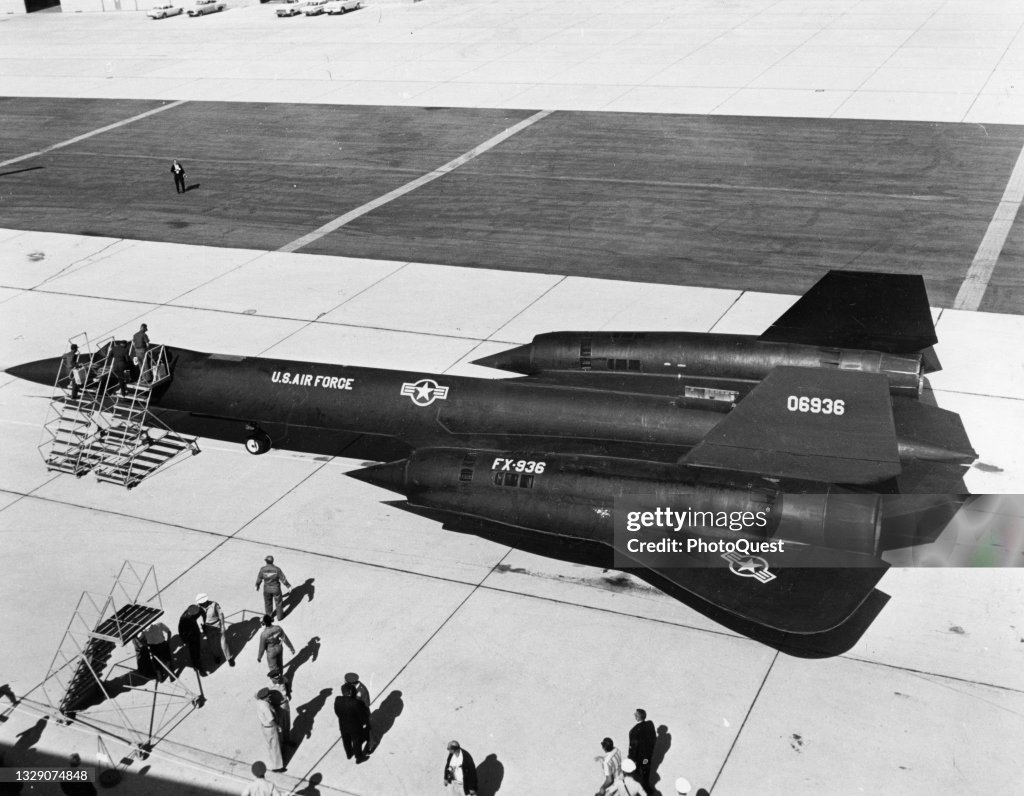
The U.S. Air Force gave its first public demonstration of “the world’s fastest military aircraft”, the Lockheed YF-12A, at a press conference at Edwards Air Force Base in California. The fastest and highest‐flying jet known to exist was publicly displayed for the first time today, in the air and on the ground. The plane was the Lockheed A‐11, announced by President Johnson in February and since designated the YF‐12A by the Air Force. The President said it had been tested at speeds of more than 2,000 miles an hour and at altitudes of more than 70,000 feet. Unofficial reports put the top speed at almost 2,500 miles an hour and the top altitude at more than 100,000 feet.
The government also unveiled an equally advanced air‐to‐air interceptor missile to be launched from the YF‐12A. Air Force spokesmen said the plane‐missile combination represented a “tremendous increase” in its ability to knock down attacking bombers. Today’s demonstrations appeared intended, among other things, to lessen skepticism that has developed in aviation circles over the plane’s talents as an interceptor. Accusations that the Administration has neglected manned aircraft and tried to fool the public about its aircraft program have been a recurrent theme of Senator Barry Goldwater’s campaign for President.
Fourteen men and three women arrested on disorderly conduct charges during a protest rally at Duffy Square in New York on August 8 went on trial in Criminal Court. They had been arrested when they refused to disband a rally in protest of United States action in South Vietnam. At the time, Police Commissioner Michael J. Murphy had banned midtown demonstrations following riots in Harlem and the Bedford‐Stuyvesant area of Brooklyn. Two of the defendants — Levi Laub, 33 years old, of 217 Haven Avenue and Vincent Copeland, 49, of 180 Seventh Avenue — were also charged with violating a city administrative code barring the use of a megaphone in public without a license.
The first major demonstration by students and faculty opposed to the U.S. role in the war in Vietnam takes place at the University of California at Berkeley. But polls of Americans show a majority support the President’s conduct.
In his first Major League at bat, pinch hitter Bill Roman debuts with a homer, the only one of his brief Major League career. The 25-year-old Tiger rookie first baseman will accumulate only 37 career plate appearances during a brief two-year stint in Detroit. Even so, the Tigers lose to New York 7–6 as a Mickey Mantle leadoff home run in the second off Lolich ignites a 5-run rally. New York takes the nightcap 11–8 for a sweep. In both games, Yogi finally had to call on Pedro Ramos, who now has seven saves and a victory in his 11 games as a Yankee. Even Pedro was less brilliant than in the past, but he got a double play when he needed it in the first game, and a line‐out to center to end the second game.
The Washington Senators pounded out 12 hits and took advantage of Baltimore errors to hand the Orioles a 6–3 defeat in the second game of a doubleheader tonight. The Orioles won the opener, 8–4, behind the hurling of Wally Bunker, a rookie. Baltimore’s loss, coupled with the New York Yankees sweep of a doubleheader over the Detroit Tigers, virtually ended the Orioles’ hopes of winning the American League pennant. The Orioles dropped four games behind the Yankees and can do no better than force a tie in their remaining games. Boog Powell tied the second game at 3–3 in the third when he clouted his 38th homer off Chuck Osteen. Willie Kirkland gave the Senators a 3‐1 advantage with his eighth home run off Milt Pappas in the top of the inning. Osteen scattered 10 hits through 6⅓ innings in picking up his 15th victory against 13 defeats. He needed help from Steve Ridzik over the final 2⅔ innings. Two home runs by Jerry Adair, one a two‐run blast, and a two‐run homer by Jackie Brandt carried Baltimore to victory in the opener. Bunker, who gave 10 hits and struck out eight, gained his 19th triumph in 24 decisions.
In a rarity at Fenway, the Cleveland Indians shut out the Boston Red Sox in a doubleheader winning 5–0 and 3–0. Rookie Luis Tiant and Sam McDowell go the distance in applying the whitewash. The triumphs moved the Indians into a sixth‐place tie with Minnesota, and extended the Red Sox’s scoreless streak through 27 innings. Tiant checked the Red Sox on four hits in the opener, as Leon Wagner hit a two‐run homer and Max Alvis a three‐run drive to account for all the runs. Fred Whitfield’s 10th homer of the season, in the sixth inning of the second game, supplied McDowell with the winning margin. The Cleveland pitcher later drove in an insurance run.
Jimmie Hall and Don Mincher hit home runs to support the five‐hit pitching of Jim “Mudcat” Grant today as the Minnesota Twins toppled the Kansas City Athletics, 6–1. Hall hit his 25th homer of the season in the third inning off the A’s starter, Diego Segui. Mincher hit his 23rd in the eighth off John Wyatt, who made his 79th relief appearance, one more than Dick Radatz of Boston. Grant beat the A’s for the third time this season without a loss and scored a run in the seventh on Larry Stahl’s fourbase error in centerfield.
The Phladelphia Phillies lose their 10th straight game as Curt Simmons of the St. Louis Cardinals beats Jim Bunning, 8–5. The Cardinals, who trailed the Phillies by 10 games one month ago, opened with a roar tonight to give Simmons eight runs in the first four innings while the desperate Phillies committed four errors and made a wild pitch. Simmons, meanwhile, pitched a no‐hitter for 6⅔ innings against the Phils — his teammates for 13 seasons — and won his 16th game against them with only two defeats since they released him four years ago. The Phillies now trail by 2½ games with just two to play, but have a glimmer of hope since the Cardinals have three games left against the 10th-place Mets.
A total of 36 strikeouts, 19 by Pittsburgh batters, ties the National League record for whiffs in the Pirates’ 1–0 squeaker against the Cincinnati Reds in 16 innings. Jerry Mays’s squeeze bunt scores the lone run. The loss drops the Reds out of first place with three games left. Three Cincinnati pitchers held the Pirates hitless from the eighth inning and retired 17 consecutive batters. But Donn Clendenon led off the 16th with a double off the scoreboard for the first extra-base hit of the game, which was witnessed by a meager crowd of 8,188. Bill Mazeroski sacrificed Clendenon to third, from where he raced home as May bunted along the third‐base line. May beat out the bunt for a single. The victim of the run was John Tsitouris, the Reds’ third pitcher.
After the game Danny Murtagh resigned as manager of the Pirates “because of health.” Murtagh said his resignation from the job he has held since 1957 will become effective with the end of the 1964 baseball season.
John Purdin, a Los Angeles Dodger rookie, shut out Chicago, 2–0, tonight on two hits in his first major league start. He beat Larry Jackson of the Cubs in a brilliant pitching duel. Purdin, 22 years old, yielded two singles to the Cubs’ catcher, Dick Bertell. He struck out two men and walked one, and no Cub runner reached second base. Jackson limited the Dodgers to five hits.
The San Francisco Giants pushed across a run in the bottom of the 11th inning to defeat the Houston Colts 2–1, today. Consecutive errors with two out enabled the Giants to score the winning run. Tom Haller walked with two out and moved to second on Orlando Cepeda’s single. Then Joe Morgan booted Duke Snider’s bouncer and Eddie Kasko kicked Jim Davenport’s grounder allowing Haller to score. Dick Farrell and Gaylord Perry were locked in a scoreless duel through the first five innings, then, in the sixth, the Colts got to Perry for a run on a double by Sonny Jackson and single by Al Spangler. With two away in the Giant sixth, Haller hit his 14th homer to tie the game, 1–1.
It took the Mets two months to lose their 107th game. They started tonight’s game with the Braves when it was still September, but it was the early hours of October when they finally succumbed, 6–5, on Dennie Menke’s home run in the 12th inning. The game consumed 4 hours 5 minutes. The defeat was the seventh straight for the Mets. Willard Hunter served the home run that decided the issue and was charged with his third defeat. The home run was the 20th of the season for Menke and enabled the Braves to tie a National League record shared by four other clubs. Milwaukee now has five men in its line‐up who have hit 20 or more homers.
Dow Jones Industrial Average: 875.37 (-0.37).
Born:
Stephen N. Frick, American naval commander and astronaut (STS-110-Atlantis, 2002; STS-122-Atlantis, 2008), in Pittsburgh, Pennsylvania.
Monica Bellucci, Italian actress and model (“Dracula”), in Città di Castello, Italy.
Trey Anastasio, American guitarist, vocalist and songwriter for the band Phish; as Ernest Anastasio III in Fort Worth, Texas.
Robby Takac, American rock Bassist (Goo Goo Dolls – “Iris”), in Buffalo, New York.
Mike McKay, Australian rower (Olympics gold medal, coxless four 1992, 96; silver medal, eights 2000, bronze, 2004), in Melbourne, Victoria, Australia.
Scott Lusader, MLB outfielder (Detroit Tigers, New York Yankees), in Chicago, Illinois.
Doug Jennings, MLB pinch hitter, outfielder, and first baseman (Oakland A’s, Chicago Cubs), in Atlanta, Georgia.
Keith Williams, NFL wide receiver, running back, and kick returner (Atlanta Falcons), in St. Louis, Missouri.
 History Diaries