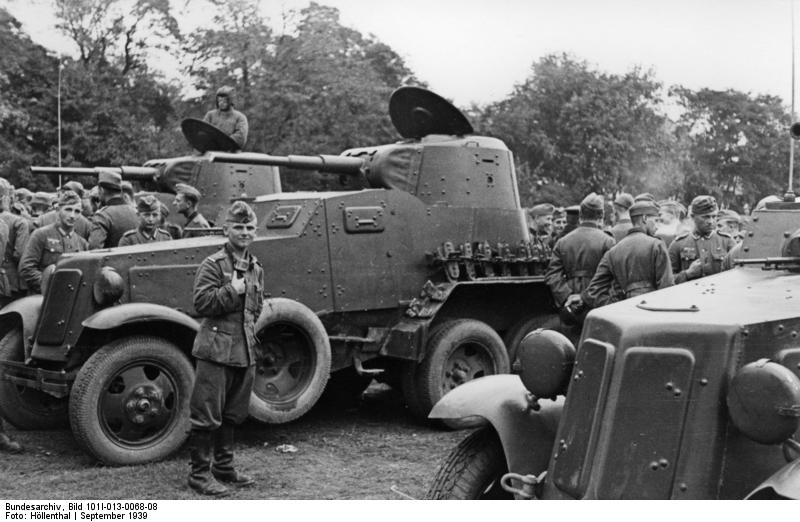
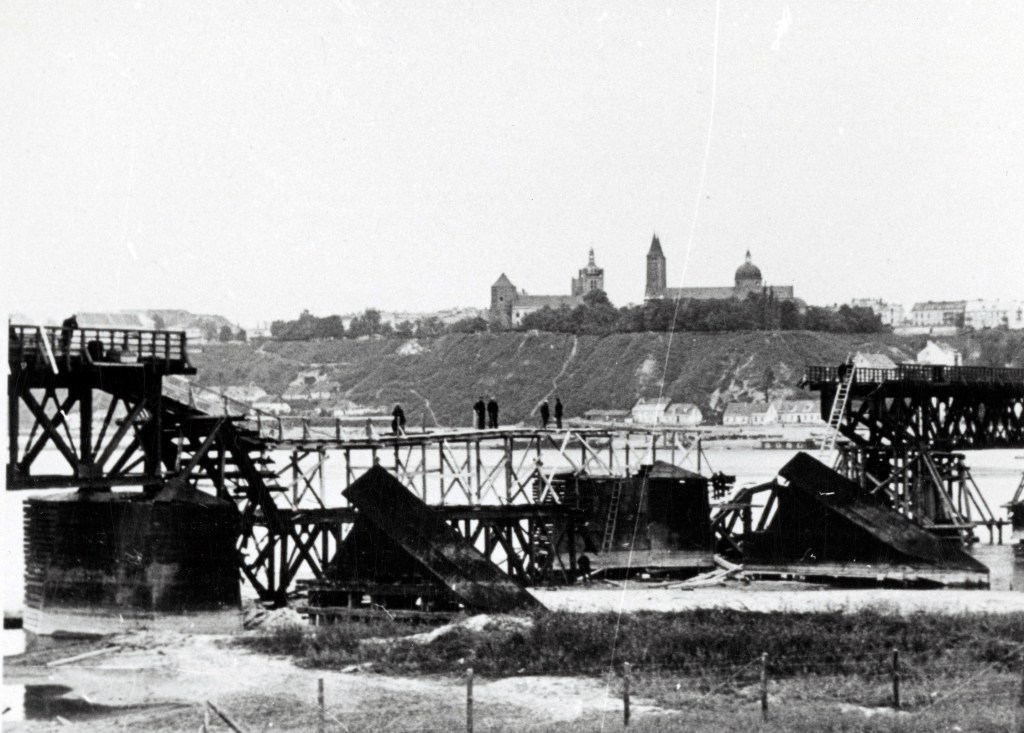
The fortress of Modlin surrenders to the Germans after an 18-day siege. Modlin was one of the last centers of Polish resistance. With the formal surrender of Poland, including the last 35,000 besieged troops in Modlin, the Germany and Soviet Union finished dividing up Poland. From 13 to 29 September 1939, Modlin served as a defensive citadel for Polish forces under the command of General Wiktor Thommée against assaulting German units. The fighting was closely linked with the strategic situation of the Battle of Warsaw. The Polish forces defending the fortress included the armoured train Śmierć (“death”) and the Modlin anti-aircraft battery, which was credited with shooting down more Luftwaffe planes than any other in the entire September campaign. Fortress Modlin capitulated on this day, one of the last to lay down its arms in the campaign, and surrendered 24,000 troops. Several days earlier, Rochus Misch had attempted to negotiate the surrender of the fortress despite being wounded, an act for which he was awarded the Iron Cross.
The Battles of Parczew, Jabłoń and Milanów between the Polish Army and the Red Army began. They took place on September 29–30 of 1939 at the beginning of the Second World War. They resulted in a Polish victory, as the Polish units successfully broke through the Soviet forces near the town of Parczew and progressed towards the Świętokrzyskie Mountains. The Polesie Group, about 18,000 strong, was followed by the Soviets, which planned to neutralize it before securing the Polesie region. The group encountered the Soviets on September 28 near the village of Jabłoń, while advancing south towards Parczew. A number of smaller engagements took place over the next two days. The Soviet advance was interrupted by a successful Polish defense, and eventually a Polish counterattack pushed the Soviets back. As the Polish units advanced towards Milanów, they defeated another Soviet attack, inflicting significant casualties on the enemy and taking a number of prisoners.
Soviets took over 100 casualties near Milanów. Their casualties at Jabłoń were few dozen, with a tank captured and another few dozen POWs switching sides to join the Polish army. After the Soviet forces were defeated, they did not engage the Polesie Group again; instead they would pass the initiative in the region to the German forces, which would engage the Poles instead in what would become the last major battle of the Polish campaign.
Estonia signed an agreement with the Soviet Union allowing the Soviets to establish naval and air bases within Estonia’s borders.
Adolf Hitler issues a repatriation order for the 86,000 ethnic Germans living in Estonia and Latvia, knowing that the Soviet Union will soon demand the Baltic States.
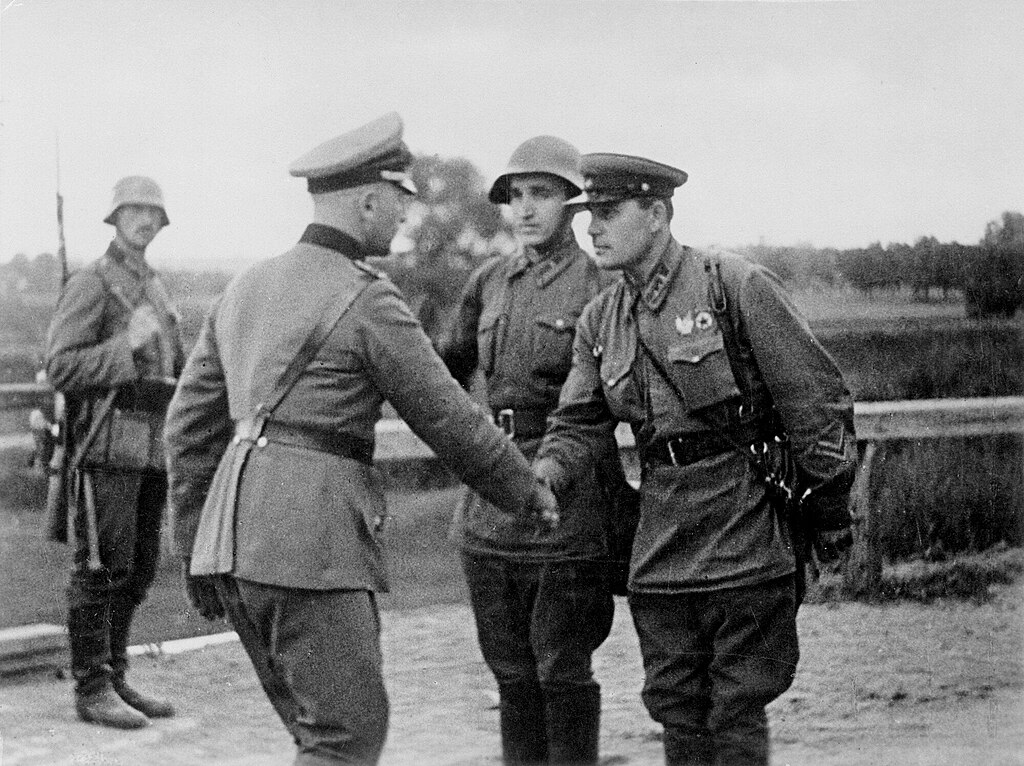
Germany and the USSR have signed a boundary and friendship treaty. By its terms Poland is partitioned, giving Germany control over the area generally west of the Bug River. Germany receives nearly 73,000 square miles of Polish territory, the USSR, 78,000 square miles. While Soviet Union gets slightly more land, the Germans now control the majority of the population (some 22,000,000) and fifty percent of all Polish industry as well as substantial mining centers. All of Lithuania is transferred to the Soviet sphere of influence. An economic agreement is also signed which includes a Soviet promise to provide Germany with the entire oil output of the Dohowicz fields.
The Moscow radio broadcast at 6:40 AM today made an official announcement that Russia and Germany had signed an agreement in Moscow fixing the German-Russian frontier and revealed that no Polish State would be formed. The broadcast said that the Russian Premier and Foreign Commissar, Vyacheslav M. Molotov, and German Foreign Minister Joachim von Ribbentrop issued a joint statement that, after the liquidation of Poland, there was no necessity for a continuation of hostilities. The joint statement added that if Britain and France, however, continued hostilities, then the responsibility rested with them, and Germany and Russia then would consult each other about “necessary steps.” The joint statement also said that the Soviet Government agreed to supply Germany with all necessary raw materials in exchange for German goods, which would be delivered over a longer period.
The Foreign Office in Berlin today announced the signing in Moscow during the night of a “frontier and friendship” treaty with Russia, liquidating Poland as a nation and creating a “secure foundation for permanent European peace.” The German Reich Government and the Government of the USSR, by signing the treaty, finally regulated the question arising from the collapse of the Polish State and thus created a secure foundation for permanent European peace,” the announcement said. They thus express agreement that it would be in the true interests of all peoples to put an end to the state of war between the Reich and Britain and France. The two governments will, therefore, make mutual efforts if necessary with other friendly powers to attain this end as soon as possible. Should, however, the two governments’ efforts be unsuccessful, the fact would thus be established that France and Britain were responsible for continuation of the war, in which event the German and USSR governments would consult regarding necessary measures.”
The German high command today reports that the withdrawal of German forces in Poland to the demarcation line agreed upon with Russia continued according to plan, but that the formal occupation of Warsaw, scheduled for today, will not take place before Monday.
In the House of Commons, Neville Chamberlain says that Britain and France went to war to stop Nazi aggression and nothing has changed that position. Chamberlain is believed to be referring to recent private contacts between German and British representatives that have suggested formal peace negotiations may begin.
Great Britain cannot be frightened into peace with Germany and will not be jockeyed into war with Russia. That is the consensus of informed opinion in the blacked-out capital of London on the first anniversary of CzechoSlovakia’s sacrifice to the cause of peace.
The National Register began operating in the United Kingdom. The National Register was a result of the National Registration Act was passed by Parliament on September 5, 1939 and was a system of identity cards and a requirement that they must be produced on demand or presented to a police station within 48 hours.
Britain launches a ration roll call; 11 million homes will be visited to determine the food needs of the nation. A national census is taken to obtain information on rationing and mobilization. A roll-call of the United Kingdom’s eleven million homes was started tonight in an effort to determine how the food rationing will have to work and to get an estimate of the industrial and national service qualifications of every individual in this country.
The British Government’s evacuation scheme will be extended to take care of children between 2 and 5 years old whose mothers do not want to stay with them in the country.
France offers amnesty to deserters and evaders who register now.
Large-scale recruiting for the Polish Army in France started today. Thousands of Poles, ranging in ages from 17 to 45, registered in Paris and all over the country and the formation of Polish units will start soon in a special camp.
Pope Pius XII is to address Poles today; he hopes for an end to Nazi occupation.
The final agreements on mutual assistance between Turkey on the one hand and Britain and France on the other have now been initialed and await signature on the return of Foreign Minister Shukru Saracoglu from Moscow.
RAF Heligoland Bight patrol attacks two German destroyers. Second formation of five shot down in battle with German fighters. Two German fighters destroyed. Five out of 11 Hampdens lost. No damage to the destroyers.
In the North Sea, U-10 attacks a group of four British destroyers, but the single torpedo fired misses its target.
The Royal Navy training ship HMS Caledonia caught fire and sank at Rosyth, Fife. Scrapped in situ starting in October 1942.
The neutral Norwegian steam merchant Takstaas was stopped by gunfire and after the crew abandoned ship was torpedoed and damaged beyond repair by the U-7, commanded by Werner Heidel, off the coast of Norway near Bergen (60°15′N 4°14′E). Of the ship’s complement, all survived and their lifeboats were taken in tow by the Norwegian torpedo boat Storm. The 1,830-ton Takstaas was carrying lumber and was bound for London, England.
The British Thames barge Azariah struck a mine and sank off the coast of Essex.
The Norwegian cargo ship Solaas (1,368 GRT) struck a mine and sank in the North Sea south of Kristiansand. Her crew were rescued by the Danish ship England.
The U.S. freighter Executive, detained at Casablanca, French Morocco since September 27 was released by French authorities, provided that she proceeded to Bizerte, Tunisia.
British warships operating on the Northern Patrol continued to stop neutral merchantman; between this date and October 12, 63 vessels were stopped, of which 20 were detained at Kirkwall, England for the inspection of their cargoes.
The War at Sea, Friday, 29 September (naval-history.net)
Western Atlantic – heavy cruiser HMS York arrived at Halifax after convoy HX.2 escort duty.
British east coast – anti-aircraft cruiser HMS Calcutta departed Scapa Flow on escort duty and arrived at Grimsby at 2337/29th.
Training ship HMS Caledonia (ex-White Star liner Majestic, 56,551grt) was gutted by fire and sank at Rosyth. There were no casualties. The hulk was broken up in situ beginning in October 1942.
Destroyers HMS Jervis, HMS Jupiter, and HMS Jaguar attacked a submarine contact at 1158 in the Firth of Forth, three miles at 345° from Fidra. At 1544, Jupiter and Jervis attacked a contact five miles 55°from Inchkeith Light. This search continued on the 30th.
Anti-aircraft cruiser HMS Cairo departed Grimsby on escort duties and arrived back on 2 October.
Norwegian waters – U-7 torpedoed Norwegian steamer Takstaas (1830grt) in 60 15N, 04 41E, 16 miles off Bergen and a Norwegian torpedo boat rescued the crew. The abandoned Takstaas remained afloat, taken in tow by Norwegian salvage tug Herkules (124grt), but broke in half. The bow sank; the aft half was taken into port and later scrapped.
UK-France convoys – BC.5 of 15 steamers, including Beaverdale (Cdre), Bullfinch, City of Derby, Delius, Lowick, Trehata, Treworlas, and Volo departed the Loire escorted by destroyers HMS Exmouth, HMS Echo, HMS Escapade, HMS Encounter, and HMS Eclipse. The convoy arrived safely in Bristol Channel on 1 October.
Convoy DB.9 departed Southampton with two personnel ships, escorted by destroyers HMS Vansittart and HMS Venomous and arrived at Brest on the 30th.
Convoy MB.9 departed Southampton with six cargo ships, escorted by destroyers HMS Acheron and HMS Achates, also arriving at Brest on the 30th.
UK-out convoys – OA.12G departed Southend with 21 ships, escorted by destroyers HMS Imperial and HMS Isis to 3 October and light cruiser HMS CERES to the 8th. OB.12G departed Liverpool escorted by destroyers HMS Ilex and HMS Imogen to 2 October, when both convoys became OG 1.
SO.19 departed Portsmouth, from Spithead, with steamers Alcantara (22,209grt), Athlone Castle (25,564grt), Empress of Australia (21,833grt), Franconia (20,175grt), escorted by destroyers HMS Inglefield and HMS Ivanhoe. The convoy arrived at Gibraltar on 3 October without the escorts, which had been separated by heavy weather, and arrived separately the same day. The convoy headed into the Mediterranean as Convoy Red 2.
Indian Ocean – Light cruiser HMS Liverpool departed Bombay and arrived at Colombo on 3 October.
Aircraft carrier HMS Eagle departed Colombo on raider hunting duties.
The Senate struggle over revision of the Neutrality Law was intensified today when Senator Pittman said that the new bill to substitute a “cash and carry” plan for the arms embargo would, to the extent of the ninety-day credits provided in the measure, modify the Johnson Act, which forbids loans to nations in default on World War debts.
This fact, affirmed by the chairman of the Foreign Relations Committee in a discussion of the completed draft of the bill on which debate is scheduled to open Monday, immediately met with various reactions which suggested a possible break in an Administration majority in favor of revision.
No Senator announced a switch in his vote, but Senators Taft and Gillette, among persons supporting revision, publicly voiced their disappointment with the final draft of the bill. Senator Johnson of California served notice he would attempt to amend this bill on the Senate floor to make it conform with the loan law he sponsored.
President Roosevelt reiterated his opinion today that the United States would keep out of the European war and remarked that he did not expect an emergency.
In New York city, Fritz Kuhn, the leader of the pro-Nazi German-American Bund, is imprisoned. Fritz Kuhn, leader of the GermanAmerican Bund, spent last night in a Tombs cell because he was unable to raise $50,000 bail demanded by District Attorney Thomas E. Dewey on Kuhn’s indictment last May 25 for alleged thefts of about $14,560 of the bund’s funds.
William Z. Foster, U.S. Communist Party chairman, asserted before the Dies committee today that he would not support the United States if it entered the present “imperialistic war” in aid of France and Great Britain.
Condemning as “sinister talk” the idea that American participation in the European war is inevitable, Frank Gannett, publisher of the Gannett newspapers, declared in an address before the annual convention of the National Women’s Christian Temperance Union here tonight that America’s Christian duty is to stay out of it.
Six hundred United States citizens returned from the war zones of Europe last night, landing at Hoboken from the Holland-America liner Niew Amsterdam.
Senator Borah took himself out of consideration today for the Republican nomination for President. He notified J.P. Beuscher of Milwaukee, president of a Borah-for-President club, that he disapproved the movement started there to make him the nominee in 1940.
The engineering plant of the battleship Arizona (BB-39) is sabotaged in port at San Pedro, California. A thorough FBI investigation into the occurrence opines that the deed is done to embarrass certain ship’s officers rather than cause serious damage.
U.S. Navy cryptographer Joseph Rochefort was ordered to transfer to heavy cruiser Indianapolis currently based out of San Pedro, California, United States.
The hotel in Cincinnati where the Yankees are to stay for the World Series announces that the New Yorkers will have to sleep on cots due to the lack of rooms. The American Federation of Labor has a large convention in town that week and has had room reservations for many months.
The Cleveland Indians strengthened their hold on third place in the American League race by taking a double-header from the Tigers today. They came from behind to win the opener, 4–3, and gained a 3–0 decision in the nightcap.
The Brooklyn Dodgers split a pair with the host Boston Bees, losing 2–1 and winning, 7–1, before an announced crowd of 474. They maintain a half game lead over the Cubs for 3rd place. In an announcement Dodger secretary John McDonald says that Dodger batsmen will wear helmets in the second game of the final Sunday doubleheader provided that third place has been settled before that game. The second game is rained out.
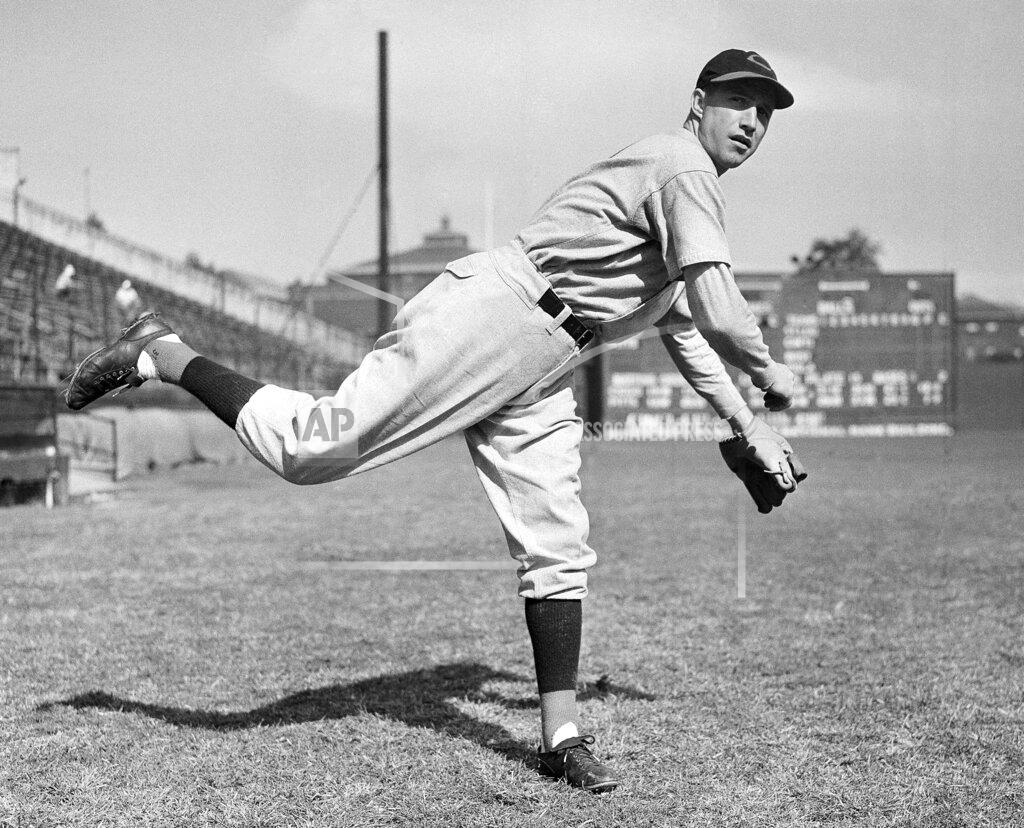
Lefty Lee Grissom, working in championship form, smacked out a three-bagger to drive in one Cincinnati run today and then scored the winning tally on Eddie Joost’s single to give the Reds a 2–1 victory over the Pittsburgh Pirates today.
Details of Canada’s proposed expeditionary force issued tonight show that it will be a smaller but more mobile and a much more heavily armed force per capita than in 1914.
The Canadian Federal Government has decided to take up the challenge thrown down by Premier Maurice Duplessis of Quebec in calling a provincial election next month as a protest against what Mr. Duplessis calls an infringement of Quebec’s autonomy by federal war measures.
Heavy casualties marked the fighting between the Chinese and Japanese north of Changsha today, semi-official dispatches from the Hunan capital reported. The Chinese say they continue to halt the Japanese drive toward Changsha, administering costly losses to the invaders. Japanese planes again flew through heavily overcast skies over Chungking tonight east of the city. One squadron was reported to have bombed a small city to the north. The suburbs of Chungking were bombed last night.
Chinese reports said today that Japanese troops, driving toward Changsha, the capital of Hunan Province, had fallen back before a counteroffensive by thousands of fresh Chinese troops. The Japanese continued to report advances within twenty miles of the city.
At Hong Kong Chinese sources denied earlier Japanese reports that Changsha was in flames and her defenders fleeing. They told of reports that the city was quiet and her defenders were “steadily resisting Japanese attacks.” Chungking spokesmen asserted the week-old Japanese offensive had cost the attackers 70,000 men and sixty craft used in landing troops from Tungting Lake.
In Kiangsi Province the Chinese were said to have defeated the Japanese, virtually halting a Japanese drive near Kaoan.
According to claims from the Domei News Agency in Tokyo, Japanese armies attacking Changsha on the Canton-Hankow Railway moved rapidly southwest of Pingkiang on the Mi River, a key point in Changsha’s defense. While Japanese land forces advanced on Changsha from the north, the Japanese air force bombed Chinese troops retreating south of Changsha, Domei said.
The Japanese stress a ban on U.S. mediation. They say the Sino-Chinese conflict is strictly a two-country issue. “As is well known, the Japanese Government considers the dispute between China and Japan purely a two-party conflict, not to be settled by the intervention or mediation of a third party,” was the emphatic written statement given out in Shanghai tonight by the Japanese embassy spokesman, replying to the proposal for U.S. mediation made by Foriegn Minister Wang Chung-hui in Chungking.
Dow Jones Industrial Average: 150.16 (-0.96).
Born:
Larry Linville, actor (“MASH“), in Ojai, California (d. 2000).
Molly Haskell, American film critic, in Charlotte, North Carolina.
Tommy Boyce, American songwriter (with Bobby Hart: The Monkees – “Last Train to Clarksville”; (I’m Not Your) Steppin’ Stone”), and singer (Boyce & Hart – “I Wonder What She’s Doing Tonight”), in Charlottesville, Virginia (d. 1994).
Art Williams, NBA and ABA point guard (NBA Champions-Celtics, 1974; San Diego Rockets, Boston Celtics, ABA: San Diego Conquistadors), in Bonham, Texas (d. 2018).
Died:
Samuel Dickstein, 88, Polish mathematician, in WWII bombing.
Naval Construction:
The Royal Navy Tree-class minesweeping trawlers HMS Pine (T 101) and HMS Olive (T 126) are laid down by Hall, Russell & Co. Ltd. (Aberdeen, Scotland).
The Royal Navy Bangor-class (Turbine engined) minesweepers HMS Rothesay (J 19) and HMS Tenby (J 34) are laid down by William Hamilton & Co. (Port Glasgow, Scotland); completed by White.
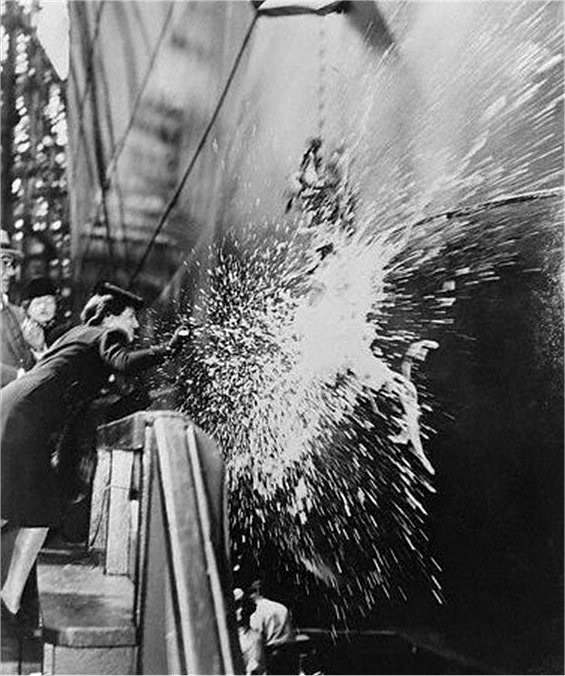
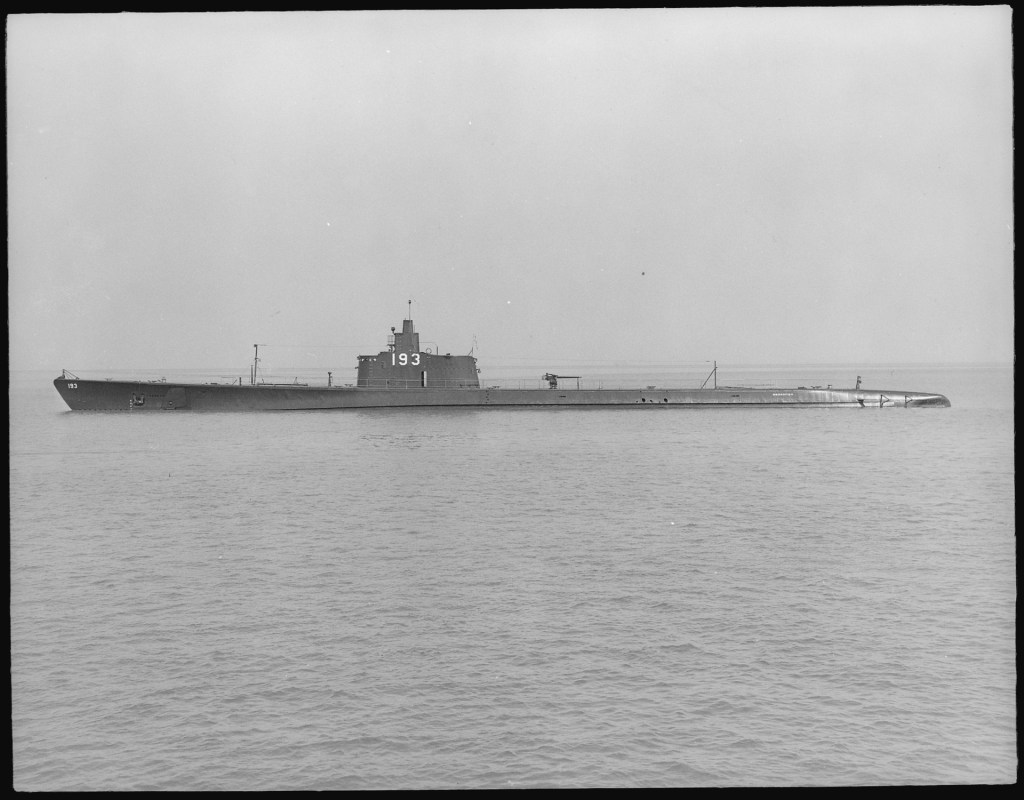
The U.S. Navy Cimarron-class oiler USS Kaskaskia (AO-27) is launched [as SS ESSO Richmond] by the Newport News Shipbuilding and Dry Dock Co. (Newport News, Virginia, U.S.A.).
The Royal Navy Havant-class destroyers HMS Hurricane (H 06) and HMS Harvester (H 19), formerly the Brazilian Japarua and Jurus, are launched by Vickers Armstrong (Barrow-in-Furness, U.K.). Requisitioned by the Royal Navy on 4 September 1939 while being built for the Brazilian Navy.
The Kriegsmarine (German Navy) vorpostenboot V 302 Bremen is commissioned.
The Royal Indian Navy auxiliary patrol vessel HMIS Ramdas (4.111) is commissioned. Her first commanding officer is Lieutenant Commander Martin Henry St. Leger Nott, OBE, RIN.
The Royal Indian Navy auxiliary patrol vessel HMIS Irrawadi (4.186) is commissioned. Her first commanding officer is Lieutenant Hubert John Douglas Hamilton, RIN.
The Royal Indian Navy auxiliary patrol vessel HMIS Hiravati (4.215) is commissioned. Her first commanding officer is T/Lieutenant Frank William Richard Saxty, RINR.

 History Diaries