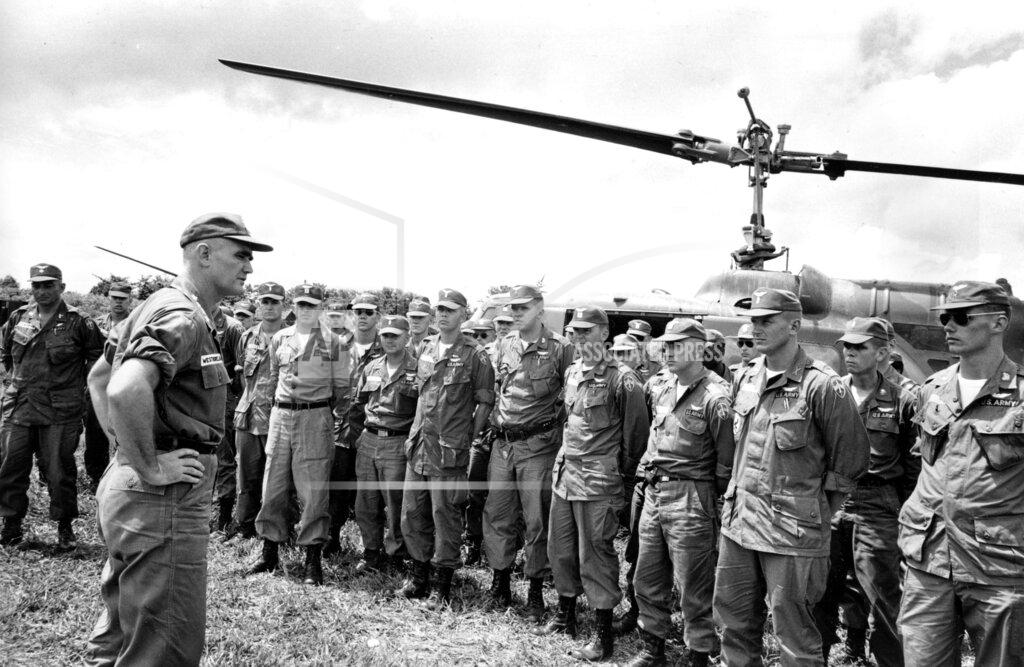
Without bloodshed, U.S. Army troops rescued 60 Vietnamese hostages and seized the main camp of Montagnard rebels operating at Buôn Sar Pa near South Vietnam’s frontier with Cambodia. The Americans flew in on 50 helicopters from the Buôn Ma Thuột East Airfield and picked up the hostages, then aided in placing the 470 rebels on a convoy of trucks. The release of the prisoners met a government condition for negotiations with the armed mountain tribesmen. It appeared to reduce the danger of a violent clash. Nevertheless the revolt is having serious political consequences, involving growing suspicion between the United States mission and the Premier, Major General Nguyễn Khánh. The rebellion has intensified Saigon’s feeling that the United States, which has supported General Khánh, is undergoing a change of policy.
Officials around General Khánh say he no longer believes he can count on American help to stay in power and he feels he must seek firmer support from Vietnamese political and religious groups. Some of these groups doubt the value of pursuing the American‐backed war against the Việt Cộng guerrillas. For the first time, many Americans are seriously concerned that General Khánh may turn his back on the anti-Communist war effort and pursue his new alliance with Buddhist groups even to the point of seeking a truce with the Việt Cộng. Qualified sources insisted, however, that senior policymakers did not yet consider this hypothesis serious enough to shift support from General Khánh. American officials insist that there has been no policy change and that they consider General Khánh the best hope for governmental continuity and stability in a fluid situation.
Since its start a week ago, the tribal rebellion has appeared to stir concern among Americans out of proportion with its size. Only as, the defiance continued did it become clear how deeply related was the matter of friction with General Khánh. The United States Ambassador, Maxwell D. Taylor, has long discounted his own lack of personal rapport with General Khánh as a factor in the political situation. But in the last few days, according to qualified sources, the Ambassador has realized that personal suspicion on General Khánh’s part can no longer be lightly dismissed. The United States is involved in the tribal situation. Officers of the Special Forces—the Army guerrila ‐ warfare specialists—acted as intermediaries between the South Vietnamese Government and the rebels and, according to American officials, probably prevented armed clashes.
A union leader pulled the pin of a hand grenade today and held off 300 union members armed with clubs, crowbars and shovels for three and a half hours. Nguyễn Khánh Vân, secretary general of the Vietnam Labor Union, was accused by dissident members of having sold out the organization to the Vietnamese Labor Confederation and being a member of the late President Ngô Đình Diệm’s semisecret Cần Lao party. The dissidents were led by a union officer ousted earlier. Mr. Vân was at union headquarters when the demonstrators arrived. As they closed in, he pulled the pin and, holding the grenade so that it would not go off, cleared the area. The police finally convinced Mr. Vân to leave and backed a truck up to the headquarter’s front door. Still holding the grenade, Mr. Vân got into the truck. The dissidents then entered the building.
About five persons were reported shot dead when security forces fired on a crowd in Quy Nhơn, 270 miles northeast of Saigon. Later a mob stormed a radio station and troops were called in to evict the demonstrators, Reuters reported.
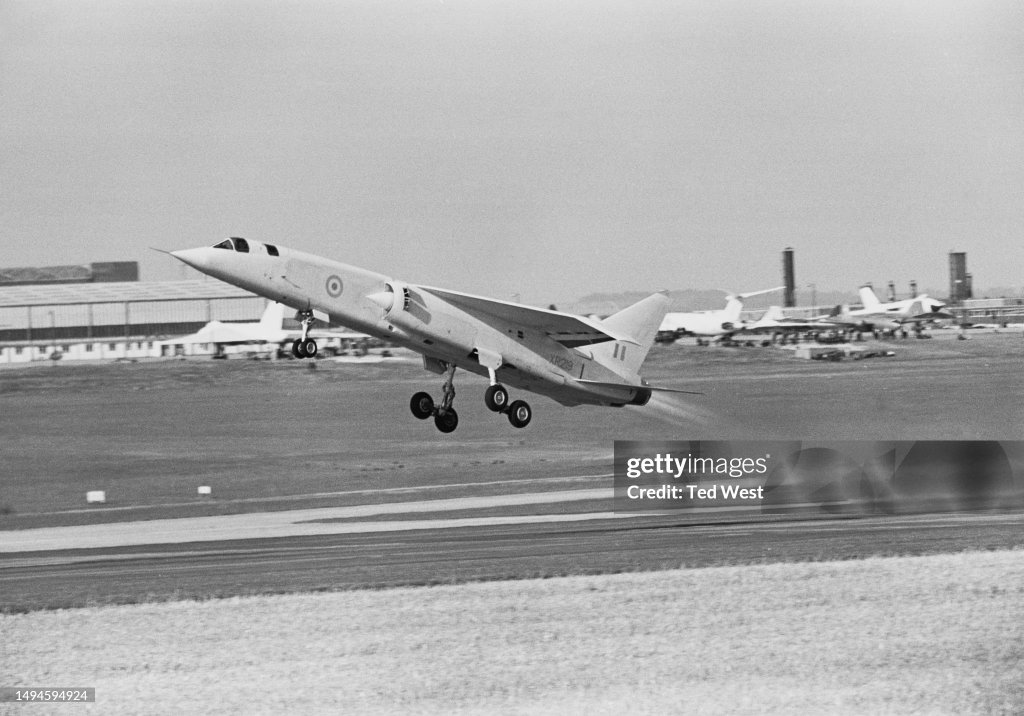
The TSR-2 strike and reconnaissance aircraft, developed by the British Aircraft Corporation (BAC) for the Royal Air Force (RAF), made its maiden flight. At 3:28 p.m. (as reported in The Guardian the next morning) the supersonic nuclear bomber took off from Boscombe Down in Wiltshire with Roland Beamont as the test pilot.
A snarl developed today over a plan to place the Turkish Army garrison, stationed by [treaty on Cyprus, under the control of the United Nations peace force. General Kodendera S. Thimayya of India, commander of the United Nations force conferred with Dr. Paul Kutchuk, Vice President of Cyprus and a leader of the Turkish Cypriot community. Later a Turkish Cypriot spokesman said, “Everything is in a muddle.” A Turkish Government statement from Ankara said that Turkey’s 650‐man force would be placed under United Nations command on condition that the contingent preserves the right to perforin “national duties” on the island. An Ankara spokesman said that the Turkish contingent would not abandon its position on the strategic Kyrenia road, and would continue to maintain some control over the route.
The United Nations Secretary General, U Thant, had told the Security Council that agreement had been reached giving the peace force exclusive control of the road and that the Turkish contingent would pull back 100 yards from it. The road links Nicosia with the north coast port of Kyrenia. A United Nations spokesman declined to confirm that an agreement had been reached to bring the Turkish contingent under the peace force. He was unable to say whether a refusal by the contingent to pull back from the road would shatter any such agreement. Another cloudy question was the rotation of troops from the Turkish contingent on the is land. At one point the Government of President Makarios, the Greek Cypriot leader, threatened to oppose the rotation by force. Mr. Thant told the Security Council that agreement had been reached on rotation, but implied that this was linked to a condition that the United Nations assume control of the Kyrenia road.
Turkish officials in Nicosia said they expected the rotation to take place by next Thursday. United States sources said that they felt the take‐over of the road would not be settled by that time. In Paphos, General George Grivas leader of Greek Cypriot forces, declared that his troops would defend Cyprus against invasion and “will not allow a single Turk to set foot on Cypriote soil.” Speaking at memorial services for Greek Cypriots killed in fighting with Turkish Cypriots and in the Turkish air attacks of last month, he reiterated a determination to continue fighting until the realization of Enosis — union with Greece.
Two young white men wearing boots and khakis limped into the Memling Hotel in Leopoldville, Congo, last week and took the elevator to an unmarked office on the third floor. They reappeared an hour later dressed in sport shirts, gray slacks and civilian shoes. “Were not supposed to be in uniform in public,” said Michael Collingsworth, a sandy‐haired, 22‐year‐old former paratrooper from South Africa, who is now a mercenary in the Congolese Army. He and his friend had just been released from a Leopoldville hospital after treatment for bullet wounds in the legs. In two days they will be flown back to the mercenary staging base at Kamina, about 700 miles east of here. A few days after that, they expect to return to combat against the Communist‐backed rebels. Their presence in Leopoldville and plans for going back to active duty are among the many indications that the mercenaries are in the Congo to stay despite the officially inspired impression that they are being withdrawn.
Malaysia announced today that she had captured the commander of the Indonesian guerrilla band that invaded southern Malaya three weeks ago. An official announcement said the officer, a paratroop lieutenant, had capitulated to the Government and was, appealing to members of the force still at large to surrender and avoid a massacre. Officials said the capture had broken the back of the Indonesian invasion effort. The announcement said the captured officer had termed the struggle against Malaysia use less and had accused Indonesian officials of lying about it.
Indonesia considers the Malaysian federation a device to perpetuate British colonialism. Malaya charges that Indonesia herself wants to dominate the region. The federation, 13 months old, embraces Malaya and the former British colonies of Singapore, Sarawak and Sabah (North Borneo). Malaysian officials said the lieutenant’s capture and his appeal to his men had all but eliminated the force as, an effective instrument of. sabotage and terror. He was identified as Lieutenant Muda Satu Soetikno, 38 years old.
Leftist Japanese workers and students opposing any visit by United States nuclear‐powered submarines at Japanese port clashed with the police today while demonstrating outside the big United States naval base at Yokosuka, about 30 miles south of Tokyo. Five policemen and 10 demonstrators were injured.
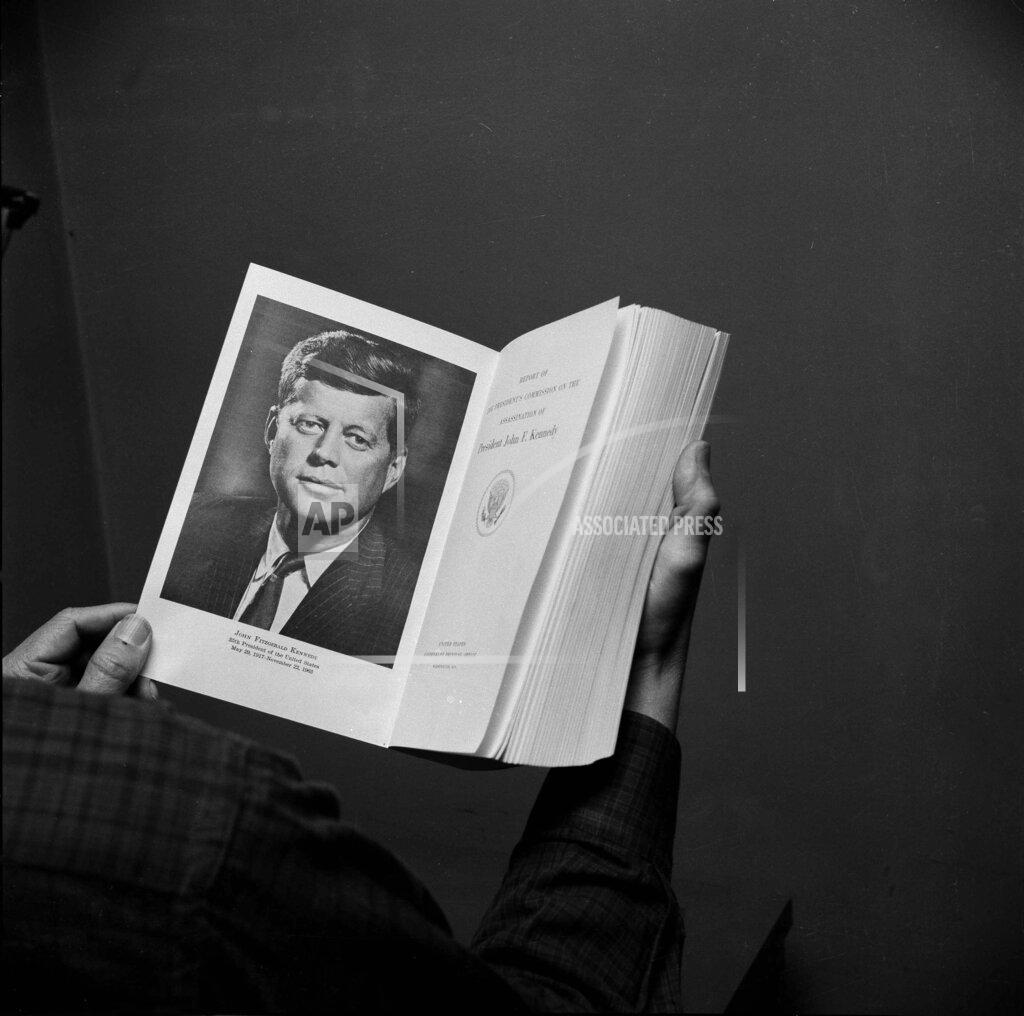
At 6:30 p.m., the Warren Commission Report of the investigation of the assassination of President John F. Kennedy was released to the public. The Commission concluded that Lee Harvey Oswald had acted alone in the slaying, that Kennedy had been inadequately protected during his November 22, 1963 visit to Dallas, and that there had been no conspiracy to commit, nor to cover up, the murder. Retired U.S. Army Major General Edwin A. Walker, who had been shot at by Oswald seven months before Kennedy’s death, was among the first to criticize the report, commenting that “The Warren Commission from the beginning had the full intent… to show that Oswald was a ‘Lone Ranger’.”
No Soviet, Cuban or other foreign official or agent gave Lee Harvey Oswald any help, advice or encouragement in the assassination of President Kennedy, the Warren Commission has concluded. The commission’s finding coincided with testimony it received from Secretary of State Dean Rusk that the Soviet Government had no conceivable interest in the murder of the President. The Commission finding supported Mr. Rusk’s report that the assassination frightened rather than pleased the government of Premier Fidel Castro. The commission accepted as ”reasonable and objective” the Administration’s judgment that Moscow had an interest in correct state relations with Washington, despite the existence of ”grave” political differences.
Nonetheless, the Commission conducted a painstaking search for evidence of direct or indirect foreign influence on Oswald’s actions in the assassination. It found no such influence and sought to rebut contentions of those who thought they had. Both the Soviet and Cuban governments aided the Commission by furnishing some documents from their files on Oswald. In addition, Commission investigators obtained information and appraisals from American intelligence agencies and unrevealed informants aboard.
The study of Oswald’s foreign travels, his 31‐month sojourn in the Soviet Union and his dealings with foreign governments yielded no evidence of involvement in any undercover activity — for or against the United States, the commission said. His travels and conduct abroad, while extraordinary, appeared to be entirely legal, it determined, and the treatment given him by the Soviet and United States Governments, while preferential at times, was under the circumstances neither unusual nor suspicious, it found. The commission did not minimize Oswald’s “commitment to Marxism and Communisim” in weighing his possible motives for the assassination. But it satisfied itself that this commitment did not lead him into any conspiracy.
A sweeping revision of the organization and basic operating practices of the United States Secret Service was recommended today by the Warren Commission. The commission sharply rebuked the Secret Service for failure to make adequate preparation for the visit of President Kennedy to Dallas last November. It reprimanded the Federal Bureau of Investigation for failure to supply the Secret Service with information concerning the presence of Lee Harvey Oswald in Dallas. The commission deplored the fact that “there was no fully adequate liaison” between the FBI and the Secret Service before the Dallas trip. It noted that some improvements had occurred since then but it insisted that, ultimately, Presidential protection required improvement in working arrangements of all Federal agencies concerned, including the Central Intelligence Agency, the State Department and the military intelligence branches. The State Department was admonished to scrutinize more carefully requests for return to the United States of defectors like Oswald “who have evidenced disloyalty or hostility to this country or who have expressed a desire to renounce their citizenship.”
The Warren Commission rejected in detail a number of charges suggesting that Lee Harvey Oswald had not acted alone in the assassination of President Kennedy. The commission said that “publicizing of unchecked information.” had led to “myths” and “distorted” interpretations. While each inaccuracy could be: explained, it went on, “the number and variety of misstatements issued by the police” in Dallas would have “greatly assisted a skillful defense attorney.” On the other hand, Mark Lane, chairman of a Citizens Committee of Inquiry here, contended that if the report contained all the available evidence, “Oswald would have been acquitted” of both the President’s assassination and the murder of the Dallas patrolman, J. D. Tippit.
A preacher’s tone has crept into the Presidential campaigns of both Lyndon B. Johnson and Barry Goldwater, but those campaigns are widely different in tone and style. Senator Goldwater’s moralizing most often resembles a call: for repentance and dire warnings of damnation. The President’s most frequently repeated themes are love and compassion. The most striking difference in their techniques may be a superficial one. Mr. Goldwater constantly hammers away at “Lyndon Baines Johnson,” drawling and drawing out the middle name in a tone of distaste. Mr. Johnson never mentions Mr. Goldwater — or, for that matter, even uses the phrase “my opponent.”
Mr. Goldwater has been campaigning hard and almost steadily since September 8. The President seldom concedes that he is campaigning at all. He has no extended schedule, and even when his “nonpolitical” speeches are included he does much less traveling and speaking than the Republican candidate. But he is the President, and he is well aware that he can get as much publicity out of one stroll around the south driveway of the White House with reporters as Mr. Goldwater can get with a jet flight to Wichita. The fact that Mr. Johnson does not directly mention Senator Goldwater does not mean that his campaign is not a tough one. He has warned against “a raving, ranting demagogue” and against “extremists.” Whatever implications intended, his audiences supply the inferences that he is talking about his strongly conservative opponent.
Senator Barry Goldwater sets out tomorrow on a whistle‐stop search for Midwestern votes. He will travel by railroad in Ohio, Indiana and Illinois.
Bernard M. Shanley, New Jersey’s Republican candidate for the Senate, said yesterday he would support an increase in American ground troops in South Vietnam or an air or naval blockade of North Vietnam if necessary, to achieve victory there. Mr. Shanley stressed that he saw no need for the use of nuclear weapons in Vietnam, because he felt they would prove “impractical.” “You can’t continue a no‐win policy and let American boys die every day, day after day,” he said. “But you can’t let it [Vietnam] go down the drain either.” Mr. Shanley made the remarks on the C.B.S. television program “Newsmakers.” His Democratic opponent is Senator Harrison A. Williams Jr., who is seeking a second term.
The fate of two key Administration programs—health insurance for the aged and aid to Appalachia—may be decided this week as Congress pushes toward adjournment. “We could finish up Saturday; that’s my most optimistic guess,” Senator Mike Mansfield of Montana, the majority leader, said today. “But I have my fingers crossed.” The health insurance issue, currently in House‐Senate conference, could delay adjournment until the following week, some legislative leaders believe. Prospects for conference approval of some form of health insurance for the aged under Social Security have ranged from bright to gloomy in recent days. The House passed a bill this summer to increase Social Security taxes as well as cash benefits. The Senate added a program of health insurance for the aged under Social Security. Among the compromises being considered in conference is one to limit the health insurance to 45 days of hospitalization. The Senate had called for a far broader program that included nursing home care, outpatient services and home nursing visits.
Some conferees reported confidently last Friday that some form of health insurance would be agreed upon. However, a few hours later, the conference broke up in what one member described as “utter confusion.” The negotiations will resume Tuesday.Meanwhile, legislative leaders are attempting to lure enough campaigning Representatives back to Washington to pass the Administration’s $1.06 billion program of economic aid to Appalachia. House action on the Appalachia measure was scheduled three weeks ago, then was postponed when Democratic leaders discovered that too many supporters were back home campaigning. The Senate, by an unexpectedly lopsided vote of 45 to 13, passed the Appalachia measure last Friday. The chief feature of the five‐year program would be $840 million for highway construction in the 11‐state region.
Final action on foreign aid is also pending in Congress. The Senate passed a bill last week authorizing $3.3 billion for economic and military aid to friendly governments overseas. The House had previously authorized $3,516,700,000, the full amount sought by the President, and appropriated $3.3 billion. An authorization bill sets a ceiling on appropriations. An appropriations bill sets the actual amount that can be spent. The Senate still must act on the foreign aid appropriation. The Senate’s authorization bill carries with it a controversial rider suggesting a slowdown in court‐ordered reapportionment of state legislatures. Senate‐House differences over the authorization bills will go to conference.
Other matters scheduled for action this week include both House and Senate approval of a conference agreement on extension of the National Defense Education Act, and renewed attempts to reach a compromise on implementing the International Coffee Agreement. Senator Mansfield said that he would also call up for Senate debate a bill proposing a constitutional amendment to deal with the disability of a President or a vacancy in the office of Vice‐President. It is considered doubtful that Congress will complete action this year on the proposed amendment, because of the lateness of the session, but Mr. Mansfield said he would try to obtain a Senate vote. The House has not yet acted.
An explosion in the driveway of a Black man’s home in Jackson, Mississippi severely damaged a car and broke windows in the house before dawn today. No one was reported injured. The blast was at the home of I. S. Sanders, a businessman. He told the police he was a worker in the Black civil rights movement. Detective Sgt. J. P. Emmons said investigation showed that some type of explosive powder had been set off under one of two cars in the driveway. That car was damaged. The other vehicle was not. The explosion was the latest of several bombings or burnings at Black homes or churches in Mississippi since the civil rights Summer Project in the state.
In the McComb, Mississippi area, 16 out-of-state ministers were visiting the region to “establish contacts in white communities.” A spokesman for a civil rights group said the clergymen would “help us any way they can and contact some of the more liberal whites to help draw them out.”
The United Automobile Workers Union and the General Motors Corporation began efforts today to settle the strike that has halted the company’s automobile production. Walter P. Reuther, the union’s president, and Louis G. Seaton, General Motors’ vice president of personnel staff, met for two hours today at company headquarters. They emerged to say their discussion had been “healthy.” The two men said they had spent the time taking an inventory of the situation and setting up negotiating machinery, rather than discussing matters of substance. They will resume talks tomorrow. About 260,000 union members at 89 General Motors plants walked off the job Friday after the company refused to meet the union’s demands for improved working conditions. Another 90,000 union members in 41 plants producing parts and accessories for G.M. and its competitors have remained at work.
Neither Mr. Reuther nor Mr. Seaton would speculate today on how long the strike might last. The union leader said he did not anticipate a “long struggle” like those that made G.M. idle for 113 days in 1945 and 1946. He said it would be possible to resolve present differences within a week, but emphasized it was too early to predict the outcome.
A prolonged strike could sesiously affect the ecenomy and President Johnson was known to be deeply concerned about the situation. Mr. Reuther said he had not spoken to the Presiident about the strike, but that he had telephoned Labor Secretary W. Willard Wirtz twice to inform him on the situation. Mr. Seaton said he had had no contact with the President since the strike began. Mr. Reuther has been under heavy pressure to win improvements in working conditions that would mollify militant G.M. local leaders. The prevailing view here was that the strike might be settled in a couple of weeks. But it could last considerably longer, sources said if local militancy prompted the union to make bigger demands.
A federal panel made an urgent attempt yesterday to avert a strike at midnight Wednesday by 60,000 longshoremen from Maine to Texas. Steamship operators and longshoremen, still deadlocked arter more than three months of contract negotiations, agreed to further talks this morning, but expressed the opinion privately that the outlook avoiding a work stoppage was was bleak. A strike by the International Longshoremen’s Association would tie up more than 500 United States and foreign ships along the Atlantic and Gulf Coasts. It would make more than 20,000 seamen idle and back up 20,000 box cars on the nation’s railroads. In New York, the busiest port in he nation, more than 10,000 truck drivers would be without work.
In the 1964 All-Ireland Senior Football Championship Final, Galway defeated Kerry. It was the first of three All-Ireland football titles won by Galway in the 1960s. Galway and Down would both win three titles during the 1960s, sharing the role of “team of the decade.”
The New York Yankees ended their 11‐game winning streak today by misplaying two bunts in the 11th inning and helping the Washington Senators score a 3–2 victory. The loss cut New York’s American League lead to three games over Baltimore and Chicago. Any combination of Yankee victories and Oriole and White Sox defeats totaling four will give the Yanks the pennant. They have seven games left. A single by Dick Phillips off the glove of Bobby Richardson actually ended the game, but the two mishandled sacrifice attempts set the stage. Don Lock started the 11th with a solid single to left against Hal Reniff, the fourth Yankee pitcher and the loser. When Joe Cunningham bunted in front of the plate, Elston Howard elected to throw to second, and since the throw was not in time, the Senators had two men on. Manager Yogi Berra ran out and argued, to no avail. Willie Kirkland also bunted, along the first‐base line. Both Reniff and Joe Pepitone went over to field the ball. Reniff let Pepitone have it, but in the process crossed the baseline and Kirkland ran into him.
Robin Roberts pitched a threehitter today as the Baltimore Orioles beat the Cleveland Indians, 4‐0, for Roberts’s 12th victory and fourth shutout of the year. Roberts yielded a bunt single to Dick Howser in the fourth and singles to Tony Martinez in the fifth and Chico Salmon in the eighth. He walked one man. Baltimore scored once in the first inning on two singles and, a force‐out and three times in the fourth on a walk, Charlie Lau’s double and Norm Siebern’s homer. Boog Powell of the Orioles was sidelined in the first when he severely bruised his left knee sliding into second.
Al Kaline got three hits, Billy Bruton hit a home run and Joe Sparma hurled his second major league shutout to lead the Detroit Tigers to a 3–0 victory over the Boston Red Sox today. Bruton, who announced his retirement from baseball today, effective at the end of the season, walked in the first and scored on a double by Kaline. Bruton, who will become a member of the sales staff at Chrysler Corporation, hit his fifth homer in the fifth. He later added a single in his final appearance at Tiger Stadium.
Joe Horlen scattered seven hits and batted in two runs today in leading the Chicago White Sox to a 5‐3 victory over the Kansas City Athletics. It was Horlen’s 12th victory against nine defeats and the A’s 100th loss. Chicago chased Johnny (Blue Moon) Odom with five hits and all five runs in the first two innings. Horlen hit a basesfilled two‐run single that started a four‐run second. John Wyatt, the fourth of six Kansas City pitchers, made his 77th relief appearance, tying Dick Radatz of the Boston Red Sox for the major league record. A crowd of 4,903 brought the Athletics’ final home attendance figure to 642,478.
The Minnesota Twins snapped a string of eight straight losses to Los Angeles by defeating the Angels, 3–1, today. A crowd of 16,292 at the final home game brought the Angels’ attendance to 760,439.
The stunning collapse of the Phillies is complete. Despite 3 home runs by Johnny Callison, the Philadelphia Phillies are 14–8 losers to the Milwaukee Braves, who complete a 4-game sweep at Connie Mack Stadium. The Phils’ 7th straight loss drops them out of first, which they had held for 73 days. Milwaukee tallied 22 hits — 10 against Jim Bunning in 4 innings — and four relievers. Lee Maye, with five hits, and Felipe Alou and Joe Torre, with three each, led the assault as the Braves swept the four‐game series and left the Phillies without a victory in their final home stand. Torre hit his 20th homer.
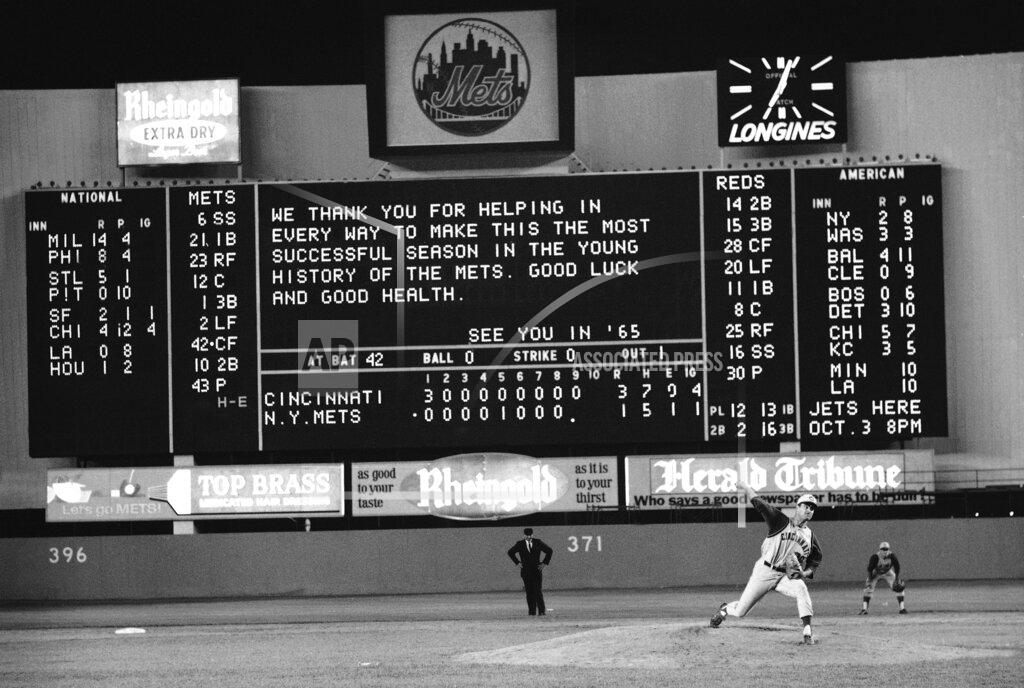
The Cincinnati Reds are winners of 9 straight as they sweep two from the New York Mets, winning 4–1 and 3–1, to take a one-game lead over the faltering Phils. Philadelphia is now just a half-game ahead of the charging Cardinals, winners of 8 straight games. Even the Giants, losers of a doubleheader against the Cubs, are just 4½ games in back of the Reds, and will not be eliminated until October 3. Jim O’Toole won the opener with relief help from Sammy Ellis. Then Joey Jay served up a five-hitter to win the nightcap.
The St. Louis Cardinals defeated the Pittsburgh Pirates, 5–0, today behind the six‐hit pitching of Roger Craig and Barney Schultz. The Cardinals remained in third place but were only half a game behind the Philadelphia Phillies whose 14‐8 loss to the Milwaukee Braves knocked them out of the lead. St. Louis, the winner of five straight — all against the Pirates—open a three‐game series at home against the Phillies tomorrow night. Craig scattered five singles and did not walk a batter until he had two out in the eighth inning. Then, Bob Bailey singled and Bill Virdon walked. Schultz went in, struck out Roberto Clemente and went on to preserve Craig’s seventh victory against nine defeats.
The Chicago Cubs dent the San Francisco Giants pennant hopes with a double sweep, winning 4–1 on a 3-hitter by Larry Jackson (23–10) and 4–2 behind Cal Koonce (2–0). Ron Santo has a 3-run homer in game 1, off Juan Marichal, and Ernie Banks hits a grand slam in game 2. Santo’s homer, in the eighth inning, broke up a scoreless duel between the league’s only 20‐game winners, Jackson of the Cubs and Juan Marichal of the Giants. Jackson has 23 victories against 10 losses. Marichal has a 20‐8 mark. Banks’s homer in the fifth inning, the 10th grand slam of his career, enabled Koonce to post the second‐game victory with relief help from Lindy McDaniel. Koonce ran his string of scoreless innings to 16 before the Giants reached him for two runs in the sixth inning on singles by Jim Hart, Duke Snider, Willie McCovey and a sacrifice fly by Chuck Hiller. McDaniel finished the inning.
In the final game at Colt Stadium, Bob Bruce pitches 12 scoreless innings for the Houston Colt 45’s in a 1–0 gem over the Los Angeles Dodgers. Bruce, who has pitched 22 shutout innings against the Dodgers, scattered five hits as he posted his 15th triumph against nine losses. Dodgers’ starter Don Drysdale allows 3 hits in 10 innings before giving way to Ron Perranoski, who allows a walk-off RBI-single to Jim Wynn to end the game. Bruce is the only Colt 45 with a winning career record.
Two months ago, a Phillies-Red Sox world series seemed almost certain. Now, neither team will make it.
NFL Football:
Chicago Bears 0, Baltimore Colts 52
Cleveland Browns 28, Philadelphia Eagles 20
Dallas Cowboys 17, Pittsburgh Steelers 23
Minnesota Vikings 13, Los Angeles Rams 22
St. Louis Cardinals 23, San Francisco 49ers 13
Johnny Unitas passed for three touchdowns and the tough Baltimore defense manhandled the Chicago offense as the Colts handed the Bears their worst defeat in their history, 52–0. The Bear quarterback, Billy Wade was harassed by a stiff charge led by the all‐pro end, Gino Marchetti, and consistently overthrew his receivers. Two of his passes were intercepted. The Bears ground game was limited to 69 yards. Joe Don Looney, a rookie obtained from the New York Giants, scored the Colts’ final touchdown on a wild 58‐yard run, bowling over two would‐be tacklers and simply shrugging off another at the 10‐yard line.
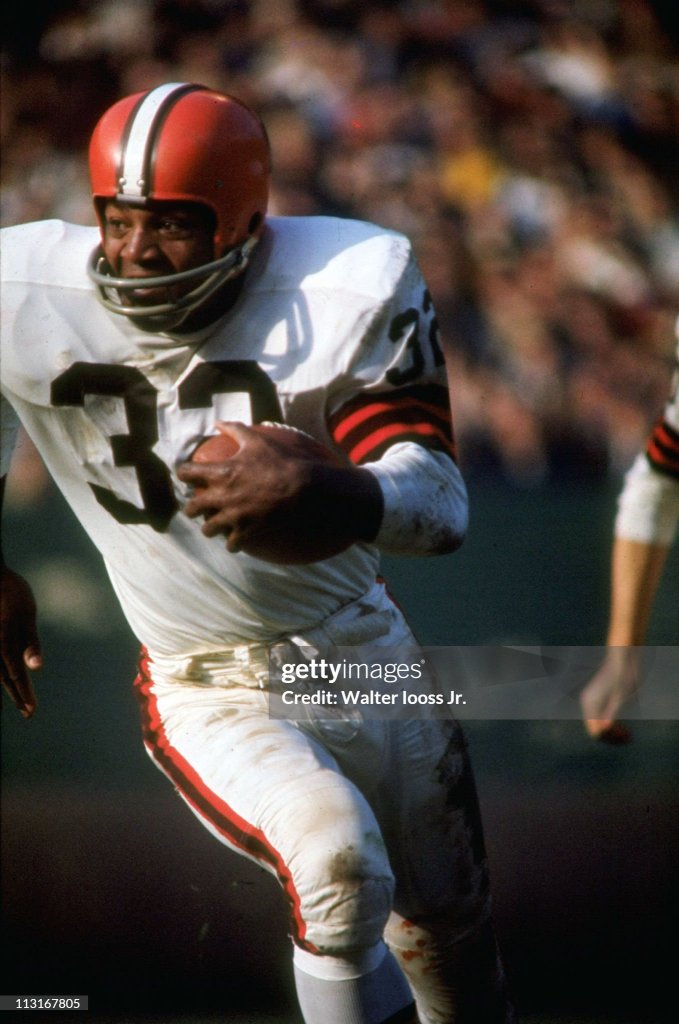
The Philadelphia Eagles, who were able to stop the aging Y. A. Tittle and the unimpressive New York Giants two weeks ago, were no match for the strong Cleveland Browns and Frank Ryan in the second half today. Once he was able to hit regularly, Ryan passed the Browns to a 28–20 victory before a capacity crowd at Franklin Field. In less than 15 minutes of action, Ryan completed nine passes, including three for touchdowns, that brought his team from a 13–7 deficit to the victory that kept it atop the Eastern Conference of the National Football League. A major assist, as usual, was turned in by Jimmy Brown, who made 104 yards rushing and 53 catching Ryan passes. It was the 45th game in which Brown, now in his eighth year in the league, had rushed for more than 100 yards. A 40‐yard pass from Ryan to Brown accounted for the winning touchdown midway in the third period.
Three touchdown passes by Ed Brown and a brilliant goal‐line stand enabled the Pittsburgh Steelers to score a 23–17 victory over the Dallas Cowboys in a National Football League game today. The Cowboys had nine attempts from the Pittsburgh 7yard‐line to put over what would have been the winning touchdown in the final moments, but the Steelers’ defense held. Bill Saul deflected a pass by John Roach in the end zone and the Steelers took over with less than two minutes remaining. However, the Cowboys still had another chance with a first down on the Pittsburgh 31, but Ed Holler intercepted a fourth down pass in the final seconds.
The Los Angeles defense checked Minnesota’s scrambling quarterback, Fran Tarkenton, today and the Rams scored a 22–13 victory over the Vikings with an offense that had Terry Baker as a halfback. The Rams’ first‐string halfback, Dick Bass, played only in the first half. He gained 92 yards, including a 59‐yard sprint around right end that set up the first of three field goals by Bruce Gossett. Baker a former all‐American quarterback, took over in the second half and befuddled the Viking defense. He proved to be a tricky runner and a fine receiver for Bill Munson. Munson completed nine of 18 passes for 170 yards and one touchdown. Tarkenton, who connected on 10 of 22 passes for 150 yards, was under pressure most of the time from the big Ram front four, particularly David Jones. He was thrown for 39 yards in sacks while trying to pass.
The St. Louis Cardinals won a slugging, fight‐filled game with the San Francisco 49ers, 23–13, today. Officials had a hard time keeping control as fist fights broke out all during the game. The second Cardinal touchdown was scored after four San Francisco penalties for unsportsmanlike conduct had put the ball on the 49er 1. The partisan fans booed so hard and long that Chariie Johnson of the Cards had to call signals in the. din. The 49er defense held for three downs but on the fourth officials ruled that John David Crow had been over the goal line although when play was halted he was 4 yards short. This caused another outbreak with 49er players following officials all over the field to protest. None of the players from either side was ejected from the game. The Cardinals got an earlier touchdown on a 68-yard Jimmy Burson punt returnnad added three Jim Bakken field goals. The 49ers scored a fourth quarter touchdown on a pass from John Brodie to tight end Monte Stickles for 32 yards..
AFL Football:
New York Jets 10, Boston Patriots 26
Houston Oilers 38, Denver Broncos 17
Kansas City Chiefs 21, Oakland Raiders 9
The New York Jets, idle since their opening game victory over Denver two weeks ago, were too sluggish to cope with the alert Boston Patriots today and suffered a 26–10 loss. A crowd of 22,716 watched the Patriots score their third successive victory of the season and remain in a first-place tie with Buffalo in the Eastern Division of the American Football League. Coach Mike Holovak’s Patriots blunted the Jet aerial game by snaring six interceptions, five of them against Dick Wood. And when the Jets attempted to rush, the Pats’ line, led by Larry Eisenhauer and Houston Antwine, repeatedly smothered Matt Snell and Bill Mathis. While the Boston defenses were holding New York in check, the Pats’ offensive unit was having things pretty much its own way. Gino Cappelletti, the league’s leading scorer last year, kicked four field goals and 2 extra points. The field goals, three of which were aided by a strong tail wind, traveled 47, 26, 41, and 42 yards. The last one was against the wind in the fourth quarter.
Houston shocked Denver with two touchdowns in the first four minutes and repeated with a two‐touchdown salvo in the last 11 seconds of the first half to batter the Broncos 38–17 in an American Football League game today. George Blanda passed Houston to a touchdown in seven plays after opening kickoff and two minutes later Charley Tolar charged 23 yards on a draw play for the second touchdown. Blanda’s 43‐yard field goal gave Houston a 17–0 lead before Gene Mingo of Denver countered with a 24‐yard field goal in the second quarter. Blanda engineered another touchdown drive at the close of the half that ended with a three-yard pass to Dobie Craig. After the kickoff, Denver had time for one play — and the pass was picked off by linebacker Johnny Baker, who ran it back 17 yards for another touchdown, to end the half with the Oilers in command, 31–10.
Len Dawson hit on touchdown passes of 56 and 39 yards in the 4th quarter today to lift the Kansas City Chiefs to a 21–9 victory over the Oakland Raiders, who suffered their third American League defeat in three games. Abner Haynes, who gained more than 100 yards during the contest, caught the 56‐yard pass that sent the Chiefs ahead, 14–9. Haynes took the ball over his shoulder on the run after getting behind Clancy Osborne on the Raider 20. Five minutes later, after a 41‐yard toss from Dawson to Haynes had moved the Chiefs from deep in their territory, the Kansas City quarterback passed to Frank Jackson for 39 yards and another score. Three field goals by Mike Mercer within a span of 3 minutes and 5 seconds in the third period had pulled the Raiders into a 9–7 lead.
Born:
Stephan Jenkins, American musician and lead singer, songwriter and guitarist for Third Eye Blind; in Indio, California.

 History Diaries