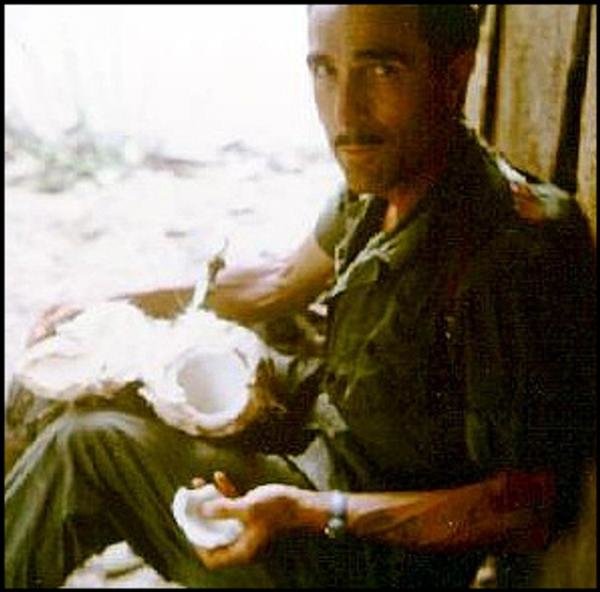
John Lowery McCoy
Date of birth: 18-May-25
Date of death: Killed in Action
Home of record: Los Angeles California
Status: KIA
AWARDS AND CITATIONS
Silver Star
Awarded for actions during the Vietnam War
The President of the United States of America, authorized by Act of Congress, July 8, 1918 (amended by act of July 25, 1963), takes pride in presenting the Silver Star (Posthumously) to Sergeant First Class John Lowery McCoy, United States Army, for gallantry in action while engaged in military operations in Vietnam, on 26 June 1964. As an Advisor to a Ranger Battalion of the Army of the Republic of Vietnam, Sergeant McCoy accompanied a friendly unit on a military mission to dislodge a reinforced hostile element. As the unit advanced across an open area, it received heavy hostile gun fire from the front and was quickly pinned down. Sergeant McCoy rapidly address the situation, notified the Commander of the unit’s untenable position, and advised a counterattack immediately, and exposed himself to the intense gun fire as he placed himself with the lead elements of the company in a direct attack against the insurgents. When the Vietnamese Company Commander was wounded during the ensuing battle, Sergeant McCoy again exposed himself to the enemy gun fire to assist in evacuating the wounded Commander, and then administered first aid to him. When the casualties mounted and the troops were reluctant to advance, he moved from position to position under heavy gun fire to rally the forces and to advise his counterparts. His fortitude, personal example, and courageous conduct inspired the Rangers to proceed to their objective and led to the successful accomplishment of their mission. Sergeant McCoy’s conspicuous gallantry is in the highest traditions of the United States Army and reflects great credit upon himself and the military service.
General Orders: Department of the Army, General Orders No. 2 (February 5, 1965)
Action Date: 26-Jun-64
Service: Army
Rank: Sergeant First Class
Company: Advisor
John is buried at Fort Rosecrans National Cemetery, San Diego, California. He is remembered on the Wall at Panel 1E, line 64.
The Khánh regime forms a 17-member civilian High National Council that is charged with setting up a provisional government to replace Khánh’s regime and to hold a national convention to draft a permanent constitution. The council includes representatives of Buddhist and Roman Catholic groups, opposition civil organizations, and political activists. The “High National Council”, with 17 civilian members, was installed to function as a legislature for South Vietnam, with Phan Khắc Sửu as the Council’s chairman. He would become the new head of state on October 26.
It was the first concrete step toward ending the legal and political anomalies resulting from a month of internal dissension. But apparent new frictions between the caretaker Government of Premier Nguyễn Khánh and the United States mission here led informed observers to doubt that stability could be achieved without further upheavals. Amid continuing fears of another attempt at an armed coup d’état similar to that of two weeks ago, a squad of troops took up positions outside the Central Post Office tonight in downtown Saigon.
Major General Dương Văn Minh, titular head of the triumvirate that now rules South Vietnam, presided at the Government Palace installation ceremony for the new civilian council. Its membership embraces rival religious and civic groups, including Buddhists and Roman Catholics, in addition to political personalities. The council has a little over a month to design a new government framework. A few days after he had stepped down as President a month ago, General Khánh returned as caretaker Premier for a fixed period of two months. He said then that during this period a civilian council would be established, a national convention called and a new constitution drafted. Rioting and political demonstrations late last month brought about General Khánh’s withdrawal as President. But since his return as caretaker Premier, new problems have arisen, including a threatened rebellion by Montagnard tribesmen in the central plateau.
Young military officers in Saigon issued an ultimatum in which they demanded the purge of six generals. Young Vietnamese officers demanded that Premier Khánh dismiss some older generals, a Government source said, according to The Associated Press. A new attempt to seize power in Saigon is possible, the source added.
An ARVN battalion engages in a fierce battle in the Mekong Delta with Việt Cộng forces; one U.S.-piloted plane is downed and one U.S. soldier is killed.
ARVN forces claim a victory over guerrillas in Gò Công Province but are defeated in a clash in Kiên Giang Province, where one U.S. soldier is killed.
Premier Nguyễn Khánh threatened action against rebelling mountain tribesmen in South Vietnam against U.S. wishes, and endangered the lives of U.S. troops trying to talk the tribesmen out of their revolt. Premier Khánh returned to Buôn Ma Thuột today and threatened strong measures against rebellious mountain tribesmen. He apparently did so against the wishes of United States military advisers. South Vietnamese troops were nearby and there were indications that they would begin action against the tribesmen by tomorrow. Americans feared a war within a war for this troubled nation.
The Montagnard tribesmen are demanding outright autonomy in the mountain areas along the Cambodian and Laotian frontiers. The Montagnards (“mountain men”) are primitive, tough warriors who often work in the fields wearing only loincloths. Their hardiness and knowledge of the mountain terrain have made them extremely valuable in the war against the Việt Cộng guerrillas. “We cannot let them set up an independent nation,” General Khánh said after his 160‐mile flight from Saigon. “That would be like Sioux Indians seceding from America. I cannot allow this. We will not punish them if they come back to us. But if they do not we will have to take strong measures.”
The United States has been routinely patrolling the Tonkin Gulf since 1963 to gather intelligence information, until recently without incident, it is revealed.
President Johnson is reported to have decided that if Communist planes attack United States naval forces operating off Vietnam, American fighters can chase them across the border of Communist China, if necessary. The decision was said to have been prompted by Peking’s movement of Soviet‐built jet planes into Communist North Vietnam early last month. It would provide more precise authority for United States pilots to apply the principle of “hot pursuit” and deny the Communists a “privileged sanctuary.” The Soviet‐built aircraft were sent into the area after American planes had attacked North Vietnamese torpedo boats and installations in retaliation for assaults on United States destroyers in the Gulf of Tonkin. The sequence of events appears to indicate an increase in the danger of direct clashes between the United States and Communist China in Southeast Asia.
The Greek Cypriot Foreign Minister, Spyros Kyprianou said today that he expected to sign an agreement with the Soviet Union next week for Soviet military aid to the Government of President Makarios.
The Security Council has now prolonged the stay of the United Nations Force in Cyprus until Dec. 26, thus providing an additional three months in which to look for a solution for the problems of that troubled island. Since Cyprus had agreed to the extension, the two Communist members of the Council, the Soviet Union and Czechoslovakia, joined in the vote making it unanimous. But the threat of a Soviet veto had compelled the elected members of the Council to submit a proposal which complied with the Soviet demand that the United Nations Force in Cyprus continue its operations in strict accordance with the vague resolution of March 4 under which it was established. It would have been necessary to withdraw the peace‐keeping force yesterday if the Council had not voted the extension, and the Kremlin was in the driver’s seat.
Turkey announced that it will place its army garrison on Cyprus under U.N. command. The 650‐man Turkish Army contingent in Cyprus will be placed under United Nations control, a Turkish Foreign Ministry spokesman said today. But Turkey has set two conditions. The spokesman said that the troops remaining in Cyprus must maintain their present positions, and that Turkey reserved the right to withdraw her contingent from the United Nations command if the security of Turkish Cypriots was threatened. This development followed the agreement made public yesterday on rotating the Turkish troops on Cyprus and on turning over to the United Nations control of the strategic highway between Nicosia and Kyrenia. This road has been controlled essentially by Turkish Cypriots backed by Turkish troops.
In yesterday’s announcement, U Thant, Secretary General of the United Nations, said the agreement on the road had been reached among “the parties concerned.” The Turkish Foreign Ministry spokesman said Turkish troops would maintain their positions on the highway while technically under the command of the United Nations. The 235 Turkish Army officers and men who were to have relieved Turkish troops on Cyprus at the end of August will now be allowed to land in Famagusta, the spokesman added. He said they would start for the island as soon as the Turkish Government is notified by Mr. Thant that arrangements have been completed on Cyprus.
At Stanleyville, seized by rebels on August 5 and proclaimed as the capital of the “People’s Republic of the Congo” on September 5, President Christophe Gbenye ordered the rounding up of all foreigners trapped in Stanleyville and Paulis. Most of the hostages— 525— were Belgians, and about 200 were Greek or Italian; 63 Americans, 33 Canadians and 25 British people were also taken captive and held at hotels within the city; the rest were citizens from 12 other nations. Gbenye, whose forces had killed hundreds of Congolese nationals, threatened to kill the hostages. The crisis would force a rescue mission by Belgian and American troops on November 24.
More than 400 residents of the Copenhagen suburb of Valby were injured by the explosion of two large natural gas storage tanks, and at least four of the most critically hurt died in the blast.
Although he was greeted with cheers of the populace in four capitals of South America President Charles de Gaulle failed in the governmental palaces to win support away from the United States.
Bills from President Charles de Gaulle’s current Latin American tour alone may turn the projected 1964 French national budget surplus into a deficit.
Two accused Russian spies, one an attractive woman, go on trial for their lives Monday. They are charged with sending nuclear and military secrets to the Soviet Union.
With Congress now driving belatedly to adjourn by the end of next week, there is widespread agreement among members of both parties on one point. This is that September in an election year is no time for legislating but a time for politicking—preferably in the home precincts, but in Washington, too, if necessary. The validity of such a conclusion is borne out by the sparse legislative accomplishments and the politically motivated wrangles since Aug. 31, when Congress resumed work after a nine‐day recess for the Democratic National Convention. So far, the post‐convention period has seen final Congressional action on only one bill that might be classified as major legislation — a measure setting up a new federal tax fund to finance the acquisition and development of recreational facilities.
The Senate has passed a Social Security bill embodying a modified version of the Administration’s program of health care for the aged. It is now in the hands of a Senate‐House conference committee with the fate of the health‐care provisions very much in doubt. The Senate has also passed the annual foreign‐aid authorization bill after finally breaking, only two days ago, a threeweek deadlock over a rider inspired by the Supreme Court’s June 15 ruling on apportionment of state legislatures. The settlement cleared the way for Senate passage of the Administration’s Appalachian ‐ aid bill, which promptly followed. In addition, legislation to extend the Food‐for‐Peace program has been steered to final approval and routine action has been taken on several appropriation bills. Otherwise, the caliber of September’s achievements is aptly illustrated, perhaps, by House passage of a number of bills dealing with such matters as pesticide research, fish conservation and commemoration of the Battle of New Orleans.
If President Johnson should somehow salvage a health‐care plan against odds that now seem prohibitive, the post‐convention leg of the session would become a priceless asset to the Democrats in November. The achievement would greatly enhance Mr. Johnson’s already formidable stature as a strong, “can‐do” President, much to his political benefit in the country as a whole. More specifically, it would probably yield sizable increases in the Democratic vote, particularly in urban areas of non‐Southern states where the demand for a Federal medicare program has become increasingly insistent in recent years. This could mean the difference between victory and defeat for the Democratic ticket in several states, notably in the Midwest, where there is a close balance between the urban and rural vote. It could also give some Democrats an edge in close contests for House and Senate seats.
Without medicare legislation, however, it is possible that the month’s Congressional labors would prove to be more harmful than helpful to the Democrats in November. For one thing, the meagerness of accomplishments in the post‐convention period might detract, at least a bit, from the impressive record written by Congress earlier in the session. For another, the President’s failure to obtain medicare legislation from a Congress controlled by his own party might impair, at least a bit, his “cando” reputation.
President Johnson ordered the FBI to make riot training available to all police departments as a result of recent riots. The President, who is spending the weekend at his LBJ Ranch at Johnson City, issued a written statement commenting on the report by J. Edgar Hoover, director of the Federal Bureau of Investigation, on the patterns found in recent rioting in such places as Harlem and Philadelphia. Mr. Johnson noted that the preservation of law and order was primarily a state and local matter, but added that “the fact that such riots can occur is a matter of national concern as well as personal concern to me.” He listed four steps he has taken or will take to involve the Federal Government in attempts to control and alleviate the problem.
First, he said he had directed the F.B.I. to “make riot training available to all police departments in the United States.”
Second, he said he had instructed that the Army’s program for demonstrating techniques of riot control be enlarged. “We will make these techniques a larger part of the training of the National Guard of the various‐ states and we will make them available to local police forces as well,” he said.
Third, he said he had directed Anthony J. Celebrezze, Secretary of Health, Education and Welfare, to make a study of the District of Columbia’s program to deal with school dropouts and to recommend “what further steps might be taken by the Federal Government to assist in meeting this important problem.” He described the district’s dropout program as “one of the most intensive in the nation.”
Fourth, at an “appropriate time,” he will call a conference of state and city officials to discuss how the Federal Government can offer other assistance.
J. Edgar Hoover said summer riots in the North were neither race riots nor the work of Communists or other extremist groups. The Federal Bureau of Investigation reported today that there was “no systematic planning or organization” underlying riots this summer in New York and eight other Northern cities. The report, which was submitted to President Johnson, concluded that the riots were not basically racial. “While in the cities racial tensions were a contributing factor,” it said, “none of the nine occurrences was a ‘race riot’ in the accepted meaning of the phrase. They were not riots of Blacks against whites or whites against Blacks.” Rather, the report said, “a common characteristic of the riots was a senseless attack on all constituted authority without purpose or object.” The FBI said that “the Communist Party U.S.A. does not appear to have officially instigated these riots, though its members were observed taking part” in some of them.
Agents of the Federal Bureau of Investigation have been instructed not to disclose to a Mississippi grand jury any information about the slaying of three civil rights workers. The nine FBI agents have been summoned to appear before the Neshoba County grand jury in Philadelphia, Mississippi, at 9 AM Monday. The grand jury is investigating the abduction and murder of three young men last June in or near Philadelphia. A similar inquiry is being made by a Federal grand jury in Biloxi.
The order that the agents refuse to disclose any of their findings was issued by J. Edgar Hoover, director of the FBI, at the direction of Acting Attorney General Nicholas deB. Katzenbach. A spokesman for the Justice Department said that the agents had been instructed “not to testify about matters concerning department files or FBI investigations.” The agents are stationed in the Jackson, Miss., field office of the bureau.
Officials of the Justice Department are understood to fear that the refusal of the agents to testify could lead to a contempt‐of‐court case. The FBI and the Justice Department have made an extensive investigation of the murder of the three young men — James E. Chaney, 21‐yearold Meridian Black; Michael Schwerner, 24, and Andrew Goodman, 21, both of New York. The bodies of the three men were found August 4 under an earthen dam on a farm near Philadelphia. No arrests have been made and the official autopsy report has never been released.
Mr. Chaney and Mr. Schwerner were civil rights workers. Mr. Goodman was a volunteer in the Mississippi Summer Project. They were reported to have been seen last on June 21, when they were jailed in Philadelphia on a speeding charge and then released some hours later, according to Deputy Sheriff Cecil Price. The department spokesman declined to say why the agents had been instructed not to testify. There have been reports, however, that the FBI wants to have a foolproof case of its own before making any arrests.
Developments following the southern visits of President Johnson and Senator Barry Goldwater indicate that neither candidate can yet lay claim to the region’s support. Senator Goldwater’s appearances in eight states provided impressive evidence of the size and commitment of his following and spurred a more vigorous campaign effort. But a week has passed with no sign that he evoked the wave of continuing enthusiasm he must have to overcome Democratic traditionalism. The President’s tour of the hurricane‐damaged coastal areas of Florida and Georgia and his subsequent speech in Miami, and inspection of the Cape Kennedy Space Center appear to have had even less effect. These visits, of course, were not tailored specifically to the needs of the Democratic campaign in the south, which is only now beginning in earnest. Mr. Johnson’s campaign appearances yesterday in El Paso and Texarkana, Texas, and especially his tumultuous reception in the latter city reflected for him a more promising trend.
Senator Hubert H. Humphrey charged that Republican Presidential nominee Barry Goldwater “is no friend of the South” in a talk at Memphis. Earlier Humphrey visited West Virginia and Kentucky.
Senator Barry Goldwater urged Michigan voters to re-elect Governor George Romney, but the Republican governor did not reciprocate with endorsement of Goldwater.
Evidence showing where Senator Barry Goldwater has lost ground in terms of earlier support comes to light in an analysis of two “trial heat” tests made about a year apart.
Political observers in New York State believe Senator Kenneth B. Keating (R-New York) can defeat Robert F. Kennedy in their Senate race unless Senator Barry Goldwater runs poorly against President Johnson.
Vice-Presidential candidate Rep. William E. Miller headed for a weekend of bridge and golf in Colorado Springs after pouring new criticism on the Democrats, including the charge they are avoiding the discussion of issues in the Presidential campaign.
“Gilligan’s Island,” a situation comedy starring Bob Denver as one of seven persons marooned on a deserted island, made its debut on CBS at 8:30 in the evening. UPI critic Rick Dubrow commented afterward that “It is impossible that a more inept, moronic or humorless show has ever appeared on the home tube.” After three seasons and 98 episodes, CBS would cancel the show, which would become extremely popular in syndication.
Behind rookie Mel Stottlemyre’s 2-hitter, the New York Yankees roll over the Washington Senators, 7–0, for their 11th win in a row. Stottlemyre leads the offense with a Major League-record-tying 5 hits, the last pitcher to collect that many and just the 8th pitcher this century to do so (Jim Callahan of the White Sox did it twice). With a single in his last at bat in his last game, he’s had 6 hits in a row. Joe Pepitone hit his 27th home run, his 11th in the last month.
The Baltimore Orioles, paced by the home runs of Russ Snyder, Boog Powell and Brooks Robinson, set back the Cleveland Indians today, 5–3. Milt Pappas scored his 16th pitching victory against six defeats, but needed help from Dick Hall as the Indians scored twice in the eighth. Hall ended the threat. Baltimore Jumped on Luis Tiant for two runs in the first inning. Snyder hit his first homer of the season and Powell followed with his 37th. In the fourth, the Orioles made it 3–0 as Sam Bowens singled, stole second and scored on Charlie Lau’s double. In the sixth, Robinson hit his 27th homer and the Orioles picked up an unearned tally in the seventh.
Gary Peters scored his 20th victory of the season tonight as the Chicago White Sox downed the Kansas City Athletics, 5–2. The victory kept the White Sox tied with the Orioles for second place, four games behind the Yankees. Peters, last year’s American League rookie of the year, needed help from Hoyt Wilhelm in the seventh when Kansas City got its two runs. The White Sox scored in the first when Don Buford singled, went to third on Floyd Robinson’s single and came in on Ron Hansen’s sacrifice fly. Chicago added two runs in the fourth. Buford’s single scored Camilio Carreon, who had singled and advanced to second on a ground out. Buford went to second on the throw in, took third on a wild pitch and stole home.
Billy Bruton lined a two‐run pinch single off Dick Radatz, breaking a tie and sending the Detroit Tigers to an 8–6 victory over the Boston Red Sox today. Bruton’s hit with the bases filled capped a three‐run rally in the seventh inning after the Red Sox twice had rallied to tie the score. Mickey Lolich earned his 17th victory for the Tigers despite homers by Bob Tillman and Tony Conigliaro. Lolich gave up six hits and struck out eight before Bruton pinch‐hit for him in the seventh. Radatz, increasing his record of appearances by a pitcher to 77, handicapped himself with three walks during the Tigers’ winning rally. He filled the bases on two walks and Mickey Stanley’s single before Bruton’s winning hit.
Bill Kelso of the Los Angeles Angels, making his first major league start after eight relief appearances, defeated the Minnesota Twins tonight, 2–0. Kelso allowed the Twins but four scattered hits and was in trouble in only two innings. Mudcat Grant took the loss for the Twins.
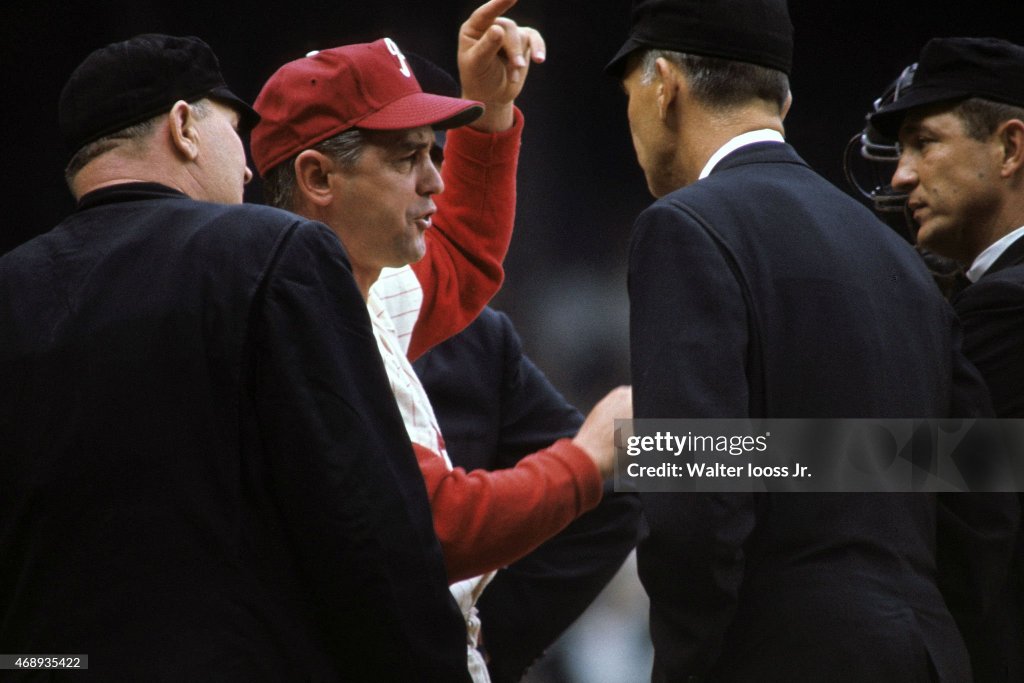
At Shibe Park, the Atlanta Braves and Philadelphia Phillies set a Major League record by using 43 players in a 9-inning game. The Braves’ 25 match the 9-inning high mark for National League clubs. Eight of the 25 are pitchers, tying a league mark, but still the stumbling Phillies drop their 6th in a row 6–4. The topper is Rico Carty’s 3-run triple in the top of the 9th against reliever Bobby Shantz, in for starter Art Mahaffey. Torre again has three hits for Milwaukee, which shaves the Phillies’ lead to a half-game.
The Philadelphia Inquirer stops its recent practice of printing the Phillies magic number, citing the countdown digit has lost its significance in the National League race. The fading Phils, which had a 6.5 game lead just six days ago, now clings to a half-game margin, and the team will need to beat the contenders they will face in five of the six remaining games to clinch the once ‘certain’ pennant.
The Cincinnati Reds belt the New York Mets, 6–1, for their 7th straight win, the longest in the National League this season. Marty Keough drives in half the runs with a single and double. The Reds are now a half-game in back of the Phils.
The St. Louis Cardinals got good hitting from Mike Shannon and good pitching from Curt Simmons today to post a 6–3 victory over the Pittsburgh Pirates. Shannon put the Cardinals ahead to stay 2–1 in the fourth inning with a bloop single to right off the Pirate ace, Bob Veale. Dick Groat opened the inning with a double, Ken Bpyer walked and Bill White sacrificed. Julian Javier was intentionally walked before Shannon singled home two runs. Another run scored when the rightfielder, Roberto Clemente, threw wildly to the plate. Shannon scored with the fourth run of the inning on Tim McCarver’s infield hit. Simmons got his 17th victory against nine losses. He had to pitch out of trouble several times. Barney Schultz relieved him in the ninth to get the last out.
AFL Football:
San Diego Chargers 3, Buffalo Bills 30
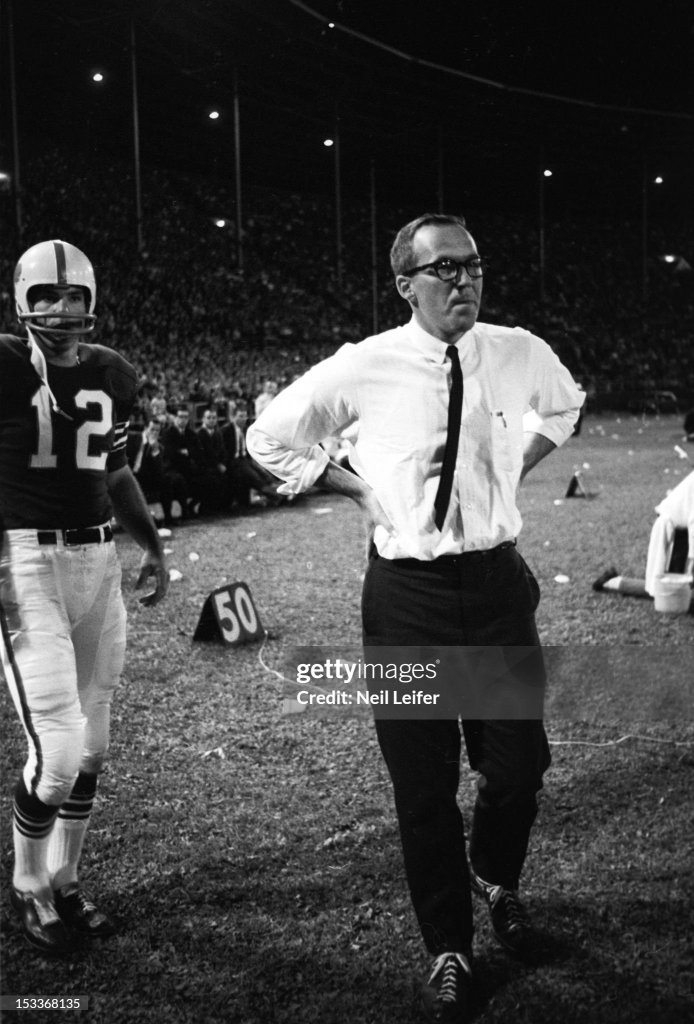
The Buffalo Bills swamped the San Diego Chargers, 30–3, tonight in an American Football League game before a crowd of 40,167. George (Butch) Byrd of Boston University, covered 75 yards when he intercepted a pass from Tobin Rote early in the first quarter and the Bills were in the lead to stay. Hagood Clarke of Florida, another rookie, returned a punt 35 yards in the second period for a touchdown. The crowd was the largest to see the Bills in their five‐year history. Pete Gogolak, who missed two field goals and an extra point, scored on a 13‐yarder and three conversions. Daryl Lamonica relieved Jack Kemp with 10:43 left in the game and steered the Eastern Division leaders to two insurance touchdowns.
Born:
Bobby Joe Edmonds, NFL running back and punt and kick returner (Pro Bowl, 1986; Seattle Seahawks, Los Angeles Raiders, Tampa Bay Buccaneers), in Nashville, Tennessee.
Tony Leiker, NFL defensive end (Green Bay Packers), in Hays, Kansas.
Dave Martinez, MLB outfielder and first baseman (Chicago Cubs, Montreal Expos, Cincinnati Reds, San Francisco Giants, Chicago White Sox, Tampa Bay Devil Rays, Texas Rangers, Toronto Blue Jays, Atlanta Braves), in Manhattan, New York, New York.
Joe Skalski, MLB pitcher (Cleveland Indians), in Burnham, Illinois.
Derek Ho, American surfer (World Championship 1993; Hawaiian Triple Crown 1984, 1986, 1988, 1990), in Kailua, Hawaii (d. 2020).
Nicki French, English singer, in Carlisle, England, United Kingdom.
Ty Miller, American actor (‘The Kid’-“Young Riders”), in Granada Hills, California.

 History Diaries