Rumors of another coup bring government troops to take up key points around Saigon, but nothing materializes; however, younger officers demand that Major General Nguyễn Khánh dismiss General Khiêm, a member of the ruling triumvirate, and five other generals. (Khánh will announce the resignations of all six on 30 September.) Anti-government riots at Quy Nhơn, one of the centers of Buddhist protests during August, are also put down by government forces. A company of paratroopers camped at the offices of Premier Khánh, and aides said they had been stationed there because of the rumors of a coup. A marine battalion was transferred from swampy Gò Công Province Wednesday night and taken to Tạ Đức, five miles from the city. The marines at Gò Công were protecting government officials charged with weaning the local people away from the Communists.
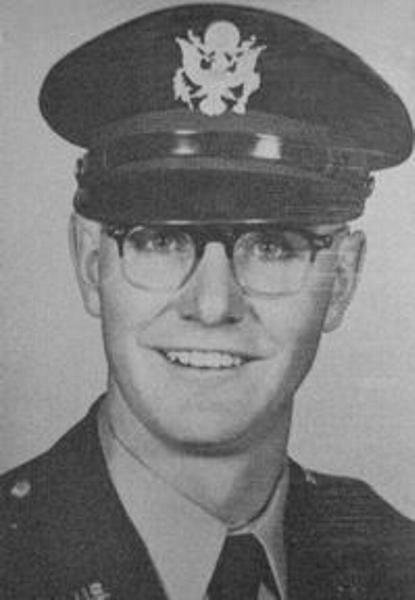
In military action today, a United States Army officer was killed and an American civilian wounded in a Việt Cộng ambush five miles northeast of Saigon. A United States military spokesman said the Communists had thrown a grenade into a jeep in which the Army officer and the civilian, a foreign‐aid official, were riding along a dirt road from the capital to neighboring Bình Dương Province. The civilian suffered minor injuries. The ambush brought to 194 the American death toll in Vietnamese fighting since major military aid started in 1961. In incidents other than fighting, 89 have died, bringing the overall death toll to 283.
Ambassador Maxwell D. Taylor of the United States has been urging Premier Nguyễn Khánh to conciliate Vietnam’s rebellious mountain tribesmen rather than try to force them into line. The Ambassador has been in close touch with the Premier since the threat of a rebellion arose last week. Today, after General Khánh returned from Buôn Ma Thuột, a Montagnard tribal center, informed sources said he had agreed to remedy some of the dissidents’, long‐standing grievances.
When General Khánh flew to Buôn Ma Thuột yesterday to confer with Montagnard leaders, he was handed a list of complaints ranging from requests that tribal languages be taught in state schools to more sweeping demands for outright autonomy in the mountain areas along the Laotian and Cambodian frontiers. The demands were pressed upon his transitional government at a time when many special‐interest groups are agitating for satisfaction. While the Government is unlikely to agree to complete autonomy for the Montagnards, qualified sources said, it is likely to give them more economic assistance and to show more respect for their customs.
Amid the strident demands of religious, political and military groups in Saigon, with their overtone of world politics, the Montagnard issues strike observers as a voice from a strange and distant past. There is clear evidence of Communist agitation and encouragement to some of the tribal leaders, but most of their complaints arose long before Communism became a force in South Vietnam. Seven Americans remained with rebel tribesmen today at the Special Forces camp of Bon Sar Pa, providing a communications link for the settlement of grievances. Official spokesmen said the Americans were there voluntarily and were being treated well by the Montagnards.
Major General Đỗ Cao Trí, dismissed from his military command of the II Army Corps this month, is reported to have attempted suicide in the mountain resort of Đà Lạt but was saved by emergency medical treatment, government sources said today. Premier Nguyễn Khánh denied printed reports that General Trí was dead. In a statement, General Khánh said: Đỗ Cao Trí is alive. I heard from him yesterday. He is a very sick man.” General Trí has been in Đà Lạt since an abortive military coup September 13. Đà Lạt is a favorite spot to send generals for what amounts to area arrest, although no such action has been reported officially in General Tri’s case.
General Trí had many powerful enemies, and it was largely a result of Buddhist pressure that the tough military commander was discharged from his post by General Khánh. Buddhists accused General Trí of responsibility for the conduct of repressions against Buddhist demonstrators during the Ngô Đình Diệm regime. He also directed successful military operations against the Hòa Hảo religious sect, which once was in armed revolt against the Diệm regime. The sect, which had its own army, joined with the government after President Diệm was ousted and killed last November.
The Laotian Government has sent a strongly worded protest note to Communist North Vietnam against North Vietnamese participation in the Laotian fighting, it was disclosed today. The note, citing fresh evidence, was sent by Foreign Minister Pheng Phongsavan Wednesday and was made public today.
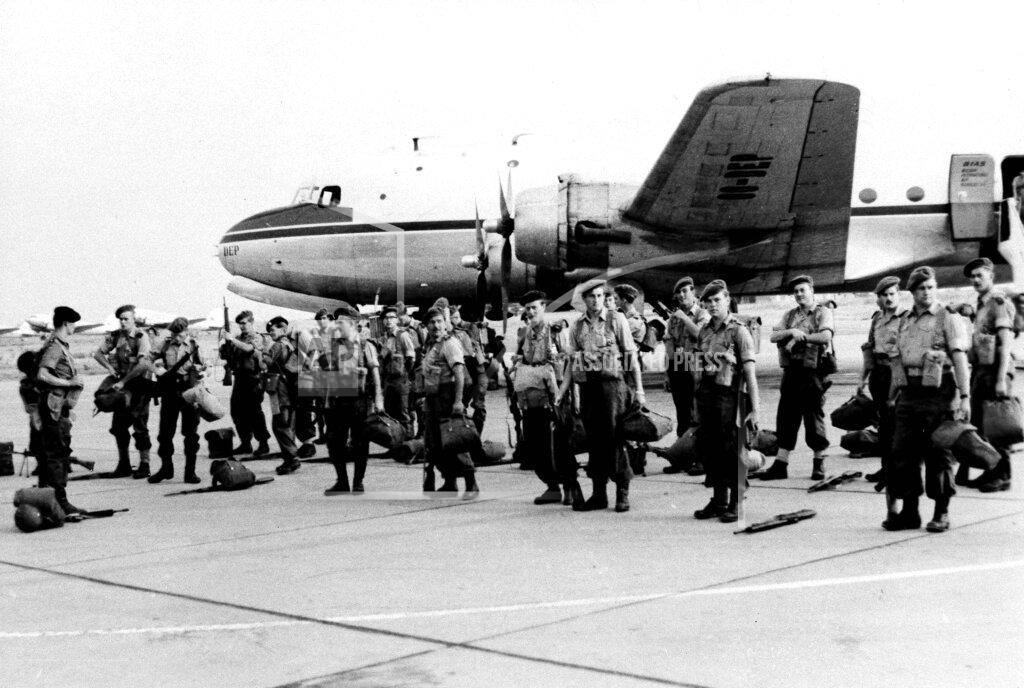
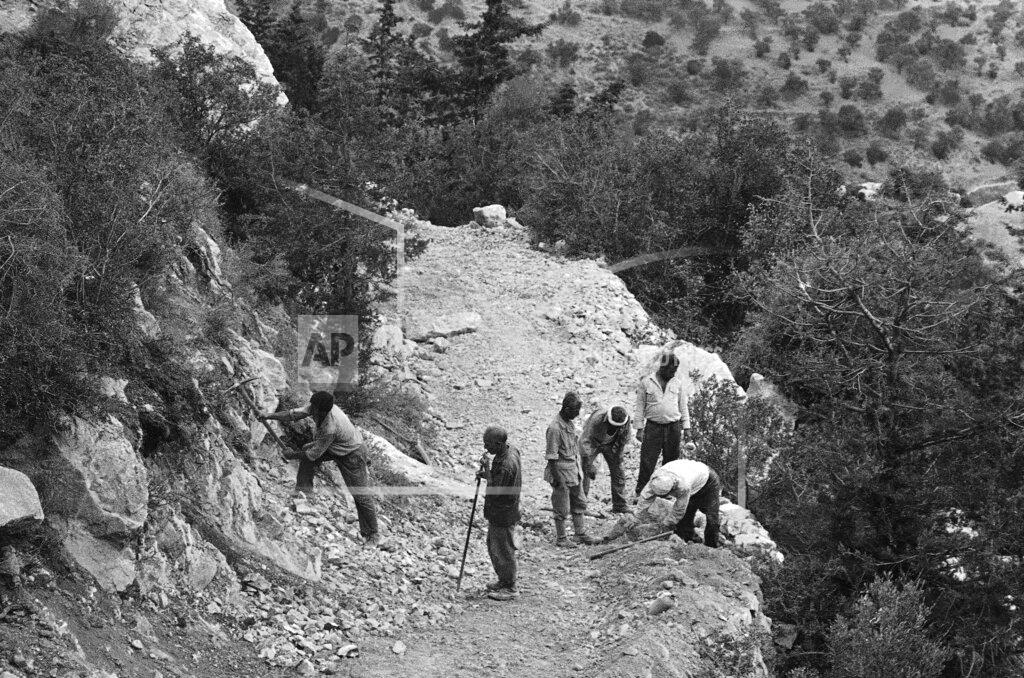
The Secretary General, U Thant, announced today that he had won agreement for complete United Nations control of the strategic highway from Nicosia to Kyrenia in Cyprus. The road has been held for many months by the Turkish Army. This is the biggest concession won so far from the Cypriote and Turkish Governments in the United Nations’ peacekeeping mission. Mr. Thant announced the agreement to the Security Council just after it voted unanimously to retain the peacekeeping force in Cyprus for three more months, until December 26. The force’s mission — already extended once, by three months — was to expire tomorrow.
The Secretary General also disclosed that he had appointed Carlos Alfredo Bernardes of Brazil as his representative in the Cyprus peacekeeping effort. Mr. Bernardes succeeds Galo Plaza Lasso of Ecuador, who has become the mediator for Cyprus and will seek a longrange political solution. Mr. Plaza said at a news conference that he hoped for success and that the job must be done in Cyprus. He said that as soon as he understood the feelings of the Greek Cypriote majority and the Turkish Cypriote minority he could approach the broader international aspects of the question. Greece and Turkey have figured in the Cyprus issue since communal violence resumed on the island last December. Mr. Plaza vowed that he would be “fiercely independent” in his work and would not sacrifice his “independence of action” at any point.
The Security Council resolution did not broaden the powers of the United Nations force or the Secretary General, as Mr. Thant asked in his report of September 10, nor did it provide for financing the force except by voluntary contributions. Opposition from the Cypriote Government and the Soviet bloc prevented such changes. In his statement to the Council after the vote, Mr. Thant said he would continue to solicit voluntary contributions, but he added: “I must nevertheless reiterate the view I expressed in my report to the Council on 15 June, 1964: that this method of financing the force is most unsatisfactory.”
A Turkish representative in Cyprus and the United Nations commander, General Thimayya, have reached agreement on the rotation of Turkish troops, Foreign Minister Feridun C. Erkin, said today.
Chancellor Ludwig Erhard said today that he hoped the President of the United States would come to Europe after the November elections to review the state of the Western alliance. The Chancellor indicated that President Johnson had such a trip in mind. Speaking at a news conference, Dr. Erhard said he and the President were agreed that consultations on the future of the Western alliance and its strategic concepts were necessary. But “nothing official” has been done yet to arrange a meeting of Western leaders, he added. This was the second time within a week that the Chancellor had dropped a hint that a meeting of Western leaders might be in the offing.
FRELIMO, the Frente de Libertação de Moçambique (Mozambique Liberation Front), a nationalist group led by Dr. Eduardo Mondlane and dedicated to making the colony of Portuguese East Africa independent, launched the Mozambican War of Independence against the colonial armies of Portugal, in a battle that would continue for more than a decade. The first attack was on the Portuguese Army outpost at Chai, in the Cabo Delgado Province near the border with Tanzania.; FRELIMO would later claim “simultaneous attacks on ten military outposts ‘covering a vast area of the country’”.
U.S. presidential adviser McGeorge Bundy met with the Soviet Ambassador to the U.S., Anatoly Dobrynin to discuss the possibility of joint action to prevent the People’s Republic of China from becoming the fifth nation (after the U.S., the U.S.S.R., the UK and France) to develop nuclear weapons. President Johnson had already ruled out taking unilateral action on September 15; Dobrynin told Bundy that the Chinese nuclear capability was not a great concern and, according to Bundy’s memorandum of the conversation, “gently remarked on the continued existence of the treaty” between the USSR and China. China would have its first successful nuclear bomb three weeks later, on October 16.
At a meeting of the Privy Council of the United Kingdom, Queen Elizabeth II signed a proclamation dissolving “the longest peacetime parliament of modern time” and “the first to run its full five-year term since the term was reduced from seven years before World War I”. The dissolution of the House of Commons marked the beginning of campaigning for the October 15 elections called by Prime Minister Douglas-Home.
Jens Otto Krag forms a minority government in Denmark consisting entirely of Social Democrats. His party, although the largest in Parliament, failed to obtain an absolute majority in Tuesday’s general election. It won the same number that it had before—76 of the 179 seats in the unicameral Parliament.
Secretary of State Dean Rusk sought today to enlist the support of America’s Black leadership for United States policy in Africa. He made the plea at the American Negro Leadership Conference on Africa, which seeks to stimulate public awareness of African affairs and of the transformation of Africa from a marginal to a major consideration in United States policy. It was evident from the ranking American officials who attended the luncheon and the working sessions of the conference that the United States had come to seek domestic support for its policies in Africa.
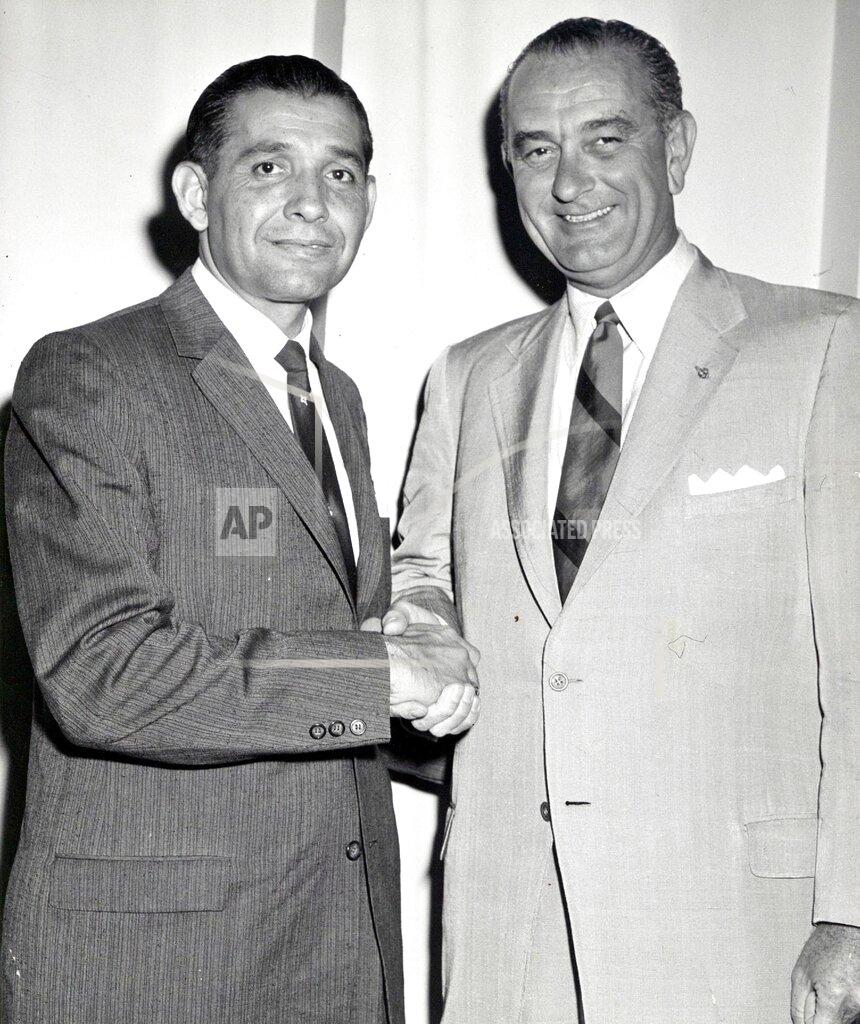
President Lyndon Johnson of the United States and President Adolfo Lopez Mateos of Mexico shook hands at the center of the international bridge over the Rio Grande from Stanton Street in El Paso, Texas, to Avenida Lerdo in Ciudad Juarez, Chihuahua, to commemorate the two nations’ agreement to settle the Chamizal dispute. Johnson and Lopez then traveled to a ceremony in El Paso, followed by a visit to El Chamizal to unveil a marker for the new boundary marker for the half-mile northward shifting of the border.
President Johnson flew to Oklahoma for the dedication of the new Eufaula Dam and spoke about national issues and the Vietnam War. In words not noted until after his escalation of the war, Johnson said “There are those that say you ought to go north and drop bombs, to try to wipe out the supply lines, and they think that would escalate the war. We don’t want our American boys to do the fighting for Asian boys.”
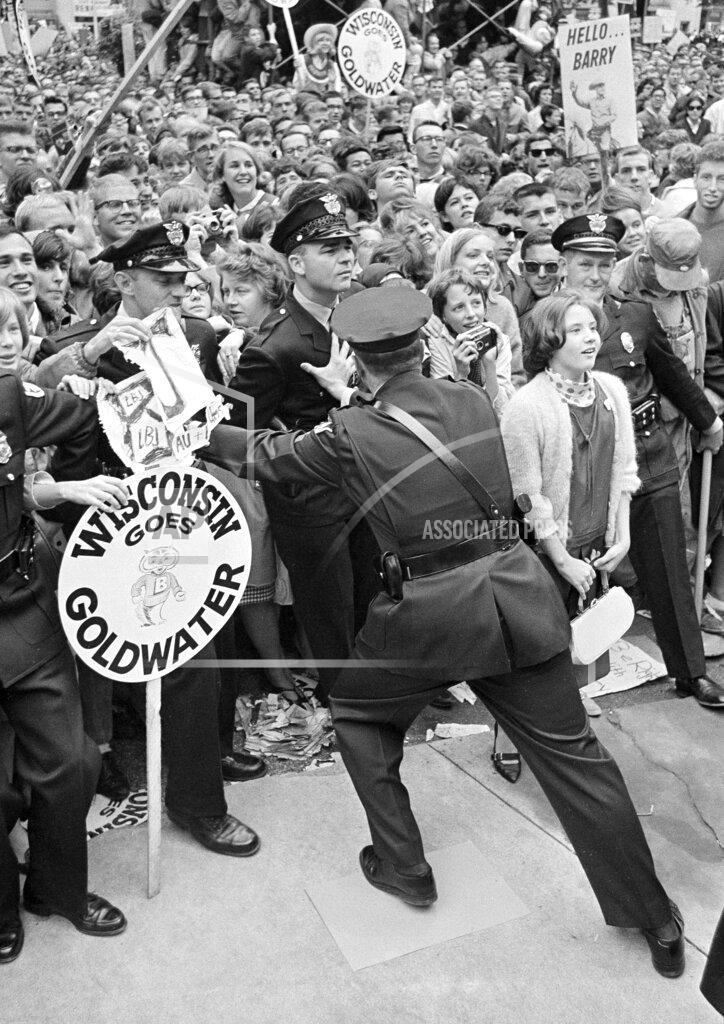
President Johnson said today the United States was not a “government of ultimatum” and would not “frighten others into a nuclear war.” His words seemed aimed at the “Why not victory?” foreign policy of the Republican Presidential candidate, Senator Barry Goldwater. Mr. Johnson made a whirlwind speaking tour of the Southwest. He was met by large crowds, and defended the policies of his Administration. To about 20,000 persons attending the dedication of Eufaula Dam near Muskogee, Oklahoma, he said he did not want “a land war” in Asia.
In regard to the American commitment in the guerrilla war in South Vietnam, he said: “We are not going to start another war and we are not going to run away from where we are.” He criticized those who “want to go north,” meaning to attack North Vietnam, which supports the Việt Cộng partisans in the south. The President spent the day giving four essentially nonpolitical speeches in the Southwest, but he enjoyed a political triumph in El Paso when huge crowds, estimated at from 100,000 to 250,000, turned out to cheer him in the streets. Mr. Johnson alighted from his limousine 10 times to plunge — joyously — into the throngs to shake hands. At one crowded El Paso intersection he gave an effective one‐sentence speech to an audience containing many Mexican‐Americans. “Buenos dias, mis amigos,” said the President.
At Texarkana, the President’s political implications became more direct as he said that “who leads America must speak what is deep in the hearts of Americans—and not what comes from the top of the head.” He said Americans loved both peace and social gains made in recent years, and warned “but those gains will go — they will be taken from us — if we ever allow any to divide us.” “The ultimate test of moral fitness for men to seek a public trust is their devotion to perfection of our system and justice in our society,” said the President.
Mr. Goldwater has charged that there is moral decay at the top of American leadership. Mr. Goldwater has also campaigned strongly in the South on a pledge to support states rights. Mr. Johnson quoted Robert E. Lee as telling the South in the last century to “abandon all local animosities — and make your sons Americans.” The President said: “There are voices in the land tonight that have a strange and brittle tone. They cry out that we are weak and soft and blind… insist the way to the future is the road back into the past… demand suspicion as the price of liberty and belligerence as the alternative to peace… They just can’t seem to find anything right in our beloved country. All they find is wrong.”
The Republican leaders of the Senate and House asked President Johnson today to confirm or deny that he had given the Supreme Commander of the North Atlantic Treaty Organizations forces authority to use tactical nuclear weapons in certain emergencies. The statement, issued by Senator Everett McKinley Dirksen, of Illinois, the Senate GOP leader, and Representative Charles A. Halleck of Indiana, minority leader in the House, said reports in two magazines ”are in direct conflict with statements of President Johnson and practically every major spokesman of his Administration.”
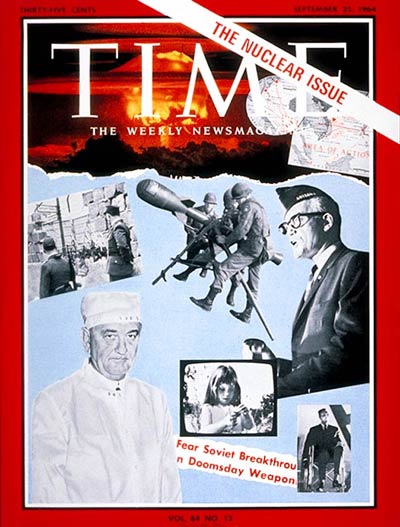
The statement quoted TIME magazine as saying there was nothing in the law to prevent the President from delegating authority to a NATO commander to use nuclear weapons under certain circumstances. “Goldwater insists that the President should delegate such authority,” Time reported about Senator Barry Goldwater, Johnson’s Republican rival for the Presidency. “The fact is that he already does, as did President Eisenhower and Kennedy before him.” U.S. News & World Report said that “even now, the understanding is widespread among NATO allies that U.S. commanders in Europe already have orders, issued in advance, to use nuclear weapons in certain emergencies with no further instructions from Washington.”
The Johnson Administration asked Congress today to break a deadlock over new sugar legislation by passing a sixmonth extension of import quotas on foreign sugar. The Administration proposal included no provision for any changes in marketing quotas for domestic sugar. An Administration spokesman said that unless the foreign quotas are continued, domestic sugar prices might be depressed this fall. Action on extending the foreign quotas, which are scheduled to expire on December 31, had been stalled by a battle between the domestic sugar beet industry and cane sugar refiners in the United States. Domestic portions of the Federal Sugar Control Act are not scheduled to expire until the end of 1966. The domestic beet industry, which wants to expand production, had sought at least to include provisions in the foreign‐quota extension, allowing the marketing of sugar produced in excess of domestic quotas in 1963 and this year. Cane refiners, who process imported sugar, have demanded that sugar beet acreage be reduced next year.
The Senate approved today the Administration’s $1.06 billion program for relief and development of Appalachia. The vote was 45 to 13. The legislation, a key supplement to President Johnson’s antipoverty program, now goes to the House, where its fate is uncertain. Congressional leaders originally planned to seek House action first, but persistent election-year absenteeism there caused them to change their minds. The Senate, it was hoped, would set an example and perhaps provide a pyschological spur. The House test is expected next week. Leaders today began to predict final adjournment by next Saturday. They gained new confidence from the Senate’s prompt passage yesterday of the $3.3 billion foreign aid bill after breaking the six‐week impasse over moves to slow; down court‐ordered reapportionment of state legislatures.
A Republican campaign camphlet depicting Senator Barry Goldwater as a “personally dedicated” and “vigorous” champion of Black rights who believes it is “both wise and just” for Black and white children to attend the same schools has been summarily suppressed by the Republican National Committee. Acknowledging the “kill order” against the pamphlet, Republican officials said their veto was “only a matter of timing.” One spokesman, however, explained that distribution of the pamphlet had been stopped because “it might turn the backlash into frontlash by falling into the wrong hands.” The pamphlet was designed for distribution among Blacks in Washington. It calls Mr. Goldwater “a card carrying member” of the National Association for the Advancement of Colored People.
A 27‐year‐old Black said today that police officials in McComb, Mississippi, had threatened to dismiss him from the local force if he did not provide information about civil rights activity in the area. Ardis Gardner, whose home there was bombed Wednesday night, told reporters that he quit the force about a month ago when served with the ultimatum. Mr. Garner arrived in Washington yesterday and conferred for several hours with Burke Marshall, Assistant Attorney General for civil rights, and John Doar, a Justice Department lawyer, about the turbulent situation in southwest Mississippi. He also met with representatives of the Civil Rights Commission.
Mr. Garner said he had joined the police force “in good faith” because he wanted a job but had resigned after serving six weeks. Two days later, he tried to rejoin the force but was told by Police Chief George Guy that it was too late, Mr. Garner said. After his resignation he was ”followed constantly by police and other men,” Mr. Garner said. He said he had tried to get another job, but had failed. He said that it would be too dangerous for him to return to Mississippi and that he would move to San Francisco. The bombing of Mr. Garner’s house was the 15th reported in McComb since early summer. A 16th blast was also reported Wednesday night. Mr. Garner’s house was bombed while he was in Jackson, Mississippi, testifying before the Mississippi Advisory Committee or the Civil Rights Commission. He said that his wife had left for Jackson by bus less than two hours before the blast occurred.
Qualifying petitions filed by four Blacks seeking to run for Congress were ruled “deficient” today and rejected by the Mississippi Election Commission. “Attorney General Joe Patterson announced that two of the Blacks were ineligible to run as. independents in the November general election, since they had run previously in the Democratic primary. They lost in that election. All four are members of the Freedom Democratic party, which precipitated a dispute at the Democratic National Convention by challenging the regular white delegation from Mississippi Most of the white delegates walked out. The four are Aaron Henry of Clarksdale, Mrs. Annie Devine of Canton, Mrs. Fannie Lou Hamer of Ruleville and Mrs. Victoria Jackson Gray of Hattiesburg.
A cure for acute lymphocytic leukemia by the end of 1967 was forecast by the President of the American Cancer Society, Dr. Wendell G. Scott, who told delegates to the Society’s 18th annual conference, “I predict that within the next three years, acute leukemia will be stricken from the list of human diseases.”
CBS introduced “Gomer Pyle, U.S.M.C.,” a popular situation comedy starring Jim Nabors as a naive recruit to the United States Marine Corps and Frank Sutton as the boot camp’s drill sergeant. Nabors continued the role that he had originated on The Andy Griffith Show. The show would be among the Top Ten most popular U.S. television program in all five of its seasons.
Two home runs by Roger Maris, one by Joe Pepitone and perfect relief pitching by Pete Mikkelsen and Hal Reniff — all in the last three innings — brought the New York Yankees a 6-5 victory over the Washington Senators tonight. The deciding run came in the ninth when Maris hit his second homer. This late‐inning uprising, the first of its type enjoyed by the Yankees in two months, increased their winning streak to 10 games and reduced their pennant-clinching number to five. Any combination of Yankee victories and contenders’ defeats adding up to five will end the race, in which the Yankees have nine games left and Baltimore and Chicago seven apiece. New York leads the league by four games, five in the loss column.
The Baltimore Orioles unleashed a 17‐hit attack to crush the Cleveland Indians 10–6, tonight and keep alive their fading hopes in the American League race. The Orioles, snapping a threegame losing streak, scored four runs in the second inning and three more in the fourth as Wally Bunker gained his 18th victory of the season. Baltimore took a one‐run lead in the first when Luis Aparicio led off with a single and stole second. Russ Snyder grounded out, but Boog Powell singled to right to deliver Aparicio.
Juan Pizarro of Chicago gained his 18th victory of the season tonight as the Chicago White Sox unlimbered their home run attack to trounce the Kansas City Athletics, 11–3. Four different players went deep for the Sox.
Dean Chance beats the Minnesota Twins’ Jim Kaat 1–0 to become the California Angels first 20-game winner. It’s the 11th shutout of the year for Chance. Chance’s five 1–0 wins in 1964 ties the Major League record held by 4 pitchers (Reb Russell; W. Johnson; Bush; Hubbell).
Dave Wickersham set down Boston without a hit for the first five innings, then squeezed out his 19th victory of the season today in Detroit’s 3–2 triumph over the Red Sox. Don Demeter’s homer in the sixth decided the game.
The Milwaukee Braves scored two runs in the 12th inning tonight and defeated the Philadelphia Phillies, 7–5. The loss was the Phillies’ fifth straight. Chris Short goes 8 innings for Philly before exiting with a 3–3 tie. Joe Torre slams a two run homer in the 10th, but the Phils match it with Richie Allen’s inside-the-park homer, before losing it in the 11th. Torre had three hits including the homer, his 19th, with 3 RBIs.
The Cincinnati Reds roared into New York last night from their three‐game sweep in Philadelphia, rolled over the Mets in both ends of a doubleheader and closed to within 1½ games of the collapsing Phillies. Jim Maloney (15–10) fires a one-hitter in the 3–0 win over the New York Mets. Joe Christopher’s 2nd-inning single is the only hit. Then Bob Fukey (11–9) completed the job with a 4‐1 three‐hitter with help over the last three innings from Sammy Ellis. The Reds were losing, 1—0, in this duel until the sixth, when Frank Robinson clipped Jack Fisher for a two‐run homer, while Marty Keough added one in the seventh.
St. Louis took advantage of seven walks and sloppy Pirate ball‐handling tonight to beat Pittsburgh, 5–3. The Cardinals scored three runs in the first inning and two in the seventh and both times used a pair of walks, a single and an error to get the runs. The Pirates out‐hit St. Louis, 8–4, and four of the Pirate hits went for extra bases: But Gordon Richardson, Ron Taylor and Barney Schultz combined to keep the Cards in front. Taylor choked off a Pirate threat in the fifth and Schultz thwarted a rally in the eighth.
Tom Haller’s homer and a double by Gaylord Perry, pitcher, accounted for two seventh‐inning runs as the San Francisco Giants kept their flickering National League pennant hopes alive with a 3–1 victory over the Chicago Cubs today. Perry (12–10) went the distance on a strong three‐hitter for his 12th triumph of the season and participated in the seventh‐inning rally that began after two outs when Haller slammed his homer. Bob Buhl, one of the league’s hard‐luck pitchers of 1964, held the Giants to a total of four hits but took the loss, his 14th of the campaign and eighth in his last nine decisions.
The Los Angeles Dodgers shelled Dick Farrell (11–10) early tonight and routed the Houston Colts, 7‐2. Tommy Davis hit his 14th homer for the Dodgers. Jim Brewer (3–3) got the win for Los Angeles.
NFL Football:
Washington Redskins 10, New York Giants 13
Y.A. Tittle, his bruised ribs heavily bandaged, came off the bench in the second half Friday night and drove the New York Giants to a 13–10 victory over the Washington Redskins before a crowd of 62,997. Rookie quarterback Gary Wood, goat of a lackluster first half in which the Redskins ran up a 10–0 lead, scared the winning touchdown with 39 seconds left on a left-end sweep from the one after Tittle, injured for the second time during the game, had to go to the sidelines. Tittle’s passes set up a pair of field goals by Don Chandler and moved the Giants to Washington’s one-yard-line late in the fourth period after linebacker Bill Winter recovered a fumble by Charley Taylor on the Redskins 17. On fourth down at the one, Wood replaced Tittle and promptly scooted around left end for the winning score.
Dow Jones Industrial Average: 874.71 (+1.73).
Born:
Maria Doyle Kennedy, Irish folk and rock singer (Mütter), and actress (“The Tudors”; “Outlander”), in Clontarf, County Dublin, Ireland.
Anita Barone, American actress (“The Jeff Foxworthy Show”, “Friends”), in St. Louis, Missouri.
Carlos Ruiz Zafón, Spanish writer (“Shadow of the Wind”), in Barcelona, Spain (d. 2020).
Gary Ayles, British racing driver, in Robertsbridge, East Sussex, England, United Kingdom.
Joe Fuller, NFL defensive back (San Diego Chargers, Green Bay Packers), in Milligan, Florida.
Reggie McGowan, NFL wide receiver (New York Giants), in McLennan County, Texas.
Ray Perkins, NFL defensive end (Dallas Cowboys), in Richmond, Virginia.
Mike Slaton, NFL defensive abck (Minnesota Vikings), in Sacramento, California.
Marc Benioff, American internet entrepreneur and philanthropist (Salesforce), in San Francisco, California.
Joey Saputo, Canadian businessman and sports executive, in Montreal, Quebec, Canada.
Died:
Ida Moore, 82, American character actress (“Mr. Music”; “Ma and Pa Kettle”; “Desk Set”).



 History Diaries