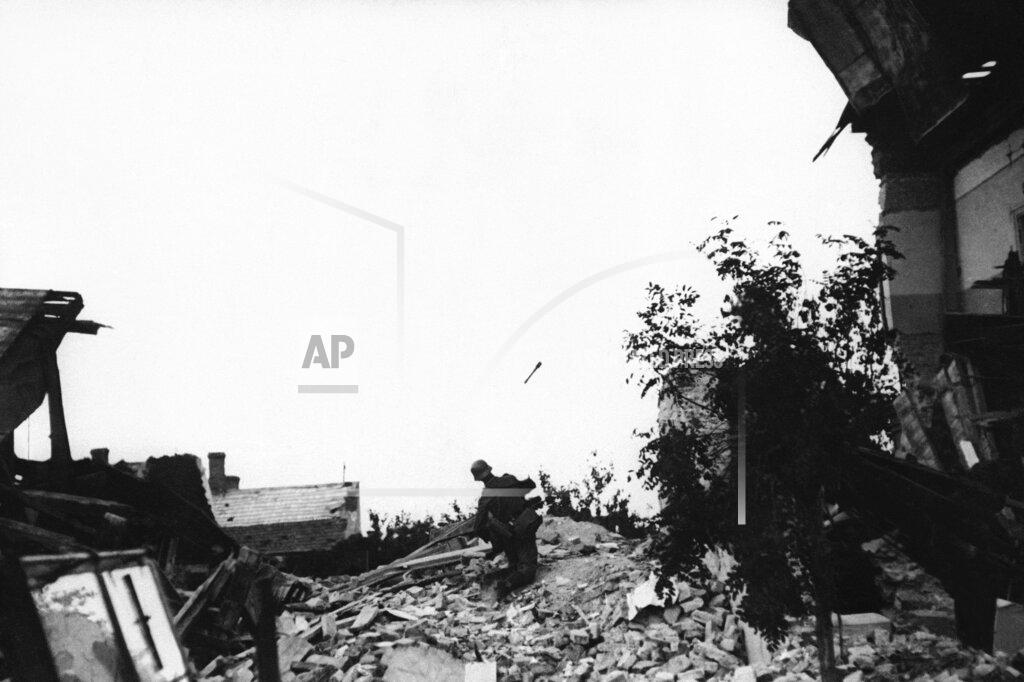
The Battle of Krasnobród was fought, resulting in Polish victory. It was fought between the forces of the Polish Army and the German Wehrmacht during the Invasion of Poland. It was one of the last battles in European warfare in which cavalry was used on both sides. At approximately 7 AM a group of Polish cavalry of the Nowogródek Cavalry Brigade left the forests halfway between Zamość and Tomaszów Lubelski. The 25th Greater Poland Uhlan Regiment under Colonel Bogdan Stachlewski formed the front guard of the formation and was entrusted with recapturing the pivotal town of Krasnobród. The German 8th Infantry Division fortified the town located on a hill with two lines of trenches. In order to minimize the effect of enemy numerical superiority, the Polish commander split his forces in two and ordered a cavalry charge, with each of the squadrons charging separately at a different sector of the front.
The German forces were caught completely by surprise and the first squadron successfully broke through their positions, while the German infantry started a chaotic retreat towards the center of the town, followed by the Polish cavalry using sabres and lances. The second squadron under Lieutenant Tadeusz Gerlecki joined the charge towards the hill. A unit of organic cavalry from the German 8th Infantry Division counter-charged from the hill, but was repelled. The Polish units started a pursuit after the fleeing enemy and entered the city. Although the Poles suffered heavy losses due to machine gun fire (with Gerlecki’s squadron losing all but 30 men), the town was retaken and the Poles took the headquarters of the division, together with about 100 German soldiers. Forty Polish combatants previously taken prisoner by the Germans were freed.
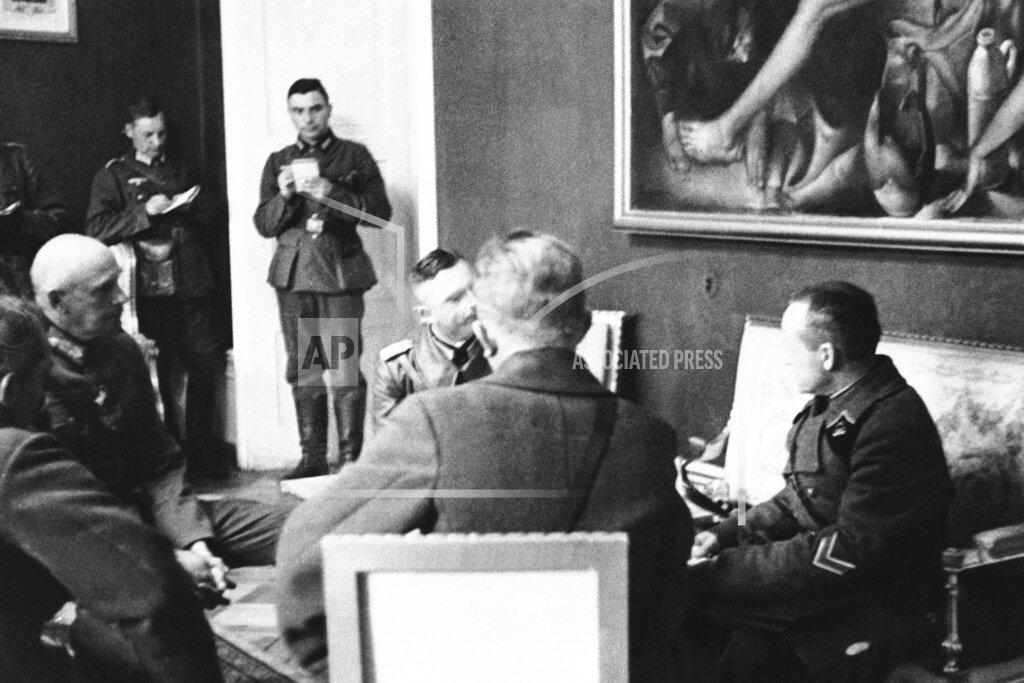
German Foreign Minister Joachim von Ribbentrop expressed approval for the Soviet proposal on the partition of Poland. German Foreign Minister Ribbentrop tells his ambassador in Moscow, Schulenberg, that the time has come to sign a treaty for “the definitive structure of the Polish area” and that he is willing to fly to Moscow — again — to complete it.
The Germans announce the fall of Lviv.
The surrounded Fortress of Modlin and nearby Warsaw continue to hold out. Morale is high even as rations dwindle
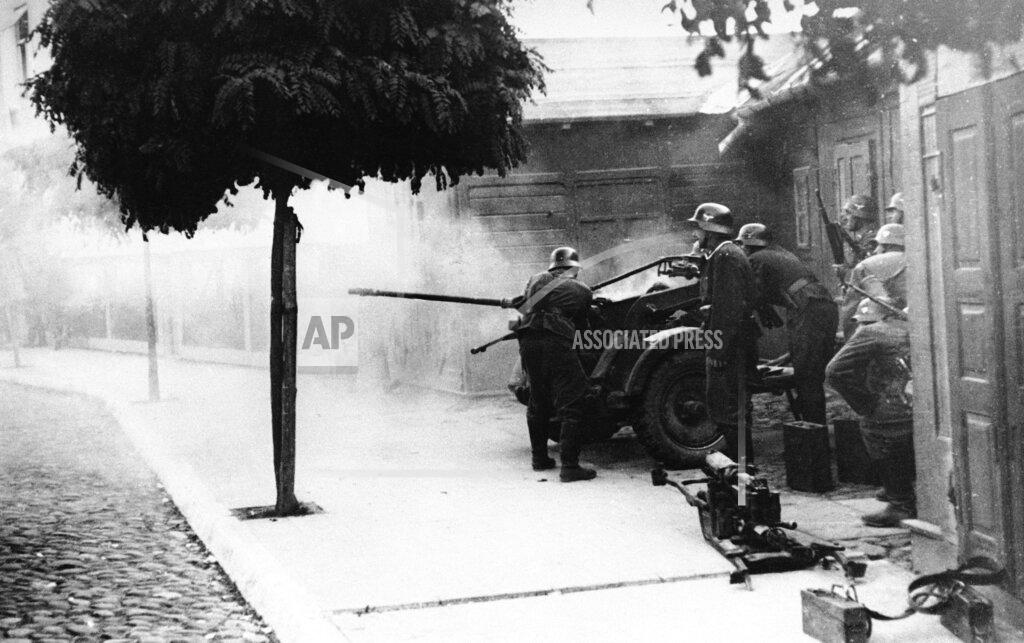
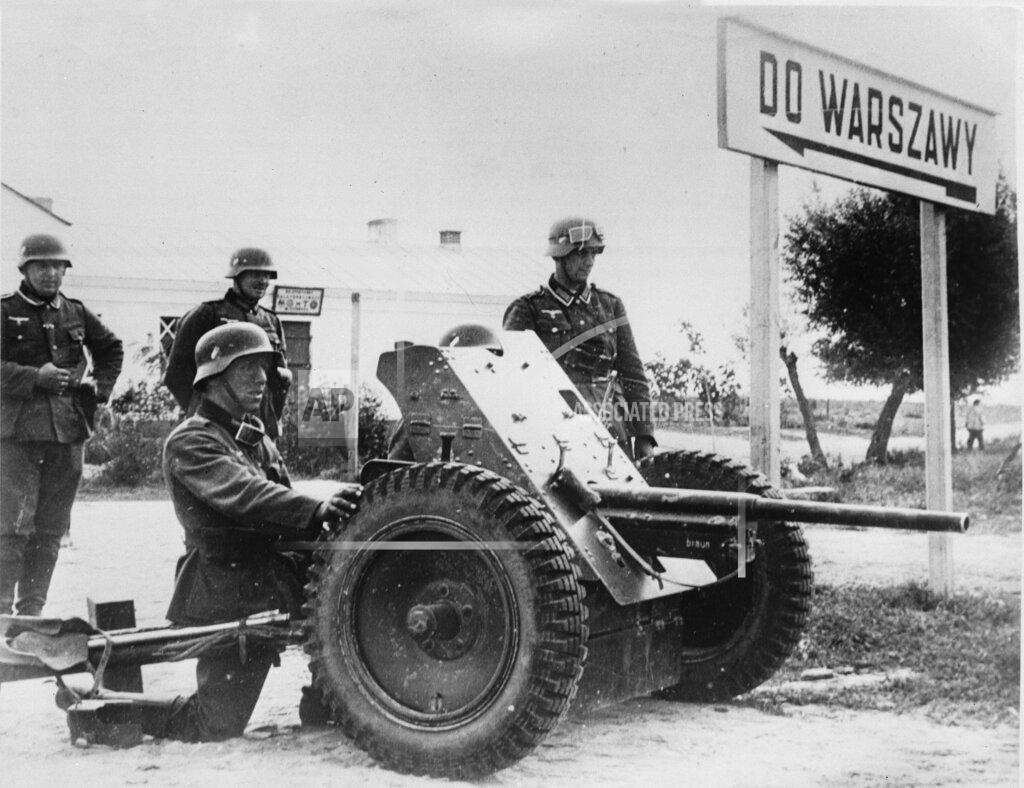
In Warsaw, food supplies are running out although the determination to resist remains among the Polish garrison surrounded in the city. Warsaw was running out of food and water after 8 days of siege, artillery shelling, and aerial bombing. As preparation for the storming, the city was shelled day and night with artillery and aerial bombardment. Among the guns used were heavy railway guns and mortars. Two entire air fleets took part in the air raids against both civilian and military targets. After September 20 the forces on the eastern bank of the Vistula started daily attacks on the Praga suburb. All were successfully counter-attacked by the Polish forces. On September 24 all German units concentrated around Warsaw were put under command of general Johannes Blaskowitz.
The German government issues a statement claiming that all organized fighting in Poland has ended. It states “The Polish Army of a million men has been defeated, captured, or routed. No single Polish active or reserve division escaped this fate. Only fractions of individual groups were able to avoid immediate destruction by fleeing into the swamps of eastern Poland. They succumbed there to Soviet troops. Of the entire Polish army only an insignificant remainder still is fighting at hopeless positions in Warsaw, in Modlin and on the Hela Peninsula.”
German radio announces that Germany has taken 450,000 prisoners and destroyed 800 Polish planes.
Radios owned by Jews in Nazi Germany were confiscated.
Limited food rationing begins in Germany.
In a speech delivered to Fascist party leaders at Rome, Italian Prime Minister Benito Mussolini restated Italy’s intention to remain neutral unless attacked. He also suggested that the “liquidation” of Poland presented an opportunity for a European peace settlement. Mussolini, in a speech to fellow fascists in Rome, urges a cease-fire and a peace based on current frontiers. He also somewhat ominously states that the country must “strengthen our army in preparation for any eventualities.”
Greeks fear Soviet pressure may weaken Turkey’s tie with the Allies.
A U.S. professor says that Italy is cashing in on war, and is engaged in a “scandalous profiteering” venture.
Rumania’s virtual military dictatorship worked to check any possible disorders in the country as plans for the slain Premier Armand Calinescu’s funeral were completed today. Slight disturbances were rumored in the provinces, but they could not be confirmed.
Sigmund Freud, founder of psychoanalysis, died in London. He had escaped from Vienna in 1938.
The neutral Finnish steam merchant Walma was stopped in the Skagerrak off the southern coast of Norway (58°15′N 11°00′E) by the U-4, commanded by Oberleutnant zur See Harro von Klot-Heydenfeldt, and examined by a boarding party, which placed scuttling charges after it became clear that she was carrying cargo for England. Of the ship’s complement, all 18 survived and were picked up by the Swedish fishing vessel Zephyr. The 1,361-ton Walma was carrying cellulose and was bound for Ellesmere, England.
Squadron 40-T arrives at Lisbon, Portugal; en route, flagship, light cruiser Trenton (CL-11) (Rear Admiral Charles E. Courtney) intercepts distress signal from British freighter Constant which reports being pursued by what she believes to be a German U-boat. Rear Admiral Courtney sends destroyer Jacob Jones (DD-130) to provide water and provisions to the English merchantman.
War at Sea, Saturday, 23 September (naval-history.net)
German policy – Admiral Raeder ordered U-boats to sink all merchant ships using their radios when stopped.
Scotland – submarine HMS Trident completed and departed Liverpool for trials in Gareloch Bay, escorted by escort vessel/minesweeper HMS Gleaner.
British northern waters – battleship HMS Royal Sovereign departed Scapa Flow at 2330, escorted by destroyers HMS Esk and HMS Express, to refit at Portsmouth. At 1750/24th, the destroyers attacked a submarine contact 25 miles off the north coast of Ireland. The three ships arrived at Portsmouth at 0930/26th.
Western Atlantic – convoy HX.2 departed Halifax at 0900 escorted by heavy cruiser HMS York and Canadian destroyers HMCS St Laurent, HMCS Fraser, and HMCS Saguenay. York detached on the 25th, and the convoy reached Liverpool on 10 October.
British east coast – destroyers HMS Fortune and HMS Firedrake attacked U.14, 40 miles NNE of Peterhead, but no damage was done.
Skagerrak – U-4 captured Finnish steamer Walma (1361grt) off Smagen on the west coast of Sweden and scuttled her off Hallo in 58 15N, 11 00E. The entire crew was saved.
Southern England – Midshipman J C Casey and Midshipman R M B Kettle, flying Harvards of the RAF No 1 Flying Training School at Netheravon, Wiltshire were killed when their aircraft collided NE of the airfield.
UK-France convoys – MB.7 of seven cargo ships departed Southampton, escorted by destroyers HMS Achates, HMS Sardonyx, and HMS Acheron, and arrived at Brest on the 25th.
BC.3S of 21 steamers, including Baron Graham, Baron Maclay, and New Texas (Cdre) departed Quiberon Bay escorted by destroyers HMS Wolverine and HMS Wessex, and arrived safely in the Bristol Channel on the 25th.
BC.4F of steamer Tynwald departed Loire Bay escorted by destroyers HMS Escort and HMS Electra, also arriving in Bristol Channel on the 25th.
UK-out convoys – OA.9 of 32 ships departed Southend. Destroyers HMS Juno and HMS Amazon departed Devonport to escort the convoy and were with it from the 23rd to 26th. The destroyers then detached to convoy HXF.1 before arriving back at Plymouth on the 29th.
OB.9 departed Liverpool escorted by destroyers HMS Vanoc and HMS Whirlwind until the 26th.
Caribbean – Australian light cruiser HMAS Perth south of Jamaica received a direction finding bearing NW of her of a German vessel, most probably pocket battleship Deutschland.
Southwestern approaches – destroyer HMS Jackal attacked a submarine contact 20 miles SW of Land’s End. HMS Eclipse attacked the same contact at 1027. Destroyer HMS Exmouth (D.12) was ordered to continue the hunt with HMS Eclipse, HMS Encounter, HMS Escapade, and HMS Jackal.
Indian Ocean – Light cruiser HMS Manchester departed Bombay.
Fourteen Democratic members of the Senate Foreign Relations Committee, a majority headed by Senator Pittman, began writing behind locked doors today a bill to repeal the embargo on shipments of arms and munitions to belligerents. They expect to complete the draft for consideration by the full committee on Monday morning. These members, all of whom are more or less convinced of the desirability of recall of the embargo, met at the invitation of Senator Pittman, and were called to meet again tomorrow afternoon.
In the meantime, the Republican members of the committee and Senator Clark of Missouri, lone dissident Democrat, were neither invited to express their views nor shown a copy of a confidential “working draft” which Senator Pittman had printed last night after he and Senators Connally and Thomas of Utah, working as a drafting committee, completed their work on it at midnight. “I don’t think they would be interested,” Senator Pittman said.
While this section of the committee thus attempted to expedite action on legislation which constituted the purpose of President Roosevelt’s action calling Congress into special session, the Senate group working to maintain the embargo held three strategy meetings, at which they discussed ways and means to be taken inside and outside of Congress to stop enactment of the proposed legislation. All of those participating in the bill-drafting meeting today were reticent to an extreme degree, but it was learned that a long time was taken up by serious discussion as to the probable public reaction to a proposal actually to eliminate the “cash” from the so-called “cash-and-carry” program.
It has been suggested that while belligerents, under the proposed law, would have to take title to purchases in this country and transport goods in their own ships, they might have the benefit of commercial credits. As a talking point the bill drafters considered ninety-day credits instead of spot cash on munitions shipments and longer ones on other commodities of a non-military nature, according to authoritative. reports. But several members expressed fears that such action would arouse a public reaction which would add to the opposition to repeal of the embargo.
When Senator Pittman was asked about this phase of the committee deliberation, he replied, “I will not discuss that.” The fourteen Democratic members sat from 10:30 AM until 1 PM. In the afternoon, the trio consisting of Senators Pittman, Connally and Thomas met to pencil further the preliminary draft. The entire fourteen were invited to meet again tomorrow. The other eleven in the larger group are Senator Barkley, the majority leader, and Senators Wagner, Gillette, Reynolds, Murray, Green, Schwellenbach, George, Pepper, Guffey and Van Nuys.
This constituted the Democratic membership, along with Senator Clark of Missouri and Senator Harrison. The latter is absent on account of illness. Of those who met today, all are expected to help report out a bill, although not all are definitely pledged to support one on the floor. Only Senator Murray made a statement for quotation after the meeting, aside from Chairman Pittman’s remarks at a press conference. Mr. Murray told reporters, “I do not even know what they were talking about.”
Chairman Pittman, while reticent in his statements in reply to inquiries, affirmed that the proposed new bill was similar to a bill he introduced last March as a substitute for the old cash-and-carry provision of the current Neutrality Law which expired on May 1. He emphasized, however, that the new measure would reduce the President’s discretion, enlarge penalties for violation of trade rules by American vessels and give the President authority in a new section to assure as far as possible the keeping of American shipping from dangerous waters.
All forms of trade with belligerents, “even shoe laces,” would be forbidden to American shipping, he said, under proposed penalties involving fines of $50,000 and five-year penitentiary sentences for officers and directors of corporations convicted. Such a prohibition, he emphasized, “would apply to every kind of trade on earth” as far as belligerents were concerned. It would automatically stop trade with countries at war, and the new section now written in the bill would authorize the President to designate as “combat areas” any waters considered dangerous to neutral shipping.
Forty-four Senators, or only five less than a majority, have announced that they favored repeal of the embargo on exports of arms to Europe’s warring nations. Only 20 have declared opposition. Thirty-two are so far uncommitted.
Alf M. Landon, former Governor of Kansas and Republican nominee for President in 1936, called upon President Roosevelt yesterday to take the proposed repeal of the embargo on munitions out of politics by a definite declaration that he would not run for a third term.
President Roosevelt, at Hyde Park, declined to make any such declaration.
Aircraft manufacture in the United States has been speeded so much, especially since the start of the European war, that the $300,000,000 expansion of the Army Air Corps may be attained six months or more ahead of schedule.
The War Department is rushing organization of five army divisions into a mobile, hard-hitting corps which would be ready for instant dispatch to defend any threatened mainland point or such outposts as Panama and Hawaii.
Dr. David H. Dubrowsky of New York, former director of the Soviet Red Cross in the United States and friend of many early Bolshevik leaders, told the House Committee on Un-American Activities today that through “rackets” organized by the Soviet Government in the United States Americans had paid millions of dollars to finance propaganda aimed at themselves.
The New York Yankees downed the Washington Senators, 7–1, behind the pitching of Monte Pearson, and Joe DiMaggio’s 29th home run.
Between Buck Newsom’s seven-hit pitching and the batting of Rudy York and Charley Gehringer, the Tigers drubbed the Indians today, 6–3. Cleveland held third place, but the White Sox crept within one game behind by taking two contests. Newsom held the Indians in check all the way. They collected two hits in only one frame, the second, when Roy Weatherly scored on a double and single.
The Chicago White Sox, defeated in seven of their last eight road games, came back to Comiskey Park today to sweep a double-header with the St. Louis Browns, 6–2 and 9–4. The triumphs moved Chicago within a game of third-place Cleveland. Johnny Rigney hurled a four-hitter n the opener.
The Philadelphia Athletics outhit the Boston Red Sox today, 14 to 12, but wilted in the face of Boston’s seven-run fifth inning, and the home team won its second straight in the series, 10–8.
The Dodgers’ Cookie Lavagetto goes 6-for–6 as Brooklyn swamps the Philadelphia Phillies, 22–4, in the first of two. Da Bums collect 27 hits against the host Quakers. Cookie has 4 singles, a double, a triple and a walk in 7 plate appearances — but no RBIs, the only Dodger not to register at least 2 runs knocked in. In the two games Cookie reaches base 11 times, tying a record. In the second game, reliever Larry Doyle (1–2) makes his first start of the year and shuts out the Phillies, 8–0, with a three-hitter.
The Cincinnati Reds battered the Pittsburgh Pirates today for their second straight double-victory with a show of batting and pitching of championship caliber before 20,954 fans. The Reds won the opener, 6–5, as Bucky Walters won his 27th of the season, and the nightcap, 6–1, on Lee Grissom’s five-hitter. Cincinnati now has a winning streak of six games.
Spurred on by Cincinnati’s double conquest of Pittsburgh, the St. Louis Cardinals walloped the Chicago Cubs, 7–3, today to stay in the National League pennant chase. The Cardinals lost another half-game on the Reds; they now trail by 3½, with just eight games remaining.
The New York Giants’ Babe Young hits two home runs to lift the Giants to a 4–1 victory over the Boston Bees. Hal Schumacher (12-10) got the win for New York.
The Panama Conference began with 21 countries of the Americas in attendance. American states agree to a 300-mile (480 km) neutral zone off the coast of the the Americas. The conference is formally titled “First Meeting of the Ministers of Foreign Affairs of the American Republics for Consultation Under the Inter-American Agreements of Buenos Aires and Lima.” The world’s attention was called to the fact that twenty-one Pan-American Foreign Ministers are assembled hre with no thought to “destroy, enslave or dismember any nation,” and with no secret treaties to negotiate, by President Juan Demostenes Arosemena of Panama in welcoming the delegations at the formal opening of the neutrality consultations here late today.
In Hunan Province, China, Japanese Army 6th Division crossed the Sinchiang River at dawn, followed by a similar crossing by another division at 0620 hours at Yingtian (now Miluo). Also on the same day, naval vessels landed Japanese Navy Shanghai Special Naval Landing Force and Japanese Army 3rd Division east of the city of Changsha. Surrounded on three sides, Chinese troops fell back to prevent encirclement, opening the way to Changsha.
At Peiping, the United States Embassy protested to the Japanese against the bombing of the American Southern Baptist Mission at Luichow, in Kwangtung Province, on September 4. The mission was reported to have been damaged by bombs from low-flying planes, although it displayed American flags.
The French remove the ban on Chinese supplies. Burmese and Indo-Chinese routes open.
Admiral Nomura Kichisaburo is appointed Foreign Minister in Prime Minister General Abe Nobuyuki’s recently appointed Japanese government. This appointment is seen as a serious effort to place Japanese-American relations on a better footing. This cabinet will hold office until January of 1940, and make some conciliatory moves towards the U.S., which will not be reciprocated. This will strengthen the position of the more militant Japanese leaders
Dow Jones Industrial Average: 152.99 (+0.42).
Born:
Jerry Cole [Jerald Kolbrak], American session guitarist (Wrecking Crew), in Green Bay, Wisconsin (d. 2008).
Roy Buchanan, American blues guitarist, in Ozark, Arkansas (d. 1988).
Janusz Gajos, actor, in Dąbrowa Górnicza, Poland.
Died:
Sigmund Freud, 83, Austrian neurologist and psychoanalysist (euthanasia).
Floyd Gibbons, 52, American war correspondent (heart attack).
Naval Construction:
The Kriegsmarine (German Navy) Type VIIC U-boats U-201, U-202, U-203, and U-204 are ordered from F. Krupp Germaniawerft AG, Kiel (werk 630-633).
The Kriegsmarine (German Navy) Type VIIC U-boats U-251, U-252, U-253, U-254, and U-255 are ordered from Bremer Vulkan-Vegesacker Werft, Bremen-Vegesack (werk 16-20).
The Kriegsmarine (German Navy) Type VIIC U-boats U-331, U-332, U-333, and U-334 are ordered from Nordseewerke, Emden (werk 203-206).
The Kriegsmarine (German Navy) Type VIIC U-boats U-371, U-372, U-373, U-374 are ordered from Howaldtswerke AG, Kiel (werk 2-5).
The Kriegsmarine (German Navy) Type VIIC U-boats U-401, U-402, U-403, U-404 are ordered from Danziger Werft AG, Danzig (werk 102-105).
The Kriegsmarine (German Navy) Type VIIC U-boats U-431, U-432, U-433 and U-434 are ordered from F Schichau GmbH, Danzig (werk 1472-1475).
The Royal Navy Flower-class corvette HMS Primula (K 14) is laid down by William Simons & Co. Ltd. (Renfrew, Scotland).
The Regia Marina (Royal Italian Navy) Attilio Regolo-class light cruiser Pompeo Magno is laid down by Cantiere Navale Riuniti (Ancona, Italy).
The Вое́нно-морско́й флот СССР (ВМФ) (Soviet Navy) “L” (Leninec)-class (4th group, Type XIII-modified) submarine L-22 is launched by Baltiyskiy Zavod (Leningrad, U.S.S.R.) / Yard 189.
The Kriegsmarine (German Navy) vorpostenboot V 301 Weser is commissioned.
The Kriegsmarine (German Navy) vorpostenboot V 303 Tannenburg is commissioned.
The Kriegsmarine (German Navy) vorpostenboot V 406 Jan Mayen (later V 401 Jan Mayen) is commissioned.
The Regia Marina (Royal Italian Navy) Marcello-class submarine Comandante Cappellini is commissioned. She later serves as the Kriegsmarine UIT-24, and finally as the Japanese I-503.
The Kriegsmarine (German Navy) Type VIIB U-boat U-54 is commissioned. Her first commander is Oberleutnant zur See Georg-Heinz Michel.
The U.S. Navy Benham-class destroyer USS Rowan (DD-405) is commissioned. Her first commander is Lieutenant Commander Beverley Randolph Harrison, Jr., USN.

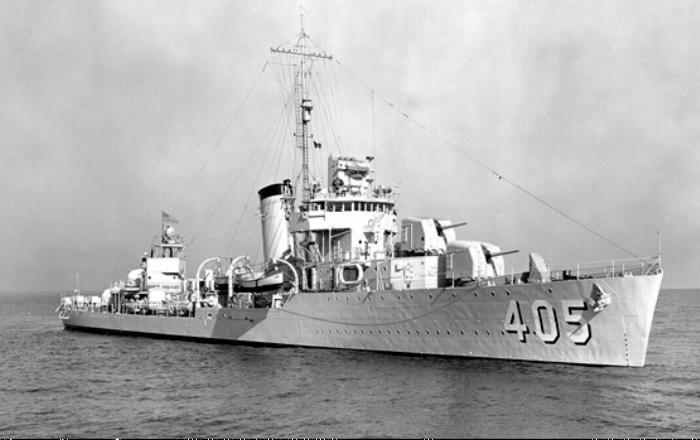
Served on Atlantic and Arctic convoys, including the ill-fated PQ.17. Subsequently particpated in the TORCH landings in North Africa and HUSKY landings at Sicily. Her final mission saw her screening forces landing on the Italian mainland at Salerno (AVALANCHE).
Rowan earned five battle stars during World War II.
Lost 11 September 1943.
After the Allied invasion of Italy, USS Rowan (Lt.Cdr. Robert Stephens Ford, USN) was screening empty transport ships when a torpedo that was seen on the port side streaked toward them but missed. A second torpedo slammed into her magazine, sinking the destroyer in 40 seconds southeast of Salerno Gulf in position 40°07’N, 14°18’E, 204 officers and men were killed and 71 were rescued by the USS Bristol which included the Commanding officer. The attack had been carried out by the German E-boats (Schnellbote) S-57, S-151, S-152 and S-154.
https://www.history.navy.mil/research/histories/ship-histories/danfs/r/rowan-iii.html
 History Diaries