The New York Times opines:
“Though some details have been cleared up, last Friday’s shooting incident in the Tonkin Gulf and its consequences are in some ways more mysterious and more disturbing now than they were originally. Bureaucratic confusion and secretiveness in Washington are still denying to the American people a detailed official account of what the United States Government knows about the skirmish.
“Amid the welter of unanswered questions here, one of the few certainties is that Senator Goldwater was wrong when he implied the United States military communications system Had broken down during the incident.
“The most disturbing aspect of the affair is President Johnson’s revelation that when first reports arrived last Friday some people—presumably among his military and civilian advisers—had urged rapid retaliation and American bombing of North Vietnam. As was to be expected, the President had a cooler head and correctly rejected that advice. But it is sobering to learn that there are individuals in the President’s close official family who are so quick on the trigger, and who wanted to take action that could have had very serious consequences in escalating and widening the Vietnam conflict. The United States would have been in an indefensible position before world public opinion if it had bombed North Vietnam as “retaliation” against bullets and torpedoes that—even accepting the official interpretation—were never fired.
“The incident will have been useful if it reminds the nation and its leaders of how inescapably confusion is a part of war, and of the need for maximum responsibility in dealing with that confusion. The destroyer captains who opened fire last Friday acted out of understandable concern for their ships and their men in putting the worst possible interpretation on what their radar screens showed. They used—and had permission to use—only conventional weapons.
“But it is conceivable that in some analogous situation commanders of land or sea forces might, if they had the authority and the means, employ nuclear weapons, with the gravest possible consequences. The dangers that were faced and avoided in the Tonkin Gulf incident make more evident than ever before the wisdom of national policy in retaining authority over nuclear weapons in Washington, where the fullest picture is known and can be evaluated.”
The U.S. military and Johnson Administration continue to insist that there was an incident with North Vietnamese vessels, though the evidence now suggests that it was simply another case of shooting at radar ghosts — as happened in the second night of “action” during the Tonkin Gulf Incident. The Defense Department believes that at least one and perhaps three unidentified craft were sunk in last Friday’s encounter with two United States destroyers in the Gulf of Tonkin off Communist North Vietnam.
This tentative assessment of the incident is based on radar observations made by the two destroyers after they had fired several rounds of five‐inch shells at the approaching craft, generally presumed by officials to have been North Vietnamese torpedo boats or gunboats. The assessment gives some substance to a report yesterday from Moscow by Tass, the Soviet press agency, that three vessels had been sunk in the encounter. The Defense Department has refused to confirm or deny the report. The first official indication that some of the craft were believed to have been hit came today from Secretary of State Dean Rusk in a news conference in San Francisco. Mr. Rusk reported that the destroyers had fired upon and presumably hit what appeared to be four or five hostile vessels.
Ten persons were wounded, some seriously, when a Vietnamese soldier threw a hand grenade early today at a group of policemen in downtown Saigon. The soldier was identified as a deserter from a post 10 miles outside the capital. He had been using his grenade to threaten and rob passersby in Saigon, and policemen were sent to disarm him and his two accomplices. The accomplices fled, but the deserter was captured after he had thrown the grenade. There has been a wave of robberies by men armed with grenades in Saigon in the last few weeks.
Republican presidential candidate Goldwater charges that President Johnson lied to the American people and that he is committing the U.S. to war ‘recklessly.’ Having previously called it ‘McNamara’s War,’ Goldwater calls it ‘Johnson’s War.’
A compromise agreement was reached today to end a general strike in Saigon, but the city’s labor leader claimed victory. “Of course we have won,” said Võ Văn Tài, secretary general of the Vietnamese labor confederation’s Saigon council, in calling off the strike begun yesterday by 20,000 workers. “The government has been forced to give in. If they don’t keep their word, they know we can turn more thousands into the street.” About 2,000 workers massed at the union headquarters with banners ready for a march if the negotiations had failed. They were conducted on the Government’s side by a team headed by Deputy Premier Nguyễn Xuân Oánh. The government negotiators apparently held the line against a labor demand for repeal of a state‐of‐emergency regulation officially barring strikes, but they yielded on other points.
An urban labor movement in South Vietnam extracted concessions today from the buffeted Government of Premier Nguyễn Khánh. Politically militant students, under Buddhist leadership, demonstrated in central Vietnam for democracy. Two days ago a backward but powerful tribe of mountain people in the central highlands pressed their demands for autonomy, seizing a government radio station in their defiance of central authority. Before that it was the senior generals of the army, then some junior generals who challenged the government. The Roman Catholics are growing restive as the Buddhists penetrate deeper into the seats of power. Intellectuals are forming new political parties and the older parties are reasserting themselves.
Also, that constant element of the nation’s society that too many seem to overlook, the Communist Việt Cộng insurgents, intensified their campaign of terrorism and intrusions last week. What is left of the government’s authority in South Vietnam? More omniously, what is the prospect for a return to stability? To say that the country has fallen apart at the seams is too strong, for time and time again Western observers here have been struck by the resiliency of the Vietnamese society. But the worry for American officials now is: when a Modus Vivendi is found will it be one consistent with the American policy for defeating Communism in Southeast Asia?
Prince Souvanna Phouma, Premier of Laos, left Paris by air today for Vientiane to report to King Savang Vathana on the tripartite Laotian talks in Paris. The formal talks on Laotian neutrality among the leaders of the country’s three political factions — neutralist, pro-Communist and right wing — opened yesterday. They had been scheduled to open August 24, but continuing disagreement between Prince Souvanna Phouma, a neutralist, the pro‐Communist Pathet Lao leader, Prince Souphanouvong, and a right‐wing leader, Prince Boun Oum, delayed their beginning.
One South Korean soldier was killed and another was seriously wounded today while on sentry duty by a group of five men clad in South Korean military uniforms but believed to be armed North Korean espionage agents. The incident, which took place at a military cantonment near Yangyang on South Korea’s eastern coast, occurred three days after a similar attack in which four South Korean soldiers were wounded by three Communist agents carrying Soviet‐made machine pistols. Both incidents occurred just South of the demilitarized zone that divides South Korea from Communist North Korea. Some observers here believe that the sudden flare‐ups probably are premeditated. They fear the incidents may signify a change of Communist tactics in South Korea from the covert intelligence activities of the past to more overt armed subversion.
The Soviet Union was reported today to be conducting intensive surveillance of the large‐scale North Atlantic Treaty Organization naval exercise Team Work, which began yesterday over a vast area of the Atlantic Ocean. The Russians have been using surface ships, planes and submarines to. track the Allied warships, Rear Admiral H. R. Law, the British commander of the “enemy” forces in the exercise, and Vice Admiral Kleber S. Masterson, the American commander of the NATO striking fleet, said at news conferences. Aboard the United States aircraft carrier USS Wasp, Admiral Masterson said two Crusader jet fighters from the carrier USS Independence had intercepted two long‐range Soviet Bison bombers off Iceland and escorted them out of the area of the exercise. The Soviet planes were never closer than 35 miles to the carrier. Both Admiral Masterson and Admiral Law, who brieted the press at the Defense Ministry here, said there was nothing “unnatural” in the Soviet surveillance. “They can tag along,” Admiral Law added. “It’s a free ocean. They’ve given us some good exercise in reconnaissance.”
A surprise Cypriot demand today threatened to block a resolution under which the Security Council would keep the United Nations peacekeeping force in Cyprus for three months more. According to reliable sources, Cyprus is demanding the inclusion of language making a friendly reference to a recent decision by Archbishop Makarios, President of Cyprus, to grant a general amnesty and to remove most restrictions on Turkey’s shipments of food to the Turkish Cypriot minority. Turkey has refused to agree to the inclusion of such language in the resolution, which would be introduced by the six elected members of the 13‐member Council — Bolivia, Brazil, Czechoslovakia, the Ivory Coast, Morocco and Norway. A disagreement over this and other provisions blocked introduction of the resolution. The Council adjourned until tomorrow.
The six elected members will probably meet tomorrow before the Council session to make a final effort to reach agreement. Since the present mandate of the force will expire Saturday, some Western delegates are afraid that the disagreement may terminate the efforts of the United Nations to settle the persistent communal dispute on Cyprus. Gala Plaza Lazo, former President of Ecuador, the newly appointed United Nations mediator for Cyprus, conferred with the Secretary General, U Thant on arrival from Cyprus. Last week, when the United States offered to donate $2 million and Britain $1 million toward the $7 million required to keep the force in operation three months more, it was believed that the extension would go through without difficulty. Brazil and Norway started work on a brief resolution, like one adopted unanimously last June, authorizing the extension.
Africa’s Congo Conciliation Commission called on the United States tonight to withdraw all its military supplies, equipment and men from the Congo. A special African delegation will fly to Washington from Nairobi, Kenya this week to appeal to President Johnson for an immediate end to American military support for Premier Moise Tshombe. The commission said American withdrawal was essential before peace could be restored in the troubled Congo, once a Belgian colony. The delegation, made up of representatives of five African countries, is to leave Nairobi Thursday. It will be led by Kenya’s Minister of State, Joseph Murumbi. The four other members will be from Ghana, Guinea, Nigeria and the United Arab Republic. Tonight’s decision was announced by Kenya’s Prime Minister, Jomo Kenyatta, chairman of the commission, as the nine-nation body completed its preliminary meetings in Nairobi.
The Italian Communist party sent delegations today to Rumania and Czechoslovakia for what is thought will be talks on the Moscow‐Peking quarrel. Yesterday, Italian Communist representatives flew to Hungary, apparently on a similar mission. It is known that the Italian Communist party, the strongest in the West, is also in touch with the parties in Poland and Yugoslavia. Informed Communists in Rome denied suggestions that their Rome headquarters intended to become the center of a “third force” in the Communist camp, committed to neither Moscow or Peking.
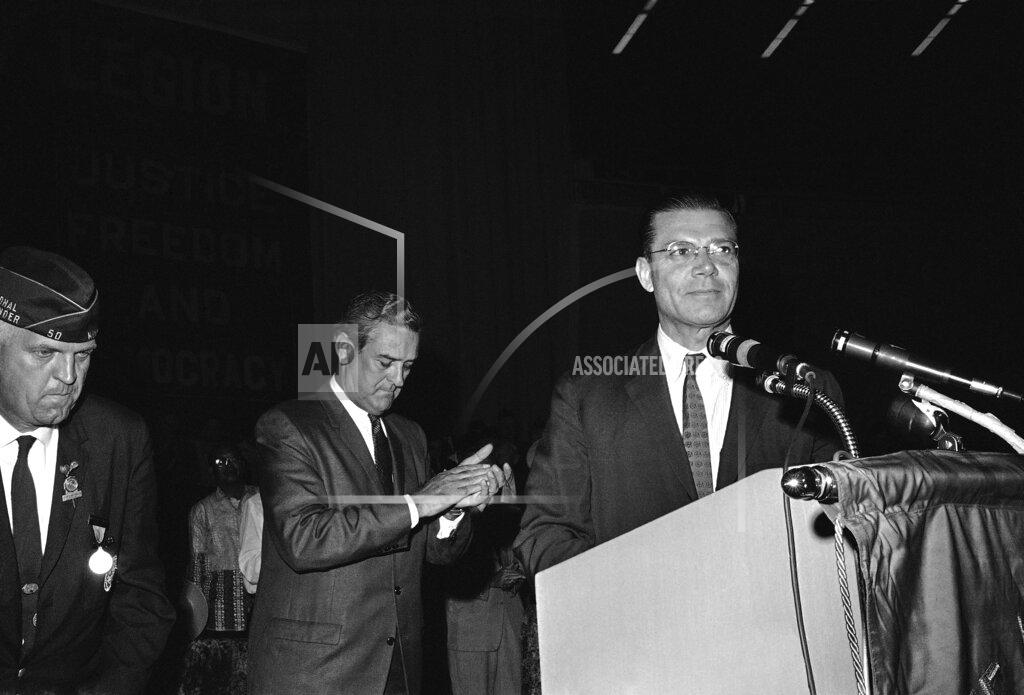
President Johnson asked today that the voters reject the voice of a “raving, ranting demagogue.” Although he called his speech nonpolitical, Mr. Johnson delivered what was perhaps his most impassioned address since the Presidential election campaign began. He also promised that “next year we are going to cut excise taxes.” Mr. Johnson spoke in the huge Convention Hall in Atlantic City, New Jersey to the annual convention of the United Steelworkers of America. It was in this hall that he received the Democratic nomination on August 26.
He never mentioned the Republican Presidential candidate, Senator Barry Goldwater of Arizona, by name. He denounced the philosophy of the “soup line” and criticized “prejudice and bigotry and hatred and division.” Saying there was no limit to what a united, tolerant nation could achieve, Mr. Johnson turned a Republican slogan to his own purposes, declaring, “And you know in your heart that I am telling you the truth.” The 3,500 union delegates, many of them wearing five‐gallon LBJ hats, had endorsed the President’s candidacy earlier.
They gave Mr. Johnson three standing ovations and repeatedly interrupted him with applause. Mr. Johnson’s voice rose from near whispers to shouts. “We will extend the helping hand of a just nation to the poor and to the helpless and the oppressed,” Mr. Johnson said. “We will do all these things because we love people instead of hate them, we have faith in America not fear of the future, because you are strong men of vision, not frightened crybabies, because you know it takes a man who loves his country to build a house instead of a raving, ranting demagogue who wants to tear down one… Beware of those who fear and doubt and those who rave and rant about the dangers of progress.”
Delegates to the convention of the United Steelworkers of America formally endorsed President Johnson today and called his election vital to the labor movement and the cause of peace and freedom hi the world. A few minutes after voting unanimously to support President Johnson and his running mate, Senator Hubert H. Humphrey of Minnesota, the 3,500 delegates, representing 1,120,000 steelworkers, gave a cheering, whistling, clapping reception to the President himself, who flew to Atlantic City by helicopter to address the delegates in Convention Hall. The union delegates left no doubt about their enthusiasm for the President. They interrupted his 42‐minute address 60 times to applaud and cheer. At the conclusion of President Johnson’s speech, David J. McDonald, president of the steel union, told Mr. Johnson that the steelworkers would work and fight and help him win in the November election. In another address to the convention this afternoon, George Meany, president of the American Federation of Labor and Congress of Industrial Organizations, emphasized that the first order of business for the American trade-union movement in the next 44 days should be to work for the election of President Johnson.
“We have got to see to it,” Mr, Meany said, “that we have an administration in Washington under which we can progress, under which we can face the very difficult international and domestic problems that are before us, and we have got a job to do, and we have the members and we have the votes, but having the members and having the votes doesn’t mean anything unless you get those votes in the ballot box.” Mr. Meany sharply attacked the record of Senator Barry Goldwater of Arizona, the Republican Presidential candidate, and compared his rise to that of Hitler. Nobody paid much attention to Hitler, Mr. Meany said, but “suddenly the crackpot” took over. Mr. Meany warned against being complacent in the face of what he called the threat now posed by Senator Goldwater.
Like Hitler, Mr. Meany said, Senator Goldwater has written a book — a book composed of his record in Washington during the last 12 years. He reviewed a long list of votes by Senator Goldwater on various bills, indicating that he had repeatedly taken a position in opposition to labor’s interests, on issues ranging from an increase in unemployment insurance benefits and an expansion of Social Security to the passage of the civil rights bill and President Johnson’s antipoverty program. “One of our major political parties has been captured lock, stock and barrel by the rightwing extremists who look upon Barry Goldwater as a hero,” Mr, Meany said. “Oh, this may be temporary, but here it is. They have control of this party.”
[Ed: The election has turned nasty. The man wrote a book? Obviously, Hitler. I bet he eats little sausages, too, the villain. (Sarc) How little things have changed in 60 years.]
Senator Barry Goldwater believes that military field commanders already have the power, without specific Presidential order, to use nuclear weapons under emergency conditions. He believes that standby arrangements with the President, to deal in extremities with situations of open war, have long been in effect. Furthermore, the Republican Presidential candidate is known to hold the view that the existence of these contingency plans has already essentially effectuated one of the policies that he has been suggesting in the area of nuclear weaponry. In Washington, the Pentagon declined comment on the candidate’s assertion. However, it is widely assumed in the capital that certain field commanders now have authority to employ nuclear arms in certain circumstances.
Mike Mansfield and Everett McKinley Dirksen, the Democratic and Republican leaders of the Senate, have tentatively agreed to modify considerably their proposal to delay reapportionment of State Legislatures. The modified version, which was produced over the weekend by legal aides of the two leaders, would be offered as a substitute for the amendment to the foreign aid bill submitted on August 12. That amendment would stay until January 1, 1966, all Federal court proceedings arising from the Supreme Court decision last June that each house of a Stata Legislature must be based on districts substantially equal in population. The original Dirksen‐Mansfield proposal also directed a stay of proceedings long enough to give a state “reasonable opportunity” to reapportion in accordance with the Supreme Court prescription.
If the state did not reapportion in the time allowed by the stay, then the district courts could redistrict. A bipartisan group of liberals resorted to Unlimited debate against this proposal, asserting that it required a “suspension” of the 14th Amendment to the Constitution guaranteeing “equal protection” of the laws, and that it was an attempt to make the Supreme Court “subservient to Congress.” Over the last six weeks, the liberals have won recruits but not enough to be able to kill the Dirksen‐Mansfield amendment by tabling it. The substitute under consideration is designed to win over the liberals if possible, and if they refuse to go along, to attract enough Senators to shut off debate. Closure of debate requires two‐thirds of those present and voting.
Sargent Shriver, the Peace Corps director, was confirmed by the Senate today to head the Administration’s $l billion antipoverty program as well. The appointment was approved by voice vote, with only six Senators present. The vote came after Senator Jacob K. Javits said President Johnson had made “a serious mistake” in giving Mr. Shriver “two fulltime jobs”. The New York Republican said Mr. Shriver was doing a fine job with the Peace Corps and no doubt would do a good job on his new post. But he urged President Johnson to “think seriously” about giving Mr. Shriver responsibility for both jobs.
The House Judiciary Committee voted 20 to 13 today to order an investigation of the Department of Justice. The inquiry would concentrate on whether the department had invaded the constitutional rights or liberties of any individual. No names were mentioned in the authorizing resolution, but the name of James R. Hoffa, president of the International Brotherhood of Teamsters, was brought into immediate Congressional focus. The teamsters’ union has lobbied for an investigation of the department since Hoffa’s conviction on jury‐fixing charges last spring. It accuses the department and former Attorney General Robert F. Kennedy of having abused their powers and of having had Government agents spy on Hoffa’s attorneys during the court action in Chattanooga. Two Hoffa convictions are now under appeal.
The resolution approved today was a substitute for one that specifically called for an investigation into the Justice Department’s handling of the teamster cases. This was sponsored by Representative Roland V. Libonati, Democrat of Illinois. The substitute was presented by Representative William C. McCulloch of Ohio, the ranking Republican on the Judiciary Committee. No vote of the full House is required. The resolution simply calls for appointment of a subcommittee of six Democrats and four Republicans to conduct the inquiry. Representative Emanuel Cellar, Democrat of Brooklyn, chairman of the Judiciary Committee, would be chairman of the inquiry. Mr. Celler opposed the investigation but said he would direct committee counsel to start preparations at once.
The House of Representatives appropriated $750 million today for antipoverty projects after turning back a feeble effort to further reduce the program by $75 million. The action came in House approval of a supplemental appropriations bill of nearly a billion dollars. The catch‐all bill includes funds not only for the antipoverty program but for a number of other programs as well. Included are urban mass transit, civil rights enforcement and food stamps for the needy. House members demonstrated little of the fire that usually marks consideration of any money bill.
No attempt was made to restore the $197.5 million cut by the House Appropriations Committee from the Administration’s original $947.5 request for the antipoverty program. No attempt was made to restore the $1.9 million for the Publie Health Service, to create a new national clearing house for information on smoking and health. And the $13 million item, for enforcement of the Civil Rights Act voted this year was mentioned only in passing. Representative John M. Ashbrook, Republican of Ohio, posed a question: Where were all the Southerners, who had spent sol much time fighting passage of the civil rights bill? Why were they not speaking up against appropriations money to carry out the law they disliked so much? His question remained unanswered.
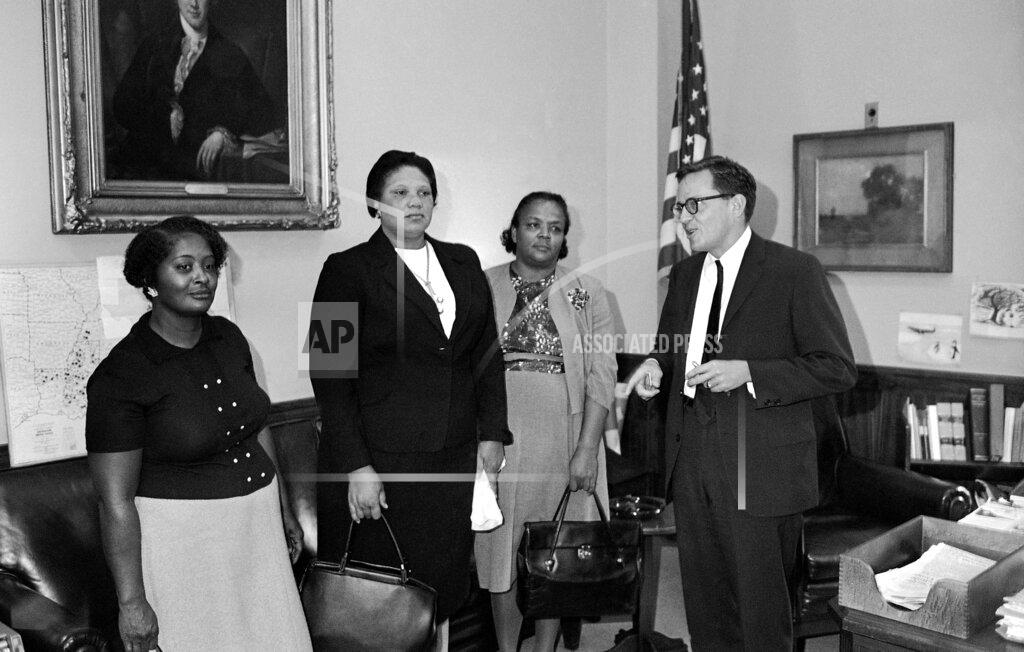
Three Black women who say their homes in McComb, Mississippi, were bombed by white terrorists said today that Justice Department officials “have promised something will be done to ease the tension” in that volatile town in the southwestern part of the state. At least 14 bombings have been reported in McComb since early summer, and at least 10 churches have been burned. The women met this morning with Burke Marshall, Assistant Attorney General for Civil Rights; John Doar, his chief assistant, and Lee White, a White House aide. The women have not received a reply on their appeal for a meeting with President Johnson. Speaking at a news conference, the women said the officials had promised “nothing specific,” but that they were “very satisfied” with their reception. The women said they had asked for “Federal protection” of some sort, possibly in the form of more agents of the Federal Bureau of Investigation.
Although requesting more FBI agents, the women sharply criticized the bureau’s previous work in the area. Mrs. Aylene Quin, whose house was bombed Sunday night, said the FBI agents “work with the local police” and had not made a single arrest in connection with the bombings. Mrs. Quin also answered the charge of Sheriff R. R. Warren of Pike County, Mississippi, who said yesterday her house had been bombed by civil rights workers for publicity purposes. “Do you think I would work 11 years to keep a house and then plant a bomb under it while two of my children were in it?” she asked. Mrs. Quin, a tall, hefty, 42‐year‐old woman, operates a restaurant where civil rights workers often ate during the summer. Her oldest daughter taught in the freedom school run by the Council of Federated Organizations and two other children attended its classes. In response to a question, Mrs. Quin said she believed her house had been bombed as retribution for her cooperation with the summer civil rights project. The other women, Mrs. Matti Lean Dillon, 43, and Mrs. Ora Bryant, 51, agreed on the motive for recent bombings.
The Neshoba County grand jury in Mississippi has subpoenaed 30 witnesses, including federal agents, for a state investigation of the murder of three civil rights workers last June, District Attorney W. H. Johnson Jr. disclosed today. Mr. Johnson a former legislator who lives in adjoining Newton County, said the investigation would begin Monday and would probably be completed before the end of the week. “We intend to present all the evidence that is available,” he said. “We intend to go into it thoroughly.” The jury of 18 white men was impaneled yesterday. Mr. Johnson said consideration of the civil rights case was put off until Monday so there would be no conflict with a Federal grand jury investigation under way in Biloxi. The Federal jury is conducting a broad inquiry into the alleged violation of Federal civil rights laws in the Neshoba County area in the detention and slaying of the three young men.
Circuit Judge O. H. Barnett charged the state jury yesterday to investigate “with a reference to the homicide of the three men whose bodies were found in the country some weeks ago.” The state jury would have jurisdiction in murder or kidnapping cases. The three men — James E. Chaney, 21 years old, a Meridian, Miss., Negro; Michael Schwerner, 24, and Andrew Goodman, 21, both of New York — were last seen June 21 when they were arrested and held for several hours in the Neshoba County jail on a speeding charge. After an extensive search and investigation the Federal Bureau of Investigation found their bodies on August 4 under the dam of a newly built pond on a farm five miles from Philadelphia, Mississippi. Despite the fact that an informant told the FBI where the bodies were there have no been no arrests in the case.
The Coyote Canyon Fire broke out near Santa Barbara, California, after being initially caused by a car’s faulty exhaust. It would rage for several days, burning 67,000 acres (105 mi² or 271 km²) of backcountry, along with 106 homes.
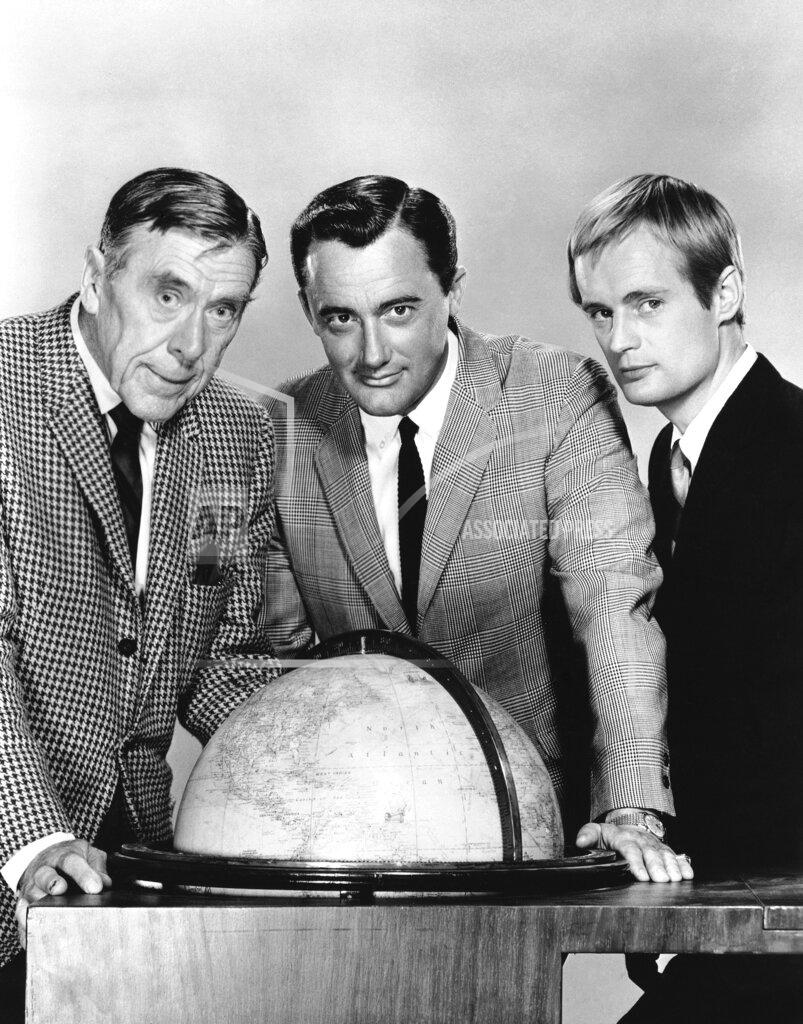
The NBC network introduced “The Man from U.N.C.L.E.,” an adventure show created in the wake of the popularity of spy films. Starring Robert Vaughn and David McCallum, the series about the fictitious “United Network Command for Law and Enforcement” would have 105 episodes in four seasons. Critics were generally negative, with comments like “Plagiarism isn’t quite the word for this; Bond and his opposite number, Napoleon Solo, are more like killing cousins,” and “it just doesn’t prove very entertaining”, while UPI Critic Rick DuBrow, noting that Vaughn was “looking forward to the day when he can quit acting”, said, “There’s no time like the present.”
“Fiddler on the Roof” opened at the Imperial Theatre on Broadway for the first of 3,242 performances. The musical, with music by Jerry Bock and lyrics by Sheldon Harnick, was based on the stories of Sholem Aleichem. Actor Zero Mostel starred in the lead role of Tevye, father of five daughters. Before opening on Broadway, the play had been perfected during the summer in performances in Detroit and in Washington, D.C.. The final performance of the original production would take place on July 2, 1972.
“An Triail” (“The Trial”), a play written by Máiréad Ní Ghráda and performed entirely in the Irish language, was given its first performance.
The New York Yankees sweep the Cleveland Indians, winning 5–3 and 8–1. Mel Stottlemeyer (8–2) won the opener; Whitey Ford (16–6) won the nightcap with a three-hitter. In the doubleheader, the Yanks get home runs from Mickey Mantle, Joe Pepitone, Roger Maris, and Phil Linz. The Orioles lost; the Yankees now lead the American League by 2½ games. The Yankees have won 22 of their last 29 games.
Ed Rakow blanked Baltimore for seven innings today and Al Kaline hit a two‐run homer to lead the Detroit Tigers to a 2–1 victory over the Orioles. Rakow, who scored his eighth victory and third in relief over the Orioles, gave only six hits after replacing Hank Aguirre with two outs and the bases filled in the first inning. Detroit got only six hits off Milt Pappas, but two came in the first inning and were costly to the Baltimore Star right‐hander. With one out, Jerry Lumpe, who had three hits, singled and Kaline followed with his 15th homer into the left‐field seats.
The Los Angeles Angels dropped the Chicago White Sox to 3½ games behind the league-leading New York Yankees tonight with a 1–0 victory on Fred Newman’s five‐hitter. The Angels got three of their five hits off Bruce Howard, a rookie, in the third inning. With two out, Jim Fregosi doubled and scored from second on Willie Smith’s single to centerfield.
Bill Bryan’s ninth‐inning pinch home run, the seventh homer of the game, followed Ed Charles’s three‐run shot and gave the Kansas City Athletics a 10–9 victory over the Minnesota Twins tonight. Bill Monbouquette’s five‐hit pitching and a three‐run rally in the ninth inning gave the Boston Red Sox a 3–0 victory over the Washington Senators tonight. Monbouquette, bringing his won‐lost record to 12–13, was locked in a scoreless duel with Claude Osteen until the ninth.
The Cincinnati Reds raised eyebrows all over the National League tonight by knocking off the Philadelphia Phillies for the second straight time. They now trail Philadelphia by 4½ games. The Reds gave the Phillies’ leading left‐hander, Chris Short, his roughest handling of the year by scoring six runs off him in 4⅔ innings. Then they added three against John Boozer, Morrie Steevens, Ed Roebuck and Rick Wise, and coasted to a 9–2 victory. The most crushing blow was a two‐run homer by Frank Robinson during a four‐run third inning, just three hours, before the Phillies began accepting mail orders for World Series tickets. That blow gave Jim O’Toole a head start toward his 16th pitching victory and headed the Phillies toward their fifth defeat in the last seven games. The Phillies’ collapse was fairly complete. It included six walks to Cincinnati batters, throwing errors by Richie Allen and Gus Triandos, and two passed balls by Triandos in one inning. And it caused loud booing among the crowd of 21,232 in Connie Mack Stadium.
The St. Louis Cardinals, battling to stay alive in the National League pennant race, held off the New York Mets to gain a 2–1 victory in windy Shea Stadium last night. A crowd of 10,443 topcoat‐clad fans watched Curt Simmons, the Redbirds’ left‐handed ace, hold Manager Casey Stengel’s men in check after yielding New York’s only run in the first inning. Simmons, using a tantalizing change‐up pitch that had the Mets lunging at the ball, held the New Yorkers to six hits in posting his 16th victory of the year. He has lost nine games. Tracy Stallard, who gained New York’s last victory last Wednesday over San Francisco, deserved a better fate. Instead he went down to his 19th defeat against 10 triumphs although he gave but seven hits. The loss was the Mets’ fourth in succession and the 100th of the season, making it the third year in a row New York has lost at least 100 games.
The San Francisco Giants spoil Larry Dierker’s 18th birthday party by chasing the rookie in the 3rd inning as they beat the Houston Astros, 7–1. Dierker was making his Major League debut. Orlando Cepeda drove in three runs with a homer and a single. Cepeda’s 31st homer started a three‐run Giant uprising in the second and his bases‐filled single capped a three‐run fourth. Harvey Kuenn collected three hits for the Giants, including the 2,000th of his major league career.
Bob Veale of Pittsburgh broke a 55‐year‐old club strike out record tonight, but the Milwaukee Braves, behind Denny Lemaster’s seven‐hit pitching, defeated the Pirates, 2–0. Veale fanned 15 men to snap the record of 12 set by Babe Adams in 1909 and tied twice this season by Veale. Milwaukee collected seven hits off the Pirates southpaw. Three of the hits came in the second inning when they scored both of their runs.
Cal Koonce, with Salt Lake City throughout that team’s 1964 season, took over from the injured Lew Burdette after one inning today and pitched the Chicago Cubs to a 1–0 victory over the Los Angeles Dodgers. He allowed seven hits. Burdette retired the first three batters and then left the game because he had been struck on the right forearm by a hard‐hit ball from the bat of Willie Davis. Koonce allowed the Dodgers to fill the bases on two singles and a walk in the next inning, but escaped without a run.
Dow Jones Industrial Average: 872.47 (+0.89).
Born:
Marq Torien, American hard rocker (Bullet Boys – “For Love of Money”), in Los Angeles, California.
Died:
Jimmy Pardue, 33, American NASCAR driver, was killed while he was doing a “tire test” for Goodyear at the Charlotte Motor Speedway; Pardue would finish in fifth place in the 1964 Grand National Series of NASCAR races, which still had eight events left.

[Ed: What a difference six decades has made in South Korea.]


 History Diaries