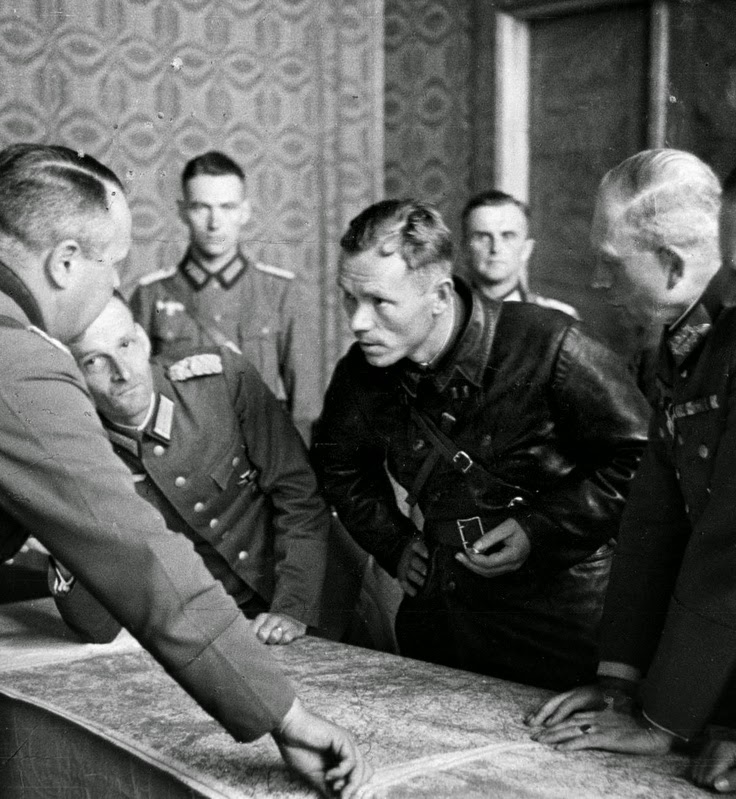
Jackals dividing the kill.
The Battles of Cześniki and Grodno began. The Battle of Cześniki took place on 21 and 22 September 1939 during the German and Soviet invasion of Poland, around the village of Cześniki near Zamość. It was an armed engagement between the Polish reserve 39th Infantry Division and a large German detachment of the 14th Army, comprising the 27th Infantry Division and 4th Light Division. The result of the battle was inconclusive, though the Polish units successfully forced the Germans to retreat and broke through on their way from Zamość towards the Hungarian border. However, instead of breaking through towards Hungary, the division was ordered to attack towards the besieged city of Lwów. The 39th Division reached Tomaszów Lubelski but was destroyed in the Second Battle of Tomaszów several days later. Both sides suffered similar losses: approximately 200 killed and 600 wounded. The Poles took some 100 Germans prisoner and captured about 150 motor vehicles and motorcycles.
The Battle of Grodno was fought between improvised Polish units under Gen. Wacław Przeździecki and Soviet Red Army troops of Komkor Ivan Boldin’s Dzerzhinsky Cavalry Mechanized Group, at the time in a non-aggression agreement with Nazi Germany under the Ribbentrop-Molotov Pact. Ill-equipped, undermanned and lacking any anti-tank artillery, the Polish defenders relied mostly on improvised anti-tank means such as bottles of gasoline or turpentine, small arms fire, and anti-tank obstacles. On 20 September, the tanks of the Soviet 27th Light Tank Brigade of the 15th Tank Corps reached the city’s outskirts. Although both numerically and technically superior, the Soviet forces lacked infantry support and oil, which stopped many tanks. Also, the tank crews had no experience in urban warfare, which was a significant help for the defenders.
The Soviets tried to seize the city from the south through the bridge over the Niemen River. However, the initial assault was repelled. In the early morning of 21 September, the defenders were joined by the remnants of the reserve Wołkowysk Cavalry Brigade under Brigadier General Wacław Przeździecki. After two days of heavy fighting, often in close quarters, much of the city centre was destroyed by Soviet artillery. Seeing no chance for further defence, on 22 September the remainder of the Polish forces withdrew towards the Lithuanian border. According to Soviet sources, the Red Army suffered casualties of 57 killed and 159 wounded. However, Polish historians Andrzej Krzysztof Kunert and Zygmunt Walkowski claim that the Red Army lost around 800 killed, missing or wounded. They also lost 19 tanks and four armored cars.
Polish losses, both civilian and military, remain unknown, although Soviet records claim 644 killed and 1,543 captured (66 officers and 1,477 soldiers). The Soviet troops reported the capture of 514 guns, 146 machine guns, a mortar, and an anti-aircraft gun. One notable casualty on Polish side was 15-year-old Tadeusz Jasiński who was captured throwing a petrol bomb and tied to a Soviet tank as a human shield.
After the battle, the remaining forces of the Wołkowysk Cavalry Brigade broke through the lines of the reconnaissance battalion of the 2nd Light Tank Brigade in the Battle of Kodziowce and headed for the Augustów Forest. About 300 Polish defenders of the city, including teenage boys, were murdered by the Soviets after the battle. The victims were both Polish students (20) and soldiers (30) as well as an unknown number of civilians. Poles were judged by the Soviet justice organs for their participation in the defense of the city and were reproached with the participation in the armed resistance movement against the Red Army and sentenced.
German forces intensify the artillery bombardment of Warsaw.
With German operations in Poland officially declared completed by the army’s Commander in Chief and hostilities there confined to mopping up the activities of four scattered sectors, the main remaining job for the military on the Eastern front appeared today to be the rounding up and counting the prisoners and booty in war materiel.
60,000 survivors of the Polish Southern Army surrender at Tomaszov and Zamosz, Poland.
The Marynarka Wojenna (Polish Navy) Kraków-class river monitor ORP Kraków was scuttled on the Pina River near the Krolewski Canal to avoid capture. She was raised, repaired and put into Soviet service as Smolensk.
Reinhard Heydrich met with police and security officials in Berlin. Heydrich ordered that Germany’s Jews and Romani be transferred to Poland using freight cars. Reinhard Heydrich authorizes the formation of Jewish ghettos in Poland, each governed by a Judenrat (Jewish Council); the ghettos are to be formed in large Polish cities with access to major railroads. He also authorizes the formation of Einsatzgruppen. The Germans decree that all Polish communities with less than 500 Jews are to be dissolved and that the Jews are hereafter to live in certain restricted areas in the larger cities, or in a special region between Lublin and Nisko, called the “Lublinland reservation.” Heydrich tells a meeting of his department heads in the Reich Central Security Office (RSHA), an organization encompassing the Gestapo, SS, SD, and Criminal Police, that the mass deportations of thousands of Jews, including Poles, Germans, Austrians, Czechs and Slovaks, to the eastern areas of Poland are the “first steps in the final solution” (die Endlösung) . It is declared that all Jews will be temporarily deported to the “reservation” in Poland, and later to a remote part of the USSR or to Madagascar.
Cardinal August Hlond, Primate of Poland, arrives in Rome and personally reports of German atrocities against Catholic priests in Poland to the Pope. The Vatican radio and “L’Osservatore Romano” tell the story to the world.
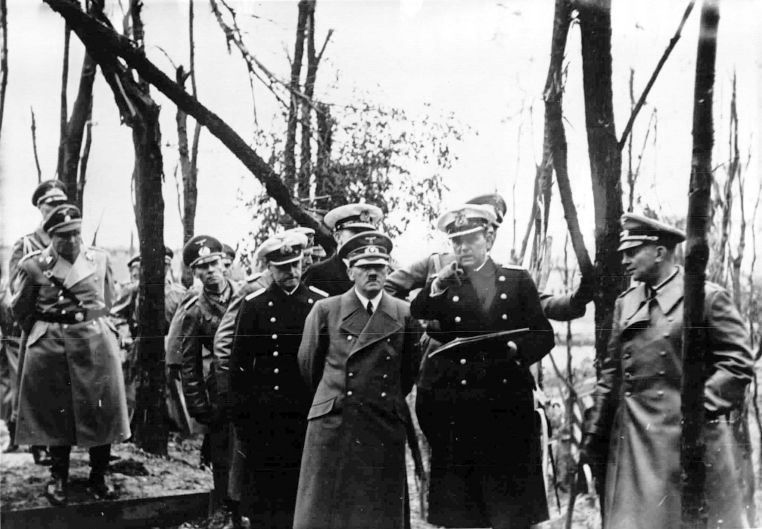
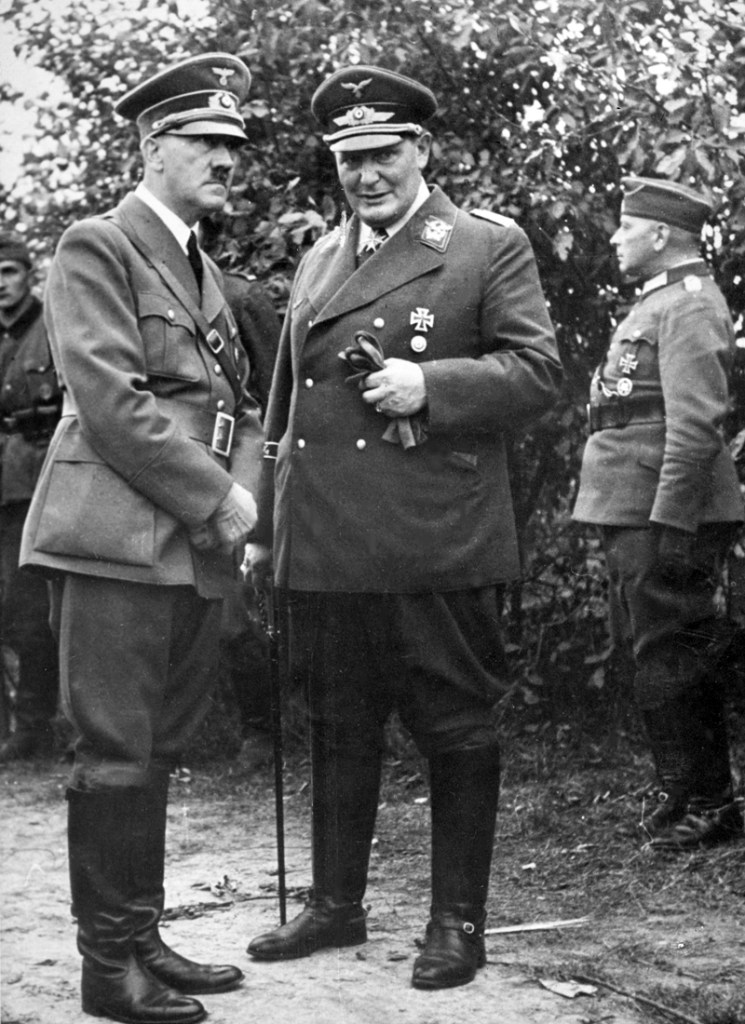
The Nazis announce the renaming of the captured port of Gdynia, Poland. It is now to be called Gotenhafen. Hitler visited there today, and whiile there met with Hermann Göring, who was there inspecting the harbor facilities.
Troops and materials from seventy German divisions in Poland today were en route to the Western Front for what Nazis called a “war to the bitter end” after announcement by the high command that the conquest of Poland was complete.
“Iron Guard” fascist Rumanian Legionaries murder Rumanian Prime Minister Armand Călinescu, who they blame for the death of Corneliu Codreanu and for his sympathetic stance towards Poland. Nine of the assassins turn themselves in to police and all are quickly executed. This was the last of several assassination attempts, including an attack on the Rumanian Athenaeum and bombing a bridge over the Dâmbovița River, both of which were thwarted by the police. It seems that the action was carried out with German approval and assistance. The vast majority of sources reacting to the events made ample mention of German backing for Călinescu’s killers, with the exception of German media.
The German press today unanimously charges the British Secret Service with the murder of Premier Armand Calinescu of Rumania.
A more severe repression of the Iron Guard followed under the provisional leadership of Gheorghe Argeșanu and was inaugurated by the immediate execution of the assassins and the public display of their bodies at the murder site for days on end. A placard was set up on the spot, reading De acum înainte, aceasta va fi soarta trădătorilor de țară (“From now on, this shall be the fate of those who betray the country”), and students from several Bucharest secondary schools were required to visit the site (based on the belief that would dissuade them from affiliating with the Guard). Executions of known Iron Guard activists were ordered in various places in the country (some were hanged on telegraph poles, while a group of Legionnaires was shot in front of Ion G. Duca’s statue in Ploiești); in all, over 300 members of the Iron Guard were killed without trial. Călinescu was succeeded by Gabriel Marinescu as Minister of the Interior and by Ioan Ilcuș as Minister of Defense.
Premier Édouard Daladier addressed to his fellow countrymen and women by radio this evening what might be most appropriately called a personal message, telling them unpretentiously about the military and political situation and why they were at war. His harshest words were for the German and Soviet leaders. “There is no doubt,” said Mr. Daladier, “that the destruction of Poland had been secretly resolved long ago; and that being so, all the efforts the highest political and moral authorities of Europe and the United States made to save peace were bound to fail. That destruction was being prepared with arms and secret treaties while the pretense of negotiation was being continued. When the hour struck and certain complicities were assured, the deluge of iron and fire was loosed on Poland.”
At a special conference of representatives of the foreign press Dr. Joseph Goebbels, the Propaganda Minister, declared this morning that reports in foreign countries that Germany was massing troops around Aachen and thus before the borders of Belgium and Luxembourg were wholly without foundation. Germany never had and does not now have any intention of violating the neutrality of Belgium, the Netherlands, or Luxembourg, Dr. Goebbels stated. There has not been any general civilian evacuation of Aachen, he added, although a number of the old and sick have been moved further inland.
The U-35, commanded by Kapitänleutnant Werner Lott, fired three torpedoes at convoy OA-7 southwest of the Isles of Scilly (49°39′N 6°39′W), missed a destroyer and a tanker and damaged British steam tanker Teakwood. The damaged ship was taken to Falmouth, escorted by the destroyer HMS Ardent which also took wounded sailors aboard for treatment. Shortly thereafter the destroyer was relieved by the destroyer HMS Vesper and returned to the convoy. Teakwood was subsequently repaired and returned to service.
The Kriegsmarine (German Navy) submarine chaser UJ-171 Nettelbeck was wrecked in the Baltic Sea.
The War at Sea, Thursday, 21 September (naval-history.net)
British northern waters – destroyers HMS Esk and HMS Express arrived at Invergordon from the Humber to escort tanker San Alberto (7397grt). They arrived at Scapa Flow on the 21st.
North Sea – light cruiser HMS Cairo and destroyers HMS Codrington, HMS Beagle, HMS Blanche, and HMS Boadicea were involved in operation CL, a sweep towards Texel to intercept German merchant steamers. Following this operation, these ships covered convoy FN.9.
Baltic – German auxiliary anti-submarine trawler UJ.171 (trawler Nettelbeck) was wrecked in the Baltic.
English Channel – light cruiser HMS Ceres departed Plymouth and arrived back the same day.
UK-France convoys – MB.6 of seven cargo ships, escorted by destroyers HMS Arrow, HMS Anthony, and HMS Saladin, departed Southampton, and arrived at Brest on the 23rd.
BC.4F of steamer Tynwald departed Barry in the Bristol Channel escorted by destroyers HMS Escort, HMS Electra, and HMS Vivacious and arrived at Quiberon Bay on the 23rd. Not long after sailing, Escort and HMS Wessex attacked a submarine contact 30 miles SW of Swansea. BC.4 departed Bristol Channel at the same time with steamers Baron Kinnaird and Clan Monroe and the two convoys arrived together.
UK-out convoys – destroyers HMS Janus, HMS Jackal and Polish ORP Grom departed Devonport to escort convoy OA.8, after it had departed Southend with 22 ships. Jackal and Grom were with the convoy from the 21st to 24th, and Janus from the 22nd to 24th, when the convoy dispersed. The destroyers arrived back at Devonport on the 25th.
Convoy OB.8 departed Liverpool escorted by destroyers HMS Versatile and HMS Vimy to the 24th.
Southwestern approaches – U.35 torpedoed and damaged steamer Teakwood (6014grt) from convoy OA.7 south of Land’s End at 49 39N, 06 39W. The damaged ship was taken to Falmouth, escorted by destroyer HMS Ardent. En route to Falmouth, destroyer Vesper relieved Ardent which returned to the convoy. Destroyers HMS Echo, which departed Plymouth on the 21st, with HMS Imperial and HMS Kempenfelt searched the area.
French convoys, Mediterranean – during the night of 21st/22nd, French convoys L.1, escorted by large destroyers Vautour and Gerfaut, and L.3, escorted by large destroyers Guepard and Verdun, converged 80 miles west of Malta.
In a first collision, French liner Mariette Pacha (12239grt) with L.3 had a damaged bow and proceeded to Malta, escorted by liner El D’jezair. French liner Chenoneaux (14825grt) with L.1 was towed to Malta by tug Royster, arriving on the 23rd. Large destroyer Vautour with L.3 and liner El D’jezair with L.1 also collided.
On the 28th, Mariette Pacha departed Malta escorted by destroyers HMS Hostile, HMS Hero, HMS Hereward, and HMS Hasty for Marseilles. The destroyers remained with the liner until the 30th, then returned to Malta, arriving 2 October. Chenonceaux was under repair at Malta for four months.
Central Atlantic – convoy SL.2 departed Freetown on the 21st, escorted by light cruiser HMS Despatch and destroyer HMS Hunter, but Hunter was ordered to return to Freetown at 1500/21st. Despatch remained and then parted company at 0600/28th, arriving back on 2 October. The convoy reached Liverpool on 7 October.
During the night of 21st/22nd September, German steamers Cap Norte (13,615grt), Tijuca (5918grt), and Curityba (4969grt) departed Pernambuco to return to Germany.
Indian Ocean – light cruiser HMS Manchester arrived at Bombay.
Chinese waters – destroyer HMS Diana departed Hong Kong on the 21st, Singapore on the 25th, and Colombo on the 29th en route to the Mediterranean Fleet. She arrived at Suez on 11 October.
Australian waters – Australian light cruiser HMAS Hobart arrived at Sydney.
Pacific – before the war started, German steamer Leipzig (5898grt) departed Christobal on 24 August when Australian light cruiser HMAS Perth arrived, and reached Guajaquil, Ecuador on 8 September. On the 20th, a short time before light cruiser HMS Achilles arrived off the port, she left Guajaquil and arrived at Callao, Peru on the 21st. Achilles departed later the same day.
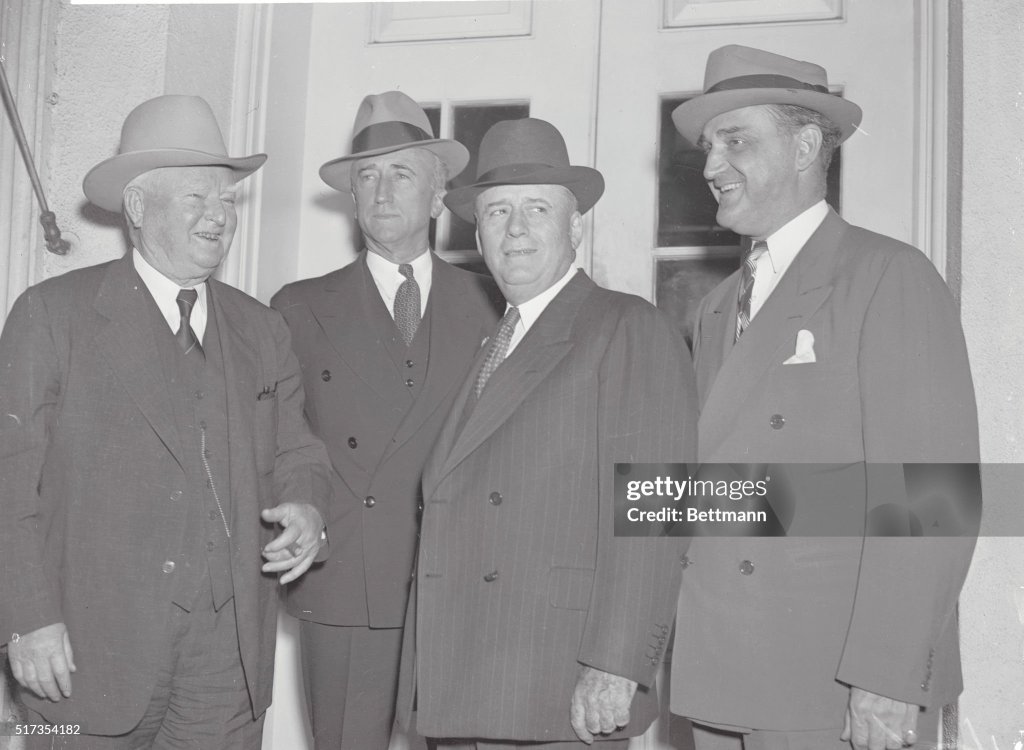
U.S. President Franklin Roosevelt called for a special session of Congress to revise the Neutrality Act of 1937 and repeal the arms embargo to Allied countries. “Our acts must be guided by one single hard-headed thought – keeping America out of this war,” the president said. Allowing arms to be sold on a cash-and- carry basis would be “better calculated than any other means to keep us out of war.” A hard fight is indicated as 24 Senators map resistance.
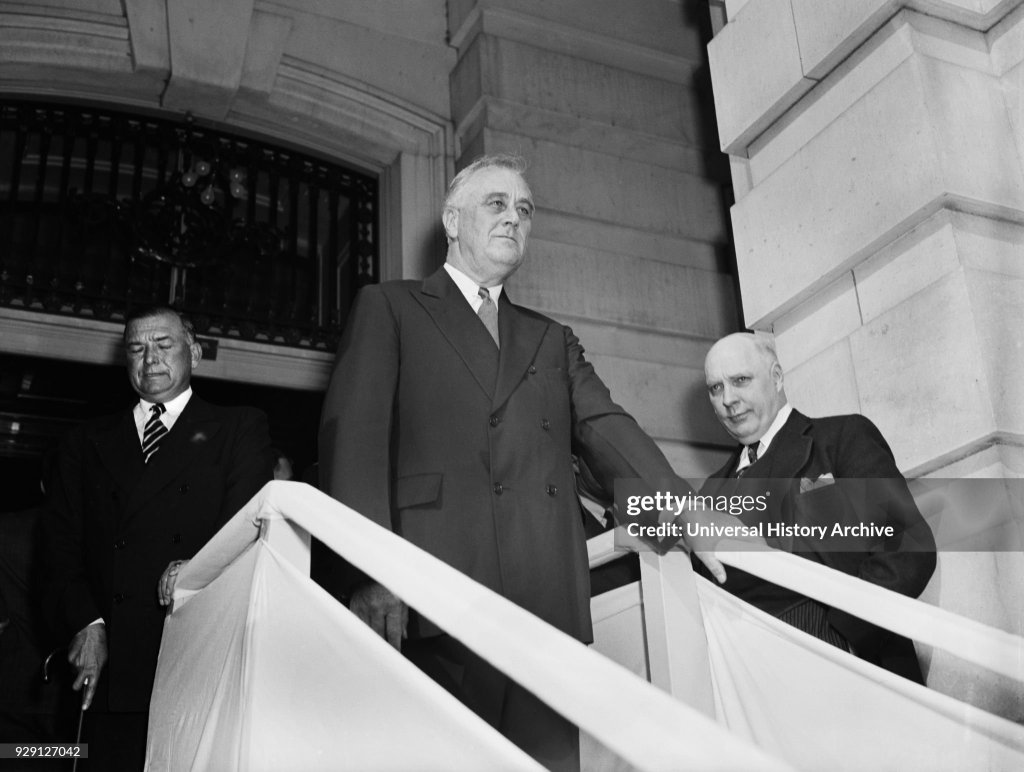
President Roosevelt made a speech to Congress saying the United States should amend its Neutrality Acts to allow countries fighting Germany to purchase American arms. The president said the current laws stood to give passive “aid to an aggressor,” while denying help to victimized nations. President Roosevelt asked Congress today for immediate repeal of the arms embargo against belligerents and a return to the principles of international law as the surest safeguard against the involvement of the United States in the new World War. His plea was delivered in person this afternoon to a joint session of Congress, summoned to an emergency meeting, and amid conditions which indicated that the President might again be headed into a bitter struggle with the Senate over the methods by which this country. should be kept at peace.
The message was received with varied emotions by the 500-odd members of Congress whose offices already were being deluged with thousands of letters and telegrams. -many of them obviously products of organized pressure, but many spontaneous-demanding retention of the arms embargo and other features of the mandatory Neutrality Act of 1937.
The President’s speech was acclaimed throughout Congress as conciliatory and good tempered. His pleas for cooperation to the end that peace should be secured to the Western Hemisphere, and his declarations that war must and should be kept from these shores, were applauded warmly. But when the display of the opening session was over, and Congress began. settling itself down to the question of methods, the indications of trouble ahead began to develop.
The President branded the arms embargo as “most vitally dangerous to American neutrality, American security and American peace.” He confessed regret that he had signed the act that contained it. His only request for legislation was for repeal of the provisions under which he had been compelled to proclaim an embargo on arms, munitions and airplanes against England, France, Poland, Germany and other belligerents in the European war.
As to other methods of pursuing the one purpose to keep the United States out of war, such as cash-and-carry restrictions upon commerce with belligerents, this could be handled, he said, by legislation or by Executive proclamations which he might issue, Just as Congress willed it. Even if the repeal is granted by Congress, this government would insist “clearly and definitely” that American citizens and American ships keep away from the immediate perils of the actual zones of conflict, he added. “Repeal of the embargo and a return to international law are the crux of this issue,” the President declared. In meeting that issue he asked for the complete abandonment of partisanship and the substitution of “one single hard-headed thought — keeping America out of this war.”
The President and his Congressional leaders began preparations this afternoon for the speediest possible action. This was in keeping with the advice of his frankest advisers that unless they got the question to a vote in the Senate soon, or the trend of letters flooding the Capitol changed materially, the Administration might find itself faced soon with an extremely difficult situation in its effort to change the Neutrality Law.
Administration leaders in the Senate moved promptly today to postpone debate on the neutrality issue until they are ready to lay before the chamber a bill approved by the Foreign Relations Committee. Senator Barkley, majority leader, moved adjournment until Monday, as soon as the formalities incident to the joint session to hear President Roosevelt were concluded, and indicated that if no bill had been reported from the committee by that time, he would then move another adjournment until later next week.
No opposition was voiced to this procedure, principally because both proponents and opponents of the proposed repeal of the embargo on shipments of arms to belligerents welcomed time to assess their strength and to outline strategy for what is expected to be, if not a long session, at least not the brief one. contemplated a few weeks ago. Eighty-one Senators answered the first roll call of the special session, meeting and greeting each other in a generally jocular atmosphere. They met briefly after they had gone en masse to the House of Representatives to listen to the President’s address, and again their manner seemed almost to belie the struggle going on behind the scenes, and in some cases in the minds of individual members.
There was no evidence that the President’s message, delivered in person in a most dramatic manner, had swayed immediately the opinion of any individual member. At least a score of Senators issued various statements on the message, but, while all agreed on the need for neutrality, there was no noticeable shift between the groups which disagree on the methods to achieve it.
The House of Representatives convened today in response to the special session call and adjourned immediately for three days under an agreement engineered by the leaders whereby no business will be transacted until the Senate completes action on the neutrality question.
The most elaborate precautions taken to safeguand the life of the Chief Executive since World War days were employed today when President Roosevelt went to the Capitol to address a joint session of the Senate and House of Representatives on the subject of American neutrality.
Felix Frankfurter, Associate Justice of the Supreme Court, said tonight that Americans cannot be “neutral in thought” when the bases “of our common life, our entire civilization” are challenged.
Delegates to the twenty-eighth annual convention of the American Federation of Hosiery workers, a C.I.O. affiliate, recorded yesterday their “unequivocal opposition” to American participation in the present European war.
Pan American Airways’ Dixie Clipper arrived in Port Washington, New York this afternoon from Foynes, Eire, with twenty-two passengers, eighteen of them United States citizens. One of them is John Fitzgerald Kennedy, 22, son of the U.S. Ambassador to the United Kingdom, and about to begin his senior year at Harvard.
A full broadcast day of radio station WJSV in Washington, D.C. is recorded for preservation in the National Archives.
U.S. newspapers allege that senior Nazis, including Goebbels and Hess, have foreign investments worth over £3 million.
President Roosevelt nears his 1936 popularity as 61 percent of voters endorse the President.
Southern California today sweltered in a record September heat wave for the sixth consecutive day with no relief in sight. Forty-nine deaths have been reported as temperatures continue to exceed 100 degrees even at the ebaches.
The National League announces that for the first time in the 20th century, games will be transferred from one city to another. The Dodgers’ doubleheader in Philadelphia will be moved to Brooklyn in an effort to top one million paid attendance.
At Fenway Park, a crowd of 598 paying customers, believed to be a low for the park, watch the Boston Red Sox top the St. Louis Browns, 6–2, behind Denny Galehouse. Galehouse gives up solo homers to opposing pitcher Jack Kramer and to rookie Bob Neighbors, both hitting their first in the majors. It is Neighbors only Major League homer. He will go in the Armed Services, serve in WW2, and die in a plane crash in Korea in 1952, the last major leaguer after WW2 to die in combat.
The New York Yankees downed the Chicago White Sox, 5–2, for their fourth straight and their 102nd victory of the season. Bill Dickey and Joe Gordon homered for the Yankees. Marius Russo (8–3) got the win.
Rudy York drove in three runs with a homer and single in the last two innings today to give the Detroit Tigers a 7–6 victory over the host Philadelphia Athletics.
A six-run rally in the eighth inning today gave the Cleveland Indians a 6–3 victory over the Washington Senators.
The St. Louis Cardinals score two on four consecutive hits with two out in the bottom of the ninth to come back and beat the Brooklyn Dodgers, 6–5. Joe Medwick lines a double just inside the left field line to end it.
Paul Derringer allows eleven hits but the National League-leading Cincinnati Reds win anyway, beating the Philadelphia Phillies, 8–3. The Reds are clinging to a 2½-game lead over the Cardinals.
Hank Leiber cracks a homer and two singles to lead the Chicago Cubs to a 9–3 rout of the New York Giants. Claude Passeau offered up a six-hitter to get the win.
The Pittsburgh Pirates sweep a doubleheader from the Boston Bees, winning the opener, 6–4, and then shutting out the Bees in the nightcap, 7–0.
In Chungking, Chinese Foreign Minister Wang Chung-hui today emphatically denied peace rumors current here this week following the RussoJapanese border agreement, reportedly freeing more than 300,000 Japanese troops for new offensives in China.
Reports in Tokyo that the Foreign portfolio has been offered to Admiral Kichisaburo Nomura were confirmed this morning by the newspaper Nichi Nichi. Premier Nobuyuki Abe sent for Admiral Nomura Monday, according to Nichi Nichi, and urged him to accept. General Abe had sounded out the army and other high quarters before making the offer. Admiral Nomura asked for time to make his own inquiries.
Admiral Nomura once served as naval attaché in Washington and has many American friends. He is known as sympathetic to the United States. If the appointment is made, it will confirm that Japan now regards an understanding with the United States as the next most urgent measure on her program for early settlement of the China affair.
Dow Jones Industrial Average: 153.48 (+1.23).
Born:
Trevor James Hold, British composer, writer, and musicologist (John Clare Songbook), in Northampton, England, United Kingdom (d. 2004)
Died:
Armand Călinescu, 46, Prime Minister of Rumania (assassinated by Iron Guard members).
Naval Construction:
The Royal Navy Black Swan-class sloops HMS Erne (U 03) and HMS Ibis (U 99) are laid down by Furness Shipbuilding Ltd. (Haverton Hill-on-Tees, U.K.); completed by Richardson Westgarth.
The Royal Navy Flower-class corvette HMS Geranium (K 16) is laid down by William Simons & Co. Ltd. (Renfrew, Scotland).
The Kriegsmarine (German Navy) vorpostenboot V 214 Baden (later V 404 Baden) is commissioned.
The Royal Indian Navy auxiliary patrol vessel HMIS Prabhavati is commissioned. Her first commanding officer is Lieutenant William Joseph Graham Hughes, RIN.
The Royal Indian Navy Cornwallis-class sloop HMIS Pansy is commissioned.
The U.S. Navy Sims-class destroyer USS Hughes (DD-410) is commissioned. Her first commander is Lieutenant Commander Donald James Ramsay, USN.
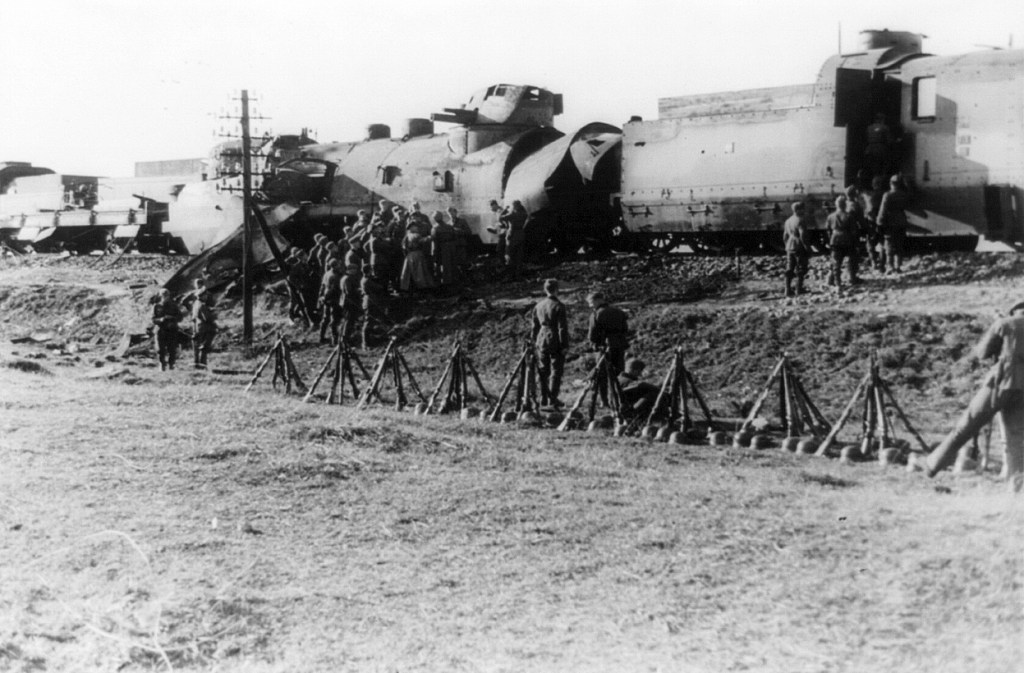
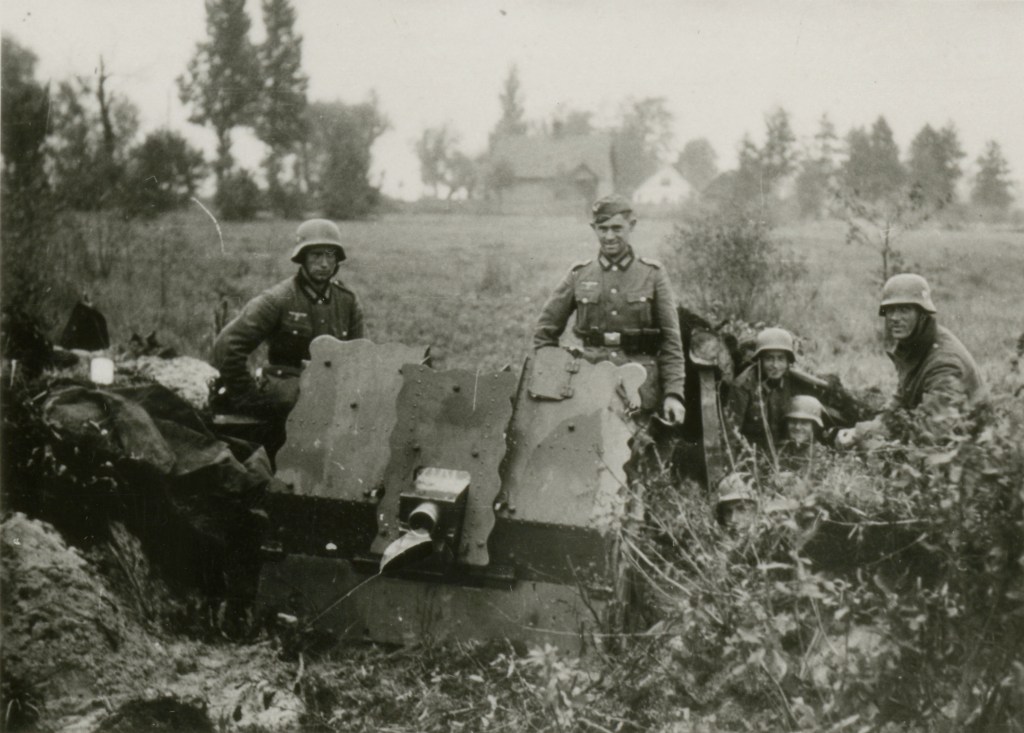
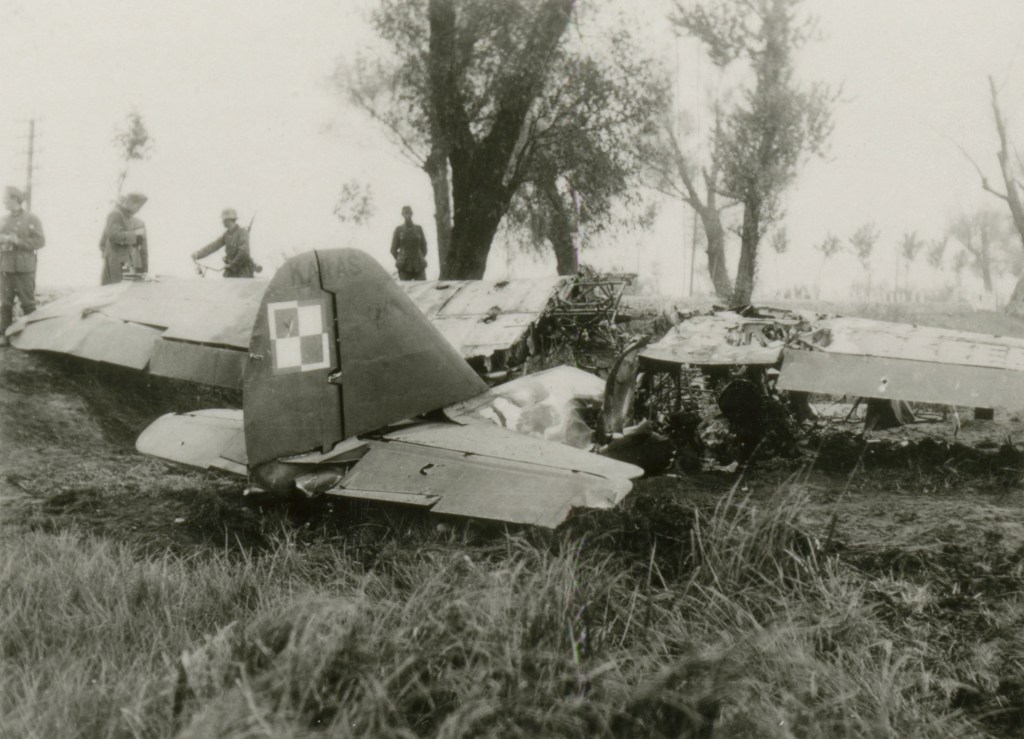
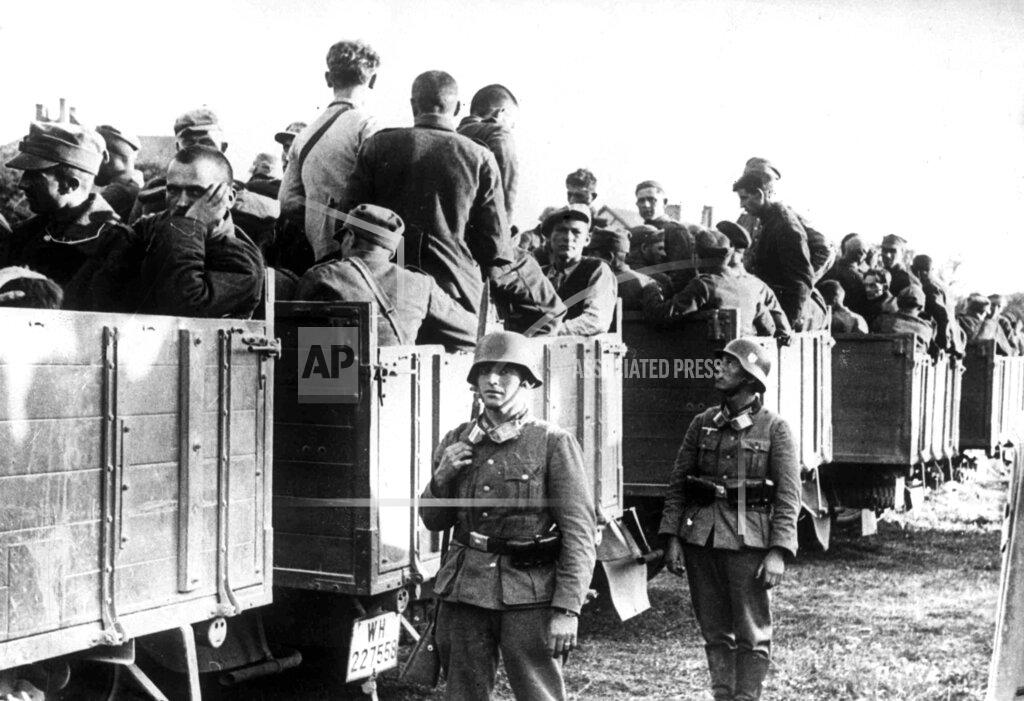
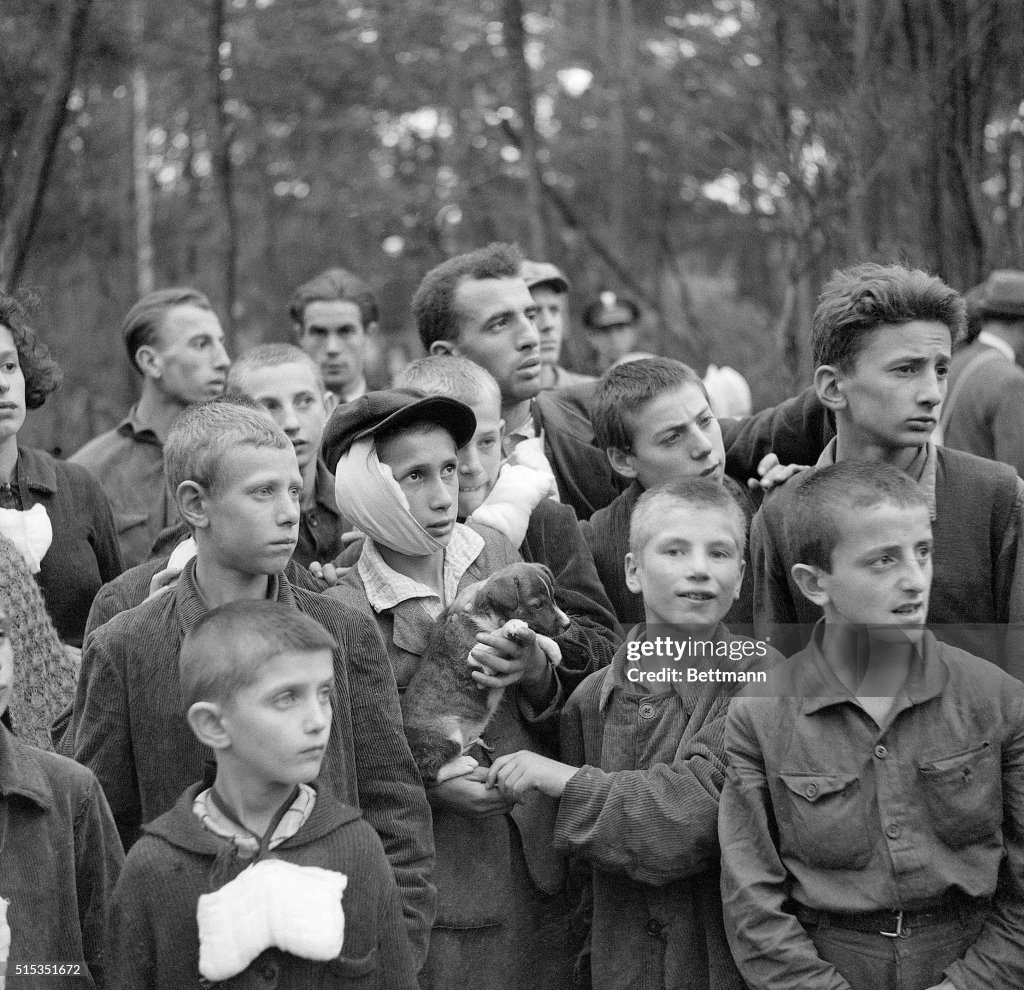
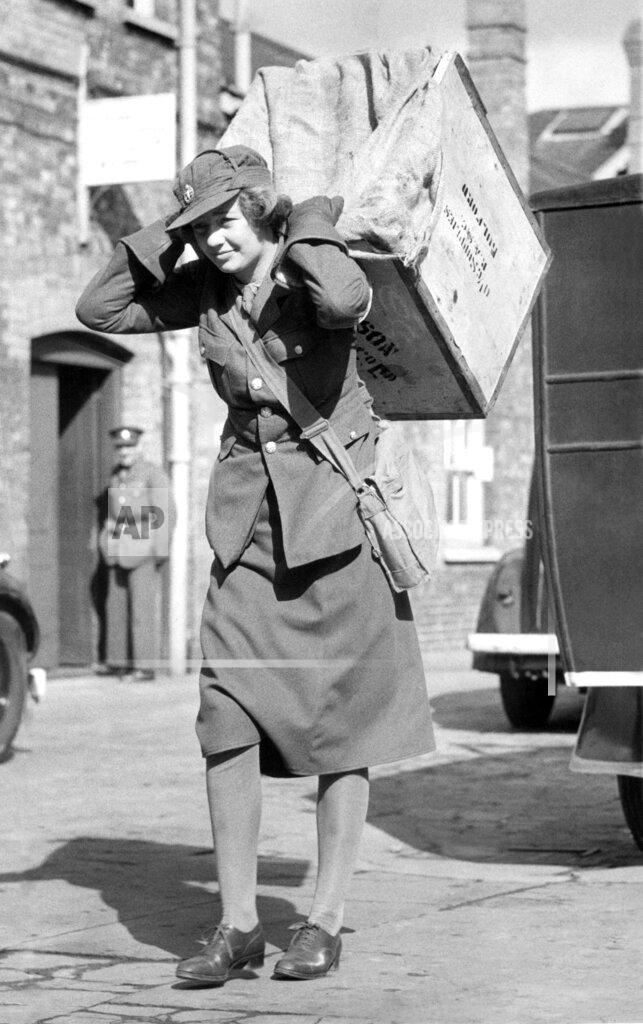
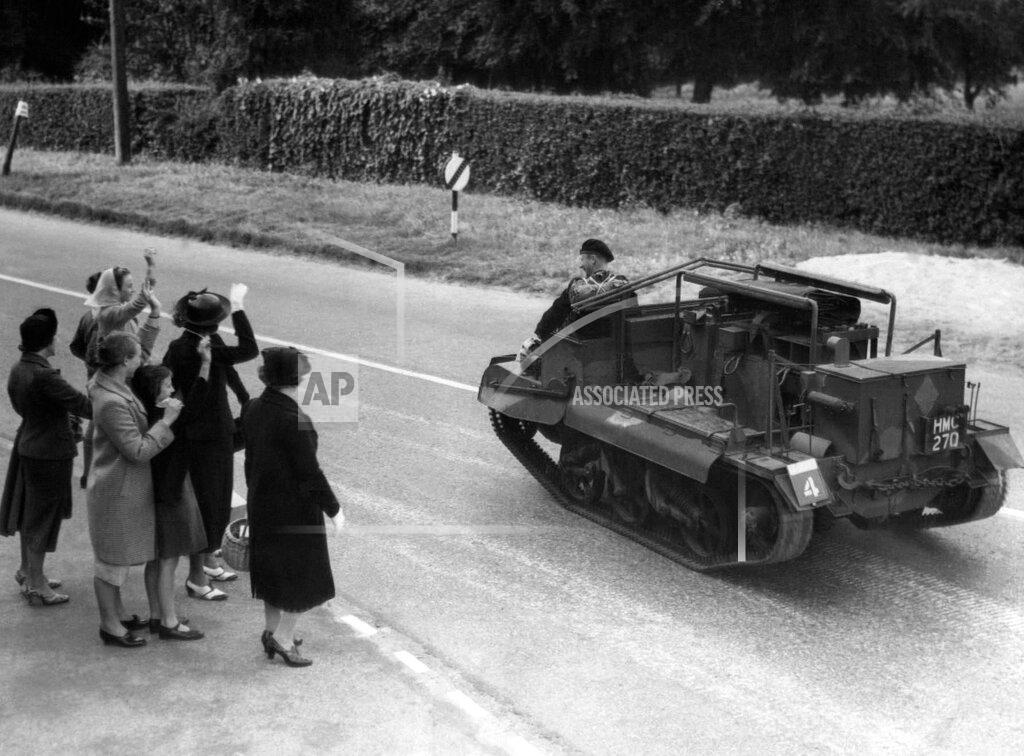
[Ed: I wonder how many of these kids will live to see the Summer of 1945…]
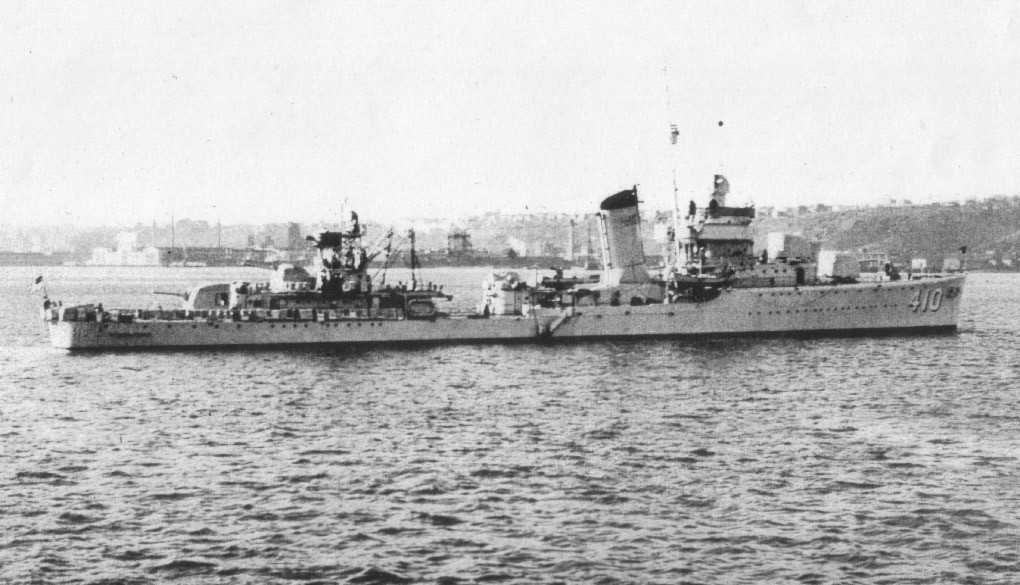
Hughes earned 14 battle stars for World War II service.
Hughes initially served in the Atlantic before the U.S. entry into the war. After Pearl Harbor, she was transferred to the Pacific and spent the rest of the war there. Among the battles she participated in were Midway, Santa Cruz, Kiska, the Gilbert Islands, the Marshalls, Hollandia, and Leyte.
She was decommissioned on 28 August 1946, and was used as a target ship in the Operation Crossroads atomic bomb test. Following the test she was towed to sea and sunk off Kwajalein on 16 October 1948, and struck from the Naval Vessel Register on 26 November 1948.
https://www.history.navy.mil/research/histories/ship-histories/danfs/h/hughes.html
 History Diaries