
South Vietnamese General Khánh’s government made several major changes in the military command, in part a response to demands from officers who have emerged as loyal in the recent coup. Sweeping changes in military command following last weekend’s coup d’état, which failed, appear to have aligned two of the country’s most powerful groups — the army and the Buddhists. The Government of Premier Nguyễn Khánh is replacing military leaders involved in the coup with younger officers whose views parallel many of those of the Buddhists. It appears that one reason the coup failed was that there was a crucial misunderstanding between its leaders, Major General Dương Văn Đức and Brigadier General Lâm Văn Phát, about its objectives and participants.
Two new appointments to important corps commands have been made. Brigadier General Nguyễn Chánh Thi, who helped to crush the coup, was picked to command the I Army Corps, based in the northernmost provinces. Brigadier General Nguyễn Hữu Có took over the II Corps, in central Vietnam, replacing Major General Đỗ Cao Trí, a man particularly resented by the Buddhists. The Vietnamese corps commands are among the most influential posts in the country, with wide authority in military and civil affairs. In addition, Colonel Phan Trọng Chinh has replaced Colonel Huỳnh Văn Tồn as commander of the Seventh Division, which had moved into Saigon to take part in the coup.
Other officers believed loyal to the government and to the young generals who thwarted the uprising were selected for the posts of armed forces chief of staff, civil guard commander, commander of the capital military district and military governor of Saigon. In the aftermath of the coup, details provided by reliable sources shed more light on the motives of the rebels and the officers who defended the Khanh Government.
It appears that at the end of last week two separate challenges to Premier Khánh were developing: the public one from General Phát, who had been removed earlier as Interior Minister and a private but equally compelling challenge from nine junior officers. Their stand took the form of an ultimatum to be presented to General Khánh demanding that he oust unpopular and corrupt elements from the army and the civil service. The demands were similar to those voiced earlier by Buddhists and students. If General Khánh proved unable to carry out these changes within two months, the officers threatened to stage an uprising against him.
Communist guerrillas stepped up their attacks against South Vietnamese Government forces today. A South Vietnamese military spokesman reported nine separate clashes with the Việt Cộng during the day. A total of 24 government soldiers were reported killed, 24 wounded and 30 missing. The Việt Cộng was reported to have lost five killed and nine captured.
The New York Times opines:
“For its 17 years of existence the Republic of Vietnam’s Army has been waging war without clear definition of whom it is fighting or what it is fighting to achieve. Highly developed, trained and equipped with the best materiel that American money can buy, the Vietnamese armed forces lack only a mission they can believe in Their present leaders and the Americans would have them fight against Communism, but fighting against something is only half a mission. The Vietnamese Communist armies, for their part, know what they are fighting for. At times the South Vietnamese armed forces resemble nothing so much as mercenaries in their own homeland. When they stage a coup d’état — the abortive affair of last weekend will not rank among the more glorious examples of their art — they seem to be respending to a vague feeling that they ought to be doing something toward accomplishing something. But what?”
Khánh threatens to restrict the use of the Mekong River as an international waterway to punish Cambodia if it continues its hostile actions. Premier Nguyễn Khánh said today that Prince Norodom Sihanouk had acted as “a diplomatic middleman” between the Việt Cộng and neutralist exiles from South Vietnam. General Khánh produced what he described as a facsimile of a letter from the Cambodian Chief of State to a neutralist leader. The South Vietnamese Premier, who recently weathered a series of political disruptions, said the letter showed that talks had been arranged between the neutralists and political leaders of the Việt Cộng.
The meeting would be held in Phnom Penh, the Cambodian capital, General Khánh said, and its aim would be to further a truce between the Communists and the United States‐supported South Vietnamese forces. General Khanh. said the letter, which diplomats considered to be genuine, had been signed by Norodom Sihanouk. He would not name the addressee for “security reasons,” but qualified sources said the letter had been sent to Trần Văn Hữu, leader of a neutralist exile movement in Paris. It was not stated how the letter had come into the hands of the South Vietnamese Government.
Citing the letter as evidence of the Cambodian leader’s “positive connection with elements out to destroy us,” Premier Khánh threatened stern action against the neighboring country if its “hostile” attitude continued. South Vietnam has charged, and Cambodia has denied, that Việt Cộng guerrillas have been given, sanctuary on Cambodian territory. Cambodia has accused the South Vietnamese of attacks on her people in border areas; the Vietnamese have said these were the consequence of “hot pursuit” of guerrillas fleeing across the border. The letter said that Nguyễn Hữu Thọ, head of the National Liberation Front, political arm of the Việt Cộng, had accepted Norodom Sihanouk’s invitation to send a representative to the proposed talks.
Units of the U.S. Seventh Fleet were placed on special alert today after reports of a new incident in the Gulf of Tonkin off North Vietnam. The U.S. Government said today that four unidentified but apparently hostile vessels “disappeared” in the Gulf of Tonkin yesterday after: having menaced two United States destroyers and drawn fire from them. Officials explained that the darkness and poor weather at sea had made it extremely difficult for the destroyers and accompanying aircraft to identify the vessels during or after the confrontation. The daylight search by ships and planes, about eight hours later, yielded no further persuasive evidence
North Vietnam called today for a meeting of the International Control Commission immediately to discuss American reports of a new naval action in the Gulf of Tonkin. The‐North Vietnamese Foreign Minister, Xuân Thủy, also sent a message urging the co‐chairmen and members of the 1854 Geneva conference on Indochina to “check the United States scheme for renewed war acts.” Britain and the Soviet Union ara co‐chairmen of the conference, which brought about a cease‐fire in Indochina and set up the nations of North Vietnam and South Vietnam. The conference also established the International Control Commission to supervise the armistice. Hsinhua, Peking’s press agency, reported that Colonel Hà Văn Lâu, head of the North Vietnamese High Command’s liaison mission, had sent an urgent message demanding‐the commission meeting. The colonel denounced American reports of an encounter between North Vietnamese patrol boats and American warships as pure fabrication prearranged by the United States.
Prince Souvanna Phouma, Premier and neutralist leader of Laos, accused Communist China and North Vietnam today of supporting the pro‐Communist Pathet Lao forces in their insurrection against his government. The Premier charged at a news conference that North Vietnam had sent 24 infantry battalions, about 12,000 men, to fight on the side of the Pathet Lao. The Pathet Lao, he continued, is “definitely” subsidized by the North Vietnamese Government and thus is “indirectly influenced” by Communist China. “If our neighbors would only leave us alone, we could get an agreement among ourselves and live in peace,” Prince Souvanna Phouma declared.
Premier Khrushchev offered Soviet weapons today to “any people fighting against oppressors.” “Many peoples” have already won victory with Soviet military aid, he said, and added: “If there are any others who need weapons, we are ready to discuss the question in fraternal fashion and give help.” The Soviet leader made the remarks at a Kremlin reception for delegates to the anticolonialist World Youth Forum. The delegates have come to Moscow mainly from Asian, African and Latin‐American countries. Mr. Khrushchev’s 45-minute “speech, heavily interspersed with critical allusions to the Chinese Communists, was regarded as part of an intensified Soviet propaganda campaign to win the adherence of nonaligned countries and of peoples still under colonial rule.
A Cyprus Government minister said today that Premier Khrushchev had agreed to give “military and other assistance” to Cyprus. Andreas Araouzos, Cyprus Minister of Commerce and Industry, said he was “wholly satisfied” after an hour‐long discussion with the Soviet leader in the -Kremlin this morning. Mr. Araouzos, who arrived in Moscow a week ago to follow up a Soviet aid offer made last month, said he would have detailed discussions with Soviet Government departments next week. He refused to disclose details of the aid that the Russians had offered, but he said that Mr. Khrushchev had “expressed willingness to accord assistance as requested by Cyprus. He emphasized that both military “and other” forms of assistance were involved.
The Greek Government declared today that it would not go to war with Turkey over the question of the rotation of the Turkish Army contingent in Cyprus. At a news Conference today a few minutes after a Conference with President Makarios of Cyprus, Premier George Papandreou said “the policy of the Greek Government is that no conflict should come as a result of these secondary problems, which should be settled in a satisfactory manner.” This he added, is Greece’s “common policy with Archbishop Makarios and with General [George] Grivas.” Tha general, the former leader of Greek Cypriot guerrillas who fought British rule, is now in Charge of Greek Cypriot forces. He did not take part in today’s consultations. The Premier’s assurance came after a Turkish note this week conveyed Ankara’s growing impatience on the rotation issue. About a half of the 650-man Turkkish contingent in Cyprus should have been relieved at the end of last month.
West German Chancellor Ludwig Erhard’s “Gaullist” critics in Bonn are mounting a new attack on his flexible foreign policy. This dissident faction in Mr. Erhard’s Government coalition is seeking to forestall the projected visit of Premier Khrushchev to Bonn. Preparations are now under way for the visit, which will probably take place early in 1965. The Cologne newspaper Rheinische Merkur, the unofficial organ of the Bonn “Gaullists,” demanded today that it be canceled. An editorial signed by the newspaper’s editor, Paul‐Wilhelm Wenger, warned that a meeting between Chanceilor Erhard and Premier Khrushchev could split the Western alliance and strike a death blow at the special alliance between West Germany and France.
Skindivers were able to rescue 12 survivors of the capsizing of the Denmark dredging ship Kaptjan Nielsen, after the Danish sailors had stayed alive for half a day in the remaining air trapped inside. A 13th member of the crew, 21-year old Erik Paulsen, made his way out of the ship, swam to the surface, then swam for the next three hours until he reached Moreton Island off of the coast of Australia’s state of Queensland and alerted authorities. All but nine of the original 25 men on the Kaptjan Nielsen were able to live through the accident.
Debates in the first week of the reconvened Ecumenical Council in Rome show that the progressive viewpoint in the Roman Catholic Church is winning on all fronts, in the opinion of informed observers.
Unable to round up a quorum for the third consecutive day, the Senate majority leader, Mike Mansfield of Montana, sent telegrams today to all 66 Democratic Senators calling on them to get back on the job next week. Senator Mansfield’s appeal went out just before the Senate met in an unusual Saturday session. After one minute, it adjourned. The absenteeism results from the increasing tempor of this year’s election campaigns and from a six‐week Senate deadlock over proposals to limit the application of the Supreme Court’s ruling on legislative apportionment.
Only 36 of the 100 Senators appeared for a scheduled session Thursday. On Friday, after repeated calls of the roll, 49 appeared — less than the 51 required to conduct official business. The Senate Republican leader, Everett McKinley Dirksen of Illinois, telegraphed the 34 Republicans, asking them to be here for next week’s session. Mr, Mansfield credited the Republicans with a better attendance record than the Democrats.
Off the floor, meanwhile, efforts to break a Senate deadlock over reaportionment are continuing. But there was no sign that a group of liberals planned to give up their fight, against a proposal to delay reapportionment of both houses of state legislatures on a population basis. The fight has tied up the Senate since August 12, when the proposal was offered by Mr. Dirksen as an amendment to the pending $3.3 billion foreign aid bill. Unless it is killed or a compromise substitute is adopted, Congress is likely to remain in session indefinitely.
Mr. Mansfield, a cosponsor of the Dirksen amendment, has abandoned hopes for adjournment by October 1. He set a new target date, October 15, yesterday, but told reporters “we will be lucky if we make it.” Opponents of the rider, including Senator Clinton P. Anderson, Democrat of New Mexico, hope to come up with a new, nonbinding “sense of the congress” substitute with a view to bringing it to a vote next week. There has been talk of a vote Tuesday.
Senator Barry Goldwater rejected today President Johnson’s exhortation, “Let us continue.” “Let us stop before it is too late,” Mr. Goldwater said in a speech at the National Plowing Contest on the farm of Elmer Fraase near Buffalo, North Dakota. The Republican Presidential candidate declared that to continue the policies and philosophies of the Democratic Administration would be to risk “war through weakness” and to stifle the freedom and economic prospects of farmers and other Americans.
Mr. Goldwater asserted, in fact, that today we are at war as certainly as the sun sets in the west,” and said this had come about because of a “policy of weakness, a policy of indecision, a policy of indirection.” After flying here from North Dakota, Mr. Goldwater, speaking at a rally in Kiel Auditorium, continued his attack on the Administration’s foreign policy. He told a large throng that was jammed into the auditorium tonight that it was time an American President told Soviet Premier Khrushchev that “he’s wrong.” “If Communism intends to bury us,” the Senator said, “let us tell Communists loud and clear we’re not going to hand them the shovel.”
The New York Times opines:
There is an echo in this year’s foreign affairs debate of other postwar election battles, but by the choice of both parties the traditional argument has become subordinate to a most peculiar issue: the very fitness of Senator Goldwater to conduct the politics of the world. As in most recent elections, the Ins are boasting of peace and preparedness, whereas the Outs are complaining about war, hot or cold, and weakness. That much was predictable. But to an extraordinary degree, this familiar pattern of debate has been supplemented by discussion of the personality and political perversity of the Republican candidate. Mr. Goldwater has accepted that issue almost as readily as the Democrats — and some Republicans — created it. The question of the Senator’s temperament — bold to his friends and rash to his detractors — was in fact a principal source of strife among the Republicans at their San Francisco convention in July. When the Democrats assembled in Atlantic City, they picked up the theme and wrote it into their platform
Peace, they, said requires a President with “the utmost intelligence, the clearest vision and a strong sense of reality” because “one rash act, one thoughtless decison, one unchecked reaction — and cities could become; smoldering ruins and farms parched wasteland.” To ram home the message, Democrats rushed across the land to warn that Mr. Goldwater was governed by “prinitive passions.” The suggestions of recklessness have disturbed and angered Mr. Goldwater. But he has not hesitated to accept the underlying challenge and to define his view of world affairs as rightly bold and simple. “After all,” the Senator said the other day in his most definitive foreign policy speech, “this Administration avoids simple and clear statements like the plague. It is a master at hiding behind the complex and the vague. Our view is just this: If an element of foreign policy helps the cause of freedom, do it. If it hurts the cause of freedom, reject it.”
Senator Hubert H. Humphrey told thousands of farmers gathered at the National Plowing Contest in North Dakota today that the election of Barry Goldwater as President would mean a “death sentence to agriculture.” Neither rain nor fatigue nor a progressively hoarser voice dampened the enthusiasm of the Democratic Vice‐Presidential candidate as he wound up late tonight a day of campaigning that began in a wheat field and ended at the annual dinner of the Third Ward politicians in Chicago. All day, Mr. Humphrey was not only the happy but the aggressive warrior, cutting and quipping at Senator Goldwater, the Republican candidate for President, and his running mate, Representative William E. Miller of upstate New York. When he arrived at O’Hare Airport in late afternoon, more than a thousand Democrats were on hand to meet him.
Blacks are deserting the Republican Party in Maryland in large numbers. The defection is a movement that leaders of both parties believe can hardly fail to have profound effects on the politics of this northward‐looking Border State. Some observers believe its impact may be greater in the long run than the white backlash vote turned up last spring by the civil rights protest campaign of Governor George C. Wallace of Alabama in Maryland’s Presidential primary. The defections are clearly associated with Senator Barry Goldwater’s vote last July against the civil rights bill and his strategists’ decision to cultivate the anti‐Black prejudice vote in the Presidential campaign. They reflect a growing national mood among Blacks of dissatisfaction with the Republican candidate. A special circumstance here is the asserted hostility experienced by Black members of Maryland’s delegation to the Republican National Convention in San Francisco last July. Of the 31 Black delegates at the convention, six were from Maryland’s traditionally strong Black Republican faction. They returned here shaken and disillusioned.
Urban Blacks everywhere have increasingly embraced the Democratic Party and supported its candidates since Franklin D. Roosevelt’s New Deal campaigns in the nineteen‐thirties. Baltimore is no exception. But many Black voters here and elsewhere in Maryland have clung to an allegiance to the party of Lincoln. The allegiance has been perpetuated by a notably nondiscriminatory welcome to Blacks from the Republican party organization and a parallel white man’s party tradition in most Democratic Party groups. The rural wing of the Maryland Democratic party, long dominant in the state, descends from the former slave owners’ Whig party. Sixteen of the 45 seats on the Republican City Committee here are held by Blacks. Blacks have no comparable representation in the high councils of the Democratic party. Yet, to date, not one of Baltimore’s Black Republican officials has endorsed his party’s Presidential candidate, normally a routine gesture.
Cult leader and survivalist John Robert Harrell, who had created the Christian-Patriots Defense League, was arrested after 17 months as a fugitive. In arresting Harrell, the sheriff of Lawrence County, Arkansas discovered two teenage girls who had been missing for nearly a year. A meter reader had reported his suspicion that someone was being held captive in the house, prompting Sheriff Kenneth Guthrie to investigate Harrell’s home.
Author Peter Benchley (24) weds Winifred B. Wesson.
“Flipper,” a television adventure series starring a dolphin and the family that has befriended him, began the first of three seasons on the NBC network. With 88 episodes, the show was based on a 1963 film of the same name.
At the Last Night of the Proms, Sir Malcolm Sargent conducted the BBC Symphony Orchestra in works by Hector Berlioz, Pyotr Ilyich Tchaikovsky, Alan Rawsthorne, Felix Mendelssohn and Richard Strauss.
The New York Yankees move a half game ahead of the rained-out Orioles by defeating the Kansas City A’s, 8–3. Mantle and Maris homer and Ralph Terry pitches effectively in relief of Al Downing, who got the win. It took two hours to play the first five innings because the pitchers were having so much trouble getting the ball over the plate. Diego Segui, the Kansas City starter, got it over more often than most, but with disastrous results. Richardson singled with one out in the first, Maris hit a 400-foot out to right‐center, and Mantle drove his 31st homer deep into the Yankee bullpen.
The ninth‐place Washington Senators dealt the Chicago White Sox a severe jolt to their pennant hopes today by scoring a run in the 10th inning for a 1–0 victory. The setback, the fourth in a row for the White Sox, put Chicago two games behind the first‐place New York Yankees and four games down in the lost column to the leaders. The winning run scored on row for the White Sox, put a sacrifice fly by Dick Phillips. John Lock opened the 10th with a single and went to third on Jim King’s single. The victory went to Benny Daniels, a right‐hander, whc has beaten the Sox three times this year against one loss. The White Sox had their biggest scoring opportunity in the seventh inning after filling the bases with one out. Smokey Burgess, a pinch‐hitter, forced Moose Skowron at the plate on a ground ball in the infield. Horlen then bounced out to Daniels to end the threat.
Frank Malzone slammed two home runs and Bob Tillman and Felix Mantilla hit one each to lead the Boston Red Sox to a 7–2 victory over the Minnesota Twins today. Malzone connected for his 12th and 13th homers in the fourth and eighth innings. Tillman’s two‐run blast in a four-run seventh snapped a 2–2 tie. Mantilla followed with his 29th homer one out later. Harmon Killebrew drove in the Twins’ runs. He clouted his 48th homer in the fifth inning, equalling his career high for a season set in 1962. He batted in the first run with a first-inning sacrifice fly.
The Houston Colt 45s drop Harry Craft (61–88) as manager. He is replaced by Lum Harris. The Colts presented newly appointed Manager Harris with a 2–1 victory over the New York Mets tonight when Nellie Fox lined a pinch‐single to left center in the ninth inning to drive in the winning run. Bob Aspromonte had three hits and a sacrifice in four plate appearances.
The Los Angeles Dodgers-Philadelphia Phillies matchup in Los Angeles goes deep into extra innings, when with two outs in the bottom of the 16th, Willie Davis singles, steals 2nd, and takes 3rd on a wild pitch. With rookie reliever Morrie Steevens making his first Major League appearance, Davis swipes home to give the Dodgers the 4–3 win. His steal of home is the latest in any game in the National League and ties Hal Trosky’s 16th-inning swipe of home in a 1944 game. The Phils now lead by 5½.
In the first game of a doubleheader, the Cincinnati Reds stun the St. Louis Cardinals 7–5 when Frank Robinson connects for a 3-run 9th inning home run off Bob Gibson. The Cards take the second game, 2–0, scoring both runs on catcher Don Pavletich’s throwing error on a double steal. Ray Sadecki, with relief help from Barney Schultz in the ninth, wins his 18th. The Cardinals, who remained in second place in the National League, led in the first game, 5–4, going into the ninth. But Gordy Coleman doubled and Vada Pinson walked with two out Robinson followed with his homer off Bob Gibson, who had won six straight.
Larry Jackson pitched the Chicago Cubs to a 5–3 victory for his 21st triumph of the season today in the opener of a doubleheader, but the Milwaukee Braves triumphed in the second game, 8–5, on two consecutive home runs by Rico Carty. Jackson, the major leagues’ top winner this year yielded six hits and two earned runs in his 15th complete game. The Cubs provided him with solid extra‐base hitting, including Ernie Banks’s 21st homer, a triple by Billy Williams and doubles by Dick Berteil Andre Rodgers and Ron Campbell. Eddie Mathews’s 23rd homer in the opener drove in two Milwaukee runs. Mathews now ranks ninth among all home run hitters with 445.
Juan Marichal wins his 19th and Willie Mays hits his 44th home run as the San Francisco Giants beat the Pittsburgh Pirates, 13–4. Mays scores 5 runs on 2 hits, the second time this year and the third time in his career he has plated 5 runs. Matty Alou made three hits, including a triple, and Orlando Cepeda had three hits in four trips to the plate. The Pirates used six pitchers. The starter, Bob Friend, was charged with the loss. He yielding three runs in the first inning before leaving the game with two outs. Three of the Pirate runs came on homers, one on a drive by Roberto Clemente and two on a shot by Jim Pagliaroni.
NFL Football:
Detroit Lions 17, Los Angeles Rams 17
Earl Morrall came off the bench for the second half and led the Detroit Lions from behind tonight as he hit Terry Barr with a 17-yard scoring pass in the final quarter to give the Lions a 17–17 tie with the Los Angeles Rams. The National Football League game drew 52,001 fans and few if any left Memorial Coliseum until the final gun. A rookie quarterback, Bill Munson, fired two touchdown passes in the second half, one for 85 yards on a remarkable catch by another rookie, Bucky Pope, and the Rams led the favored Lions by 14–7 at the half. Detroit had built a 10–0 lead early in the second period on Wayne Walker’s 36-yard field goal in the first quarter and Milt Plum’s 46-yard completion to Barr. Los Angeles moved in front in the third quarter when another rookie, Bruce Gossett, booted a line‐drive field goal from 44 yards out.
AFL Football:
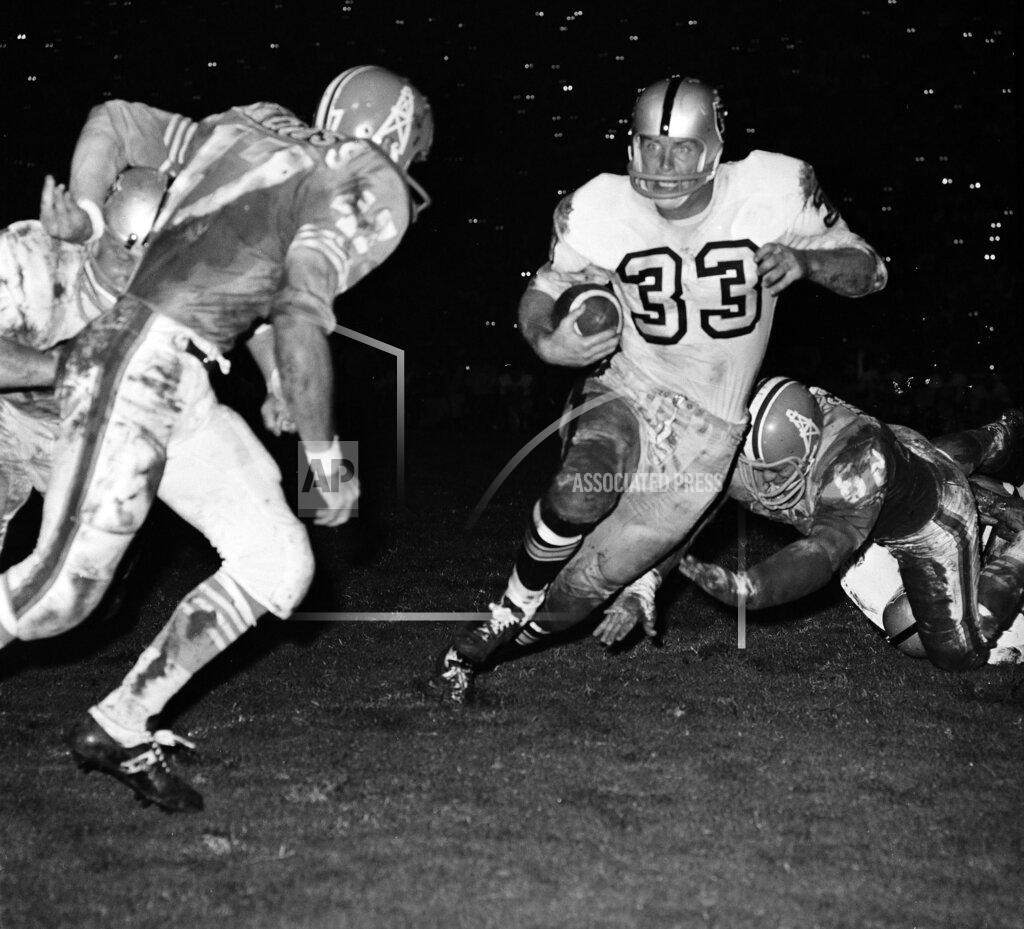
Oakland Raiders 28, Houston Oilers 42
Combining the passing of George Blanda with the brilliant running of Sid Blanks, the reawakened Houston Oilers overpowered the Oakland Raiders, 42–28, in an American Football League game tonight. Blanks, a halfback from Texas A. & I., carried the ball for 129 yards in six tries to lead the Oilers in ground gaining. Houston scored two touchdowns in each of the first three quarters. Five interceptions by Houston rookies accounted for two touchdowns, one of them a 95yard unmolested runback by Pete Jacquess midway in the second quarter. Benny Nelson, a rookie from Alabama, took in a pass intended for Billy Cannon late in the third quarter and went 45 yards for another touchdown.
Born:
Trisha Yearwood, American country music singer (“Believe Me Baby (I Lied)”; “How Do I Live”), in Monticello, Georgia.
Kim Richards, American actress (“Nanny & the Professor”, “Escape to Witch Mountain”, “James at 15”), in Mineola, Long Island, New York.
Jennifer Cooke, American actress (“V”, “Friday the 13th Part VI: Jason Lives”), in New York, New York.
Bob Papa, American sportscaster (NBC Sports), in Dumont, New Jersey.
Tony Blue, NFL defensive back (Seattle Seahawks), in Inglewood, California.
Patrick Marber, English playwright (“Closer”) and comedian, in Wimbledon, London, England, United Kingdom.
Yvonne Vera, Zimbabwean novelist, in Bulawayo, Southern Rhodesia (d. 2005).
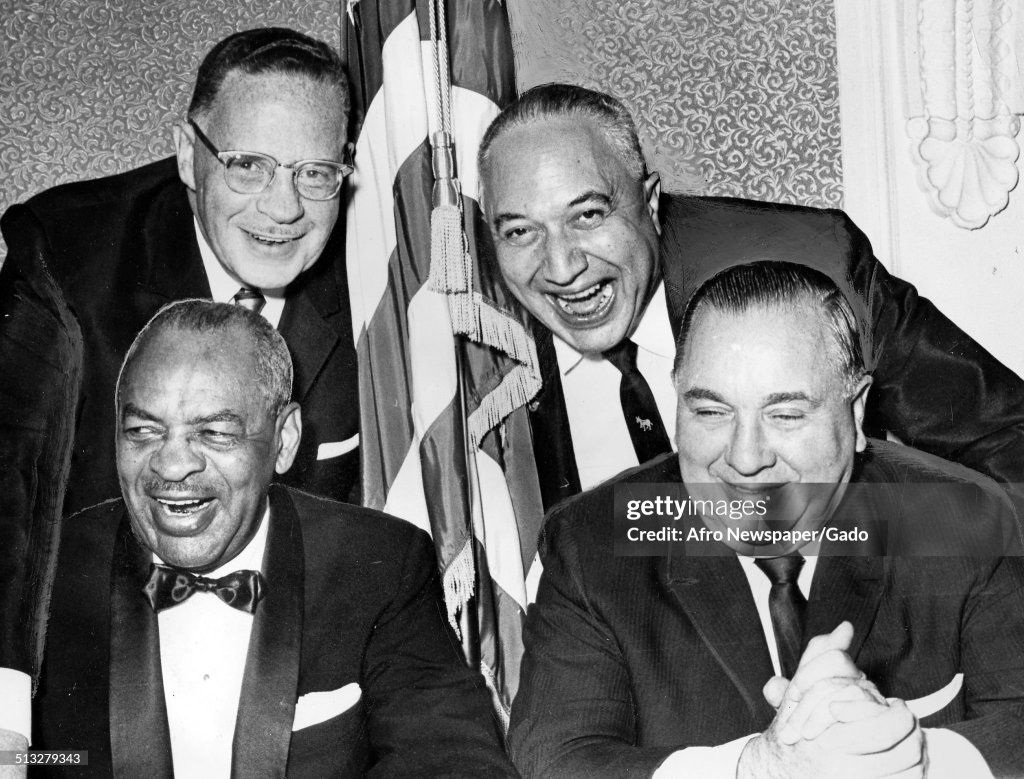
[Ed: Daley seems happy. Either stole votes or money.]


 History Diaries