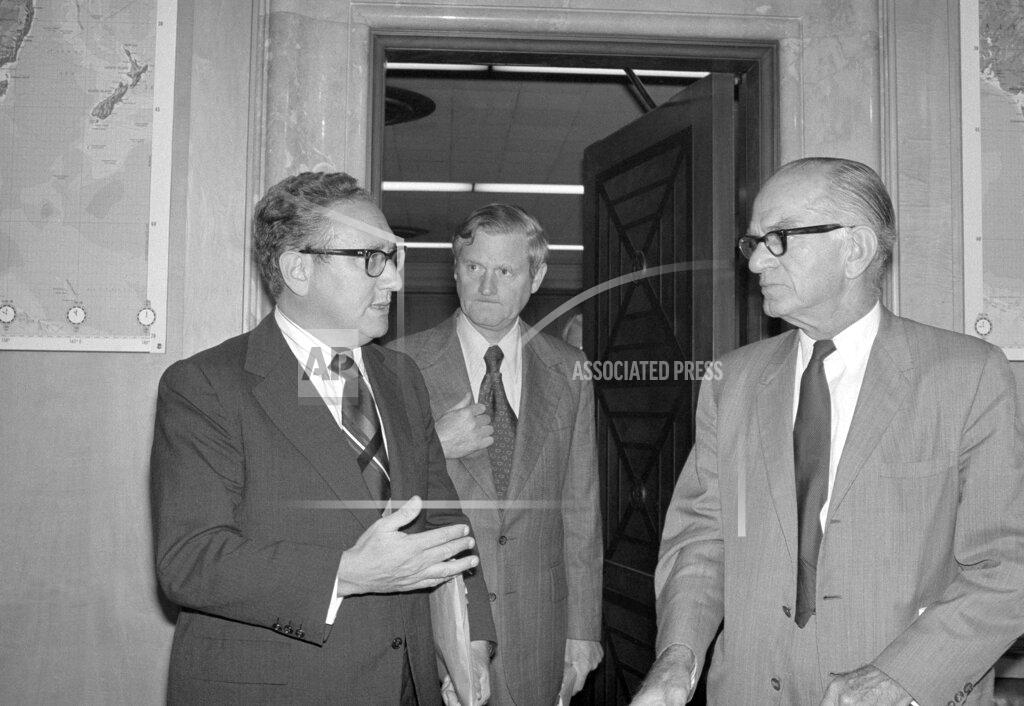
Secretary of State Kissinger strongly defended the policy of the Nixon and Ford administrations in pursuing better relations with Moscow in a long, mainly philosophical, statement on Soviet-American relations before the Senate Foreign Relations Committee. He said that reduction of tensions between the two countries had opened the way for a much broader East-West collaboration in meeting such crucial international problems as food, energy and the protection of the environment. In his largely philosophical 10,000‐word statement of Soviet‐American relations, Mr. Kissinger broke no significantly new ground. He described the advantages he said had accrued to both Washington and Moscow from détente, and the outlook for the future in political, economic and arms‐control fields.
The committee, which has been holding desultory hearings for the last month on Soviet-American relations, generally agreed with Mr. Kissinger’s approach. But the meeting was not without discord.
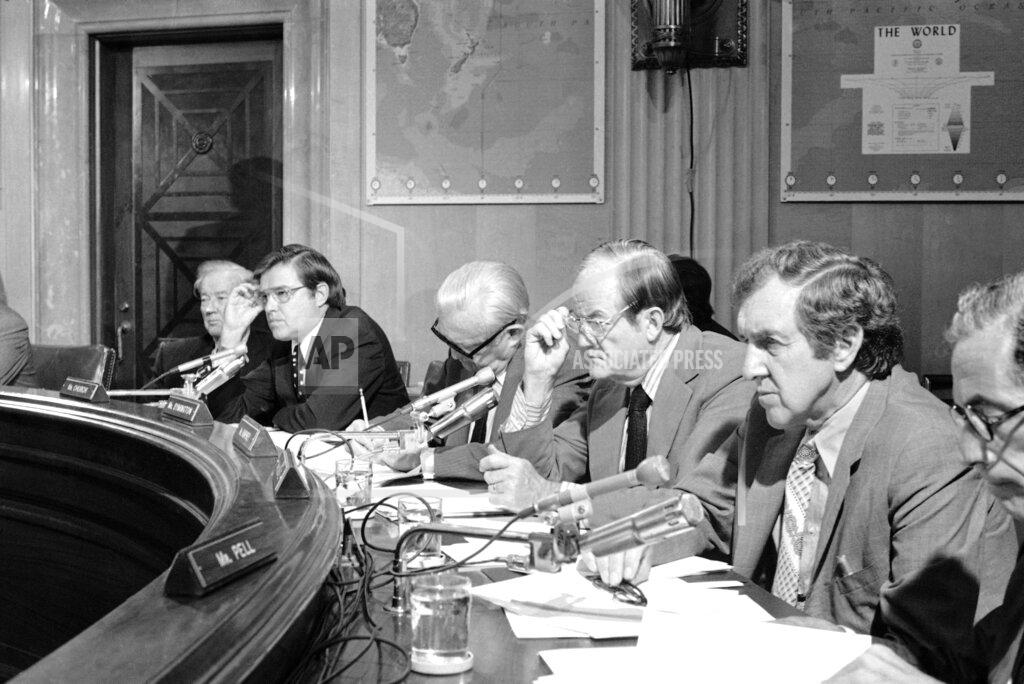
In particular, Mr. Kissinger was questioned sharply by Senator Frank Church, Democrat of Idaho, on how the secret American involvement in Chile could be justified in light of Mr. Kissinger’s stated belief in noninterference in other countries’ affairs. This, in turn, provoked an exchange between Mr. Church and the chairman, J. W. Fulbright, Democrat of Arkansas, who argued that questions on Chile “were out of order” since the committee had voted Tuesday to undertake a separate study of the Chile affair. Mr. Kissinger, however, finally replied to Mr., Church’s questions. He asserted that the more than $8‐million authorized to be spent in Chile between 1970 and 1973 was not aimed at “subverting” the Government of President Salvador Allende Gossens, who died in a military coup d’état last year, but rather to keep alive political parties and the press. He said they were in danger of being swallowed up in a one-party minority Government headed by Dr. Allende.
Senator Clifford Case, Republican of New Jersey, expressed the most doubt about the value of détente. He told Mr. Kissinger in the two‐hour question period that it was his impression that “the gains made in detente have accrued to the Soviet side.” Mr. Kissinger interrupted Mr. Case to say: “I disagree completely.” Mr. Case retorted that the Soviet Union had been largely responsible for the Middle East war last fall and had spurred the Arabs to embargo oil shipments to the United States. He said that “we’re almost too grateful for relatively small concessions” by the Russians. Mr. Kissinger said, “I believe that on balance, if anything, the gains of détente have been more in our favor than in the opposite direction.”
Yuri Andropov, the Director of the Soviet Union’s KGB spy agency, approved “Plan 5/9-16091”, a disinformation campaign to discredit recently-expelled dissident Aleksandr Solzhenitsyn and to deter his contacts with other Soviet dissidents. The harassment led to Solzhenitsyn leaving Zürich in Switzerland, where he and all persons contacting him had been under Soviet surveillance, and settling in the small U.S. town of Cavendish, Vermont.
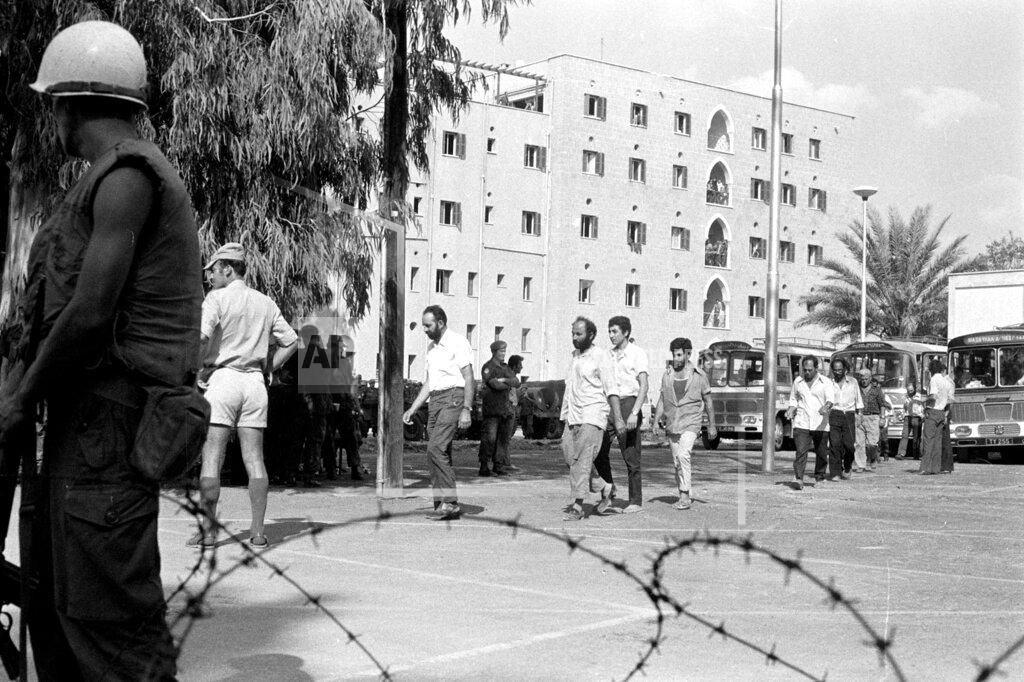
The United Nations High Comnission for Refugees called today for urgent action to help the 225,000 refugees in Cyprus. Earlier, the United Nations warned of a growing danger of epidemics among the thousands of Greek Cypriots living without shelter, particularly on the British base at Dhekelia. Although the Cyprus Government and relief organizations have mounted an emergency operation to help the refugees, approaching winter threatens to catch many without adequate shelter. Political considerations have frustrated all efforts so far to repatriate even token numbers of refugees displaced from their homes by the Turkish invasion. An estimated 6,000 Greeks trapped behind Turkish lines in the northeastern peninsula are without adequate relief. The United Nations commission has announced that its food supplies are depleted and other relief is needed.
The Senate voted today to urge President Ford to cut off military aid to Turkey. The vote came after a sharp exchange behind closed doors between Secretary of State Kissinger and Senator Thomas F. Eagleton on the legality of the aid. According to Senate sources, Mr. Kissinger acknowledged in the meeting of the Senate Democratic caucus that the preponderant view of State Department lawyers was the same as Mr. Eagleton’s — that the aid was in violation of the Foreign Assistance Act because of Turkish use of American equipment on Cyprus. But Mr. Kissinger urged that the aid be continued. He asked the Senators not to write any restrictions into law. This was a reference to the move led by Mr. Eagleton and 25 other Senators to obtain sense‐of‐Congress resolution urging. Mr. Ford to cut off the aid. Mr. Eagleton said he was not writing any restriction, but was asking “you to enforce the law on the books.”
The U.N. General Assembly’s 25-member steering committee approved the inclusion of the first 90 substantive items for the longest agenda in U.N. history. The action rejected Soviet bids for the removal of two items — reviews of the U.N. Charter and of the role of the World Court. Among the recommended items were two on Korea — one calling for the withdrawal of U.N. forces there and a counterproposal on the need “to maintain peace and security in the Korean Peninsula.”
Norway maintained its reservations about joining in an emergency oil-sharing pact with 11 other industrialized nations. This was made clear by a Norwegian delegation leader, Arne Arnesen, at a Brussels meeting of the 12-nation energy Coordinating group. Norway’s reluctance stems from its new-found oil riches in the North Sea. The aim of the pact is to avoid the chaos that resulted from the recent Arab oil embargo. There was still a chance that the other 11 nations would go ahead with the plan and Norway would join later.
Arab delegates to the United Nations said today that they regarded President Ford’s address to the General Assembly yesterday as a veiled ultimatum to the oil‐producing countries. “The United States is trying to rally the majority of the world against us,” an Arab official said. “We are being pictured as the butchers of the world’s economy,” he added, contending that President Ford’s speech, linking the energy and food crises, was aimed at “intimidating” the oil‐producing countries. The President had called on “oil producers to define their conception of a global policy on energy to meet the growing need and to do this without imposing unacceptable burdens on the international monetary and trade system.” “A world of economic confrontation,” he warned, “cannot be a world of political cooperation.” The Arab official and others here who took exception to the President’s remarks requested that they not be identified.
Ethiopia’s military rulers and the Confederation of Labor Unions, at loggerheads over how the country should be run, met to iron out their differences. The military council, which deposed Emperor Haile Selassie last week, has described the union leaders as “imperialist agents.” Meanwhile, troops broke up an anti-government protest that the demonstrators said was paid for by families of Ethiopia’s arrested aristocracy. The aristocrats reportedly have had their heads shaved and are required to wear prison clothes and do yard work. Their families want them freed.
More than 300 Thai, Vietnamese and Laotian prisoners of war were freed at a remote airstrip behind Communist lines on the Plain of Jars in northeastern Laos, but no one could go home until Pathet Lao tanks made a friendly appearance. One of the U.S.-supplied transport planes sank in the mud, halting completion of the exchange operation. The former enemies worked jovially side by side trying to move the plane but it took the tanks to pull it free.
The Japanese Government tendered to South Korea today two expressions of regret, one written, the other oral, over the attempted assassination of President Park Chung Hee by Korean resident of Japan. This procedure, which was carefully worked out by South Korean and Japanese negotiators, formally brought to an end the diplomatic dispute that followed the attack on President Park here on August 15. The President’s wife was killed during the shooting. The written statement was personal letter from Japan’s Premier, Kakuei Tanaka, to President Park. It and the supplementary oral statement were delivered by a special Japanese envoy, former Foreign Minister Etsusaburo Shiina, who arrived here this morning. The President accepted the letter during a meeting that lasted an hour and 50 minutes and said through a spokesman later that “the incident has been an unfortunate one for the peoples of Korea and Japan alike.” South Koreans had been enraged by statements senior Japanese officials had made after the assassination attempt that Japan bore no legal or moral responsibility for the incident.
Intelligence sources in Washington disclosed that the Central Intelligence Agency secretly subsidized striking labor unions and trade groups in Chile for more than 18 months before Salvador Allende was overthrown. The C.I.A., the sources said, heavily subsidized the organizers of a nationwide truck strike in the fall of 1972 that disrupted Chile’s economy.
In Argentina, the kidnapping of brothers Jorge Born and Juan Born, which would be resolved only after the payment of a record ransom, was carried out in Buenos Aires by the Montoneros terrorist group. The two brothers, officers of the Bunge & Born grain exporting company, were being driven to their offices, along with general manager Alberto Bosch, when their limousine was blocked by 15 terrorists in several cars. Bodyguards in the car opened fire, but the terrorists fired back, killing chauffeur Juan Carlos Perez and company manager Bosch. The Born brothers were then dragged from the limousine and driven away. Juan would be released in April, but Jorge would remain captive until June 20, 1975, released only after the payment of $64,000,000 U.S. dollars.
Nearly 200 Portuguese soldiers were unexpectedly freed by Frelimo guerrillas in Mozambique. In what Frelimo President Samora Machel described as the “symbolic end” to the 10-year guerrilla war for the colony’s independence, the 197 freed soldiers were flown aboard a Tanzanian air force plane from a prisoner of war camp in southern Tanzania to Nangade, a small outpose 10 miles across the Mozambique border.
President Ford lost his first test with Congress. The Senate, voting 64 to 35, rejected his proposal to delay for the three months a 5.52 percent pay increase for about 3.6 million federal employees. The increase will take effect on October 1, as scheduled. Mr. Ford proposed to delay the increase in an effort to fight inflation. The Senate action appeared to reflect a general reluctance by Congress to deny pay increases to large numbers of Federal workers in an election year, although a few Senators have acknowledged privately that the adverse public reaction against Mr. Ford’s granting a full pardon to former President Richard M. Nixon had made it easier for some Senators to oppose the new President on the pay issue.
In a statement late yesterday, Mr. Ford urged the Senate to sustain the three‐month delay and declared: “I see this vote as the first test of our common effort to put our economic house in order.” After the vote, Mr. Ford said he was “disappointed” but that he was “in agreement with the Congress that Federal employes deserve this pay increase.” He added in his statement that he would reach a decision “as quickly as possible within the prescribed discretionary limits on the precise amount of the raise.” nder the Federal Pay Comparability Act of 1970, the Civil Service Commission and the Of Office of Management and Budget have recommended a 5.52 percent pay increase to keep federal salaries comparable to those in private industry. Congressional aides said they expected that the 5.52 percent increase would be ordered into effect on October 1, although some Civil Service groups have contended that a larger increase was warranted.
Vice President-designate Nelson Rockefeller revised the estimate of his net worth from $33 million to $62.5 million, including that of his wife, in addition to the income from two trusts worth $120 million. He said he was acting to counter “incomplete and therefore misleading data” leaked to the press.
The administration sponsors of a conference in Washington on ways to fight inflation in social services agencies were criticized by delegates representing labor, religious, consumer, charitable and minority groups, who said that the meeting was being used to justify cuts in the nation’s social programs. Alan Greenspan, chairman of the President’s Council of Economic Advisers, was hooted and jeered.
Former President Nixon has been subpoenaed by the special Watergate prosecutor, Leon Jaworski, to appear at the Watergate cover-up trial. A spokesman for the special prosecutor said the subpoena was delivered Wednesday night to the Federal Bureau of Investigation, which has been asked to serve it at Mr. Nixon’s San Clemente estate. This was the second time that Mr. Nixon has been subpoenaed to appear at the trial. The first subpoena was served on behalf of John Ehrlichman, who wants Mr. Nixon as a defense witness.
Supporters of a bill that would establish a national consumer protection agency failed for the fourth time since it was introduced in the Senate to break a conservative filibuster against it. The vote was 64 to 34, two short of the two-thirds majority needed to cut off debate on the bill, which may be shelved.
Members of the House Ways and Means Committee, which originates all tax legislation, are getting large contributions from special interests that are trying to preserve or increase the favored treatment they now receive under the tax laws. The biggest contributors are the oil and gas industry, the real estate business and the securities industry.
President Ford, campaigning for the first time as leader of his party, addressed voters on behalf of a Republican congressman seeking reelection in suburban Virginia. Mr. Ford spent about 25 minutes at a reception at a country club in Alexandria for Rep. Stanford E. Parris and praised him for doing “a first-class job,” for being “a real team player” and “a strong and staunch ally.”
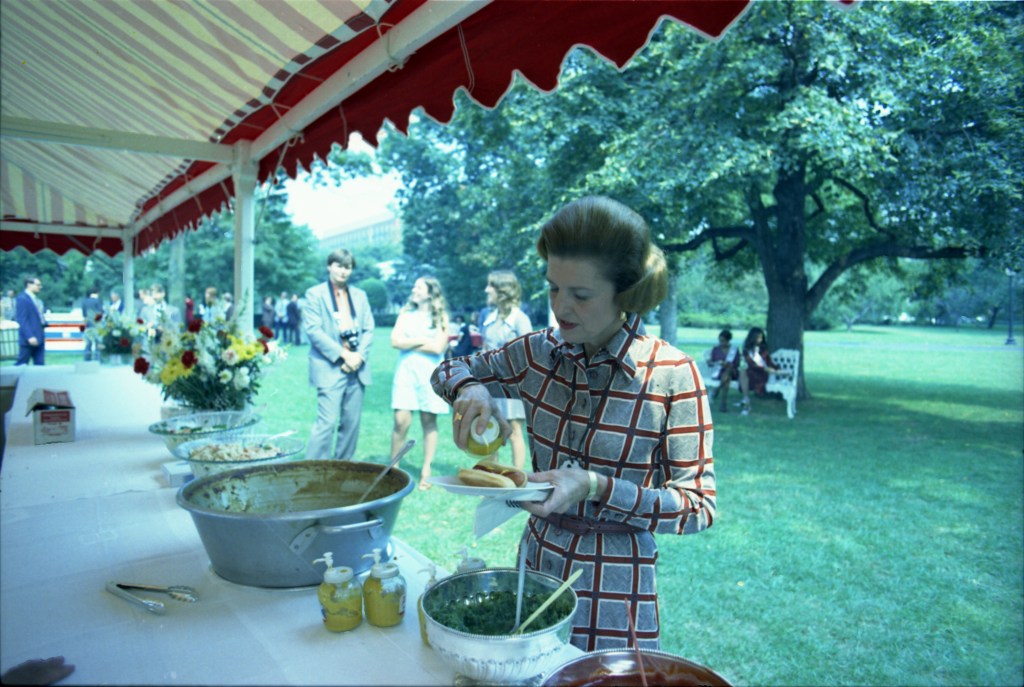
How many people are on the White House staff? At least 1,200. That was the number turning out — from maid to chief of staff — for a picnic of President Ford’s payrollers on the White House south lawn. In the warm, sunny weather, the Fords joined in frisbee-throwing and chatting with the guests as the Executive Mansion’s kitchen served hot dogs, baked beans, potato salad, cole slaw, ice cream, soft drinks, and coffee. The President passed up the food, being “on a strict diet.” But the First Lady remarked, “Too bad we can’t do this every day. I’d be all for it.”
Two out of three Americans interviewed by the Gallup Poll said they favored public financing of presidential and congressional elections campaigns and a ban on private contributions. The public’s attitude began to harden after Watergate revelations. In a Gallup survey shortly after the Senate Watergate committee opened hearings in June, 1973, 58% said they wanted federally imposed limits on campaign spending. By September of that year, the percentage had increased to 65.
The Associated Milk Producers, Inc., has sued its former general manager for $332,000 it alleges he misappropriated through political contributions. The defendant, Harold S. Nelson, 56, was a key figure during the late 1960s in building AMPI into the nation’s largest dairy cooperative.
Richard L. Roudebush, President Ford’s nominee to head the Veterans Administration, said he would not tolerate assignment of draft evaders or military deserters to VA hospitals under the new conditional amnesty program. That was in reply to a question from Senator Strom Thurmond (R-South Carolina), who had said he feared such assignments might be attempted. Roudebush said he agreed that this would be an affront to veterans. The former Indiana Republican congressman, appearing before the Senate Veterans Committee for questioning on his nomination, pledged efforts to make improvements all along the line.
The Justice Department’s Law Enforcement Assistance Administration has quietly hired its former boss as a $135-a-day consultant for up to three months, August 29 to November 29, despite his resignation in a political dispute last June. Donald E. Santarelli is currently on the payroll as a “special government employee,” officials acknowledged. On June 1, Santarelli resigned after suggesting publicly that Richard M. Nixon should quit the Presidency because of the Watergate scandal. Mr. Nixon accepted Santarelli’s resignation but asked him to remain until a successor was chosen. Richard W. Velde, a former deputy administrator, was sworn into the top job on September 5.
The Department of Health, Education and Welfare announced it had begun an immediate investigation of three studies reporting a possible link between two widely prescribed anti-hypertension drugs and breast cancer in women over 60. The drugs, reserpine and rescinnamine, have been used in the United States for 20 years and account for 25% of medicines for treatment of high blood pressure. Reserpine alone is taken by 3 million to 4 million U.S. patients. Separate studies in Boston, Finland and Britain, to be published in the next edition of the British medical journal Lancet, have found that among women over 60 the breast cancer rate was up to three times higher for those who had taken reserpine over long periods of time.
Kootenai Indian leaders in Bonners Ferry, Idaho, modified their threat to declare “war” on the United States after state police arrived in force. About 60 officers were brought to the community “as a precautionary measure.” Indian spokesman Doug Wheaton said roadblocks would not be erected as planned but that “information points” would be established at daybreak. The 67-member tribe is seeking a treaty and a 128,000-acre reservation in exchange for 1.6 million acres of ancestral land the government seized 120 years ago. The tribe plans to charge a 10-cent toll for cars passing the information points.
Labor union officials said yesterday that they were planning a new challenge to Federal asbestos regulations on the ground that the rules failed to protect the health of asbestos workers and their families.
Tom Seaver, baseball’s highest-paid pitcher, probably will do no more pitching for the New York Mets this season. The right‐hander is suffering from the same ailment he experienced in his left hip and buttock two months ago in a game with the Phillies. Attributed to the sciatic nerve, the pain sidelined Seaver for 11 days. Since only a dozen games remain on the schedule, it generally was felt today that Dr. James Parkes, the club’s physician, would decide to have Seaver sit out the rest of the season.
Dave McNally (16–10) tosses a three-hit shutout gem and the Baltimore Orioles beat the New York Yankees, 7–0, to take a half-game lead in the tight American League East race. McNally goes the distance and strikes out five. He got all the runs he needed in the fifth inning when Don Baylor lined his ninth homer of the year into the left field seats at Yankee Stadium. The Orioles added two more runs in the 8th and four in the 9th. Rudy May took the loss.
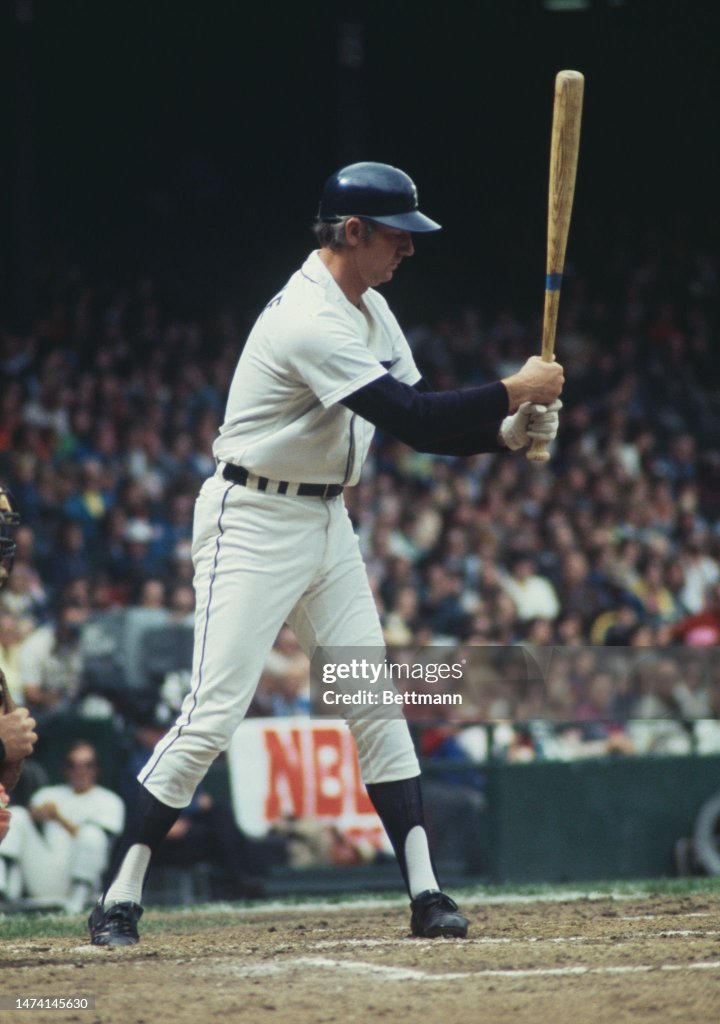
For the Boston Red Sox, September has been the cruelest month. Their 3–1 loss to the Detroit Tigers tonight was their 18th defeat in 25 games. Boston got just two hits in seven innings off a pitcher making his first major-league start, Vern Ruhle. They didn’t do much better against Ruhle’s reliever, John Hiller, who held them to one hit in the last two innings. Fred Lynn, a rookie recently called from the minors, hit a homer off Ruhle for the only Red Sox run. The losing pitcher was Luis Tiant, who failed for the sixth straight time to gain his 21st victory. Tiant made one notable pitch — a homer to Al Kaline in the first inning. It left Kaline just three hits short of becoming the 12th player in baseball history to collect 3,000 career hits. “It would be nice to get No. 3,000 at home,” he says, “but I want to get it as quickly as I can. We’re on a nine-game trip now before returning to Detroit, and I’m trying my best.” A two-run triple by Jim Nettles in the fourth inning broke open the game.
Amos Otis singled home the tie-breaking run in the 10th, giving the Kansas City Royals a 4–3 victory over the Oakland Athletics and reducing the A’s lead in the West Division to 4½ games over the idle Texas Rangers. Al Cowens singled to start the winning rally and moved to third on a double by George Brett. Hal McRae was walked intentionally to load the bases, and John Mayberry fouled out before Otis came through with his single that tipped off the glove of the A’s shortstop, Bert Campaneris.
The Pittsburgh Pirates move a half game behind the St. Louis Cardinals in the National League East, clipping the Birds, 8–6. Each team collects 15 hits. The Pirates score five runs in the 7th, three on Richie Hebner’s home run, to win. The Pirates did their damage in the seventh against Al Hrabosky, who had allowed only one earned run in his 26 previous relief appearances. After Manny Sanguillen and Al Oliver opened the seventh with singles, Hrabosky came in and gave up the double to Stargell, a walk to Richie Zisk and the homer to Hebner, Lou Brock stole his 111th base of the season for the Cardinals, who got their last two runs in the eighth on Ken Reitz’s two-run double.
Steve Yeager smashed a three-run homer and Don Sutton and Mike Marshall combined for a six-hitter, leading the Los Angeles Dodgers’ 11–2 rout of the hapless San Diego Padres. Marshall pitched the ninth inning for the Dodgers and tied a major league record with his 77th finish this season.
Johnny Bench’s bases-loaded double was the big blow in a six-run second inning that carried the Cincinnati Reds to an 8–4 victory over the San Francisco Giants. The triumph, coupled with the Dodgers’ rout of the Padres, left the Reds still 2½ games back in the National League West. Los Angeles has 12 games remaining, one more than Cincinnati.
The Chicago Cubs beat the Philadelphia Phillies, 7–4, as Ron Dunn cracked three doubles, and Bill Madlock and Don Kessinger each had three hits. Five Phillies pitchers issued nine walks to go with the 13 hits they allowed. Burt Hooten (6–11) got the win.
Dow Jones Industrial Average: 674.05 (+22.14, +3.40%).
Born:
Jimmy Fallon, American actor, comedian, and television personality (“Saturday Night Live”, “The Tonight Show”), in Bay Ridge, Brooklyn, New York, New York.
Hidetaka Miyazaki, Japanese video game designer and executive (FromSoftware: “Demon Souls”, “Dark Souls”, “Elden Ring”), in Shizuoka, Japan.
Victoria Silvstedt, Swedish model; in Skelleftehamn, Sweden.
Died:
Eve March, 63, American actress (“Adam’s Rib”, “Danny Boy”).
Leonard Raffensperger, 70, American football and basketball player and coach, died of cancer.
Zack Taylor, 76, American Major League Baseball catcher and manager, died of a heart attack.
Harry Austryn Wolfson, 86, Russian Empire-born American scholar, philosopher and historian at Harvard University.
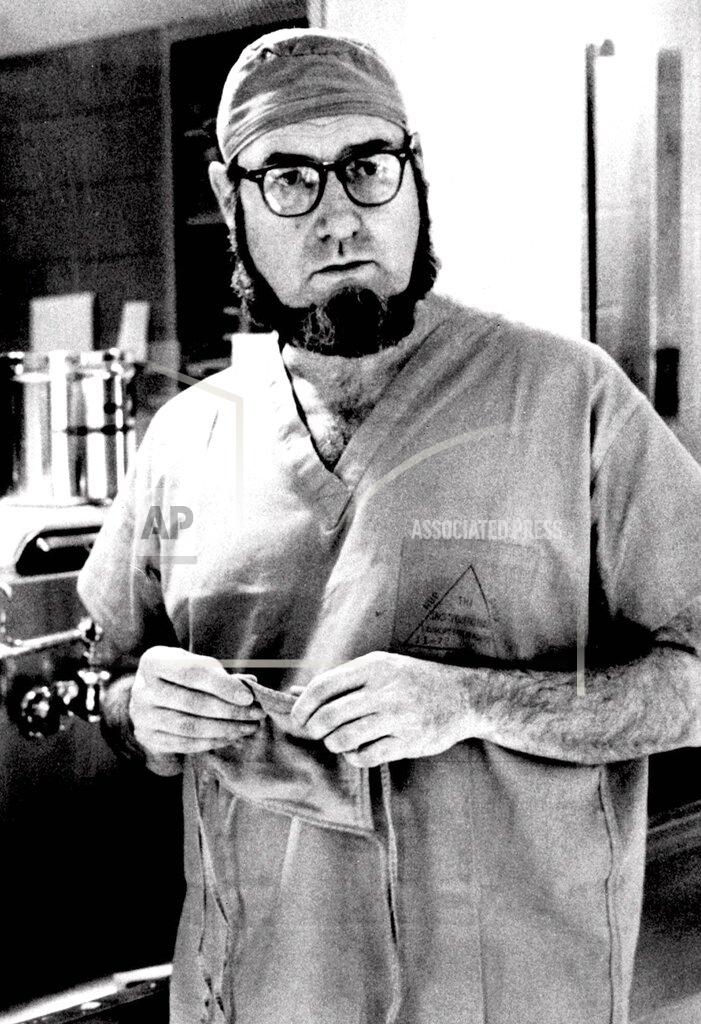
[Ed: Yes, it’s that C. Everett Koop — Surgeon General in the Reagan White House.]
 History Diaries