
In a speech in Sacramento, California, U.S. President Johnson disclosed that the United States had a pair of defense systems in place “to assure that no nation will be tempted to use the reaches of space as a platform for weapons of mass destruction… systems capable of destroying bomb-carrying satellites.” He added that the top secret program had started in 1962 and that “We now have developed and tested two systems with the ability to intercept and destroy armed satellites circling the Earth in space. I can tell you today that these systems are in place, they are operationally ready, and they are on alert to protect this nation and the free world.”
Speaking on the subject of defense from the steps of the California State Capitol here, Mr. Johnson said that the United States had no intention of putting warheads into orbit in military satellites. “We have no reason to believe,” he said, “that any nation plans to put nuclear warheads into orbit.” He did not give any details of the satellite‐intercepting weapons, but it was learned authoritatively that he referred to two systems that differ in principle. They are ground-based weapons and are not themselves maintained in orbit. Mr. Johnson did explain that the curvilinear radar gives the nation’s armed forces and aircraft “earlier warnings than ever before of any hostile launches against this country.” “Previously,” he said, “our radar capability has been limited to detection of objects within the line of sight. But now we have produced — and we are installing — our first facilities for operational “over‐the horizon” radar.
Exercising its power as one of the five permanent members of the United Nations Security Council, the Soviet Union vetoed a resolution calling upon Indonesia to withdraw its forces from Malaysia. The Norwegian resolution also would have appealed for negotiations between Indonesia and Malaysia. The vote was 9 to 2 in favor of the resolution. Czechoslovakia voted with the Soviet Union. Those in favor were the United States, Bolivia, Brazil, Britain, Nationalist China, France, the Ivory Coast, Morocco and Norway. The Soviet Union now has used the veto 102 times in the Security Council.
The veto prevented any immediate effective action by the Council toward easing the tension between the Southeast Asian neighbors. However, the question remains before the Council and may be taken up again at any time. Adlai E. Stevenson of the United States expressed his “regret and surprise that the representative of the Soviet Union has prevented this Council from exercising its duty in a manner clearly considered essential by all of the Council’s members except the representatives of Czechoslovakia and the Soviet Union.” The general feeling was that the vote had effectively placed on record the fact that all the countries that voted for the resolution wished to condemn Indonesia’s actions.
The Indonesian stand, as stated here, is that the United Nations Charter’s ban on use of force does not count when it conflicts with Indonesia’s policies. Platon D. Morozov of the Soviet Union, this month’s President of the Council, rebuked Mr. Stevenson for commenting on another country’s vote. He said that explanations of a vote should be limited to a statement of the speaker’s motives and that each country was sovereign in taking its position. Roger Seydoux of France and Sir Patrick Dean of Britain spoke in support of the resolution. French circles said France had kept out of the debate until today in the hope that complete agreement could be reached on some text. Mr. Seydoux said today that his delegation would have preferred “a formula capable of getting general agreement” but that it would support the present resolution because it deplored a situation in which one party made a complaint that the other did not even deny and which might endanger peace.
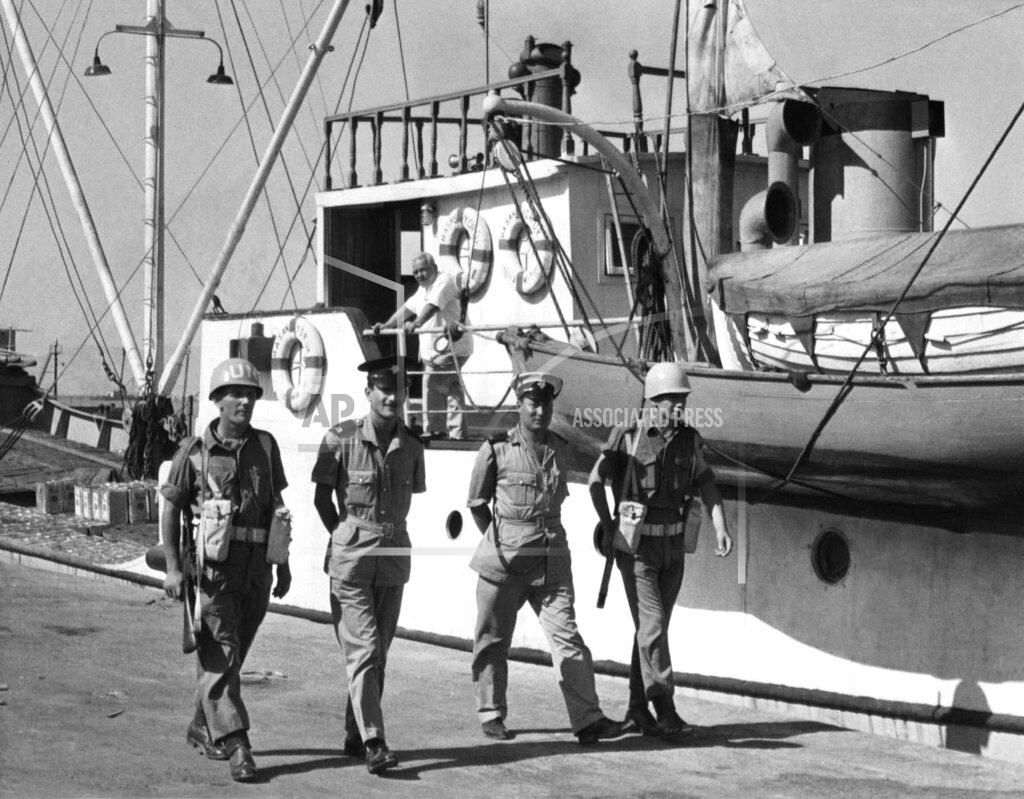
Cyprus’s President, Archbishop Makarios, and Greece’s Premier, George Papandreou, agreed today on a policy for restoring peace in Cyprus as a prelude to a solution through the United Nations of the dispute over the island. The accord was announced at the close of a two‐and-one‐half-hour luncheon at the Premier’s country residence 10 miles north of Athens. The meeting was attended by General George Grivas, the former Cypriot guerrilla chief, who is defense adviser to President Makarios. Archbishop Makarios, who is in Athens for the wedding of King Constantine tomorrow, said after the luncheon, “Our policy remains the same.” Premier Papandreou interjected: “We have a common policy of pacification. We are proceeding to the United Nations. There are no outstanding issues between us.”
The Greek Premier said he fully backed the Archbishop’s “peace gestures,” which included the lifting of the food blockade imposed on the Turkish Cypriote community on Cyprus. The Greek Foreign Minister, Stavros Costopoulos, said: “We are in complete accord with the Makarios peace campaign, which will develop further.” He did not elaborate, but it was assumed that President Makarios had agreed to avoid any issue that might provoke a fresh crisis with Turkey.
In another move apparently likely to reduce tensions, Turkey informed Greece today that a stay had been ordered on the expulsion of 1,810 Greek nationals in Istanbul whose residence permits have lapsed. The Turkish Government had threatened a mass expulsion in 10 days following the expiration yesterday of the 1930 Greek-Turkish treaty under which Greek residents in Turkey were granted specified rights. Turkey seeks to protect the Turkish Cypriots, who are in the minority on the island. In the violence that has gone on since December, Turkey has repeatedly threatened to intervene militarily if the constitutional rights of the minority are abrogated. It was a Greek Cypriot move to alter the Constitution that brought on the communal fighting on Cyprus. Prospects for a resumption of efforts for a peaceful solution appeared brighter today with the appointment of Galo Plaza Lasso of Ecuador as the new United Nations mediator for Cyprus. The appointment was welcomed tonight by Archbishop Makarios. He said, “I have the deepest respect for him both as a political man and a man of integrity.”
The President said that a Turkish ship with food supplies was on the way to Cyprus and that he had instructed that duties should not be levied on normally taxable supplies. Informed sources said that while the new mediator, who replaces the late Sakari S. Tuomoija of Finland, resumed United Nations efforts to devise an acceptable solution, parallel efforts would be made by the North Atlantic Treaty Organization. Both Greece and Turkey are members. A number of NATO officials including the Commander in Chief in Europe, General Lyman L. Lemnitzer, are in Athens for the wedding. Many were taking advantage of the visit to confer with Greek leaders. Greek‐Turkish cooperation within the alliance broke down after Greece withdrew from NATO’s headquarters at Izmir, Turkey, last month.
The Laotian leftist, neutralist and rightist factions agreed tonight that their talks in search of national unity were stalled. The deadlock became clear after an hour‐long meeting between Prince Souvanna Phouma, the neutralist leader and Premier, arid Prince Souphanouvong, who speaks for the pro-Communist Pathet Lao. They adjourned the talks without setting a date for new ones, although spokesmen for all three factions said it might be possible to resume them either here or in Vientiane, the administrative capital of Laos. Prince Souvanna Phouma plans to return to Laos Monday after holding a news conference Saturday to explain his departure. If the leftists make any new proposal in the interval, the Premier plans to discuss them then. But an aide said the Premier had no intention of postponing his departure again.
On Wednesday, he postponed the departure after the leftists proposed a cease‐fire and offered to give up military positions taken from the neutralists on the Plaine des Jarres. This would have restored the military situation to what it was on June 24, 1962, when the rightist‐leftist-neutralist coalition was established. The hopes aroused by this proposal were dashed yesterday when the leftists declared that they would not allow any agreement to be supervised by the International Control Commission for Laos. Allied diplomats who have followed the talks voiced fear that the impasse might lead to new fighting on the Plaine des Jarres, which controls the key north‐south roads and tracks through Laos.
Two United States Army advisers who had been serving with South Vietnamese units commanded by two of the leaders of last Sunday’s abortive anti‐government coup were transferred today. The Americans are Colonel Sammie N. Holman, who was senior adviser to the IV Corps commander, Major General Dương Văn Đức, and Colonel Frank J. Nemethy, who was senior adviser to the Seventh Division commander, Colonel Huỳnh Văn Tồn. General Đức was the military leader of the coup that attempted to overthrow the American-backed Premier, Major General Nguyễn Khánh, and Colonel Tồn provided most of the rebel troops. Both now are under arrest. A United States military spokesman said that Colonel Nemethy was being transferred to a training job in Saigon and Colonel Holman, would be flown back to the United States in a few weeks, cutting short his normal, one‐year tour of duty in Saigon.
The 8-year‐old son of the director of South Vietnam’s official radio station was returned today after five days in the hands of men involved in the abortive coup d’etat Sunday. The apparent purpose of the kidnapping was to bring pressure on Nguyễn Ngọc Linh, the director, make the radio station available to the rebels.
Sir Alec Douglas‐Home, facing his first election battle as Conservative party leader, promised today that Britain would enjoy increased prosperity if the Tories were returned for a fourth successive term October 15. The Prime Minister warned that a Labor victory would demand a “massive surrender of freedom to the state.” He drew the battle lines in familiar terms for the campaign that has just begun: prosperity with planning by consent under the Conservatives; inflation and restrictions with planning by direction under Labor. The Conservative manifesto followed Labor’s by a week. Both gave in the most general terms an outline of legislation that the nation can expect over the lifetime of the next Parliament. The heat of the campaign may draw out some of the details of exactly how each side would achieve the modernization and renovation of British social and economic life that both parties now have promised.
As Sir Alec introduced the manifesto at a televised press conference, he was flanked by three of his party lieutenants —Viscount Blakenham, the party organization’s chairman, who presided, and Foreign Secretary R. A. Butler and Chancellor of the Exchequer Reginald Maudling, to whom the Prime Minister turned over some of the questions. The Conservatives have sought to give this team impression wherever they can, apparently hoping to point up their charge that Harold Wilson has to play a one‐man band as Labor’s leader.
The American cargo ship Penn Carrier ran aground and blocked the Suez Canal, the temporarily halting travel between the Mediterranean Sea and the Indian Ocean.
The National Museum of Anthropology (Museo Nacional de Antropología) was inaugurated in Mexico by President Adolfo Lopez Mateos, amassing artifacts from the ancient Aztec, Maya and Toltec civilizations. “The Mexican people raise this monument”, President Lopez told a multinational audience, “in honor of the admirable cultures that flourished during the pre-Columbian era in regions that are today territories of the republic. Before the testimonies of these cultures, the Mexico of today pays homage to indigenous Mexico, in whose example it recognizes the essential characteristics of its national originality.”
The Civil Rights Act of 1964 suffered its first setback today when a three‐judge Federal panel ruled that the public accommodations section was unconstitutional when applied to a restaurant not engaged in interstate commerce. The ruling could conceivably bring a landslide of suits from neighborhood restaurants and lunch counters seeking to reestablish racial barriers that were swept away by the act, signed July 2. In its ruling, the federal panel declared that if Congress had the “naked power to do what it has attempted in Title II [public accommodations section] of this act, there is no facet of human behavior which it may not control.” Acting United States Attorney General Nicholas deB. Katzenbach was specifically ordered not to enforce the law against Ollie’s Barbecue in Birmingham, the restaurant that brought the suit.
A Justice Department spokesman in Washington said a notice of appeal was filed with the Supreme Court this afternoon and that a stay of the order would be sought pending the appeal. The white owners of Ollie’s Barbecue, Ollie McClung and his son, Ollie Jr., filed suit two months ago contending they would lose $200,000 annually in business if forced to serve Blacks. Their restaurant is in a Black neighborhood of Birmingham, but caters to white patrons, except for take‐out orders. The McClungs argued that their restaurant was situated far from any interstate road, did not cater to transients and thus was not subject to the Civil Rights Act because it was not engaged in interstate commerce. Government attorneys countered that the restaurant should be made to comply with the law because segregation breeds racial friction, which in turn would hamper interstate commerce.
Today’s decision was counter to one returned by a three‐judge Federal panel that heard two similar cases involving the Pickrick Restaurant, owned by Lester Maddox, an Atlanta segregationist and the Heart of Atlanta Motel. Mr. Maddox offered many of the same arguments presented by the McClungs, but the Atlanta panel held that both the Pickrick and the motel must accept Blacks. The Pickrick closed rather than comply, but the motel bowed to the court’s order.
A proposed constitutional amendment to nullify the Supreme Court’s “one man, one vote” decision on the apportionment of state legislatures was forced to the House floor today. The House Rules Committee, invoking a rarely used power, took the proposed amendment away from the House Judiciary Committee and sent it to the floor. The vote was 8 to 3. If written into the Constitution, the amendment would allow states with bicameral legislatures to apportion one of the two houses on “factors other than population.” The Supreme Court held last June 15 that members of both houses must represent districts that are “substantially equal” in population. Since then, the lower courts have ordered a number of states to reapportion their legislatures to conform with the ruling.
To become a part of the Constitution, the nullifying amendment must be approved by twothirds majorities in the House and Senate and be ratified by three‐fourths of the states. Most of its backers conceded privately that the chances of getting Senate action this session were all but nonexistent. Some of them expressed hope, however, that House approval of the proposal by the required two‐thirds majority would impel the courts to take notice of the possibility that Congress would submit such an amendment to the states next year. If so, they said, it would be logical for the courts to defer the execution of reapportionment orders to provide reasonable time for ratification of the amendment.
Backers of the one man, one vote principle questioned the logic of this explanation. They suggested that the Rules Committee was motivated mainly by a desire to use every available device to dramatize opposition to the ruling of June 15 and to other Supreme Court decisions of recent years. There is considerable doubt over whether the amendment’s sponsors will be able to muster a two‐thirds majority in the House. “I believe we can,” Representative Wright Patman, Democrat of Texas, said in urging the committee to clear the way for House action. “We have a reasonable chance, at least.” Mr. Patman is the author of one of about a dozen similar proposed amendments that have been bottled up in the House Judiciary Committee. It was his proposal that the Rules Committee sent to the floor.
The Senate, meanwhile, failed to make any progress toward settling an apportionment dispute that has immobilized it for weeks. Liberals there have been conducting a filibuster against a proposal offered by Everett McKinley Dirksen of Illinois, the Senate Republican leader, as a rider to the pending foreign aid authorization bill. The Senate adjourned after two hours and 26 minutes today for lack of a quorum of 51 members. Only 37 of the 100 Senators answered when the roll was called. Many of the others were out of town campaigning. Leaders had assured them there would be no important votes before next week.
A catch-all appropriations bill slicing $197 million from the nearly billion dollars President Johnson had requested for his antipoverty program was sent to the House floor today. Action on the bill is scheduled to begin next Tuesday. The measure then would go to the Senate. As approved by the House Appropriations Committee, the bill provides funds for a number of Administration programs including civil rights, mass transit and food stamps for the needy. But the committee eliminated the $1.9 million sought by the Public Health Service to create a national clearing house for smoking and health.
The clearing house was to have conducted research and demonstration projects dealing with the problems of smoking and was to have developed and distributed health information on the relationship between smoking and various diseases. The committee action marked the second reduction in the $962.5 million originally sought by President Johnson to carry out what he called his “war on poverty.” As passed by Congress this summer, the. bill creating the antipoverty program authorized a cost of $947.5 million, down $15 million from the original request. The supplemental appropriations bill sent to the House floor today allowed just $750 million for the antipoverty program.
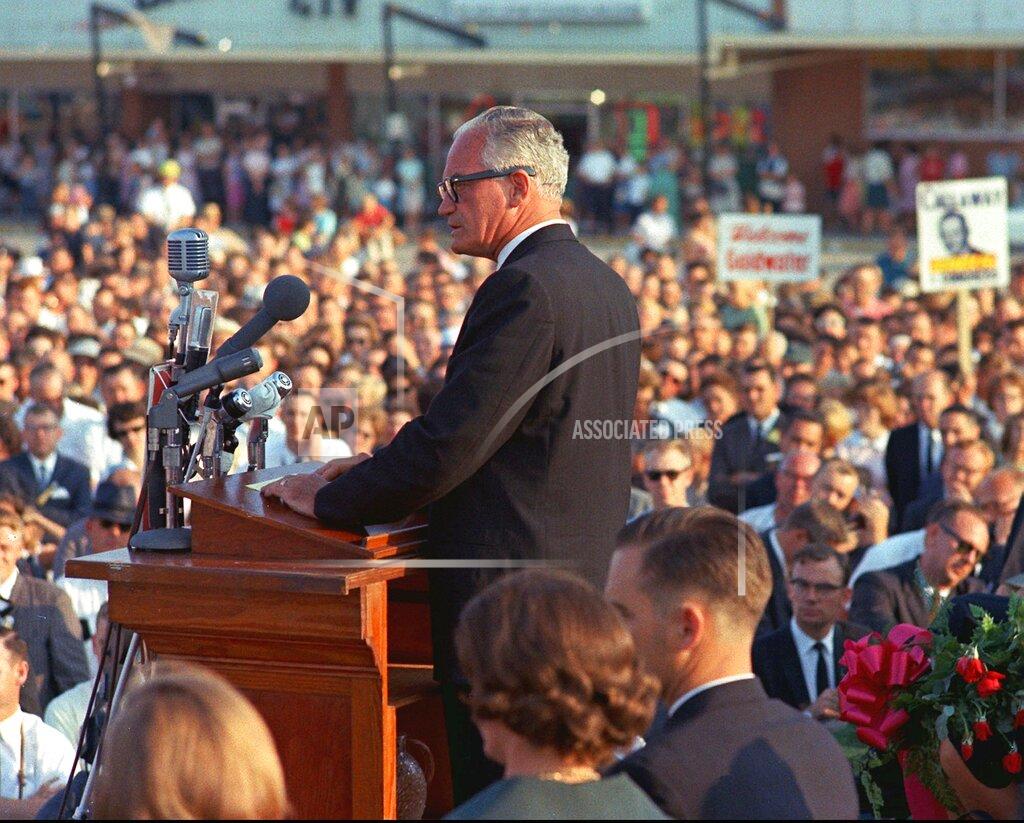
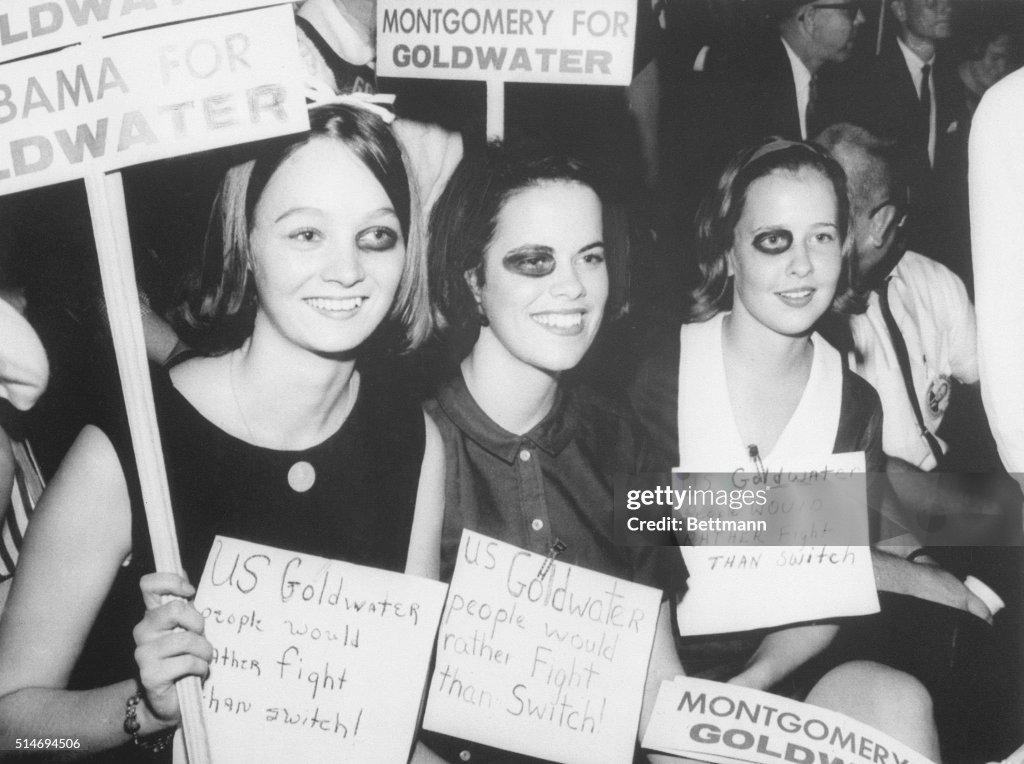
Senator Barry Goldwater and Senator Strom Thurmond of South Carolina embraced politically today. The event was symbolic of what may be a defection of conservatives of the Deep South to the Republican Presidential candidate. As Mr. Goldwater campaigned through the Carolinas and Louisiana today he told Southern Democrats that their fathers up in heaven would say, “Thank God,” if they left the national Demo cratic party. In an emotional scene at Greenville, South Carolina, Mr. Thurmond, who yesterday switched from the Democratic to the Republican party, introduced and endorsed Mr. Goldwater amid the wild cheering of a crowd estimated by the police at from 15,000 to 20,000 persons. As Mr. Goldwater alighted from his campaign jet he found Mr. Thurmond at the bottom of the ramp, wearing a golden elephant on his left lapel and a Goldwater button on his right lapel.
Secretary of the Treasury Douglas Dillon abandoned his low‐keyed approach to the Presidential campaign yesterday and for the first time hit out at Senator Barry Goldwater. One prong of the attack by Mr. Dillon, who up to this point has confined himself to a matter of‐fact defense of the Johnson
Administration’s economic record, was aimed at the Arizona Republican’s proposal to cut income taxes 25 percent over a five‐year period. Mr. Dillon, in a talk delivered to 700 businessmen gathered in New York for a National Industrial Conference Board meeting, said “no one with the slightest understanding of fiscal affairs… could countenance the prospect of blindly and irrevocably binding us to annual tax cuts for many years ahead regardless of the state of the economy.”
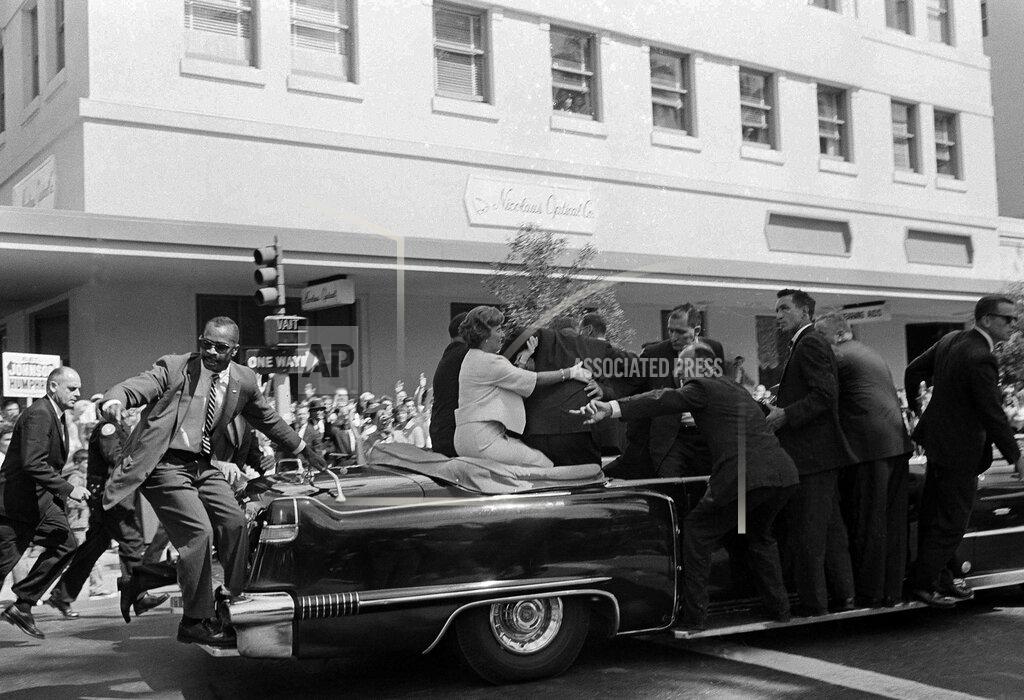
Senator Hubert H. Humphrey took the Democratic campaign to Texas today, and found the state middling warm in the morning and almost fervid by evening. The welcome grew more ardent as he moved from Wichita Falls, in north Texas, to Waco, in the middle of the state, to San Antonio, in the south. By the time he reached the new John F. Kennedy High School in San Antonio — an integrated school of whites, Americans of Mexican descent and Blacks — he was welcomed by signs saying “We Love You Hubert!”
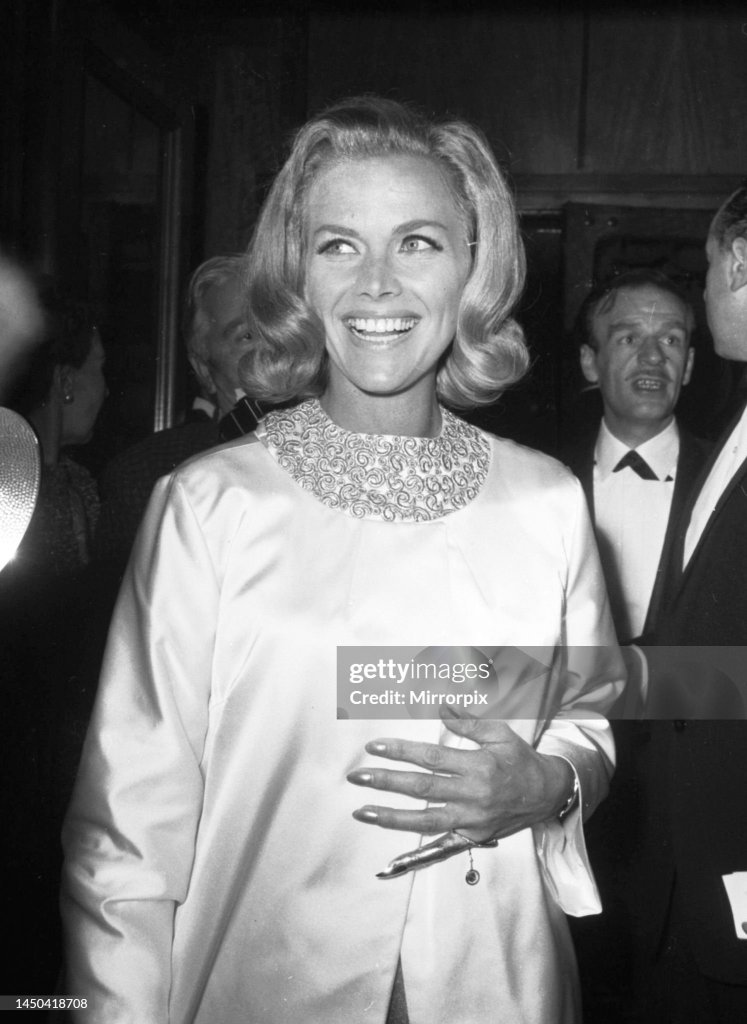
The latest James Bond film, “Goldfinger,” opened in London before being released on September 20 throughout the United Kingdom.
The popular TV fantasy sitcom “Bewitched,” starring Elizabeth Montgomery as a witch who has married an ordinary advertising executive (Dick York), began the first of eight seasons on the ABC network. Reviews of the first episode were mixed, with one critic calling it “a situation comedy that’s magically merry” while Associated Press columnist Cynthia Lowry called it “disappointing” as “Miss Montgomery evoked her best tricks by wiggling her nose like a rabbit, made dishes move, windows fly open and trays spill.”
Motown Records releases The Supremes’ single “Baby Love”; written and produced by the Holland-Dozier-Holland team, it becomes their second consecutive #1 record.
The Beatles are paid a then record $150,000 by baseball team owner Charles Finley for a concert at Municipal Stadium in Kansas City, Missouri on a scheduled day off; the group adds the song “Kansas City”/”Hey, Hey, Hey, Hey” to their standard setlist, much to the delight of the crowd. The group’s manager Brian Epstein, who had initially turned down the A’s owner’s offers of $50,000 and $100,000 to have the lads from Liverpool perform in the City of Fountains, agrees on $150,000, about six times the going rate, enabling the Fab Four to earn $4,838 per minute, the largest sum ever paid for a musical concert.
Seattle mayor J.D. Dorm Braman publicly admits his attempt to bring the Indians to the Emerald City. Other suitors for the disgruntled franchise, whose board of directors will vote to keep the team in Cleveland next month, include the cities of Oakland and Dallas.
The New York Yankees whip the Los Angeles Angels 6–2 to lock on to first place for good with a 2-percentage-point lead over the idle White Sox and Orioles. Roger Maris and Mickey Mantle each have 3 hits. Mantle’s include his 2,000th career hit and his 450th home run, his 31st of the year. Mel Stottlemyre allowed only a bunt single in the first six innings as he gained credit for his seventh victory in nine starts since being brought up from Richmond in mid‐August. Meanwhile, his hitters provided a 4-0 lead. The Yankees have won 2 in a row and will run their win streak to 11 games. Only twice in the first 17 years have the Yankees failed to be in first place on this date — 1948 and 1954.
The league‐leading Philadelphia Phillies scored four runs, all unearned on three Dodger errors, to beat Los Angeles by 4–3 tonight. The Phillies got three gift runs in the first inning when Maury Wills booted a grounder, then bobbled a double‐play relay from Don Drysdale, the pitcher. Little Bobby Shantz, who relieved Rick Wise in the first inning, got credit for the victory, his second against four defeats. The loss mathematically eliminated the Dodgers, last year’s world champions, from pennant contention. In the top of the ninth, the Phillies scored the winning run when Ruben Amaro, who had reached base when hit by a pitched ball, scored from third on Ron Fairly’s throwing error.
Frank Robinson, Vada Pinson and Johnny Edwards hit home runs as the Cincinnati Reds defeated the Chicago Cubs, 7–5, today. Robinson clouted his 26th home run off Lew Burdette in the second inning. Edwards his bis seventh homer in the fourth and drove in another run with a sacrifice fly in the seventh. Pinson hit his 21st home run in the eighth. Jim O’Toole of the Reds retired 22 Cubs in a row at one stretch but failed to finish. He did not allow a base runner after the Cubs had scored their first run in the first until John Boccabella’s pinch single leading off the ninth. Then came Andre Rodgers’s triple, Billy Cowan’s single and Ron Santo’s homer. Sammy Ellis relieved O’Toole and got the last two outs. The victory enabled the Reds to take sole possession of third place, one‐half game ahead of the San Francisco Giants.
Born:
Christian Conrad, American actor (“Charley Hannah”, “High Mountain Rangers”), in Woodland Hills, California.
Jim Pena, MLB pitcher (San Francisco Giants), in Los Angeles, California.
George Benyola, NFL kicker (New York Giants), in Perth Amboy, New Jersey.
Karen Straker, British horse show jumper, born in County Durham, England, United Kingdom.
Dow Jones Industrial Average: 868.67 (+4.49).


 History Diaries