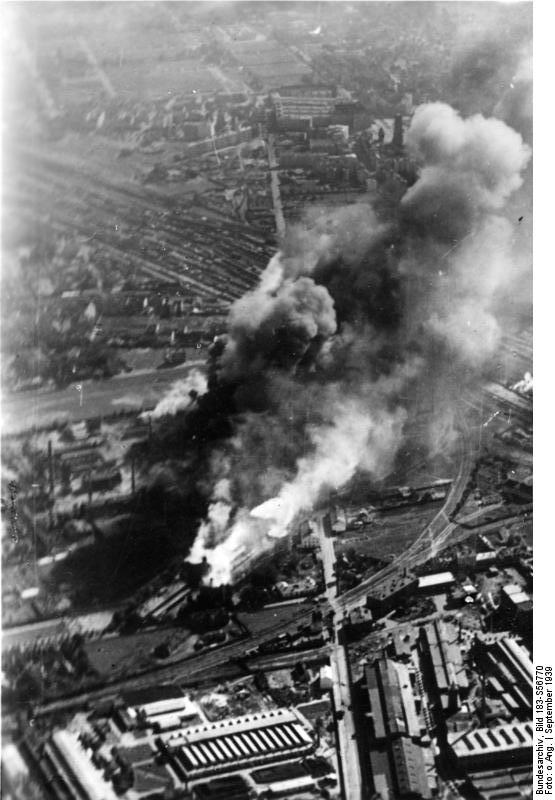
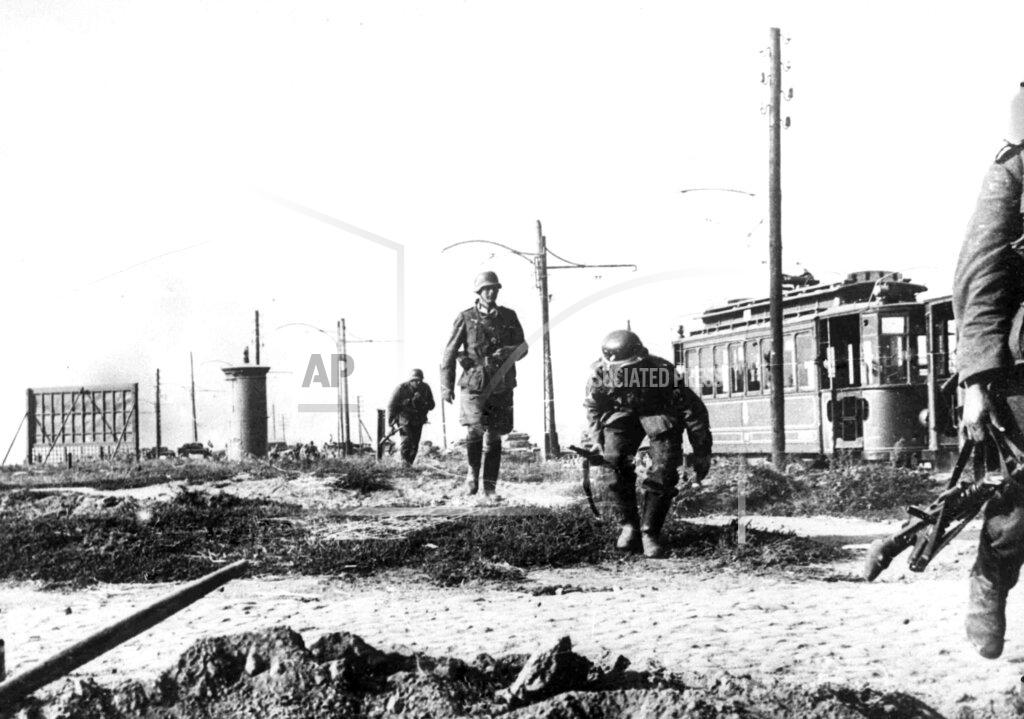
Poland’s armies fought on tonight despite odds that neutral military experts described as almost hopeless. Sixteen days after the Nazi military machine rolled into Poland, the defending troops still held Warsaw, still battled German columns at Lwow and Brest-Litovsk and still struggled against the vast Nazi encircling movement designed to crush their main armies on the central plains. The struggle may go on for weeks. But, neutral observers point out:
- The overwhelming artillery and aerial superiority of the Germans and the swift thrusts of Nazi flying mechanized columns have left much of the population in despair.
- There are few Polish communications left that are worthy of that word. Generals have been forced to fly over German positions from one Polish unit to another to maintain contact.
- No effective railroads remain for transportation between the scattered Polish armies.
- There are few roads that have not been bombed by the Nazi aerial forces or cut by Nazi columns.
- The seasonal rains, which the Poles had counted on to slow down the German mechanized units, have been only a sprinkle in most areas.
- The Polish Government has been driven into this far southeastern corner, where it cannot communicate with the rest of the nation. Constant shifting of the government since its evacuation of Warsaw has not encouraged the population.
Both the army and the civil population apparently had believed that the minute Great Britain and France declared war on Germany the Westwall would be broken and the pressure would be lifted from Poland. Whether any government now could rally the people into a unified force again was a subject of speculation as foreign diplomats crossed the frontier into Rumania. Only one diplomat — Longworth Patterson of the United States Embassy — remained in Zaleszczyki, where most of the Polish Government was concentrated yesterday. Since then they have gone to Kuty on the Rumanian border.
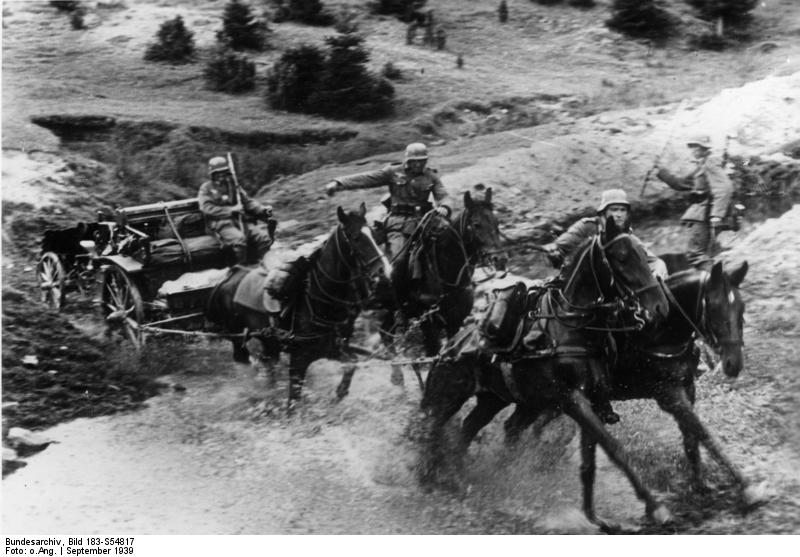
The Battle of Jaworów ended in Polish victory. Polish forces break through German lines on 16 September 1939 in the forests north and west of the town of Janów. Six battalions get through to Janów despite determined defense by the German “Pemsel” combat group formed from the 1st Mountain Division. The Poles repel a counter-attack at Dobrostany. This concludes the Battle of Jaworów, which has been a tactical Polish victory.
The Battle of the Bzura River, between the Polish Posnan and Pomorze Armies and Germany’s Army Group South, continues. Polish troops counterattack, destroying 22 tanks of Leibstandarte SS “Adolf Hitler” regiment. Elsewhere in Poland, German troops capture Brest-Litovsk.
The German Army High Command has given Warsaw until 3:10 o’clock tomorrow morning to decide whether or not to surrender. In the event the Polish capital does not give in to the German troops now surrounding it on all sides, the city will “take. the full consequences of being regarded as a military sector.” The notice was served in the form of a double ultimatum: First, a military ultimatum expiring at 3:10 o’clock tomorrow morning, and the second ultimatum to the civilian population to leave the city by 3:10 o’clock in the afternoon.
A German officer entered Warsaw with a white flag at 8 o’clock this morning to demand the surrender of the city. According to the report of the official German News Agency the commandant of the city refused to see him or accept & written demand for the surrender of the city. The officer, it is stated, thereupon returned to the German lines and this afternoon a squadron of the German air force distributed the pamphlets.
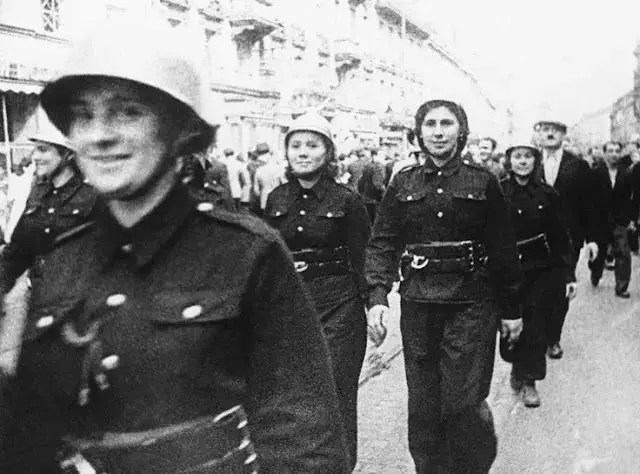
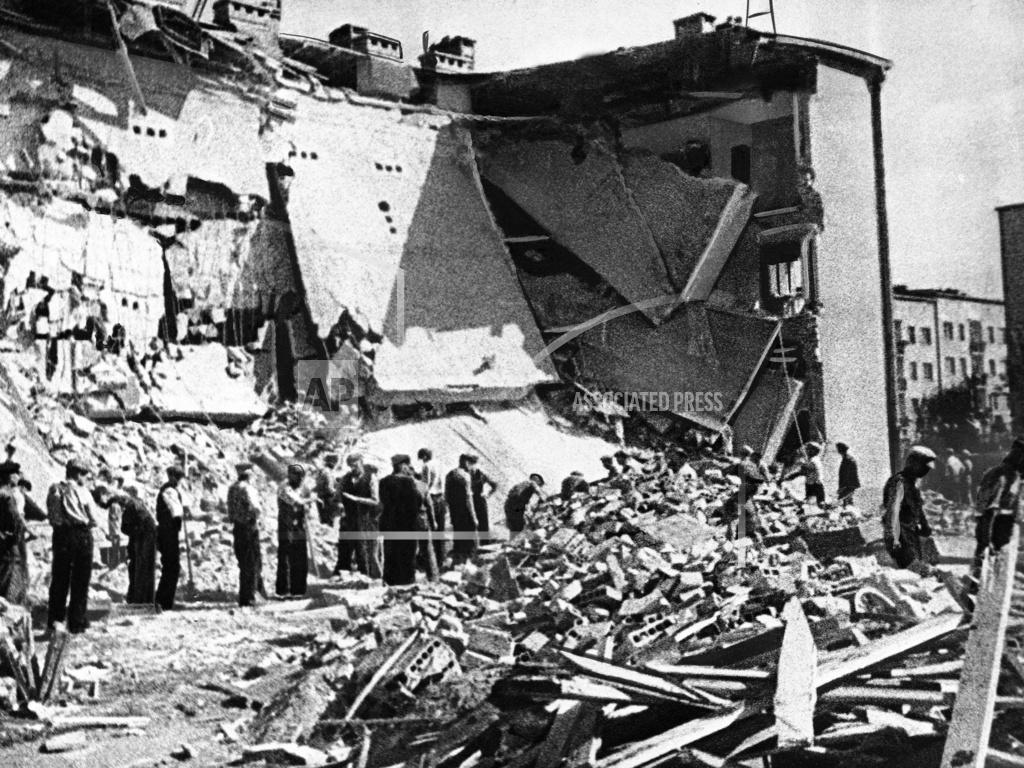
Warsaw already has been subjected to a partial bombardment by the German air force and artillery but, according to the German report, only objects of a military nature have been fired upon. Preparations for defense by the civilian population, however, are regarded by the German High Command as being a “violation of international law depriving the city of its character as an open city.” German shells and German bombs will crash into the city tomorrow afternoon. unless it is “surrendered without resistance” by dawn tomorrow.
“The patience of the German Army is now exhausted,” states the official news agency. “The German. Army is no longer willing to observe inactively these conditions which are a slap in the face of all International law, but is determined to put an end to these activities of the Warsaw power holders which, though of no importance whatever in a military sense, constitute a criminal treatment of the civilian population.”
The German High Command reported at 4:30 o’clock this morning, an hour and twenty minutes after expiration of the ultimatum, that its army in the field had had no word from the Polish authorities, The Associated Press reported. The German surrender ultimatum is rejected by the Polish garrison of Warsaw, led by General Walerian Czuma.
Mass executions commence in Przemyśl on the eve of the Jewish New Year. The liquidations occur at several places in the city outskirts: Lipowica, Prałkowce, Pikulice, at Przekopana, near the Wiar river and near the Jewish cemetery at Słowackiego Street. According to some estimates as many as 600 Jews in total are killed over the next few days.
The Luftwaffe bombs the Jewish quarter of Warsaw. The Poles in Warsaw are successfully repelling determined German ground attacks but are largely defenseless to air attack. General List’s army is both investing Warsaw and heading north to link up with the rapidly approaching XIX of General Guderian.
In Moscow, Russia, Soviet Foreign Minister Vyacheslav Molotov proposes that the Soviet Union will enter the war with the reason of protection of Ukrainians and Byelorussians; Germany complains that it singles out Germany as the lone aggressor.
Polish general Józef Kustron is killed in the village of Ulazow, Poland; he was the second general-rank officer to be killed in action during the European War.
European Air Operations: The Polish Air Force launches its final bombing raid.
French forces make some tentative movements in the Saar and are 12 miles east of Saarbrücken. The Saar Offensive ended with an unforced French withdrawal after operations failed to divert any German troops from Poland.
Germans execute an objector to the war who was a Jehovah’s Witness. The first German conscientious objector to participating in the present war, August Dickmann, 29 years old, of Dinslaken, has been shot in Berlin by a firing squad for “sabotage.”
Germany charged today that Poland and Great Britain had violated “humane warfare” principles and warned in an official statement that Britain’s “hunger blockade” would be met “with such weapons as it has available.”
A grandson of former Kaiser Wilhelm — Prince Oskar Jr. of Prussia — was listed today as “killed in action,” the first Hohenzollern victim of the German-Polish war.
Germany extends its 10-hour workday. Continuing its efforts to increase the productive capacity of Germany under the new war economy, the government through the Labor Ministry today revised the restrictions governing the working hours of women and persons between 16 and 18 years old.
German church authorities were instructed today not to permit more persons to attend services than could be accommodated in each church’s airraid shelters. The regulations forbid church services at night.
The non-aggression treaty between Soviet Russia and Germany was the culmination of a policy long pursued by Joseph Stalin, Russian dictator, aiming at the destruction of Western democracy, according to Alexander Kerensky, former Russian Premier, who led in the revolution that resulted in the overthrow of the Czarist regime in March, 1917.
The second Uranverein (Uranium Club) first met at a conference organized by German nuclear physicist Dr. Kurt Diebner, advisor to the German Army Weapons Bureau, and his assistant Dr. Erich Bagge. At this conference Diebner presented evidence that U.S. physicists had begun research into uranium chain reaction, specifically citing the recent paper by Niels Borh and John Wheeler “The Mechanism of Nuclear Fission”, just published in the September issue of Physics Review. These physicists knew that U235 was capable of slow-neutron fission. The physicists also knew the hurdles of isotope separation, which would make the development of a U235 weapon difficult.
The British restrict shipping as part of a campaign to persuade Eire to support the Allies throughout the war. The restrictions tighten under British Prime Minister Winston Churchill who was enraged by Irish Prime Minister Eamon de Valera’s refusal to return the Treaty Ports to British control, i.e., the three Irish ports that the British had returned to Irish control in 1938.
British Government: The Duke of Windsor, newly returned from France, is appointed a liaison to the French government.
U.S. freighter Shickshinny is detained at Glasgow, Scotland, by British authorities.
The British Admiralty, reflecting the need to protect the Atlantic lifeline necessary to Britain’s survival, announced establishment of a convoy system for its merchant shipping. The first Halifax-United Kingdom convoy, Convoy HX.1, set sail from Halifax, Nova Scotia for Liverpool with eighteen ships escorted by the Canadian destroyers HMCS St. Laurence and HMCS Saguenay. HX.1 arrived safely in Liverpool on 30 Sep 39. The last convoy in this series was the 56-ship HX.358, which sailed from New York on 23 May 45 and arrived at Liverpool on 06 Jun 45. With the exception of the UK East Coast convoys, the HX series was the longest continuous running convoy series of the war. Originally, the convoys were split into a slow group that sailed at the prescribed nine knots and a faster (HXF) group of ships that were not capable of the 15 knots required for independent sailing. The HFX convoy delayed sailing by a few days and the two groups would amalgamate before entering the submarine danger zone in the Eastern Atlantic. Eventually, the dwindling number of fast merchant ships and the expanding submarine danger area brought an end to the HFX series, of which there were 17 convoys. HX.300 was the largest convoy with 160 ships while HX.4 was the smallest with only ten ships. In total, ten percent of the HX convoys were attacked while they were in formed groups. Of the 110 ships sunk, 96 were claimed by U-boats, five by the raider Admiral Scheer, and the remaining 14 were lost to mines, aircraft, collisions, groundings, and storms. They totaled 0.6 percent of the 17,744 ships in the convoys. The worst convoy battle was in March 9/16/1943 when HX.229 lost 12 of its 38 ships (31.5%). A further 60 ships were sunk that had straggled out of convoy. Another 36 ships were listed as ‘losses out of convoy,’ which were ships sunk before the ocean convoy escort arrived, or after detachment from the convoy while on route to their various ports of destination, or after a convoy had been scattered due to attack. This brings the loss rate to 1.1 percent, which was considered sustainable (three percent was considered unsustainable). A further 38 ships were damaged. The HX convoy series is held up as a ‘model of success’ based on the gross numbers. However, the convoy system relied heavily on evasive routing to prevent losses. Of the HX convoys engaged the actual loss rate for the entire war was 4.85%, which does not include the ships damaged (6.44%). The loss rates up to Mar 1943 were 5.92% and 7.45%, respectively. Clearly, the rate of loss from intercepted convoys was unsustainable. This explains the desperation of the Allies at certain periods of the war when German signals could not be deciphered. Convoys HX.70 to HX.74 were all hit in Sep 1940 and seven of the 16 HX.107 to HX.117 convoys in Apr 1941 were attacked. Admirals Raeder and Doenitz both strongly resented Hitler’s interference with the anti-shipping campaign when he order U-boats be diverted for the invasion of Norway, and for operations in the Mediterranean Sea and the Arctic Ocean. Without these respites and the benefits of signals intelligence, the rate of loss would have been substantially higher
The British steam merchant Aviemore was torpedoed and sunk by the U-31, commanded by Kapitänleutnant Johannes Habekost, approximately 220 miles southwest of Cape Clear, Ireland in the eastern Atlantic Ocean (49°11′N 13°38′W). Of the ship’s complement, 23 died and 11 survivors were picked up by the destroyer HMS Warwick. The 4,060-ton Aviemore was carrying tinplate and black sheets and was bound for Buenos Aires, Argentina. Although the Aviemore was not part of Convoy OB-4, she was crossing ahead of the convoy, she was the first ship sunk by a U-boat during an attack on a convoy in the World War II.
The unescorted British steam merchant Arkleside was stopped by gunfire and after the crew abandoned ship was torpedoed and sunk by the U-33, commanded by Kapitänleutnant Hans-Wilhelm von Dresky, about 150 miles southwest of Lands’ End, England in the eastern Atlantic Ocean (48°00′N 9°30′W). The 1,567-ton Arkleside was carrying coal and coke and was bound for Gibraltar.
The 333-ton British steam fishing trawler Rudyard Kipling was stopped and scuttled by the U-27, commanded by (Johannes Franz, approximately 100 miles west of Donegal, Ireland in the eastern Atlantic Ocean. Of the ship’s complement, all 13 survived and reached land by lifeboat.
The Finnish steam merchant Vega was stopped by the U-41, commanded by Oberleutnant zur See Gustav-Adolf Mugler, in the North Sea and a prize crew placed on board to bring the steamer to Wilhelmshaven. Later that day the Finnish steam merchant Suomen Poika was also stopped by the U-41 and ordered the master to follow the other Finnish ship to Germany because the vessels were carrying contraband to Britain. Both ships arrived in Cuxhaven/Steubenhöft on September 18. The 974-ton Vega was carrying general cargo, including cellulose, timber, plywood and paper and was bound for Hull, England. The 1,099-ton Vega was carrying general cargo and cellulose and was bound for Hull, England.
The British steam passenger ship City of Paris was damaged by a German mine laid 3.5 miles east-northeast of Aldeburgh, England in the North Sea, by U-13. One crew member was lost. The disabled ship was towed to Tilbury by the British tugs Contest and Atlantic Cock.
The British cargo ship Bramden struck a mine and sank in the North Sea off Dunkerque, Nord, France (51°22′N 2°31′E) with the loss of three crew.
The British cargo liner Aska was bombed and sunk off Rathlin Island, County Donegal, Ireland (55°15′N 6°55′W). Survivors were rescued by HMS Jason ( Royal Navy) and local fishing trawlers.
The U.S. Naval Attaché in Berlin reports that Grossadmiral Erich Raeder, Commander in Chief of the German Navy, has informed him that all submarine commanders had reported negatively concerning the sinking of British passenger liner Athenia. This is, of course, a lie by Raeder.
Greece demobilizes on the Albanian border. Greece has started to demobilize her troops concentrated on the Albanian frontier in exchange for Italian guarantees of friendship and the withdrawal of some Italian troops from Albania.
The Soviet Union promises to respect Finnish neutrality.
The hope was expressed by the Ukrainian Bureau of Washington in identical letters, made public today, to Secretary of State Cordell Hull and the Ambassadors of Great Britain and France that when a peace conference is held at the termination of the war “the allied powers will deem it necessary to lean their support toward the re-establishing of an independent Ukrainian State.”
The fight over lifting the American embargo against export of arms was intensified further today as Senators Clark of Missouri and Vandenberg of Michigan aimed new blasts at the Administration’s program to alter the Neutrality Act at the special session of Congress. Following upon the radio address last night of Colonel Lindbergh, the Senators, a Democrat and a Republican, took up Senator Borah’s thesis — that the issue was more of intervention or non-intervention in the affairs of Europe than of mere methods of neutrality. Senator Clark’s remarks were contained in a statement telegraphed from his home in St. Louis for release at the capital. Senator Vandenberg made his plea to his own constituents at a Republican rally at Grand Rapids, telling them not to allow their minds to be taken off domestic problems by the agitation over the conflict abroad.
In his address, Senator Vandenberg declared that the arms embargo should not be repealed by a revision of the present neutrality laws. “In my view,” he said, “It is not ‘neutrality’ for us to change that code today to make it fit some favored belligerent, no matter what our sympathies. In my view, that is unneutrality. It is trying to be half in this war and yet to safely stay out. I do not believe there can be any such middle ground.”
“I welcome the President’s call for an extraordinary session of the Congress,” Senator Clark said in his statement. “Since the President has by proclamation declared the existence of a national emergency, it is the duty of the Congress to remain in session and share fully in the responsibilities of government during the duration of the national emergency. This is and should remain a government by law and not by decree.
“So far as the Neutrality Act is concerned there has been no suggestion of a ‘filibuster’ on the part of any of the Senators who oppose the emasculation and perversion of the whole neutrality policy heretofore adopted by the Congress and approved by the President by the repeal of the provision for a mandatory arms embargo. The suggestions of a ‘filibuster’ have been put out in inspired articles from Washington and Hyde Park designed to promote gag rule and stifle free and fair discussion of perhaps the most important question of public policy which has confronted the Congress of the United States since that tragic day in 1917 when the decision was made to throw the United States into the World War.
“We are now to determine whether or not we have learned anything from that awful experience by deciding whether by repealing the arms embargo we shall again deliberately set our feet on the path which inevitably leads to war. “Those of us who oppose the abandonment of a bona fide neutrality policy stand precisely where President Roosevelt stood in his eloquent Chautauqua speech in 1936 when he was a candidate for reelection when he said in defending the law containing a mandatory arms embargo: ‘We are not isolationists, except in so far as we seek to isolate ourselves completely from war.’”
Paul V. McNutt, Federal Security Administrator, hailed by his hearers as “the best qualified man in all America” to succeed President Roosevelt, and Senator Van Nuys, Democrat, who has been a frequent foe of the New Deal, united here tonight in endorsement of the President’s plan for “cash-and-carry” sales of supplies to European belligerents.
Senator Arthur H. Vandenberg, listed among the contenders for the next Republican Presidential nomination, took advantage of a shirtsleeve address today to oppose amendment of the Neutrality Law and to urge an active attack on the New Deal in the election of 1940.
American merchant shipping was badly hampered in New York harbor yesterday when the crews of six vessels refused to sail their ships, insisting on concrete concessions to their demands for extra compensation for entering European waters affected by the war.
Unemployment of men and machines during the depression caused an estimated loss of $200,000,000,000, in terms of 1929 dollars, in the national income of the United States from 1930 to 1937 inclusive, according to a report on “The Structure of American Economy” submitted to President Roosevelt today by the National Resources Committee.
Experts discount air raids in the United States, holding that experience in Europe shows the sea is an effective barrier.
The numbers of foreclosures drops across the US. Bank loan reports show a continued drop in a seven month period.
Grocers are expected to ask that the food stamp plan continue, regardless of war developments.
U.S. Banks consider giving aid to financially troubled home owners to help them retain their homes.
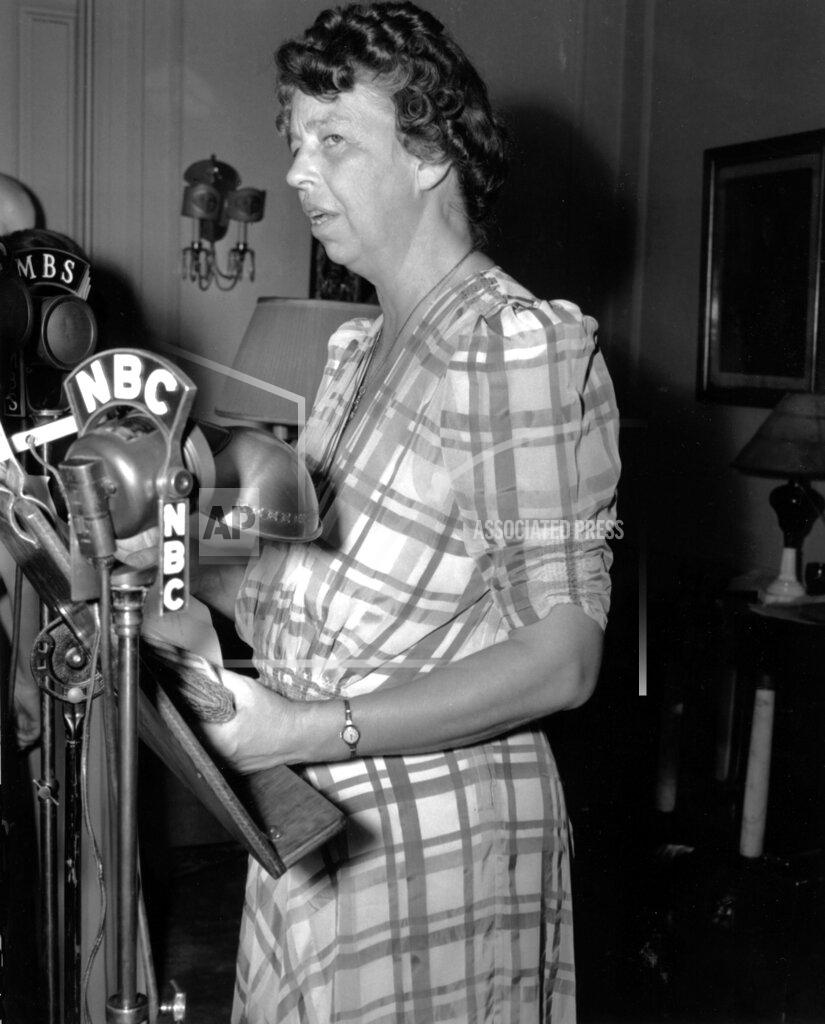
Neither wars nor rumors of wars, but the popularity among motorists of the White House grounds on Summer nights is the reason one of the iron gates on Pennsylvania Avenue is now closed after dark and a guard stands at the other, day and night, to tell all comers that only those having appointments may park their cars inside. People have been driving in, especially at night, and parking there, Mrs. Roosevelt revealed at a press conference today. And though it is a pleasant place to sit, under the trees, the White House driveway is really not a good trysting place, she said. Too many motorists were attracted by it. As the number of parking parties increased, so did the problem of keeping the driveway open and free of obstruction. Now an extra all-night guard is on duty, from dark to dawn, to keep it so.
President Roosevelt today commended warmly the salvage unit which rescued the survivors of the disaster to the submarine Squalus and after 113 days succeeded in raising the craft and docking her at the Portsmouth Navy Yard.
The First flight of a pre-production Lockheed YP-38 Lightning is made. The P-38 is a twin-engine high-altitude fighter, with turbosupercharged Allison V-1710 engine. However, delivery of the P-38F, which is considered the first combat-ready version, does not begin until late 1942.
The New York Yankees clinch their fourth consecutive American League pennant, and 11th overall, with an 8–5 win over the Detroit Tigers. A three-run triple by Robert “Red” Rolfe is one of the big blows today in the Yankees’ four-run seventh, which erased the Tigers’ 2–1 lead they had taken in the third on Hank Greenberg’s 28th homer. Marius Russo got the win for the Yankees.
A three-way battle for runner-up honors to the Yankees in the American League developed today as the Indians defeated the crippled Red Sox, 2–1, for their fifth straight victory and a clean sweep of the three-game series at Fenway Park. Mel Harder won his 15th, giving up just one run, on a solo homer by Ted Williams, his 27th this year. Indians’ third baseman Ken Keltner had a homer and a single, each of which drove in one of the Indians’ runs.
The Philadelphia Athletics scored their third straight victory over the Chicago White Sox, 7–6, in a hectic twelve-inning game today, after coming from behind to tie the score in the ninth. A walk and two Chicago errors provided the winning run.
Young Joe Haynes, who pitched in a Class D league last year, shut out the St. Louis Browns with two hits today to win for the Washington Senators, 4–0. The St. Louis hits were singles by Myril Hoag in the first inning and Catcher Sam Harshany in the fifth. Haynes, who was throwing a blazing fast ball, never allowed a Brown to get as far as second. He retired the last thirteen batters in a row, ending the game by striking out Don Heffner and Hoag.
William Henry Walters Jr., more familiarly known to the baseball world as Bucky, notched his twenty-fifth victory of the season today for the Reds as the helpless, hopeless New York Giants fell victims to the five-hit pitching of the reformed infielder before 10,038 fans at Crosley Field. The Cincinnati victory kept intact the team’s margin of three and a half games over the second-place Cardinals, who also won. First major leaguer to win twenty-five games since Carl Hubbell racked up twenty-six in 1936, Walters coasted to a 6–1 triumph as he hurled and batted the league pace-setters to a one-sided conquest in what virtually was a one-man show. Bucky, with a double and two singles, drove in a run, scored one and figured in another. And he struck out six Giants.
Those diehard St. Louis Cardinals came from behind again today to break the enemy defense in the lucky seventh and score their fifth straight victory, 6–5, for a clean sweep of the three-game series with the Boston Bees. Lynn King’s two-run single in the eighth drove in the winning runs.
Backing up the gallant veteran, Freddy Fitzsimmons, with some timely hitting for all their runs in the eighth inning, the Brooklyn Dodgers won today, 3–2, for their third straight over the Pirates and rolled away to Chicago tonight to start the battle for third place.
Six Philadelphia errors made Big Bill Lee’s eighteenth triumph an easy one today, the Chicago Cubs scoring seven unearned runs off Ray Harrell to win, 8–2. The Phillies had men on bases frequently in the early innings, but could not score off Lee until the eighth. The Phils got nine hits, one less than the Cubs, who made the most of three errors by Shortstop George Scharein and single miscues by Infielders Merrill May and Jim Shilling and Catcher Ben Warren. The victory gave Gabby Hartnett’s clan four out of five in the series and ended the season’s battling between the two teams with Chicago having won twelve games and Philadelphia ten.
Gandhi urges Britain to “free” India, saying the free country would be an ally to defend democracy.
The Battles of Khalkhin Gol ended with an armistice that goes into effect on this day.
Japanese troops were reported tonight to have opened a general offensive on one Central China front and observers predicted possible development of major campaigns to crush Chinese resistance.
Dow Jones Industrial Average: 152.15 (-1.88).
Born:
Billy McGill, NBA and ABA center (Chicago Zephyrs, Baltimore Bullets, New York Knicks, St. Louis Hawks, Los Angeles Lakers; ABA: Denver Rockets, Los Angeles Stars, Pittsburgh Pipers, Dallas Chaparrals), in San Angelo, Texas (d. 2014).
John Cadwell, AFL guard (Dallas Texans), in Oakland, California (d. 2010).
Gord Turlik, Canadian NHL left wing and center (Boston Bruins), in Michel, British Columbia, Canada.
Breyten Breytenbach, South African writer and painter, in Bonnievale, Western Cape, South Africa.
Died:
Józef Kustroń, 46, Polish general (killed in action).
Naval Construction:
The Regia Marina (Royal Italian Navy) submarine Ammiraglio Cagni, sole boat of her class, is laid down by Cantieri Riuniti de l’Anreitico (Montfalcone, Italy).
The Kriegsmarine (German Navy) Type VIIC U-boats U-95 and U-96 are laid down by F. Krupp Germaniawerft AG, Kiel (werk 600).
The Kriegsmarine (German Navy) M1935 type minesweeper M18 is launched by Oderwerke, Stettin (werk 804).
The Marinha do Brasil (Brazilian Navy) Carioca-class minelayers Cabedelo (C 4) and Camaqua (C 6) are launched by Arsenal de Marinha do Rio de Janeiro (Ilha das Cobras, Rio de Janeiro, Brazil).
The Kriegsmarine (German Navy) Type 37 torpedo boat T15 is launched by F. Schichau, Elbing, East Prussia (werk 1403).
The Regia Marina (Royal Italian Navy) Marconi-class submarine Leonardo da Vinci is launched by Cantieri Riuniti dell’Adriatico [CRDA] (Monfalcone, Italy).
The Nihon Kaigun (Imperial Japanese Navy) Type B1 submarine HIJMS I-19 is launched by Mitsubishi, Kobe, Japan.
The Koninklijke Marine (Royal Netherlands Navy) Tromp-class light cruiser HrMs (HNMS) Jacob van Heemskerck (D 20) is launched by Nederlandse Scheepsbouw Maatschappij (Amsterdam, Holland).
The Kriegsmarine (German Navy) vorpostenboot V 211 Friedrich Busse (later V 212 Friedrich Busse) is commissioned.
The Kriegsmarine (German Navy) vorpostenboot V 401 Dr. Adolf Spilker (later V 402 Dr. Adolf Spilker) is commissioned.
The Marinha do Brasil (Brazilian Navy) Carioca-class minelayer Carioca (C 1) is commissioned.
The Marinha do Brasil (Brazilian Navy) Carioca-class minelayer Cananéia (C 2) is commissioned.
The Royal Navy “T”-class submarine (First Group) HMS Triad (N 53) is commissioned. Her first commander is Lieutenant Commander Ronald McClellan Powning Jonas, RN.
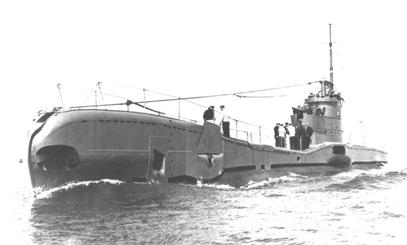
Triad had a relatively short career, serving in the North Sea and the Mediterranean. In April 1940 during her patrol on the North Sea, she sank the German troop transport Ionia and attacked, but failed to sink the German depot ship Tsingtau.
Lost 15 October 1940.
Shortly after, Triad was assigned to the Mediterranean. On 9 October 1940 she sailed from Malta to operate in the Gulf of Taranto, with orders to reach Alexandria on completion of her patrol. She failed to make port and by 20 October the submarine was declared overdue. She was believed to have been lost in a minefield or sunk by Italian anti-submarine aircraft. New evidence suggests that Triad was engaged and sunk with all hands on the night of 14/15 October by the Enrico Toti.
At 0110 hours the Italian submarine Enrico Toti (C.C. Bandino Bandini) encounters a British submarine in position 38°16’N, 17°37’E described as of the Perseus class and they pass at close range on opposite course as the Italian submarine rakes his opponent with machinegun fire and fires three rounds of 4″ with her deck gun claiming two direct hits. The British submarine fires back scoring a hit on the conning tower of Toti, but this caused only slight damage and wounding two sailors. A torpedo misses the Italian submarine by a few meters. As the British submarine pulls away it submerges but by this time Toti has also launched a torpedo which hit the enemy submarine. It is almost certain that her victim was HMS Triad (Lt.Cdr. George Stevenson Salt, RN). She will be the only British submarine to be sunk by an Italian submarine during the war.
Battle Honors: NORWAY 1940 – MEDITERRANEAN 1940
 History Diaries