The two chief leaders of the latest South Vietnamese coup attempt, Generals Lâm Văn Phát and Dương Văn Đức, are arrested, as are three other rebel generals. Premier Nguyễn Khánh’s Government placed five leaders of Sunday’s coup attempt under arrest today. The prospects are that all will be tried and punished. At the same time General Khánh and the young generals who supported him handed out penalties and rewards in a shake‐up of South Vietnam’s military command structure.
Brigadier General Lâm Văn Phát, the former Interior Minister who organized the uprising and denounced Premier Khánh as a traitor, was the fifth of the faction to give up. He returned to the capital from Mỹ Tho, 40 miles south of Saigon. He withdrew to Mỹ Tho with his troops and tanks following collapse of the coup on Monday. Others detained were Major General Dương Văn Đức, who commanded IV Army Corps; Colonel Huỳnh Văn Tồn., former Seventh Division commander with headquarters at Mỹ Tho; Colonel Dương Hiếu Nghĩa, commander of the dissidents’ armor, and Brigadier General Dương Ngọc Lắm, former Mayor of Saigon and commander of the paramilitary Civil Guard.
Word that the rebellious officers would not be punished had been issued Monday by the loyalist commander of the air force, Commodore Nguyễn Cao Kỳ, who was most responsible for saving the day for General Khánh. Commodore Kỳ and General Đức shared a new conference Monday. Both said there was uuity in the armed forces. They were among 10 top military leaders who signed a resolution last week calling for a purge of corrupt elements from the Government and the military establishment. But the harmony apparently has vanished. Fears that rebel elements might strike anew were apparently behind the disciplinary action.
Premier Nguyễn Khánh survived yet another threat to his position at the head of the South Vietnamese Government last weekend, but only at the cost of becoming beholden to the wishes of a new group of military leaders. Last month it was the Buddhists who “captured” the Premier with mob force and induced him to start easing entrenched military officials out of the Government. Over the last weekend the armed forces fought back — twice. Openly, a disgruntled clique of generals about to lose their jobs tried to overthrow General Khánh, but their coup d’état was poorly conceived and clumsily executed.
Privately, a group of junior oficers handed the Premier an ultimatum. Unless he pressed on with a genuine reform in which both civilians and military men could participate, he was told, he would be overthrown. When these junior officers, notably the air force commander, Air Commodore Nguyễn Cao Kỳ and Brig. Gen. Nguyễn Chánh Thi of Huế decided to oppose senior generals’ attempted coup, they rescued General Khánh’s position and person, but in so doing added much more weight to their ultimatum. “There are two ropes around Khánh’s neck,” one Vietnamese observer said.
A United States surgeon just back from South Vietnam said today that the people there ocntinued to be militantly anti-Communist and wanted United States help, but resented the rule of Premier Nguyễn Khánh. Dr. Tom West of Seattle, a Public Health Service career officer, said he saw no evidence of anti‐American feeling during the riots that erupted August 24 and continued for days. Dr. West, here to report on a 90‐day tour with a United States medical team in Vietnam, said the rioting was a ”reaction against what the people regarded as establishment by Khánh of another totalitarian state and also a demonstration that they are all militantly anti‐Communist.”
The Laotian pro-Communists blocked an agreement with the country’s rightists and neutralists today by barring the International Control Commission from the strategic Plaine des Jarres. The new dispute centered on how to supervise the movement of neutralist and pro‐Communist forces on the plain under a cease‐fire proposed yesterday by Prince Souphanouvong, the leftist leader. Diplomatic opinion is that the talks, which are intended as preparations for a formal conference here, have entered their most delicate stage.
Prince Souphanouvong has indicated how far the leftists are prepared to go. His goal now is apparently to win in return maximum concessions from the rightist and neutralist wings of Laos’s three‐party coalition Government. Today’s three‐and‐a‐half‐hour talks were held at the residence of Prince Souvanna Phouma, the neutralist leader and Laotian Premier. Ngon Sananikohe, Minister of Public Works, represented the Laotian rightist leader, Prince Boun Oum. Prince Souphanouvong spoke for the pro-Communist Pathet Lao forces. Informed diplomats described the proceedings as a classic example of the Communist tactic of advancing three feet one day and retreating two feet the next.
Yesterday Prince Souphanouvong offered a cease‐fire under which the Pathet Lao would yield to the neutralists the positions that were overrun last spring in a leftist military sweep on the Plaine des Jarres. The plain, which covers approaches to Vientiane, the national capital, is a no man’s land fought over by the Pathet Lao from the north and the neutralists and rightists from the south. Control of the plain is tantamount to command of roads and paths to the capital.
Premier Souvanna Phouma, encouraged by the leftist offer, proposed that a cease‐fire become effective from October 1 and that the neutralist forces, commanded by General Kong Le, return to positions they held May 16 before the last and most successful Pathet Lao thrust. Prince Souvanouvong rejected supervision on the ground that the commission — comprising Canadian, Indian and Polish representatives — derived its authority from the three‐faction Laotian Government.
The United States has offered to contribute $2 million and Britain $1 million toward the cost of keeping the United Nations force in Cyprus for three months after September 26. This would still leave $4 million to be raised by voluntary contributions or from the United Nations treasury. But well‐informed sources said today, that the offers removed the only barrier to Security Council approval of extension of the force’s mandate. The $2 million now pledged will raise the total United States contribution to the Cyprus force to $6.3 million. The pledge of $1 million will increase the British contribution to $3 million, plus the cost of maintaining the British contingent in the force.
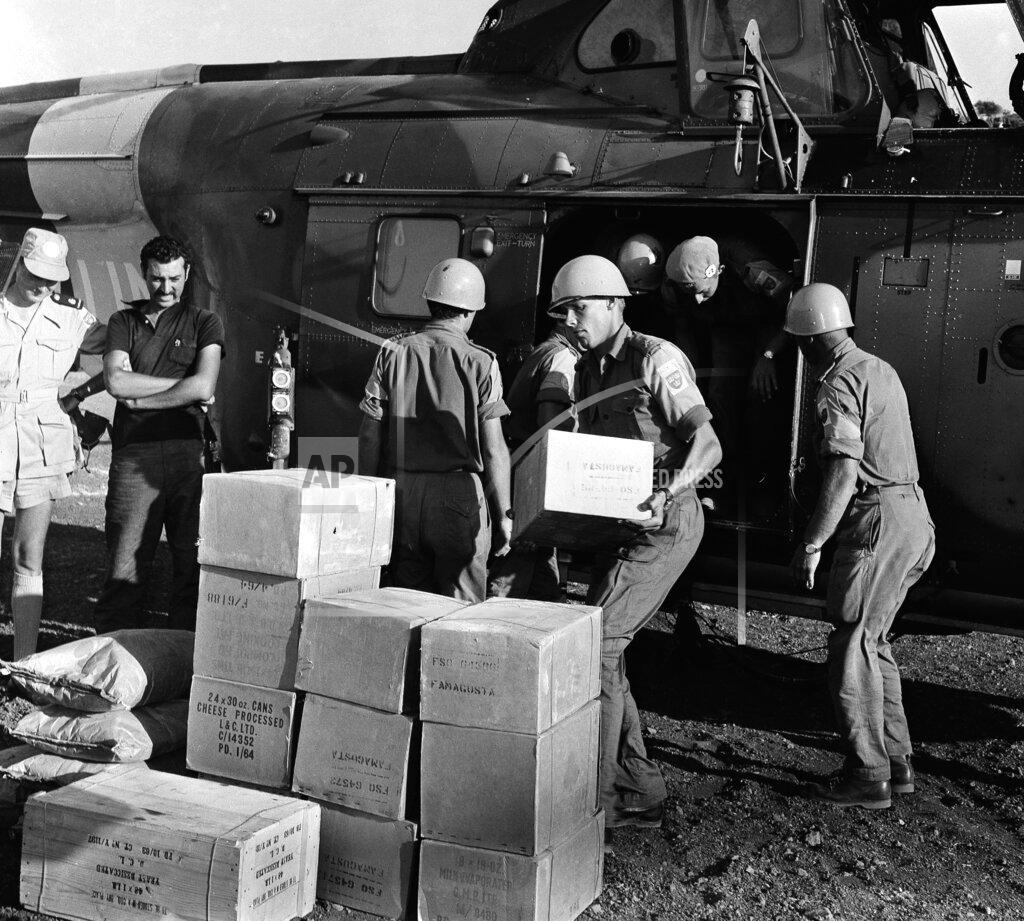
A United Nations convoy delievered six tons of food from Turkey to Turkish Cypriots in the northwest village of Kokkina today. Three United Nations trucks manned by Finnish soldiers and guarded by armored cars rolled into the village, whose inhabitants were of the verge of starvation three days ago, past a nine‐ton heap of food donated by the Government of President Makarios. The government supplies were placed on the edge of the road by United Nations personnel last night when armed villagers refused to accept them and halted the United Nations convoy at gunpoint.
Turkey’s President Cemal Gürsel has canceled a state visit to Tehran, Iran, which was to have begun October 15, because of the “seriousness of the Cyprus crisis,” the Foreign Office announced toaday.
Meanwhile, the first Turkish relief vessel carrying 250 tons of food and supplies to Turkish Cypriots in Northwest Cyprus left the port of Mersin tonight. The freighter, the Yoruk Hasan, is expected to reach Famagusta tomorrow night, where the cargo will be unloaded under the supervision of United Nations officials.
Intensive private efforts went on today to avoid a Soviet veto of a proposed Security Council resolution chiding Indonesia for dropping paratroopers into Malaysia. The Soviet Union has indicated that it will veto any resolution that Indonesia does not favor. Indonesian sources said they objected for two reasons to a Norwegian resolution scheduled to come before the Council tomorrow morning. First, it “deplores” the paratroop drop of September 2 and similar incidents; second, it calls upon both parties “to respect the territorial integrity and political independence of each other.” Indonesia has so far refused to recognize Malaysia’s territorial integrity or political independence. The diplomatic efforts were directed toward persuading Indonesia to accept the text or persuading the Soviet Union to abstain instead of voting against it.
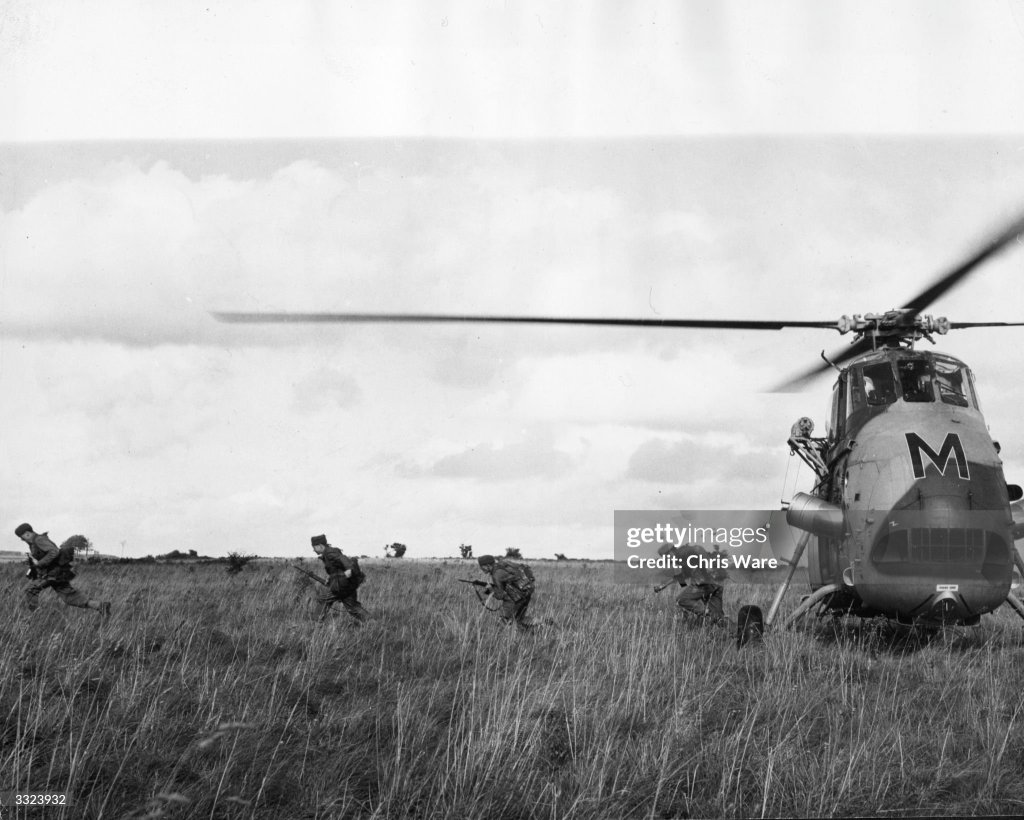
British helicopters airlifted Gurkha troops into action against Indonesian guerrillas today as new gunfire broke out in the southwestern jungles of Malay. The Gurkhas — Nepalese tribesmen noted as warriors — will stage a major offensive against paratroops that landed in the Labis region of Johore State two weeks ago.
The Christian Democratic Party in Italy ended its national congress today and restated its faith in the center-left orientation of the government and the party’s determination to fight Communism. However, after five days of discussion, the party appeared to be still split over political goals and tactics. Clashes of personalities in the leadership seemed to cloud many issues. Premier Aldo Moro, the party secretary, Mariano Rumor and former Premiere Amintore Fanfani were the outstanding figures at the biennial policymaking congress. Their role in private confidential talks among the party factions may prove to be more decisive than what they and their spokesmen said publicly.
President Johnson said in Seattle today that the country could rest assured his Administration had ”taken every step man can devise to insure that neither a madman nor a malfunction could trigger nuclear war.” He reiterated his belief that control over nuclear weapons must remain with the President, a position firmly opposed to that of his Republican opponent, Senator Barry Goldwater of Arizona. Mr. Goldwater has suggested a nuclear ”sharing” policy with United States allies, mentioning the use of what he calls “conventional nuclear weapons.” The President spoke at a civic dinner here after spending most of the day with Canada’s Prime Minister, Lester B. Pearson, at ceremonies marking the implementation of the Columbia River Treaty, which became effective today. Traveling to Vancouver, British Columbia, and to the International Peace Arch nearby, Mr. Johnson made his first trip beyond United States borders since he became President.
Arriving in Seattle, which gave Senator Goldwater a warm reception on his recent visit, the President got out of his car in midtown to mingle with a moderately large, enthusiastic rush‐hour crowd. Smiling broadly, he moved away from his security guards. There was almost a mob scene as police and Secret Service men pulled away well‐wishers who were closing in on him. In his speech at Seattle, the President spoke of the horrors of atomic war, and acknowledged that the use of nuclear weapons might become necessary “in defense of freedom.” But he added, touching on the fears of some that Senator Goldwater might be impulsive or reckless:
“I will never let slip the engines of destruction because of a reckless and rash miscalculation about our adversaries.” The President spoke in measured, somber tones. He drew only a few rounds of applause, and sought no more. The speech was billed as a serious policy statement, and Mr. Johnson, with quiet deliberation,” delivered it as such. While the use of nuclear weapons can come by Presidential decision alone, he said, there are complex codes and electronic devices to prevent unauthorized action. “The American people,” the President said, “can rest assured we have taken every step man can devise to insure that neither a madman nor a malfunction could trigger nuclear war.”
Senator Thruston B. Morton told the Senate today that the Democratic National Committee was putting “panic-inspired falsehoods” on television and President Johnson must take the responsibility for them. “The Kentucky Republican, who is the chairman of the Republican Senatorial Campaign Committee and a former National Chairman of his party, said the commercials paid for by the Democrats were aimed at “scaring the wits out of children in order to pressure their parents.” Senator Morton described two spot commercials. One shows a child picking petals on a daisy followed by a countdown ending with a bomb explosion. The other depicts a child eating an ice cream cone, contrasting vitamins A and D with radioactive poisoning and saying Senator Barry Goldwater wants to continue exploding test bombs.
Edward Strong, the Chancellor of the University of California, Berkeley sent out a notice that would trigger a reaction in the form of the Free Speech Movement, the first “student revolt” of the 1960s. Student activists had regularly set up tables near the “Sather Gate” located on Bancroft Way at the edge of south side of the UC-Berkeley campus, and across from the Berkeley, California business district at Telegraph Avenue. The memorandum, approved while university president Clark Kerr had been out of town, announced that, starting on Monday, “all tables, posters, fund-raising activities, membership drives, and speeches” would be prohibited at the location and that such practices would be allowed only at designated areas of the campus. “With hindsight,” a historian would note later, “it was… not a particularly brilliant move on the part of the university administration to restrict the civil liberties of Berkeley’s students, as many of the tables along Bancroft were manned by individuals aiming to support the efforts of such groups as SNCC and CORE. As could be expected Berkeley students responded in kind.”
Senator Strom Thurmond confirmed tonight that he was bolting the Democratic party to work as a Republican for the election of Senator Barry Goldwater. His break with the Democrats, the second for him in 16 years, was made public in a televised denunciation of that party and its leaders broadcast here and in seven other Southern states. “The Democratic party has abandoned the people,” he asserted. “It has repudiated the Constitution of the United States; It is leading the evolution of our nation to a socialistic dictatorship.” Senator Thurmond urged other Southerners to join him in a fight to elect Senator Goldwater and to make the Republican party ‘a’ party which supports freedom, justice and constitutional government.”
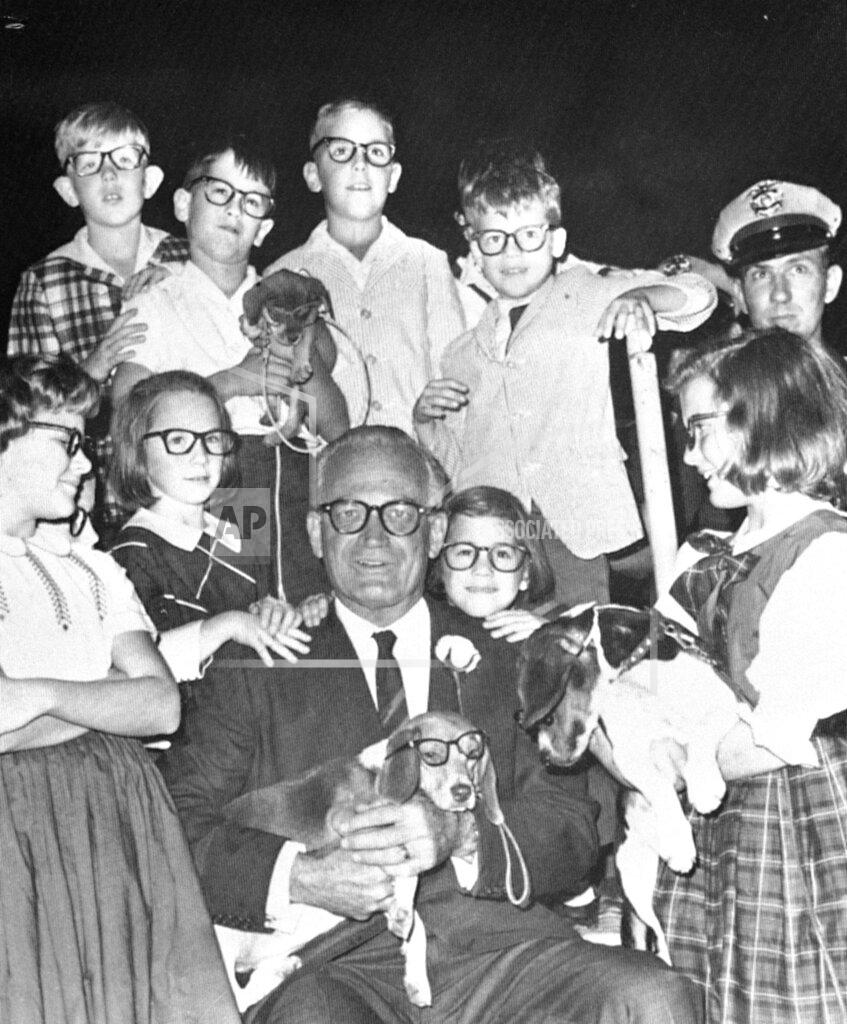
In a news conference held at station WIS‐TV following the taping of the 15‐minute broadcast the Senator said he had already asked that his Senate desk be moved to the Republican side of the aisle. He said he had made the request of Senator Everett McKinley Dirksen of Illinois, the minority leader. Asked if he would lose the prerogatives of more than eight years’ seniority in the Senate, he replied that this question would not come up until January, “but I think [the Republicans] will treat me right.” The Senator, who emerged from the studio with a gold elephant pin with black eyeglasses in his lapel, indicated that he might break his ties to the Republican party if he found its position too objectionable to the future. “I’ve always been independent regardless of what party I’ve been in,” he said. “I intend to maintain my independence.”
Senator Barry Goldwater toured the Tennessee Valley today and said he stood by what he had previously said on the desirability of selling the Tennessee Valley Authority to private enterprise. However, Mr. Goldwater said that a President did not have the authority to take such a step and implied that Congress would not give him authority to do so. At various times he had advocated the outright sale of T.V.A. to private enterprise, but lately he has spoken of the sale of only the fertilizer plants and the steam‐operated electrical generating plants. On one occasion he said the authority was too big to sell to any private customer and suggested it might be sold to a quasi‐public corporation.
The Republican Presidential candidate also welcomed the announced support of South Carolina’s Senator Strom Thurmond and Mr. Thurmond’s conversion to the Republican party. Mr. Goldwater said he hoped Mr. Thurmond would set a good example for tens of thousands of other conservative Southern Democrats. In the second day of a four-day campaign swing in the South, Mr. Goldwater flew to and spoke at Knoxville and Memphis, Tennessee, Macon, Georgia, and Montgomery, Alabama. He flew to Raleigh, North Carolina, to spend the night.
Undismayed by yesterday’s setback, Senate Democratic leaders were confident today that they could defeat a Republican effort to postpone compliance with the Supreme Court’s decision on state legislative apportionment. Senator Hubert H. Humphrey of Minnesota, the majority whip, and Senator Clinton P. Anderson, Democrat of New Mexico, were working with their aides on a new “sense of Congress” resolution to be offered as a substitute for a proposal by Everett McKinley Dirksen, the Senate Republican leader, to stay Federal court proceedings on apportionment until January 1, 1966. Mr. Dirksen has submitted his proposal as an amendment to the foreign aid authorization bill. His purpose was to delay further court‐ordered reapportionment to gain time for ratification of a constitutional amendment that would allow the districts for one house of a state legislature to be based on factors other than population. In a decision last June 15 the Supreme Court ruled that districts for both houses must be substantially equal in population.
Yesterday a coalition of Republicans and Southern Democrats defeated, 42 to 40, a substitute for the Dirksen amendment sponsored by Senators Humphrey, Eugene J. McCarthy, Democrat of Minnesota, and Jacob K. Javits, Republican of New York. This substitute did not direct a stay of court proceedings. It simply expressed “the sense of Congress” that the courts give the states “a reasonable time” to conform to constitutional requirements on apportionment and to take into consideration the “fact” of a proposed constitutional amendment if one were later submitted to the states by Congress.
The Javits – McCarthy Humphrey substitute was designed to meet the objections of liberals of both parties that the Dirksen amendment required an unconstitutional “suspension” of the 14th Amendment and violated the separation of powers. The new substitute being framed today by Senators Humphrey and Anderson would be a “sense of Congress” resolution just different enough from the one defeated yesterday to satisfy Senate rules requiring a “meaningful” change.
The Senate Finance Committee voted today to reopen the G.I. insurance program to World War II and Korean War veterans who allowed their service policies to lapse. The proposal was added by the committee to a bill to raise veterans pension benefits. This House‐passed measure would affect disabled veterans of World Wars I and II and the Korean War. The House bill was approved without change. It would cost about $72.6 million the first full year and would rise to $111.4 million by 1969.
Several hundred New York City public school children are expected to continue their boycott today against the Board of Education’s integration plan, while thousands more will attend school for the first time this year. The two predominantly white groups that organized a two-day boycott early in the week have disagreed on future strategy. James B. Donovan, president of the Board of Education, said last night that the board had been studying every available legal means for halting child boycotts of the schools. Among the legal remedies under consideration, he said, are injunctions and criminal prosecution. “We have also considered the possibility,” he continued, “of possible civil actions against those responsible, in dollar amounts, for the losses to our school system in state aid.”
Johnson & Johnson was charged yesterday with having stifled competition in the food store sales of first‐aid products and baby toiletries. The company was accused of using illegal agreements, and special discounts and “of refusing to sell to supermarkets that would not cooperate. The charges were contained in a civil antitrust suit filed by the Justice. Department in Federal District Court at Newark against the pharmaceutical manufacturer, which is based at New Brunswick, New Jersey.
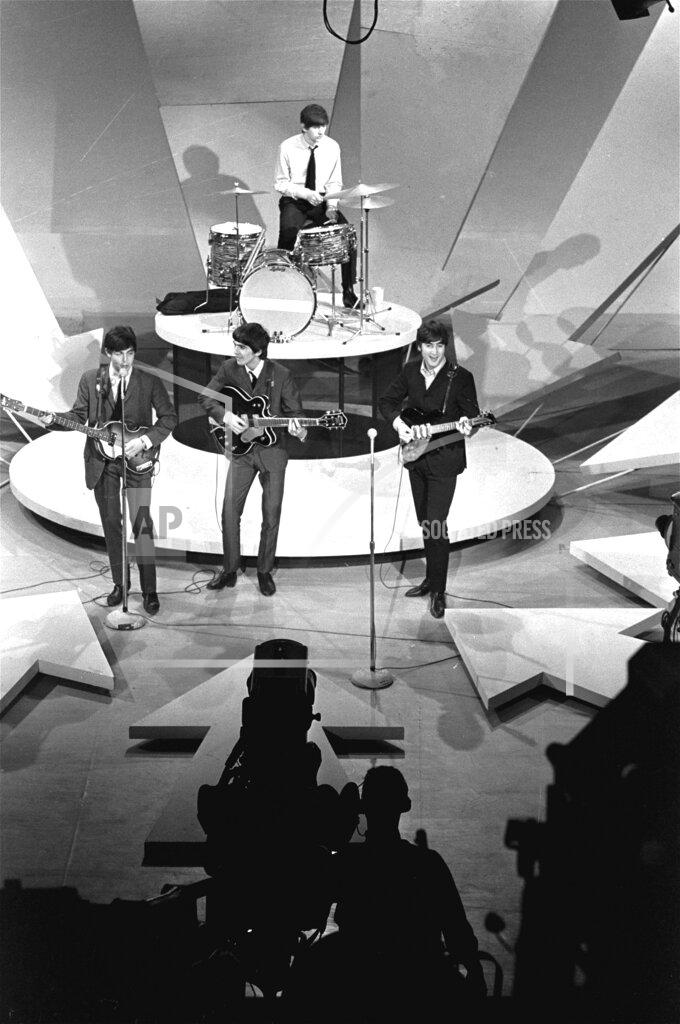
“Shindig!,” which featured many of the top musical acts of the 1960s, debuted on ABC at 8:30 p.m. Eastern time. Performers on its first show included Sam Cooke, The Everly Brothers, Donna Loren, The Righteous Brothers, The Wellingtons, and The Blossoms. Reviews were favorable, with one critic commenting that “it has none of the blaring dullness that has turned up, for example, on Dick Clark’s American Bandstand” and another noting that “we were spared the shallow utterances of an ‘all right, kids’ type of announcer. To be sure, there was an announcer, but he kept his mouthings to a minimum.”
The Chicago White Sox move into a first-place tie (88–61) with the Baltimore Orioles by besting the Detroit Tigers, 4–1, while the Orioles lose to Minnesota 2–1. The Yanks are one point behind. The White Sox’ Gary Peters, who gained his 18th victory, gave up two hits in the first inning, when the Tigers scored. He then handcuffed Detroit on three hits until replaced by Eddie Fisher in the eighth. Mickey Lolich was more effective than Peters until the seventh, when his wildness sent him to his eighth defeat. The White Sox scored two runs before a man was retired in the inning on two singles, a double and a wild pitch by Lolich. Bill Skowron started the rally with a single and took third on Pete Ward’s double. Then Lolich threw a pitch past Bill Freehan, allowing Skowron to score. Jim Landis followed with a single that drove in Ward. In the eighth, Floyd Robinson singled and went to second on a second wild pitch by Lolich. Mike Hershberger bunted to Lolich, who threw wild trying to get Robinson at third, allowing a run to score. The Sox got their final run in the ninth off Terry Fox when J. C. Martin singled, moved to second on a sacrifice and scored on a single by Don Buford.
Harmon Killebrew hit his 47th home run of the season and Camilo Pascual drove in the other run with a double in the fourth inning to carry the Minnesota Twins to a 2–1 victory over the Baltimore Orioles tonight. The loss, the Orioles’ second in a row to the Twins, dropped them into a tie with the Chicago White Sox for first place in the American League pennant race. Pascual, who struck out 12 and allowed seven hits, went the distance for the victory. Wally Bunker was charged with the loss. The Twins got only three hits but drew nine bases on balls. Bunker gave up six and Stu Miller yielded three. Pascual’s ground‐rule double followed a walk to Don Mincher and an intentional pass to Jay Ward.
Thanks to another perfect relief job by Pedro Ramos, the New York Yankees tightened the screws still further on the American League pennant race yesterday. By beating the Los Angeles Angels, 9–4, the Yankees made their won‐lost record 85–59, for a percentage of .590. The Chicago White Sox, who also won yesterday, are 88–61 for .591. Ramos entered the game in the seventh inning. The Yankees were leading, 5–4, but the Angels had men on first and third, only one out, and their two most dangerous hitters coming up, Jim Fregosi and Joe Adcock. Ramos made Fregosi pop up on the first pitch, then struck out Adcock. He struck out two of the three men he faced in the eighth. Then, after the Yankees had added four runs to their total in the bottom half, he zipped through the ninth on a pop‐up, an error and a double play.
Two home runs by Tony Conigliaro, a rookie, paced the Boston Red Sox to a 10–1 victory over the Kansas City Athletics today. Dick Stuart and Bob Tillman also hit homers in Boston’s 16hit attack. Stuart’s was his 33rd and raised his runs‐batted‐in total to 106. Tillman’s blast, his 15th, produced three runs in a four‐run fifth inning. Conigliaro’s homers were his 22nd and 23rd.
In Cleveland, the Indians sweep a pair from the Washington Senators, winning 3–1 and 3–2. Game 1 is held up for 10 minutes in a rules dispute after Don Zimmer bangs a ball off the padding and outfielder Chico Salmon kicks it through a hole in the wall. Nats manager Gil Hodges wants a homerun, but Zim just gets a double out of it. John Romano smashed his 15th and 16th home runs for the Indians. Sam McDowell, blanked the Senators for five innings in the second game until three singles produced one run. The Senators broke on top in the first game, 1–0, on a walk to Johnny Kennedy and a run‐scoring, groundrule double by Don Zimmer in the third. Sonny Siebert, the winning pitcher, and Woodie Held drove in Cleveland’s second and third runs.
Philadelphia Phillies’ pitcher Jim Bunning (17–4), starting on two days’ rest after pitching 10 innings in Houston, loses to the Colt .45s, 6–5. The Colts jolted Bunning with a four‐run outburst in the fifth inning tonight and held on to hand the league‐leading Philadelphia Phillies the defeat. Bunning had won eight in a row. The loss left the Phillies six games in front of St. Louis in the National League pennant race. Manager Gene Mauch will be highly criticized for his overuse of his top pitchers down the stretch as Philadelphia blows its season-long lead.
Denny Menke walloped a three‐run homer in the second inning today and the Milwaukee Braves went on to post a 3–2 victory over the St. Louis Cardinals. Menke’s 18th home run off Ron Taylor, a relief specialist who was given a starting assignment, Was hit with Eddie Mathews and Gene Oliver on base. Mathews had walked and Oliver had singled. The Braves’ starter, Denny Lemaster, held the Cardinals in check until the eighth when they scored both of their runs. Lemaster had allowed the Cards only five hits until then. Doubles by Curt Flood and Lou Brock produced one Card run. Then Menke fumbled Ken Boyer’s grounder before Hal White drove in Brock with a sacrifice fly. Bob Tiefenauer relieved Lemaster and ended the threat by getting Bob Skinner to ground out.
John Edwards batted in three runs with three singles today and Jim Maloney scored his 14th victory in a 5–3 Cincinnati Reds triumph over the Chicago Cubs. Edwards knocked the starting pitcher, Bob Buhl, out of the game with the fifth single of the first inning for the Reds. The hit drove in two runs and capped a four‐run inning. Wards’s single in the third scored Deron Johnson, who had tripled. Sam Ellis relieved Maloney after six innings and held the Cubs hitless, striking out five.
Tracy Stallard shut out the San Francisco Giants on five singles today, 4–0, as the New York Mets crept to within one victory of their career record of 51 in one season. Stallard received formidable support from George Altman, who hit a homer, double and a single. He outpitched Gaylord Perry, who had won five straight over the Mets and had allowed them only two run in 42 innings. He also tied two medium-sized Met records. He struck out 10 Giants, tying a club mark shared by Jay Hook and Dennis Ribant. And he scored his 10th decision of the year, tying Roger Craig and Jack Fisher for achievement by a Met right‐hander.
In Los Angeles, the Pittsburgh Pirates top the Dodgers, 7–5. Don Clendenon doubled home the two decisive runs and gave Vernon Law his first victory over the Dodgers in more than three years. The game was marked by five homers, three in the second inning when the Pirates took a 5‐0 lead and drove Phil Ortega from the mound. Clendenon and Law hit bases‐empty homers and Jim Pagliaroni clouted one with two aboard. Law gave up a bases empty homer to Willie Davis in the sixth inning and a two‐run homer to Ron Fairly in the eighth and was removed for a pinch hitter in the ninth. Willie Crawford, who turned 18 nine days ago, debuts for the Dodgers and pops out pinch hitting. Crawford is the youngest player to debut with the team in Los Angeles.
Dow Jones Industrial Average: 864.18 (+1.64).
Born:
David Michael Sabo, American rocker (Skid Row – “Psycho Love”), in Perth Amboy, New Jersey.
Molly Shannon, American actress and comedian (“Other People”), in Shaker Heights, Ohio.
Rossy de Palma, Spanish actress (“Women on the Verge of a Nervous Breakdown”), in Palma, Balearic Islands, Spain.
Mary Coustas, Greek-Australian actress and comedian, in Melbourne, Victoria, Australia.
Al Herline, NFL punter (New England Patriots), in Monroe, Louisiana.
Died:
Ernest Hill, 64, American jazz double-bassist.
 History Diaries