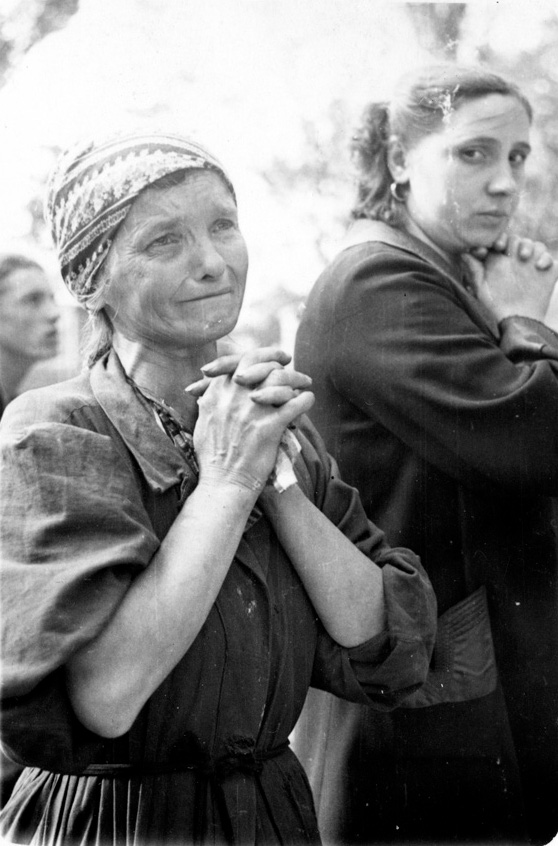
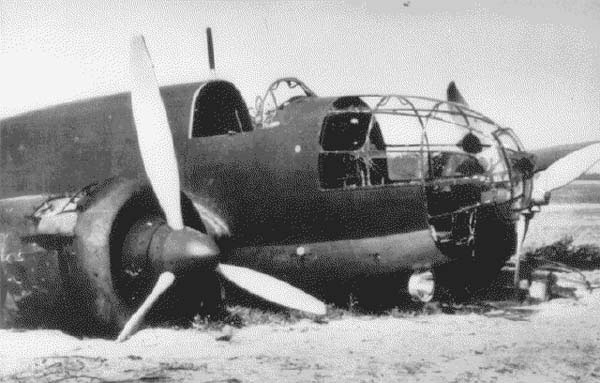
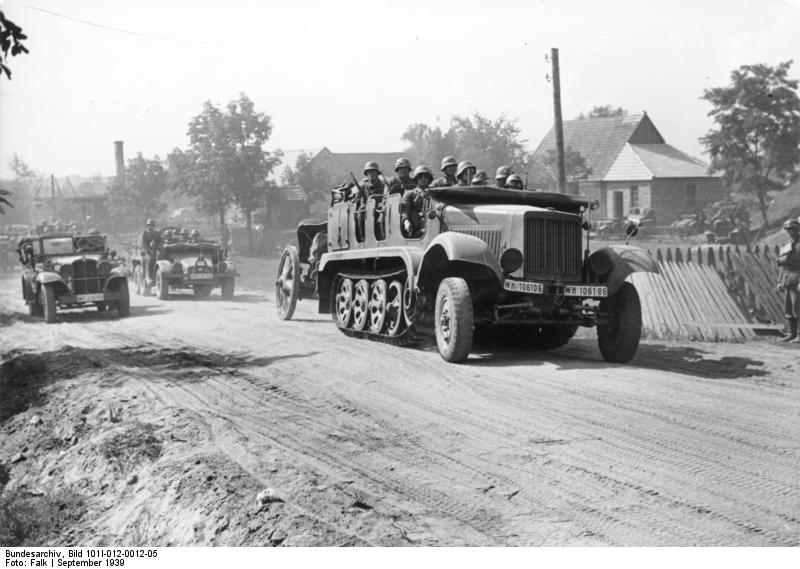
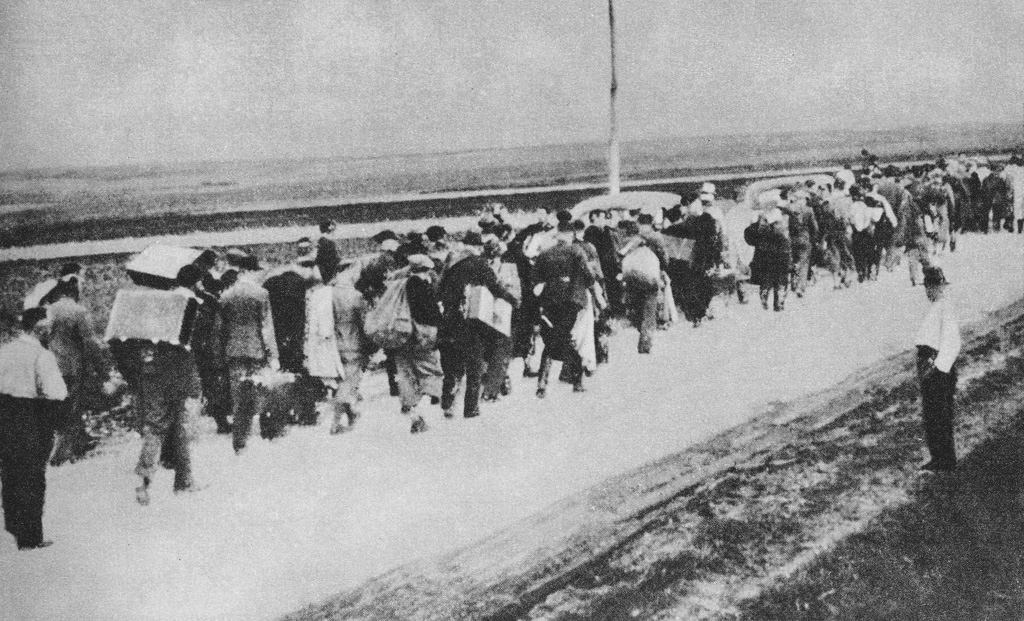
The Battle of the Bzura River, between the Polish Posnan and Pomorze Armies and Germany’s Army Group South, continues. On 15 and 16 September, Army Pomorze took up defensive positions on the north bank of the Bzura. General Stanisław Grzmot-Skotnicki’s group between Kutno and Żychlin, General Michał Karaszewicz-Tokarzewski’s units near Gąbin and parts of Army Poznań by the Bzura near Sochaczew were ready to begin their drive towards Warsaw. To encircle and to destroy the Polish forces, the Germans used most of their 10th Army, including two armoured, one motorized and three light divisions, which was equipped with some 800 tanks altogether. The attack from all sides on Polish positions started on 16 September with the support of the Luftwaffe. On 15 September, the Poles were forced out of Sochaczew, a town on the Bzura river, and were trapped in a triangle of Bzura, Vistula and German forces. The German 1st Panzer Division, after crossing the Bzura between Sochaczew and Brochów and engaging the Polish 25th Infantry Division, managed to capture Ruszki, but its advance was then halted. Poles began to cross the Bzura near the Vistula, north of Sochaczew, and retreat towards Warsaw. The Polish forces were forced to abandon most of their heavy equipment while they crossed the river.
Polish troops fail to break out of the Kutno Pocket. At Warsaw, with the city surrounded by German troops, the Polish Army is ordered to the Romanian border to hold out until the Allies arrive; the Romanian government offers asylum to all Polish civilians who can make it across the border; Polish military personnel who cross the border, however, will be interned.
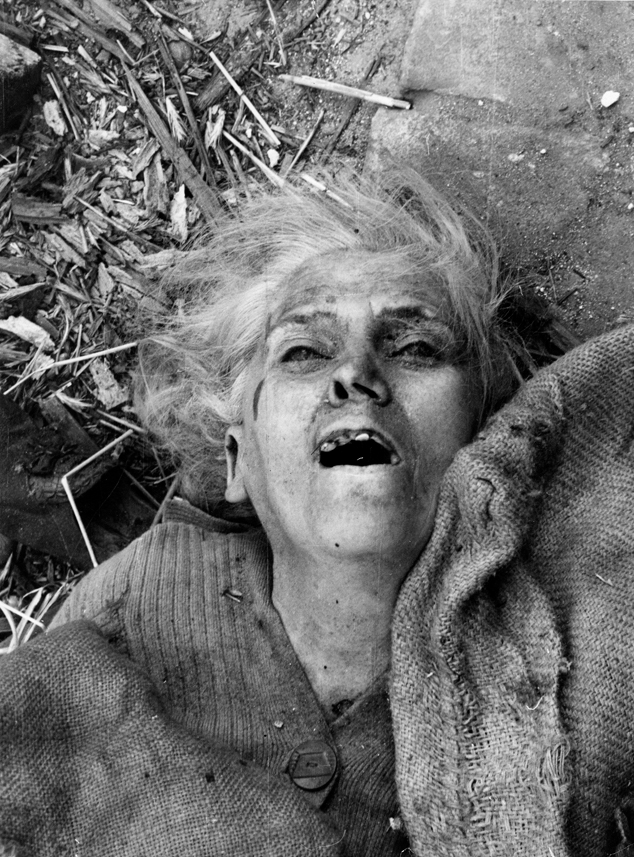
French radio stations today broadcast a dispatch from the besieged Polish city of Lwów (now Lviv, Ukraine) saying that foreign neutral diplomats had decided to ask their governments to protest to Germany against the aerial bombings of Polish open cities. The neutral diplomats, whose identities were not given, were reported to have met in the town of Krzemieniec, near the Russian frontier, under the chairmanship of Mgr. Filippe Corteal, Papal Nuncio to Poland. The diplomats studied the effects of a German air raid on Lwów September 12 and were said to have seen many bodies lying in the marketplace of the latter town.
The Polish Transcontinental Press Agency, quoting the Lwów radio station, said that 20,000 Lwów civilians had been killed by German air raiders there, a figure higher than military casualties. The French radio station said the worst raid on Lwów was timed to coincide with a gathering of peasants in the market place because of an approaching Jewish holiday. After bombing the people, according to the French radio, the German fliers swept low and machine gunned crowds in the streets, killing and wounding many.
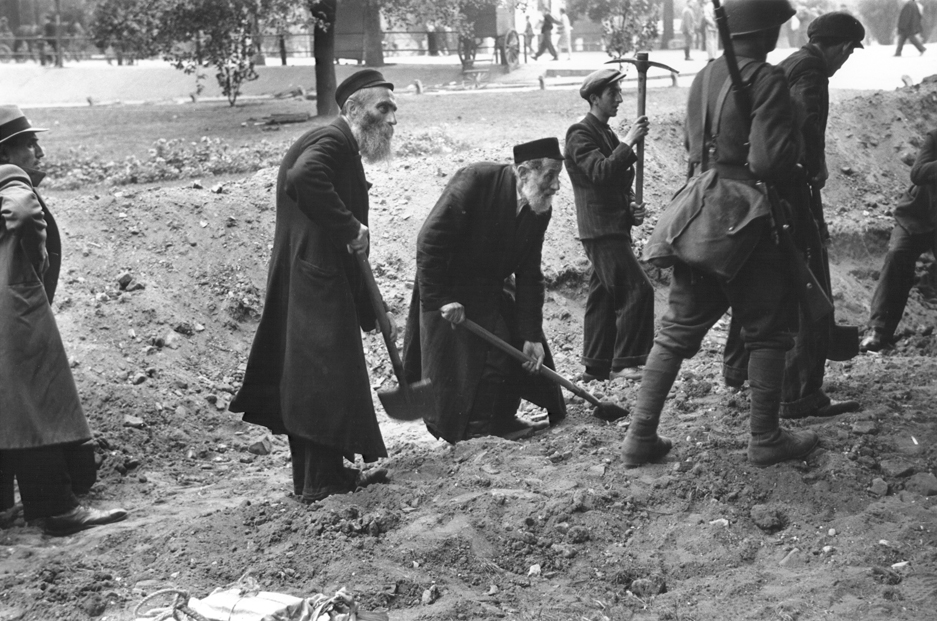
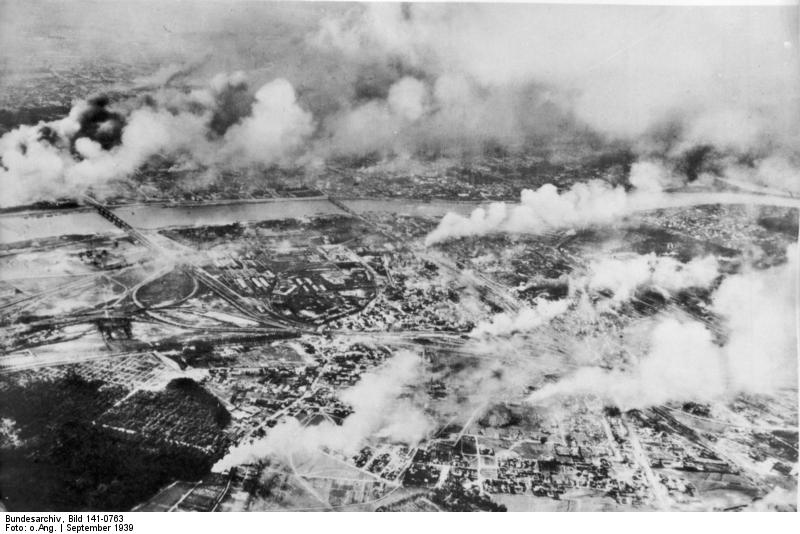
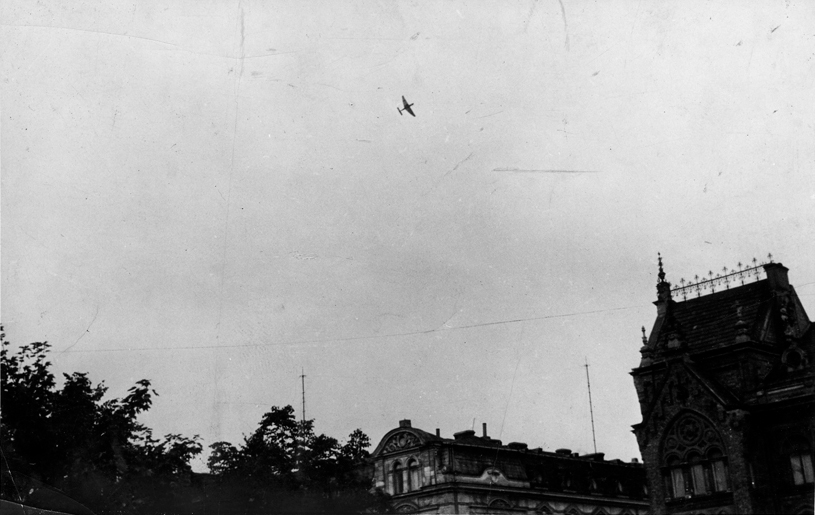
“The time is now 4 PM. The cannon fire hasn’t ceased for the last 20 hours. Artillery shells explode every second, and the shrapnel falls like a hail of steel. Whistling, bombardments, the noise of machine guns and the thundering of the airplanes overhead reverberate in the air and increase our terror. Our ears and heads ache. We can’t hear each other talk. Only boom boom boom! Another pillar of fire and smoke. Roofs are billowing smoke. A row of houses in the center of town is engulfed in flames. Suddenly, a terrible noise followed by groans and screams – houses have collapsed in the old city, and we run to save those who have been buried alive under the debris. Suddenly the skies darkened – a cloud of smoke descended on the city.”
Mira Zabludowski wrote these words on 15 September 1939 in the diary she kept during the first months of occupation in Warsaw. Mira came to visit her parents, lawyer Dr. Simcha Zabludowski and his wife Elisheva, and was caught in the eye of the storm. In late November 1939, she managed to leave Poland and return to her home in Eretz Israel (Mandatory Palestine). Her parents were murdered in the Holocaust.
In Berlin, Germany, German Foreign Minister Joachim von Ribbentrop asks the Soviet Union for a definite date and time when Soviet forces will attack Poland.
The semi-official Deutsche Dienst [German newspaper service] charged tonight that Anthony J. Drexel Biddle Jr., United States Ambassador to Poland, “evidently” was trying to play the role of the World War American Ambassadors to Paris and London and drag the United States into the present war.
The Vatican is critical on church curbs in the Reich and disputes the Italian explanation. Vatican circles took the unusual step today of calling attention to Catholic persecution in Germany by permitting the Osservatore Romano, its official organ, to comment critically on a Stefani News Agency dispatch from Berlin excusing German measures.
Britain will enlist anti-Nazi Germans. A tribunal will classify those friendly to the Allied cause. The British Government indicated today that a large part of the 35,000 German and Austrian refugees in this country will be permitted to do work of national service and that a limited number will be allowed to enlist in the British armed forces.
Picking up the threads of his life where he broke them off nearly three years ago, the Duke of Windsor, eager to get back into the flow of the nation’s life, renewed contact with his government today. He met with Prime Minister Chamberlain for an hour today.
Orzeł incident: The Polish submarine ORP Orzeł, at sea when hostilities broke out and unable to return to a Polish base, entered port in Tallinn. Estonian authorities, at the insistence of the German embassy, interned the submarine to prevent it from putting out to sea again.
The press reports that the steam merchant Firby (4869 tons), owned by the Ropner Shipping Company, Limited, was sunk in the Atlantic (on September 11). The master, Captain Prince, informs the owners that he and the crew of 40 all survived. Shells, however, have injured four. The chief officer, Mr. James Woodruff, states that the crew, after taking to the boats, pulled alongside the German submarine, the commander of which was most considerate. Members of his crew handed nine loaves of black bread to the sunken ships crew and three rolls of bandages for the injured men. Before they moved away the submarine commander sent an SOS to Mr. Churchill at the Admiralty giving the position where the sinking had occurred. After 13 hours in a heavy sea a destroyer rescued the men.
The unescorted British motor tanker Cheyenne was stopped by gunfire and after the crew abandoned ship was torpedoed and sunk by the U-53, commanded by Ernst-Günter Heinicke, about 150 miles west-southwest of Fastnet, Ireland in the eastern Atlantic Ocean. Of the ship’s complement, 6 died and 37 survivors were picked up by the Norwegian motor merchant Ida Bakke. The 8,825-ton Cheyenne was carrying benzine and was bound for Swansea, Wales, U.K.
The unescorted British steam merchant Truro was stopped by gunfire and after the crew abandoned ship was torpedoed and sunk by the U-36, commanded by Kapitänleutnant Wilhelm Fröhlich, about 150 miles east of Kinnaird Head, Scotland in the North Sea. Of the ship’s complement, all 20 survived and were picked up by the Belgian trawlers Nautilus and Edwaard Van Flaaneren. The 974-ton Truro was carrying coal, coke, general cargo, nickel, and copper and was bound for Trondheim, Norway.
The Belgian motor merchant Alex van Opstal struck a mine and sank in the English Channel. Of the ship’s complement and passengers, all 57 survived and were picked up by the Greek steam merchant Atlanticos. The 5,965-ton Alex van Opstal was carrying general cargo and was bound for Antwerp, Belgium.
Since Canada had “publicly proclaimed interest in the defense of Newfoundland,” Governor Sir Humphrey Walwyn suggests to the Dominions Secretary in London that they invite the Canadian Government “to take over for the duration of the war…Botwood Seaplane Base for the RCAF.” London flatly refuses, explaining that in light of Newfoundland’s destined role in transatlantic aviation, relinquishing control of its airports was inadvisable as they “are such an important factor in our bargaining position vis-a-vis Pan-American World Airways and [the] United States.” London did not object, however, to the RCAF making use of facilities if Canada so requested. Indeed, such a request had been made by Canada earlier in the month and authorized by Newfoundland. An agreement in April 1941 did eventually see the transfer of Newfoundland’s air bases to Canada for the duration of the war.
The first British transatlantic convoy sets sail from Halifax, Nova Scotia. From now on, all ships carrying vital supplies of Canadian wheat and U.S. munitions are to travel in convoys scheduled and protected by the British and Canadian navies. The vital Glasgow-Thames coastal trade is now moving in convoys. Last week the first convoy from Liverpool set sail for the United States.
Within the past forty-eight hours the government in Dublin, Ireland has adopted measures under the Emergency Powers Act which clearly indicated that the administration felt itself faced with a serious threat to peace.
President Roosevelt wants a limited Congressional session confined to the embargo issue. President Roosevelt indicated today that the Administration’s program at the extra session of Congress would be limited to revision of the Neutrality Law. In answer to questions at his press conference, he told reporters that he did not expect to ask legislation to restrict profiteering, or on any other issues which are to be seen at this time as likely to be connected with the European war situation.
Another development of the press conference was a definition by the President of the nation’s territorial waters: they extend as far to sea as the nation’s interests require them to go. But he added a strong hint that this government would not question the right of blockaders to search and seize cargoes of American ships bound for adjacent neutral ports. The contest between the White House and the Congressional bloc opposed to any changes in the embargo phases of the Neutrality Law was at a standstill for the day. Further skirmishes are expected before the session convenes on September 21, however, including a statement by Senator Clark of Missouri against repeal of the embargo.
Senator Borah, who charged last night in a radio address that repeal at this time would be tantamount to intervention by the United States in the war, was the only member of the self-styled “peace bloc” on Capitol Hill. His office staff said he had received hundreds of telegrams and telephone calls from all parts of the country congratulating him. Other Senators’ secretaries reported that mail on the subject of neutrality legislation was increasIng daily; that it showed a vast interest on the subject. Although the recommendations by voters for repealing the embargo provisions of the Neutrality Law were increasing, they said, sentiment still was closely divided.
Although Mr. Roosevelt’s statement on the search and seizure of American cargoes at sea was vaguely phrased, international lawyers here said it could mean only the conceding of the applicability to Britain’s blockade of Germany of the doctrine of “continuous voyage” which the Federal Government originated during the Civil War to seize cargoes sent by way of Nassau to the Confederacy. If the Administration intends to follow the doctrine now, experts on international law believe, the policy will be a source of great comfort to Britain in that a cause of diplomatic controversy such as arose between this country and Britain before our entrance into the World War will have been removed. It would mean that so far as the British blockade is concerned this country will not raise the issue of our neutrality on the high seas.
Although there have been various definitions and proposed definitions of the nation’s territorial waters, such as three miles from shore and an hour’s steaming distance, Mr. Roosevelt claimed to be the first to extend them to whatever distance our interests required. For all practical purposes, the territorial waters would extend under the President’s definition to several hundred miles offshore, since that is the distance at sea at which the navy and Coast Guard patrol is operating. Asked whether his definition would extend American territorial waters as far as the Rhine, Mr. Roosevelt laughed and said he was thinking only of salt water.
Disagreement with United States Senator William E. Borah’s radio speech advocating retention of the Neutrality Act was expressed yesterday by Henry L. Stimson, former Secretary of State, and Dr. Nicholas Murray Butler, president of Columbia University, in communications to the editor of The New York Times. Mr. Stimson urged repeal of the act on the grounds that such action was the only sure way for this country to keep out of war, while Dr. Butler urged its repeal on the ground that it represented a policy of economic nationalism now “the chief cause of the world’s troubles.”
After asserting that he did not differ from Senator Borah in his desire that the country should not participate in a war in Europe, Mr. Stimson wrote that the thought uppermost in all minds was the surest way of preventing this contingency from arising. “Senator Borah evidently thinks that the repeal of the automatic arms embargo provisions of the so-called Nye legislation would inevitably drag us into armed participation in the present war,” Mr. Stimson wrote. “I think that the repeal of those provisions constitutes perhaps the last remaining hope of our avoiding being so dragged in.”
The danger of our ultimate involvement is great, Mr. Stimson said. He added that the danger of involvement, in fact, had been increased by the now-disputed neutrality legislation. “Repeal is a belated step,” he declared, “but it is a step in the direction of possibly saving us from eventual participation rather than bringing that participation nearer.” Mr. Stimson urged that the sale of arms under international law had been the traditional policy of our country and cited the tenets set down by Secretary of State Robert Lansing as outlined in a note to the Ambassador of Austria-Hungary in 1915 in support of this contention.
“A group of nations has arisen in the world by whom the practice of military aggression upon their neighbors has become a well developed art,” Mr. Stimson asserted. The old foundation stone of international law that every State in the family of nations should recognize and respect the independent sovereignty of every other State has been thrown by them into discard. And our government, though with the best intentions, has played into the hands of that group and has made more difficult the defense against their skillful aggression by the nations whom they have attacked through a departure on our part from international law and our own traditions in respect to the purchase of arms.”
Dr. Butler said in his communication that Senator Borah’s speech “belongs to an age that is past.” He added that the doctrine of isolation that it reflects gave rise to the economic nationalism which is the chief cause of the world’s troubles and which is making almost impossible industrial recovery in the United States. After recalling the nearness of Europe, Dr. Butler asserted that “the present miscalled Neutrality Act puts us into this war on the side of the aggressor. Repeal it and go back to that neutrality which international law defines and controls and we shall be on sound ground,” he urged.
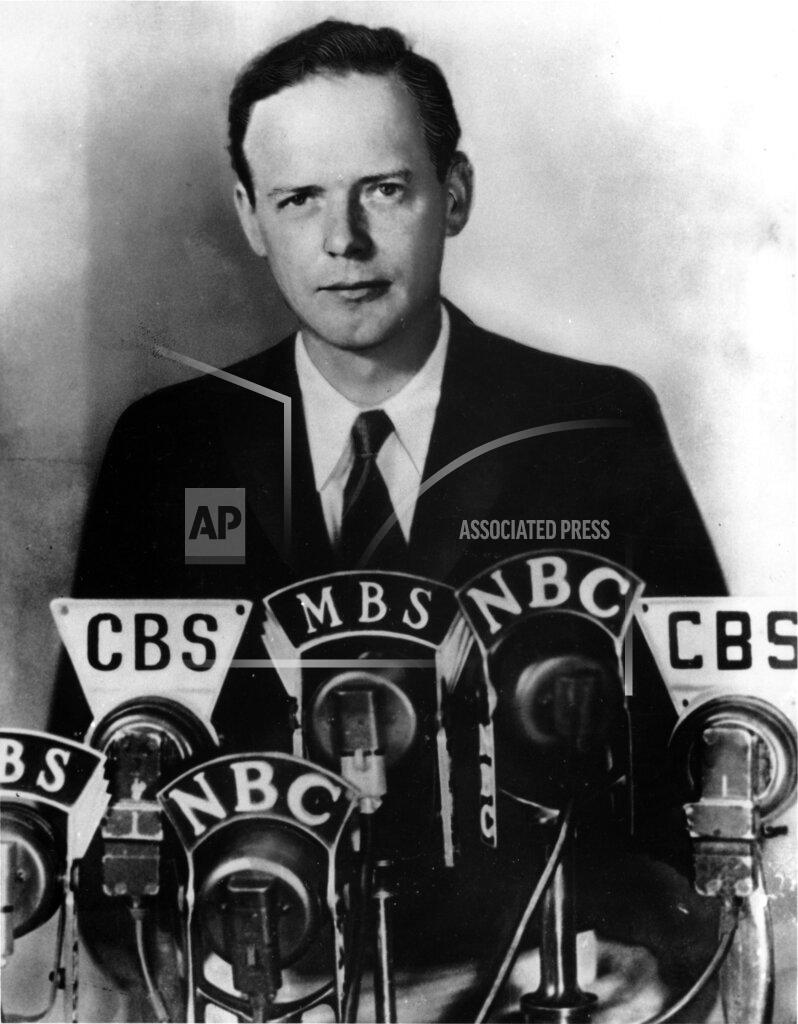
Charles Lindbergh urges that the United States shun war. If we fight for democracy there, he says, we could possibly lose it here. Charles Lindbergh made a nationwide radio broadcast in favor of American isolationism. “It is madness to send our soldiers to be killed as we did in the last war if we turn the course of peace over to the greed, the fear and the intrigue of European nations. We must either keep out of European wars entirely or stay in European affairs permanently”, Lindbergh said. “We must not permit our sentiment, our pity, or our personal feelings of sympathy, to obscure the issue, to affect our children’s lives … America has little to gain by taking part in another European war.”.
Dwight F. Davis, former United States Secretary of War, was among the fifteen passengers who arrived at Port Washington on Long Island this afternoon on the Yankee Clipper of Pan American Airways, returning from Europe. So was Hollywood actress Maureen O’Sullivan.
With temperatures as high as 105 degrees, the record-breaking September heat wave today gripped the Middle West for the fourth consecutive day and extended into Pennsylvania and Kentucky.
The New York Yankees beat the Detroit Tigers, 10–3, to lower their magic number for the pennant to one. Steve Sundra got his tenth win without a loss this season, as he spun a six-hitter. Fine defensive plays by Joe Gordon and Charlie Keller helped keep him out of trouble. Sundra also had a double and a single and three RBIs, and Gordon added two doubles, the first of which chased Schoolboy Rowe to the showers in the fourth. Frankie Crosetti had four singles. Joe DiMaggio’s slump continues with an 0-for-3 day; his batting average is down to .390 after being above .400 much of the summer.
The Cleveland Indians discharged three-run barrages in the last two innings today to defeat the Red Sox, 7–1, and provide Willis Hudlin with his tenth pitching victory of the season. Lefty Fritz Ostermueller yielded a run to the Indians in the first inning and then held them scoreless until the eighth, when a pass, Bruce Campbell’s single and doubles by Ben Chapman and Bad News Hale provided three tallies. The Indians then treated Wilfrid Lefebvre in equally rough fashion in the ninth on two bases on balls, singles by Campbell and Rollle Hemsley and a Chapman homer. Hudlin gave the Sox seven hits but kept them scattered after the first inning, when Doc Cramer went to second as Chapman muffed his fly and scored on Ted Williams’s double.
A three-run homer by Bob Johnson and tight pitching by Lynn Nelson gave the Philadelphia Athletics a 3–2 victory over the Chicago White Sox today. Johnson’s circuit blow, his twenty-second of the year, came in the first after Wally Moses had doubled and Al Brancato singled to open the inning.
Vernon Kennedy won his ninth game of the year today, pitching the St. Louis Browns to a 9-to-5 victory over the Washington Senators and allowing only seven hits. The former Detroit pitcher had to retire after the eighth inning when he hurt his foot, and Howard Mills finished the game, yielding a hit and a run.
In game 1 at Cincinnati, the New York Giants dig a hole for themselves when Bill Lohrman allows 10 hits and 8 runs in less than 2 innings, and the Reds win, 10–6. New York takes the second game, 4–3, in 7 innings. The Reds lead by 3½ over the Cardinals.
The St. Louis Cardinals keep close to the Reds by winning a pitching duel against the Boston Bees, 1–0, in 14 innings. Enos Slaughter hits a double and scores on a single by Joe Medwick. Bob Bowman and Jim Turner each throw 11 scoreless innings. The Bees had 11 hits, but left 12 men on base.
Relief pitcher Ira Hutchinson’s first hit of the year, a solid single to left off Max Butcher, led directly to a tenth-inning Brooklyn Dodger triumph over the Pittsburgh Pirates by 4–2 today. Hutchinson scores the winning run on Cookie Lavagetto’s double, and after Brooklyn adds an insurance run, he setts the Pirates down in the bottom of the tenth to get the win.
Unable to win on hitting alone in the opener, the Chicago Cubs added four-hit pitching by Vance Page and Claude Passeau to their newly revealed punch today to take the second game of a doubleheader from the Philadelphia Phillies, 6–1. The Phillies routed Dizzy Dean in the third inning of the opener for a 9–6 triumph. The Cubs ran their hit total to eighty-nine for their last six games by getting to Wayne Kerksieck for fourteen hits in the nightcap. The Phils lone run came on a homer by rookie catcher Ben Warren off Page in the second inning. Page wrenched his back on the last pitch of the second inning and was replaced by Passeau. Captain Billy Herman led the second game attack with his seventh homer, a triple and a double. Hank Leiber paced the 16-hit attack against Kirby Higbe in the opener with his twentieth homer, a double and single.
Royal Canadian destroyers HMCS Fraser and HMCS St Laurent arrived at Halifax from Vancouver, British Columbia.
Japanese signed a ceasefire in the Nomonhan (Khalkhin Gol) Incident, to be in effect on the following day, and agreed to honor the borders claimed by Mongolia. The Japanese suffered between 20,000 and 50,000 casualties (at least 8,400 killed) out of 75,000 troops committed; the Soviets suffered 23,499 casualties (8,248 killed) out of 57,000 troops committed. For the victory, Zhukov won his first Hero of the Soviet Union award and was promoted to the rank of general.
The agreement to end hostilities on the frontier between Japanese-dominated Manchukuo and Sovietized Outer Mongolia was announced through Tass, Soviet official news agency. Japanese-Manchukuoan and Soviet-Mongolian forces had been Fighting intermittently on the disputed frontier since May 11. The announcement said that the armistice would begin at 2 PM tomorrow. The respective forces, under the agreement, will maintain their positions held at 1 PM today. A commission of two Japanese-Manchukuoan and two Soviet-Mongolian representatives will be organized “at the earliest possible date” to establish a frontier line between the two States.
The agreement was reached after negotiations between the Japanese Ambassador, Shigenori Togo, and Premier and Foreign Commissar Vyacheslav Molotov. A patching of the quarrel between the two nations probably would have a tremendous effect upon Japan’s campaign in China. The Soviet Union has been more or less openly supporting the Chinese with materials. If the cessation of hostilities should lead to a definite nonaggression pact — one quarter, unofficial but usually reliable, expressed belief that one already had been signed — it would deal a blow at the British foothold in Asia and might possibly affect United States interests in the Far East, observers said.
What has every appearance of exploratory conversations on the initiative of Japan looking toward better understanding with the United States, was marked by a conversation today between Kensuke Horinouchi, the Japanese Ambassador, and Cordell Hull, U.S. Secretary of State.
Australia forms a war Cabinet. A new administration, heavier taxes, and recruiting are part of the plan.
Dow Jones Industrial Average: 154.03 (+0.32).
Born:
Jim Kimsey, American co-founder of AOL, in Washington, District of Columbia (d. 2016).
Ron Walker, businessman, in Melbourne, Australia (d. 2018).
Ode Burrell, AFL running back, flanker, and punter (AFL All-Star, 1965; Houston Oilers), in Goodman, Mississippi (d. 2009).
Breyten Breytenbach, South African poet and painter, in Bonnievale, South Africa.
Naval Construction:
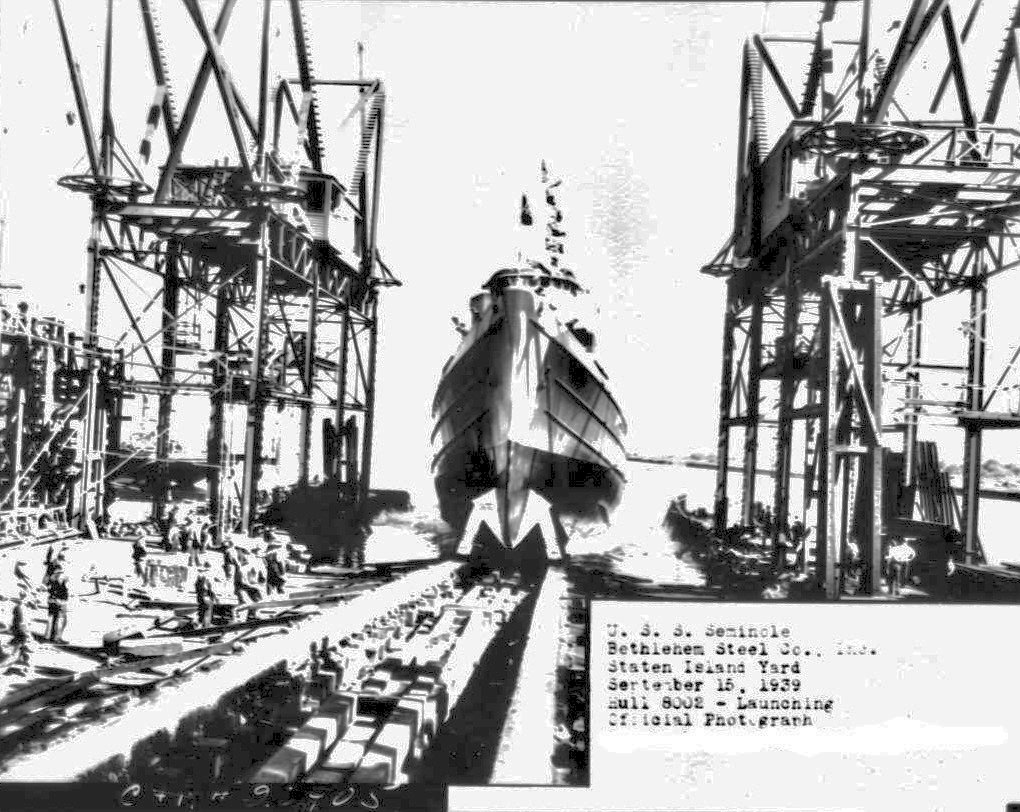
The U.S. Navy Navajo-class fleet tug USS Seminole (AT-65) is launched by the Bethlehem Steel Corp. (Staten Island, New York, U.S.A.).
The U.S. Navy seaplane tender USS Tangier (AV 8), lead ship of her class of 3, is launched by the Moore Dry Dock Co. (Oakland, California, U.S.A.).
The Royal Canadian Navy auxiliary minesweeper and patrol vessel HMCS Bras D’Or commissioned. Her first commanding officer is Lieutenant A.K. Young, RCNR.
The U.S. Navy Sims-class destroyer USS Mustin (DD-413) is commissioned. Her first commander is Lieutenant Commander James Shepherd Freeman, USN.
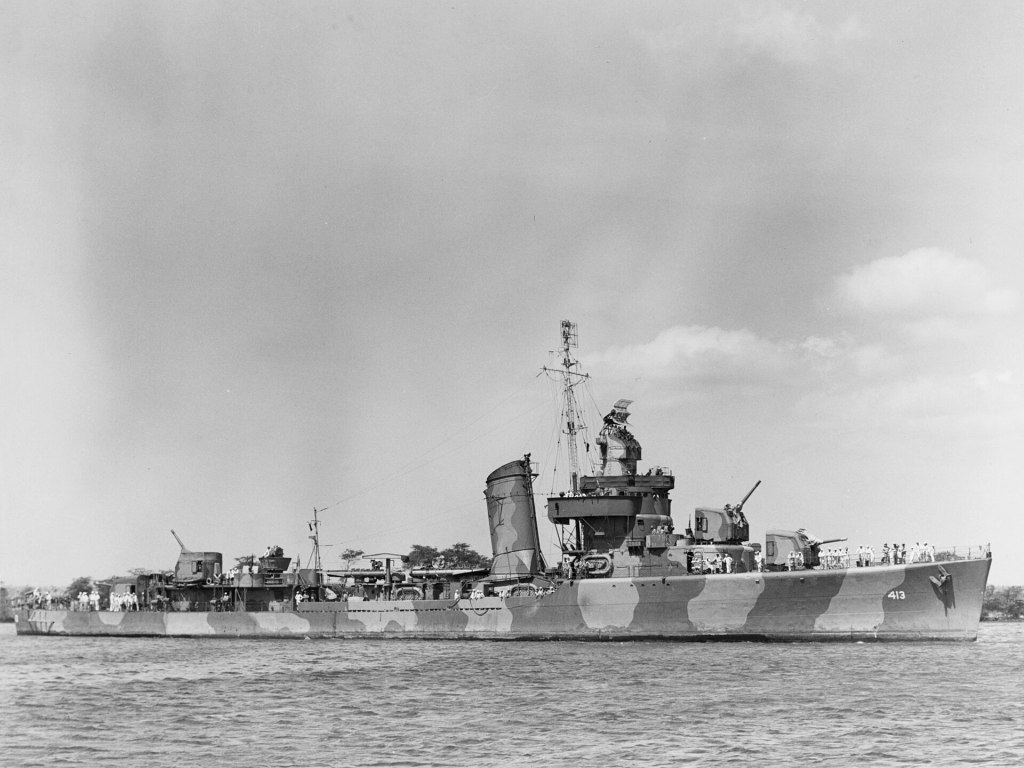
Briefly served with the Neutrality Patrol in the Atlantic. In January 1942, Mustin moved to the Pacific where she spent the rest of the war, participating in many of the famous battles in that theater. She survived the war. Damaged in the atomic bomb tests at Bikini Atoll in July 1946, she was decommissioned 29 August 1946. Scuttled off Kwajalein 18 April 1948, and stricken from the Navy List on 30 April 1948.
Mustin received 13 battle stars for World War II service.
https://www.history.navy.mil/research/histories/ship-histories/danfs/m/mustin.html
 History Diaries