Premier Nguyễn Khánh began purging plotters from his military high command in South Vietnam, but the colonel who spearheaded Sunday’s abortive coup refused to return to Saigon. They are Major General Dương Văn Đức, nominal reader of the attempt; Brigadier General Lâm Văn Phát, Brigadier General Dương Ngọc Lắm, Colonel Lâm Quang Thơ and Colonel Huỳnh Văn Tồn. Only one of the five officers was reported arrested — General Đức, Colonel Tồn and General Phát were reported at large. The status of Colonel Thơ and General Lắm was unclear.
The National Liberation Front, the formal organization behind the Việt Cộng, call for a general military offensive to take advantage of the ‘disarray’ among the South Vietnamese, particularly after the abortive coup. The South Vietnam Liberation Front, political arm of the Việt Cộng, ordered today a general military offensive to take advantage of the “unprecedented disarray” in Saigon after the abortive coup d’état there Sunday.
Analysts here said that the Communists decision to renew intense guerrilla activity indicated that the Việt Cộng no longer expected the immediate collapse of Premier Nguyễn Khánh’s Government under internal political pressures. The Communists maintained silence while awaiting the outcome of the action led by dissident army generals. The takeover attempt failed early yesterday when loyal military commanders rallied to Premier Khánh. United States officials in Saigon reported that Việt Cộng forces exercised military restraintlate last month when student demonstrations and Buddhist‐Catholic strife convulsed Saigon. Early this month the Việt Cộng’s military activity was at the lowest level of the year.
The American officials interpreted this as a Việt Cộng effort to avoid military provocations that could impel the anti‐Communist forces to come together. There seemed to be a Việt Cộng hope that an overthrow of Premier Khánh would produce turbulent political conditions with opportunities for an eventual Communist takeover. The Liberation Front’s call for an immediate offensive was broadcast by its clandestine radio and distributed by press agencies of North Vietnam and Communist China.
It was seen here as a signal that the Việt Cộng regarded General Khánh as back in control and that it was resuming its effort to overthrow the United States‐backed regime. The liberation Front radio called for quick response to the appeal for attacks on all fronts in South Vietnam.
Asserting that Sunday’s coup attempt demonstrated that the Việt Cộng enemies were “biting one another” and were weaker than ever the statement declared: “Let all compatriots and all of the liberation army attack the enemy on an battlefronts, destroy the remaining ‘strategic hamlets’ [fortified settlements] of the enemy and expand our liberated areas. Let the urban people rise up to demand democratic liberties and throw off enemy control in its yarious forms and all United States puppet dictatorial administrations.”
It continued: “Demand that United States imperialists put an end to their aggressive war andrecognize the independence, democracy and neutrality of South Vietnam. Let the soldiers, officers and generals of the South Vietnamese Army, administrative personnel and the police cooperate with the people, free themslvs from pro‐Amrican leaders, take ’actions quickly and struggle to [save the country, their families and themselves.”
Winds of 75 miles an hour slammed into the central Vietnamese coastline today. Reports indicated that about 90 per cent of the houses in Quảng Tín Province were demolished. At the coastal city of Đà Nẵng, farther north, the huge air base was battered, damaging one United States plane.
A new indication of North Vietnamese involvement in the Laotian fighting was presented today in the form of letters and documents taken from the bodies of soldiers killed in skirmishes with Laotian Government fofces in southern Laos. The evidence was offered at a news conference given by General Sang of the army’s setion of psychological warfare. General Sane said the letters proved that North Vietnamese Communists were taking part in guerrilla operations led by the Pathet Lao.
The letters found on the bodies were written in Vietnamese and addressed to individual soldiers’ families and friends in North Vietnam. There was also a diary containing daily entries about one soldier’s journey into Laos and about the conditions under which he lived. General Sang said that the letters came from soldiers killed last August in “skirmishes” in the Kham Kheut region, in southern Laos. North Vietnam was one of the 14 nations that signed the 1962 Geneva pledge to withdraw all military forces from Laos. The Laotian Government, howhowever, has repeatedly accused the North Vietnamese of sending troops into Laos.
The Laotian pro‐Communists have proposed a cease‐fire under which their Pathet Lao forces would yield positions taken from the Laotian neutralists on the strategic Plaine des Jarres. The proposal was put forward today by Prince Souphanouvong, head of the Pathet Lao, in a meeting with Prince Souvanna Phouma, the neutralist leader and Premier of Laos. Agreement on this proposal, if carried out by Laotian leftists, could open the way to peace in the country and a new international conference to proclaim its neutrality, according to Laotian and French sources.
The Pathet Lao offer was made at the last moment. After nearly a month of fruitless preliminary talks, Premier Souvanna Phouma had threatened to leave Paris. As a result of the new developments he has postponed his departure until next Monday. Prince Souphanouvong’s offer, according to members of his delegation, was “in effect” a cease‐fire and a return to the state of affairs that prevailed June 24, 1962. This would mean, these sources said, restoring to the neutralists the positions that were occupied in the Plaine des Jarres last March by Pathet Lao forces.
The leftist military thrust broke an accord reached by the 14‐power Geneva conference in 1962. At the time, the leftists maintained that the rightists were violating the agreement by dominating the country instead of participating equitably in a rightist‐neutralist‐leftist coalition. Premier Souvanna Phouma, before arriving here last month for talks with the leftists and the rightists, declared that the return of the overun positions was a condition for any international conference. He later proposed the neutralization of the Plaine des Jarres under international controll, but that proposal was rejected by Prince Souphanouvong’s leftist delegation. Britain which with the Soviet Union was a co‐chairman of the Geneva conferebce approved Premier Souvanna Phouma’s conditions, as did the United States. But Washington did not regard fulfillment of these conditions as a prelude to reconvening the 14‐nation conference, which the Soviet Union and France desire.
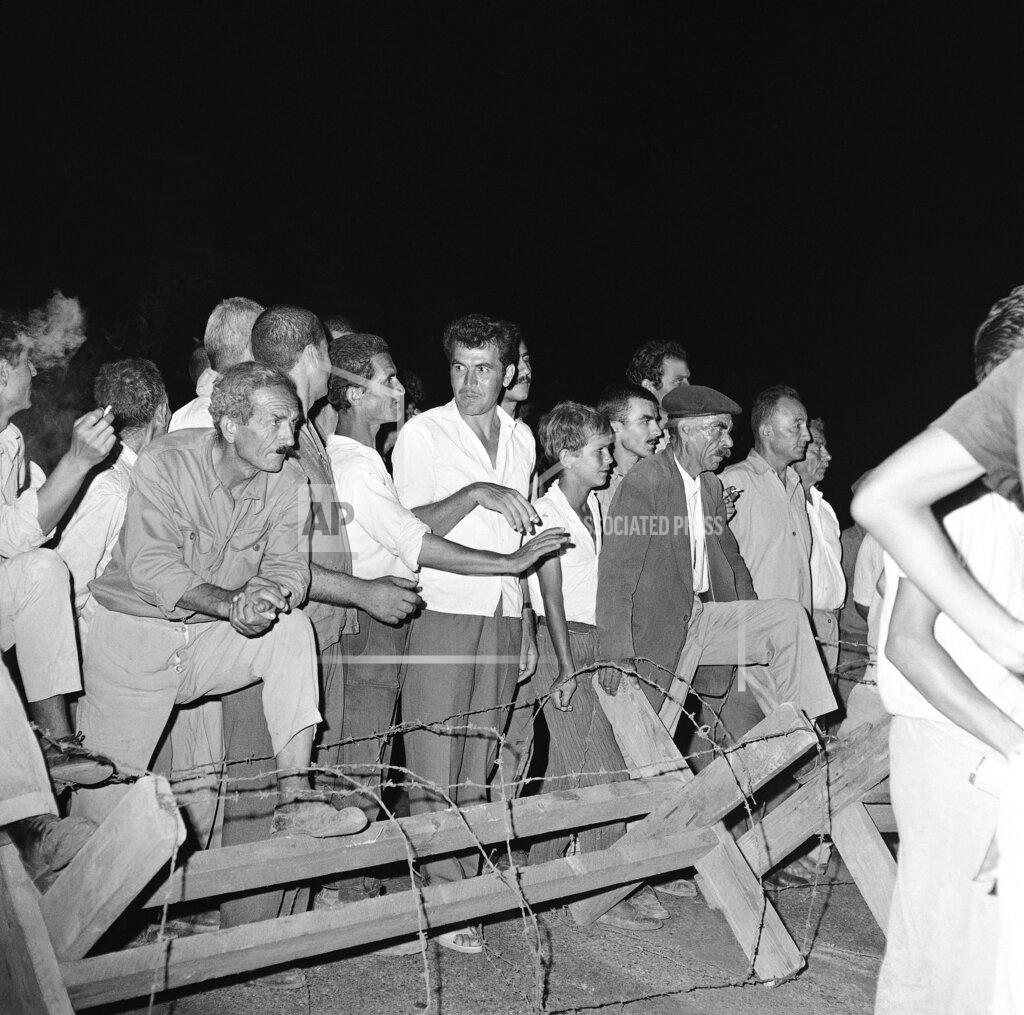
The government of President Makarios agreed to lift its economic blockade against Turkish Cypriots as part of a Greek Cypriot peace plan. President Makarios put forward a peace plan for Cyprus today without committing himself on the island’s political future. The Greek Cypriots will lift their economic blockade of Turkish Cypriot areas, he said. He also offered to remove fortifications, declare a general amnesty and give financial help to displaced Turkish Cypriotes. United Nations officials voiced pleasure over what they regarded as a victory for mediation and a conciliatory gesture by Archbishop Makarios. Greek Cypriot sources said the peace offer was entirely genuine but doubted whether the Turkish Cypriots would accept it. “They don’t really want food,” one said. “They want guns.” Well‐informed neutral sources said they were completely taken aback by the unexpected proposals. In a cablegram to the United Nations Secretary General, U Thant, Archbishop Makarios made it clear that his proposals were directed to the Turkish Cypriots and their leaders, who he asserted were being exploited by Turkey.
Meanwhile, as the first truckloads of food set out for the besieged Kokkina region, United Nations officials reported a scuffle. They said Turkish Cypriots had tried to prevent the food from being unloaded at the roadside. This situation was alluded to in Archbishop Makarios’s message to Mr. Thant. “It is clear, in my opinion,” President Makarios wrote, that the Turkish Government has urged the Turkish Cypriots to create incidents and has undermined the efforts of the United Nations force on Cyprus to restore peace. ‘‘Moreover,” the Archbishop said, “the Turkish Government exploits certain conditions created by the Turkish Cypriots for the purpose of falsely representing the Government of the Republic of Cyprus as oppressing the Turkish minority and also to have excuses for arbitrary actions.” In an “earnest desire to have peace and normality restored in the island, and with the hope that Turkey will be deprived of the opportunities of exploitation,” Archbishop Makarios said, his government has made the following decisions:
- “To remove any economic restrictions and to allow any quantity of foodstuffs to be supplied to or purchased by the Turkish Cypriots through the normal channels and on a permit granted by the Cyprus Government.”
- “To order the removal of all the armed posts throughout Cyprus, provided that the Turkish leadership will do the same.”
- “To assist, financially the Turkish Cypriots who have been.compelled by their leadership to abandon their homes and are desirous of being resettled, and to afford them any protection.”
- “To grant a general amnesty, so that any Turkish rebel who may be under criminal, charges of offenses committed during the rebellion may be relieved from any fear of arrest and punishment.”
- To accept any United Nations suggestion for “practical security measures contributing to the pacification of the island, provided that such measures do not affect the political solution of the problem.”
The “political solution” has been under discussion since last December, when communal violence flared between the Turkish Cypriots and the Greek community, which outnumbers them 4 to 1. The Archbishop has alternately advocated “enosis” — union with Greece — and self‐determination, or independence with a reduced voice for the Turkish minority. It was an attempt to abridge the minority’s constitutional rights that set off the violence last winter, leading up to Turkish Air Force attacks on the Greek Cypriots and to the internationally supervised cease‐fire now in effect.
British Prime Minister Sir Alec Douglas-Home called a general election for October 15 for the 630 members of the House of Commons. Prime Minister Sir Alec Douglas-Home officially confirmed what all Britain has assumed for weeks — that the British general elections will be on October 15. Queen Elizabeth II then dissolved parliament, effective September 25.
Soviet Premier Nikita S. Khrushchev told a visiting Japanese parliamentary group that the Soviet Union has developed new weapons capable of destroying all life on earth. Khrushchev claimed in a speech in Moscow that Soviet researchers had shown him “a monstrous new terrible weapon” that was “a means of the destruction and extermination of humanity.” Addressing a delegation of legislators visiting from Japan, Khrushchev said, “I have never seen anything like it…. It is power without limit.” Intelligence officials in London speculated that the Soviet premier was talking about the theoretical cobalt bomb; Khrushchev followed his announcement by saying, “We do not want to use such terrible weapons,” without explaining why he would have had Soviet scientists produce a bomb that would destroy his own nation along with its enemies, and said, “we shall continue to press for peaceful co-existence and economic development, which are the sole hope of mankind.” Two days later, Khrushchev would say at a reception at India’s embassy that he had been misquoted. “I spoke to the Japanese in Russian and it was taken down in Japanese and then it was told in another language.”
Striking in darkness east of Cuba, two unidentified speedboats set a Spanish freighter afire and killed its captain and two other officers with machine guns, survivors said.
The Vatican and Communist Hungary signed an historical agreement on church-state relations and expressed willingness to continue negotiating.
Top directors of the Vatican Ecumenical Council ordered greater secrecy for this third council session and exhorted the bishops to work harder to bring the council to an end.
The first issue of The Sun newspaper, which supported the Labour Party, was published to supersede The Daily Herald. Its inaugural editorial commented that “Steaks, cars, houses, refrigerators, washing machines are no longer the prerogative of the ‘upper crust’, but the right of all. People believe, and The Sun believes with them, that the division of Britain into social classes is hopelessly out of date. Public taste has been uplifted… For all those millions of people with lively minds and fresh ambitions, The Sun will stimulate the New Thinking.” A historian would write half a century later, “The Sun was, therefore— strange as it may seem today— a left-wing newspaper and it was not until Rupert Murdoch bought it in 1969 that the now-familiar recipe of sensationalism, sex and sport was established.” On November 17, 1969, Murdoch would relaunch the paper, which by then, had a lower circulation and advertising revenues than the Daily Herald had had in 1964, and would transform it into a tabloid with the slogan “The paper that cares about people. About the kind of world we live in.”
President Johnson’s Medicare plan was all but killed in the House. Its backers surrendered without trying to force the showdown vote they had promised. The House without objection consigned the bill to a Senate-House committee controlled by foes of the bill. Administration leaders abandoned plans today for a test vote in the House of Representatives this week on health care for the aged under Social Security. In a sudden shift of tactics, they permitted the issue to go to a Senate‐House conference committee without trying to bind the House conferees. This was widely interpreted at the Capitol as a surrender without a fight, since three of the five men who will represent the House in the conference negotiations are stanch opponents of the Social Security approach to health care. The assumption was that the conference committee would now kill a Senate‐approved health‐care plan and reject any compromise on the issue.
There were indications, however, that such an assumption was not yet wholly justified. Hints were dropped by sources close to the White House that a new compromise formula might be put before the conference committee. These sources suggested that Representative Wilbur D. Mills, Democrat of Arkansas, would present the new formula to the conferees and possibly work for an agreement acceptable to the Administration. As chairman of the House Ways and Means Committee, Mr. Mills will head the five-member House delegation in the conference committee. In the past, he has successfully opposed, the Administration’s health‐care program and all compromises in the Ways and Means Committee.
Until today’s abrupt shift in tactics, Administration leaders had planned to seek a House vote next Thursday on a motion instructing the House conferees to accept a health‐care plan in settling differences with the Senate on Social Security legislation. A bill passed by the House July 29 called for a $1.5 billion increase in annual cash payments to Social Security beneficiaries without dealing “ with the problem of health care. The Senate raised the projected increase in cash benefits to $2.2 billion and added a modified version of the Administration’s health‐care program before passing the bill September 3. The threatened fight over instructing House conferees caused a delay of nearly two weeks in sending the bill to conference. This is because House rules require either unanimous consent or clearance by the Rules Committee for bills to go to conference.
The Senate defeated an administration-backed compromise aimed at ending the stalemate over apportioning state legislatures and killed House-passed legislation that would have stripped courts of jurisdiction over the makeup of the legislatures. President Johnson suffered a defeat today at the hands of Everett McKinley Dirksen, the Senate Republican leader. By a vote of 42 to 40, a coalition of Republicans and Southern Democrats led by Senator Dirksen defeated a compromise resolution favored by the Administration on the emotion‐charged issue of apportionment of state legislatures. The Senate then beat by a vote of 56 to 21 a proposal by Senator Strom Thurmond, Democrat of South Carolina, to deny jurisdiction to all Federal courts on legislative apportionment.
What was particularly galling to the Administration was that the defeat of the compromise was unnecessary. It would have won if a number of Democratic Senators had returned from the hustings at home to vote. The defeat was not irreparable, in the opinion of Senator Hubert H. Humphrey, the Democratic Vice‐Presidential nominee, and leaders of the bipartisan liberal coalition that has led the fight against Mr. Dirksen’s effort to postpone further compliance with the Supreme Court’s ruling on reapportionment.
The compromise was, a substitute for an amendment to the foreign aid bill offered by Senator Dirksen last August 12. The Dirksen amendment would stay until January 1, 1966, all Federal court proceedings on state legislative apportionment resulting from the Supreme Court’s decision last June 15. The Court then ruled that districts for both houses of state legislatures must be as nearly equal in population as practicable. The substitute, which was sponsored by Senators Humphrey and Eugene J. McCarthy, both Minnesota Democrast, and Senator Jacob K. Javits, Republican of New York, was softened late yesterday at the insistence of liberal members of both parties, who have been leading the fight against the Dirksen proposal. It simply expressed “the sense of Congress” that when any apportionment proceedings are before the courte, the state should have “reasonable time” to conform to the constitutional requirements on districting laid down by the Supreme Court.
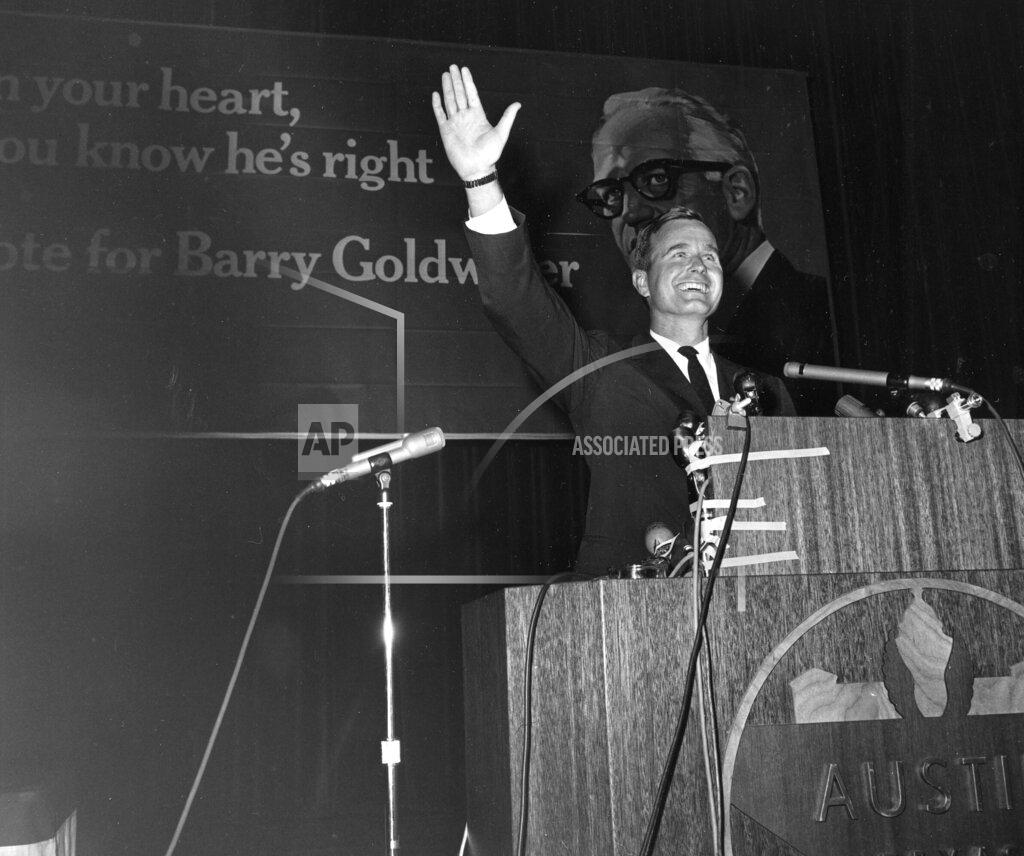
Senator Barry Goldwater invaded the South advocating states rights, criticizing the Supreme Court, and delivering a scathing attack on the President. Senator Barry Goldwater pledged tonight to work to overturn a series of United States Supreme Court decisions on rights of defendants in criminal prosecutions. The Republican Presidential candidate said in a speech here that criminals were being needlessly pampered and that law and order were being sacrificed “just to give criminals a sporting chance to go free.” To achieve his end, Mr. Goldwater said that, as President, he would first use his power of appointment to federal courts to “redress constitutional interpretations in favor of the public.” Mr. Goldwater made this pledge at the end of his first day of campaigning in the South, a region on which his election hopes and strategy rest.
Some of his supporters have been telling Southerners for months that if Mr. Goldwater is elected President, the South’s interests and sensibilities would be considered in making Supreme Court and Justice Department appointments. However, none of the crowd of about 10,000 that heard Mr. Goldwater speak tonight applauded his phrase about redressing constitutional interpretation. He was repeatedly applauded at other times, however, especially in his reference to the “pampering” of criminals. Leaving Washington this morning, Mr. Goldwater flew to and spoke at Winston‐Salem, North Carolina, Atlanta, Georgia; and Orlando, Tampa, and St. Petersburg, Florida. Sizable and enthusiastic crowds met Mr. Goldwater and warmly cheered his statements that “I happen to believe in states’ rights” and his remark that he was not one of those who believed the “South is not part of the United States.”
President Johnson launched a week of coast-to-coast campaign travel with a pledge at Cape Kennedy to keep America first in space and an urgent call for passage of medicare.
President Johnson made a strong bid today for the labor vote in Miami Beach, Florida. The President, speaking at the national convention of the 900,000‐member International Association or Machinists, cited a batch of new statistics to emphasize the economic gains that workers have made since the Democrats took office in January of 1961. He also stressed his support of medical insurance for the aged under Social Security and strengthening Social Securitytwo aims that are high on labor’s agenda. The 1,400 delegates and 2,500 convention guests who packed the main auditorium at the Deauville Hotel gave Mr. Johnson a demonstrative and colorful reception. The convention endorsed. Mr. Johnson and Senator Hubert H. Humphrey, his Vice‐Presidential running mate, last Friday.
Senator Strom Thurmond of South Carolina has decided to bolt the Democratic Party and formally become a Goldwater Republican, it was disclosed in Washington. The Senator is scheduled to tell his South Carolina constituents his decision in a statewide telecast at 6:15 PM Eastern standard time. Mr. Thurmond was the 1948 States Rights party candidate for President in a protest campaign against President Truman. The then South Carolina Governor captured 39 electoral votes in Southern states. In 1960 Mr. Thurmond supported Senator Lyndon B. Johnson for the Democratic Presidential nomination. But during the campaign he issued a blistering attack on the Democratic party platform and kept hands off the race.
His support of Mr. Goldwater will mark the fifth straight time since he came to national political prominence that he has not campaigned for the Democratic Presidential nominee. His party switch will be the first for a United States Senator since Wayne Morse of Oregon changed from the Republican party to independent status and then to the Democratic party 10 years ago. Mr. Thurmond has repeatedly stressed in speeches his feeling of political independence, although he has been nominated to public office in state Democratic primaries.
Results of the latest nationwide Gallup survey on the Presidential race show President Johnson continuing to hold a substantial lead over Senator Barry Goldwater.
Two Blacks were elected today to seats on the Tuskegee City Council in Alabama, defeating white incumbents in a municipal run‐off election. In the same election, Mayor Howard Rutherford was defeated by a white opponent, Charles M. Keever, who apparently got the support of most of the Black voters. It was the first time in Alabama since the Reconstruction era that Blacks had won election to public office against white opponents.
Contract negotiations between Ford Motor Co. and the United Auto Workers union were interrupted in Detroit for nearly five hours when several thousand workers staged a wildcat walkout.
“Peyton Place,” a prime time television soap opera based on a 1956 novel and a 1957 film of the same name, premiered on the ABC network. Initially shown with two episodes, and, later, three per week, the show would have 510 episodes in five seasons.
The American Youth Soccer Organization was founded.
The Beatles play at Public Auditorium in Cleveland, Ohio; police stop show during third song as some of the crowd climbed on the stage, after a 10 minute delay, and warning audience to stay seated, the concert resumed.
Rich Rollins, whose double tied the score in the seventh, tripled home the tie‐breaking run in the ninth as the Minnesota Twins dealt the American League‐leading Baltimore Orioles a 2–1 defeat tonight. As a result, the Orioles’ lead was cut to one game over the Chicago White Sox, who moved past the New York Yankees into second place. The Yankees are a game and a half out. The game‐winning hits came off Harvey Haddix, the third of four Baltimore pitchers. Minnesota used six pitchers, with Bill Pleis the winner.
The Chicago White Sox downed the Detroit Tigers, 3–2, in 10 innings tonight and regained second place in the American League, one game behind the Orioles. Marv Staehle, a 22‐year‐old rookie making his first appearance in the big leagues, lined a pinch single to left field with one out that scored J. C. Martin with the winning run. Hoyt Wilhelm, the 41‐yearold knuckleball relief ace of the White Sox, blanked the Tigers on one hit for the final three innings and picked up his 10th victory.
Dean Chance, the leading candiate for this year’s Cy Young award as baseball’s outstanding pitcher, fired a 7–0 two‐hitter against the New York Yankees last night for the Los Angeles Angels at Yankee Stadium. The 23‐year‐old right‐hander faced only 29 batters and struck out eight as he continued a season‐long, mastery of the Yankees. In 50 innings this season, they have scored one run off him, a home run by Mickey Mantle on July 28. Chance’s 19th victory of the season, however, was no breeze. He was in a scoreless duel with Al Downing for five innings and had only a one‐run lead until the Angels scored six times in the ninth. It was Chance’s 10th shutout and his third against New York. His earned‐run average was reduced to 1.49, and if he can maintain such a figure, it will be the lowest recorded by a starting pitcher in the American League since 1919. Against the Yankees, he has been even more difficult to believe. In the 50 innings, covering five games, the Yanks made 14 hits — 13 singles and Mantle’s homer. No Yankee got more than two hits and in no game did the team make more than four. Their combined batting average against Chance was .086. His earned‐run average against them was 0.18. He struck out 36 men and walked nine.
Ed Connolly blanked the Kansas City Athletics on two hits and the Boston Red Sox pounded out 14 in an 8–0 victory over the A’s tonight. Felix Mantilla’s 26th home run capped a four‐run fourth inning for the Red Sox.
Bob Gibson struck out 12 and allowed only four hits tonight in hurling the St. Louis Cardinals to a 3–1 victory and a sweep of a doubleheader with the Milwaukee Braves. St. Louis had won the first game, 11–6. Gibson, who gained his sixth consecutive complete‐game victory, was untouchable until the fifth inning, when Joe Torre singled after Eddie Mathews had walked. Until then he had faced a minimum of 12 men, striking out six. After the walk and Torre’s single had put Gibson in trouble, he struck out the side. Mike Shannon’s three-run homer and a five‐run seventh carried the Cards to victory in the first game.
Dennis Bennett and Jack Baldschun combined to pitch a four-hitter and Johnny Callison drove in a run with a sixth-inning single as the National League-leading Philadelphia Phillies beat the Houston Colts, 1–0, tonight. Bennett, the winner, allowed three hits before being lifted for a pinch‐hitter in the sixth. Despite the victory the Phils lead was cut to six games as the second‐place St. Louis Cards swept a double‐header from Milwaukee. Richie Allen opened the sixth with a double off the left‐field wall and Callison drove him home with a hit to left. Hal Woodeshick then replaced the loser, Ken Johnson, and after Cookie Rojas reached base on an error, worked out of trouble.
At Chicago’s Wrigley Field, Larry Jackson fires a six-hitter, beating the Cincinnati Reds, 6-1, to become the season’s first 20-game winner. The 33-year-old right-handed workhorse will finish the campaign with a 24-11 record for the eighth-place Cubs. Cincinnati scored in the first inning when Pete Rose led off with a single, went to third on a single by Marty Keough and scored on Vada Pinson’s sacrifice fly. The Cubs went ahead in their half of the first on walks to Joey Amalfitano and Ellis Burton, a run‐scoring single by Billy Williams, and a sacrifice fly by Ron Santo, who battled in his 100th run of the year. Andre Rodgers clouted a three-run homer in the sixth.
Juan Marichal scored his ninth straight victory over the New York Mets tonight, defeating them, 3–1, yielding just four singles. The victory was No. 18 of the season for the ace of the San Francisco Giants’ staff, but it could not narrow the gap on the Philadelphia Phillies, who defeated Houston and still led the Giants by 7½ games with 16 to go. The Giants scored single runs in the first, fourth, and sixth innings behind Marichal’s stiff pitching to defeat Galen Cisco. But for the first time Willie Mays was benched for not hitting, though he was substituted into center field for defensive purposes in the ninth inning. Willie, who said simply that he was “just tired,” had been hitting .205 during September as the Giants tried to mount a stretch run at the league‐leading Phillies. Hal Lanier tripled to rightcenter in the first inning and scored on Willie McCovey’s long fly to center in getting San Francisco off to a 1–0 lead. Tom Haller raised the score to 2–0 in the fourth when he lined his 10th home run of the year over the fence in right-center. Marichal drove home the final run in the sixth with a line‐drive single to center after Orlando Cepeda had doubled and Jim Davenport had received an intentional base on balls.
Willie Davis, Ron Fairly and a rookie, Bart Shirley, each slammed three hits tonight and led the Los Angeles Dodgers to a 5–3 victory over the Pittsburgh Pirates. Fairly singled home the first run in the second inning and Willie Davis doubled home another in the third. The score went, to 4–0 in the fourth when Shirley singled, Jim Gilliam walked, and Nate Oliver and Willie Davis followed with run-producing singles.
Dow Jones Industrial Average: 862.54 (-3.70).
Born:
Robert Fico, Prime Minister of Slovakia (2006-10, 2012-18, 2023-), in Topolcany, Czechoslovakia.
Ryoko Kikuchi, Japanese cosmonaut (Soyuz TM-11) and reporter, in Zama City, Kanagawa, Japan.
Andrew Landenberger, Australian tornado sailor (Olympic silver medal, 1996) in Grafton, New South Wales, Australia.
John Sterling, NFL running back (Green Bay Packers), in Altus, Oklahoma.
Doyle Wolfgang von Frankenstein [Paul Caiafa], American musician, former guitarist for horror punk band The Misfits, in Lodi, New Jersey.


 History Diaries