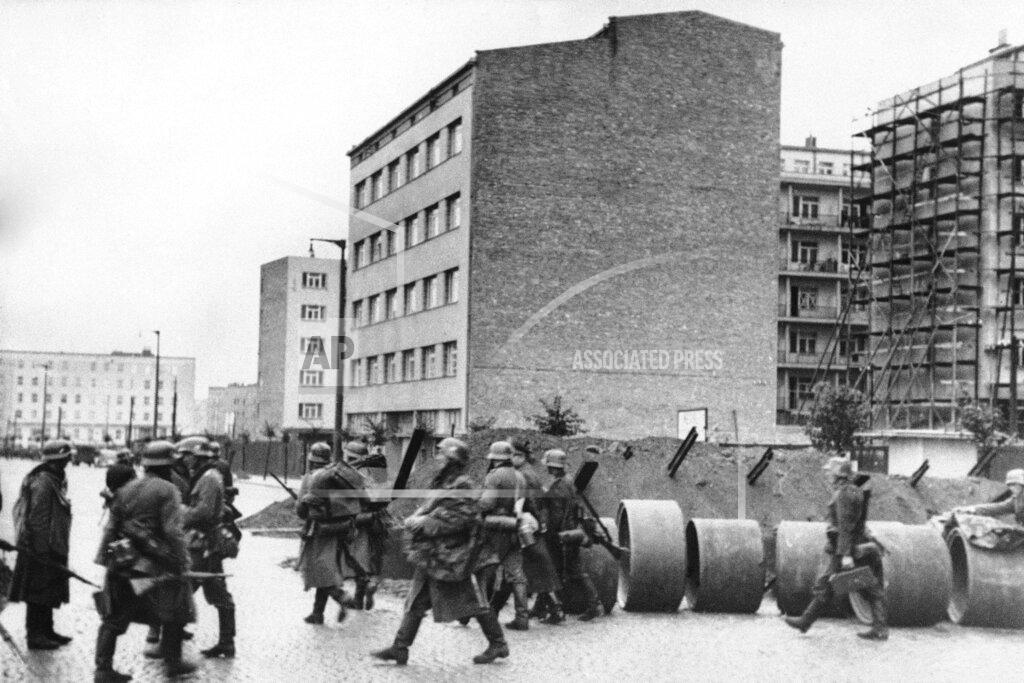
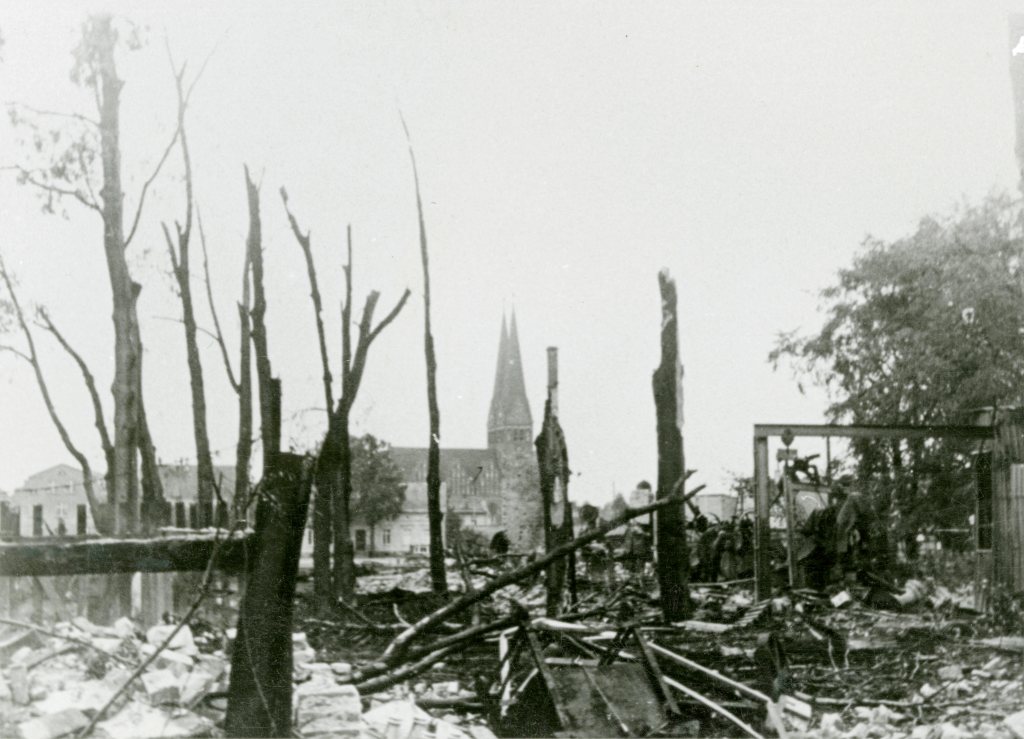
The ruins of war stretch out behind the advancing German Army, leaving a landscape of smoldering cities and desolate farms, mostly emptied of their former inhabitants, with casualties to the civilian population impossible to estimate as yet.
The Battles of Brześć Litewski, Jaworów and Kobryń began. The Battle of Brześć Litewski took place between 14 and 17 September 1939, near the town of Brześć Litewski (now Brest, Belarus). After three days of heavy fights for the stronghold in the town of Brześć, the Germans captured the fortress and the Poles withdrew. On 14 September 77 German tanks of the 2nd Battalion of the 8th Panzer Regiment, part of 10th Panzer Division, reached the area of Brześć and attempted to capture the fortress on the run. The probe attack was repelled by Polish infantry and the 113th company of light tanks, consisting of 12 obsolete Renault FT tanks. All the Polish tanks were destroyed, but the German forces were forced to retreat towards their initial positions. Polish armoured train number 53 (PP53), which made a reconnaissance advance to Wysokie Litewskie, was attacked by a scout patrol from the 10th Panzer Division. The crew from the train opened fire with artillery. Several other skirmishes were fought, but were largely inconclusive.
Later that day the German artillery arrived and started bombardment of both the fortress and the town. Heavy street fighting ensued. At dawn approximately half of the town was in German hands, the other half being defended by Polish infantry. Polish anti-tank weapons, artillery and AA guns were very scarce and were unable provide enough support for the infantry. The following day Polish defenders withdrew from the town, but heavy casualties on both sides prevented the German units from continuing the attacks on the fortress. Instead, it was constantly shelled with artillery and bombed by the Luftwaffe.
When reports told Polish General Plisowski that scout elements from the 3rd Panzer Division were seen near the railway station at Żabinka, north of Kobryń, he sent PP55 to prevent his forces from being cut off. A platoon of five scout tanks left the train near Żabinka and attacked German armoured cars near a bridge on Muchawiec River. After three tanks were lost, the other two withdrew. A further attack by an assault platoon from the train failed. After a combined attack of the assault platoon and PP55 artillery, the Germans left the area of the Muchawiec bridge. When they returned, PP55 attacked another battle group of the 3rd Panzer Division (consisting of scout elements and the 5th Tank Regiment, supported by the 6th Battery of the 75th light artillery Regiment). After destroying a few armoured cars, the train withdrew towards Brześć and the train station was left in German hands.
The main assault finally started in the early morning of 16 September. The defenders had plenty of small arms ammunition and light arms thanks to the munitions depot in the fortress, but had almost no anti-tank weapons and insufficient artillery cover.
Although the German infantry was repelled and the assault of German tanks was stopped by two FT tanks sealing the northern gate of the fortress, by nightfall it became apparent that the German pressure made the situation very grave. Despite heavy losses, the German 20th Motorized Division and 10th Armoured Division captured the northern part of the citadel. Meanwhile, the combined 3rd Armoured Division and 2nd Armoured Division comprising the XXIInd Armoured Corps entered the area. The Poles were unable to resupply and the casualties rose to almost 40%.
At dawn General Plisowski ordered part of the Polish forces to retreat from the easternmost fortifications and regroup to the other side of the river and southwards. The evacuation was completed by early morning, 17 September when the last unit crossing the bridge blew it up to hinder the Germans. An hour later elements of the German 76th infantry regiment entered the fortress – almost unopposed.
The Battle of Jaworów was fought between the German forces and elements of the Polish Małopolska Army. It took place from 14 to 16 September 1939 in the vicinity of the town of Jaworów. In the effect of a two-day assault, the Polish forces broke through the German line of defence on their way towards the city of Lwów (modern Lviv). The engagement is best known for the destruction of one battalion of three battalions of SS-Germania regiment together with the capture of the heavy equipment of the entire regiment. The battle resulted from a chaotic situation in the rear of Małopolska Army. Although the army, since 13 September commanded by General Kazimierz Sosnkowski, maintained a high morale and remained in relatively good fighting condition during the first two weeks of the war, a string of retreats seriously depleted its forces.
Sosnkowski’s aim was to break through towards the city of Lwów. To make the matter worse for the Poles, a large detachment of German motorised and mountain infantry units, composed of the 7th Infantry Division, elements of 1st Mountain Division and the SS-Standarte Germania regiment, outflanked the Polish forces and organized a defence line between the towns of Jaworów and Gródek Jagielloński, directly between the Małopolska Army and Lwów, with German 2nd Mountain Division closing in from behind and the 57th Infantry Division approaching from the north.
On 15 September, the Polish force, formed by 11th, 24th and 38th Infantry Divisions, reached the area between Mościska and Sądowa Wisznia. From there the Poles attacked the forward positions of the German units. In a lengthy night assault of the German main position the Polish forces broke through to a large forest complex extending to the north and west of the town of Janów and dominating the road between Przemyśl and Lwów.
Although losses were high on the Polish side, they were much higher for the Germans. The SS-Germania regiment lost most of its artillery, vehicles and practically ceased to exist. Its remnants were withdrawn from the front and then disbanded. Meanwhile, the Polish force organized the defence of the forest complex and fought the Battle of Janow Forests. The day after the battle, the Soviets invaded Poland from the east. Breaking through to Lviv became unrealistic, since the town was encircled by the united forces of Nazi Germany and the Soviet Union. Some soldiers were taken prisoner and sent to German and Soviet POW camps. Others were executed by the Soviets, while some participated in the battles around Lublin, a few crossed the so-called Hungarian Bridgehead (named after the Romanian Bridgehead was cut off by the Soviets) and reached either France, where they continued to fight in 1940, or the UK, and fought alongside British Commonwealth forces.
German officers and NCOs of the SS Germania were not permitted to lead German troops into battle again (except for a few when the Soviets gained the upper hand). Instead, they were assigned to lead a foreign volunteer division known as SS Viking.
The Battle of Kobryń was one of the battles of the Invasion of Poland. It was fought between 14 and 18 September 1939, between the German XIX Panzer Corps of General Heinz Guderian and the improvised Polish 60th Infantry Division “Kobryn” of Colonel Adam Epler. It was fought concurrently with the Battle of Brześć Litewski. After breaking through the Polish defences in the Battle of Wizna, the German forces under General Heinz Guderian started to make their way towards Brześć, Kowel and Kobryń. Their aim was to cut the Polish territory in two parts and paralyse the Polish attempts to organise a line of defence east of the Bug River.
On 14 September 1939, elements of the XIX Panzer Corps reached the area of Brześć and Kobryń. Brześć was defended by a small force under General Konstanty Plisowski, while Kobryń was defended by the improvised 60th Infantry Division of Colonel Adam Epler.
In the early morning of 14 September Colonel Epler received a report of German forces entering the area. Elements of the German XIX Panzer Corps (elements of 3rd Panzer Division and entire 2nd Motorised Infantry Division) were advancing rapidly and Epler suspected that the Germans would advance on the towns of Brześć and Kobryń, as well as toward an important railway node located in the village of Żabinka. To probe the enemy forces, he ordered the 2nd battalion of his 84th Infantry Regiment to commence a delaying action in the area of Żabinka train station and the villages of Tewela and Ogrodniki. At the same time, the 2nd battalion of 83rd Infantry Regiment was ordered to organise a defensive line along the swampy shores of Trościanica river to cover the eastern flank of the Polish forces in the area of Brześć, some 30 kilometres westward.
On 15 September the German 3rd Armoured Division encountered and destroyed a column of the 9th reserve light artillery depot. However, Epler’s forces were not spotted until late evening of that day, when they were bombarded by the Luftwaffe. The following day the main force of the German XIX Corps arrived. The 2nd Battalion of the 84th Infantry Regiment together with an armoured train organised an ambush and attacked the Germans who were supported by a battery of artillery. Following six hours of combat, the Germans were forced to retreat with significant casualties. The Polish battalion seized several guns and tanks, but had to burn them due to lack of fuel and then retreated toward the main line of Polish defenses.
At dawn on 17 September 1939 the reconnaissance units of the German 2nd Motorised Infantry Division finally reached the Polish lines. After a short skirmish, the Poles withdrew behind the defensive positions guarded by the 2nd battalion of the 83rd Infantry Regiment. The Germans then tried to outflank the Poles by attacking the cemetery in the village of Chwedkowice, but were repelled with light losses, mostly due to direct fire from the Polish 100mm howitzers. The 2nd Motorised Division lost three or four armoured cars and was forced to retreat. The Polish battalion withdrew towards the village of Piaski, where it organised another ambush. In the afternoon it was again attacked by the elements of German 2nd Motorised Division, but this assault was also repelled.
17 September also marked the beginning of the Soviet invasion of Poland.
Overnight, the Polish forces fighting in the Battle of Brześć were withdrawn to the other side of the Bug River and joined the forces of Independent Operational Group Polesie under General Franciszek Kleeberg. Elements of the Polish forces arrived at Kobryń, but the defense of the area lost much of its strategic significance. Colonel Epler decided to defend the area as long as possible, and then retreat southwards, following the General Kleeberg’s forces.
The main battle for Kobryń began on 18 September 1939. Early in the fighting, the Germans managed to capture the Gubernia I and Gubernia II manorial farms, which were protecting the road to Bereza Kartuska and closing the approach to main forces of the Polish division. A counterattack by Polish forces from Kobryń forced the retreat of the Germans from one of the manorial farms, but it was later recaptured. Fierce combat broke out near the Queen Bona Canal. The Germans were unable to seize complete control of Kobryń on September 18 because of Polish army resistance, resulting in an impasse. During the day, Polish patrols and units of the eastern wing of Independent Operational Group “Polesie” came into contact with advanced units of the Soviet Army 23rd Rifle Corps in the area of Łuniniec.
Faced with the knowledge of the broader Soviet Invasion of Poland pouring in from the frontline and specific reports from units of IOG “Polesie” encountering advanced units of Red Army forces, General Franciszek Kleeberg amalgamated all units of IOG “Polesie” under his command with the improvised 60th Infantry Division and withdrew to the South towards the Pinsk Marshes in the area of Dywin. The headquarters of GO “Polesie” was relocated from Pińsk to Lubieszów, at present Lubeshiv in Ukraine. With the withdrawal of Polish forces, the battle for Kobryń came to an end.
The Battle of Gdynia ended with the German capture of the city. Gdynia falls this morning after a siege of 13 days.
The Battle of Przemyśl ended with the Polish surrender of the city. On 14 September, the defenders of Przemyśl consisted of seven infantry battalions, a company of engineers, and six platoons of artillery. Altogether, these forces numbered several thousand soldiers. They came from different units, and in many cases did not know the city they defended. German forces consisted of 7th Infantry Division, and elements of 44th and 45th Infantry Divisions. In the morning, the Germans tried to capture the city in a frontal attack, but were halted by machine gun fire and artillery. Main fighting took place in the south, where Germans, after artillery bombardment, crossed the San and attacked the village of Kruhel Maly, which now is a district of Przemyśl. After a Polish counterattack, in which bayonets were used, the situation there stabilized in the evening. In the north, German attacks also failed.
In the evening of 14 September, Colonel J. Matuszek, who commanded the defence of the city after General Jan Chmurowicz, received order of General Kazimierz Sosnkowski, who commanded him to abandon Przemyśl and march eastwards, to Lwów. Polish units retreated towards Mosciska, blowing up bridges behind them. On the next day in the morning Germans entered Przemyśl.
The Battle of the Bzura River, between the Polish Posnan and Pomorze Armies and Germany’s Army Group South, continues. On the morning of 14 September, General Władysław Bortnowski’s 26th and 16th Infantry Divisions crossed the Bzura near Łowicz. The Polish 4th Infantry Division reached the road linking Łowicz with Głowno. At that point, however, Bortnowski ordered the 26th Infantry Division to retreat. He had learned of the withdrawal of the German 4th Panzer Division from the outskirts of Warsaw and was concerned that the Panzer division posed a threat to his men.
The Marynarka Wojenna (Polish Navy) Jaskółka-class minesweeper Jaskółka, the minesweepers ORP Czapla and ORP Pomorzanin, and the tug ORP Lech were bombed and sunk at Jastarnia by Junkers Ju 87 aircraft of 4. Trägergeschwader 186, Luftwaffe.
Poland requests more British aid, particularly by air. The Polish Ambassador to Britain, Count Edward Raczynski, today delivered a note to the Foreign Office urging that Britain give more effective aid to Poland, battered by superior German forces that claim they have encircled the Polish capital.
Prime Minister Neville Chamberlain today assured the House of Commons, and indirectly the public opinion of the world, that Great Britain will never resort to indiscriminate slaughter of civilians from the air even if the Germans carry out their threat to bomb open towns in Poland. The Prime Minister’s statement was an amplification of Foreign Secretary Viscount Halifax’s warning in the House of Lords yesterday that Britain would feel free to retaliate if Germany disregarded the rules of aerial warfare. It showed the intense anxiety of the British — already expressed in a score of speeches and government pronouncements — not to do anything in this war which might antagonize world opinion or arouse neutral countries.
Neutral diplomatic circles in Berlin are now convinced that the Reich has been assured of Turkey’s and Rumania’s unconditional neutrality as a result of certain diplomatic demarches.
The Duke of Windsor returned to Buckingham Palace today, for the first time since he abdicated the British throne, and had tea with his brother and successor, King George VI. The Duchess of Windsor did not accompany him.
First Lord of the Admiralty Winston Churchill visits British naval base Scapa Flow in the Orkney Islands.
U.S. freighter City of Joliet is detained by French authorities and her cargo examined.
The U-39, commanded by Kapitänleutnant Gerhard Glattes, attempts to sink the aircraft carrier HMS Ark Royal (91) by firing two torpedoes at her. The torpedoes malfunction and explode just short of the carrier. The U-39 is immediately hunted down by three British destroyers, HMS Faulknor (H 62), HMS Firedrake (H 79), and HMS Foxhound (H 69), which were in the vicinity of the HMS Ark Royal, disabled with depth charges, and subsequently sunk. HMS Foxhound, which is the closest to U-39, picks up 25 crew members while HMS Faulknor rescues 11 and HMS Firedrake saves the remaining eight crew members.
The unescorted British motor merchant Vancouver City is torpedoed and sunk by the U-28, commanded by Oberleutnant zur See Günter Kuhnke, south of Ireland in the eastern Atlantic Ocean. Of the ship’s complement, 3 die and 30 survivors are picked up by the Dutch motor tanker Mamura. The 4,955-ton Vancouver City was carrying sugar and was bound for the United Kingdom.
The unescorted British motor tanker British Influence is stopped by gunfire and after the crew abandoned ship is torpedoed and sunk by the U-29, commanded by Kapitänleutnant Otto Schuhart, 180 miles southwest of Cape Clear, Ireland in the eastern Atlantic Ocean. Of the ship’s complement, all 42 survive and are picked up by the Norwegian motor merchant Ida Bakke. The 8,431-ton British Influence was carrying diesel and fuel oil and was bound for Hull, England.
The unescorted British steam merchant Fanad Head is stopped by gunfire and after the crew abandoned ship is scuttled by the U-30, commanded by Oberleutnant zur See Fritz-Julius Lemp, about 280 miles west-northwest of Ireland in the eastern Atlantic Ocean. Of the ship’s complement, all 42 survive. The 5,200-ton Fanad Head was carrying general cargo and grain and was bound for Belfast, Ireland.
The British motor merchant Hawarden Castle strikes a mine and sinks in the English Channel. All of the ship’s complement dies. The 210-ton Hawarden Castle was carrying cement and bricks and was bound for London, England.
Kriegsmarine U-boat U-30 shoots down two Fleet Air Arm Blackburn Skua aircraft.
The arrival in Rome today of the French Ambassador, Andre Francois-Poncet, with new instructions from his government was expected to intensify diplomatic activity in Rome and aid in clarifying Italy’s position, now that of an announced neutral.
Pope Pius XII made a moving appeal today to belligerents to humanize the war, urging them to conform to existing international agreements.
Turkey and Romania assure the Reich of non-participation in the war.
Sounding the note which the self-styled “peace bloc” is expected to take up a week hence in its fight in Congress against revision of the Neutrality Act, Senator Borah told a radio audience tonight that repeal of the arms embargo under the present circumstances would amount on the part of the United States to entering the European war. The address of the Senator was broadcast over a network of the National Broadcasting Company. Undeterred by the claims of the Administration of enough votes to write its own ticket on neutrality revision, or by the growing division in the Republican party on the subject, the veteran “isolationist” declared that the issue was far greater than that represented by the so-called arms embargo.
“What we are really considering these days,” he said, “is the broad question: Has the time come when the United States must take a part in this European conflict?” He charged that the United States was being called upon to confirm the title to the “loot” divided up by the victorious European nations at the close of the last war-a divisjon in which, he emphasized, the United States took no part. “What a fateful doctrine to propose!” exclaimed the Senator. “Let us renounce it and make the effort, at least, to establish freedom from the European system.”
The address was a warning within itself that a long debate is ahead in the Administration’s effort to change the Neutrality Act. Furthermore, it confirmed suggestions made hitherto in these columns that Congressional opponents of Mr. Roosevelt’s handling of foreign affairs would attempt to make the movement to repeal the embargo provisions tantamount to a movement to enter the war. Senator Borah charged that the proposal for repeal of the arms embargo was based upon a program of taking sides in the furnishing of arms to present belligerents. “Undoubtedly we have a right to repeal the law,” he declared. “But when we couple the repeal with the announced and declared program of furnishing arms and munitions to one side and withholding them from another, such a program will unquestionably constitute intervention in the present conflict in Europe.”
When debate gets under way in Congress, Mr. Borah and his followers may be expected to attempt to make the issue one of “peace or war,” with the proposal for repeal of the arms embargo as the symbol. The Senator submitted the question tonight to those advocating repeal of the embargo. Was it not their main purpose, he asked, to enable the United States to furnish arms, munitions and implements of war to one group of nations now at war and to deny them to another? Further, he asked, if it were not the intention to take sides through the authority which would be available with repeal of the embargo law? Anticipating that these questions were to be answered affirmatively, he asked whether neutrality would not thus be broken down; “and are we not henceforth by every rule of international law, by every dictate of common sense and common honesty, parties to a European conflict?”
Before deciding on a special Congressional session to revise the Neutrality Act, the President had Administration whips conduct a telephone check-up of Senate sentiment. The long-distance wires amply confirmed the general expectation that, when the issue can be brought to a vote, there will be no difficulty in repealing the arms embargo. For straight repeal a majority of fifty-five or sixty. Senators seemed to be assured. There were also indications that if the President would agree to clothe repeal in the cash-and-carry plan, the majority would be considerably larger. This is far from impossible, now that the Far Eastern situation, the original obstacle to cash-and-carry, has receded from importance.
The figures’ meaning is fairly clear to anyone who knows the ways of the Senate. Senate talkers are encouraged proportionately to the number of colleagues whom they have brought over or hope to bring over to their side. The majority, at least for straight repeal, is insufficient to discourage the isolationists. And, while the pressure of public opinion is likely to prevent the worst type of filibuster, as of today it appears probable that the Senate chamber will resemble a cave of the winds for a considerable period.
The United States served notice upon European belligerents today that it reserved all its rights under international law and would take such measures as seemed “prudent and practical” to protect these rights if they were violated by participants in the existing war. Secretary Hull made clear the position of the United States in a formal statement. Coincidentally, Charles Edison, Acting Secretary of the Navy, warned submarines of any belligerents that they “would be taking a long chance” if they! attacked an American ship. In effect, he forestalled claims of mistaken nationality by asserting that the precautions taken by this government made it virtually impossible for the commander of a belligerent submarine not to know that it was an American vessel which he was attacking.
Thus two Cabinet officers, in actuality, warned the European nations at war that no violations of this country’s rights as a neutral would be tolerated and that no excuses for such violations, if any should happen, would be accepted as valid. Secretary Hull made his neutrality statement a vehicle for cautioning Americans to keep out of danger “actual or potential” and thus avoid creating complications which might involve their government.
A high Administration official revealed today that for more than a year agents of the Federal Bureau of Investigation have been receiving intensive secret training in the technique of uncovering espionage, sabotage and subversive activities.
Bernard M. Baruch, who was chairman of the War Industries Board in the 1917-18 days of Liberty Loans and the A.E.F., made a plea today for expansion of the military and naval establishments to the limit of peacetime authorizations.
A U.S. price rise of about half a cent per quart of milk is anticipated, with a cut in costs seen for those on relief.
Eighteen modern apartment buildings with self-service elevators and complete gas and electric equipment are to be constructed by the New York City Housing Authority in a squalid neighborhood of Brooklyn.
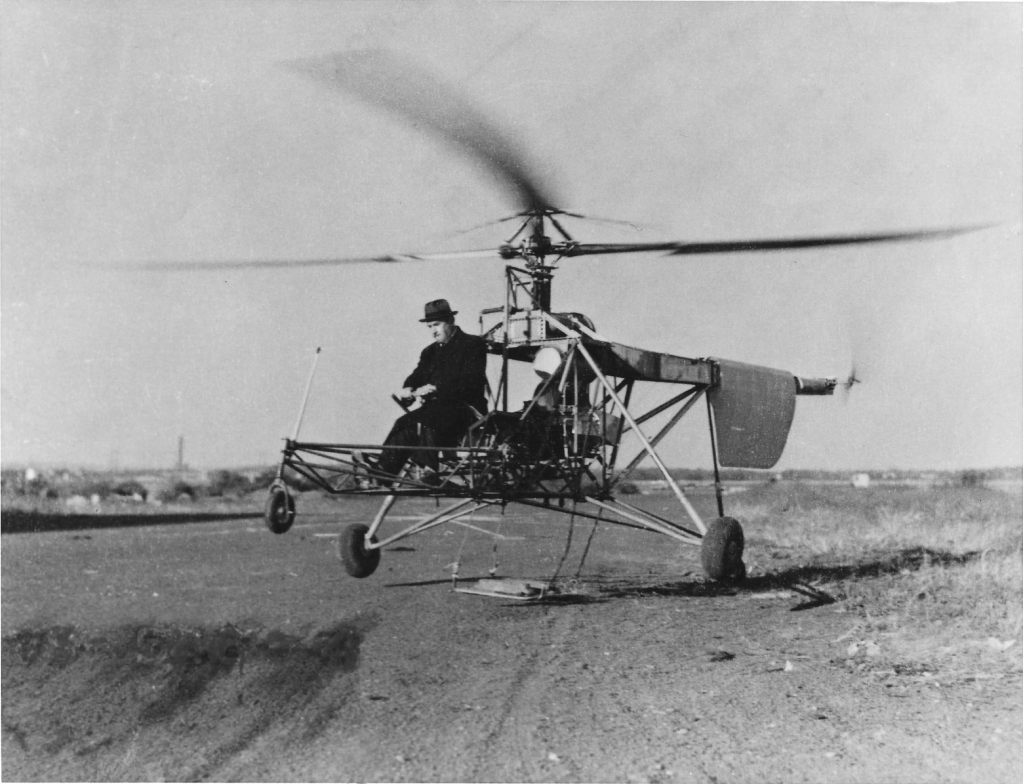
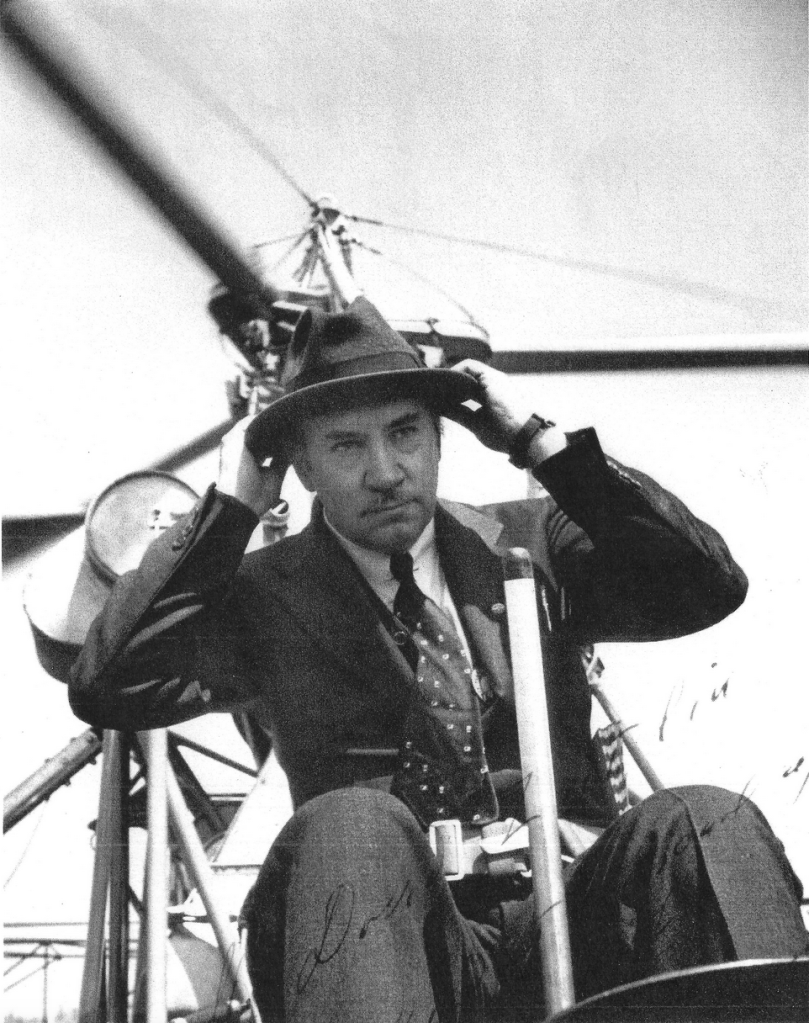
Igor I. Sikorsky made initial tethered flights with the first successful single-main-rotor helicopter, the VS-300, precursor of the R-4 two-place design procured in 1942 by the AAF. The duration of the flight was just 10 seconds but demonstrated that the helicopter could be controlled. The Vought-Sikorsky VS-300 was the first successful single main rotor, single tail rotor helicopter. On 19 December 1939, the VS-300 was rolled over by a gust of wind and damaged. It was rebuilt, however, and developed through a series of configurations. It made its first free (untethered) flight 13 May 1940. Test flights continued for several years. After 102 hours, 32 minutes, 26 seconds of flight, the VS-300 was donated to the Henry Ford Museum, Dearborn, Michigan.
U.S. Navy Atlantic Squadron Neutrality Patrol assets deployed this date: destroyers Davis (DD-395), Jouett (DD-396), Benham (DD-397) and Ellet (DD-398) operate between Halifax, Nova Scotia, and Placentia Bay, Newfoundland (Grand Banks Patrol); destroyers Hamilton (DD-141) and Leary (DD-158) operate off Georges Shoals; Goff (DD-247) and Hopkins (DD-249) and PBY-2s (VP 54), supported by minesweeper [small seaplane tender] Owl (AM-2) operate out of Narragansett Bay; destroyers Decatur (DD-341), Barry (DD-248), Reuben James (DD-245) and auxiliary [high speed transport] Manley (AG-28), with shore-based VP 52 and VP 53 (P2Y-2s) operate out of Chesapeake Bay; destroyers Babbitt (DD-128) and Claxton (DD-140) patrol the Florida Straits; heavy cruisers San Francisco (CA-38) and Tuscaloosa (CA-37), destroyers Truxtun (DD-229), Simpson (DD-221), Broome (DD-220) and Borie (DD-215) and patrol squadrons VP 33 (PBY-3s) and VP 51 (PBY-1s), supported by small seaplane tenders Lapwing (AVP-1), Thrush (AVP-3) and Gannet (AVP-8) watch the Caribbean and the Atlantic side of the Lesser Antilles; heavy cruisers Quincy (CA-39) and Vincennes (CA-44) operate off Cape Hatteras, North Carolina; held in reserve in Hampton Roads is a striking force consisting of carrier Ranger (CV-4) (her embarked air group consisting of squadrons VB 4, VF 4, VS 41 and VS 42) and battleships New York (BB-34) and Texas (BB-35). Arkansas (BB-33) and gunnery training ship (ex-battleship) Wyoming (AG-17) are carrying out training cruise for USNR midshipmen. The destroyers find the going rough on the Grand Banks; they will be replaced by 327-foot Coast Guard cutters that will be administratively assigned to Destroyer Division 18.
The Detroit Tigers’ Buck Newsom (16-11) held the New York Yankees to just six hits in crafting a 6–1 victory. Atley Donald (13-3) was unable to get through the third inning today and took the loss. Since the Red Sox lost, the Yankees’ American League lead stays at 15 games and their magic number is now three.
Outfielder Bruce Campbell topped a perfect day at bat by scoring the run that gave the hard-slugging Cleveland Indians a tight 8–7 victory over the Red Sox in today’s series opener. Campbell contributed a triple, a double and two singles as the Indians whaled three Boston pitchers for a total of eighteen hits.
The Washington Senators drubbed the cellar-dwelling St. Louis Browns today, winning by 5–1 behind the pitching of Dutch Leonard. With Bill Trotter hurling well early, the Browns had Washington shut out until the sixth. Then the Senators scored two, and three more in the 7th.
Dee Miles’s tenth-inning pinch home run with one on base and gilt-edged pitching by Nelson Potter gave Philadelphia’s Athletics a 4–2 victory over the Chicago White Sox in the opener of their series today.
Two heat waves, one supplied by the sun and the other by the equally red-hot Cincinnati Reds, but both unbearable, greeted the New York Giants at Crosley Field today. The result was a double setback for the Giants, 8–5 and 9–3. The temperature on the field reached 110 degrees. Paul Derringer won his 21st of the year in the opener, as loser Carl Hubbell was shelled for five runs in his two innings of work. The Reds, trailing 2–0 in the nightcap, scored four in the third to take a lead they never relinquished.
The Chicago Cubs swept both games of a doubleheader with the Philadelphia Phillies today, pounding out a 13–1 victory in the opener and winning, 5–2, in the nightcap. Cubs’ centerfielder Hank Leiber went 3-for-7 on the day, with a homer and five RBIs.
After running their losing streak to three games by dropping the opener of today’s twin bill to the Pittsburgh Pirates, 4–3, the Brooklyn Dodgers bagged their first victory of the current trip by taking the nightcap, 8–4. Second baseman Pete Coscarart pounded out four straight hits including a double for the Dodgers in the second game.
Silent Curt Davis hurled his twenty-first victory of the year today, defeating the Boston Bees, 6–3, but the second-place St. Louis Cardinals nevertheless lost half a game to the league-leading Reds, who won twice from the Giants. The Cards now trail by four games. The Cardinal ace right-hander was off to a wobbly start when the first three Bees up connected for singles, but he steadied as the Redbirds began piling up their half dozen runs.
In the opening moves of the Battle of Changsha, the Japanese 106th Division under Lieutenant General Ryotaro Nakai engaged with the Chinese 184th Division near Fengxin County, Jiangxi Province China. On the night of 14 September 1939, Lieutenant General Ryotaro Nakai’s 106th Division drove westward from north of Fengxin, Jiangxi, against Wan Baobang’s 184th Division of the Chinese 60th Corps. After fierce fighting, the defending forces abandoned Gao’an. The bulk of Japanese forces then moved northwest to assault Shangfu, Ganfang, and Xiushui. In coordination with Nakai, Lieutenant General Jutaro Amakasu’s 33rd Division assaulted Guan Linzheng’s 15th Army Group from the south.
The Japanese 101st Division under Lieutenant General Masatoshi Saito engaged Chinese troops near Mount Lianhua near Gao’an, Jiangxi Province, China, capturing the city shortly after.
Dow Jones Industrial Average: 153.71 (-0.39).
Born:
Cornelius “Nini” Harp, American doo-wop singer (The Marcels – “Blue Moon”), in Pittsburgh, Pennsylvania (d. 2013).
Guy Webster, American celebrity portrait photographer, album cover artist (The Byrds; The Mamas & the Papas; Taj Mahal; Rolling Stones), and educator, in Los Angeles, California (d. 2019).
Ken Rice, AFL tackle, guard, and defensive end (AFL All-Star, 1961; Buffalo Bills, Oakland Raiders, Miami Dolphins), in Attapulgus, Georgia (d. 2020).
Piet Stoffelen, Dutch ambassador and MP (PvdA), in Oldenzaal, Netherlands (d. 2011).
Naval Construction:
The Marinha do Brasil (Brazilian Navy) Carioca class minelayer Caravelas (C 5) is launched by Arsenal de Marinha do Rio de Janeiro (Ilha das Cobras, Rio de Janeiro, Brazil).
The Royal Navy Illustrious-class aircraft carrier HMS Victorious (R 38) is launched by Vickers Armstrong (Newcastle-on-Tyne, U.K.); completed at Wallsend.
The Royal Navy “K”-class destroyer HMS Kingston (F 64) is commissioned. Her first commander is Lieutenant Commander Philip Somerville, RN.


 History Diaries