Major General Nguyễn Khánh, again in control of the South Vietnamese Government, gave public thanks and commendation today to a small group of younger military commanders whose support helped crush an attempt by some senior generals to oust him. Premier Khánh returned to Saigon from his alternate military headquarters at Cap Saint‐Jacques (Vũng Tàu), 45 miles southeast of Saigon. With him was Major General Dương Văn Minh, titular head of the triumvirate that, with interruptions, has been governing South Vietnam in recent days. Ambassador Maxwell D. Taylor flew to Cap Saint‐Jacques to confer with General Khánh late in the afternoon. Mr. Taylor returned from Washington early in the morning before the forces seeking to carry out a coup d’état had been completely dispersed.
Perhaps exemplifying the effect of the upheavals in Saigon, on the effort against the Việt Cộng in the countryside, and ambitious offensive in the Mekong Delta was postponed until officers there could be sure of air support on orders from the capital. The denouement of the ill-planned coup came in the hours just before dawn, after General Khánh had spent more than three hours in conferences at Saigon Airport with military commanders who remained loyal to him. Troops and armor from the Mekong Delta, south of Saigon, occupied government buildings in the capital yesterday morning at the behest of Major General Dương Văn Đức and other generals opposed to General Khánh’s domestic policies.
After the revolt had collapsed, a beaming General Khánh said: “I am very moved by the spirit of unity shown by the armed forces and population when faced with the threat of internal strife. I commend the patriotism of all the soldiers who knew how to put the higher interests of the nation above all else.” He reaffirmed his promise to step down early in November, after two months’ caretaker rule, but instead of specifying that the next government would be a civilian one, as he had after he resumed office September 3, he said power would be restored to “a government that has the confidence of the entire people.” Once again the 37‐year‐old Premier had survived a challenge to his authority and to the United States-backed effort to stabilize the government so it can pursue the campaign against the Communist Việt Cộng.
Secretary of State Dean Rusk said today that the United States had appealed to the leaders of South Vietnam to put their differences “on ice” and get on with the job of saving their country. The Administration has made “some headway” on that point, he reported, and has found several other reasons for solace in the collapse of the weekend coup d’état against Premier Nguyễn Khánh in Saigon. Like other high officials in Washington, Mr. Rusk did not belittle the difficulties he expects in establishing a stable South Vietnamese Government. He also reiterated forcefully the Administration’s determination to “avoid the extremes” of withdrawal, “bogus neutralization” or major war in Southeast Asia.
The Secretary held a news conference this evening primarily to give his assessment of the situation in South Vietnam. He called attention to a statement he had made earlier in the day as part of a luncheon address to the Economic Club of Detroit. The course in Vietnam, the statement said, is difficult and costly in lives, money and resources. “It taxes our ingenuity and tries our patience,” he went on, “but it is the policy of wisdom and, if we stick to it, of ultimate success.”
Military officers in Vị Thanh postponed an ambitious offensive against the Việt Cộng today because of the abortive revolt in Saigon. On the other hand, they went ahead with the opening of a training school for leaders of six hamlets where pacification efforts will soon begin. The two decisions, one to delay and one to proceed, reflected the reaction in the Mekong Delta to the political upheaval in the capital.
Vị Thanh is a delta town of 20,000 people. The Communist guerrillas are especially strong in the surrounding province of Chương Thiện. A United States military advisory team of eight officers and six enlisted men had helped to plan the campaining, which was to have begun today. Lieutenant Colonel Archie E. Carpenter, the chief adviser, was informed abruptly yesterday by his Vietnamese colleagues that the operation had been put off and that battalions headed here had been called back. A few hours later the first reports of the coup d’état were received. The entire delta is under the command of Major General Dương Văn Đức, one of the rebel leaders. When his voice was heard on the radio calling for support for the new military government, the Americans who had worked closely with him were surprised. “I knew he had a lot of guts, but I never knew he was interested in politics,” one American remarked.
As conferences began last night in Saigon to decide who headed the country, the usual skirmishing with the guerrillas continued outside Vi Thanh. Throughout a sunny afteroon and sultry night, the low booming of artillery and the crackling of rifle fire could be heard. Three soldiers were wounded by the Việt Cộng during a routine supply mission. No more major engagements will be planned until the situation in Saigon clears, Colonel Nguyễn Chiêu, the province’s brigade commander, said this morning. “It is all very confusing,” he said in an interview, “but we need a guarantee from Saigon of air support for the mission we had scheduled, so we must wait.” By midmorning, reports had reached the delta that Premier Nguven Khanh was again in command. General Đức’s prospects seemed suddenly dim. “It goes to show that soldiers should stick to soldiering,” one American officer said.
Apart from the stir felt within the army, no ripple of the crisis showed yesterday along the waterways that crisscross the province. Old people, children and buffalos were submerged in the fresh but brownish water of the Cái Lớn River. After a day of visiting in town, the farmers returned to their rice paddies at dawn. Pacification, the program to secure villages threatened by the Việt Cộng, increases like the rice shoots — at a rate that is barely discernible. The program began in Chương Thiện Province last May. In 28 hamlets some degree of achievement has been recorded, but no one maintains that any hamlet has been truly “pacified.” The process is laborious and costly, and its success does not immediately rest on stability in Saigon. The crucial element is local leadership.
Cypriot President Makarios agreed today to allow a Turkish ship to dock at Famagusta with supplies of food and clothing for Turkish Cypriots in the coastal village of Kokkina, a United Nations spokesman said. The agreement followed discussions this morning and this evening between President Makarios, Galo Plaza Lasso, the special representative of the United Nations Secretary General, U Thant, and General Kodendera S. Thimayya, commander of the United Nations force. Turkey announced last Thursday that she would send food to beleaguered Turkish Cypriots under armed convoy, breaking a Greek Cypriot economic blockade. Turkey shelved the armed convoy plan indefinitely, The Associated Press reported from Ankara.
Yesterday the United Nations airlifted two tons of food and fuel to the Turkish Cypriots in Kokkina. A United Nations spokesman said that President Makarios would like the shipment from Turkey to come as soon as possible and he promised to deal with it in a “privileged way” so that it would reach Kokkina without delay and without undue interference. General Thimayya also saw the Turkish Cypriot Vice President, Dr. Fazil Kutchuk. The United Nations spokesman said that the Turkish chargé d’affaires in Nicosia, on instructions from Ankara, had informed General Thimayya that his government had agreed to send the ship to Famagusta on the condition that the United Nation supervised the unloading of the vessel and transported the cargo to Kokkina without delay.
The spokesman added that the Turkish chargée d’affaires had said that the Turkish Government would like to send in a small emergency shipment for Kokkina immediately by way of the port of Xeros in northwest Cyprus. The spokesman said that the United Nations was in no position to consider this last proposal, in view of the potential difficulties involved and because the Cyprus Government had assumed the responsibility of sending supplies adequate for the next few days — until the arrival of the Turkish ship at Famagusta.
Turkey shelved indefinitely today her plan to ship supplies under armed escort to the blockaded Turkish Cypriote community of Kokkina. Premier İsmet İnönü’s Cabinet announced that the convoy relief move, scheduled for tomorrow, was postponed at the request of the United Nations Secretary General, U Thant. The decision averted a threat of a battle at Kokkina between the Turks and forces of President Makarios’s Greek Cypriot regime. Villagers and a Turkish Cypriote garrison there have been sealed off for six weeks. In announcing the plan last Thursday to send in supplies under guard of a destroyer and warplanes, Mr. İnönü said that any interference during the debarkation would be considered an attack and would be answered “in the same way.” The Makarios Government responsed that the convoy movement would be regarded as an aggressive act and resisted.
Turkish army, navy and air force units were reported placed on a new alert today following a meeting of Cevdet Sunay, the Chief of Staff, with the Cabinet. The reason for the reported alert was not immediately clear. There seemed to have been a reduction of tension this weekend in the Cyprus crisis.
Saudi Arabia and the United Arab Republic announced agreement tonight for “full cooperation” on handling their military disputes over Yemen. Prince Faisal, the Saudi Premier, said earlier at a news conference, shortly before leaving, for home, that there was a “complete understanding” with President Gamal Abdel Nasser on the issue. But he added that for the time being the agreement did not involve Saudi diplomatic recognition of the republican Government of Yemen. A joint communiqué issued this evening said the Egyptians and the Saudi Arabians would “undertake necessary contacts with parties involved for peaceful settlement” of the two‐year‐old civil war in Yemen between the republican Government and royalists seeking to regain power.
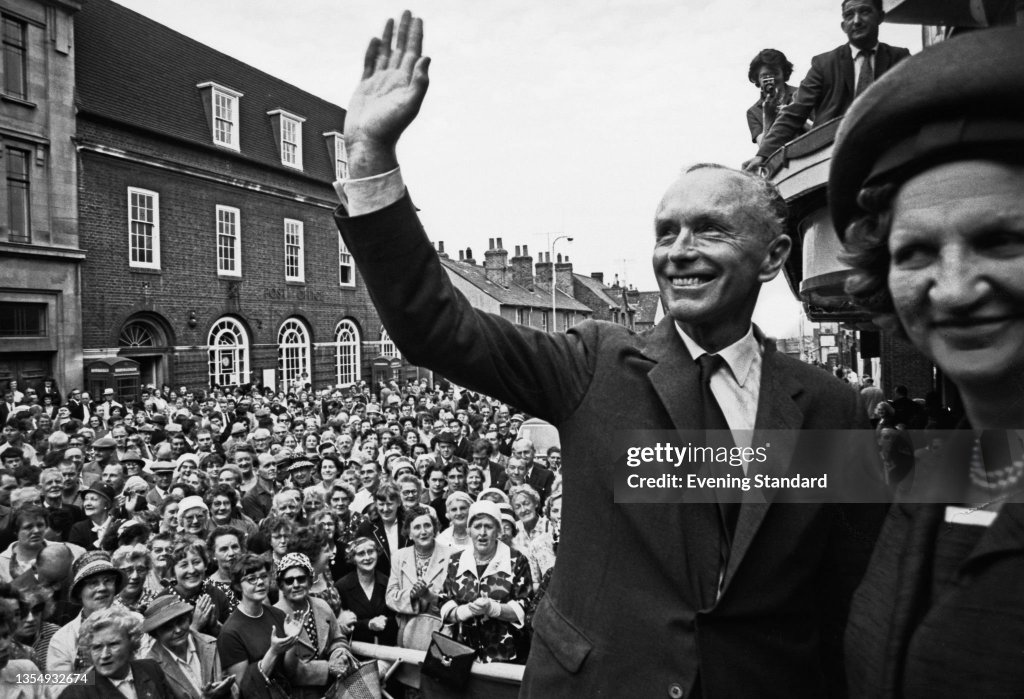
Sir Alec Douglas‐Home flew to Balmoral Castle in Scotland tonight for the traditional consultations with the monarch that precede the calling of British general election. Because of the lateness of the Prime Minister’s arrival at the huge white granite palace on the Dee River near Aberdeenshire, the formal audience between Sir Alec and Queen Elizabeth II will be held tomorrow morning. On his return to London tomorrow afternoon, Sir Alec will announce from 10 Downing Street, his official residence and office, that Parliament will be dissolved by royal proclamation on September 25 and that the election will be held Thursday, October 15. The ceremony of Parliament’s dissolution will be dispensed with, mainly because extensive repairs are being made to the Palace of Westminster, which houses the Lords and the Commons. The formal three‐week election campaign will begin with the dissolution. In fact, the campaign has been going on since Sir Alec emerged as Prime Minister from the bitter struggle for the Conservative party leadership last October.
Sir Alec’s confidence has been buttressed by the results of the latest opinion polls, two of which show the Conservatives leading Labor. The third showed Labor’s lead narrowed to 5 per cent, which the Conservatives believe can easily be overtaken. Campaigning before his flight to Balmoral, the Prime Minister varied his attack today at each of the eight towns that he visited in Kent, just outside London. He spoke once from the top of a haycart, another time from a Conservative club balcony and later in front of a theater. Sir Alec took up Labor’s argument that the Conservatives were primarily interested in conserving privileges and making profits. “The industry that makes a profit is the best friend of the wage earner,” he said, “Profit has a vital role to play. I think the Socialists have been wrong about capitalism. I believe every man’s ambition is himself to be a capitalist.”
The third session of the Vatican Council was opened by Pope Paul VI, who reaffirmed the doctrine of papal supremacy in his speech before the 2,500 council delegates, but added that it didn’t limit the authority of bishops. “As successors of Peter and possessors of full powers over the entire church,” the Pope said, “we have the duty of heading the body of the episcopate. But our position in no way defrauds you your authority.” The Pope broke with tradition and invited women to be present at the Council in a role as observers. “We are delighted to welcome among the auditors our beloved daughters in Christ,” he said, “the first women in history to participate in a conciliar assembly.”
The Daily Herald of London published its final issue.
Senate liberals of both parties neared final agreement tonight on a compromise resolution that could break the stalemate over apportionment of state legislatures. If the agreement is nailed down, the Administration is believed to have a chance of narrowly defeating a proposal by the Republican leader, Everett McKinley Dirksen, to postpone until January 1, 1966, further compliance with the Supreme Court ruling that districts of both houses in state legislatures must be substantially equal in population. Senator Dirksen’s proposal, which he has made a rider to the foreign aid bill, is the pending business before the Senate. A rider is an amendment that is not germane. At 2:20 o’clock tomorrow afternoon the Senate is scheduled to vote on a substitute for the Dirksen rider sponsored by Senators Hubert H. Humphrey and Eugene J. McCarthy, both Democrats of Minnesota, and Senator Jacob K. Javits of New York, a Republican.
The Dirksen amendment directs all Federal courts to stay all apportionment proceedings until January 1, 1966. A small group of liberals in both parties has resolutely fought the amendment on the ground that it suspends for that period the 14th Amendment’s equal protection clause as applied to equal voting rights. In an effort to meet that criticism, the Javits‐McCarthy‐Humphrey substitute does not direct a stay but expresses the “sense of Congress” that in any proceeding the courts should give the states “adequate time” to conform to the requirements of the Constitution on apportionment of state legislatures. The substitute also states it is the sense of Congress that adequate time be given for consideration by the states “of any proposed amendment to the Constitution” relating to apportionment. This is in anticipation of a possible constitutional amendment permitting apportionment of one house on factors other than population. The Administration threw its support behind the substitute in the hope of sidetracking the restrictive Dirksen amendment.
Over the last weekend, however, the liberals split over the substitute. A few of them found it acceptable, but most of them said they could not vote for it. Their argument was that it strongly implied that Congress would submit a constitutional amendment to the states. This virtual pledge, they argued, would provide a psychological block both to the lower courts about to order redistricting and to those state legislatures in the process of redistricting on their own initiative. Although the opposing liberals probably numbered no more than ten, there was little hope of passing the substitute without their votes, since Mr. Dirksen could count on possibly 27 Republicans and 17 Southern Democrats against it.
Shortly before 11 Saturday night, a little girl licking an ice cream cone appeared on millions of television screens all over America. While the little girl concentrated on her ice cream, a woman’s voice, tender and protective, told her that people used to explode atomic bombs in the air, and that the radioactive fallout made children die. The voice then told of the treaty preventing all but underground nuclear tests, and how a man who wants to be President of the United States voted against it. “His name is Barry Goldwater,” she said. “So if he’s elected, they might start testing all over again.” A crescendo of Geiger‐counter clicks almost drowned out the last words; then came the male announcer’s tag‐line: “Vote for President Johnson on November third. The stakes are too high for you to stay home.”
The war of political television commercials has begun, with the first Democratic spot in the same vein last Monday, the second Saturday night. The Republican National Committee began its TV campaign today. All indications are that the Democrats are first trying to scare the voters with the idea that Senator Goldwater, the Republican nominee, opposed the nuclear treaty, and then to impress them with the Democratic record; and that the Republican will first try to soothe the mothers about Mr. Goldwater and then impress them with the Republican record.
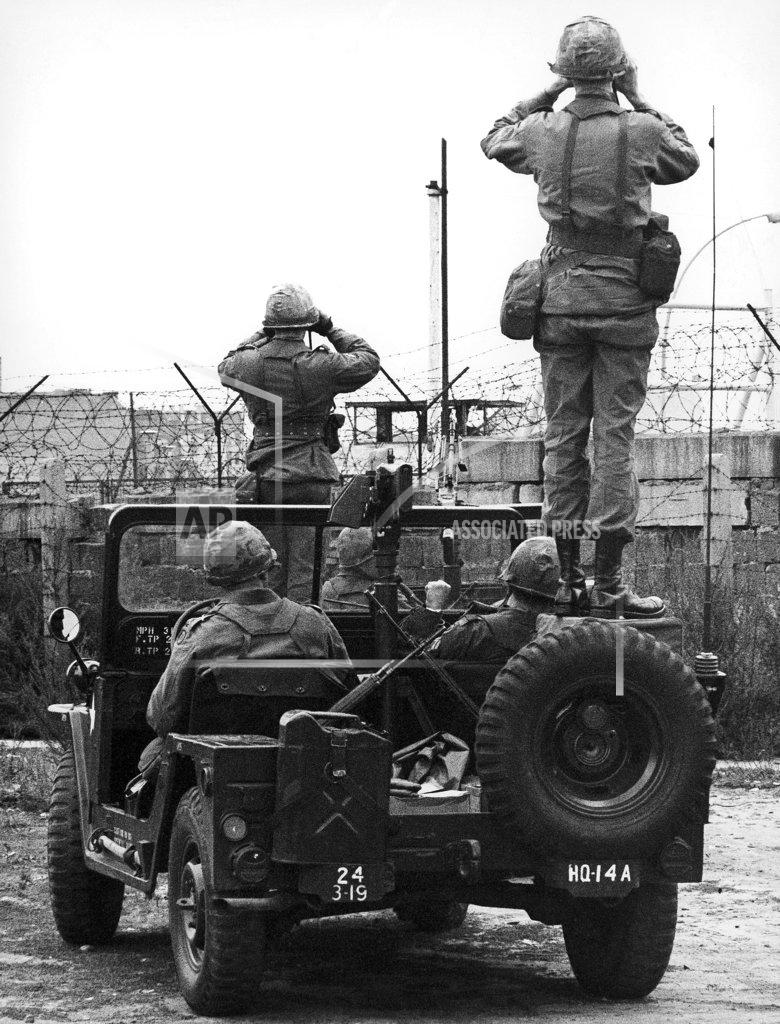
Today the Republicans led off with a five‐minute TV spot seen in 187 cities. The theme was that their party was “the party of peace through strength.” An announcer’s voice mentioned “failures at the wall of shame in Berlin,” and failures at the Bay of Pigs in Cuba and in Vietnam. Senator Goldwater then came on to declare that “Communism is the only great threat to the peace.” “Some distort this proper concern to make it appear that we are preoccupied with war. There is no greater political lie,” he said. “I am trying to carry to the American people this plain message. This entire nation and the entire world risk war in our time unless free men remain strong enough to keep the peace.”
The peace issue was explored in detail tonight by Senator Hubert H. Humphrey, the Democratic candidate for Vice President. President Johnson’s running mate charged at a Democratic rally in Kansas City that Senator Barry Goldwater, the Republican Presidential candidate, would “destroy nearly two decades of dynamic partnership between the two great parties” on foreign policy. After listing a series of foreign policy accomplishments, which Mr. Humphrey contended Mr. Goldwater would nullify, the Democratic candidate declared: “It is a depressing thought, but in the weeks ahead we must remember that the temporary spokesman for the Republican party could become the President of the United States. He could be in a position to reverse the global gains of Harry S. Truman, John F. Kennedy and Lyndon B. Johnson. He could have his finger —or that of some field commander — on the nuclear trigger.”
The California Poll run by Marvin Field showed today that President Johnson was ahead of Senator Goldwater 62 per cent to 33 per cent in statewide voter preference for the Presidency. Mr. Field said 1,209 potential voters were interviewed as of the first week in September. Five per cent questioned were undecided, he reported. “Mr. Johnson’s present lead is unprecedented in recent California history,” Mr. Field said.
The poll‐taker Louis Harris reported today that voters preferred President Johnson’s handling of foreign affairs by a wide margin over Senator Barry Goldwater’s positions on the same issues. Mr. Harris said a survey showed that of all the issues, United States policy toward Cuba and Vietnam appeared to be the most vulnerable to Republican attacks. In a copyright article in today’s Washington Post, Mr. Harris said Mr. Johnson held a commanding lead over Mr. Goldwater on most other issues about which voters were questioned. For example, he said, Mr. Johnson was given a 75‐to‐25‐percent edge as the candidate more likely to keep America out of war.
Senator J. W. Fulbright said today that the election of the Republican Presidential nominee, Senator Barry Goldwater, would mean “four years of rising animosity and increased violence between Blacks and whites.” The Arkansas Democrat, who voted against the Administration’s civil rights bill, told the Senate that Mr. Goldwater had only one claim on Southern voters — that he also opposed the measure. “It is, of and by itself, a very poor claim indeed,” Mr. Fulbright said. “Its appeal is to spite and its promise is futility.” He said he had opposed the bill because “I do not think it will make a decisive contribution to the solution of race problems in America.” However, he said Democratic programs, which Mr. Goldwater wants to end, have “brought new hope, new growth and new opportunity to the South.”
Ronald Reagan, film star, and M. Philip Davis, Los Angeles lawyer, were named co‐chairmen of California Citizens for Goldwater‐Miller today. Both men have long been associated with the Goldwater cause in California.
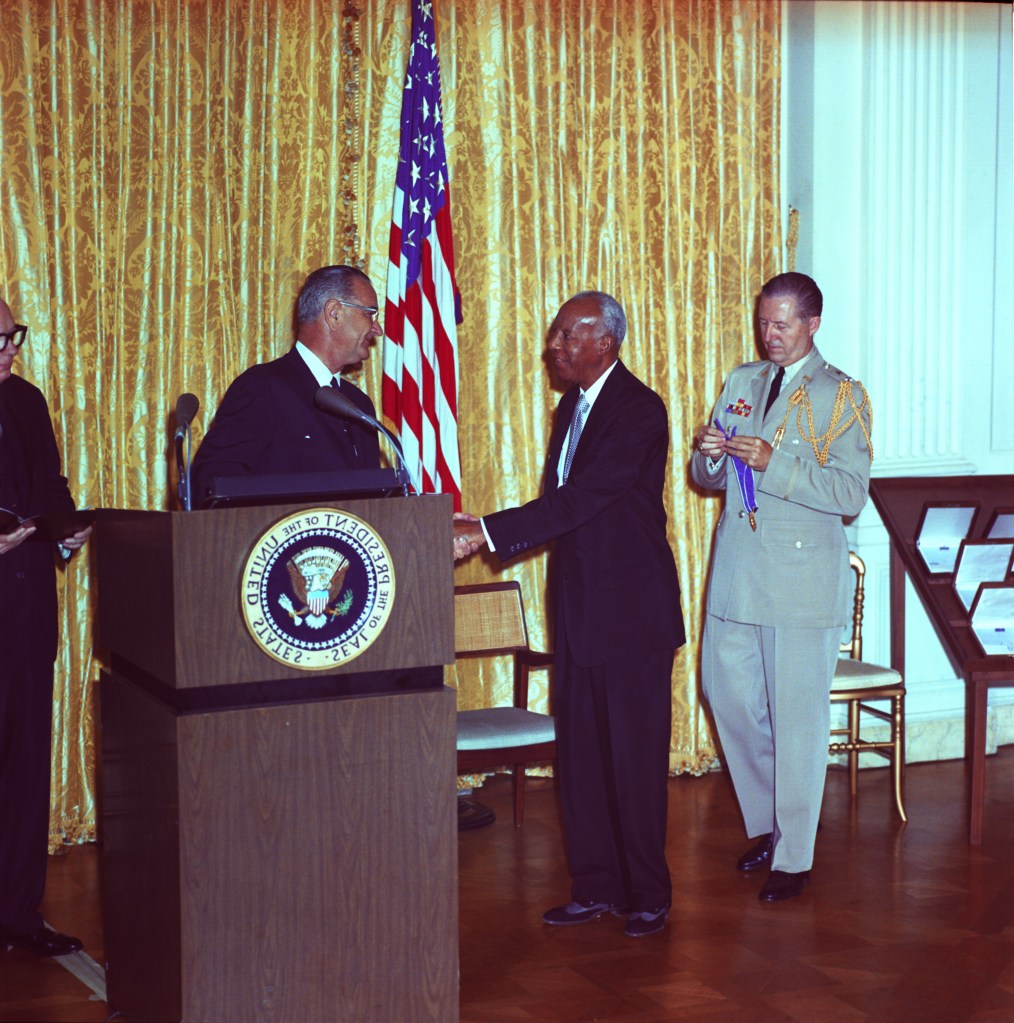
President Lyndon Johnson presents journalist Walter Lippmann with the Presidential Medal of Freedom. Walt Disney and 28 others were also awarded the Presidential Medal of Freedom at White House by President Johnson. He said their achievements “have made freedom stronger for all us.” In a noon ceremony in the East Room of the White House the honored men and women stepped forward to receive the gold decoration and a handshake from the President to the applause of top Government officials. There was extra applause for the journalist Lippmann; the poet and historian Carl Sandburg, and for the three recipients whose medals were accompanied by citations of “special distinction” for service in the Government. They were: Former Secretary of State Dean Acheson, retiring Representative Carl Vinson, Democrat of Georgia, and Edward R. Murrow, former television commentator and director of the United States Information Agency.
President Johnson presented three Harmon International Aviation Trophies today in a brief ceremony in the Rose Garden of the White House. The recipients were Major LeRoy Gordon Cooper, the first astronaut to receive a Harmon award; Mrs. Betty Miller of Santa Monica, California, the first woman to fly alone across the Pacific from California to Australia; and Lieutenant Colonel Fitzhugh L. Fulton Jr., pilot of a Strategic Air Command B‐58 jet bomber that established a world altitude record September 14, 1962.
“Voyage to the Bottom of the Sea,” an American science fiction television series based on a successful 1961 film of the same name, premiered on the ABC network at 7:30 in the evening and began a four-season run. Starring Richard Basehart and David Hedison, the show tracked the adventures of the nuclear submarine Seaview in the then-future year pf 1973. Its last original episode would be telecast on March 31, 1968.
Rod Laver defeated Ken Rosewall to win the London Indoor Professional Tennis Championship at Wembley Arena, the first of his four successive wins in the tournament.
A freakish injury has probably ended the playing career of Bob St. Clair of the San Francisco 49ers, a 12‐year star and one of the top tackles of the National Football League. The 6‐foot‐9‐inch, 265‐pounder pulled fibers loose from the Achilles tendon on his right heel while running to catch a punt in the pregame drill before yesterday’s San Francisco‐Detroit game.
Luis Aparicio hit a sacrifice fly with the bases filled in the ninth inning tonight to score Bob Saverine and give the Baltimore Orioles a 4–3 victory over the Minnesota Twins. The triumph increased the Orioles’ league lead to 1½ games over the Yankees, who were idle. Johnny Orsino started the rally when he led off with a single and Saverine ran for him. Jerry Adair sacrificed Saverine to second and a pinch‐hitter, Lennie Green, was intentionally walked to set up a possible double play. Charlie Lau grounded to Johnny Goryl, who bobbled the ball, filling the bases and setting the stage for Aparicio’s winning fly. The Orioles had tied the score at 3–3 in the eighth on an infield single by Boog Powell and a throwing error by Bob Allison.
The Kansas City Athletics frittered away a four‐run lead, then rallied with two runs in the ninth inning tonight for a 7–6 victory over the Boston Red Sox. John Wyatt gained his ninth victory after three near‐perfect innings of relief. At the same time, he tied the 24‐hour‐old American League record for most pitching appearances in a season at 73. Dick Radatz of Boston set the mark yesterday. Ninth‐inning triples by Dick Green and Bill Bryan and a double by Ed Charles gave Wyatt the victory. The Athletics pounded four Boston pitchers for 15 hits, but committed three errors, two of which let in unearned runs.
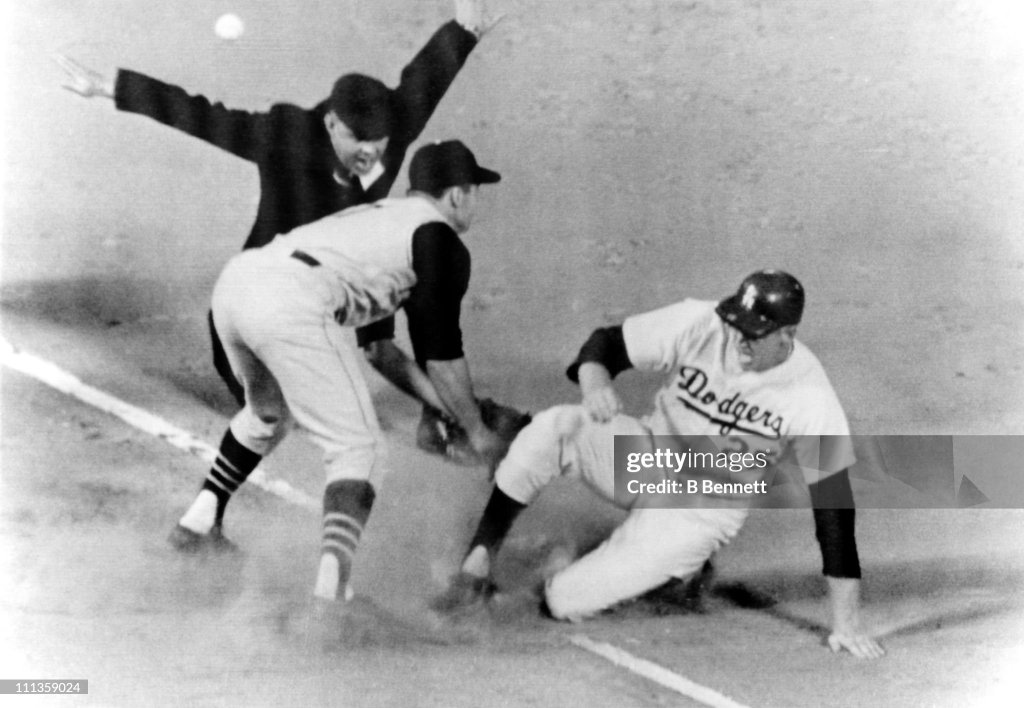
Dick Schofield hit a bases‐filled double in the fourth inning tonight to drive in the key runs in a 7–2 victory by the Pittsburgh Pirates over the Los Angeles Dodgers. Bob Veale went the distance on the mound for the Pirates giving only five hits and scoring his 17th victory against 10 defeats. The only time he was in trouble was in the second inning when the Dodgers scored their runs.
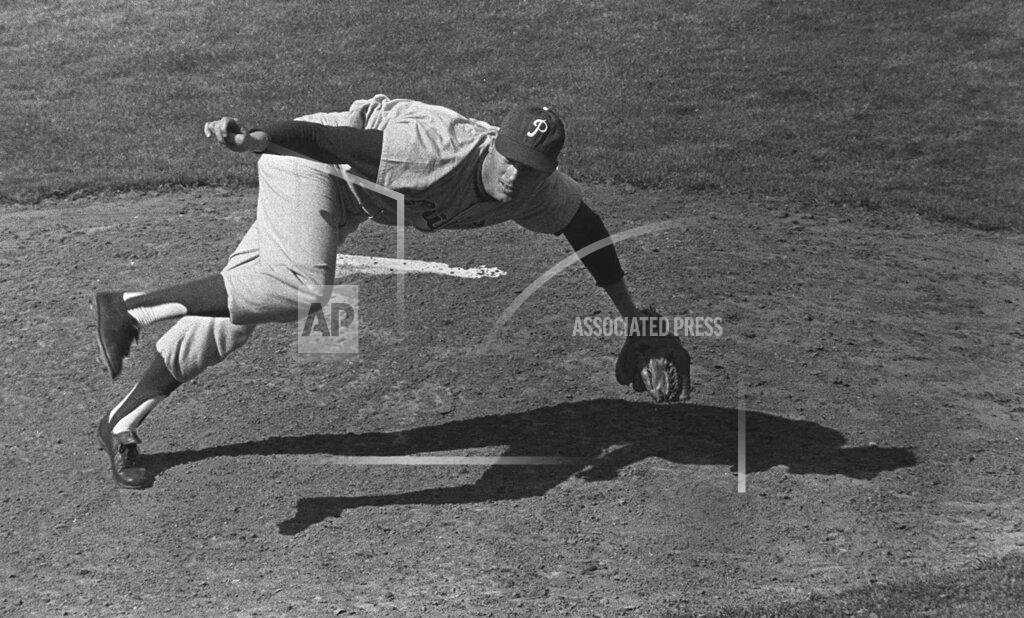
Chris Short, a left‐hander hurled a four-hitter against the Houston Colts tonight, enabling the league‐leading Philadelphia Phillies to take a 4–1 victory and increase their lead to 6½ games over second‐place St. Louis. Short, now 17–7, lost his chance for his fifth shutout in the eighth when the Colts pushed across their run. Bob Lillis led off with a double, moved to second on an infield out and scored on pinch‐hitter Joe Gaines’s ground out. Philadelphia staked Short to what proved to be the winning margin in the first inning off the Colt starter, Bob Bruce. John Callison hit his 27th home run of the season with Richie Allen on base to put the Phillies ahead, 2–0. The Phillies added single runs off Bruce in the fourth and fifth innings to make Short’s task easier. Tony Gonzalez singled home Ruben Amaro in the fourth and Clay Dalrymple’s sacrifice fly scored Callison in the fifth.
Dow Jones Industrial Average: 866.24 (-0.89).
Born:
Faith Ford [as Alexis Ford], American TV actress and comedian (“Another World”, ‘Corky’- “Murphy Brown”) in Alexandria, Louisiana.
Kurt Gouveia, NFL middle linebacker (NFL Champions, Super Bowl 22 and 26-Redskins, 1987, 1991; Washington Redskins, Philadelphia Eagles, San Diego Chargers), in Honolulu, Hawaii.
Alex Gordon, NFL linebacker (New York Jets, Los Angeles Raiders, Cincinnati Bengals), in Jacksonville, Florida.
Chris Gambol, NFL guard and takle (Indianapolis Colts, San Diego Chargers, Detroit Lions, New England Patriots), in Pittsburgh, Pennsylvania.
Jeff Parks, NFL tight end (Houston Oilers, Tampa Bay Buccaneers), in Columbia, South Carolina.
Dennis Borcky, NFL nose tackle (New York Giants), in Chester, Pennsylvania.
Todd Flichel, Canadian NHL defenseman (Winnipeg Jets), in Osgoode, Ontario, Canada.
Died:
Mary Howe, 82, American composer and pianist (“Sand”).


 History Diaries