A Buddhist revolution is taking place in South Vietnam. Its lines and goals are still far from clear even to many of the Buddhists themselves, but seasoned observers consider it the most significant and far‐reaching trend in present‐day Southeast Asia. Its implications stretch far beyond the frontiers of this country. They extend not only to nations nearby but also, because of Buddhism’s unclear relation to the ideology and power of Communism, the Vietnamese; experience could alter the entire power structure the United States has been fighting to maintain in the southwestern Pacific. The Buddhists seem to be gambling that they can produce a new basis for stability. So far what has actually happened is that the American-supported Premier of South Vietnam, Major General Nguyễn Khánh, has accepted in general and in detail an immediate Buddhist formula for reforming his Government along new civilian lines. This is the outcome, now apparent, of this country’s political crisis last month.
In a letter to the ICC, the South Vietnamese Government says it is prepared to disarm and end all U.S. support as soon as North Vietnam halts the activities of the Việt Cộng.
In an interview, Senator Humphrey says that the United States must remain in Vietnam but make it clear that the primary responsibility for achieving peace rests with the Vietnamese. “We should not attempt to take over the war from the Vietnamese,” he said. “The present struggle is a conflict between Vietnamese of various political beliefs; no lasting solution can be imposed by foreign armies. We must remember that the struggle in Vietnam is as much a political and social struggle as a military one. What has been needed is a government in which the people of Vietnam nave a stake.” Although remaining in South Vietnam, the United States must realize that in the long run there is no real defense against Communism in Southeast Asia without an Asian coalition of powers “with India as its main force.”
Senator Hubert H. Humphrey, the Democratic Vice‐Presidential candidate, believes that the United States policy toward Communism “should be increasingly to encourage greater autonomy and greater freedom of action and choice” by individual Communist states. The Minnesota Senator, who is expected to play a key role in foreign affairs in the Johnson Administration if the Democratic ticket is elected, contends that the United States must embark upon imaginative policies to take advantage of the developing “fragmentation” of the Communist world. These policies, he said, should be a “skillful use of trade programs and cultural exchanges as both President Johnson and President Kennedy have done.” “If Rumania or Poland wishes to kick up its heels at the Soviet Union, we should help to make it possible for them to get along without Soviet blessings. We should do nothing to help drive Communist countries together again,” he said.
Presidential candidate Goldwater says that ‘if there is a solution brewing’ for Vietnam, this is the time to inform the American people.
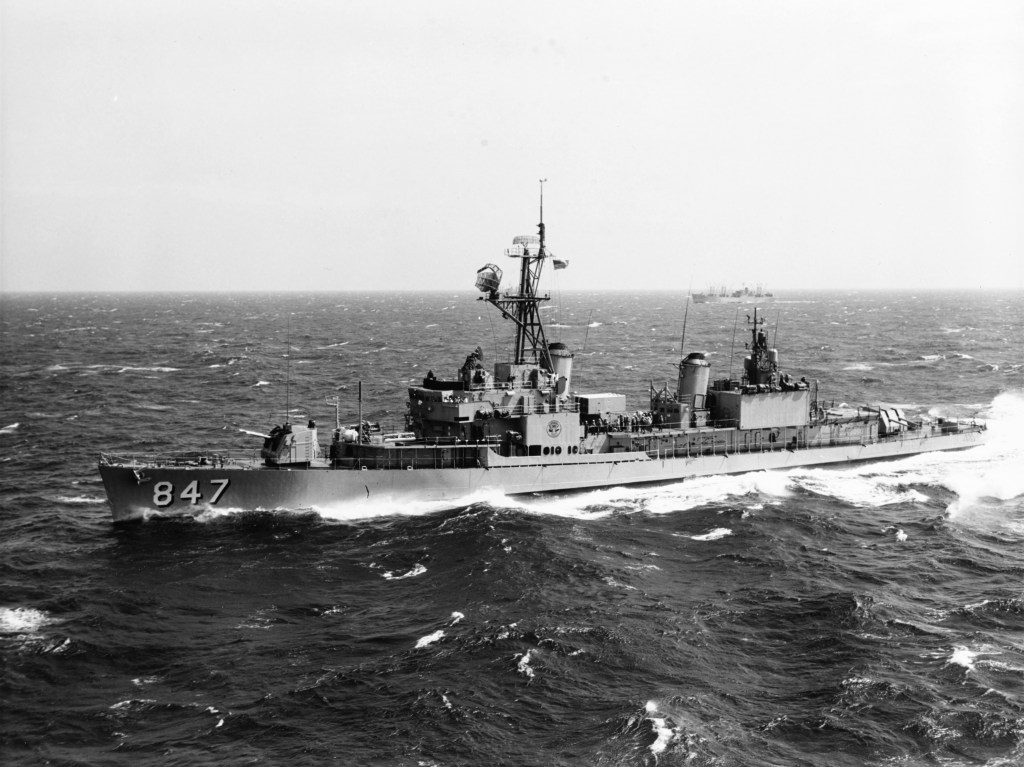
The U.S. Navy destroyers USS Edwards and USS Morton resume the DeSoto patrols in the Gulf of Tonkin (but are ordered to observe the 12-mile limit).
President Makarios has agreed to admit food shipments for the beleaguered Kokkina region, the Turkish Cypriot stronghold on the island’s northwest coast. The agreement was announced today by General Kodendera S. Thimayya, commander of the United Nations force striving to prevent clashes between the Greek and Turkish Cypriot communities. General Thimayya said the Makarios Government, which is dominated by the Greek majority, had even offered to pay for the food if necessary. Before disclosing the accord, General Thimayya toured the Kokkina region to gauge the effects of the Greek Cypriot blockade and the influx of refugees. He said the Turkish Cypriots’ living conditions were “subhuman.” “Food has got to come in or they will starve,” he said.
According to the general, Archbishop Makarios has eased his earlier stand against a shipment of supplies from Turkey. The Turkish Government may send food if it wishes, the President said, but the food must move through ports — apparently under Greek Cypriot control — other than Kokkina. Last night President Makarios warned of “serious consequences” if the Turks tried to run the blockade. He said their ships would be halted. Turkey has announced a plan to ship food on Tuesday. Last month President Makarios agreed to ease restrictions on the Turkish Cypriot communities, but Turkish Cypriot leaders later complained that the economic blockade was continuing “in full force.”
On his visit to Kokkina today, General Thimayya was accompanied by representatives of the International Red Cross. He said conditions were worse than officials of the United Nations had realized, and he voiced fear that an epidemic might break out among the Turkish Cypriot refugees, many of whom live in caves. “I was told that they only have food left for four days,” he said. In the evening, after sending a report to the United Nations Secretary General, U Thant, General Thimayya issued a statement on his tour. “First of all,” he said, “I examined the difference in figures given by the local inhabitants, and more or less accepted by the U.N. — which give a total of 1,400 inhabitants in the village — and those given by the government. The government puts the population figure at 850. This discrepancy accounts for the low caloric value of the food intake of the population.”
General Thimayya found about 600 refugees at Kokkina, “many in caves in subnormal conditions.” He said he was afraid an epidemic might break out. The medical situation was termed fairly satisfactory, but the condition of the refugees had deteriorated since General Thimayya’s last visit, soon after Turkish bombings last month. “No cases of starvation were seen,” he said. “However, if the present system of supply continues, the situation at Kokkina could rapidly deteriorate.” General Thimayya plans to see President Makarios again Monday “to arrange details.”
The Christian Democrats opened a party congress today with a forceful rejection of Communist overtures for collaboration in Italy’s political life. Mariano Rumor, political secretary of the party, gave a four‐hour keynote address calling for a continued all‐out fight against Communism. Mr. Rumor dismissed Communist suggestions that the Italian center‐left Government might be transformed into a more “advanced” cooperation of Christian Democrats, Socialists land Communists. The Christian Democratic secretary asserted that Italian Communism had remained a fundamentally unchanged totalitarian ideology.
The Foreign Ministry disclosed tonight that a member of the West German Embassy staff in Moscow was dangerously ill after being sprayed with mustard gas during a visit to a Russian monastery outside the Soviet capital. A protest has been lodged with the Soviet Government by the Foreign Minister, Dr. Gerhard Schröder, a ministry spokesman announced. The spokesman said the injured man, Horst Schwirkmann, an embassy technician, was in critical condition in a West German hospital. He was flown home from Moscow last Wednesday after embassy officials haggled for two days with Soviet authorities over a plane booking. The ministry spokesman said that Mr. Schwirkmann was splashed or squirted in the left thigh wih a liquid that proved to be mustard gas last Sunday at Zagorsk Monastery, 40 miles outside Moscow.
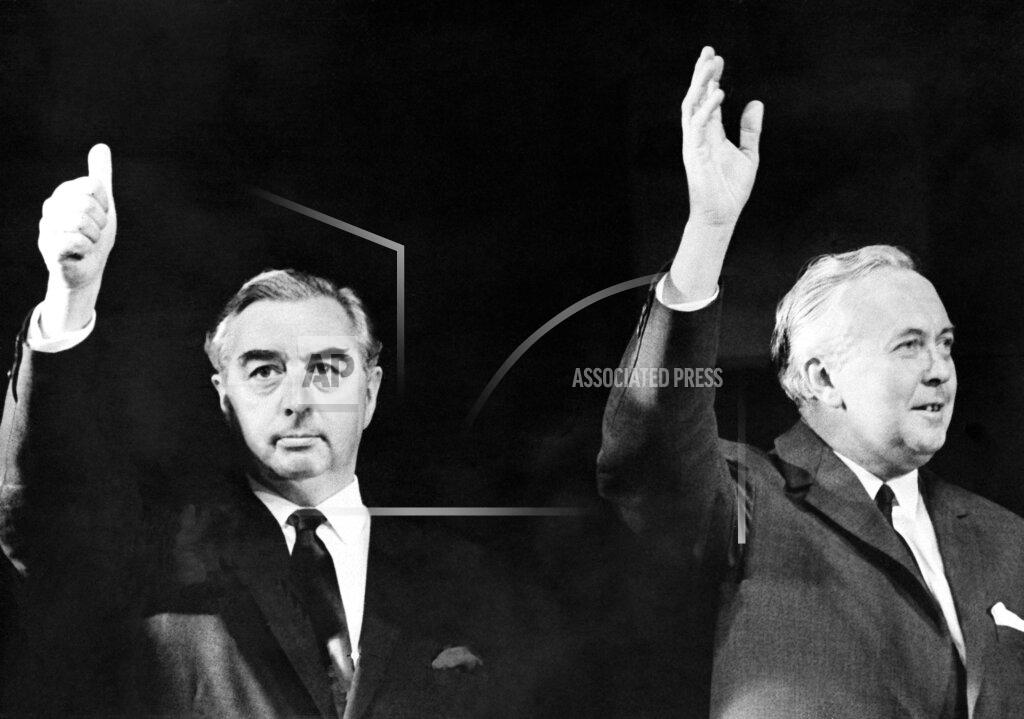
The Prime Minister, Sir Alec Douglas‐Home, told the British people today that a Labor victory in next month’s general election would put the economic and military security of the country into jeopardy. Sir Alec, who is expected within a few days to announce October 15 as the election date, made a hard‐hitting attack on Labor at a Conservative party rally here. He described Labor s election manifesto published yesterday as a “menu without prices” because, he said, the Opposition had failed to mention where the money would come from to finance the vast programs of social renovation promised in the manifesto.
A few miles across London, Harold Wilson, the Laborite leader, addressed an enthusiastic mass meeting of the party faithful, visibly and cheerfully excited at the prospect of taking over the leadership of Britain in little more than a month. Mr. Wilson assailed the Conservatives as the party of privilege, as a selfish class‐conscious lot determined to conserve their privileges. The themes were as expected, and they were repeated up and down the land at lesser rallies by lesser political lights.
Following the controversy created by the “Daisy Ad” that the Lyndon Johnson campaign had aired on national television five days earlier, Chairman John M. Bailey of the Democratic National Committee and Chairman Dean Burch of the Republican National Committee signed a fairness pledge agreeing not to run any more negative advertisements for the remainder of the 1964 presidential campaign.
When Senator Barry Goldwater brings his Republican Presidential campaign to Louisiana next week, he will be introduced by the Democratic Lieutenant Governor. The endorsement of the Arizona conservative by C. C. Aycock and the official explanation for his action underscore the difficulties confronting President Johnson here and in some other Deep South states. Louisiana, which broke tradition in 1956 by backing the Republican ticket headed by former President Dwight D. Eisenhower, now seems likely to do so again unless Democrats unite behind Mr. Johnson. Although this state adjoins the President’s native Texas, most of those Johnson supporters interviewed on a swing from Shreveport to New Orleans conceded he was trailing Mr. Goldwater.
Instead of the Democratic unity the President must have to reverse the trend, the picture is one of widespread defections or expressions of neutrality by officials in the face of anti-Johnson sentiment aroused by the Civil Rights Act of 1964 and other developments in this field. In announcing his switch to to the Republican’s camp, the Lieutenant Governor said this of the Civil Rights Act: “We in the South know it as a grim reaper that must eventually destroy all rights — state and individual as well.” So strong is the Goldwater tide running that Dixiecrats who had placed slates of unpledged or third‐party Presidential electors on the Louisiana ballot in three of the last four elections found little support for such a move this time.
Senator Hubert H. Humphrey accused Senator Barry Goldwater of “fiscal irresponsibility” today, saying the Republican Presidential candidate’s proposed tax cut and spending pledges would “wreck the economy and set off an orgy of inflation.” Pointing to Mr. Goldwater’s plan for a 25 per cent tax cut and Republican platform pledges to increase defense and other expenditures, the Democratic Vice-Presidential candidate declared that Mr. Goldwater’s program, if implemented, would cause “the biggest federal deficit in peacetime history.” Before a crowd of about 1,000 persons at an airport rally in Rapid City, S. D., this morning, Mr. Humphrey characterized as “contradictions” Senator Goldwater’s vote early this year against the Administration’s tax‐cut bill and Mr. Goldwater’s own recently announced tax‐cut plan. “The lesson of this is clear,” Mr. Humphrey continued. “National budgets and fiscal policy cannot be formulated in the chaos of the Cow Palace [site of the Republican National Convention in San Francisco] or in the cabin of Senator Goldwater’s jet plane.”
How, Mr. Humphrey asked, will Senator Goldwater perform his promises to “increase spending, reduce revenues and balance the budget at the same time”? The spending promises, Mr. Humphrey said, included development of a new manned bomber at $10 billion, $7 billion more annually for military research and development, an antiballistics missile system costing at least $20 billion and “over 1 billion for the Central Arizona Project in his home state.” “This program at a rockbottom minimum would increase Federal spending over $5 billion a year, or $25 billion in the next five years,” Mr. Humphrey declared. “By pure coincidence, this is the annual amount by which the Republican platform pledges to reduce Federal spending.”
Then, reviewing what he interpreted as key facets of the Goldwater tax‐cut plan, Mr. Humphrey said that the Federal deficit in 1966 would be $16 billion to $17 billion if Mr. Goldwater were elected and carried out his promises. In essence, the Democrat said, “no matter how thick or thin the Senator slices his fiscal and tax policy, it is still baloney.” Mr. Humphrey also said that “big business leaders have left Barry Goldwater” because, as he put it, “they can’t bear the idea of having in the White House someone so fiscally irresponsible as the temporary spokesman for the Republican party.”
Senator Barry Goldwater took a breather from campaigning today, apparently aglow with optimism caused by the large and fervent crowds that greeted him in the West this week. However, in a written statement, the Republican Presidential candidate renewed his charge that the Democratic Administration may be planning to stage or “manipulate” a foreign policy crisis to influence the election on November 3. Mr. Goldwater specifically mentioned the war in South Vietnam, saying that “if there is a solution brewing there, now is the time to tell the American people about it.” This is not the time, he declared, to be “waiting for a politically opportune moment” to disclose any new American plans in Southeast Asia. The Senator returned to Washington late last night from a campaign trip that had taken him from Lockport, New York a week ago today to California, Oregon, Washington, Idaho. Montana, Minnesota and Illinois.
Mr. Goldwater was encouraged by the first round of the campaign. He told his last audience, at Oregon, Illinois, last night, that he was looking forward to “a real big boo‐boo on November 3” by the pollsters. Before the campaign swing began, the Senator and his aides had, to the surprise of some observers, conceded that their own polls “pretty much”, agreed with those public polls showing him far behind President Johnson. Optimism in the Goldwater camp seemed to blossom, however, in the blare of bands, the waving of fields of campaign posters and the whistling, cheering crowds. During his daytime appearances, Mr. Goldwater, for some reason, attracted little attention along the sidewalks lining his route. His daytime crowds were neither especially large nor enthusiastic. But each evening, at his major appearance, he drew large audiences. About 53,000 persons turned out at the 56,000‐seat Dodger baseball stadium in Los Angeles.
New York Representative Emanuel Celler accused Senator Barry Goldwater yesterday of “violent demagoguery” in a speech that the Republican Presidential candidate made in Chicago on Friday criticizing the Supreme Court. The Brooklyn Democrat, who is the chairman of the House Judiciary Committee, asserted in a statement issued here that Mr. Goldwater’s attacks on the Supreme Court “can only incite disrespect for law and order,” Mr. Geller continued: “While he [Senator Goldwater] claims to oppose lawlessness, his irresponsible action is actually inciting it. He is dangerous not only for the country but for those things he most ardently claims he wants.
“As history has tragically taught, one of the first and surest steps to totalitarianism is taking away the independence of the courts of a nation. That was what Hitler and Mussolini did. And that is one thing that Communist and Fascist dictatorships have done in our own time.” Mayor Wagner also issued a statement charging that Senator Goldwater in his Chicago speech had “recklessly attacked the Supreme Court in terms which doubtless strengthen his standing with the political forces of the extreme right.”
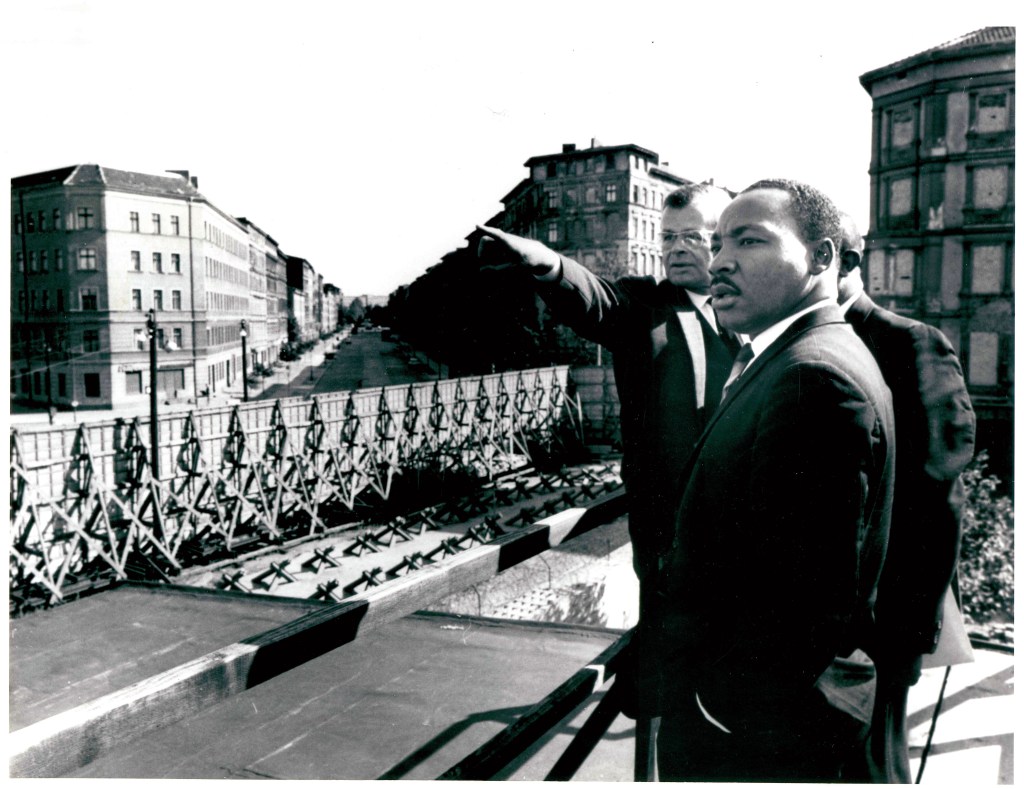
The Rev. Dr. Martin Luther King Jr. forecast today a “dark night of social disruption” in the United States if Senator Barry Goldwater is elected President. The American Negro leader said he was convinced that the discontent, frustration and despair of disinherited, povertystricken groups would then erupt into “violence and riots, the like of which we have never seen before.” It is important for all responsible persons, he said, to see that Mr. Goldwater is defeated. There were “dangerous signs of Hitlerism” in the program of the Republican candidate, Dr. King declared. Dr. King came to West Berlin at the invitation of Mayor Willy Brandt to open the city’s cultural festival tomorrow. The two‐week event highlights the interdependence of races.
Canyonlands National Park was established in Utah as the 32nd national park in the United States.
Film that started Spaghetti Western genre “A Fistful of Dollars” premieres, directed by Sergio Leone, starring Clint Eastwood in his first leading role.
Ralph Boston broke the world record for the long jump, leaping 27 feet, 4¼ inches at the U.S. Olympic team qualifying trials in Los Angeles. Boston’s leap was an inch greater than the official mark set by Igor Ter-Ovanesyan of the Soviet Union in 1962. Boston had actually jumped as far as 27′ 10¼” earlier in meet, but the mark did not qualify because the windspeed behind him in excess of 2.0 meters per second.
The Baltimore Orioles’ Frank Bertaina and the Kansas City A’s Bob Meyer duel in the Major League’s 5th double one-hitter, and the only all-rookie one. Bertaina prevails 1–0, his 1st Major League win and only decision of the year. Johnny Orsino’s 8th inning double and Doc Edwards 5th inning two-bagger account for the only hit for each team. Baltimore sets a major-league record for fewest at-bats in a 9-inning game (8 times at bat) with 19, and both clubs go to the plate just 46 times. The last battle of matching one-hitters was June 21, 1956.
Lou Clinton slammed a two-run homer in the 10th inning, giving the Los Angeles Angels a 3–2 victory over his former Boston Red Sox teammates today. The homer, Clinton’s 12th, came off Bob Heffner. The Red Sox came back for one run in the 10th on Don Lee’s two‐out, bases‐filled walk to Bob Tillman, but Lee got Russ Nixon on a grounder, ending the threat. Dick Radatz set an American League record when he made his 72nd appearance in the eighth. Stu Miller of Baltimore held the old mark of 71, compiled last year. Jim Konstanty, of the 1950 Philadelphia Phillies holds the major league mark of 74.
The Cleveland Indians score 6 in the 1st, and outlast the Chicago White Sox, 11–10. For 2nd-place Chicago, it is their 4th loss in 6 games. The loss goes to starter Ray Herbert, with Sam McDowell the victor. The Indians started their slugging against Ray Herbert and went on to batter five pitchers for 17 hits and their biggest run output against Chicago this season. It was only the fifth time in 17 meetings Cleveland has beaten the White Sox.
Dick McAuliffe’s 23rd homer in the 10th inning gave the Detroit Tigers a 6–5 victory over the Washington Senators today. McAuliffe’s drive was hit off Jim Duckworth, who had yielded a two‐out homer to Norm Cash; in the ninth that tied the score. The Tigers pounded four Senator pitchers for 16 hits, and three Detroit pitchers yielded 15 hits. Mickey Lolich, who had won three straight shutouts, was driven out in a tworun Senator seventh.
Bobby Richardson’s single to right with two out in the ninth inning gave the New York Yankees a 4‐3 victory yesterday over the Minnesota Twins, capping a 15‐minute period in which New York’s fortunes appeared to flip‐flop wildly. In the Twins’ ninth, Mel Stottlemyre, the life‐saving rookie who has been propping up the Yankee pitching staff the last month, seemed to have his sixth victory well in hand. Stottlemyre had two out, nobody on base and a 3‐2 lead, thanks to Eiston Howard’s tie-breaking homer off Camilo Pascual in the sixth. The tall, young right‐hander had allowed only two singles after a firstinning, two‐run home run by Harmon Killebrew. Since Stottlemyre specializes in throwing sinkers, he has done his job when he makes a batter hit the ball on the ground, He made Zoilo Versalles do it for what could have been the last out of the game, but Versalles hit the ball just a little too sharply and it went past Phil Linz at third for a single. Frank Kostro, who can’t run because of a pulled hamstring muscle, came up to pinch hit. He looped the first pitch over Richardson’s head into right field. Hector Lopez raced in, saw he couldn’t catch it and pulled up to field the ball on a bounce — only to have it take a crazy, low skid to his left. By the time Lopez had retrieved the ball, Versalles had scored the tying run from first and Kostro had hobbled into second. Linz then made a good play on a hard smash by Earl Battey to end the inning and preserve the tie.
Ernie Banks’s 20th homer, a two‐run clout in the sixth inning, triggered the Chicago Cubs to a 3–2 victory over the St. Louis Cardinals today. Billy Williams singled to open the sixth off Roger Craig. After Ron Santo had flied out, Banks hit the first pitch over the leftfield catwalk. This spurt, plus a run without a hit in the second on two walks and two grounders, enabled Bob Buhl to snap a six‐game losing streak by posting his 13th victory, with a five‐hitter.
Orlando Cepeda hits a 2-run homer and grand slam to lead the San Francisco Giants to a 9–1 victory over the faltering Philadelphia Phillies. The Phils lead the Giants and Cardinals by 6 games. Gaylord Perry picked up the victory for the Giants, his 11th in 20 decisions. He allowed only six hits. The Giants also had just six hits — but drew seven walks from the Philly pitchers.
Hank Fischer’s six‐hit pitching and home runs by Gene Oliver and Denis Menke gave the Milwaukee Braves an 8‐2 victory over Cincinnati today. The victory was the sixth in a row for the Braves, tying the National League high for the season. Oliver’s 12th homer of the year in the sixth was good for three runs. Menke’s homer was an inside‐the‐park blow to left field in the second with the bases empty. Fischer earned his 11th victory of the season while striking out four and giving one walk.
The Houston Colts pushed across two runs in the first inning a 2–1 victory over the Pittsburgh Pirates tonight. Don Larsen, who allowed six hits, needed help from Hal Woodeshick in the ninth to get the decision. Houston got its runs on Al Spangler’s double, a sacrifice fly and singles by Nellie Fox and Carroll Hardy. The Pirates scored on Willie Stargell’s home run in the second.
Pete Richert, a 24‐year‐old lefthander from Floral Park, New York, pitched the Los Angeles Dodgers to the .500 mark tonight by shutting out the New York Mets, 8–0, on two hits. It was a far cry from last season, when Sandy Koufax was pitching the Dodgers to the National League pennant by six games. But for the Dodgers, who had been over .500 only one other time this year, Richert’s performance was a welcome flashback. Richert’s victory was gained at the expense of Al Jackson, the Mets’ senior left‐hander, who had won seven of his previous 10 games, but who has never beaten the Dodgers in his career at a Met. Jackson pitched the complete game, was under fairly constant fire and was pounded for 13 hits, four of them by Frank Howard. The 238‐pound outfielder lined out two doubles and two singles, scored two runs and batted in two, and became the only Dodger outside Maury Wills to get four hits in one game this season.
NFL Football:
St. Louis Cardinals 16, Dallas Cowboys 6
Charlie Johnson, Jim Bakken, Joe Robb and Larry Stallings carried the St. Louis Cardinals to a 16–6 NFL season‐opening victory over the Dallas Cowboys tonight. Johnson threw a 40‐yard scoring pass to Sonny Randle in the second period and Bakken kicked 37, 41, and 32 yard field goals in the first, third and fourth periods. All this helped the Eastern Conference title favorites to gain their seventh triumph in eight Cowboy games. The Cowboys, cheered on by a crowd of 36,519, whipped 70 yards with the opening kickoff with three Don Meredith‐toFrank Clarke passes playing the big role. The aerials included a 15‐yarder for the touchdown. But, then Robb, Stallings and the rest of the Cardinals’ defense took command. But for a brief bit of excitement when Don Perkins burst through the middle for 53 yards to the St. Louis 21‐yard line, the Cowboys spun their offensive wheels in their own end of the field, except for the last play of the game. That third‐quarter Cowboy threat died immediately when Meredith fumbled the ball away on an attempted option play. Two other times the Cardinals took the ball away on interceptions.
AFL Football:
Denver Broncos 6, New York Jets 30
Houston Oilers 21, San Diego Chargers 27
The New York Jets passed their first test impressively last night and so did Shea Stadium. The home team beat the Denver Broncos, 30–6, in the opening game of the American Football League season and the stadium, built primarily for baseball, proved to be a magnificent football park. On a delightful September evening, the brilliantly illuminated stadium presented al memorable scene. Best of all, it was almost filled by a crowd; of 52,663 (44,967 paying), two record figures for the five‐year-old American Football League. Rookie Matt Snell’s power running gave the Jets something the team has not had before, a punch on the ground to complement the passing of the quarterback, Dick Wood, who had a good night too. Wood completed nine of 18 passes for 144 yards, without an interception. The tough Jets’ defense held Denver to two Gene Mingo field goals.
Tobin Rote threw three touchdown passes tonight to pace the defending champion San Diego Chargers to a 27–21 victory over the Houston Oilers in an American Football League opener. The Oilers, sparked by their quarterback, George Blanda and a rookie halfback, Sid Blanks, tied the Chargers, 7–7, at half‐time and 14–14 in the third quarter. But Rote broke the game open late in the third period with a 19‐yard scoring pass to Don Norton. Then he threw to Lance Alworth in the fourth quarter to give the Chargers a 13‐point margin. Houston narrowed the gap to 6 points with 2 seconds left when an ex‐Chargers fullback, Bob Jackson, scored on a 1‐yard plunge. Blanks, who replaced Billy Cannon at halfback, gained 53 yards in 11 carries and caught 12 passes for 127 yards.
Born:
Greg Gutfeld, American pundit (Fox News), in San Mateo, California.
Jim Juriga, NFL guard and tackle (Denver Broncos), in Fort Wayne, Indiana.



 History Diaries