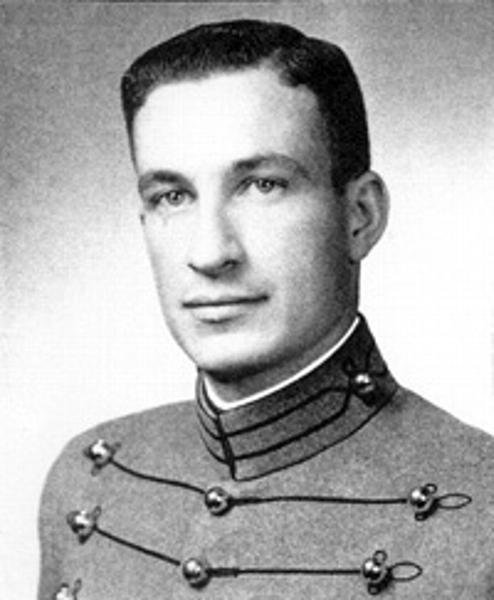
Captain Lynch was a graduate of the United States Military Academy at West Point, New York (Class of 1958). He was 29 years old when he died and married to Mrs. Nancy Lynch (Blakefield). He was the father to a daughter, born in 1963, and to a son, born six months after he was killed in Vietnam. Richard is buried at the United States Military Academy Post Cemetery, West Point, Orange County, New York. He is remembered on the Wall at Panel 1E, line 63.
Twenty-Five miles south of Saigon, a Việt Cộng ambush leaves one U.S. officer, Captain Richard Lynch, and two ARVN soldiers dead. The American officer who died today was the 270th American killed in South Vietnam and the 190th in direct combat. He was caught in a burst of fire when two platoons of Việt Cộng guerrillas ambushed a Vietnamese Ranger battalion. Near the Cambodian border another ambush, planning errors and bad weather forced the South Vietnamese and their American advisers to call off a planned attack against a Communist position. The ambush knocked out a fleet of river boats, and helicopters were used instead to fly troops to another suspected Communist stronghold.
The Administration’s four‐day review of the Vietnamese crisis with Ambassador Maxwell D. Taylor ended today with the conclusion that the Vietcong insurgency could not be ended by military means in the foreseeable future, officials said. But high officials said that the United States believed that the stalemated guerrilla warfare was so expensive to the Communist insurgents, and particularly to North Vietnam, which is directly supporting it, that they may give it up in the end, rather than risk suffering heavy losses. These assessments, expressed after Mr. Taylor had conferred at length with the top policymakers here, suggested that the United States would contemplate a negotiated settlement of the Vietnamese war only if the Communists were willing to end attacks. It was made clear that short of such a Communist decision to come to terms with the Saigon regime and the United States, the Administration would continue — and increase if needed — its economic and military support of the anti‐Communist war.
Mr. Taylor, who left for Saigon early tonight, said earlier in the day that “all wars end in negotiations.” Prior to his departure, Mr. Taylor briefed the Senate Foreign Relations Committee and the House Far Eastern Affairs subcommittee on the Vietnamese situation. Secretary of State Dean Rusk said at a news conference this morning that United States commitments to South Vietnam were “flat and very firm,” and that, “I don’t know of any negotiations now going on anywhere, overt or covert, about a settlement in South Vietnam.” The tone of official and private remarks made by Administration spokesmen today seemed to add up to an effort to persuade the Communist leadership in North Vietnam and in Communist China to start exploring the possibilities of a settlement based on the withdrawal of the Communists from their roles in neighboring Indochina states. Although the Administration had been saying all along that the Vietnamese and Laotian problems can be solved simply if the Communists “let their neighbors alone,” the impression created here this week was that the United States was now hinting at the possibility of negotiation.
Twelve years ago, forlorn French soldiers called Route 1 “la rue sans joie.” In recent weeks American troops in central Vietnam have learned that the road they must defend is still a street without joy. The Việt Cộng have stepped up their campaign of terrorism here, using land mines and dynamite along the route from Huế northward to the border of the demilitarized zone at the 17th parallel. New Việt Cộng weapons — land mines that are reasonably accurate copies of American ones — have accompanied this latest aggressiveness. On examination the counterfeits are easily spotted. The mines manufactured in the United States are smoothly machine tooled. The imitations are handmade, pitted where the metal has been shaped with hammers. The English wording across the top is clumsily painted.
Less obvious are the Chinese characters scratched underneath the mines. United States advisers believe that the weapons are being shipped from China for their propaganda value in an area that has suffered from mines for decades. “A Vietnamese villager may at least recognize the name of the United States on fragments of the mine,” one American officer said. “If he’s lost a leg it’s going to be pretty hard to win him over to our side.”
The pacification program — under which civilian Government employes were to visit villages to instruct the people in agriculture, health, and political affairs — has bogged down in this area. To the Westerner, it seems that the Vietnamese civil servant, having attained his rank with difficulty, is often reluctant to give up the prerogatives and pleasures of life in a provincial capital. A young army officer, about to return to the United States after a year here, looked down the road toward Quảng Trị. “I don’t know what they’re saying in Saigon,” he said, “but we’ve lost ground in the year I’ve been here.”
Two indications of opposition to the course of the United States in South Vietnam and to the anti‐Communist war have appeared recent Buddhist policy statement. The national Buddhist movement is assuming an increasingly influential role in Premier Nguyễn Khánh’s new Government, a Government that came about in large part as a result of Buddhist pressures. The current issue of the official Buddhist weekly newspaper, Hải Triều Âm (Voice of the Ocean Tide), attributes some of the recent rioting and destruction to American influences. American news media, and the Voice of America, have been singled out in accusations that there has been distortion of the Buddhists’ aims in their campaign last month against General Khánh’s short‐lived presidential regime. Last week the newspaper, the organ of the Buddhist Secular Institute, spoke out against Communism and neutralism, but called on the Vietnamese army and “our brothers” of the National Liberation Front — the political organization of the Việt Cộng insurgents — to cut down their war efforts.
“The Buddhists are determined to pour love and understanding over hate and conflict,” last week’s editorial said. This week, the newspaper was more specific in pointing the finger of blame. It said, “for ages past, before the Americans arrived here, Buddhists never destroyed or burnt any houses.” Destruction in the city of Danang where a Roman Catholic neighborhood was stormed and burned last month was attributed to the excitement created by two American servicemen who fired shots into the air in an attempt to turn back a street mob. An American official spokesman has confirmed that two off‐duty servicemen fired when the mob threatened to attack the American enlisted men’s quarters. In interviews with foreign newsmen, Buddhist spokesmen and sympathizers minimize anti‐American statements that appear in the Vietnamese‐language publications.
Special Emissary Henry Cabot Lodge reports to President Johnson on his trip throughout Europe; a statement issued claims that all Western European governments except France’s view the Vietnam struggle as a ‘free world’ issue, not just a regional problem. Ambassador Taylor returns to Vietnam. And President Johnson authorizes a series of measures ‘to assist morale in SVN and show the Communists westill mean business.’ Mostly these involve covert actions such as the resumption of the DeSoto patrols and the South Vietnamese coastal raids; but another crucial item calls for asking Premier Souvanna Phouma of Laos to allow the South Vietnamese to make air and ground operations into southeastern Laos along with air strikes by Laotian planes and U.S. armed aerial reconnaissance.
Hsinhua, the Chinese Communist press agency, today said that three “United States” T‐28 fighter‐bombers bombed and straffed villages east of the pro‐Communist Pathet Lao stronghold of Khang Khay in Laos yesterday, causing damage to a number of houses. The agency charged “ U. S. aircraft” repeatedly intruded into the air space over pro‐Communist areas in Laos in the last few days.
Turkey accused the Government of Cyprus today of following a calculated policy of starving the Turkish Cypriotes. A note delivered tonight to the Secretary General, U Thant, said that the representative of the International Red Cross in Cyprus had reported that the food supplies reaching Turkish Cypriots were“ lower in calories than those assigned to inmates of prisons.” The 11‐member Council is to meet tomorrow on requests made by both Greece and Turkey. Greece has accused Turkey of harassing and expelling Greek residents in violation of the Treaty of Establishment, signed in 1930 to regulate their rights. Turkey originally asked for it meeting on the ground that Greece was carrying out military movements that seemed to threaten Turkey.
The Turkish note said that since August 5 “all the Turkish Cypriot towns and villages have been under an absolute state of siege and the freedom of movement of the Turks as well as all transportation of food supplies and clothing has been curtailed by the Greek Cypriots.” The note challenged statements by the Government of Cyprus that the movement of perishable foodstuffs was not restricted. It said representatives of the International Red Cross were aware of the situation but “confessed they were unable to bring effective assistance to the Turkish community in view of the obstruction by the Greek Cypriots to the transportation of foodstuffs.”
Premier İsmet İnönü said today that Turkey would start sending food to beleaguered Turkish Cypriots next Tuesday under armed convoy. He said in Parliament that Greece, the Turkish Cypriots and the United Nations had been notified of the decision. Authoritative sources said Turkey would use destroyers and airplanes to protect the shipments. The warships will stay in Cypriot territorial waters until the deliveries have been made, these sources said.
“Any interference during the disembarkment of these supplies on the island will be considered an attack and answered in the same way,” Premier Inonu said. Greek Cypriot roadblocks on Cyprus were opened today to allow food into the Turkish Cypriot quarters of Famagusta and Larnaca, the United Nations announced. President Makarios’s Greek Cypriot Government agreed Tuesday night to lift the blockade of the two cities, but there was a delay in getting the order to the troops. The Greek Cypriot Government has already refused to permit Turkey to land replacements for troops it has stationed there under treaty agreements.
Premier Moïse Tshombe of the Congo said today he would seek to carry out the resolution on the Congo adopted early this morning by the Organization of African Unity. However, he said at a news conference that the resolution must be implemented “in the light of our sovereignty, our territorial integrity and our inalienable right to national independence.” This was regarded here as a hint that the Premier might yet balk at portions of the resolution or insist on a restricted interpretation of its provisions. Among other things, the resolution calls for the dismissal of all white mercenaries, an end to “foreign interference” in the Congo and a “national reconciliation” of all factions and leaders. It set up a 10-nation commission, headed by Prime Minister Jomo Kenyatta of Kenya, to help restore peace in the Congo.
The United States, urged the Security Council to call for an end of Indonesian attacks on Malaysia. It said the Council and the Secretary General, U Thant, should then help establish conditions that would make possible negotiations between the two Southeast Asian states. The proposal was outlined by Adlai E. Stevenson, the United States representative. In a speech he termed “inadmissible” the landing of 30 Indonesian paratroopers on the Malay Peninsula last weekend. He did not, however, introduce a resolution. Indonesia opposes Malaysia as a British colonialist device. Malaysia maintains that this charge merely masks an Indonesian desire to dominate the region.
Two East German families with a total of 11 children ranging in age from 1 to 11 fled to West Berlin last night in a refrigerator truck carrying meat. Erich Ross, 32 years old, and Gerhard Worm, 31, truck drivers and the husbands of twin sisters, described at a news conference today how they had hidden their families inside the vehicle, which was on a routine meat‐delivery trip from East Germany to West Berlin. The family group was the largest to have fled to West Berlin this year. Mr. Ross, who drove the truck, said border guards at the Heinrich‐Heine‐Strasse crossing checked him through in five minutes because the meat shipment was made under the terms of the East‐West German trade agreement. The guard did not bother to inspect the truck since the official seal appeared intact.
Three international agreements were signed at Paris by the 10 members of Europe’s International Commission on Civil Status (ICCS), with the ICCS member governments agreeing on conventions “to facilitate the celebration of marriages abroad”; “the exchange of information relating to acquisition of nationality”; and “decisions concerning the rectification of civil status records”. At the time, the ICCS was composed of the 10 EEC nations (Belgium, France, Italy, Luxembourg, the Netherlands, and West Germany) as well as Switzerland, Turkey, Greece and Austria.
Canada’s Prime Minister Lester Pearson ended the debate over attempting to get the parliament to adopt a maple leaf design for the Flag of Canada, and agreed to send the matter instead to a 15-member committee of Progressive Conservative and Liberal MPs. “As a compromise”, a reporter noted at the time, “Canada has been flying the Canadian red ensign… with the Union Jack in the upper staff quarter and the Canadian coat of arms on the red field.” In more recent weeks, debate over the flag had been occupying four days a week of time in the House of Commons. The Progressive Conservative leader of the opposition, John G. Diefenbaker, “was elated at what he believed was the end of the ‘Pearson pennant,” and “bound himself to accept the committee’s recommendation if it was ‘virtually’ unanimous” p186; on October 29, the committee would recommend a design of red vertical bars and a single maple leaf, which would ultimately become Canada’s flag.
The Palestinian Liberation Army (PLA) forms. Arab leaders approved in principle today the formation of an army among Palestine refugees but temporarily put off implementation of the decision. The leaders of the 13 states participating in the Arab summit conference in Alexandria, United Arab Republic (Egypt) were reported also to have decided to order an immediate start of construction on projects on the Jordan River in Syria and Jordan. Initially at least, any implementation of this order is expected to be so modest as not to provoke direct conflict with Israel, at least for some time, over her project to divert Jordan waters to the Negev for irrigation.
The African Development Bank (AfDB) was founded under the leadership of the United Nations Economic Commission for Africa (ECA). On August 4, 1963, an agreement was signed in Khartoum in the Sudan by governors of the central banks of 23 African nations. The majority of the AfDB’s initial capital (65 percent) was subscribed by 20 of the African nations.
The Convention on the Territorial Sea and the Contiguous Zone, signed at the United Nations on April 29, 1958, went into effect after ratification of the required number of nations.
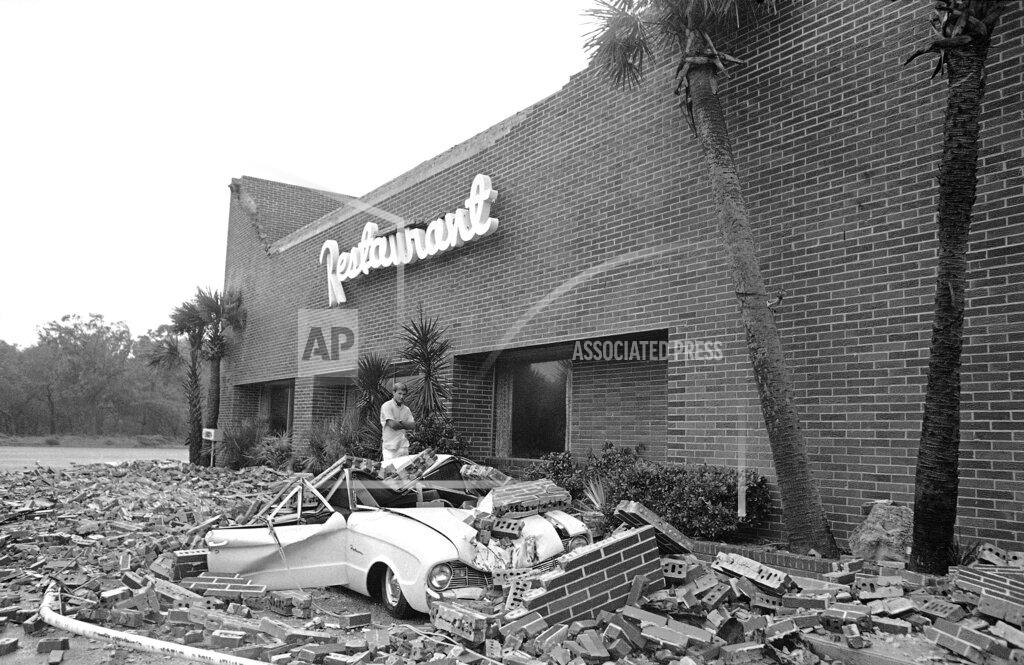
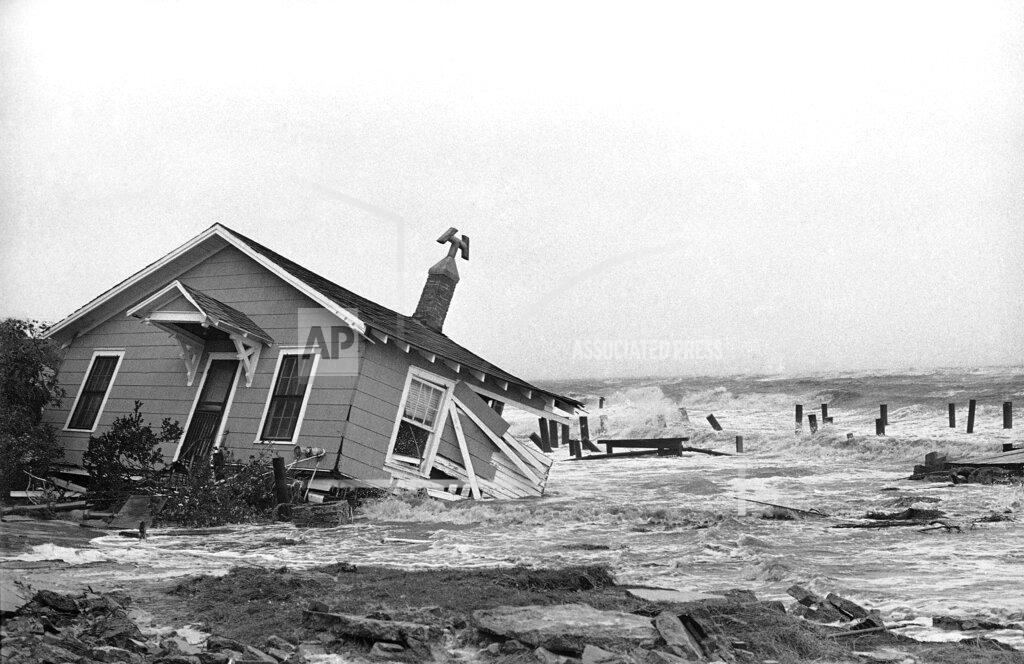
Hurricane Dora made landfall near St. Augustine, Florida, becoming the first tropical cyclone on record to make landfall in the region. The hurricane called Dora lost its punch in the pinelands of northern Florida today after leaving St. Augustine and Jacksonville in a chaos of flood and destruction. President Johnson declared the damaged regions a major disaster area, eligible for Federal reconstruction aid. Although red‐and‐black hurricane warning flags flew along the Gulf Coast in the crook of Florida’s elbow, the Weather Bureau said the storm had deteriorated badly. “If it’s a hurricane, it’s just barely one,” said a forecaster at the National Hurricane Center in Miami.
As the storm, once bigger than the State of California, moved over the Florida panhandle and the state capital of Tallahassee, the highest winds were about 60 miles an hour, recorded at a coastal station. Hurricane winds are 75 miles an hour or over. The storm’s center, or eye, is almost gone, the Weather Bureau said, and it will wear itself out if it maintains the westward movement. Jacksonville and St. Augustine were both largely without power, many of their streets were flooded by an eight‐foot tide and dozens of their buildings were damaged by water and 100‐mile winds. Damage was unofficially estimated in the tens of millions.
About 100 miles to the north, the resort city of Brunswick, Georgia, stirred back to life after taking its worst pounding in 20 years from the northern edge of the storm. A five‐foot tide and gusts ot up to 85 miles an hour slammed into the city, eroding beaches, shattering windows, ripping roofs and topling trees. Hurricane warnings were ended in the early afternoon from Jacksonville to Charleston and thousands of persons began returning to their homes on the Southeast Atlantic Coast.
The Senate refused to close debate today on a proposal to postpone compliance with the Supreme Court ruling on apportionment of state legislatures. The vote was 63 to 30. Then, immediately afterward, the Senate rejected by a vote of 49 to 38 a motion to kill the proposal by tabling it. Taken together, the two votes meant that the Senate had reached an impasse over the proposal made by Senator Everett McKinley Dirksen of Illinois, the Republican leader, to stay all Federal court proceedings on reapportionment until January 1, 1966. In this situation, the probability is that the Senate will accept a compromise sponsored by Senators Eugene J. McCarthy and Hubert H. Humphrey, both Democrats of Minnesota, and Senator Jacob K. Javits, Republican of New York.
The compromise would express the “sense of Congress” that the states be given “adequate time” to comply with the Supreme Court ruling of last June 15 that districts for both houses of state legislatures be substantially equal in population. The states would also be given adequate time to consider any proposed constitutional amendment on apportionment of state legislatures. Anticipating today’s stalemate, President Johnson yesterday threw his weight behind the “sense of Congress” compromise. After today’s votes, Senator McCarthy moved to make the compromise the pending business by offering it as a substitute for the Dirksen proposal.
President Johnson carried his campaign into bedrock Republican ground in Pennsylvania tonight, and honed his bipartisan appeal for unity to a finer edge of partisanship. He used it to deliver a cutting attack on extremism. The President called on voters of every political stripe to form, around his standard, “a more perfect union” in opposition to “reckless factions” that he said were “abroad in this responsible land.” He did not name his Republican opponent, Senator Barry Goldwater. He warned against “extreme factionalism,” whose representatives, he said, “wear many names” and “espouse many causes.”
“They demand,” the President said, “you choose a doctrine alien to America — a doctrine that would lead to a tragic convulsion in our foreign relations — a doctrine that flouts the unity of our society and searches for scapegoats among our people. It is a doctrine that invites extremism to take over our land,” he said. “It is a doctrine that plays loosely with human destiny — and this generation of Americans will have no part of it.”
The results of the Georgia Democratic primary aroused concern today over President Johnson’s hopes for carrying this state in the November election. Returns from yesterday’s voting in Congressional, legislative and judicial contests reflected an unmistakable white backlash, anti‐Johnson sentiment and surprising apathy in some areas amone Blacks. Evidence of Democratic support for Senator Barry Goldwater of Arizona, the Republican Presidential nominee, emerged clearly in Congressional contests in central and southwestern Georgia. Some observers said the Democratic Presidential prospects in the state might not be as gloomy as the returns seemed to indicate. In their view, the relatively light balloting marked the peak strength of the strongest anti‐Johnson factions.
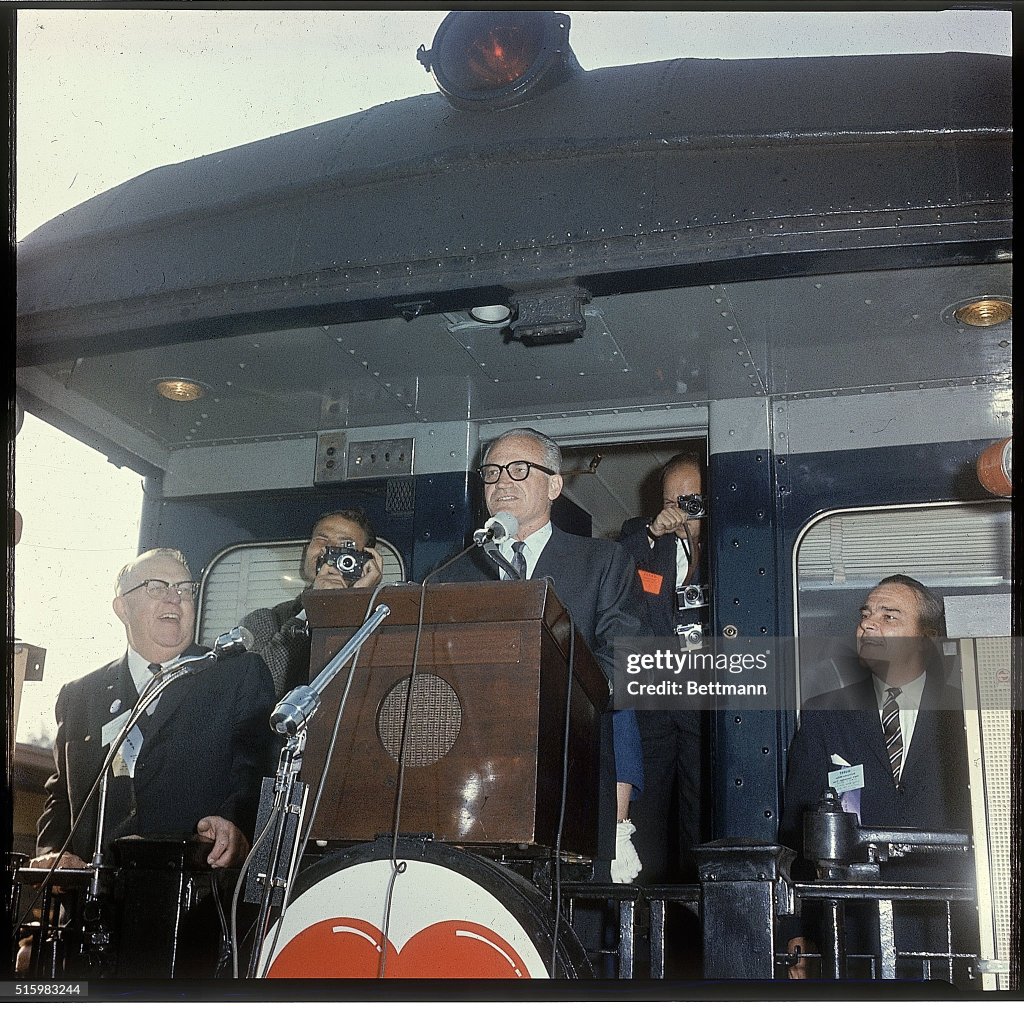
Senator Barry Goldwater linked welfare state social theories to rising crime rates today. Such theories, the Republican Presidential candidate said, encourage the idea that have‐nots can take from the haves. He deplored a wide range of things: “gang rape in California,” Black civil rights disturbances, the Supreme Court decision ordering reapportionment of state legislatures, and what he called the “power mad” Johnson Administration. Mr. Goldwater spoke at Boise, Idaho, and Great Falls, Montana, before giving what was described as a major speech in Minneapolis. He hopped between the cities on the yiabikin, or “house in the sky,” a chartered campaign jet. At Boise, Mr. Goldwater predicted that the end result of the Supreme Court decision that state legislatures must be apportioned by population would be a reapportionment of Congress that would deprive small states of their voice in government and endanger their land and water rights.
Secretary of State Dean Rusk accused Senator Barry Goldwater today of demonstrating “a basic lack of understanding” of Presidential responsibilities in foreign affairs. His remarks, at a news conference, were among the sharpest he has yet directed at the Republican Presidential candidate. They gave new evidence of the Johnson Administration’s intention to make frequent use of the authoritative voices of two ostensibly nonpartisan Cabinet officers, Mr. Rusk and Secretary of Defense Robert S. McNamara, to counter Republican campaign oratory. Mr. Rusk’s statement was prompted by Senator Goldwater’s suggestion in Pacific Coast campaign speeches yesterday that the Administration would deliberately provoke some sort of foreign crisis before the November 3 Presidential election. The Senator contended that the Kennedy Administration had timed the Cuban missile crisis of 1962 for “maximum political effect.” He said Americans should be prepared for a similar pre‐election crisis this year.
Adlai E. Stevenson, chief United States Representative at the United Nations, assailed Senator Barry Goldwater’s foreign policy views tonight as “mischief‐making jargon.” Mr. Stevenson, speaking at a dinner of the Midwestern Governor’s Conference, said that the nation’s overriding foreign concept had been the same under Republican and Democratic Administrations since that of President Franklin D. Roosevelt. “We have learned that bluff is dangerous, bluster cheap, that recklessness can be fatal,” Mr. Stevenson told several hundred guests of the 12‐state organization at the Radisson Hotel. Although he avoided mention of Mr. Goldwater by name, it was clear that he was referring to the Arizona Senator. “The talk comes easy and the solutions neat to those who call for instant solutions,” Mr. Stevenson said. He added that such ideas betray fear and impatience that do no credit to Americans or to the cause of peace.
The Senate agreed at the end of a stormy session tonight to reopen its politically charged investigation into the private business affairs of Robert G. Baker. By a vote of 75 to 3, the Rules Committee was directed to revive the inquiry it closed more than two months ago, and to give particular attention to recent allegations that Mr. Baker had played a key role in a $35,000 kickback on construction costs of the new $20 million D.C. stadium. The action came on a resolution by the majority leader, Mike Mansfield of Montana. Republican opposition was aimed chiefly at the decision to place the job with the Rules Committee, which many have accused of having failed to push the earlier investigation vigorously and impartially. The dissenting votes tonight were cast by Senators Pat McNamara, Democrat of Michigan; Thruston B. Morton, Republican of Kentucky, and Hugh Scott, Republican of Pennsylvania.
The Rules Committee closed the Baker case last June after eight months of partisan turmoil and criticism. Charges were made that the six-man Democratic majority had abetted a “coverup” and “whitewash” of the private business career of Mr. Baker, former Senate Democratic majority secretary. Mr. Baker was exonerated by the committee of illegal acts but was accused of “many gross improprieties” in amassing a fortune estimated at as high as $2 million while he was on the Senate payroll. Senator John J. Williams, Republican of Delaware, who initiated the first Baker inquiry almost a year ago, made new charges against Mr. Baker in a Senate speech on Sept. 2. Senator Williams said that Mr. Baker had received at least $5,000 of a $35,000 payoff by the stadium contractor, Matthew H. McCloskey, which he was supposed to channel into the Kennedy‐Johnson Campaign fund of 1960. He said that the Rules Committee had information on this transaction but that it had not pursued it before closing its investigation.
Rod Stewart records his 1st single “Good Morning Little Schoolgirl”
With his office being responsible for all of the costs for teams not making it into the postseason, Baseball commissioner Ford Frick authorizes the Phillies, Yankees, White Sox, and Orioles to print tickets for the World Series. Due to a historic late-season collapse by Philadelphia, the surging Cardinals win the National League pennant on the last day of the season, and will play the Bronx Bombers in the Fall Classic.
Baltimore tops the Washington Senators 12–5, despite the Orioles’ Brooks Robinson hitting into his 2nd triple play. Brooks will hit into a record 4 triple plays by the time he hangs up his glove. Robinson also singled in two runs and ended the day with four hits in five at-bats. Sam Bowens added a double and a homer as Milt Pappas sailed to his 15th win of the year. Pappas has won seven in a row.
Al Downing’s five‐hit pitching, a three‐run homer by Elston Howard and a bases‐empty drive by Joe Pepitone gave the New York Yankees a 5‐2 victory over the Detroit Tigers today and closed a successful western trip. The Yankees won seven of 10 games in four cities and climbed into a favorable position in the American League’s three‐team pennant race. Downing had been having his troubles, with only one victory in four weeks, but he pitched a strong game today. Al Kaline’s 14th homer, after a walk to Jerry Lumpe with nobody out in the fourth inning, accounted for the only Detroit runs. Downing struck out nine, bringing his league‐leading total to 189, and walked four in posting his 12th victory.
Ron Hansen’s 17th homer of the season snapped a 1–1 tie in the 10th inning today and carried the Chicago White Sox to a 2–1 victory over the Minnesota Twins in 10 innings. Hansen slammed a 3‐0 pitch 360 feet over the left‐field fence with two out in the 10th, handing Jim Kaat his eighth loss against 16 victories. Kaat and Joel Horlen of Chicago were locked in a tight pitcher’s duel over the first eight innings. Chicago had pushed across a run in the third on singles by Mike Hershberger and Floyd Robinson after Horlen had reached base on a fielder’s choice. Kaat tied it in the sixth by punching his third home run of the year over the right‐field fence on a two‐strike pitch. Hoyt Wilhelm was called in for the White Sox in the ninth and finished up, gaining his ninth victory in 17 decisions.
Consecutive home runs tonight by Sonny Siebert, a pitcher, and Chico Salmon helped the Cleveland Indians defeat the Boston Red Sox, 5–4. Siebert, who was the winner, and Salmon connected in the fifth inning to give the Indians a 5–2 lead. Siebert’s drive was hit with one man on base.
The Philadelphia Phillies split a 2-game series with the Cardinals and build a 6-game lead in the National League on Chris Short’s 5–1 win. Short strikes out 12, throwing no curves, to win his 16th against 7 losses. A pivotal play is third baseman Dick Allen’s stop and throw on Julián Javier’s sharp grounder with 2 men on in the 2nd. The Phillies then scored five runs in the bottom of the second, aided by two Cardinal errors, with the big hits being Short’s triple and Johnny Callison’s 26th homer.
Bob Purkey pitched the Cincinnati Reds to a 3–0 victory tonight over the Pittsburgh Pirates. He yielded five hits. The triumph moved the Reds into a tie with St. Louis for second place in the National League, six games behind first-place Philadelphia. Purkey, posting his 10th victory against eight defeats, gave singles to Bill Virdon in the first inning and Willie Stargell in the second, then did not allow another hit until Stargell singled in the seventh. Purkey retired 14 consecutive batters in that stretch.
Jim Ray Hart smashed a two‐run first‐inning homer tonight that paced the San Francisco Giants to a 5–1 victory over the Los Angeles Dodgers. Orlando Cepeda added three hits and scored twice for the Giants. Billy Pierce (3–0), making his first start of the year, was the winner, although he needed relief from Jim Duffalo in the eighth inning. Willie Davis gave the Dodgers their only run on his 11th homer with the bases empty in the sixth.
Larry Jackson became the National League’s second 19‐game winner today as the Chicago Cubs scored three runs in the sixth inning for a 4–3 victory over the Houston Colts. Jackson beat the Colts for the fifth straight time without a loss to join Sandy Koufax of the Los Angeles Dodgers as a 19game winner. The 33‐year‐old right‐hander yielded eight hits as he posted his fifth straight triumph.
The Milwaukee Braves departed from the New York baseball scene yesterday for the last time this season—perhaps for the last time ever—but not before they had caught, passed and outlasted the Mets, 7–6. The Braves, who are expected to return next season with “Atlanta” embroidered on their shirts, played to 9,847 persons in their final appearance here and left a reasonably lasting reminder of the talent that made them famous in the mid-nineteen‐fifties. Rico Carty slammed his 17th home run in the eighth, and Felipe Alou had a fifth-inning home run and a run-scoring double in the ninth to send the Mets on their way to another loss.
Dow Jones Industrial Average: 859.50 (+3.93).
Born:
Jack Ma, Chinese business magnate and billionaire who founded the Alibaba Group of internet businesses; as Ma Yun in Hangchow, Chekiang province (now Hangzhou, Zhejiang, Peoples’ Republic of China.
John E. Sununu, American politician (Senator-R-New Hampshire 2003-2009), in Boston, Massachusetts.
Tim Harris, NFL defensive end (NFL Champions, Super Bowl 29-49ers, 1994; Pro Bowl 1989; Green Bay Packers, San Francisco 49ers, Philadelphia Eagles), in Birmingham, Alabama.
Karl Wilson, NFL defensive end and defensive tackle (San Diego Chargers, Phoenix Cardinals, Miami Dolphins, Los Angeles Rams, New York Jets, San Francisco 49ers, Tampa Bay Buccaneers, Buffalo Bills), in Amite, Louisiana.
John Bruno, NFL punter (Pittsburgh Steelers), in Jeanette, Pennsylvania (d. 1992, of skin cancer).
Joe Kraemer, MLB pitcher (Chicago Cubs), in Olympia, Washington.
Gordon Mark, Canadian NHL defenseman (New Jersey Devils, Edmonton Oilers), in Edmonton, Alberta, Canada.


 History Diaries