The North Atlantic Treaty Organization, which celebrated its 25th anniversary in April in a confident mood, now is beset by serious political and military problems.
According to authoritative sources in Europe and Washington, there are these major problems:
- The Soviet Government is pressing Norway for the establishment of joint Norwegian-Soviet rule of the Spitsbergen island group north of Norway in the Arctic Ocean — an action that would further weaken NATO’s position in a strategically important area.
- Cuts by the Netherlands in her defense budget and a review of defense spending in Britain have raised fears that alliance forces in Central Europe will be weakened.
- The opposition by the Netherlands to the proposed appointment of General Alexander M. Haig Jr. to replace General Andrew J. Goodpaster as Supreme Allied Commander in Europe has created a command problem.
- The withdrawal of Greece from the military sector of the alliance has opened a gap in the alliance’s radar network that military sources believe could have serious consequences in any future Middle East crisis.
The situation in northern Norway has deteriorated to the point where senior officers regard Soviet pressure in the future for a demilitarization of the North Cape area, now held by a small Norwegian force, as “probable rather than possible.” Western officers believe that the methodical extension of Soviet sea and air power into the Norwegian and Baltic Seas has already seriously weakened the alliance’s position on the northern flank, regarded as the key to strategic control of the North Atlantic and the main sea lanes between North America and Europe. All Soviet nuclear‐missile submarines are based at Murmansk and must pass between Spitsbergen and Norway’s North Cape into the Atlantic. Under present arrangements their passage can be detected by the alliance.
Although Norwegian Government officials believe there is a possibility that oil will be found on the sea bed around Spitsbergen, it is generally believed that the Russians want joint rule of the Islands as much for strategic as for economic reasons. The consequence of joint rule, NATO officials say, would be to bar access to the island by the United States and other signers of the 1920 treaty that established Norwegian sovereignty there.
Finance chiefs of the United States, Japan, West Germany, France, and Britain said they were determined to fight inflation but apparently disagreed on just how. But they said they took a number of decisions to improve their balance of payments and protect their economies against the onslaught of higher oil prices. The decisions, which were not divulged, were taken during 10 hours of meetings in a villa outside Paris.
Nations of the Organization of Petroleum Exporting Countries will consider a 14% hike in the price of oil when they meet in Vienna Thursday, according to Valentin Hernandez, Venezuela’s minister of mines. Venezuela is a member of OPEC along with the oil producers of the Middle East. He said the technical commission of the OPEC has decided prices should be adjusted “at the same rate as world inflation, that is, 14%.”
TWA Flight 841 crashed into the stormy Ionian Sea 18 minutes after takeoff from Athens toward Rome, after a terrorist bomb exploded in the cargo hold. With control no longer possible, the Boeing 707 made a steep climb and stalled. The Greek Civil Aviation Authority said there appeared to be no survivors. T.W.A. said flight 841 fell from an overcast sky after the pilot reported that an engine had failed. In Paris, it was reported that a Palestinian group said it had placed one of its guerrillas on the plane with a bomb that he had exploded in flight. All 88 people aboard were killed.
Premier Bulent Ecevit is considering withdrawing paratroops from Cyprus to open the way for talks with Greece on the island’s future, informed sources said today. Mr. Ecevit met today with members of the main opposition parties, reportedly to get their approval. The paratroops played an important role in the quick capture of nearly one‐third of Cyprus and their withdrawal, while not now weakening Turkey’s military position on the island, would be regarded as a gesture to the Greeks. The form and timing of then withdrawal was understood to have been discussed so that any opposition objections, could be overcome in advance.
Since the Cyprus crisis erupted in mid‐July, the United States has taken precautionary measures to protect and if necessary, to remove atomic warheads stockpiled in Greece and Turkey, Defense Department officials disclosed today. The main cause of concern, the officials said, was not so much that the warheads might be seized by Greek or Turkish forces but rather that in the event of fighting between the two countries, some of the warheads might be damaged and cause radioactive contamination. Concern in the Pentagon over the security of the warheads was so great that early in the Cyprus crisis, according to the officials; the Defense Department ordered special measures to protect the atomic stockpiles. Among the measures reportedly taken was an order to United. States carrier with the Sixth Fleet in the Mediteranean to be, prepared to send in a Marine detachment aboard helicopters to recover the atomic warheads. While declining to confirm this particular order, a Defense official said: “We are prepared, should certain contingencies arise, to remove the warheads.”
In Congressional circles it was also suggested, that another step taken by the United States was the removal of warheads from fighter‐bombers of Greece and Turkey. This step reportedly caused a certain amount of sensitivity, provoking each to demand to know whether the United States was taking a similar step with the other. As in several other members of the North Atlantic Treaty Organization, Greek and Turkish planes on so‐called “quick-reaction alert” are armed with atomic warheads fixed tinder their wings as they sit near the ends of runways for swift takeoff. Technically, the warheads remain under United States control, but in time of war they would be turned over to the allied forces. Under a 25‐year‐old stockpile plan of the Atlantic Alliance, the United States has hundreds of atomic warheads in the two countries — more in Turkey, than in Greece. Turkey, for example, according to Congressional sources, has a potential, with the American warheads, to drop the equivalent of “millions of tons of TNT” on the Soviet Union.
Elections were held in the tiny (population 19,300) European Republic of San Marino for all 60 seats of the nation’s Consiglio Grande e Generale, and women were allowed to participate for the first time. No party won the required 31 seats for a majority, but the Sammarinese Christian Democratic Party won 25 seats to retain control. The Sammarinese Communist Party was second with 15.
Israel and Lebanese artillery exchanged fire today after an incursion by Israeli forces across the border, military headquarters here reported tonight. There was no mention of casualties. According to the statement, a patrol force near Zarit observed suspicious movements across, the border and penetrated 200 yards into Lebanese territory. Military headquarters denied a Beirut report that 100 Israeli soldiers had searched a village one mile inside the border and retreated after Lebanese artillery had opened fire. Early in the afternoon, the Israelis said, Lebanese artillery fired a few shells that exploded harmlessly near Zarit. Israeli guns returned the fire. Unofficial reports from the border area said the Israeli fire was much heavier and sent Lebanese peasants scurrying from their fields and herdsmen hurrying away with their flocks. Zarit is the area where Israeli forces intercepted and killed Arab infiltrators last week.
Thousands of people chanting “Hang the Emperor” demonstrated in the Ethiopian capital today. It was the second public demonstration against Emperor Haile Selassie in the last week. Soldiers urged the crowd to go home.
Two persons were killed and 12 others wounded today when the police fired on a crowd of 6,000 rioting refugees in Mena in the central Indian state of Madhya Pradesh, Government officials said. The clash erupted in a dispute over the distribution of food and other relief supplies the officials said.
The once-absolute ruler of Sikkim pleaded with India’s leaders to reconsider before absorbing his tiny Himalayan kingdom, and asked permission to fly to New Delhi to personally appeal his case. Chogyal Palden Thondup Namgyal sent cables to Prime Minister Indira Gandhi and President Fakhruddin Ali Ahmed asking them not to proceed with virtual annexation of Sikkim, which has been denounced within India and abroad.
A newly formed committee of publishers, journalists and Opposition politicians denounced the South Vietnamese Government today for “oppressing and terrorizing the press, newspapermen, writers and artists.” The formation of the group, which includes the chairmen of both the publishers and the working journalists associations, marks a sharp change in attitude. Fearful of official retaliation, Saigon journalists have been timid about organizing into groups to attack the government. “The cup is too full,” said Trần Văn Tuyên, an Opposition Deputy who is a member of the group. “In any case, the government has condemned the press to death.” He was referring — perhaps with a touch of exaggeration — to recent actions against several Saigon papers that have never been conspicuously anti‐government in their political posture.
[Ed: Trần Văn Tuyên would commit suicide in October 1976 in a Communist Trại cải tạo (Re-education camp).]
Typhoon Shirley roared into southern Japan with winds of nearly 80 mph, battering Kagoshima City, knocking down trees and halting road and rail traffic for the night. No injuries were immediately reported. The storm forced airlines to cancel 33 domestic flights, with ferry services also suspended throughout western Japan.
Two military helicopters, two Coast Guard vessels, four Canadian aircraft and personnel from the Toronto harbor police continued the search for a missing lifeguard from Canada who disappeared after beginning a swim across Lake Ontario. Neil MacNeil, 17, of Toronto, Ontario, was reported last seen Saturday afternoon, about four hours after he began the 32-mile swim across the lake. An escort boat which was to have led him across developed engine trouble and MacNeil continued on his own.
The Mexican army fought a gun battle with a band of guerrillas near Acapulco, killing a number of them and freeing Senator Ruben Figueroa who was kidnaped May 30. Defense Minister Hermenegildo Cuenca Diaz reported “numerous casualties,” most of them among the guerrillas, and said a large amount of weapons and ammunition was confiscated. The leader of the band, Lucio Cabanas, target of a manhunt in the hills of south-central Mexico for several weeks, “either escaped or was not there,” the minister said.
The 83-year-old father-in-law of Mexican President Luis Echeverria said he was released by his kidnappers after convincing them their real enemy was the U.S. CIA and not the Mexican government. Jose Guadalupe Zuno, political leader and former governor of Jalisco state, called his kidnappers “good boys, but mixed up. They want to change the world but don’t know how to do it.” He added, “These men are fighting against the CIA because the CIA and capitalism do not have respect for anything. I back them in that struggle.”
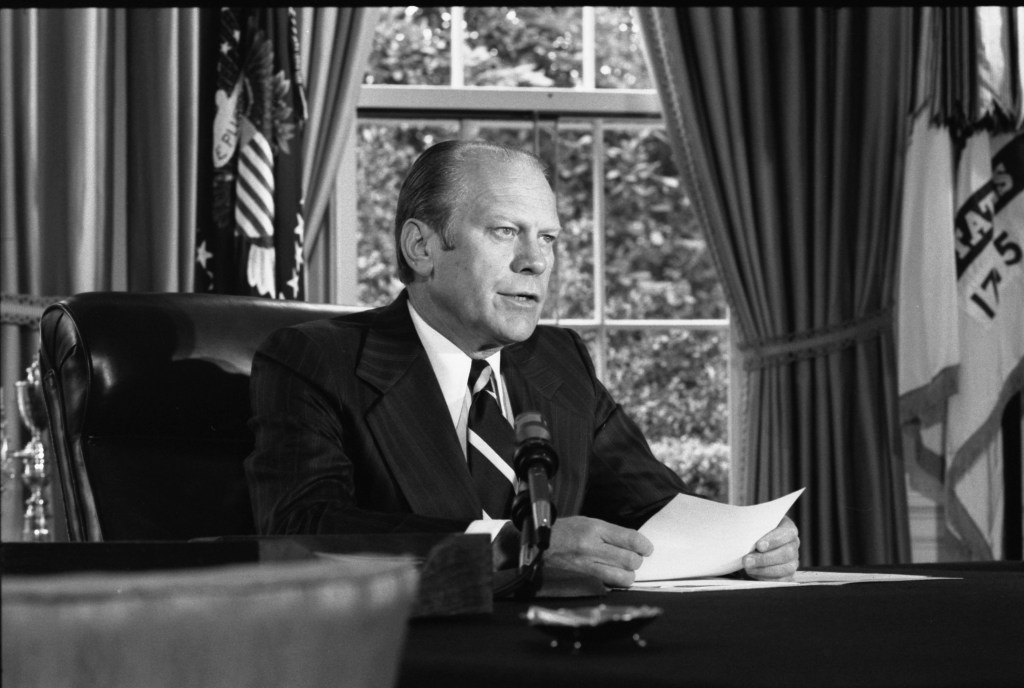
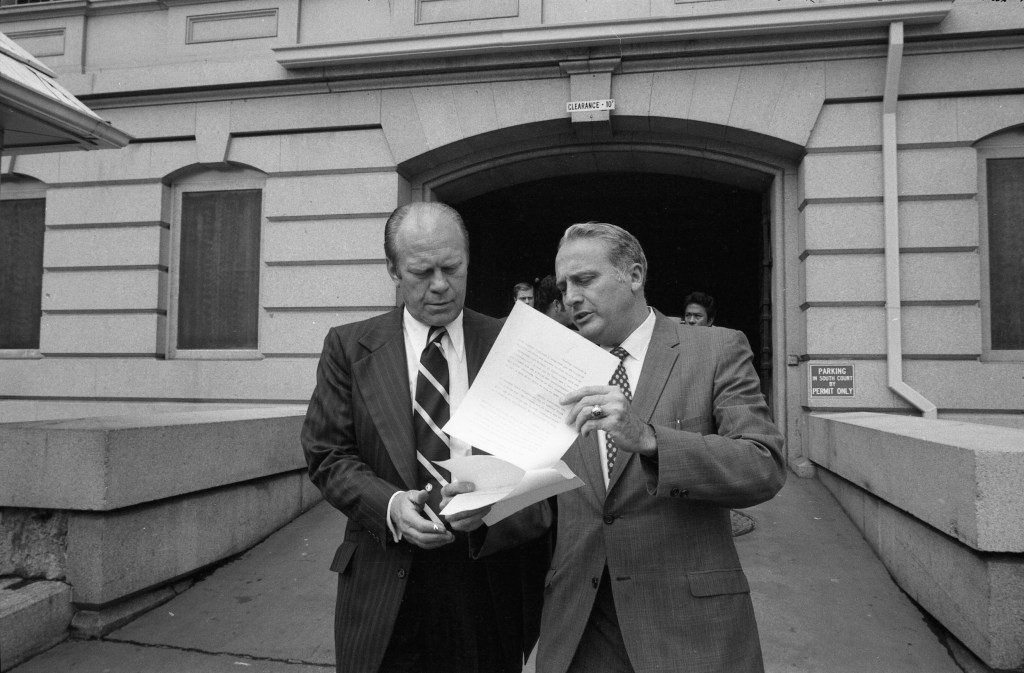
U.S. President Gerald Ford granted former President Nixon an unconditional pardon for any federal crimes he may have committed during his term in office. The pardon exempts Mr. Nixon from indictment and trial for, among other things, his role in the cover-up of the Watergate burglary. Mr. Ford said the pardon was intended to spare both Mr. Nixon and the country further punishment resulting from the Watergate scandals. Philip Buchen, the White House counsel who advised Mr. Ford on the legal aspects of the pardon, said it was an “act of mercy” on the President’s part and was done without making any demands on Mr. Nixon and without asking the advice of the Watergate special prosecutor, Leon Jaworski.
Ford made an unpopular decision that would ultimately cost him the 1976 U.S. presidential election, as he announced in a nationally televised speech that he had granted a “full, free and absolute pardon” to his predecessor, former President Richard Nixon, for any crimes that Nixon might have committed during the Nixon presidency. Ford said in his speech, “I have come to a decision which I felt I should tell you and all of my fellow American citizens, as soon as I was certain in my own mind and in my own conscience that it is the right thing to do.” He added that the Watergate scandal “could go on and on and on, or someone must write the end to it. I have concluded that only I can do that, and if I can, I must.” He noted that, “I am compelled to conclude that many months and perhaps more years will have to pass before Richard Nixon could obtain a fair trial by jury in any jurisdiction of the United States,” and that “During this long period of delay and potential litigation, ugly passions would again be aroused. And our people would again be polarized in their opinions. And the credibility of our free institutions of government would again be challenged at home and abroad.” Ford then read the text of Proclamation 4311 aloud.
In 2001, Ford was presented the Profile in Courage Award, and U.S. Senator Ted Kennedy said, “At a time of national turmoil, America was fortunate that it was Gerald Ford who took the helm of the storm-tossed ship of state. Unlike many of us at the time, President Ford recognized that the nation had to move forward, and could not do so if there was a continuing effort to prosecute former President Nixon. So President Ford made a courageous decision, one that historians now say cost him his office, and he pardoned Richard Nixon… time has a way of clarifying past events, and now we see that President Ford was right. His courage and dedication to our country made it possible for us to begin the process of healing and put the tragedy of Watergate behind us.
Within 10 minutes after the presidential pardon was announced, former President Nixon made a public statement at his estate in San Clemente, California, expressing “regret and pain at the anguish my mistakes over Watergate have caused the nation and the presidency.”
A spokesman for Mr. Jaworski said the Watergate special prosecutor apparently has no plans to challenge the validity of Mr. Nixon’s unconditional pardon. John Barker, the spokesman, said that Mr. Jaworski “thinks it’s within the President’s power to do it.” He added that Mr. Jaworski had not been consulted in advance by Mr. Ford or White House lawyers, and that he learned of the President’s decision less than an hour before it was announced.
The White House announced that Mr. Nixon and the Ford administration had reached an agreement under which Mr. Nixon will ultimately be permitted to destroy the White House tape recordings that led to his downfall. The agreement also provides that all Mr. Nixon’s presidential papers and tapes will be preserved for three years for possible use in court cases arising out of the Watergate case.
Jerry terHorst, the White House press secretary, resigned in protest against President Ford’s pardon of Mr. Nixon. It was said that terHorst had resigned because he had been blindsided by Ford’s decision and because he had consistently denied to reporters in his daily press briefings that Ford had any intent of pardoning Nixon. Once the pardon was issued, the story went, terHorst felt that any credibility that he had earned with reporters had been undermined. Therefore, he handed in his resignation even before Ford went on the air. TerHorst found the pardon especially unconscionable in light of Ford’s refusal to pardon those who evaded the draft during the Vietnam War
Benton Becker, a 36-year-old Washington lawyer, said to be well connected with the White House and a close friend of President Ford, was intermediary between Mr. Ford and Mr. Nixon on the pardon. Mr. Becker was described by a former colleague in the Justice Department as “a real wheeler-dealer.” Philip Buchen, the White House counsel, described Mr. Becker as “a very savvy guy whose loyalty belongs to the Oval Office.”
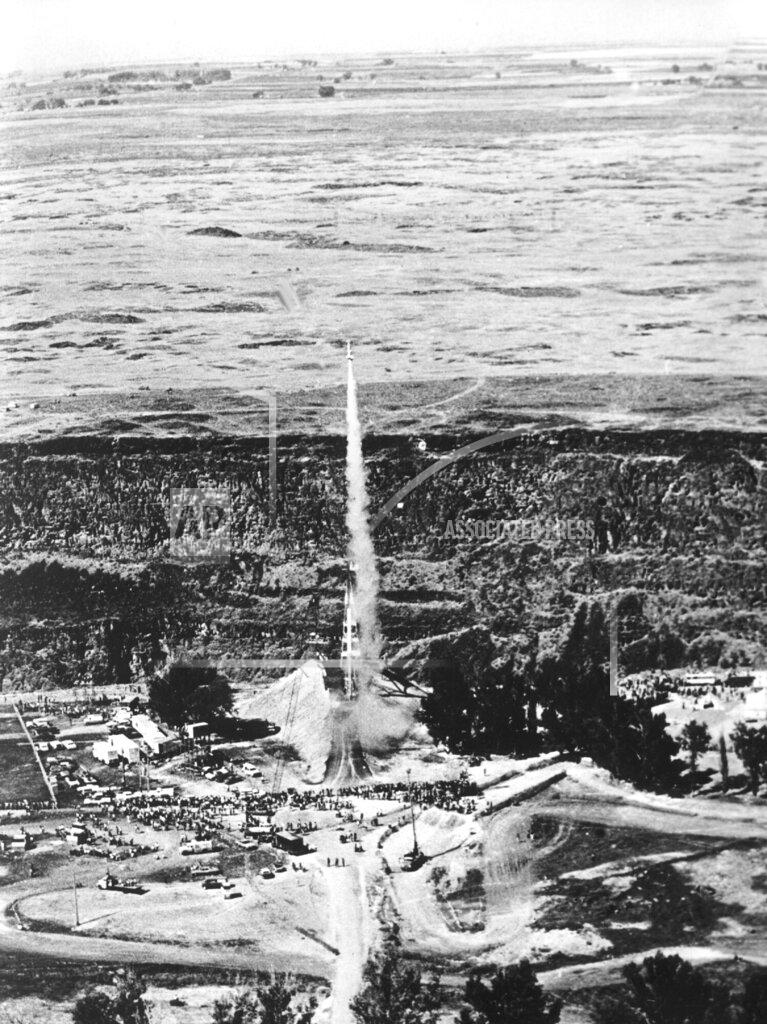
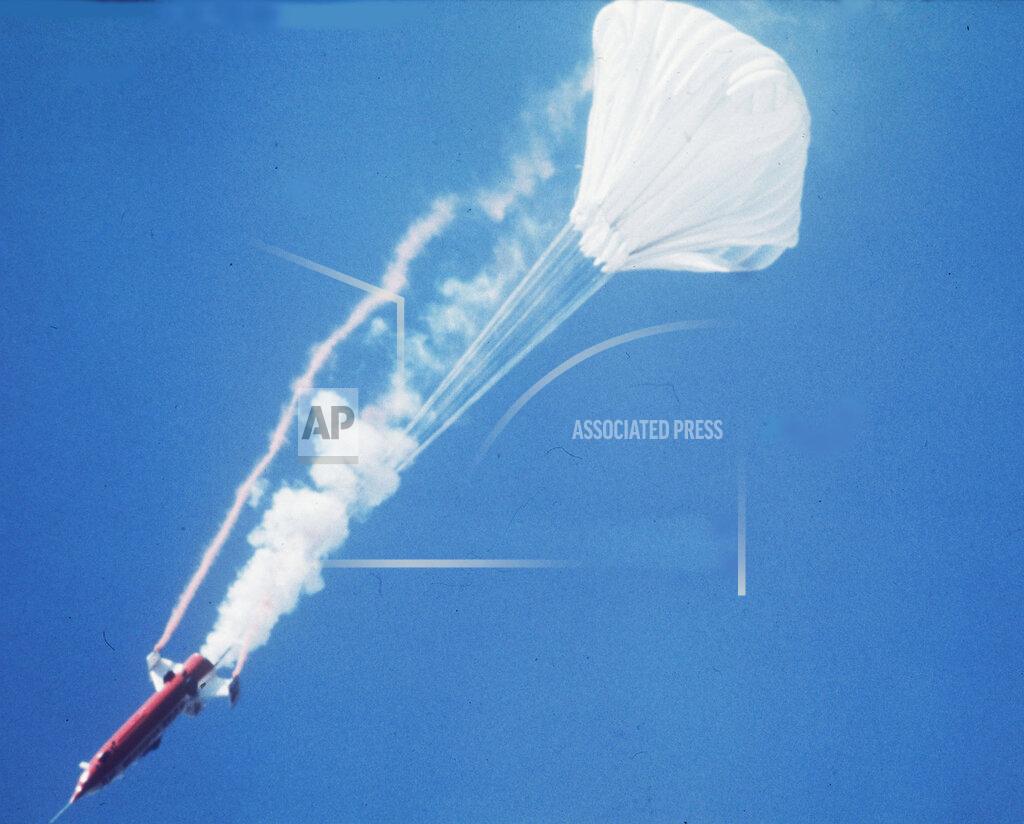
Robert (Evel) Knievel, the motorcycle stuntman, failed but survived in an attempt to rocket 1,600 feet across the Snake River Canyon in Twin Falls, Idaho. He mounted a 13-foot steam rocket in a stunt that attracted thousands of people. The flight aborted, however, almost as soon as the steam exploded from the rocket’s rear nozzle. Although Knievel cleared the canyon, a premature parachute deployment caused the rocket to drift back to the launch side, landing at the bottom of the canyon near the river. The rocket landed on its nose on the rocky bank of the Snake River, and Mr. Knievel was pulled unhurt from the craft several minutes later.
Betty Ford, stating “I can only be me,” traveled to the Deep South over the weekend and voiced support for passage of the Equal Rights Amendment despite a long-standing resistance in the area to the women’s equality issue. “I don’t mind tough problems,” she said, “I’m ready to face them.” Mrs. Ford took every opportunity to offer her full support for ERA, hinting that she might campaign for its passage in hold-out states “if my schedule permits.” Only five more states need to pass the ERA for it to become law. The First Lady added: “I believe that every woman has a place in this world, and I believe that whether you are a housewife, a mother or whether you want to go into a business… This is your choice and every woman should have their choice. And in that choice, I think they should be considered equal, and that’s what it’s all about.”
Big money — from family fortunes and large contributors — had a major role in the New York Democratic primary campaign despite new state and federal campaign-finance laws that were supposed to have reduced its influence. Interviews with campaign aides and an analysis of the campaign financial reports show that there was considerable evidence of circumventing of the new laws in fact and in spirit, possible unrecorded cash contributions and spending and even “laundering” of campaign contributions to circumvent the laws.
White prisoners have formed racist gangs, based on the ideologies of the Klu Klux Klan and the American Nazi Party, in a maximum security prison in southern Illinois, prison officials said in Chicago. About half of the 900 convicts in the prison, situated by the Mississippi River at Menard, Illinois, have become affiliated with the gangs, claiming they need protection from the 500 black prisoners there, the officials said.
Washoe District Judge John Gabrielli has ruled in Reno that a portion of Nevada’s death-penalty law is unconstitutional. The portion covers the murder of more than one person under a common scheme or plan. The judge called it vague and ambiguous. The decision came on a writ filed on behalf of Edward L. Smith, accused of murdering a couple last December. The law reinstating the death penalty in Nevada for certain crimes was passed by the 1973 legislature.
Attorney William M. Kunstler said he feared disbarment proceedings in New York unless he is vindicated of contempt charges stemming from the Chicago conspiracy trial of 1969-70. The lawyer, 54, said he has learned that the 7th U.S. Circuit Court of Appeals in Chicago upheld contempt convictions against him and three of his clients in the trial resulting from street disturbances during the 1968 Democratic National Convention.
Oregon state Senator Betty Roberts proposed the creation of local or regional amnesty boards to decide on individual cases of Vietnam draft evaders. She told an Oregon-Washington editors conference that the boards should be composed of ordinary citizens and be patterned after draft review boards. She is the Democratic nominee to the U.S. Senate.
A senior White House economic adviser said that he expects President Ford to take action to combat inflation within a few days of a presidential economic summit conference September 27-28. But Senator Edmund S. Muskie (D-Maine), chairman of the new congressional budget committee, said Mr. Ford ought to reconsider his outright rejection of wage and price controls as he prepares to preside over a meeting of labor officials later this week-the second presummit conference on inflation this month.
A Little League banquet at a Chicago church led to 109 diners being treated for food poisoning.
English progressive rock musician Robert Wyatt gave a concert at the Theatre Royal, Drury Lane, in London. Bootleg recordings of the 1974 concert would become available in the 1980s, and Wyatt’s album Theatre Royal Drury Lane 8th September 1974 would be released in 2005, more than thirty years after the concert.
American stunt pilot Shannon Leithoff was killed in the crash of her biplane in front of a crowd of 100,000 at an air show in South Weymouth, Massachusetts.
The first championship for women’s soccer football in West Germany was won by TuS Wörrstadt, 4–0 over DJK Eintracht Gelsenkirchen-Erle in the final, sanctioned by the Deutscher Fußball-Bund.
England’s Ian Thompson wins European Championship marathon in 2:13:18.8 in Rome, Italy.
U.S. Open Men’s Tennis, Forest Hills, New York: Jimmy Connors wins his first of 5 U.S. singles titles; outclasses veteran Australian Ken Rosewall 6–1, 6–0, 6–1 in last event played on grass.
The Boston Red Sox scrambled back into a tie for the lead in the American League Eastern Division yesterday after the Yankees were beaten by the Detroit Tigers. Meanwhile the Baltimore Orioles missed a chance to share the lead when their 10‐game winning streak was broken by the Cleveland Indians.
The Red Sox defeated the Milwaukee Brewers, 8–6, in Boston for their second victory after an eight‐game losing streak that tightened the race. The Boston hero yesterday was Dick Pole, a 24‐year‐old right‐hander, who has spent most of the season, his second in the majors, boucing back between the Red Sox and the Pawtucket (R.I.) Reds of the International League. He hurled seven strong innings in relief. Pole, who was the International League’s most valuable player last season, relieved Juan Marichal in the first with one out, the bases filled and the Brewers ahead, 2–0. After giving up a two‐run single to Tim Johnson, Pole struck out Pedro Garcia, ending the inning. He checked Milwaukee until the eighth when the Brewers scored two runs.
The Cleveland Indians, playing at home, beat the Baltimore Orioles, 7–4. The Indians, who had scored only two runs in their previous three games against the Orioles, got home runs from George Hendrick, Tom McCraw and Charlie Spikes. Jim Perry, making his 31st start of the season, needed help from Tom Buskey in the seventh before he gained his 15th victory in 25 decisions. Buskey came in with runners on first and third and one out and got Rich Coggins to hit into a double play. He blanked the Orioles in the next two innings and gained his 15th save of the season. Jim Palmer, who made his first start since coming off the disabled last, August 13, gave up eight hits in losing his 11th game. The 29‐year‐old right‐hander is now 3–3 since being idled with a sore arm for 54 days.
At Shea, the Detroit Tigers douse the New York Yankees, 11–3, as Bill Freehan leads the way with a 4 hits, including a grand slam, and 7 RBI. The loss, coupled with a Boston win, leaves the Yankees and Red Sox tied for 1st place in the American League East. New York was shelled at Shea Stadium by the Detroit Tigers while the Red Sox were topping the Milwaukee Brewers in Boston. That dropped the Yankees into a tie for first place with the Red Sox with 23 games left. The Baltimore Orioles, who lost to Cleveland after 10 straight triumphs, are one game behind. Tomorrow night the Yankees play the Red Sox in the opener of a two‐game series at Fenway Park. The main reason the Yankees are going to Boston tied for first instead of with a one‐game lead was the hitting of Bill Freehan. The Detroit catcher drove in seven runs with a grand‐slam home run and three singles in five times at bat. His 13th homer, over the left‐field wall in the third inning, put the Yankees on the wrong end of a 6–0 score. They could never challenge seriously as Joe Coleman pitched a seven‐hitter.
At Kansas City, Phil Roof goes deep for a grand slam to lead the Minnesota Twins to an 8–4 win over the Kansas City Royals. Roof, a catcher who had been used sparingly by the Twins, blasted the homer off Steve Mingori, the Royals’ relief pitcher, in the sixth when the Twins scored five runs, overcoming a 3–1 Kansas City lead. For Roof, who entered the game with a .213 batting average and just nine runs batted in for the season, it was the first grand slam of his 10‐year major league career.
Ferguson Jenkins tossed a seven‐hitter and gained his 22nd victory as the Texas Rangers won the seventh game in the last nine and moved within 5½ games of Oakland in the American League Western Division, beating the A’s, 5–1. Jenkins, beating the A’s for the fourth time this season, had pitched 29⅔ consecutive scoreless innings before Oakland scored in the ninth. Jenkins has limited Oakland to 16 hits in 36 innings this season.
The Chicago White Sox edged the California Angels, 1–0. Lee Richard’s double in the third, the only hit off Andy Hassler, led to the White Sox run. Richard scored on Dave Chalk’s throwing error, one of three committed by the third baseman. Jim Kaat with the help of Terry Forster, defeated California for the 21st time in his career.
Two pitchers each take their 20th loss of the season. Steve Rogers allows 3 runs in 7 innings as the Montreal Expos lose to the Pittsburgh Pirates, 8–2. The‐Pirates increased their Eastern Division lead over the St. Louis Cardinals to 2½ games. It was their sixth straight victory, their 14th in the last 16 games and 25th in the last 30. Pittsburgh wrapped up the game with a five‐run rally in the eighth that was sparked by Dave Parker’s pinch‐hit grand slam that put the game away for Jim Rooker.
Randy Jones loses his 20th as Houston edges the San Diego Padres, 3–2. The Astros’ Larry Howard hits a solo homer in the 7th to break a 2–2 tie and give the win to Tom Griffin (13–8). Ken Forsch got his 8th save for Houston in relief.
Mike Marshall of the Los Angeles Dodgers broke his major league record for pitching appearances in one season yesterday. He worked his 93rd game in relief as the Dodgers posted a 7–3 victory over the Reds in Cincinnati. Bill Buckner’s two‐run double highlighted the Dodgers three‐run rally in the sixth. Marshall greeted by loud boos when he relieved Charlie Hough in the eighth, had set the previous record of 92 appearances last season pitching for the Montreal Expos. He also broke his record for the most innings pitched in relief (180⅔). He had pitched 179 innings last season. The Dodger victory, their 11th in 15 meetings with the Reds, gave them a 3½ game lead in National League Western Division.
Lou Brock got on base twice and stole two bases today to tie Max Carey for the National League career record, but he wasn’t able to steal another base or the game for the St. Louis Cardinals. The New York Mets defeated the Cards, 5–3, largely on the strength of Wayne Garrett’s three‐run homer off Lynn McGlothen that propelled Tom Seaver to his 10th victory against eight losses. Brock’s steals, his 102d and 103d of the season, gave him 738 in all, which equaled Carey’s mark, set in 1929‐when he was with the Pittsburgh Pirates. Brock is one stolen base away from matching Maury Wills’s major‐league record of 104 for a season.
At Wrigley, the Philadelphia Phillies do their scoring in the 3rd and 8th innings to beat the Chicago Cubs, 11–10. Chicago makes it close with a grand slam by Jerry Morales in the 9th. The Phillies scored seven runs on six hits and three errors in the third and four more in the eighth. Willie Montanez drove in four Philadelphia runs with three hits and Gene Garber pitched 3⅔ hitless innings in relief. The Cubs had taken a three‐run lead in the first off Wayne Twitchell, who has not won since August 1.
The Atlanta Braves downed the San Francisco Giants, 5–3. Vic Correll, the Braves’ catcher, drove in three runs with a double and a single. His two‐run double in the fourth that tied the game at 3‐3 set off a controversy, the Braves contending the ball had cleared the left‐field fence for a homer. Umpire Jerry Dale disagreed. Dave Johnson drove in the go‐ahead run with an infield single in the fifth.
Born:
Amani Toomer, NFL wide receiver (NFL Champions, Super Bowl 42-Giants; New York Giants), in Berkeley, California.
Kevin Lockett, NFL wide receiver (Kansas City Chiefs, Washington Redskins, Jacksonville Jaguars, New York Jets), father of Tyler Lockett, in Tulsa, Oklahoma.
Susanna Bonfiglio, Italian National Team and WNBA guard (Olympics, 1996; Phoenix Mercury), in Savonna, Italy.
Tanaz Eshaghian, Iranian-American documentary filmmaker (“Be Like Others”), in Iran.
Died:
Dhani Nivat, 88, Thai Prince who served as Regent of Thailand for 21 months in 1951 and 1952 while King Bhumibol Adulyadej was attending college in Switzerland.
Clarence Senior, 71, American socialist political activist, former Executive Secretary of the Socialist Party of America, died of a cerebral hemorrhage.
Robert Cox, 79, American comic actor, last surviving member of Keystone Kops.
Wolfgang Windgassen, 60, German director of the Stuttgart Opera and operatic heldentenor known for Wagnerian roles, died of a heart attack.


 History Diaries