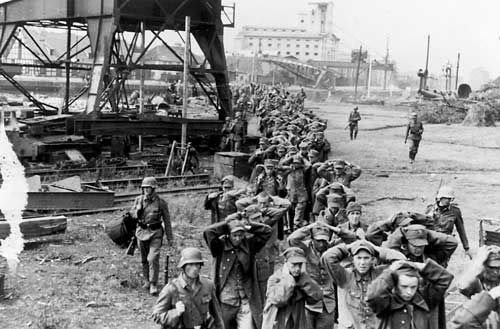
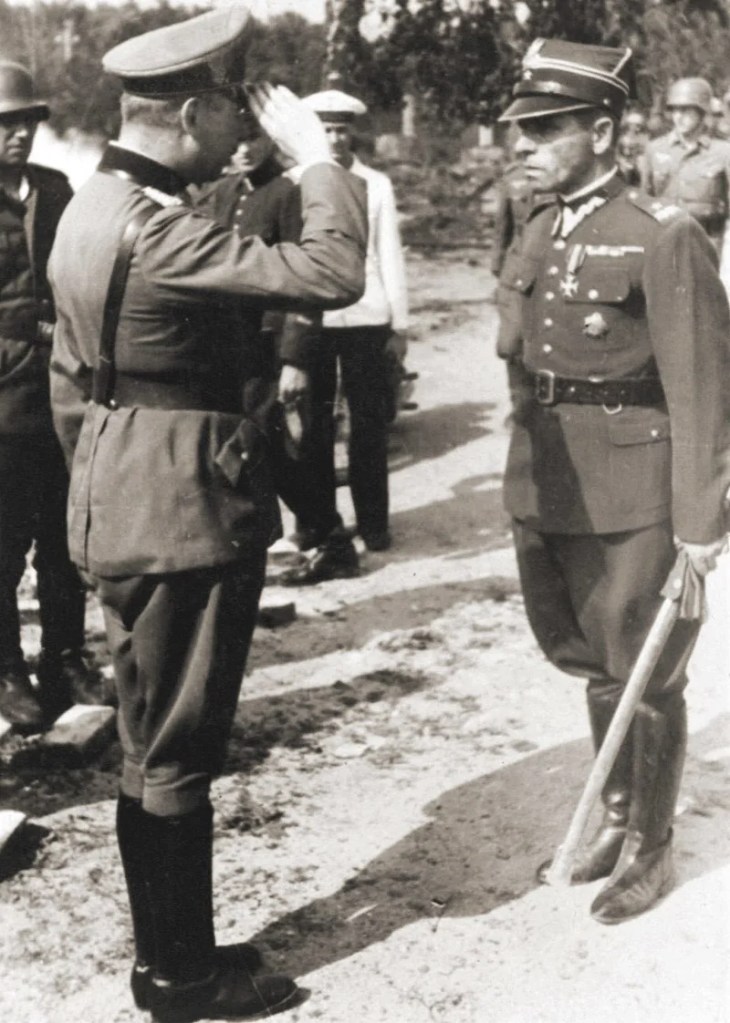
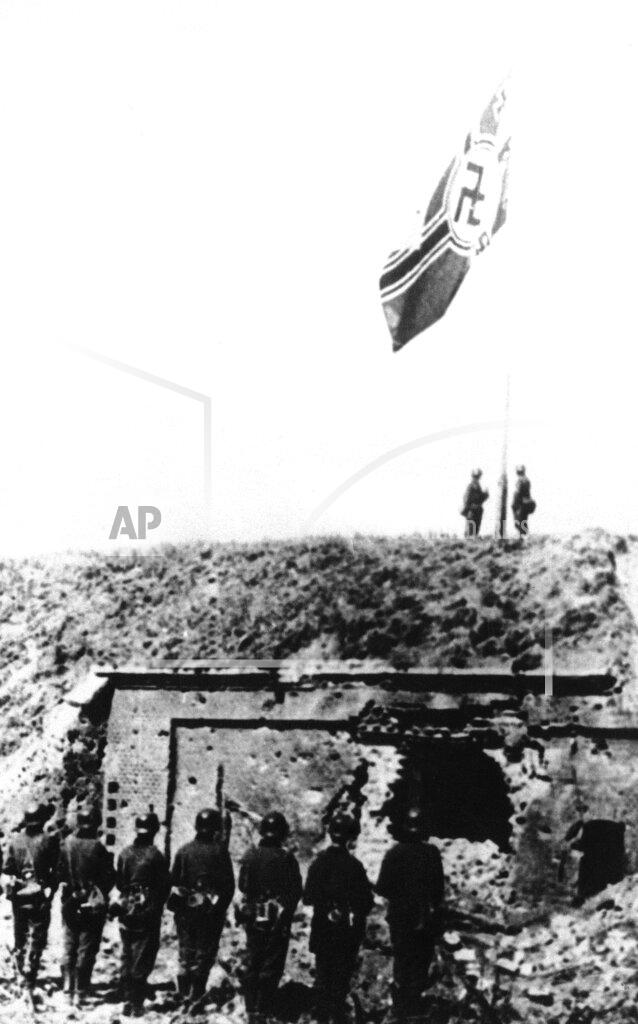
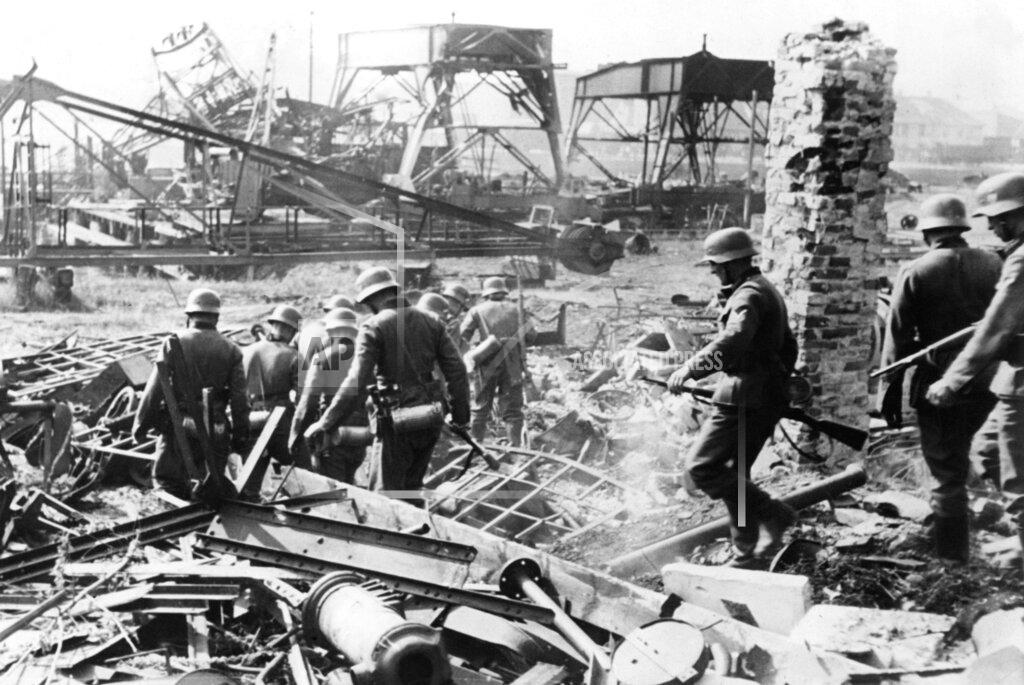
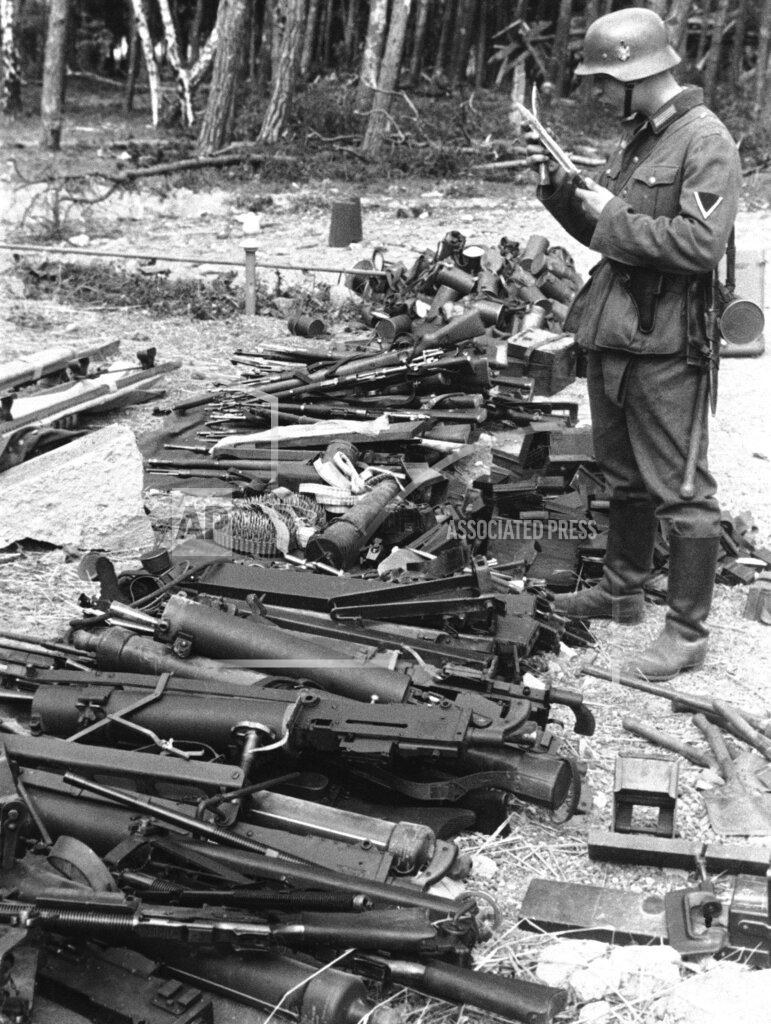
The Battle of Westerplatte ended with the surrender of the Polish garrison. The Poles had held out for seven days and repelled thirteen assaults that included dive-bomber attacks and naval shelling. At 09:45 on 7 September 1939, a white flag appeared. The Polish defence had so impressed the Germans that their commander, General Friedrich Eberhardt, initially let Major Henryk Sucharski keep his ceremonial szabla (Polish saber) in captivity, although it would be confiscated later. Contemporary English-language publications which reported on the event, such as Life and the Pictorial History of the War, misidentified the Polish commander as a Major “Koscianski”. Sucharski surrendered the post to Kleikamp, and the Germans stood at attention as the Polish garrison marched out at 11:30. Over 3,000 Germans, including soldiers and support formations such as the Danzig Police, had been tied up in the week-long operation against the small Polish garrison; about half of the Germans (570 on land, over 900 at sea) had taken part in direct action. German casualties totalled 50 killed (16 from the Kriegsmarine) and 150 wounded. The Poles had lost 15 men and had sustained at least 40 wounded.
The battleship Schleswig-Holstein, which had begun the war by firing on Westerplatte, now switches its fire to the Polish naval base at Hela.
The Battle of Łomża began. The battle took place in and around the town of Łomża, on both sides of the Narew River. Polish forces successfully held a series of pre-First World War forts from repeated German attack before being forced to withdraw due to the position becoming untenable following their losses at the Battle of Wizna and Battle of Nowogród. On 7 September, shortly after noon, the 21st Infantry Division of XXI Army Corps (Germany) (under Gen. Nikolaus von Falkenhorst) reached the forward outposts of the Polish positions in front of Łomża. The German commander tried to take the Polish positions by a frontal unprepared attack, aimed towards forts I and II. The attack, carried out by 24th Infantry Regiment of the 21st Division reinforced with tanks of the 8th Panzer Regiment, 10th Panzer Division and artillery, was repelled by Polish machine gun crews and well-placed 37 mm Bofors anti-tank guns. The attacking infantry was repelled with significant losses, the Germans also lost 6 tanks.
Several repeated attacks were repelled by the 1st Battalion, 33rd Infantry Regiment. In the evening the 21st Division tried to outflank the Łomża bridgehead by fording the Narew, but the Germans were pushed back across the river by vigorous Polish counterattack. By the end of the day the Germans suffered significant losses, the Poles took 57 German soldiers prisoner. The 21st Division withdrew to the north, leaving only a small detachment in front of Polish positions. The following morning after a short artillery barrage the screening detachment surrendered.
Despite repeated attempts, through the end of the third day the Germans had not managed to destroy a single Polish bunker and had to retreat from within the range of Polish artillery. Despite three days of repeated German attacks and significant losses (roughly 30% in dead and wounded), Polish morale was still high. However, soon after 21:00 on 10 September, Colonel Stefan Kossecki, commanding officer of the 18th Infantry Division, ordered the Łomża position to be abandoned. The reason was that the Germans were victorious in the Battle of Nowogród and the Poles failed to retake the town. Around the time the Germans also broke through at Wizna and the Narew river line was untenable.
With Warsaw already threatened from the west, Marshal Edward Rydz-Śmigły relocates his Polish Army headquarters further east from Warsaw to Brest-Litovsk (Brest, Belarus). He and the rest of the government now realize that the line of the Narew cannot be held.
The Battle of Wizna began. According to Polish historian Leszek Moczulski, between 350 and 720 Poles defended a fortified line for three days against more than 40,000 Germans. Although defeat was inevitable, the Polish defence stalled the attacking forces for three days and postponed the encirclement of Independent Operational Group Narew fighting nearby. Eventually the tanks broke through the Polish line and German engineers eliminated all the shelters one by one. The last shelter surrendered around midday on September 10. Because the battle consisted of a small force holding a piece of fortified territory against a vastly larger invasion for three days at great cost before being annihilated, Wizna is sometimes referred to as the “Polish Thermopylae”. One of the symbols of the battle is Captain Władysław Raginis, the commanding officer of the Polish force, who swore to hold his position as long as he was alive. When the last two shelters under his command ran out of ammunition, he ordered his men to surrender their arms and committed suicide by detonating a grenade against his neck.
The Battle of Wizna is the theme of the song “40:1”, on the album The Art of War by the Swedish metal band Sabaton. The title comes from the disparate ratio of forces and the lyrics compare the Polish forces with the 300 Spartan warriors at the battle of Thermopylae.
The Saar “Offensive”: The French Army began a ground operation in the Saarland against light German defenses. Elements of the French Army enter the Saarland region of Germany, but make no move on the Westwall. French forces cross the German border at three different locations: near Saarbrücken, Saarlouis, and Zweibrücken. The French meet little resistance due to the fact that Hitler had ordered German units near the border not to engage the French units unless they were attacked and forced to return fire. The transfer of troops to Poland has left only eleven regular divisions plus the equivalent of one division of fortress troops defending the western frontier. These are supported by 35 recently-formed divisions of second-, third-, and fourth-line troops. There are no armored or motorized units facing west; they have all been transferred to the east.
Almost everyone expected a major French attack on the Western Front soon after the start of the war, but Britain and France were cautious as both feared large German air attacks on their cities; they did not know that 90 percent of German frontline aircraft were in Poland nor did they realise that the few German units that were holding the line had effectively been “pared to the bone” and stripped of any real fighting capability leaving the French unknowingly with a 3:1 advantage over the Germans. Consequently what followed was what historian Roger Moorhouse called a “sham offensive on the Saar” that began on 7 September, four days after France declared war on Germany. The Wehrmacht was engaged in the attack on Poland and the French enjoyed a decisive numerical advantage along the border with Germany but the French did not take any action that was able to assist the Poles. Eleven French divisions, part of the Second Army Group, advanced along a 32-kilometer (20 miles) front near Saarbrücken, against weak German opposition. The French army advanced to as far as 8 km (5 miles) in some areas, and captured about 12 towns and villages with no resistance: Gersheim, Medelsheim, Ihn, Niedergailbach, Bliesmengen, Ludweiler, Brenschelbach, Lauterbach, Niedaltdorf, Kleinblittersdorf, Auersmacher, and Sitterswald (occasionally called “Hitlersdorf” in some French reports). Four Renault R35 tanks were destroyed by mines north of Bliesbrück.
The Polish Army general plan for defence, Plan West, assumed that the Allied offensive on the Western Front would provide a significant relief to the Polish Front in the East. However, the limited and half-hearted Saar Offensive did not result in any diversion of German troops. The 40-division all-out assault never materialised. On 12 September, the Anglo-French Supreme War Council gathered for the first time at Abbeville in France. It was decided that all offensive actions were to be halted immediately. General Maurice Gamelin ordered his troops to stop “not closer than 1 kilometer (0.6 miles)” from the German positions along the Siegfried Line. Poland was not notified of this decision. Instead, Gamelin incorrectly informed Marshal Edward Rydz-Śmigły that half of his divisions were in contact with the enemy, and that French advances had forced the Wehrmacht to withdraw at least six divisions from Poland.
The French held German territory along all of the Rhine-Moselle front, but after the collapse of Poland, General Maurice Gamelin on 21 September ordered French units to return to their starting positions on the Maginot Line. Some French generals, such as Henri Giraud, saw the withdrawal as a wasted opportunity and made known their disagreement with it. From 16 to 17 October, the German army, now reinforced with troops returning from the Polish campaign, conducted a counteroffensive that retook the remainder of the lost territory, still held by French covering forces, which withdrew as planned. At the Nuremberg Trials, German military commander Alfred Jodl said that “if we did not collapse already in the year 1939 that was due only to the fact that during the Polish campaign, the approximately 110 French and British divisions in the West were held completely inactive against the 23 German divisions.” General Siegfried Westphal stated that if the French had attacked in full force in September 1939 the German army “could only have held out for one or two weeks.”
Hitler appoints General Kurt Freiherr von Hammerstein to be the commander of Army Detachment A, an ad hoc force for the defense of the Siegfried Line. Hammerstein is overdue for retirement, and his appointment is an expression of Hitler’s desire that nothing dramatic occurs along the Western Front. Factories in Saarbrücken continue to operate as normal with French forces just miles away and virtually no defenses in between.
Heydrich tells his division heads that the Polish leadership must be “neutralized.” The Einsatzgruppen already had lists of people considered to be hostile to Germany, which included members of Polish patriotic organizations, communists, clergymen, noblemen, and Jews.
Germans bombs fall in Lithuania along the Polish border.
Germany extends its list of crimes. Violations of new decrees are punishable by long prison terms or even death. Stealing during the nightly blackout, for example, regardless of the amount or value of the things. stolen, will henceforth be punishable by death. This stringency, it is stated, is imperative because in the event of air raids the doors of all houses and apartments must be left open so that possible fires may be quickly extinguished. The crime of sabotage, punishable with death, is extended to cover such offenses as intentionally remaining away from a job or, in the case of physicians, remaining away from required service in hospitals.
All British citizens over 15 years of age as well as those of Northern Ireland, India, British colonies, protectorates and mandates now in Greater Germany, have been ordered by the Ministry of the Interior to report within the next twenty-four hours to the police. Those under fifteen are to report either in person or in writing. All those who are stateless, furthermore, must register with the police and may leave the places in which they are now located only with permission of the authorities. French citizens are not mentioned in the order.
Jewish emigration from Germany ceases. Emigration of Jews from Germany has practically ceased since the British and French declarations of a state of war. However, a few emigrants still are leaving for the United States, South America and other overseas points via neutral countries like Denmark and Italy. For an emigrant to use these routes, someone abroad must pay the passage from the neutral port in advance. It is impossible to buy passage with marks. The flow of Jews to Britain has ended. The last Jews who went to Britain were several hundred who, after all train connections were cut several days ago, boarded street cars running across the Netherlands frontier from Cleve.
The Reich Union of Jews canceled all Jewish theater, cinema and lecture programs and other large gatherings except synagogue services and warned Jews to observe strictly the wartime measures of blackouts and food distribution. The number of Jews assigned to jobs by the official Jewish Labor Exchange is growing daily because of the withdrawal of manpower to the army. It was estimated that half the able-bodied Jewish men now are working on roads, farms and building projects, while many women are doing sewing, clerical and farm work.
Gibraltar experienced its first air raid alarm this morning, when sirens and wardens’ whistles were heard all over the town. Crowds in the streets promptly but calmly went to their shelters. First aid and other stations were manned. Fifteen minutes later it was ascertained the scare had been caused by a Spanish mail plane.
More than 300 deserters from the Slovak Army fled across the frontier to this little village in Northern Hungary today. They told police that hundreds of men called to army service by the German-directed Slovak general staff had fled into the woods and were seeking a way to escape to Hungary. The Slovak Hlinka Guard, they related, is watching the frontiers and shooting deserters.
At last Friday’s Reichstag session Chancellor Hitler announced that those who failed to cooperate with the government must fall. Today Johann Heinen of Dessau was shot for sabotage. Heinen, who had a criminal record for robbery, was convicted of refusal to cooperate on tasks for “securing the nation’s defense.”
The German coaster Lianne struck a mine and sank in the Baltic Sea off the island Møn.
The German cargo ship Vegesack ran aground at Midtfjøra, Tananger, Norway and was a total loss.
The Dutch steamship Batavia is attacked but the torpedoes miss.
Italy sees Germany acting in the Balkans. A Polish collapse would leave the Nazis free to expand in other areas. This could make it more difficult for Italy to maintain her tenuous neutrality.
French civic life runs smoothly. Mail, railroad services, and markets return to normal.
The BBC begins broadcasts in Polish.
The formation of a Czech legion has been started in London by Dr. Edvard Beneš, former President of CzechoSlovakia; Jan Masaryk, son of the first President of that country, and other exiles from Czecho-Slovakia, it was learned today.
Ambassador to Germany Sir Neville Henderson is repatriated to England.
General Viscount Lord Gort is appointed to command the British Expeditionary Force.
The Eire government calls up volunteers to supplement Army reserve.
First British Atlantic convoys sail. Convoy escorts are provided to 12.5 degrees W. Merchants are not required to sail in convoy and in fact many of the faster ones do not. U-boat successes at this stage are among these “independents.”
The British steam merchant Olivegrove is torpedoed and sunk by the U-33, commanded by Kapitänleutnant Hans-Wilhelm von Dresky, about 420 miles west-southwest of Lands’ End, England in the eastern Atlantic Ocean. Upon receiving the Olivegrove’s distress signal, the U.S. passenger liner Washington, en route to the British Isles to evacuate American citizens from the European war zone, alters course and increases speed to reach the scene. Meanwhile the Germans treat the British survivors courteously, and aid in their rescue by having distress rockets fired to guide the Washington to the two lifeboats containing the 33 man crew, which she picks up without loss. The 4,060-ton Olivegrove was carrying sugar and was bound for London, England.
The unescorted British steam merchant Pukkastan is stopped by gunfire and after the crew abandoned ship is torpedoed and sunk by the U-34, commanded by Kapitänleutnant Wilhelm Rollmann, southwest of the Isles of Scilly in the eastern Atlantic Ocean. Of the ship’s complement, all 35 survive and are picked up by the Dutch steam merchant Bilderdijk. The 6,856-ton Pukkastan was carrying maize and mutton and was bound for Rotterdam.
The unescorted British steam merchant Gartavon is sunk by gunfire by the U-47, commanded by Kapitänleutnant Günther Prien, 260 miles west-northwest of Cape Finisterre off the west coast Spain in the eastern Atlantic Ocean. Of the ship’s complement, all 25 survive and are picked up by the Swedish motor tanker Castor. The 1,777-ton Gartavon was carrying iron ore and general cargo, including asphalt and was bound for Clyde, United Kingdom.
Adolf Hitler orders Erich Raeder to hold back the German Navy from attacking British and French warships. Hitler meets with Admiral Raeder, CIC of the Kriegsmarine. He issues the Athenia Order, which is that “in order not to provoke neutral countries, the United States, in particular, it is forbidden to torpedo passenger steamers, even when sailing in convoy. Warfare against French merchant ships, attacks on French warships and mine laying off French ports is prohibited.”
Iraq, independent since 1932, breaks diplomatic relations with Germany. The British maintain two RAF bases there, RAF Shaibah, near Basra, and RAF Habbaniya, between Ramadi and Fallujah.
Developments here today heightened the belief that President Roosevelt will soon call a special session of Congress to consider lifting the arms and aircraft embargo which he was compelled by law to impose this week on shipments to belligerents in the European war. Despite White House assertions that no decision had been reached as to an extra session or as to the time when it might be called, the President communicated by telephone with Congressional leaders relative to a session on or about September 18. Among those whose advice he sought were Senators Barkley of Kentucky and McNary of Oregon, leaders, respectively, of the majority and minority in the Senate.
The President’s purpose through these preliminary conversations is to insure the quickest possible action on revision of the neutrality statute and to end the factional and partisan breaches which developed at the last regular session to the end that this government will present a solid front to the world, in pursuance of whatever foreign policy may be dictated by events. It is understood that the special session would confine itself to consideration of neutrality legislation.
The President called an emergency Cabinet meeting today and it lasted nearly two hours. He detailed to the Cabinet the progress which he had been making in sounding Congressional sentiment on Neutrality Act revision under the plan for governmental unity which he first disclosed to the Cabinet soon after the beginning of the European war on Friday. Also discussed with the members of the Cabinet were the steps taken or contemplated by the Administration to insulate this country, as well as the Western Hemisphere, against war shocks from overseas. Throughout the day Mr. Roosevelt held a succession of discussions with heads of the diplomatic, naval and legal arms of the government.
That the President was canvassing the sentiment of Congressional leaders regarding a special session was made known by the White House after Senator McNary, at his home in Salem, Oregon, told of his telephone conversation with the Chief Executive. The Senator said he had received the impression that the special session call would be for September 18. In confirmation of the report, Stephen T. Early, the President’s secretary, said that Mr. Roosevelt had discussed the plan during the last week with leaders of both parties in both houses of Congress. He insisted, however, that not only had the President not decided upon a date but that he had yet to decide whether to call a special session at all.
In a telephone conversation with the Washington Bureau of The New York Times from his home, Senator McNary said he had promised the President full cooperation in bringing about early action on neutrality revision proposals. The Senator declined to state his position on the question at this time, or to prophesy the outcome. His pledge was to use his offices as minority leader to prevent unusual delay in bringing the matter to a vote, he explained. “I see no need to take up anything else at the special session,” the Senator said. “We should act on the neutrality question and adjourn as quickly thereafter as possible.”
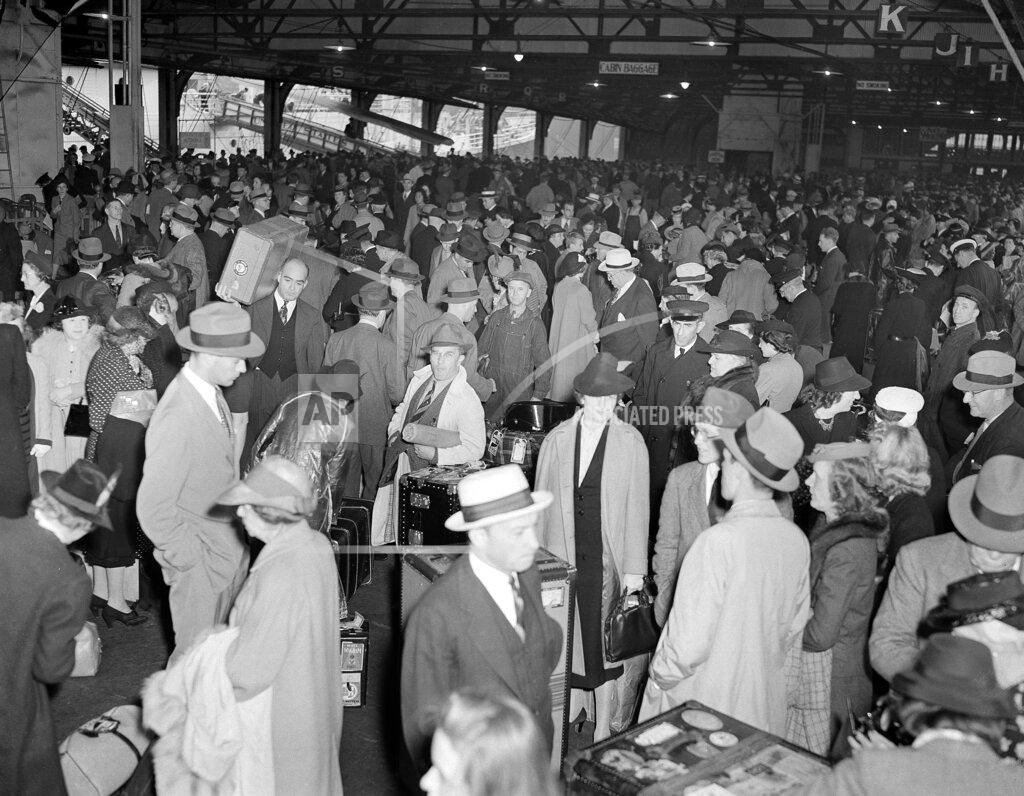
The Maritime Commission announced today, after Joseph P. Kennedy, the American Ambassador in London, had appealed by telephone for it to speed up its evacuation activities, that accommodations for approximately 3,000 passengers are provided on American ships sailing this week from New York to Europe. American ships sailing from British and French channel ports this week for New York can accommodate 2,500, it was added. The commission estimated that 8,000 Americans can be evacuated from Europe in American passenger vessels in the next four weeks, while several thousand more may be brought over in Spanish, Norwegian and Netherland ships. Ambassador Kennedy, who was the first chairman of the Maritime Commission, talked with Max O’Bell Truitt, member of the commission and an old friend, in making what was described as a vigorous request.
Ben Gitlow, general secretary of the Communist party from 1922 to 1929, testified today before the House committee investigating un-American activities that the party received $100,000 to $150,000 a year from the Communist International in Moscow during that period. Although he had no first-hand information as to whether the payments have continued since, Mr. Gitlow declared that the party set-up and activities convinced him that the subsidies were still being paid. Rhea Whitley, committee counsel, said later witnesses would present evidence to this effect.
In the early years, just after the party’s founding, Mr. Gitlow said the aid came in the form of diamonds and other jewels because dollar exchange was not available in Russia. Later it was sent in cash by courier or cable, he added. Earl Browder told the committee yesterday that the party had not received a cent from any foreign sources since he became its general secretary in 1930, about eighteen months after Mr. Gitlow was expelled from the party because of his objection to the Communist “line.”
Secretary Morgenthau rounded out his emergency advisory group today with the naming of three economists in addition to the three bankers already named.
Washington sees no new tax need. Assuming neutrality, war should increase revenues.
“At least seven” officers of the Regular army and the National Guard have participated in rallies of the German-American Bund in this area, according to agents of the Federal Bureau of Investigation.
Army and navy recruiting campaigns have been accelerated to keep pace with demands of neutrality enforcement.
Buick plans to reduce prices on nine automobile models and to add additional features on new cars at no extra cost.
Princeton researchers trace the luminescence of fireflies and the sea bacteria to two chemicals, stating that their lights are 97 percent effective compared to a 12 percent effective rate of a light bulb.
Cruiser Division 7 (Rear Admiral Andrew C. Pickens) sails to establish patrol off the eastern seaboard between Newport, Rhode Island, and Norfolk, Virginia. Heavy cruisers Quincy (CA-39) and Vincennes (CA-44) depart first, San Francisco (CA-38) (flagship) and Tuscaloosa (CA-37) follow. The ships, burning running lights, are to observe and report the movements of foreign men-of-war, and, as required, render prompt assistance to ships or planes encountered.
U.S. freighter Lehigh, detained by British authorities since 5 September, is released.
U.S. freighter Warrior is detained by the British.
U.S. passenger liner Santa Paula is hailed by British cruiser (unidentified) 30 miles off Curaçao, N.W.I. and ordered to stop; after a delay of 20 minutes, Santa Paula is allowed to proceed.
Tanker I.C. White is challenged by cruiser (nationality unidentified) 15 miles off Baranquilla, Colombia, but is allowed to proceed without further hindrance.
Houston’s Harry “The Cat” Brecheen sets a Texas League record with his fourth consecutive shutout as he beats Beaumont, 7–0. Brecheen’s other wins were against San Antonio, 3–0, on August 21; Ft. Worth, 6–0, August 25; Oklahoma City, 16–0, August 29th. The Cat’s 18–7 season will earn him a step up to Columbus next year.
Joe DiMaggio hits his 27th home run in the first inning and the New York Yankees beat the Boston Red Sox again, 5–2. DiMaggio is hitting .408 on the season and has 119 RBIs with three weeks left in the season. Frank Crosetti added two doubles. The Yankees now lead the Sox by 16½ games.
The Chicago White Sox entrenched themselves in third place today by winning a double-header from the last-place St. Louis Browns, 8–4 and 11–4. Chicago went on rampages in the ninth inning of both games. In the first contest the score was 4–4 as Chicago went to bat in the ninth and the four runs decided the contest. Six runs were scored in the ninth of the second game but were unneeded as Chicago was leading, 5–4, as the inning opened. The victories gave the White Sox a sweep of the three-game series.
Detroit went into today’s game with Cleveland a single percentage point behind the Indians and fully expecting to take fourth place from them before nightfall. Their prospects looked good for six and a half innings, then the Indians got to Freddie Hutchinson and Schoolboy Rowe, and spoiled the Tigers’ best-laid plans, 9–8. Hal Trosky’s four hits, including his twenty-fourth homer of the season, led the Tribe’s sixteen-hit attack. Hank Greenberg’s twenty-sixth and twenty-seventh homers and double helped send Mel Harder to the showers, but he was the official winner
Kendall Chase’s five-hit pitching and his mates’ sixteen-hit assault on two Philadelphia pitchers gave the Washington Senators a 10–1 victory over the Athletics and Chase his tenth victory of the season today.
The Pittsburgh Pirates beat Cincinnati, 8–7, in eleven innings today, the ferver of two young rookies, Maurice Van Robays and Bob Elliott, reducing at least temporarily the surging pennant fever of the Reds. Eliott hit a single, two doubles and a home run. Van Robays added three more hits.
The St. Louis Cardinals edged the Chicago Cubs 4–2, in ten innings, as the Cubs commit four errors. The most costly is by pitcher Bill Lee in the tenth; Enos Slaughter ends up on third base and scores soon thereafter.
New York’s Carl Hubbell, near his ninth victory, lost it in the bottom of the ninth inning and the ever-dependable Harry Danning fell down at the most crucial point as the Boston Bees rallied to record a 4–3 decision over the Giants. Hubbell was unable to get anyone out in the ninth and the Bees scored twice to win it. Catcher Danning dropped a throw to the plate and that allowed the winning run to score.
Canada’s second war Parliament in twenty-five years assembled here. today to hear from Governor General Lord Tweedsmuir that it had been “summoned in order that the government may seek authority for the measures necessary for the defense of Canada and for cooperation in the determined effort which is being made to resist further aggression.”
“You will be asked,” members were told, “to consider estimates to provide for expenditure which has been or may be caused by the state of war which now exists.” A White Paper was presented, but it did not, like that of the Australian Government, contain revealing correspondence between Ottawa and Downing Street. The speech from the throne, which opened the session, and the tabling of emergency orders-in-council already passed by the government, which was the only other business of today, did not in fact add anything to what already has been known or guessed of the Canadian Government’s intentions.
Coincident with the loss of German trade by Latin America because of the war, business and financial experts here believe Mexico is headed for a boom period. They cite the rise in the peso and the increase in demands for Mexican metals and raw products generally.
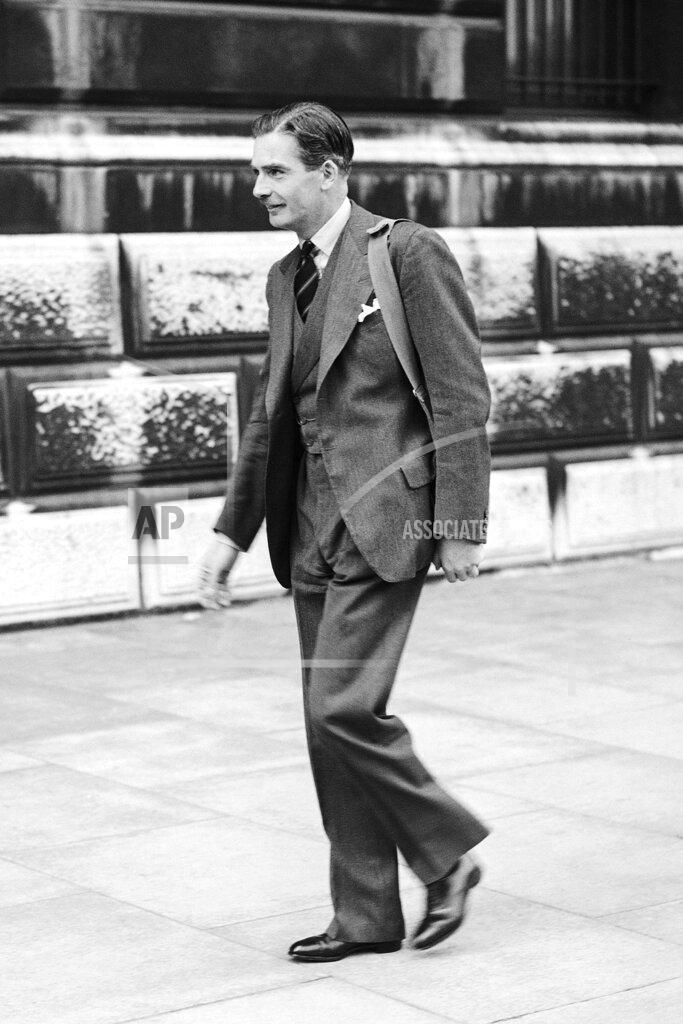
The Japanese Government has addressed an aide-memoire to the envoys of Britain, Germany. France and Poland In Tokyo saying that if the other powers wished to withdraw their troops from China Japan would be ready to protect their nationals and interests, Richard Austen Butler, Foreign Under Secretary, told the House of Commons today. At the same time Japan said that she intended to concentrate all her efforts on the settlement of the dispute with China. It is not announced what the British reply to this diplomatic move will be, but in the past the British have always taken the position that any action that they might take in China could be taken only after a full consultation with all the other nations having treaty rights and interests there, including the United States. Therefore, unless the advent of war has changed the British attitude, their reply would be that they could not act in China without consultation. The Anglo-Japanese negotiations concerning Tientsin are at present suspended, Mr. Butler said. He added, however, that the British were always ready to resume them in the hope that an agreement could be reached. Meanwhile, he added, the situation at Tientsin is unchanged except for complications added by the floods
Dow Jones Industrial Average: 148.32 (+0.28).
Born:
Stanislav Petrov, lieutenant colonel of the Soviet Air Defence Forces, “the man who saved the world from nuclear war” in 1983, in Vladivostok, Russian SFSR, Soviet Union (d. 2017).
Donnie Allison, American racing driver (NASCAR Grand National/Winston Cup circuit; 10 wins), in Miami, Florida.
Stanley David Griggs, American astronaut (STS-51-D), STS-33), in Portland, Oregon (d. 1989).
Chuck Allen, AFL and NFL linebacker (AFL Champions-Chargers, 1963; All-AFL, 1963, 1964; San Diego Chargers, Pittsburgh Steelers, Philadelphia Eagles), in Cle Elum, Washington (d. 2016).
[Benjamin] Latimore, American blues singer and piano player (“Let’s Straighten It Out”), in Charleston, Tennessee.
Naval Construction:
The oil tanker SS Ohio is laid down for The Texas Company (later Texaco) at the Sun Shipbuilding & Drydock Co. in Chester, Pennsylvania. The United Kingdom requisitioned it to re-supply the island fortress of Malta during the Second World War. The tanker played a key role in Operation PEDESTAL, which was one of the fiercest and most heavily contested of the Malta convoys, in August 1942. Although Ohio reached Malta successfully, it was so badly damaged that it had to be effectively scuttled in order to offload its cargo, and never sailed again. The tanker is fondly remembered in Malta, where to this day it is considered the saviour of the beleaguered island.
The Sjøforsvaret (Royal Norwegian Navy) Sleipner-class destroyer HNoMS Tor is launched by Fredrikstad Mekaniske Verksted (Fredrikstad, Norway); completed by Karljohansvern naval yard (Horten, Norway). Scuttled by own crew to prevent capture by the Germans. Salvaged and commissioned into Kreigsmarine service as Tiger in June 1940. Returned to Norway post-war.
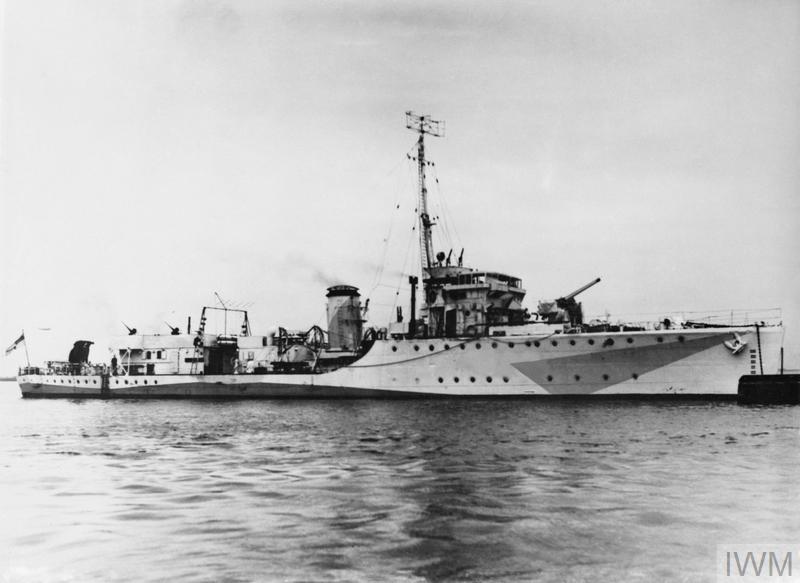
The Royal Navy Kingfisher-class patrol sloop (later rated as corvette) HMS Shearwater (L 39; later K 39) is commissioned. Her first commanding officer is Lieutenant Commander Philip Frederick Powlett, RN.


 History Diaries