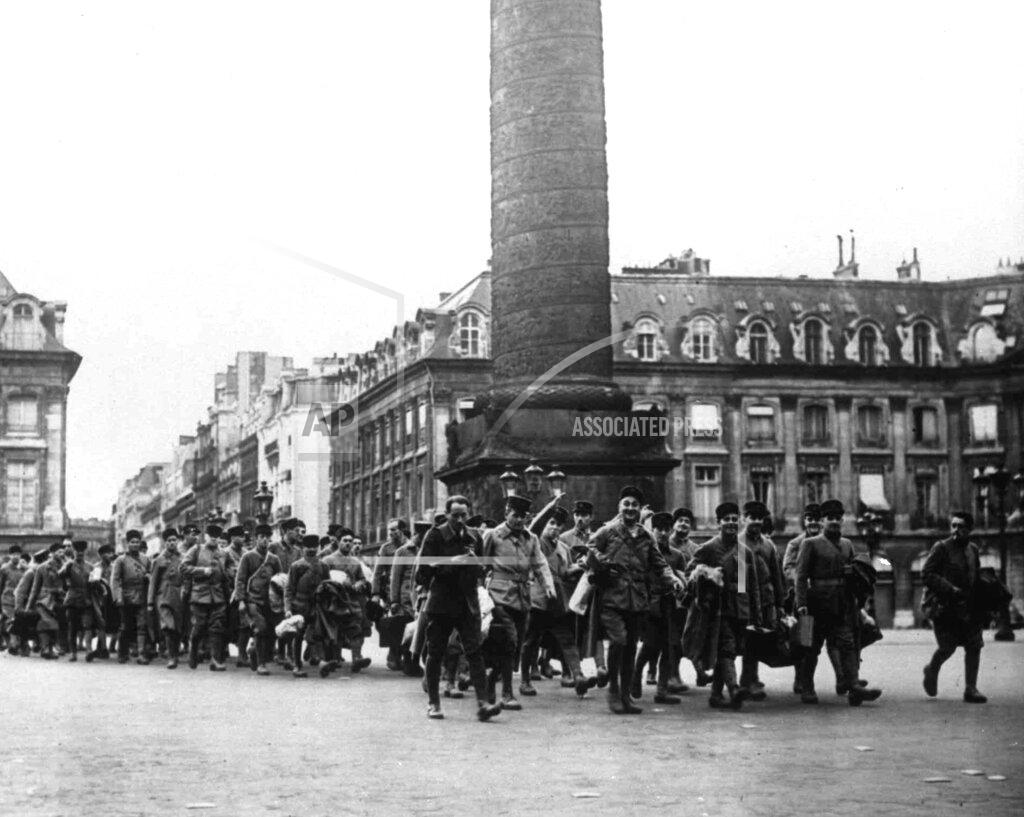
The Battle of the Border (Bitwa graniczna) ended. Polish forces were in retreat, and Marshal of Poland Edward Rydz-Śmigły ordered all troops to fall back to the secondary lines of defences at the vistula and San rivers. Virtually all battles that are considered part of the Battle of the Border (with the exception of the Battle of Hel, which lasted for more than a month, and the Battle of Mokra, a Polish defensive victory) resulted in the rapid defeat of Polish forces, which were forced to abandon the regions of Pomerania, Greater Poland and Silesia. Those defeats, in turn, made it more difficult for the Polish forces to fall back in an organised way to the secondary lines of defence (behind the Vistula and near the Romanian Bridgehead).
The four-day Battle of Pszczyna ended in German victory. The Polish conducted a successful separation and withdrawal, however they paid dearly (Polish withdrawal was successful mainly thanks to a diversionary counterattack on Ćwiklice made by two battalions from the 16th infantry regiment which gave time for other units to regroup and withdraw). The defeat suffered at Pszczyna (which also caused a loss of a significant percent of divisional artillery) forced the Polish High Command to pull back the entire frontline, and cede the territory of Upper Silesia to the Germans.
The Battle of Różan began in the fields before the town of Różan on the Narew River. A small Polish garrison of three World War I forts (consisting of two infantry battalions) successfully defended the bridgehead against the entire German panzer division for the entire day and night. However, as a result of a misunderstanding of the commander in chief’s orders, the Polish forces were then withdrawn to the other side of the river, and then further eastwards on the 6 September..
Katowice massacre (“Bloody Monday in Katowice”): German soldiers and Freikorps massacred some 80 Polish civilian defenders, including Boy and Girl Scouts, in the city of Katowice. This was one of the largest war crimes of the Wehrmacht during its invasion of Poland. German Wehrmacht soldiers aided by the Freikorps militia executed about 80 of the Polish defenders of the city. Those defenders were self-defense militia volunteers, including former Silesian Insurgents, Polish Boy and Girl Scouts, and possibly a number of Polish soldier stragglers from retreating Polish regular forces who joined the militia. The victims of the executions included at least one woman and fourteen boy scouts aged approximately 14 years old.
Częstochowa massacre: German soldiers massacred some 1,140 Polish civilians, including 150 Jews, in the city of Częstochowa on 4–6 September. The shootings, beatings and plunder continued for three days in more than a dozen separate locations around the city. The Regimental (42 Infantry Regiment “Bayreuth”) headquarters, located 20 km south of the city, received a report on the evening of 4 September from the German units of the 42nd Regiment (46th Infantry Division (Wehrmacht)), alleging that they had been attacked by “Polish partisans” in two different incidents; one in the courtyard of the Technical School where the regiment stationed, and one involving a prisoner column guarded by the 97th Regiment. The German soldiers claimed to have been shot at from one of the houses near where they were.
However, subsequent reports and testimonies of soldiers inform that none of the German witnesses were able to describe the supposed attackers. A search of houses that took place after the massacre failed to turn up any “suspicious persons”. According to German historian Jochen Böhler, the shootings were perpetrated by panicking and nervous (most likely under the influence of stimulants). German soldiers who then used the imagined or invented “Polish partisans” as an excuse for their rash actions and the massacre that followed. According to a Polish eyewitness of the event, who had been arrested and became part of a column of Polish captives under the German guard, Wehrmacht soldiers fired from a machine gun on the prisoners’ column which caused panic among those trying to escape death. Resulting from this, the guards escorting the column began shooting wildly at them. In the shooting, about 200 Polish and Jewish individuals were murdered.
The second part of the massacre took place in a different part of the city after the first wild shootings had stopped. According to the testimony of Helena Szpilman before the Jewish Historical Committee, German soldiers rounded up Polish and Jewish civilians from their homes and forced them to march to the Magnacki Square, in front of the town’s cathedral. There they were all forced to lie face down on the ground and told that anyone who moved would be shot. In all there were several thousand individuals including the elderly, children and women. Lt. Col. Ube, who was in charge of the Wehrmacht units carrying out the massacre (and who was the author of the report to regimental command who blamed the shooting on “Polish partisans”) estimated that around 10,000 people had been collected in the square. Similar estimates of the number of people rounded up are given by eyewitnesses and survivors.
After separating the men from the women, the men were searched and any found with a shaving razor or a pocket knife were shot on the spot. The remaining men were told to enter the church, but as they began moving to do so German soldiers opened fire on them from machine guns and hand-held weapons. According to the testimony of Henoch Diamant, who was wounded in the shooting, several hundred people were killed on the spot and about 400 were wounded as a result. The unfolding of the massacre in front of the cathedral was captured in narrative form by a German photographer, from the initial round-up to the Poles and Jews awaiting their fate, to photos of corpses strewn across the city’s streets and the cathedral square. This collection of photos was acquired by an American soldier from a captured German machine gunner near the end of the war.
The loss of Bydgoszcz and Grudziadz, strategic cities of the Danzig Corridor, is admitted by the Polish general staff. Germany announces that the Danzig Corridor is completely cut off.
The Polish A-class torpedo boats ORP Krakowiak and ORP Kujawiak were scuttled off Danzig.
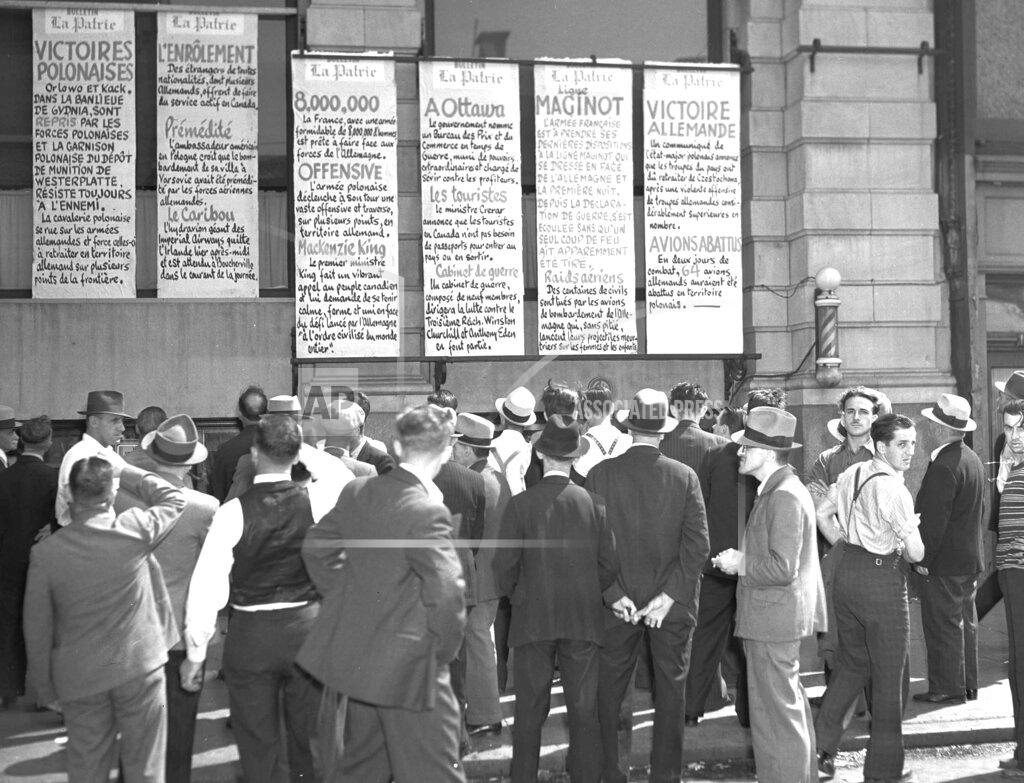
The French High Command announces that operations on Germany’s western border have commenced, and that “contact” has been made with the enemy. But as we shall see, there is no enthusiam in France for committing to the offensive.
The British RAF Bomber Command carries out attacks against German warships in the Heligoland Bight. British Blenheim and Wellington bombers attack the German naval facilities at Wilhelmshaven and Brunsbuttel. The Admiral Scheer is hit three or four times, but the bombs do not explode, the bombs have been dropped from too low an altitude for the delayed action fuses to detonate the bombs on the armored target. Pilot Officer S.R. Henderson, a Canadian serving in No.206 Squadron, Royal Air Force, becomes the first Canadian to participate in an operational sortie during the WWII when he serves as the lead navigator in a bomber force attacking German war ships at Wilhelmshaven, Germany. (Canada has not declared war on Germany yet and will not do so until 10 September). Of the 29 bombers that took off from England, 5 failed to find the target and 7 were shot down. The only serious damage was done by a Blenheim that managed to crash into the bow of the cruiser Emden, killing a number of sailors.
There is no question of attacking targets in Germany: for the next few months only leaflets are dropped. When the issue is raised in Parliament in October, the government declares that industry in the Ruhr cannot be bombed because it is private property.
Nazi bombers terrorize Warsaw. Many are slain, and damage is heavy. German bombers terrorized Warsaw in two raids this evening that set parts of the city on fire, heaped streets with debris and took a great toll of dead and wounded before Polish fighting planes drove the attackers off. A United Press correspondent, counting thirty German planes in a sky lit by the fires from their incendiary bombs, saw three of the black-tipped bombers shot down by the machine guns of Polish planes. A Berlin communiqué said seven Polish planes had been shot down in the fighting over Warsaw.
The first attack came at 4:50 P. M. and the second one an hour and twenty minutes later as nurses and stretcher bearers ran through streets an inch deep with glass carrying wounded men, women and children to first-aid stations. The Nazi raiders apparently were concentrating their bombing attack on railroad stations, the city’s two airports and lines of communications. But stores, small houses and apartment buildings were shattered by the bombs and the concussions of the explosions.
It was impossible to estimate the number of casualties because officials themselves were uncertain where all the bombs — at least fifty — had struck. The city was in a complete blackout against a return of the German planes, thereby hampering rescue work. Ten persons were killed and some wounded when a bomb struck a Girl Scout canteen near the Warsaw East railway station, The Associated Press reported. About fifteen planes participated in the first raid and as many in the second one. It was Warsaw’s worst terror of the war that has been underway since early Friday. Nine persons were killed in one house alone. Two railroad yards and at least three factories were set on fire. All available firefighters were called out to battle the flames in various parts of the fringe of the city. They worked alongside rescue workers digging for dead and wounded.
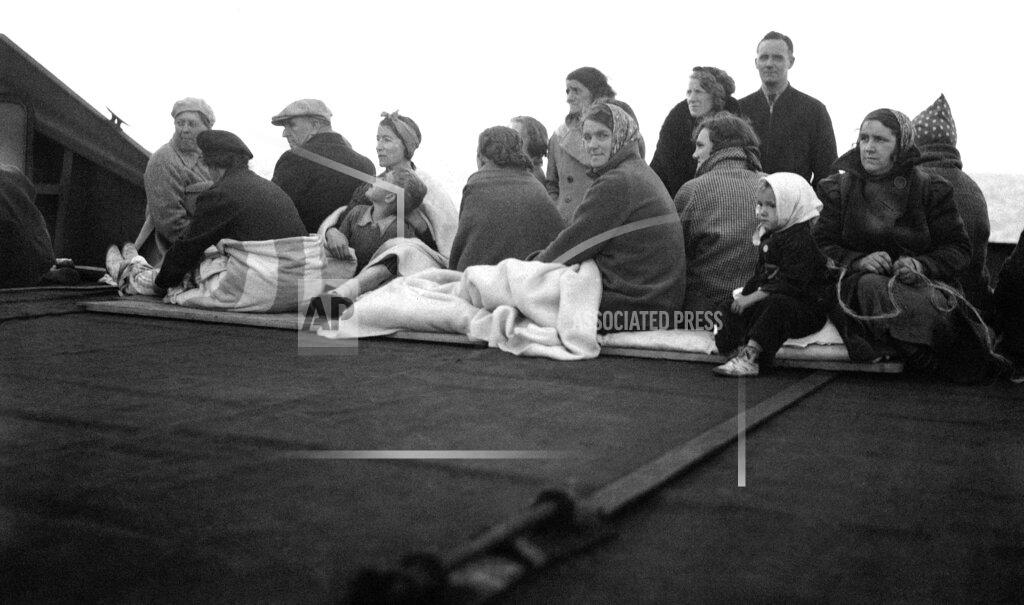
British passenger liner Athenia sinks as the result of damage sustained the previous day when torpedoed by German submarine U 30. After the sinking of Athenia is confirmed through radio intelligence and news broadcasts, the German Naval War Staff radios all U-boats at sea that the Führer has ordered that no hostile action be taken “for the present” against passenger ships, even if they are travelling in convoy. Publicly, Germany will continue to deny responsibility for the sinking of Athenia until the post-war Nuremberg Trials bring the truth to light.
The German cargo ship Johannes Molkenbuhr (5,294 GRT, 1936) was intercepted in the Norwegian Sea 17 nautical miles (31 km) off Stadlandet, Norway (61°40′N 3°51′E) by HMS Southampton and was scuttled by her crew, who were rescued by HMS Jervis, which shelled and sank Johannes Molkenbuhr.
The German auxiliary schooner Lianne struck a mine in the North Sea and sank with the loss of all five hands.
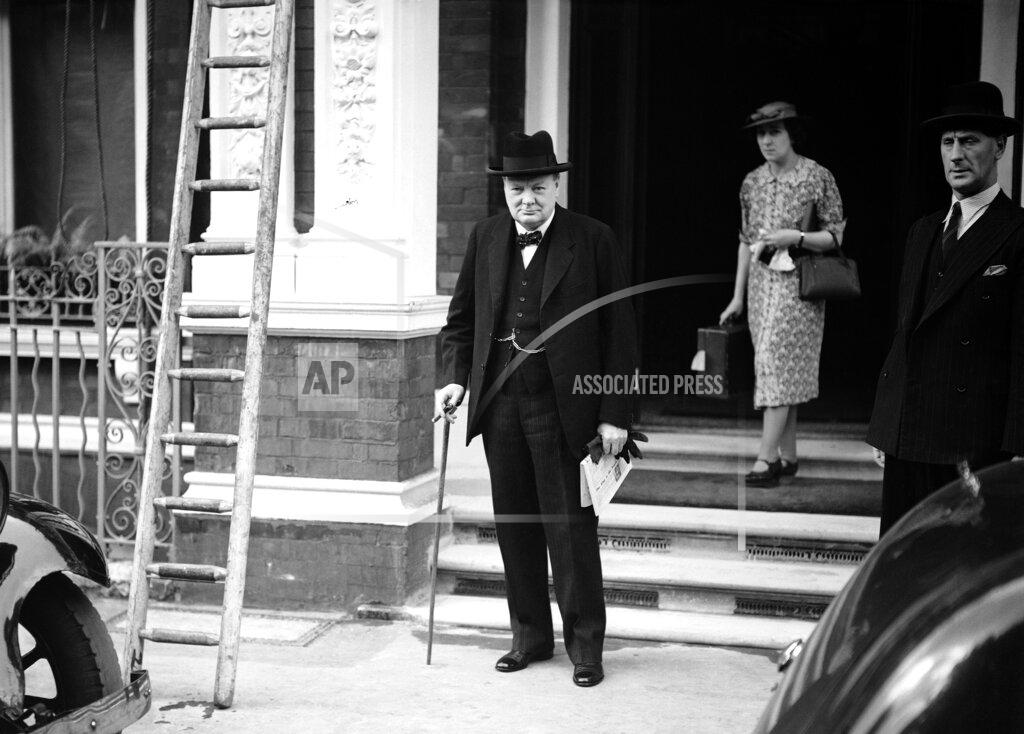
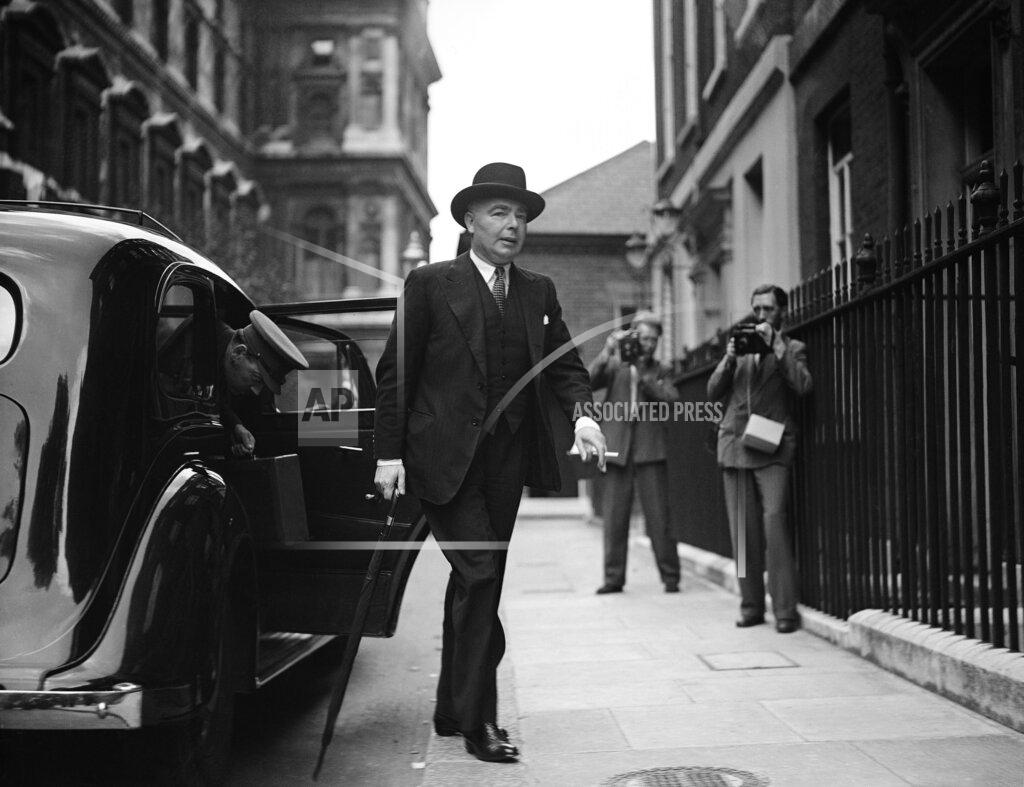
Winston Churchill accepted Chamberlain’s offer to join his war cabinet as First Lord of the Admiralty. Churchill now held the same position he had at the outbreak of World War I.
Surgeon Archibald McIndoe sets up new Centre for Plastic and Jaw Surgery at Queen Victoria Hospital, East Grinstead, England to treat injured airmen.
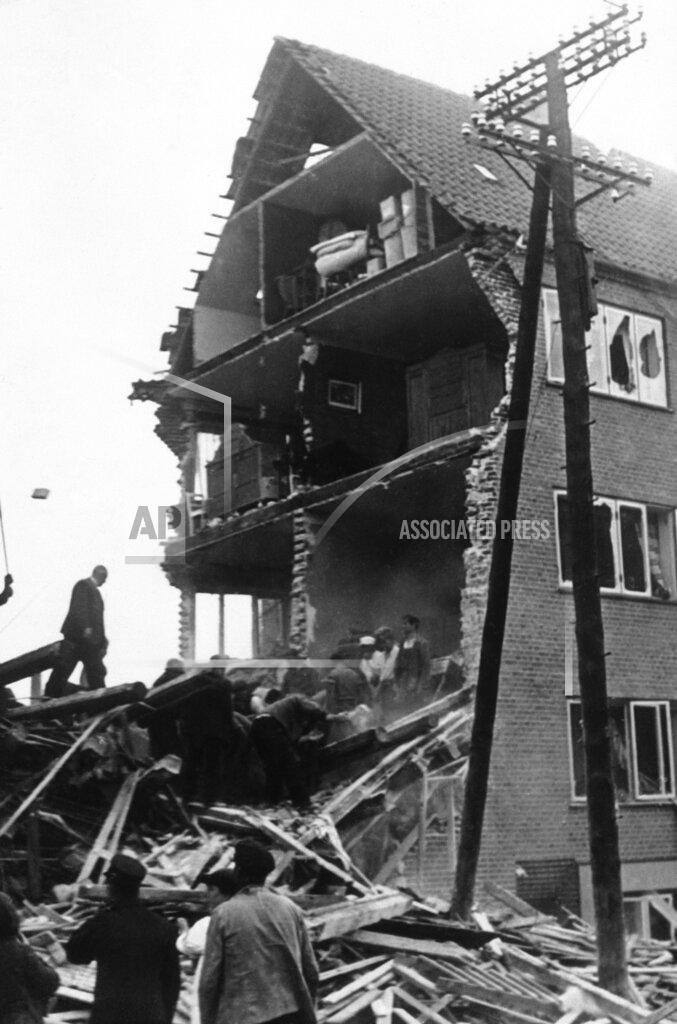
Bombs drop on neutral Denmark. The raid is held as unintentional. Neutral Denmark experienced the horror of war today at the seaport town of Esbjerg. West Jutland. At 3:37 PM a plane was heard circling the city above the clouds and four terrific explosions followed. One bomb fell into the harbor, a second exploded in a courtyard, a third hit the city center, totally smashing a three-story apartment house, taking two lives, and a fourth exploding in a field near the airport. Up until now, of the two persons found killed, one was a car hirer’s wife. Identification of the other was impossible.
The bomber’s nationality was not identified as the machine was not visible. One theory is that it was a German bombing plane, attacked by a pursuit plane, releasing its bombs. Another theory is that it was an allied plane mistaking Esbjerg for a German airbase on the island of Sylt, twenty miles distant. The Danish Government, convinced that the bombing was a mistake and in no way an intentional attack on Danish territory, is investigating its nationality.
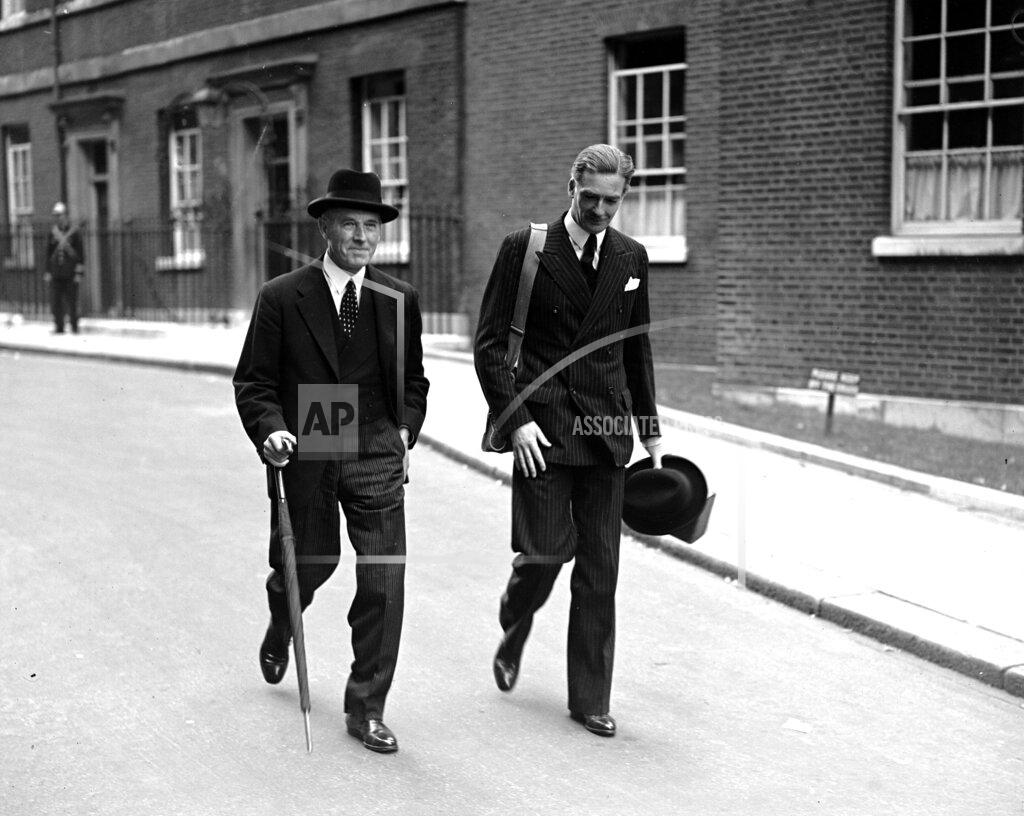
Sir Nevile Henderson, British Ambassador to Berlin, was held at the Netherlands frontier tonight with other members of the British Embassy until the German charge d’affaires should have left England.
Britain’s war entry alarms Vienna. The news comes as a surprise and shock to Austrians. Vienna’s single-page newspaper announcing Britain’s war proclamation sold out as soon as it appeared on the streets late this afternoon. This was almost the only sign of excitement displayed by the people. A few already were resigned to the possibility of a general European war, probably lasting several years. For most, however, the proclamation came as a complete surprise. and a terrible blow. Until the announcement, the people generally believed that the war would be confined to Poland and last only a few months. There were almost no signs of enthusiasm anywhere. Hitler Youth paraded the streets and were observed quietly, almost disinterestedly, by the homeward-bound civilian population, which during the afternoon thronged the open-air cafes.
Three Balkan nations — Yugoslavia, Rumania and Bulgaria — tonight officially signified their neutrality in Europe’s war.
The Danish fishing trawler Nordstrand struck a mine and sank in the North Sea 70 nautical miles (130 km) west of the Horn Reef Lighthouse. All four crew were killed.
The Greek cargo ship Kosti struck a mine in the Øresund, Sweden and sank. All 29 crew were rescued by the Finnish ship Poseidon.
The Latvian cargo ship Imanta struck a mine and sank in the Baltic Sea off Malmö, Sweden with the loss of all 22 crew.
Nepal declared war on Germany.
Egypt broke off diplomatic relations with Germany.
Leon Trotsky, exiled associate of Lenin in the founding of the Soviet Union, said tonight the Soviet-German non-aggression pact is a result of Joseph Stalin’s fear of getting his “discontented workers, peasants and decapitated Red Army” involved in a war.
U.S. Office of the Chief of Naval Operations (OpNav) orders Commander Atlantic Squadron to establish, as soon as possible, a combined air and ship patrol to observe and report, in cipher, the movements of warships of warring nations, east from Boston along a line to 42°30’N, 65°00’W then south to 19°N then around the seaward outline of the Windward and Leeward Islands, to the British island of Trinidad.
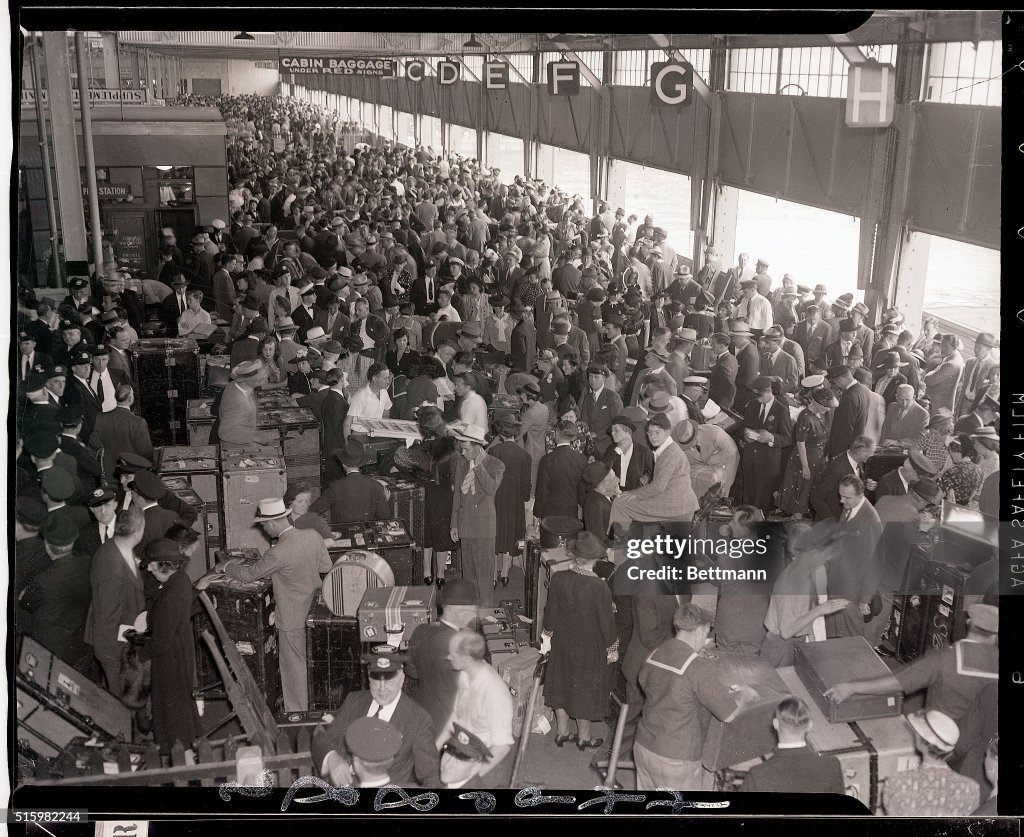
The Cunard White Star liner Queen Mary arrived safely this morning in New York with 3,562 aboard. Among her 2,331 passengers were the usual quota of notables and 250 extra persons who slept on cots in public rooms. Celebrities and cot passengers alike told a story of a completely blacked-out sailing, a sad but calm acceptance of the news of the declaration of war, and admirable morale and service on the part of the crew. The notables included J. P. Morgan, Myron C. Taylor, Dean Virginir Gildersleeve of Barnard College, the Ranee of Sarawak, Bob Hope, Dr. Solomon Goldman, president of the Zionist Organization of America, and Erich Maria Remarque, who made the horrors of the last war and its aftermath vivid to millions of readers in “All Quiet on the Western Front” and “The Road Back.”
Following upon the heels of the sinking of the Athenia yesterday the United States took its first sweeping step to insure neutrality in the European war when Secretary of State Hull tonight issued an order drastically restricting travel by Americans to and from Europe.
U.S. President Franklin Roosevelt asks the nation to observe true neutrality.
The supply of arms, munitions and other war materials to the belligerents on one side of the European conflict would be the most dangerous policy this country could pursue, Chairman Walsh of the Senate Naval Affairs Committee asserted in a speech tonight on the NBC radio network.
The Department of Agriculture appointed an Agriculture Advisory Council, today, composed of non-government members, to assist in formulating policies for production, distribution and marketing of foodstuffs.
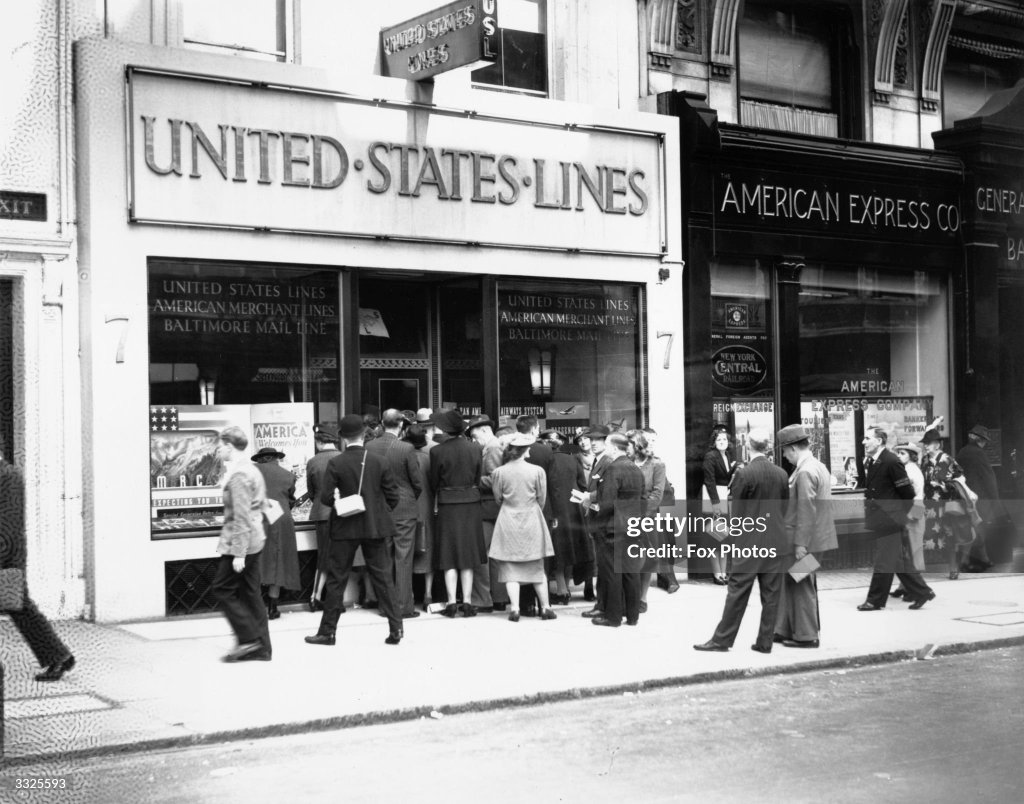
About 50 U.S. citizens remain in the Reich to protect interests. American firms are open.
U.S. automobile output spurts as 1940 models go into production.
Sulfanilamide is found to check tuberculosis in guinea pigs. Injection or oral administration of sulfanilamide or sulfapyridine has yielded “a significant degree of inhibition of experimental tuberculosis in guinea pigs infected with bovine or human tubercle bacilli,” it was reported yesterday before the Third International Congressfor Microbiology. TB is still a devastating killer in 1939.
In the American League today, the New York Yankees swept a doubleheader from the Philadelphia A’s, 7–6 and 2–0. The Washington Senators took a pair from the Boston Red Sox, 7–6 and 6–4. The St. Louis Browns won the opener of their doubleheader with the Detroit Tigers, 3–2; the second game was called after eight innings on account of darkness with the score tied at 5–5. One game of the Chicago White Sox – Cleveland Indians doubleheader this afternoon was rained out; in the evening game, Chicago won 5–2 in ten innings.
In St. Louis, Bill McGee shuts out the Cincinnati Reds for a 4–0 Cardinals win. The two teams battle to a 6–6 tie in game 2 before it is called on account of darkness. After the Labor Day games, the Reds lead the Cards by 4 games. In the American League, the Yankees are 14½ ahead.
At Wrigley Field, the Pittsburgh Pirates double the Chicago Cubs, winning 2–1 and 6–3. Elbie Fletcher contributes his second grand slam of the year in game 2.
In other National League games, the New York Giants sweep the Philadelphia Phillies, 10–0 and 7–6. The Brooklyn Dodgers win game one of their doubleheader with the Boston Bees, 5–4; the Bees come back and win the nightcap, 5–2.
European war again comes to the Americas: British light cruiser HMS Ajax intercepts German freighter Carl Fritzen 200 miles east-southeast of Rio Grande do Sul, Brazil, 33°22’S, 48°50’W, and sinks the merchantman with gunfire; scuttled because no prize crew was available.
The outbreak of war in Europe finds twenty-one nations of the Western Hemisphere united for the first time in their history by diplomatic machinery which makes it possible for them to act in unison to face any contingency likely to arise. The widely debated Declaration of Lima has been put into operation and the governments of North, Central and South America are in daily consultation under its terms. Argentina and Uruguay today issued decrees declaring their neutrality in the present conflict and other American nations were following suit after free exchange of ideas and consultation on policy.
Canada prepares for Nazi air raids. Canada having felt the brunt of the first blow struck by Germany against the British Empire in the loss of some of her nationals aboard the Athenia, today announced precautions against another form of possible German attack.
Canadians pledge a steady newsprint supply and to avoid war profiteering.
Japan remains neutral in the European war. The Japanese Cabinet tonight issued the following statement: “In the face of the European war that has just broken out, Japan does not intend to be involved in it; she will concentrate her efforts upon the settlement of the China affair.” The drafting of this statement, which carefully avoids using the word neutrality, presented some difficulty. It was not issued until seven hours after the Cabinet rose. Its declaration that China is Japan’s primary concern is held here to imply that Japan’s neutrality is conditional upon her not being interfered with there. The word “neutrality” was avoided deliberately in order to leave the government’s hands free to deal with any development that might affect the China situation.
A position might arise, says the newspaper Asahi, in which Japan would have to regard some power now engaged in war in Europe as Japan’s enemy. In such an event It would be impossible for Japan to have relations of hostility in the Far East and neutrality in Europe. Legally Japan is now in the position of a neutral and accepts her neutral obligations, but her neutrality is conditional upon developments in China.
The Foreign Office points out that under international law Japan, as a neutral, does not need to make any formal declaration. Public sentiment is predominantly neutral at present in Japan, for as the press points out, Japan has no liaison. with, or support from either side. Leaders of the army today again stressed that Japan’s foreign policy must be governed by her policy in China. This was held to imply that Britain’s attitude in China could affect Japan’s attitude toward Britain.
Stress on Britain is relieved in the Orient. Japan’s irritation at the Reich and a desire to side with the winner have modified policy, for the moment. The tension in China, which less than a fortnight ago imperiled all British interests in the Far East and particularly in Hong Kong, the British Concessions at Tientsin and Canton and the International Settlement at Shanghai, has eased markedly since the announcement of the Berlin-Moscow agreement. Since that announcement, the situation has been rapidly reversed. At present, it is German interests in the Far East that are imperiled and German nationals and vessels that are hastening to the safety of neutral ports.
Prior to the signing of the German-Soviet non-aggression pact it seemed inevitable that in case of war in Europe the Japanese would take over with force Shanghai’s International Settlement and French Concession here and other British and French outposts on the China coast and then attack Hong Kong. Now Japan’s bitterness over what is termed “Hitler’s betrayal of the anti-Comintern pact,” coupled with the natural canniness that would wait to see which side in a European struggle would be likely to be victorious, virtually safeguards, for the present, British interests in the Far East. Japan, it is noted, is even debating a drastic revision of her foreign policies with a view, eventually, actually to court friendship with Britain, America and other democracies.
Many German nationals are seeking the safety of Manila’s neutrality, particularly from Hong Kong and Shanghai. Large numbers, however, are also leaving Japan where the Reich’s citizens are no longer welcomed and even feel unsafe. Some German liners and freighters, which, it is suspected, were built purposely to be easily and quickly convertible into swift sea raiders, have been shuttling back and forth between Manila and Japanese ports. They appear to fear forcible search and possible detention in Manila, but also fear internment in Japan for the duration of hostilities and even possibly confiscation if Japan breaks off diplomatic relations with Berlin as the result of indignation over what Japan feels to be Germany’s perfidy.
In the early hours of the morning in New Zealand, Governor-General Lord Galway signed the country’s declaration of war on Germany and backdated it to 9:30 p.m. the previous night, the equivalent of 11 a.m. on September 3 in England so it would match the time that Chamberlain declared war.
Born:
Erwin Teufel, German politician (CDU), Minister-President of Baden-Württemberg, 1991-2005, in Zimmern ob Rottweil, Germany.
Naval Construction:
The Royal Navy armed merchant cruiser HMS Asturias (F 71) is commissioned. Her first commanding officer is Captain (Retired) Claud Finlinson Allsup, DSO, RN.
The Royal Navy auxiliary minelayer HMS Hampton (M 19) is commissioned. Her first commanding officer is Captain (Retired) George Herbert Freyberg, OBE, RN.
The Royal Navy auxiliary minelayer HMS Shepperton (M 83) is commissioned.
The Royal Navy Thornycroft 55-foot-type motor torpedo boat HMS MTB 26 is commissioned. Her first commanding officer is Lieutenant Michael John de Courcy Carey, RN.
The Royal Navy Thornycroft 55-foot-type motor torpedo boat HMS MTB 27 is commissioned.
 History Diaries