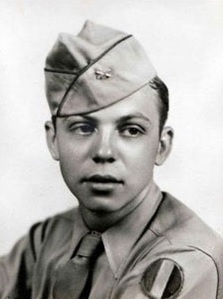
On September 4th, 1964, SSG Bailey took a mission from another CE to give that man a break. The mission brought their UH-1B “Huey” to an evacuated village site that had been visited in prior days. The crew was to ensure that all Vietnamese citizens that wanted to evacuate had left. As the helicopter banked hard left over the village site, Viet Cong forces below fired on the helicopter with an automatic weapon. A single round entered a helicopter from the right side and struck SSG Bailey, passing under his right arm and penetrating his heart. The door gunner on the opposite side of the aircraft saw SSG Bailey raise his hand as if to signal for help, and then collapse. According to the medical staff in Saigon, SSG Bailey died ‘almost instantaneously’ after he was struck.
SSG Bailey was a 36-year-old married father of two sons and a daughter when he died. SSG Bailey was awarded the Purple Heart, Distinguished Flying Cross, Bronze Star and Air Medal w/Oak Leaf Cluster during his military service. James is buried at Memorial Park Cemetery, Bartlesville, Oklahoma, and is remembered on the Wall at Panel 1E, line 63.
A U.S. helicopter crewman is killed by Việt Cộng gunfire, five other U.S. servicemen are injured in other operations and the ARVN claims it has killed 70 guerrillas in a major clash in Quảng Ngãi Province. The American helicopter crew member, an enlisted man, Staff Sergeant James Edwin Bailey, was hit by Việt Cộng small‐arms fire while his craft was participating in action in Tây Ninh Province, 34 miles southwest of Saigon.
Last night, five Americans were wounded along with 25 Vietnamese when a terrorist bomb exploded in a provincial movie house 40 miles south of Saigon. The Americans were identified as two aid mission official civilians and three army officers.
The Defense Department, encouraged by political developments in South Vietnam, will continue the build‐up of the United States military mission there, high Pentagon officials said today. The action reflects a new, more hopeful attitude within the Johnson Administration over the return to power of Major General Nguyễn Khánh as Premier of South Vietnam. The prevailing attitude is one of caution and uncertainty. But there also is hope that after nearly two weeks of turbulence, soma political stability is returning to Saigon.
Before General Khánh’s return, the Pentagon had been giving serious consideration to a plan to stop the build‐up of the large military mission, The mission has been advising and training the Vietnamese Army in the war against the Communist Việt Cộng. The concern within the Defense Department had been that the political instability could lead to a complete military deterioration. As part of its contingency planning, therefore, the Pentagon had raised the question whether it should continue to send additional men and supplies into South Vietnam if evacuation of the mission might ultimately prove necessary. So gravely was the situation viewed that the Joint Chiefs of Staff warned, according to reliable sources, that the United States was likely to face the alternative of intensifying its military efforts or getting out of South Vietnam.
A Pentagon spokesman denied reports, however, that four of the five chiefs had recommended to Defense Secretary Robert S. McNamara earlier this week that such military steps be taken as attacking supply lines in North Vietnam, imposing a naval blockade on Communist ports, bombing railroad yards around Hanoi and sending sabotage teams into North Vietnam. It was acknowledged by Defense Department sources that such steps had been included as part of the contingency plans drafted early this year when General Khánh first assumed power. But any serious consideration of such steps has always been offset by uncertainty over the reaction of the Chinese Communists and concern about the ability of the South Vietnamese Army to handle a Chinese military intervention.
The country’s military commanders rallied behind Premier Nguyễn Khánh today in his attempts to rebuild a government acceptable to the Buddhists and other dissatisfied segments of the South Vietnamese population. Premier Khanh announced the resignation from his caretaker government of all army officers in ministerial posts, including a Deputy Premier. The purpose of the move, according to reliable sources, was to give the Premier greater flexibility in naming a new Cabinet to gain wider civilian support. At the end of two months, General Khánh said, his Government will withdraw completely, “handing back all power” to civilians. If this deadline is met, it will come just a year after the armed forces’ first seizure of power last November 1, when a military junta overthrew the Government of Ngô Đình Diệm.
General Khánh appeared at a news conference to signal his resumption of duties at the head of the government he abandoned under Buddhist and student pressure ten days ago. To emphasize a new phase in the country’s political evolution, the caretaker Premier appeared clean‐shaven for the first time since he seized power last January 30. The little goatee he grew in the weeks preceding that coup was gone when he entered the conference room late today. To the first question, asked by a Vietnamese reporter, as to why he had shaved it off, General Khánh replied: “We military men have many little idiosyncrasies, but one of the reasons is to symbolize a new start, a new determination to build democracy.”
Dean Acheson, special United States representative at the Cyprus mediation talks, said today that the situation on the island was “very critical, indeed.” He warned that war could be imminent. Mr. Acheson, a former Secretary of State, made his comments at Dulles International Airport near Washington on his return from Geneva, where he acted as an informal adviser at the United Nations mediation talks. He is to meet with President Johnson Tuesday in a new United States attempt to formulate a strategy for a Cyprus settlement in the wake of the apparent failure of the Geneva talks.
Mr. Acheson, whose compromise settlement plan failed to win full approval from either Greece or Turkey in the seven weeks of the Geneva talks, said today that the Cyprus situation was so critical that “war could break out in 25 minutes.” Although he acknowledged that the point had been reached in Geneva where a “recess was necessary,” Mr. Acheson disputed reports that the talks had failed completely. “We came a long way and covered a vast territory, and have greatly removed the differences between Greece and Turkey,” he said “Now we have come to a point where it is necessary to see where we are and where we are going from here.”
Mr. Acheson left the impression that Archbishop Makarios, the President of Cyprus, has been the main obstacle in the mediation efforts. President Makarios has announced that he will not accept the Acheson plan providing for union, or enosis, between Greece and Cyprus. “The archbishop didn’t go out of his way to be helpful,” Mr. Acheson said. “He threw monkey wrenches into the machinery.” Mr. Acheson also remarked that President Makarios “has a rather intense dislike for me.” United States officials fear that the crisis may flare again before there is time for new negotiations.
The immediate threat involves the insistence of Turkey on rotating one‐third of her 650‐man garrison from Cyprus despite the opposition of Archbishop Makarios. He has announced that his forces would oppose any rotation attempt. Last week, complying with Greece’s request, Turkey agreed to postpone the rotation to give Athens time to work out a solution on this point with Nicosia. But this effort apparently has not been successful. Some officials here thought that yesterday’s speech by the Turkish Premier, İsmet İnönü, warning Greece of the danger of war might mean that Turkey would move on Cyprus unless Athens could control Archbishop Makarios.
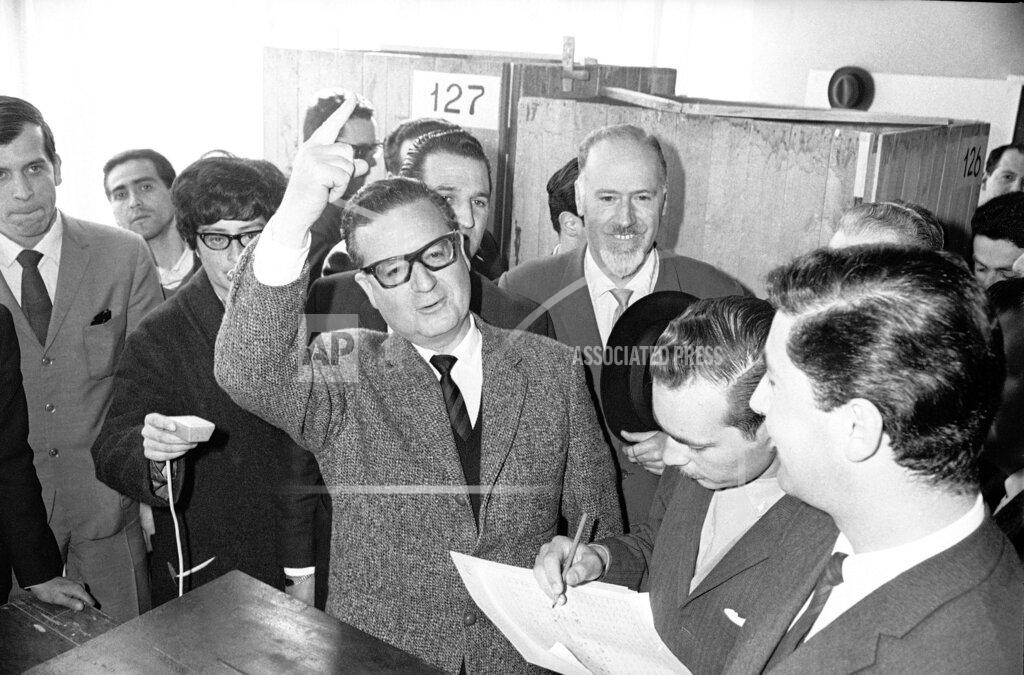
In Chile, Eduardo Frei defeated Marxist candidate Salvador Allende in the presidential election. The American CIA “became involved in extensive covert actions to ensure Allende would not win,” an author would note later, contributing almost four million dollars to Frei’s campaign to finance direct mail, radio advertisements, posters, leaflets and counterpropaganda. Frei received 1,409,012 votes, Allende had 977,902 and a third candidate, Julio Duran, had 125,233. Allende would defeat Frei in the 1970 presidential election, and would be killed in 1973 during a violent coup d’état.
The Forth Road Bridge, spanning 8,241 feet (2,512 m) over Scotland’s Firth of Forth, opened for highway and pedestrian traffic. Connecting the city of Fife with Edinburgh, the bridge replaced a ferry service that had existed for centuries.
Congo’s Premier Moïse Tshombe announced tonight that he was sending home the white mercenary soldiers recruited in South Africa to combat the rebellion in the Congo. “We have not called in South Africans to restore order,” Mr. Tshombe said. “Those who came here on their own initiative will be sent home.” About 200 mercenaries have arrived in the last few weeks, and more were expected. Most were recruited in South Africa and Northern and Southern Rhodesia through advertisements. Mr. Tshombe has been attacked by other African leaders for hiring mercenaries and is expected to come under heavy fire tomorrow in Addis Ababa when the foreign ministers of the Organization of African Unity open a meeting on the Congo crisis. Mr. Tshombe made his statement to reporters hours before he was to fly to the Ethiopian capital to lead the Congo’s five-man delegation, He said the Congo had asked for the meeting to lay before the organization evidence that two neighbor states — the Congo Republic land Burundi — were aiding the rebel movement against the Leopoldville regime.
Soviet Premier Khrushchev took issue today with Communist leaders outside China who have expressed reluctance to convene a world party conference to settle the ideological differences between Moscow and Peking. Mr. Khrushchev, who was addressing a meeting at the conclusion of his 10‐day visit here, did not name names. But the Rumanian and Italian parties are known to oppose a meeting. A statement along these lines by the Italian party was made public in Rome today. “These comrades,” the Premier said, “propose to hold off calling a meeting now and meanwhile try to bring closer together the views of all parties.” He added: “These are good intentions, but how are they to be realized? To narrow the gap between the views, it is necessary to meet, it is necessary to have goodwill and desire to overcome differences and to unite all Communists.”
The Italian Communist Party published today a wide‐ranging criticism of Soviet tactics in the dispute with Communist China and of continued repression of freedom in the Soviet bloc. It was written by Palmiro Togliatti just before his death. The document constitutes one of the most outspoken criticisms of aspects of the Kremlin leadership ever delivered by a supposedly cooperative Communist party. The Italian party is the largest in the Western world. The document also vigorously backed the independence of national Communist parties and rejected any idea of re‐creating a new, centrally controlled Communist international.
H. A. R. “Kim” Philby, 52‐year‐old former British diplomat and newspaper correspondent who defected to the Soviet Union last year, is working for the Soviet press agency Novosti, reliable sources said today. They declared that Philby, the “third man” in the Burgess‐Maclean spy case of 1951, had been working for Novosti for the last six months at a monthly salary of 700 rubles ($770). This is five to six times the average salary of a Soviet newsman. Philby was said to live in a Moscow suburb and to work at home. Sources said he rarely came to the agency’s offices in central Moscow. Novosti, a feature syndicate specializing in background reports, is distinct from Tass, the Government press agency that distributes news and comment on daily events.
Richard Sorge, a Soviet spy who had been hanged in Japan in 1944 after the Soviets had refused to exchange its own prisoners for him, received posthumous recognition from the Communist Party with the publication of an article in Pravda, celebrating the bravery and achievements of “Comrade Sorge”. The campaign marked a change in state policy to not acknowledge its espionage operations to the Soviet public. Twenty years after his death, Sorge would be awarded the nation’s highest honor, Hero of the Soviet Union; his likeness would appear on a postage stamp; a Moscow street would be renamed in his honor; and a tanker ship would be named for him.
VASP Flight 141 crashed into the side of the Pico de Caledonia, a mountain in Brazil, while on its way from Recife to São Paulo. The plane had departed from Vitória and was off course when it collided into the slope at an elevation of about 6,400 feet (2,000 m).
An all-white jury in Danielsville, Georgia, acquitted two members of the Ku Klux Klan on murder charges arising from the July 11 killing of African-American educator Lemuel Penn. Joseph Howard Sims and Cecil William Myers remained under indictment on federal civil rights violations. The jury deliberated for only a little over three hours. There was scattered applause in the crowded courtroom and the Klansmen’s wives sobbed for joy as their friends crowded around them. Despite their acquittal, Joseph Howard Sims, 41 years old, and Cecil William Myers, 25, are still not free of charges connected with the July 11 slaying. Federal charges are still pending accusing them of violating Mr. Penn’s civil rights. James Lackey, also charged with murder, will be tried separately. A fourth man, Herbert Guest, was named in the murder warrant but was not indicted.
The prosecutor, Clete Johnson, who had passionately demanded the death sentence for Sims and Myers, shook hands with the Klansmen and congratulated them after the verdict was read. The jury took the case at 5:50 PM. Not counting the two hours and 15 minutes the 12 men spent having dinner at a truck stop, It took them three hours and five minutes to reach the verdict. Sims said he had worried when the jury continued to deliberate for more than an hour after eating. But he said the decision was the only verdict “they could bring and be fair.” “When God is on your side, man can’t harm you,” said Sims’s sister.
The prosecution’s main case was a batch of confessions signed by Lackey and implicating Sims and Myers. Lackey repudiated at least one of the confessions, and the defense contended that he had made them either under duress or to get a reward from the Federal Bureau of Investigation. The defense’s case hinged on the testimony of two witnesses who said they saw Myers and Sims 24 miles away when Mr. Penn, 48 years old, was being slain by two shotgun blasts fired from a passing car on a lonely, fog‐shrouded road.
When the verdict was announced, cheering broke out, but Judge Carey Skelton silenced it quickly. The crowd waited impatiently until Judge Skelton adjourned the court, and then ran to the gleeful defendants. The defense attorneys, who had urged the “Anglo‐Saxon Madison County jury” not to “send these here boys into those cold gray stone walls” to be electrocuted, smiled broadly and congratulated their clients. Then, with several police officers and a flock of well‐wishers, the attorneys escorted the Klansmen across the street to a law office to celebrate.
Robert F. Kennedy said yesterday that on November 3 he would do what few candidates for office have ever done — stay away from the polls on Election Day. “Under New York law,” the Democratic candidate for the Senate explained in an interview, “I’m not eligible to vote here this fall. I could vote in Massachusetts, but as a resident of New York I wouldn’t want to do that.” Mr. Kennedy will thus miss the chance to vote for President Johnson and for his brother, Edward M. Kennedy, the junior Senator from Massachusetts, who is a candidate for re‐election this year.
In recent years, Mr. Kennedy has lived in Virginia and voted in Massachusetts. He has leased a house on Long Island and a suite at the Carlyle Hotel here and has said he will live here permanently, whether elected to the Senate or not. Mr. Kennedy was interviewed on the family plane, the Caroline, on the way from Washington to New York early yesterday. He resigned from the Cabinet Thursday. Yesterday afternoon, after visiting four newspaper offices, Mr. Kennedy went to Grand Central Terminal to shake hands with departing commuters. He was mobbed by screaming, pushing enthusiasts on the terminal’s concourse. During the interview, Mr. Kennedy indicated that he expected Senator Kenneth B. Keating, the Republican whom he is opposing, to be a difficult man to defeat.
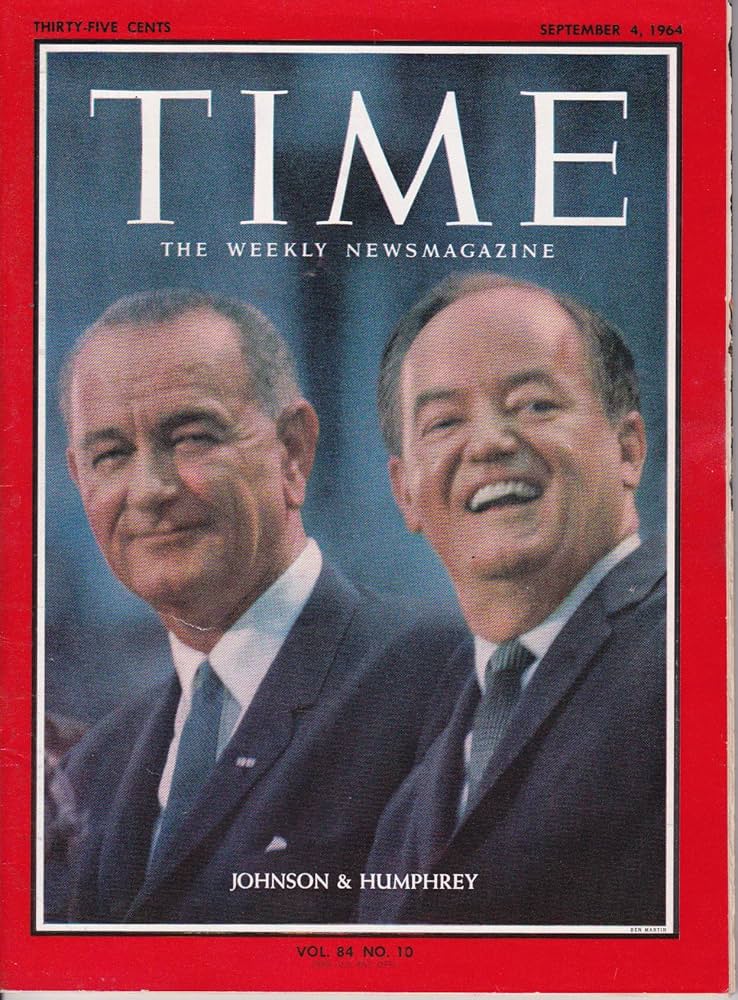
“I think President Johnson will carry New York by a million and a half votes,” the 38-year-old candidate said. “I expect to run way behind the Johnson‐Humphrey ticket and behind President Kennedy’s showing four years ago.” In 1960, President Kennedy defeated his Republican opponent, Richard M. Nixon, by 384,000 votes in New York. Sitting on the edge of one of the airplane’s seats, his feet dangling into the aisle, the former Attorney General remarked: “Barry Goldwater is an unpopular figure in this state and Ken Keating isn’t. I know that.”
Robert F. Kennedy dropped in at Grand Central Terminal in New York during the evening rush hour yesterday and was mobbed. Women screamed and girls squealed. Men pushed and boys shoved as they tried to shake the hand of the Senatorial nominee. Most of those in the crowd, departing for the long Labor Day weekend, were friendly to the candidate, but there was some booing. The visit was to last an hour, but because of the near hysteria it created, Mr. Kennedy cut it to 20 minutes. “I wonder if this sort of thing really does any good,” he said later. Mr. Kennedy, wearing a dark gray pinstripe suit and a black tie, arrived at the terminal shortly after 5 PM and entered through an entrance on West 44th Street, near Vanderbilt Avenue. He stopped to speak to the crowd, but could not, until several of his aides lifted him to their shoulders. “I think somebody’s going to get killed,” he said. “This is worse than the Beatles,” a young girl shouted.
Lester Maddox, the restaurant owner who shut down rather than serve Blacks, lost his appeal today for the lifting of a court order against discrimination. Two Federal judges turned down Mr. Maddox’s request for a stay and instead made permanent an injunction of July 26 barring the restaurant owner from practicing segregation at his business. The order by Judge Frank A. Hooper and Judge Lewis R. Morgan left Mr. Maddox free of contempt‐of‐court charges unless there are new developments. At a hearing August 20 attorneys for the Federal Government and three Blacks dropped contempt charges because Mr. Maddox had closed his restaurant. The proceedings were filed after a crowd of white persons, some armed with ax handles, blocked Blacks at the restaurant August 11, the date the original anti-discrimination order went into effect. When two Blacks tried to enter two days later, Mr. Maddox closed his restaurant.
Two dozen Blacks, one of them the brother of slain civil rights worker, James Chaney, were blocked today in attempts to enroll at five of Meridian, Mississippi’s all‐white elementary schools. Public schools in this city of 50,000, the second largest in Mississippi — have not been ordered to desegregate by federal courts. The council of Federated Organizations which represents the major civil rights groups in this state, said it would take legal action. The integration move here was similar to attempts earlier this week by 19 Blacks to gain entrance into Canton Junior‐Senior High School in rural Madison County. Canton, like Meridian, is not under court order to admit Blacks to white shcools.
Meanwhile, it was disclosed that two Blacks had registered without incident to attend first‐grade classes at a Roman Catholic school at Gulfport. It marked the first announced integration of Catholic schools under a recent directive by Bishop R. O. Gerow that they should end segregation beginning with the first grade this fall. At Biloxi, 17 Black children finished the first week of integrated classes in four previously all‐white elementary schools. A lone Black girl is attending school with whites at Carthage in Leake County. Public schools at Jackson have registered 43 Black first‐graders in desegregated classes that begin September 14 and the Clarksdale public school system is under orders to desegregate but has not yet received any applications from Blacks.
The Macon News (Georgia) endorsed the Democratic Presidential ticket today. In an editorial entitled, “We’d rather fight than switch,” The News scorned “sunshine Democrats” who are supporting Senator Barry Goldwater and said it would support the ticket of President Johnson and Senator Hubert H. Humphrey. In 1960, The News endorsed John F. Kennedy.
Senator Barry Goldwater is trailing President Johnson in his own state, according to a poll taken by the state’s largest newspaper, The Arizona Republic. A reliable source said the poll, which has not been published, showed Mr. Johnson “slightly ahead.” Eugene C. Pulliam, the publisher of The Arizona Republic and a friend and supporter of Senator Goldwater, resentfully rejected statements that the poll had been “suppressed.” Newsweek magazine, for example, said of the poll that The Republic had “quietly shelved it when the results showed that President Johnson would carry Barry’s own state in November.”
James Coburn was put to death in the electric chair in Alabama after being convicted of a robbery, becoming the last person in the United States to be executed for a crime other than murder.
Roger L. Stevens said yesterday that the ground‐breaking ceremony for the John P. Kennedy Center for the Performing Arts in Washington was tentatively set for “some time in November.” The date will be set by President Johnson, Mr. Stevens explained yesterday after a meeting in New York of the center’s staff. Mr. Stevens is chairman of the center’s board of trustees and is also White House cultural adviser.
At 8:23 in the evening, the United States successfully launched the 1,000 pound Orbiting Geophysical Observatory (OGO 1), its largest scientific satellite up to that time, from Cape Kennedy. OGO 1 would still be in orbit around the Earth 50 years after its launch.
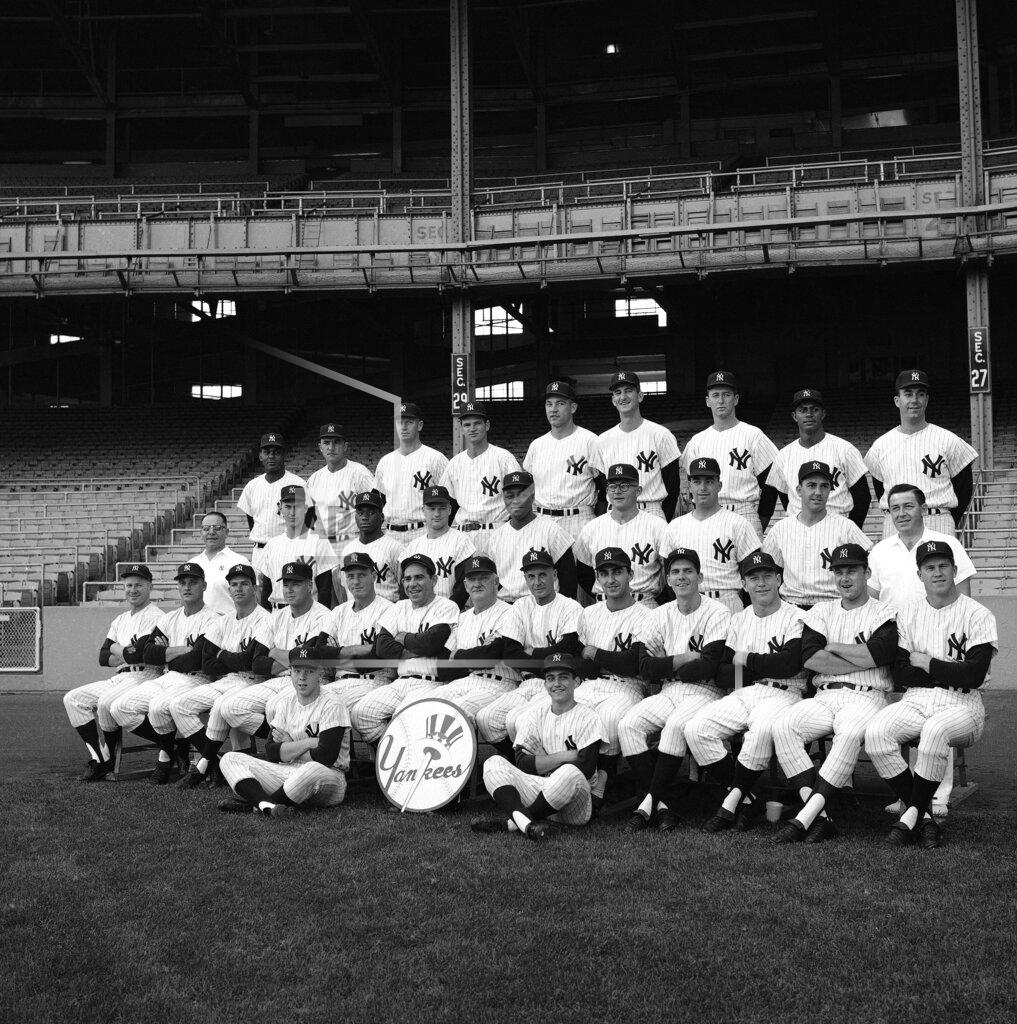
The batting glove makes its debut. The Yankees overcome two homers, the first a 450-foot shot, by Ken Harrelson to beat the host A’s, 9–7, in 10 innings. Mantle and Elston Howard hit back-to-back homers in the 4th inning for New York. Pete Mikkelsen, who had taken over after Whitey Ford left for a pinch‐hitter in the seventh, gave one run in that inning by making a wild pitch between a pair of two‐out singles. And with two out in the ninth, he was tagged by Harrelson for a game‐tying homer — Harrelson’s second of the game. The young first baseman had smacked a two‐run homer off Ford in the third. And even when the Yankees scored four runs in the top of the 10th off Ted Bowsfield (the loser), John Wyatt and Ken Sanders, it wasn’t too much. Bill Stafford, New York’s final pitcher, started the bottom half by yielding a walk and a homer to Nelson Mathews before getting the last three outs of the 3‐hour‐13‐minute struggle.
Harrelson, a platoon player, gets the start when the Yankees put in Whitey Ford. Harrelson has a blister from 36 holes of golf in the morning, so he wears his red golf glove at bat, the first time any player has worn a golf glove. Tomorrow, Mickey Mantle has the club house boy buy 20 red golf gloves which the Yankees wear in batting practice. They whistle at Harrelson, calling him “Mrs. Harrelson” and “don’t let your skirts get dirty”, but within two years golf gloves will be a common sight. In spring training 1983 Franklin Sports will team up with Mike Schmidt to perfect batting gloves and the company’s invention will become an Major LeagueB licensee in 1988. With the Orioles losing today, Baltimore (81–54) and Chicago (82–55) are virtually tied for first, with New York (77–56) three games back.
Joe Adcock clouted two homers and drove in four runs tonight as the Los Angeles Angels beat the Baltimore Orioles, 7–1. The loss reduced the Orioles’ American League lead to a percentage point over the Chicago White Sox.
Consecutive home runs by Pete Ward and Bill Skowron in the 10th inning gave the Chicago White Sox a 6–5 victory tonight over the Cleveland Indians. The Indians took a 5–4 lead in their half of the 10th on Leon Wagner’s single that scored Chico Salmon, who had singled and was sacrificed to second.
The Minnesota Twins trounced the Boston Red Sox, 14–3, tonight in a game marred by six errors. Four home runs and two triples simplified Jim Grant’s task of gaining his 12th victory for the Twins.
Dave Wickersham, with help from Fred Gladding, posted his 17th victory tonight as the Detroit Tigers handed the Washington Senators their third straight shutout, 1–0, on Norm Cash’s sacrifice fly.
Johnny Callison singled across the winning run after Frank Thomas had tied the game with a two‐run homer in the eighth inning tonight as the National League-leading Philadelphia Phillies defeated the San Francisco Giants. 5–3. José Pagan’s first homer of the year, a two‐run blast in the seventh, had put the Giants ahead, 3–1. Richie Allen opened the Phils’ 4-run eighth with a single, however, and trotted home on Thomas’s homer off Billy O’Dell. After an out, Gus Triandos doubled and scored on Cailison’s single to center field. Callison then moved to third as Ruben Amaro singled and came home on a squeeze bunt by Jack Baldschun.
The seventh‐place world of the Los Angeles Dodgers, where nothing has gone right this year except against the New York Mets, suddenly collapsed last night before 45,065 persons in Shea Stadium. Don Drysdale had defeated the Mets, 3–0, in a masterly three‐hitter in the first game of a double‐header and the Dodgers were leading, 5–2, in the eighth inning of the second game. “Then the Mets jammed four runs across the plate, three when Tommy Davis dropped a fly ball with two out and the bases filled. And, with the help of a dazzling catch against the center‐field fence by Jim Hickman in the ninth, the Mets won the game, 6–5.
Ken Boyer’s three‐run homer in the ninth inning against the Chicago Cubs lifted the St. Louis Cardinals back into third place tonight in the National League with an 8–5 victory. Boyer’s 19th home run of the season came with Lou Brock and Dick Groat on base.
Eddie Mathews backed Tony Cloninger’s three‐hit pitching tonight with a two‐run homer to give the Milwaukee Braves a 2–0 victory over the Cincinnati Reds tonight and drop the Reds 6½ games behind the league-leading Philadelphia Phillies.
Bill Mazeroski drove in four runs and Don Clendenon drove in three as the Pittsburgh Pirates gained a 10–2 victory tonight over the Houston Colts. Bob Veale gained his 15th triumph with a seven‐hitter while the Pirates collected 16 hits.
Dow Jones Industrial Average: 848.31 (+2.29).
Born:
Anthony Weiner, controversial American congressman (Rep-New York, 1999-2011) and convicted sex offender; in New York, New York.
Tomas Sandström, Swedish National Team and NHL right wing (Olympics, bronze medal, 1984, 5th, 1998; NHL Champions, Stanley Cup-Red Wings, 1997; NHL All-Star 1988, 1991; New York Rangers, Los Angeles Kings, Pittsburgh Penguins, Detroit Red Wings, Mighty Ducks of Anaheim), in Jakobstad, Finland.

 History Diaries