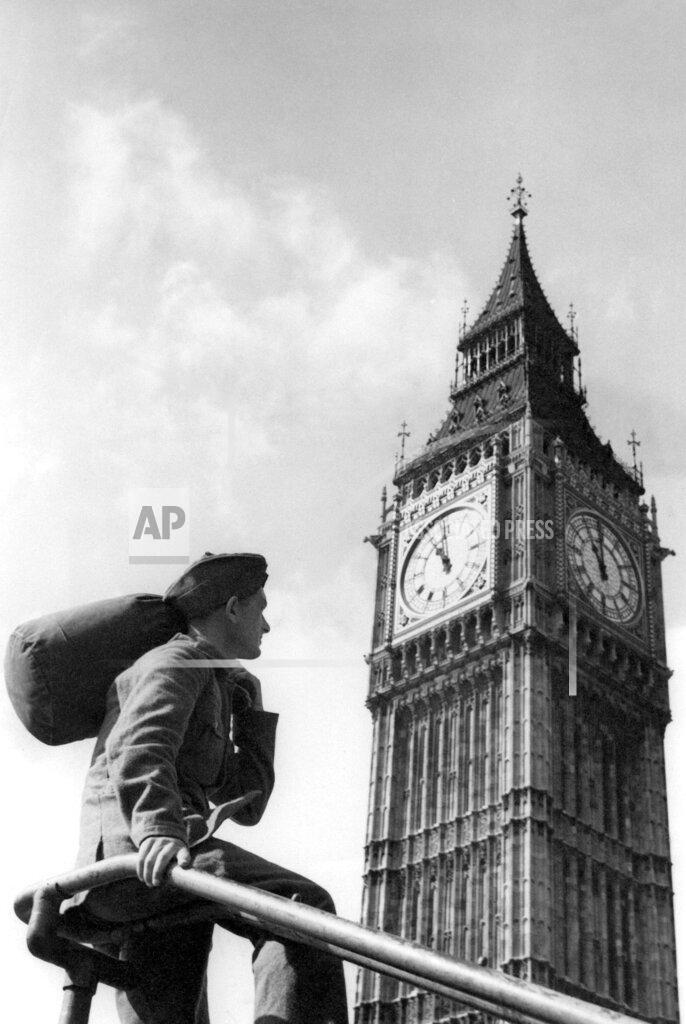
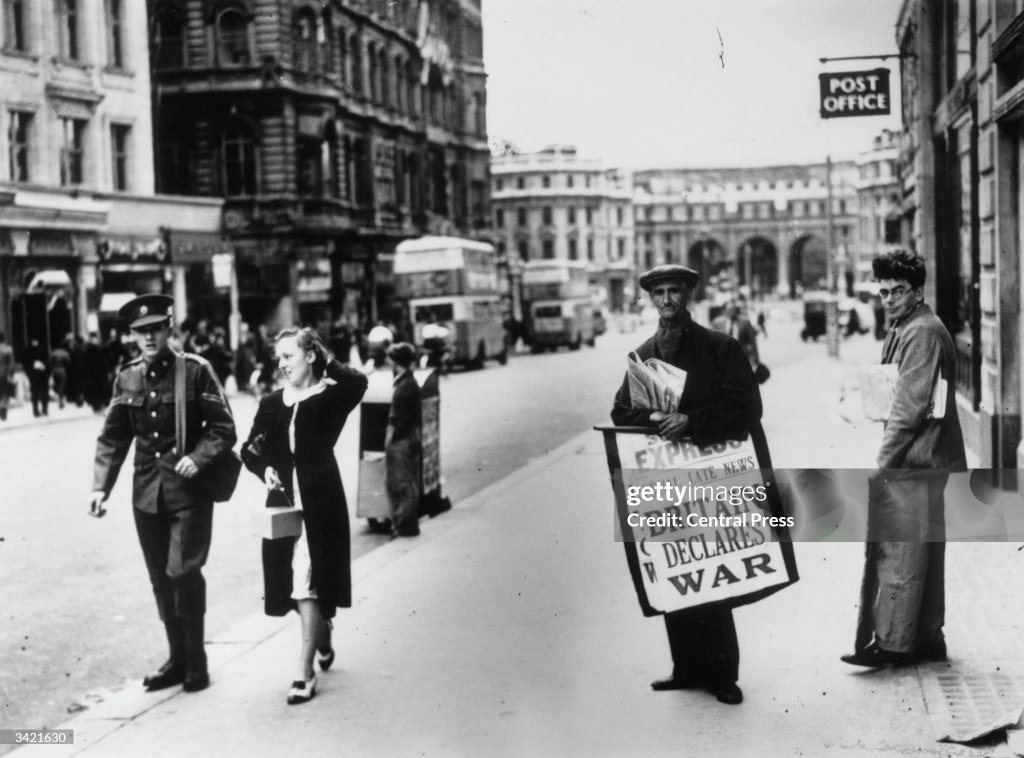
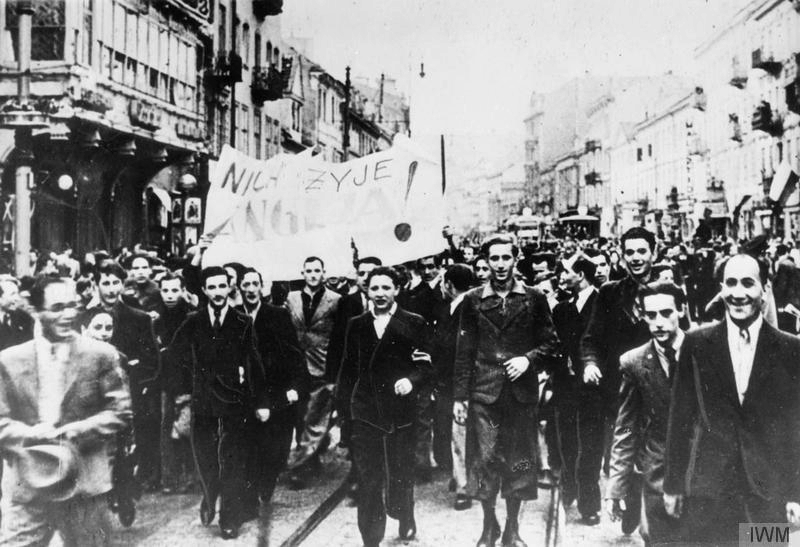
At 9:00 AM, Britain gave Germany a deadline of 11:00 a.m. to announce that it was prepared to withdraw its troops from Poland or else a state of war would exist between Britain and Germany. The deadline passed with no response.
The British ultimatum that Germany withdraw from Poland is delivered to the German Foreign Ministry at 9 AM by Ambassador Neville Henderson. It gives Hitler two hours to begin the withdrawal or a state of war will exist between the two nations. The British ultimatum to Germany expires at 1100 hours, and at 1115 hours Chamberlain broadcasts the announcement that war has begun. Chamberlain forms a war cabinet with Churchill as First Lord of the Admiralty and Eden as Secretary for the Dominions. Both have been opponents of appeasement. At 11 AM the French ultimatum is delivered. It expires at 5 PM. That afternoon the French declare war before their ultimatum expires.
Paul Schmidt, a translator in the German Foreign Ministry, carries the British ultimatum to Hitler and recalls: “I then took the ultimatum to the Chancellery, where everyone was anxiously awaiting me. Most of the members of the Cabinet and the leading men of the Party were collected in the room next to Hitler’s office. There was something of a crush and I had difficulty in getting through to Hitler.
“When I entered the next room Hitler was sitting at his desk and Ribbentrop stood by the window. Both looked up expectantly as I came in. I stopped at some distance from Hitler’s desk, and then slowly translated the British Government’s ultimatum. When I finished, there was complete silence.
“Hitler sat immobile, gazing before him. He was not at a loss, as was afterwards stated, nor did he rage as others allege. He sat completely silent and unmoving.
“After an interval which seemed an age, he turned to Ribbentrop, who had remained standing by the window. ‘What now?’ asked Hitler with a savage look, as though implying that his Foreign Minister had misled him about England’s probable reaction. Ribbentrop answered quietly: ‘I assume that the French will hand in a similar ultimatum within the hour.’
“As my duty was now performed, I withdrew. To those in the anteroom pressing round me I said: ‘The English have just handed us an ultimatum. In two hours a state of war will exist between England and Germany.’ In the anteroom, too, this news was followed by complete silence.
“Göring turned to me and said: ‘If we lose this war, then God have mercy on us!’ Goebbels stood in a corner, downcast and self-absorbed. Everywhere in the room I saw looks of grave concern, even amongst the lesser Party people.”
Great Britain and France declare war on Germany in accordance with their prewar pledges to Poland. Australia, India and New Zealand follow. The Irish Free State, however, a British dominion, declares its neutrality.
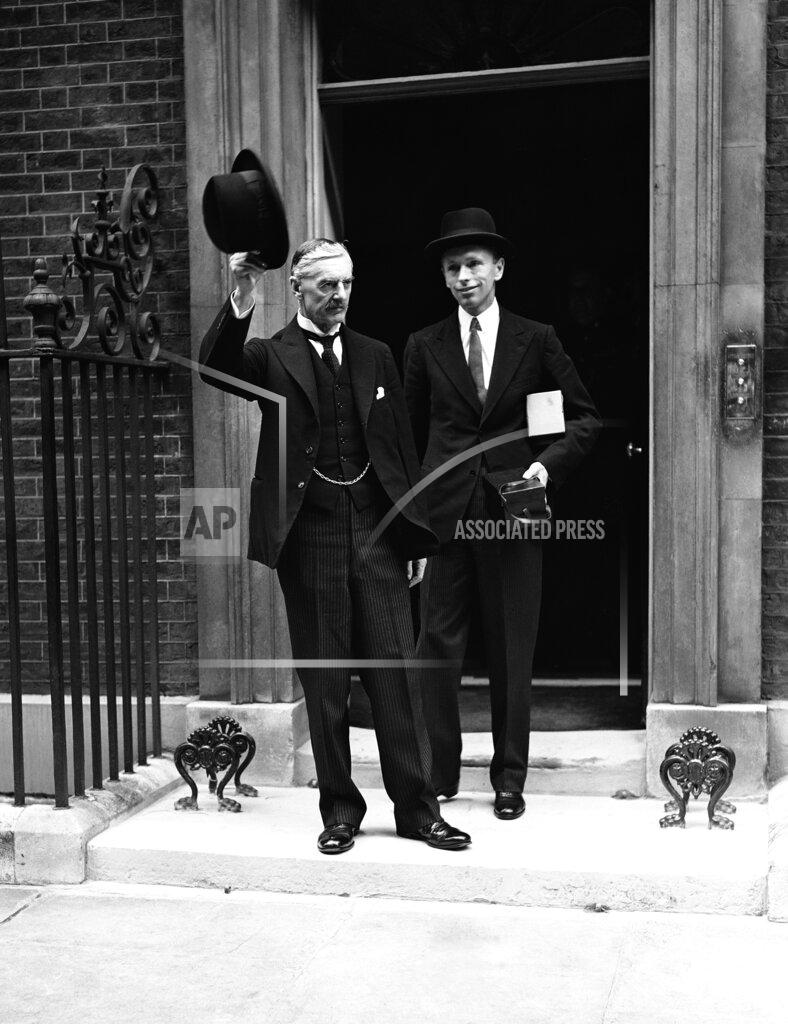
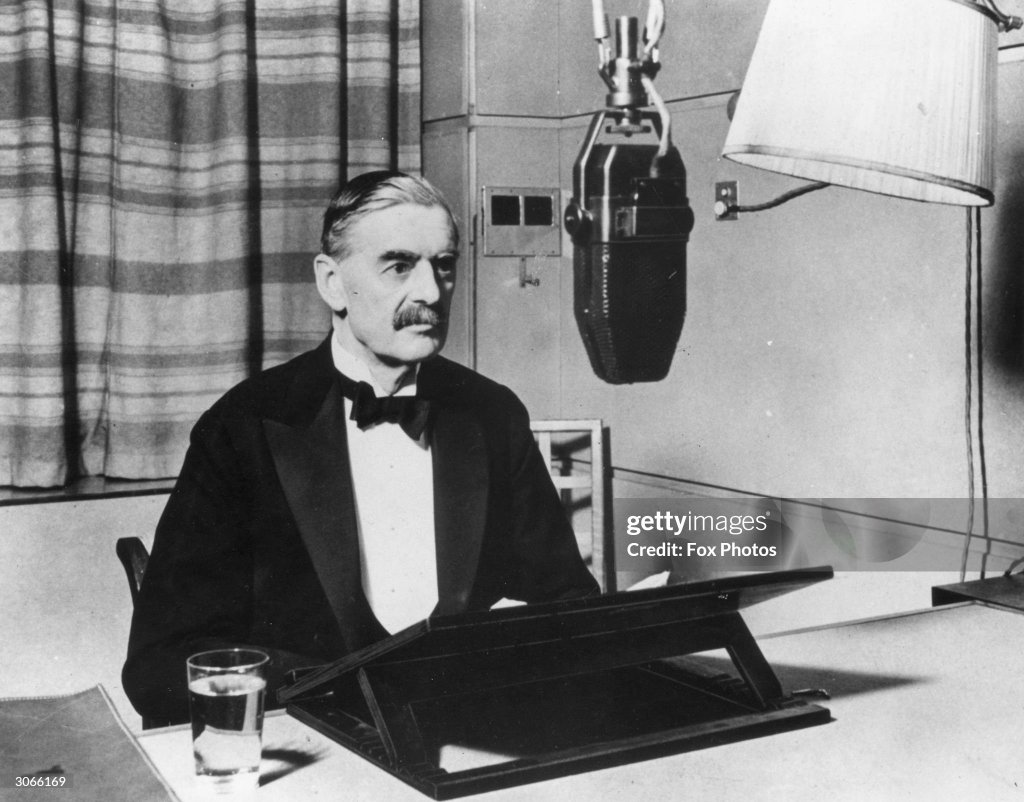
At 11:15 a.m. Neville Chamberlain announced on BBC Radio that Britain and Germany were at war. “You can imagine what a bitter blow it is to me that all my long struggle to win peace has failed”, Chamberlain said, sounding dispirited. “Yet I cannot believe that there is anything more or anything different that I could have done and that would have been more successful … We and France are today, in fulfillment of our obligations, going to the aid of Poland, who is so bravely resisting this wicked and unprovoked attack upon her people. We have a clear conscience. We have done all that any country could do to establish peace, but a situation in which no word given by Germany’s ruler could be trusted and no people or country could feel themselves safe had become intolerable. And now that we have resolved to finish it, I know that you will all play your part with calmness and courage.”.
“I am speaking to you from the Cabinet Room at 10, Downing Street.
“This morning the British Ambassador in Berlin handed the German Government a final Note stating that unless we heard from them by 11 0’clock that they were prepared at once to withdraw their troops from Poland a state of war would exist between us. I have to tell you now that no such undertaking has been received, and that consequently this country is at war with Germany.
“You can imagine what a bitter blow it is to me that all my long struggle to win peace has failed. Yet I cannot believe that there is anything more or anything different that I could have done and that would have been more successful.
“Up to the very last it would have been quite possible to have arranged a peaceful and honourable settlement between Germany and Poland. But Hitler would not have it. He had evidently made up his mind to attack Poland whatever happened, and although he now says he put forward reasonable proposals which were rejected by the Poles, that is not a true statement.
“The proposals were never shown to the Poles, nor to us, and, though they were announced in a German broadcast on Thursday night, Hitler did not wait to hear comments on them, but ordered his troops to cross the Polish frontier. His action shows convincingly that there is no chance of expecting that this man will ever give up his practice of using force to gain his will. He can only be stopped by force.
“We and France are to-day, in fulfillment of our obligations, going to the aid of Poland, who is so bravely resisting this wicked and unprovoked attack upon her people. We have a clear conscience. We have done all that any country could do to establish peace, but a situation in which no word given by Germany’s ruler could be trusted and no people or country could feel themselves safe had become intolerable. And now that we have resolved to finish it, I know that you will all play your part with calmness and courage.
“As such a moment as this the assurances of support that we have received from the Empire are a source of profound encouragement to us.
“…Now may God bless you all and may He defend the right. For it is evil things that we shall be fighting against, brute force, bad faith, injustice, oppression and persecution. And against them I am certain that the right will prevail.”
Speech by the Prime Minister, Neville Chamberlain, in the House of Commons on September 3, 1939.
“When I spoke last night to the House I could not but be aware that in some parts of the House there were doubts and some bewilderment as to whether there had been any weakening, hesitation or vacillation on the part of His Majesty’s Government. In the circumstances, I make no reproach, for if I had been in the same position as hon. members not sitting on this Bench and not in possession of all the information which we have, I should very likely have felt the same. The statement which I have to make this morning will show that there were no grounds for doubt. We were in consultation all day yesterday with the French Government and we felt that the intensified action which the Germans were taking against Poland allowed no delay in making our own position clear. Accordingly, we decided to send to our Ambassador in Berlin instructions which he was to hand at 9 o’clock this morning to the German Foreign Secretary and which read as follows:-
“Sir,
“In the communication which I had the honour to make to you on the 1st September, I informed you, on the instructions of His Majesty’s Principal Secretary of State for Foreign Affairs, that unless the German Government were prepared to give His Majesty’s Government in the United Kingdom satisfactory assurances that the German Government had suspended all aggressive action against Poland and were prepared promptly to withdraw their forces from Polish territory, His Majesty’s Government in the United Kingdom would, without hesitation, fulfil their obligations to Poland.
“Although this communication was made more than twenty-four hours ago, no reply has been received but German attacks upon Poland have been continued and intensified. I have accordingly the honour to inform you that, unless not later than 11 a. m., British Summer Time, to-day 3rd September, satisfactory assurances to the above effect have been given by the German Government and have reached His Majesty’s Government in London, a state of war will exist between the two countries as from that hour.”
“That was the final Note. No such undertaking was received by the time stipulated, and, consequently, this country is at war with Germany. I am in a position to inform the House that, according to arrangements made between the British and French Governments, the French Ambassador in Berlin is at this moment making a similar demarche, accompanied also by a definite time limit. The House has already been made aware of our plans. As I said the other day, we are ready.
“This is a sad day for all of us, and to none is it sadder than to me. Everything that I have worked for, everything that I have hoped for, everything that I have believed in during my public life, has crashed into ruins. There is only one thing left for me to do; that is, to devote what strength and powers I have to forwarding the victory of the cause for which we have to sacrifice so much. I cannot tell what part I may be allowed to play myself; I trust I may live to see the day when Hitlerism has been destroyed and a liberated Europe has been re-established.”
“In this grave hour, perhaps the most fateful in our history, I send to every household of my peoples, both at home and overseas, this message, spoken with the same depth of feeling for each one of you as if I were able to cross your threshold and speak to you myself.
“For the second time in the lives of most of us, we are at war.
“Over and over again, we have tried to find a peaceful way out of the differences between ourselves and those who are now our enemies, but it has been in vain.
“We have been forced into a conflict, for we are called, with our allies to meet the challenge of a principle which, if it were to prevail, would be fatal to any civilized order in the world.
“It is a principle which permits a state in the selfish pursuit of power to disregard its treaties and its solemn pledges, which sanctions the use of force or threat of force against the sovereignty and independence of other states.
“Such a principle, stripped of all disguise, is surely the mere primitive doctrine that might is right, and if this principle were established throughout the world, the freedom of our own country and of the whole British Commonwealth of nations would be in danger.
“But far more than this, the peoples of the world would be kept in the bondage of fear, and all hopes of settled peace and of the security of justice and liberty among nations, would be ended.
“This is the ultimate issue which confronts us. For the sake of all we ourselves hold dear, and of the world order and peace, it is unthinkable that we should refuse to meet the challenge.
“It is to this high purpose that I now call my people at home and my people across the seas who will make our cause their own.
“I ask them to stand calm and firm and united in this time of trial.
“The task will be hard. There may be dark days ahead, and war can no longer be confined to the battlefield, but we can only do the right as we see the right, and reverently commit our cause to God. If one and all we keep resolutely faithful to it, ready for whatever service or sacrifice it may demand, then with God’s help, we shall prevail.
May He bless and keep us all.”
Winston S. Churchill, War Speech, September 3, 1939, House of Commons
“In this solemn hour it is a consolation to recall and to dwell upon our repeated efforts for peace. All have been ill-starred, but all have been faithful and sincere. This is of the highest moral value — and not only moral value, but practical value — at the present time, because the wholehearted concurrence of scores of millions of men and women, whose co-operation is indispensable and whose comradeship and brotherhood are indispensable, is the only foundation upon which the trial and tribulation of modern war can be endured and surmounted. This moral conviction alone affords that ever-fresh resilience which renews the strength and energy of people in long, doubtful and dark days. Outside, the storms of war may blow and the lands may be lashed with the fury of its gales, but in our own hearts this Sunday morning there is peace. Our hands may be active, but our consciences are at rest.
“We must not underrate the gravity of the task which lies before us or the temerity of the ordeal, to which we shall not be found unequal. We must expect many disappointments, and many unpleasant surprises, but we may be sure that the task which we have freely accepted is one not beyond the compass and the strength of the British Empire and the French Republic. The Prime Minister said it was a sad day, and that is indeed true, but at the present time there is another note which may be present, and that is a feeling of thankfulness that, if these great trials were to come upon our Island, there is a generation of Britons here now ready to prove itself not unworthy of the days of yore and not unworthy of those great men, the fathers of our land, who laid the foundations of our laws and shaped the greatness of our country.
“This is not a question of fighting for Danzig or fighting for Poland. We are fighting to save the whole world from the pestilence of Nazi tyranny and in defense of all that is most sacred to man. This is no war of domination or imperial aggrandizement or material gain; no war to shut any country out of its sunlight and means of progress. It is a war, viewed in its inherent quality, to establish, on impregnable rocks, the rights of the individual, and it is a war to establish and revive the stature of man. Perhaps it might seem a paradox that a war undertaken in the name of liberty and right should require, as a necessary part of its processes, the surrender for the time being of so many of the dearly valued liberties and rights. In these last few days the House of Commons has been voting dozens of Bills which hand over to the executive our most dearly valued traditional liberties. We are sure that these liberties will be in hands which will not abuse them, which will use them for no class or party interests, which will cherish and guard them, and we look forward to the day, surely and confidently we look forward to the day, when our liberties and rights will be restored to us, and when we shall be able to share them with the peoples to whom such blessings are unknown.”
At 12:00 noon, France gave Germany an ultimatum similar to Britain’s with a 5:00 p.m. deadline. The deadline came and went with no reply, so France’s war on Germany became official.
Neville Chamberlain addressed the House shortly past noon and called it “a sad day for all of us, and to none is it sadder than to me. Everything that I have worked for, everything that I have hoped for, everything that I have believed in during my public life, has crashed into ruins. There is only one thing left for me to do; that is, to devote what strength and powers I have to forwarding the victory of the cause for which we have to sacrifice so much. I cannot tell what part I may be allowed to play myself; I trust I may live to see the day when Hitlerism has been destroyed and a liberated Europe has been re-established.” Winston Churchill agreed that it was a sad day, but said “at the present time there is another note which may be present, and that is a feeling of thankfulness that, if these great trials were to come upon our Island, there is a generation of Britons here now ready to prove itself not unworthy of the days of yore and not unworthy of those great men, the fathers of our land, who laid the foundations of our laws and shaped the greatness of our country. This is not a question of fighting for Danzig or fighting for Poland. We are fighting to save the whole world from the pestilence of Nazi tyranny and in defence of all that is most sacred to man.”.
Ireland enacted the Emergency Powers Act.
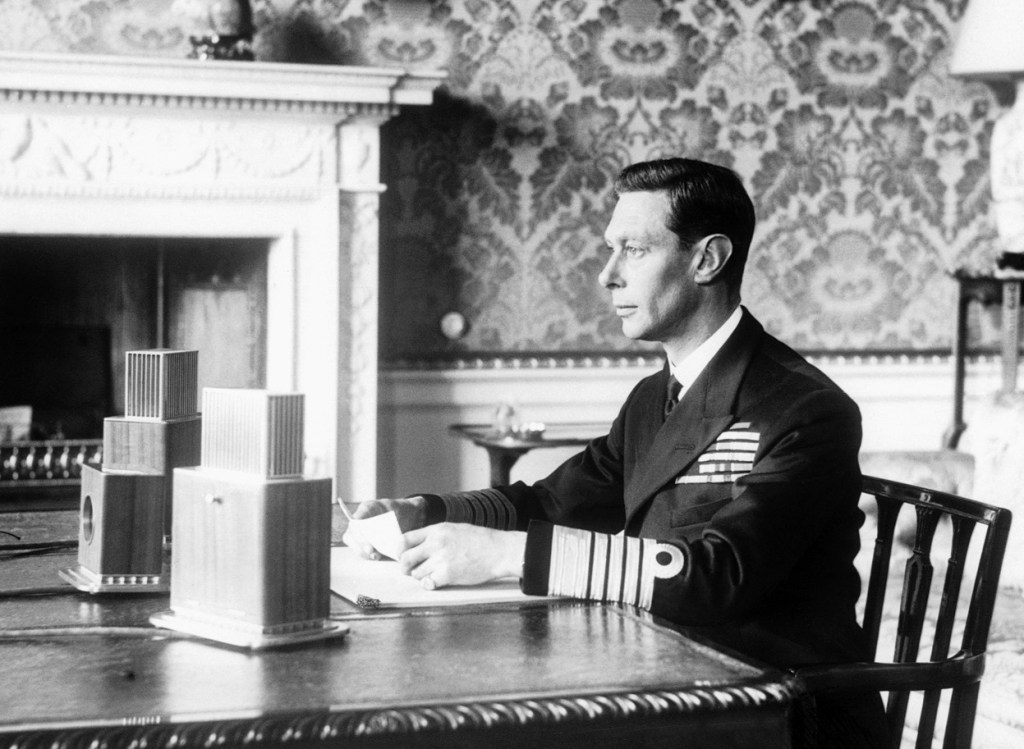
At 6:00 p.m. George VI addressed the British Empire by radio. “For the second time in the lives of most of us we are at war”, the king said. “Over and over again we have tried to find a peaceful way out of the differences between ourselves and those who are now our enemies. But it has been in vain … The task will be hard. There may be dark days ahead and war is no longer confined to the battlefield but we can only do the right as we see the right and reverently commend our cause to God. If one and all be resolutely faithful today, ready for whatever service and sacrifice it may demand, with God’s help we shall prevail.”.
Hitler issued Directive No. 2, Hostilities in the West.
The Supreme Commander Of The Armed Forces.
Berlin. 3rd September, 1939. 8 copies
Directive No. 2 For The Conduct Of The War
- After the declaration of war by the English Government, the English Admiralty issued orders at 1117 hours on 3rd September, 1939, to open hostilities. France has announced that she will be in a state of war with Germany from 1700 hours on 3rd September, 1939.
- The immediate aim of the German High Command remains the rapid and victorious conclusion of operations against Poland. The transfer of any considerable forces from the eastern front to the west will not be made without my approval.
- The basic principles for the conduct of the war in the west laid down in Directive No. 1 remain unchanged. The declaration of war by England and France has the following consequences:
(a) In respect of England
Navy
Offensive action may now begin. In carrying out the war against merchant shipping, submarines also, for the time being, will observe prize regulations. Intensified measures leading to the declaration of danger zones will be prepared. I shall decide when these measures shall become effective.
The entrances to the Baltic Sea will be mined without infringing neutral territorial waters.
In the North Sea the blockade measures envisaged for defensive purposes and for the attacks on England will be carried out.
Air Force
Attacks upon English naval forces at naval bases or on the high seas (including the English Channel), and on definitely identified troop transports, will only be made in the event of English air attacks on similar targets and where there are particularly good prospects of success. This applies also to action by the Fleet Air Arm.
These limitations do not apply to operations in the German Bight, in the western mined areas, or during actions directly supporting naval operations.
I reserve to myself the decision about attacks on the English homeland and on merchant shipping.
(b) In respect of France
Army
The opening hostilities in the west will be left to the enemy. Commander In Chief Army will decide on the reinforcement of our forces in the west from such reserves as are still available.
Navy
Offensive action against France will only be permitted if the enemy has first opened hostilities. In that case the same instructions apply to France as have been laid down for England.
Air Force
Offensive action against France will only be undertaken after French attacks on German territory. The guiding principle must be not to provoke the initiation of aerial warfare by any action on the part of Germany.
In general the employment of the Air Force in the west will be governed by the need to preserve its fighting strength after the defeat of Poland for decisive action against the western powers.
- Order X issued on 25th August, 1939, with OKW No. 2100 / 39 g. K.WFA / L. II is extended to all the Armed Forces with effect from 3rd September, 1939. The conversion of the entire German economy to a war basis is hereby decreed. Further measures for mobilisation in civil life will be introduced by the High Command Of The Armed Forces on the request of the highest Government authorities.
(Signed) Adolf Hitler.
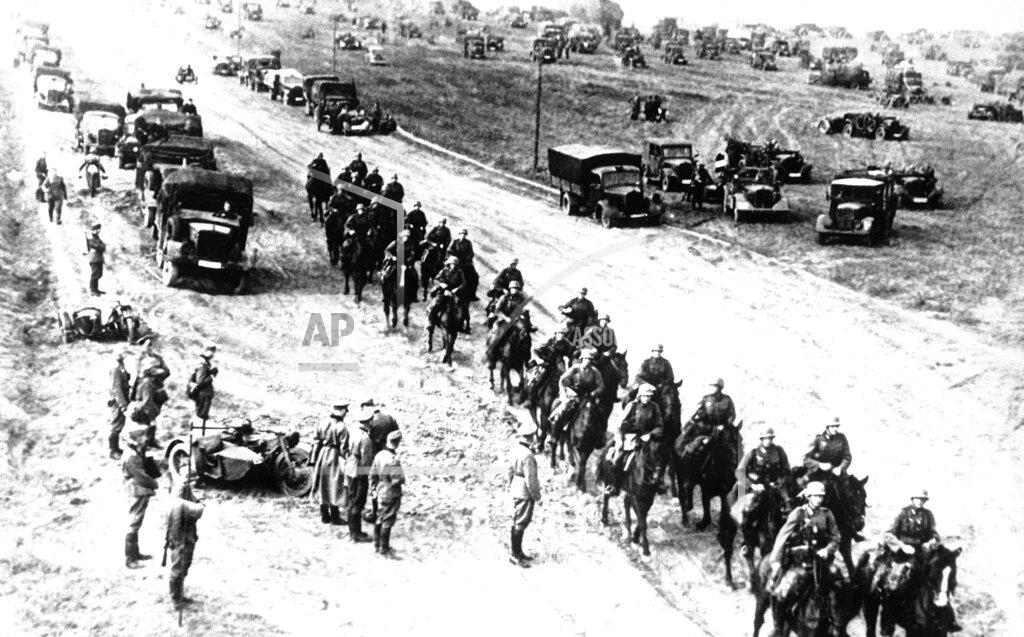
The Polish Łódź Army is in retreat after being beaten in the frontier battles with Army Group South. Despite several early successes, such as the Battle of Mokra on 1 September, where the Volhynian Cavalry Brigade stopped the German 4th Panzer Division, the army was forced to withdraw towards the Vistula River under increasing German pressure. The German Army Group South under Gerd von Rundstedt struck along the lines dividing the Polish Army Łódź from Army Poznań and Army Kraków. Without any natural defences, and facing a significant enemy force while lacking support, Rómmel’s army was easily outmanoeuvred and cut off from the rest of the Polish forces during the remainder of the battle of the Border, with most of its units being outflanked by the German Eighth Army and the German Tenth Army.
The German 14th Army is converging on Kraków.
The three-day Battle of Grudziądz is won by the Germans, and ended with Polish withdrawal from the city. This day began with a massive German assault on Polish positions. At the same time Bołtuć received news that the Polish divisions on the western bank of the Vistula were facing defeat and the German forces had already crossed the Vistula in the south. This forced him to pull back his units in order to avoid being soon encircled. The Polish defenders destroyed the bridges over the Vistula and retreated to the south-east, towards the Drwęca river, where they took new defensive positions. Grudziądz itself was abandoned on Sunday in the early afternoon. After a few hours, elements of the German 45th Infantry Regiment entered the city, but main German forces did not capture all of Grudziądz until the morning of 4 September, Monday.
Częstochowa in Upper Silesia is captured by the Germans. The last Polish units left the city in the early morning of September 3, blowing up bridges on the Warta River as they left. The 7th Infantry Division was defeated on September 3–4 by German forces during its retreat to Janów and Złoty Potok. Its commander General Janusz Gąsiorowski, was taken prisoner and staff documents, including the codes of the Polish Army, fell into German hands. After the retreat of the 7th Infantry Division from Częstochowa, the Częstochowa massacre was committed September 4-6 by the occupying Wehrmacht forces.
Twenty-one civilians die in air raids on Warsaw.
After three days of bombardment from sea and air, a little Polish garrison still held the Westerplatte munitions base in Danzig Harbor tonight. An unascertained number of soldiers were making a heroic defense within the red-walled property situated on a peninsula jutting out into the harbor. They were still there at 11:30 o’clock tonight. Thirty airplanes dropped between fifty and sixty bombs on the Westerplatte yesterday, but the Poles still retaliated with machine-gun fire.
At 9 o’clock tonight Chancellor Hitler left Berlin, presumably for the Eastern Front. He had previously sent a message to the Eastern Army stating that he was joining them.
Himmler tells the Einsatzgruppe under Udo von Woyrsch that its mission is to suppress the Polish resistence movement with all available means. The overall operation of the Einsatzgruppen in Poland has been given the code-name Aktion Tannenberg. It will officially come to an end on October 25.
Reinhard Heydrich, chief of the Security Service, issues a secret decree which provided all regional police leaders with regulations for internal state security during the war. The new regulations order the immediate arrest of any person who publicly voices doubts concerning Germany’s victory in the war or the nature of the war and gives instructions to “eliminate such elements ruthlessly.” As the war progresses, an increasing number of people are arrested. Many are deported without trial directly to concentration camps.
Berlin is sober over the situation, quieted by the news of Britain’s war declaration.
With Hitler’s consent, Göring makes a speech asking for a settlement with Poland.
In Germany, a War Economy Decree is published which laid down guidelines for the rapid mobilization of civilian resources and the conversion of the economy to war.
Lieutenant Colonel Nikolaus von Vormann, army liaison officer to Hitler, records in his notes of the day: “Even today the Führer still believes that the Western powers are only going to stage a phony war, so to speak.”
Hitler promises limited bombing. He responds to President Roosevelt that he will spare open cities if foes do likewise. [Ed: He has already violated that pledge and will continue to do so.]
The Allied navies are powerful; they outnumber Germany, 6–1, in capital ships.
The British navy acts, cutting off entrances to the Baltic, North, and Mediterranean Seas. The British Government has ordered a naval blockade of Germany, according to information reaching officials in Washington tonight. The U.S. Government has not been informed officially by the British Government of this fact, however.
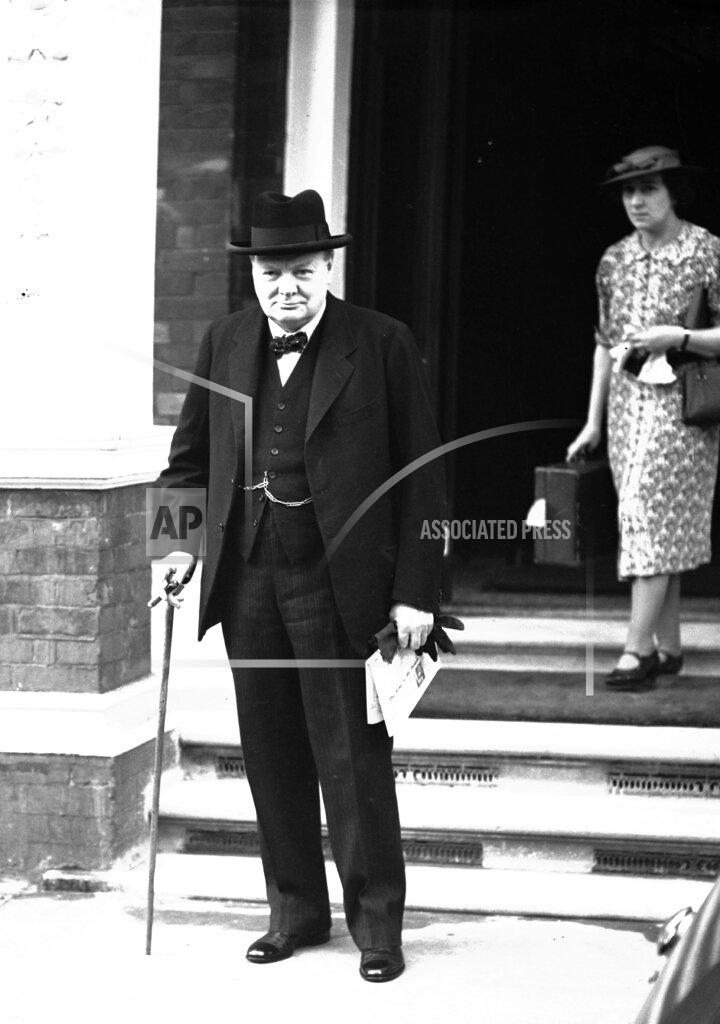
British Member of Parliament Winston Churchill becomes the First Lord of the Admiralty, a post he had held during the Great War. Winston Churchill and Anthony Eden are back in the government tonight, with all past differences forgotten in the task of winning the war. Eden is to be Secretary of State for the Dominions.
Sixty-five-year-old Winston Leonard Spencer Churchill, who today became First Lord of the Admiralty — the post he held at the outbreak of the first World War — has been a bitter enemy of the Hitler regime since it took power in 1933 and a caustic critic of the British policy of appeasement.
British General Edmund Ironside becomes the Chief of the Imperial Staff.
A limited British bank holiday, lasting only one day and affecting only banks, has been declared for tomorrow. It will apply to the Post Office Savings Bank and other savings banks but will not be a general holiday for other businesses.
Mitford sister and Nazi sympathizer Unity Mitford shoots herself in the head with a small pistol outside a German government building in Munich. Her suicide attempt is unsuccessful; she will continue to live until 1948 as an invalid.
Two thousand Americans sail from Britain.
Alan Turing reports to Bletchley Park, Buckinghamshire, England.
The Polish Ambassador to London, Count Edward Raczynski, tonight declared that new German air attacks in all parts of Poland had disclosed that the civilian population was suffering with the Germans using gas in their raids. [Ed: This turns out to be false rumors.]
General Maxime Weygand was named Commander in Chief of the French forces in the Eastern Mediterranean today as the territory was declared in a state of siege. The police handed over all their authority to the military forces.
The RAF now has 306 Mark I Spitfires. Ten squadrons are fully converted.
The Luftwaffe has 850 Bf 109E fighters with the Daimler-Benz DB601 engine, and 235 older Bf 109Ds with the Junkers Jumo 210 engine.
Four Hurricane squadrons (1, 73, 85 and 87) are sent to France.
The Danish Government, in order to control the entrances to the capital’s harbor, has arranged for minefields in the three main navigation channels. The German radio has issued a warning that minefields have been arranged south of the entrance to the Great Belt and Oresund areas. Activity by both German and Anglo-French air and naval forces in international waters around Denmark is reported.
A Rumanian passenger plane on the newly established Bucharest-Warsaw line narrowly escaped damage today when it ran into a German bombing attack on Lwow, Poland.
Luard Hempel, the German Minister accredited to Ireland, informed Premier Eamon de Valera today that Germany would respect Ireland’s neutrality if it adhered to this stand during the present conflict, and spoke of Germany’s peaceful attitude toward Ireland.
Italy abandons its attempt at mediation.
In a broadcast appeal to belligerents to “localize” the war, Generalissimo Francisco Franco of Spain gave authoritative indication today that Spain hoped to remain neutral.
Early in the morning, Officer Commanding Torpedo Boats makes a sortie towards Hela with destroyers and engages Gryf, Wicher and a 15cm battery. The last obtains hits on Leberecht Maass (four dead). In the first action by German S-boats in World War II, S 23 (Lt Christiansen) sinks the Polish barrage pilot vessel Lloyd Bydgoski (133 tons) by gunfire in the Gulf of Danzig.
Stuka dive bombers sink Polish minelayer Gryf, destroyer Wicher, minesweeper Mewa, and gunboat General Haller at Hela.
Submarine ORP Rys set a mine barrier (20 mines) 10 miles east from the tip of Hel Peninsula.
U-14 attacks the Polish submarine Sęp (Cdr. Wladyslaw Salamon) at 2022hrs. The torpedo explodes prematurely about 200 meters from the Polish sub due to a failure of the magnetic exploder. The German commander (KptLieutenant Horst Wellner) finds wreckage (from the torpedo) and some oil from Sęp’s damaged oil tank. Believing he has sunk the boat, he radios his claim in.
Although allied with Germany, the Italian government maintains its neutrality after the British and French governments declared war on Germany. Italian neutrality serves the German war effort by guaranteeing a secure source of supplies for Germany.
While the Belgian government mobilizes the kingdom’s armed forces, the Pierlot ministry declares the country’s neutrality in the event of a European war.
The Spanish government declares its intension of remaining neutral in a European war over the future of Danzig.
The Royal Navy deploys to its war stations, the Home Fleet has returned to Scapa Flow in the Orkneys and elements are preparing to escort the British Expeditionary Force (BEF) across to France.
A Bristol Blenheim light bomber of No. 139 Squadron, Wyton, carried out the RAF’s first operational sortie of the war, a photographic reconnaissance of the German naval base of Wilhelmshaven.
Ten Whitley medium bombers of Nos. 51 and 58 Squadrons carry out the first RAF operation over Germany, dropping over 5 million leaflets over Hamburg, Bremen and the Ruhr telling the Germans that Hitler’s promises are worthless, that Germany is near bankruptcy, and Germany is weak compared to Allied forces. Printed on the six million sheets of paper is the message: “Your rulers have condemned you to the massacres, miseries and privations of a war they cannot ever hope to win.”
German submarines (previously deployed to operating areas in late August) begin attacks upon British shipping: during these early operations, U 30 (Kapitanleutnant Fritz-Julius Lemp) torpedoes (without warning) the Montreal-bound British passenger liner Athenia south of Rockall Bank, 56°44’N, 14°05’W; 28 American citizens are among the 112 dead. U.S. freighter City of Flint, Swedish yacht Southern Cross, Norwegian freighter Knute Nelson, and British destroyers HMS Electra and HMS Escort rescue survivors. Despite having been given strict orders that all merchant vessels are to be treated in accordance with naval prize law (giving a warning before attacking) Lemp’s torpedoing Athenia in the belief that she is an armed merchant cruiser gives the British the erroneous impression that Germany has commenced unrestricted submarine warfare (see 16 and 22 September and 8 November). Within a fortnight, U 30 is herself a victim, when she is bombed by Skuas from British carrier HMS Ark Royal on 14 September 1939. With a slightly damaged bow and two torpedo tubes out of action, U 30 puts in to Reykjavik, Iceland, on 19 September to land a seriously wounded man before she returns to sea.
During the first two months of the war, 67 British merchant ships will be sunk.
British Home Fleet deploys aircraft carriers to seek out and destroy German submarines: HMS Ark Royal off the northwestern approaches to the British Isles, HMS Courageous and HMS Hermes off the southwestern approaches.
The British government announces the establishment of a naval blockade of Germany.
Destroyer HMS Somali captures German steamer Hannah Boge (2372grt) which had departed Shediac Bay in New Brunswick on 26 August. She is intercepted at 63 20N, 16 35W, taken to Kirkwall, arriving on the 5th, and later renamed Crown Arun in British service.
German steamer Pomona (3457grt) is seized by British forces at London. Although the crew set her on fire, the ship is saved and renamed Empire Merchant in British service.
The German cargo ship Olinda is intercepted by HMS Ajax ( Royal Navy) in the South Atlantic off the River Plate, Argentina (33°30′S 53°30′W) and sunk by Ajax as no prize crew is available.
U.S. freighter Saccarappa, with a cargo of phosphates and cotton, is seized by British authorities. The ship is released on 8 September after British authorities seize and unload the cargo.
The Egyptian government proclaims martial law in order to deport Germans, impose censorship, and arrest persons suspected of espionage.
British police today lowered the swastika from over the German Consulate in Jerusalem while a crowd, including many refugees from Germany, cheered. Hundreds of German citizens were detained, and German houses and institutions were surrounded and searched.
Moscow refuses comment on the war except for Molotov observing that the USSR is not obligated to enter the war on either side.
Proclamation by Adolf Hitler, Chancellor of the Reich, to the German People, September 3, 1939.
“Great Britain has for centuries pursued the aim of rendering the peoples of Europe defenseless against the British policy of world conquest by proclaiming a balance of power, in which Great Britain claimed the right to attack on threadbare pretexts and destroy that European State which at the moment seemed most dangerous. Thus, at one time, she fought the world power of Spain, later the Dutch, then the French, and, since 1871, the German.
“We ourselves have been witnesses of the policy of encirclement which has been carried on by Great Britain against Germany since before the war. Just as the German nation had begun, under its National Socialist leadership, to recover from the frightful consequences of the Diktat of Versailles, and threatened to survive the crisis, the British encirclement immediately began once more.
“The British war inciters spread the lie before the War that the battle was only against the House of Hohenzollern or German militarism; that they had no designs on German colonies; that they had no intention of taking the German mercantile fleet. They then oppressed the German people under the Versailles Diktat the faithful fulfillment of which would have sooner or later exterminated 20 million Germans.
“I undertook to mobilize the resistance of the German nation against this, and to assure work and bread for them. But as the peaceful revision of the Versailles Diktat of force seemed to be succeeding, and the German people again began to live, the new British encirclement policy was resumed. The same lying inciters appeared as in 1914. I have many times offered Great Britain and the British people the understanding and friendship of the German people. My whole policy was based on the idea of this understanding. I have always been repelled. I had for years been aware that the aim of these war inciters had for long been to take Germany by surprise at a favourable opportunity.
“I am more firmly determined than ever to beat back this attack. Germany shall not again capitulate. There is no sense in sacrificing one life after another and submitting to an even worse Versailles Diktat. We have never been a nation of slaves and will not be one in the future. Whatever Germans in the past had to sacrifice for the existence of our realm, they shall not be greater than those which we are to-day prepared to make.
“This resolve is an inexorable one. It necessitates the most thorough measures, and imposes on us one law above all others: If the soldier is fighting at the front, no one shall profit by the war. If the soldier falls at the front no one at home shall evade his duty.
“As long as the German people was united it has never been conquered. It was the lack of unity in 1918 that led to collapse. Whoever offends against this unity need expect nothing else than annihilation as an enemy of the nation. If our people fulfills its highest duty in this sense, that God will help us who has always bestowed His mercy on him who was determined to help himself. “
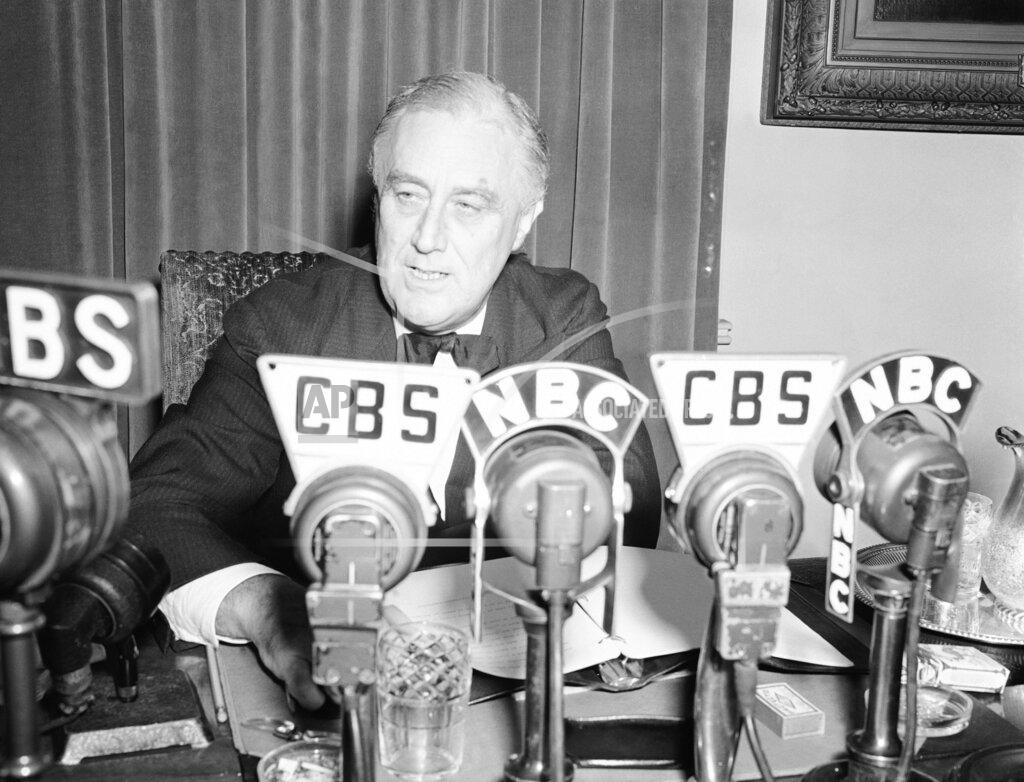
U.S. President Franklin D. Roosevelt gave a fireside chat on the European war. “Let no man or woman thoughtlessly or falsely talk of America sending its armies to European fields”, the president said. “At this moment there is being prepared a proclamation of American neutrality. This would have been done even if there had been no neutrality statute on the books, for this proclamation is in accordance with international law and in accordance with American policy … I hope the United States will keep out of this war. I believe that it will. And I give you assurance and reassurance that every effort of your Government will be directed toward that end.” Roosevelt declares in a fireside chat that the U.S. will remain a neutral nation in regard to the war in Europe, but he cannot ask every American to remain neutral in thought as well as action.
“Tonight my single duty is to speak to the whole of America.
“Until 4:30 this morning I had hoped against hope that some miracle would prevent a devastating war in Europe and bring to an end the invasion of Poland by Germany.
“For 4 long years a succession of actual wars and constant crises have shaken the entire world and have threatened in each case to bring on the gigantic conflict which is today unhappily a fact.
“It is right that I should recall to your minds the consistent and at times successful efforts of your Government in these crises to throw the full weight of the United States into the cause of peace. In spite of spreading wars I think that we have every right and every reason to maintain as a national policy the fundamental moralities, the teachings of religion, and the continuation of efforts to restore peace—for some day, though the time may be distant, we can be of even greater help to a crippled humanity.
“It is right, too, to point out that the unfortunate events of these recent years have been based on the use of force or the threat of force And it seems to me clear, even at the outbreak of this great war, that the influence of America should be consistent in seeking for humanity a final peace which will eliminate, as far as it is possible to do so, the continued use of force between nations.
“It is, of course, impossible to predict the future. I have my constant stream of information from American representatives and other sources throughout the world. You, the people of this country, are receiving news through your radios and your newspapers at every hour of the day.
“You are, I believe, the most enlightened and the best informed people in all the world at this moment. You are subjected to no censorship of news; and I want to add that your Government has no information which it has any thought of withholding from you.
“At the same time, as I told my press conference on Friday, it is of the highest importance that the press and the radio use the utmost caution to discriminate between actual verified fact on the one hand and mere rumor on the other.
“I can add to that by saying that I hope the people of this country; will also discriminate most carefully between news and rumor. Do not believe of necessity everything you hear or read. Check up on it first.
“You must master at the outset a simple but unalterable fact in modern foreign relations. When peace has been broken anywhere, peace of all countries everywhere is in danger.
“It is easy for you and me to shrug our shoulders and say that conflicts taking place thousands of miles from the continental United States, and, indeed, the whole American hemisphere, do not seriously affect the Americas—and that all the United States has to do is to ignore them and go about our own business. Passionately though we may desire detachment, we are forced to realize that every word that comes through the air, every ship that sails the sea, every battle that is fought does affect the American future.
“Let no man or woman thoughtlessly or falsely talk of America sending its armies to European fields. At this moment there is being prepared a proclamation of American neutrality. This would have been done even if there had been no neutrality statute on the books, for this proclamation is in accordance with international law and with American policy. This will be followed by a proclamation required by the existing Neutrality Act. I trust that in the days to come our neutrality can be made a true neutrality.
“It is of the utmost importance that the people of this country, with the best information in the world, think things through. The most dangerous enemies of American peace are those who, without well-rounded information on the whole broad subject of the past, the present, and the future, undertake to speak with authority, to talk in terms of glittering generalities, to give to the Nation assurances: or prophecies which are of little present or future value.
“I myself cannot and do not prophesy the course of events abroad—and the reason is that because I have of necessity such a complete picture of what is going on in every part of the world, I do not dare to do so. And the other reason is that I think it is honest for me to be honest with the people of United States.
“I cannot prophesy the immediate economic effect of this new war on our Nation, but I do say that no American has the moral right to profiteer at the expense either of his fellow citizens or of the men, women, and children who are living and dying in the midst of war in Europe.
“Some things we do know. Most of us in the United States believe in spiritual values. Most of us, regardless of what church we belong to, believe in the spirit of the New Testament—a great teaching which opposes itself to the use of force, of armed force, of marching armies, and falling bombs. The overwhelming masses of our people seek peace—peace at home, and the kind of peace in other lands which will not jeopardize peace at home.
“We have certain ideas and ideals of national safety, and we must act to preserve that safety today and to preserve the safety of our children in future years.
“That safety is and will be bound up with the safety of the Western Hemisphere and of the seas adjacent thereto. We seek to keep war from our firesides by keeping war from coming to the Americas. For that we have historic precedent that goes back to the days of the administration of President George Washington. It is serious enough and tragic enough to every American family in every State in the Union to live in a world that is torn by wars on other continents. Today they affect every American home. It is our national duty to use every effort to keep them out of the Americas.
“And at this time let me make the simple plea that partisanship and selfishness be adjourned, and that national unity be the thought that underlies all others.
“This Nation will remain a neutral nation, but I cannot ask that every American remain neutral in thought as well. Even a neutral has a right to take account of facts. Even a neutral cannot be asked to close his mind or his conscience.
“I have said not once but many times that I have seen war and that I hate war. I say that again and again.
“I hope the United States will keep out of this war. I believe that it will. And I give you assurances that every effort of your Government will be directed toward that end.
“As long as it remains within my power to prevent, there will be no blackout of peace in the United States.”
While thousands of Americans stranded in France are beleaguering the American Embassy to obtain transportation home, word came from Villefranche, where the American cruiser USS Trenton is now harbored, that the United States Navy Department was taking steps to have its citizen here evacuated, probably to neutral ports, aboard warships or commercial liners.
A plea to the 1,030,000 members of the American Legion and the 500,000 members of its auxiliary, and to the public at large, to “stay American” in thought and action and thus preserve America’s absolute neutrality during these days of world-shaking events, was issued this afternoon in Indianapolis by the national commander of the legion, Stephen F. Chadwick.
National interest in the U.S. centers on when Roosevelt will call upon Congress to discuss the possibility of U.S. participation in the war.
Aircraft plants in Southern California speed up their work on war planes, with $25,000,000 worth of orders for the Allies still unfilled.
Steel orders remain up, with August orders exceeding those of July.
The revised Social Security Act widens benefits to children, the Society Security Board reports.
The public spends more on liquor, post-Prohibition, than it does on government relief, according to the National Women’s Christian Temperance Union.
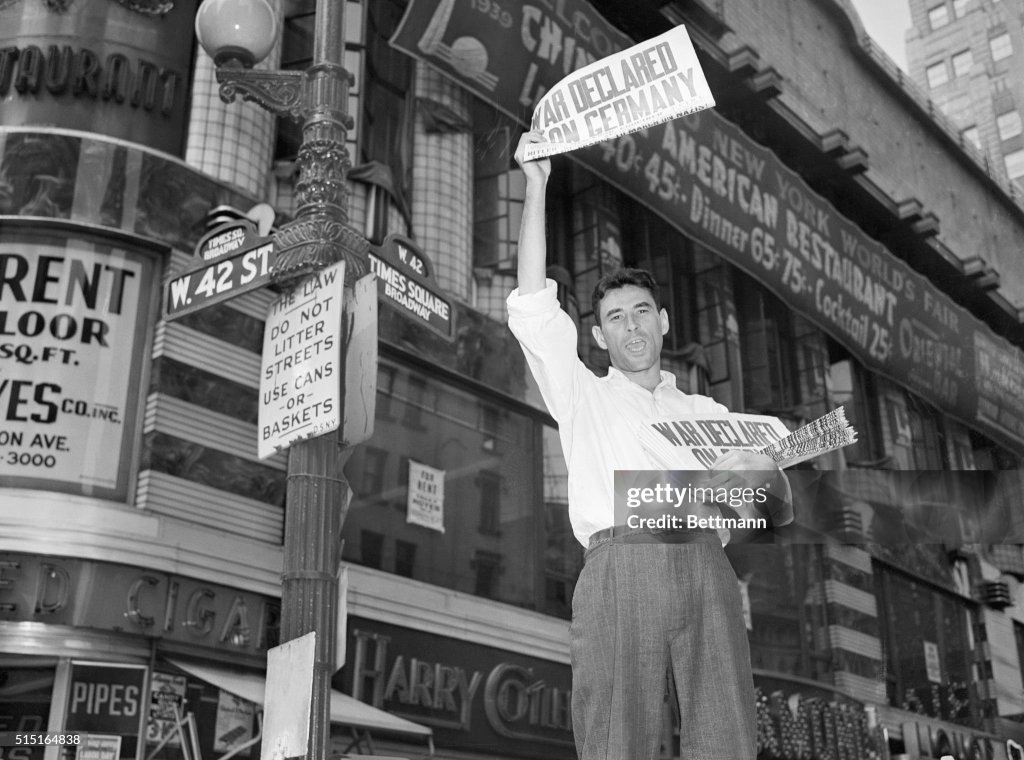
New York Mayor LaGuardia bans mass demonstrations during wartime and police disperse crowds. With quiet efficiency and a minimum of delay the law-enforcement agencies of the metropolitan area threw a protective cordon around piers, utility plants, water systems and other vital points yesterday to guard against sabotage that might result from the war in Europe.
More than 2,000 members of the German-American Bund cheered in Sellersville, Pennsylvania today as Fritz Kuhn of New York, the Bund’s leader, declared that “Hitler and Germany can lick the whole world.”
The National Labor Relations Board notes a decline in strikes, from 228 a month in 1937 to 98 monthly in 1939.
With the Sunday curfew impending, and the score at 7–5 in the 8th against the Yankees at Fenway Park in Boston, the Yankees start deliberately making outs to get the game in while the Red Sox start stalling. Two Yankees are walked intentionally and the Fenway fans then litter the field with cushions and debris to help slow things down. Umpire Cal Hubbard forfeits the game to the Yankees, but American League President Will Harridge subsequently overrules him, fines both managers for their tactics, calling the game a 5–5 tie, and the game is ordered to be replayed.
Young Freddie Hutchinson pitched the Detroit Tigers to an even break in a doubleheader with the Chicago White Sox today, his six-hitter accounting for a 7–2 victory in the nightcap after the Sox had taken the first game, 8–1. The Tigers were victims of a six-hitter in the opener, Thornton Lee setting them down as his mates. collected fourteen hits, including Gerald Walker’s twelfth home run with two mates aboard. Luke Appling and Mike Kreevich led the attack with three blows apiece. In the second game Detroit collected twelve hits, one of them Roy Cullenbine’s ninth-inning homer, while the Sox could do little with Hutchinson’s puzzling pitches.
Johnny Allen bore down today and led the Cleveland Indians to a 6–2 victory over the last-place St. Louis Browns. He fanned ten men and gave up eight scattered hits, holding the visitors scoreless until the eighth, when George McQuinn, Browns’ first sacker, planted one in the right field stands. Two walks, the only ones issued by Allen, were responsible for the other St. Louis tally in the ninth. The Indians collected six hits and two runs off Howard Mills in six innings, then pounded relief pitcher Vernon Kennedy for another six, including Shortstop Oscar Grimes’s home run in the seventh with two men on.
The Washington Senators evened a two-game series with the Philadelphia Athletics today with a 6-to-1 victory on Joe Krakauskas’s three-hit pitching. It was his eleventh triumph on the mound this year. The Senators jumped on Henry Pippen for three runs in the first inning and another in the second. Meanwhile, Krakauskas held the Athletics to one blow — Frankie Hayes’s eighteenth home run in the second — during the first six innings. George Case stole his forty-ninth base of the season in the first inning. Except for the four-bagger by Hayes, Krakauskas allowed only two men to hit safely — Nagel and Chapman, who collected scattered singles.
Paul Derringer chalked up his eighteenth victory with a 5–0 shutout of the Chicago Cubs today as the Cincinnati Reds found their old power for a thirteen-hit attack. Derringer starred along with Ernie Lombardi at the bat, the big pitcher getting three hits, including a double, and driving in two runs. He allowed Chicago five scattered safeties. Lombardi sent in the first runs in the fourth inning with his sixteenth homer of the year, coming home behind Ival Goodman, who had doubled. In the fifth Billy Myers connected for a triple and Derringer scored him with a single. Charlie Root, the losing hurler, was lifted for a pinch-hitter in the eighth. Cincinnati reached Jack Russell for three hits and two tallies in its half. With two out, Harry Craft singled and Myers’s double drove him home. Derringer’s third hit batted in Myers.
The St. Louis Cardinals regained their stride today before 11,066 fans and trimmed the Pirates twice, 14–6 and 3–0, to pick up half a game on the league-leading Cincinnati Reds, whom they now trail by five games. In the first game St. Louis piled up 20 hits, including eight doubles, three home runs and two triples. The Cards knocked out Joe Bowman with a five-run rampage in the first. Joe Medwick set the pace with four hits, but Don Gutteridge tripled with the bases loaded in the first and homered in the third. Other circuit blows were by Jimmy Brown and Terry Moore. Big Bob Weiland had the shutout in the nightcap, yielding only five hits for his ninth triumph. The Cards bunched five hits in the fourth to score all three runs off Cy Blanton.
Carl Hubbell (8–7) spins an eight-hitter and the New York Giants down the Brooklyn Dodgers, 7–1. The Giants batter the Dodgers’ pitchers for 15 hits. Catcher Harry Danning has four of them, driving in two of the Giants’ runs. Freddie Fitzsimmons takes the loss for the Dodgers, with the minor consolation of hitting a solo home run that avoids a shutout.
Right-hander Johnny Lanning and Southpaw Joe Sullivan pitched the Boston Bees to victory in both ends of a doubleheader against the Philadelphia Phillies today, 4–3 and 6–2. After Lanning had permitted only five hits in the opener, Sullivan turned in a four-hitter in the nightcap. Sullivan held the Phils scoreless until the ninth when Merrill May drove in two runs by hitting safely with the bases full. In the first game Joe Marty accounted for the Phils’ three runs with a single and a homer. Henry Majeski and Sam West hit homers for Boston in the first and second games, respectively. Lanning struck out five of the Phils in achieving his triumph in the opener, while Sullivan fanned four in the nightcap. Buddy Hassett broke out of his hitting slump to collect three hits in the second game and drive across two runs. West also was responsible for two tallies driven across in the same game.
On the principle that “when Britain is at war, Canada is at war,” first laid down by the great French-Canadian Prime Minister, Sir Wilfred Laurier, Canada automatically entered the struggle against Hitlerism at 6 o’clock this morning when the British ultimatum to Berlin expired.
Newfoundland enters World War II by virtue of Britain’s declaration of war. The Newfoundland Constabulary seizes the SS Christopher V. Doornum, a German freighter anchored at Botwood, as a prize of war.
Canada affirms that United States citizens will not need a passport to enter their country during the war.
The European war comes to the Americas: less than three hours after the British declaration of war on Germany, light cruiser HMS Ajax, under command of Captain Charles H. L. Woodhouse, intercepts German freighter Olinda, outward bound from Montevideo, Uruguay, off the River Plate, 34°58’S, 53°32’W. Not having a prize crew available to seize the enemy merchantman, Ajax shells and sinks her.
Britain interns Hong Kong Germans and places them in a Catholic school surrounded by barbed wire and guards. They will be held until they can be repatriated to Germany.
Strict neutrality is proclaimed by Japan. In a statement by the foreign office the Japanese stated that “Japan does not intend to be involved in the European conflict, but will remain strictly neutral, as an interested bystander.” The statement also said that “Japan intends to devote her entire efforts to a settlement of the China affair.”
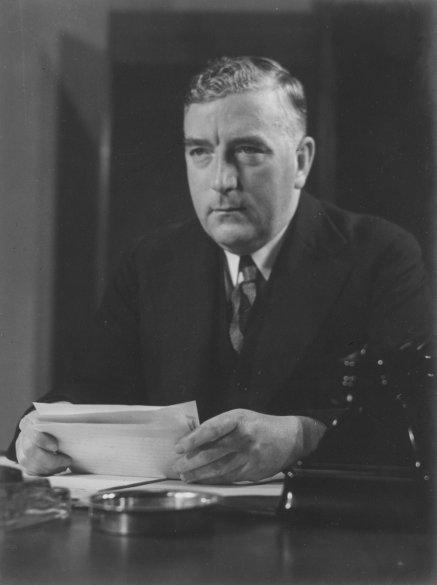
Australian Prime Minister Robert Menzies made a radio address announcing that the country was at war with Germany. “Fellow Australians”, Menzies began, “it is my melancholy duty to inform you officially, that in consequence of a persistence by Germany in her invasion of Poland, Great Britain has declared war upon her and that, as a result, Australia is also at war.”.
Born:
Jo Ann Castle [Zering], American “Queen of the Honky-Tonk Piano”, and accordionist (“The Lawrence Welk Show”, 1959-69), in Bakersfield, California.
Naval Construction:
The Koninklijke Marine (Royal Netherlands Navy) O 21-class submarine HrMs (HNMS) O-27 is laid down by Wilton-Feijenoord (Schiedam, Holland). Captured by the Germans in May 1940 while still on the slip. Ccommissioned by the Germans as UD-5 on 30 January 1942. UD-5 was surrendered by the Germans at Bergen, Norway on 9 May 1945. HrMs O 27 was commissioned into the Royal Netherlands Navy on 13 July 1945.

 History Diaries