The state of emergency in Poland was upgraded to a state of war.
In southern Poland, German Army Group South crosses the Warta River and begins a drive on Kraków.
The Battle of Częstochowa reaches its climax. The Germans launched an intense but ineffective artillery barrage from the South. The Polish 7th anti-aircraft artillery battery shot down 6 German planes and damaged several more. The Poles lost one aircraft and its crew (PZL.23 Karaś), during an air raid on a German column on the Truskolasy-Węczyca Wielka road. One plane from the 64th bomber squadron was lost, but the pilot managed to bring the plane back to Polish lines. The next day further aircraft losses occurred when a PZL.23 Karaś aircraft from 22nd bomber squadron was shot down by a German fighter, which crashed in Gnaszyn.
Around noon, German units launched an attack on the Lisiniec area from the Szarlejka area. The advance units then retreated to the main defenses where the German attack was halted. The Germans lost five tanks in the attack. Meanwhile in the area of Czarny Las, a sharpshooter destroyed three armored cars (most likely with a Wz. 35 anti-tank rifle), in which Polish forces found maps and other intelligence. In the late afternoon, a massive attack by German tanks and infantry was carried out on the defensive positions near Kiedrzyn, Lisiniec, Błeszne and Wrzosowa. The fight in Kiedrzyn between the 27th Infantry Regiment and the 1st Panzer Division lasted from 5:30 pm to 7:30 pm. In total, the Poles, defending themselves in shelters and artillery positions, destroyed over 40 German tanks and armored cars. In the area of Błeszno and Wrzosowa, some units of the 74th infantry regiment were forced back but after a counterattack, they retook their original positions from the Germans who suffered many casualties. The 74th infantry regiment took 30 prisoners and a few machine guns.
Subsequent attacks by German forces were successfully repelled by Polish forces until the evening. The strong Polish resistance in Częstochową forced the Germans to encircle the city and the Polish division defending it. In response to the threat of encirclement, the staff of the 7th Division on the night of September 2 withdrew the division from the city to the village of Janów before the encirclement was completed.
The Battle of Grudziądz intensifies. On 2 September, at 8 AM, the Germans began an assault, aiming to push further back the 16th Infantry Division. After an artillery barrage, German infantry moved into the action, managing to expand the bridgehead. The situation of Polish troops was particularly difficult in the western wing of their line of defence, and as a result, the 66th and the 64th infantry regiments (part of the 16th I.D.) had to retreat towards the Grudziądz-Jabłonowo Pomorskie railroad. To save the situation, General Bortnowski ordered 142nd squadron of the Polish Air Force (Colonel Bolesław Stachoń) to bomb German positions. The bombing did not bring any significant gains for the Poles, and in the afternoon of that day, the Poles began to retreat. Panic broke out in some Polish units, as the Wehrmacht, supported by the local Fifth Column, attacked the 208th reserve infantry regiment.
Nevertheless, General Bołtuć ordered Colonel Lubicz-Niezabitowski’s 4th I.D. to counterattack, in order to help the 16th I.D., which was under heavy German pressure. The 4th I.D. attacked from Radzyń Chełmiński towards Mełno, and the assault began at 8 p.m. Initially, the Germans retreated towards Annowo and Gruta, which was recaptured by the Poles at midnight. Furthermore, Polish 65th infantry regiment recaptured Nicwałd, but the Poles were halted before they reached their original defensive positions along the Osa. On that night General Bołtuć dismissed Colonel Stanisław Świtalski, who was unable to control his men, and replaced him with Colonel Zygmunt Bohusz-Szyszko.
In northern Poland, the German 4th Army makes contact with the German 3rd Army moving from East Prussia.
German Army Group North carried out a maneuver to envelop the forces of the Polish (Pomorze Army) that defended the “Polish Corridor”, with the result that the Polish commander General Władysław Bortnowski lost communication with his divisions. The breakthrough of armored contingents of the German Army Group South near the city of Częstochowa sought to defeat the Polish 6th Infantry Division south of Katowice where the German 5th Armored Division had broken through towards Oświęcim, that captured fuel depots and seized equipment warehouses. To the east detachments of 18th corps of the German 14th Army crossed the Polish–Slovak border near Dukla Pass.
Battle of Jordanów: To counter the threat of a Gwerman breakthrough in the vicinity of Nowy Targ, General Szylling ordered the 10th Motorized Cavalry Brigade, until then held in reserve, to move to the area and block the area of Jordanów and Rabka. Overnight the brigade was transported to the area and Col. Maczek installed his headquarters in the village of Krzeczów. The detachments of the Polish unit entered combat almost instantly. Particularly heavy fights occurred in the hills to the south of Jordanów, around the mountain of Wysoka (not to be confused with the Wysoka in northern Poland), where the 24th Motorized Regiment under Col. Kazimierz Dworzak, aided by the KOP and anti-tank artillery defended the area against the 2nd Panzer Division. Heavy artillery barrage started at 5 AM and soon afterwards the entire division started an all-out assault of the Polish positions. Despite suffering heavy losses, the Poles managed to stop the German assault and by noon the Germans withdrew losing approximately 30 tanks. However, the numerical and technical superiority of the Wehrmacht was tremendous and after three failed assaults, in the late evening the Germans finally seized the mountain of Wysoka and the village at its feet. The Poles withdrew under cover of an armoured train.
The village of Wysoka became a center for German service units and munitions depot. However, during the night the civilian inhabitants set two oil tanks on fire. The explosion destroyed a number of previously damaged tanks of the 2nd division, also killing a number of resting soldiers of the 3rd Mountain Division. Altogether, in the battle of Jordanów the Germans lost approximately 50 tanks and a number of other armoured fighting vehicles. Polish losses were also significant, and especially so in the ill-equipped volunteer units.
The Battle of Borowa Góra began. This took place near the Góry Borowskie hills, south west from Piotrków Trybunalski and east of Bełchatów. The battle, fought between the Wehrmacht and the Polish Army in the vicinity of Łódź, was a direct consequence of the Battle of the Border, an early part of the German Invasion of Poland. General Wiktor Thommée, who commanded Piotrków Operational Group of Łódź Army, ordered Colonel Czyżewski to defend a 25-kilometer line in the area of Rozprza. Polish units were supposed to hold their positions until September 4, when a Polish counterattack was planned from the Sulejów forests. Since Czyżewski did not have enough soldiers, he decided to man three main defensive positions, and to patrol the space between them. Center of Polish defence was established in the Góry Borowskie hills. Polish units began to man their positions in the night of September 2/3. Janowski’s headquarters were at a public school in the village of Janów. General Juliusz Rómmel, aware of German superiority, decided to reinforce Czyżewski, by sending the 301st Battalion of Light Tanks under Major Edmund Karpow, which consisted of 49 7TP tanks developed from the British Vickers tanks. The Poles would be hard-pressed and have to retreat from 5 September, opening for the Wehrmacht the road to Piotrków.
There are six air raids on Warsaw by the Luftwaffe. An official news service communiqué stated that yesterday German raiders dropped 120 bombs on Warsaw and its vicinity, killing ten and wounding twenty-five in Warsaw proper, with the number of casualties in the suburbs still undetermined. Twenty-one dead and more than thirty wounded were counted tonight after German bombs had struck an apartment house in a Warsaw workingmen’s quarter. The bombs tore off the side of the apartment house as if it had been made of paper. Rescue workers still were clearing away the resultant pile of debris in a search. for further casualties when this correspondent inspected it. One of the bombs had dug a crater fully twenty feet in diameter, and the open ground was piled high with furniture and belongings.
In the center of a large park in the southern section of Warsaw, a bomb had struck a simple wooden dwelling, killing two persons and wounding one. In an open field near the Vistula River, where ten light bombs apparently had been released simultaneously, they had dug craters in a 100-yard circle. A reporter in Warsaw was forced to take refuge multiple times because of air-raid alarms. Once the party took cover in a shallow dugout filled with working men, their wives and their crying children.
The worst scene of damage was at Kolo, the workingmen’s quarter, where, in addition to wrecking one apartment building, the bombs had smashed windows in several others. An old man gulped back tears as he said his wife and two children were dead. A woman, still staring blankly into space, said: “My husband is gone.”
The Polish army conducted the Raid on Fraustadt. Polish forces attacked Wehrmacht positions in and around the town of Fraustadt (present-day Wschowa), in the Province of Silesia, Free State of Prussia. In the morning of September 2, observation planes of the Polish air force observed German positions around Fraustadt. At the same time, a company of bicycle-riding Polish scouts patrolled forests along the nearby border. At 2:30 p.m., General Abraham issued an order to carry out a raid on Fraustadt. According to his directive, Polish forces were to repel enemy units and shell the town. The raid was to be carried out by 55th. Poznan Infantry Regiment, stationed in Leszno. Colonel Waclaw Wiecierzynski, who commanded this unit, named Captain Edmund Lesisz leader of the raid. The group which took part in the attack consisted of 300 soldiers and seven officers, with a platoon of military vehicles, a platoon of heavy machine guns and a platoon of artillery under Captain Ludwik Snitko. They were supported by a platoon of uhlans in the north, and a squadron of TKS tankettes, plus a platoon of military cyclists in the south. All three units communicated with each other via cyclists and mounted couriers.
In the afternoon of September 2, at about 4 p.m., the units headed towards the border. Buses were provided for the infantry, while artillery, with horse carts, reached the border after the infantry. Captain Edmund Lesisz ordered Lieutenant Władysław Konwiński of 2nd Platoon to attack a Border Guard (Grenzschutz) post, which blocked the road towards the village of Geyersdorf (Dębowa Łąka). After a short exchange of fire, the Germans retreated, and the Poles captured the post, together with a large amount of weaponry, which was taken to the barracks at Leszno.
Meanwhile, 1st Platoon of Lieutenant Stanisław Rybczyński attacked the border checkpoint, and Polish artillery took its designated positions. Soon afterward, Polish cannons opened fire on Geyersdorf, which resulted in panic among German soldiers. A number of TKS tankettes appeared in the village, supported by machine gun fire. As a result, German soldiers and civilians fled from Geyersdorf. The village was seized at app. 6 p.m. Soon afterward, Polish artillery began shelling of Fraustadt, killing some German soldiers. At the same time a Polish front unit, which was 3rd Platoon of Lieutenant Stefan Perkiewicz, reached the outskirts of Fraustadt, some 8 kilometers into German territory. The town itself was not seized, as before nightfall, General Roman Abraham ordered all Polish troops to return to Leszno. During the retreat, an incident took place in of Święciechowa. Ethnic German residents of the village came out with Nazi flags to welcome the Polish soldiers, mistaking them for the advancing Wehrmacht. A gunfire exchange ensued, after which most active Germans were arrested by the military police. After the Invasion of Poland, Captain Edmund Lesisz was captured by the Germans and sent to Oflag VII-A Murnau. Found there by the Gestapo, he was taken to Łódź and murdered.
A lone Polish PZL.23B light bomber attacks a German chemical factory in Ohlau, causing minor damage. It is the first air raid on German soil in World War II.
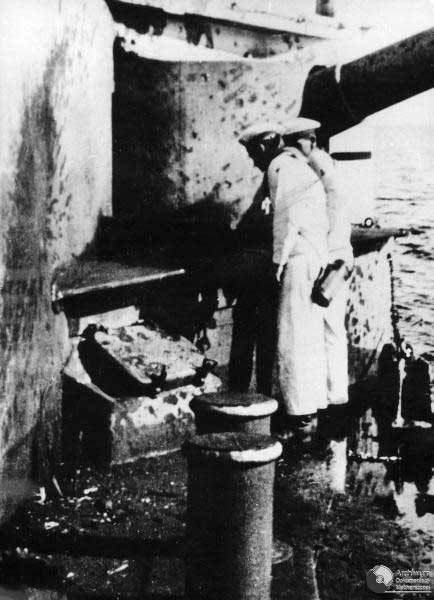
The Polish Navy auxiliary ships ORP Gdansk and ORP Gdynie are bombed and sunk in the Baltic Sea off Gdansk by Luftwaffe Ju-87 Stuka aircraft.
The Polish submarine ORP Sęp unsuccessfully attacks the German destroyer Friedrich Ihn at 1238 with one torpedo, north of Heisternest. ORP Sęp is damaged in the counterattack, but is able to continue on patrol.
The Nazis established Stutthof prison camp near the former territory of Danzig. In January 1942 it would be re-designated a concentration camp. German control is established in Danzig and construction of a concentration camp begins outside the city at Stutthof with the labor of 65,000 Polish Christians. Hundreds of Jews are among the first prisoners.
3 PM: The Parliament of Second Polish Republic gathers for the last time.
Externally little difference was discernible in Berlin on the second day under war conditions. Few people were on the streets in the government quarter, which was practically deserted. Tonight there was another blackout, which in the future will be a regular occurrence.
The Government of the Soviet Union issued directive No. 1355-279сс that approved of the “Reorganization plan of the Red Army ground forces of 1939–1940”, which regulated detailed division transfers and updated territorial deployment plans for all the 173 future Red Army combat divisions. In addition to the reorganized infantry, the number of corps artillery and the reserve of the Supreme High Command artillery was increased while the number of service units, rear units and institutions was to be reduced. By the evening of 2 September enhanced defense and security measures were implemented at the Polish–Soviet border. Per instruction No. 1720 of the border troop commander in the Belorussian Military District, all detachments were set to permanent combat-ready status.
Italy proposed a peace conference between Germany, Italy, Britain, France and Poland to address the Danzig-Polish crisis. Premier Mussolini tonight sought to prevent Polish-German hostilities from spreading into a general European war by arranging a negotiated settlement.
French Prime Minister Édouard Daladier addressed the Chamber of Deputies reviewing the events of the past several days and France’s commitment to intervene in Poland’s defense. “This is the question I lay before the French nation, and all nations”, Daladier said. “At the very moment of the aggression against Poland, what value has the guarantee, once more renewed, given for our eastern frontier, for our Alsace, for our Lorraine, after repudiation of the guarantees given in turn to Austria, Czechoslovakia, and Poland? More powerful through their conquests … the aggressors would soon turn against France with all their forces. Thus, our honor is but the pledge of our own society. It is not that abstract and obsolete form of honor of which conquerors speak to justify their deeds of violence; it is the dignity of a peaceful people, which bears hatred toward no other people in the world and which never embarks upon a war save only for the sake of its freedom and of its life.”
Premier Édouard Daladier today received implied authority from the Chamber of Deputies to declare war on Germany. With that to support them, he and his Cabinet met at the War Ministry at 7:30 tonight to frame a demand that Chancellor Hitler reply to the British-French “last warning” of yesterday. The power to declare war was vested in a war budget bill of 69,000,000,000 francs, which the sober Deputies, many wearing army uniforms, adopted unanimously by a show of hands after hearing M. Daladier say the government was still willing to negotiate if Germany would cease hostilities in Poland.
Whether the Premier uses the authority vested in him by adoption of the budget depends upon the possibility — frankly viewed as slight — that Herr Hitler would avail himself of a last-minute loophole for peace. The Premier told the finance committee after the Chamber session that he planned to call the Chamber to approve an actual declaration of war if that became necessary, but he may simply ask for approval after, rather than before, the action is taken. “The government will take the same chance as Parisians,” M. Daladier told a Deputy who asked whether the government planned to leave Peris immediately.
At 7:44 PM, Neville Chamberlain informed the House of Commons that no reply had yet been received from Germany regarding last night’s ultimatum. Regarding the Italian peace proposal he said he appreciated the effort, but “His Majesty’s Government, for their part, would find it impossible to take part in a conference while Poland is being subjected to invasion, her towns are under bombardment and Danzig is being made the subject of a unilateral settlement by force. His Majesty’s Government will, as stated yesterday, be bound to take action unless the German forces are withdrawn from Polish territory.”
A cheering Commons backs Prime Minister Neville Chamberlain, united in the ultimatum to the Nazis.
Winston Churchill, former First Lord of the Admiralty, and Anthony Eden, former Foreign Secretary, are virtually certain to join Britain’s enlarged war Cabinet, but Labor party leaders today declined to enter it, at least at the start of the conflict.
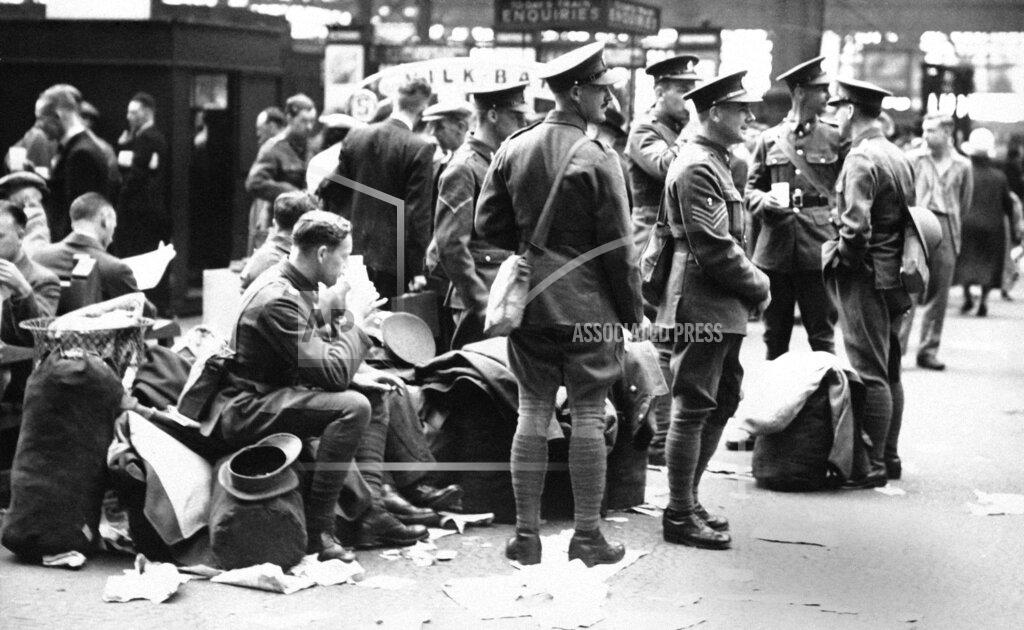
Evacuation plans in Britain are moving smoothly, ahead of schedule. Some 300,000 children have already left London.
The first British convoy of the war leaves Gibraltar for Cape Town.
Ten squadrons of Fairey Battle light bombers and two of Hawker Hurricane fighters of the RAF Advanced Air Striking Force are ordered to bases in France.
The Dail Eireann in Dublin tonight approved Prime Minister Eamon de Valera’s policy of neutrality in the event of a European war and gave his government the sweeping wartime powers that has been asked.
President Roosevelt and Secretary of State Cordell Hull deferred today their decision about proclaiming a state of war to exist in Europe and thus bringing the Neutrality Act into effect until after the meeting of the British Parliament tomorrow. Inquirers were warned not to speculate whether the act would be invoked tomorrow, regardless of the action taken by the British Parliament. It was increasingly obvious, however, that the law will not be hastily applied, unless general war should break out. Poland’s declaration today that a state of war exists will not be considered, according to present indications, of sufficient weight to cause President Roosevelt to issue his proclamation immediately. Under the law, the complete discretion rests with the President as to when he shall see fit to proclaim a state of war exists and which nations he considers to be involved. Until that finding is made, the law does not apply.
President Roosevelt indicated he has not lost all hope that war will be averted by authorizing invitations to be extended to foreign exhibitors at the New York World’s Fair to continue their participation in 1940. President Roosevelt gave considerable thought during the day to the address he intends to broadcast to the nation tomorrow night, but he was unable to reduce it to anything approaching a final draft until he had seen the trend of events tomorrow. At 10 PM, when Mr. Roosevelt is scheduled to go on the air, the action of the British Parliament and other European developments should be known to him.
The White House organized a routine for the duration of the crisis by which the army and navy intelligence services would report to the President every day at 12:45 PM, with their latest information and with maps brought up to date to show the progress of whatever fighting is going on. Rear Admiral Walter S. Anderson and Colonel John Magruder have been designated by their respective services to make these daily reports. By this means, added to the almost hourly dispatches of the State. Department received from its diplomatic posts abroad, it is hoped to keep Mr. Roosevelt officially informed of events almost as rapidly as they occur. The President, in addition to his official news sources, receives a constant supply of bulletins from the telegraphic news services, supplied for his convenience, and is a frequent listener to news broadcasts.
It has been arranged that foreign listeners may hear the President’s address of tomorrow night, which will be rebroadcast on short waves in English, French, Spanish, German, Italian and Portuguese. The State Department announced the creation of a special division to deal with repatriation problems. It will be headed by Breckenridge Long, former Ambassador to Italy, with Hugh R. Wilson, former Ambassador to Germany, who resigned yesterday, as his first assistant. George L. Brandt of the Foreign Service will serve as administrative officer.
Voters in the United States are equally divided on a change in the Neutrality Act, while a great majority believe that Congress should be called into session with an outbreak of foreign war, according to the results of a survey made public yesterday by the American Institute of Public Opinion. The institute, of which Dr. George Gallup is the director, issued the following statement: “The survey reveals where the public now stands on the question. after weeks of international tension, of cross and double-cross in European political alignments. From interviews with a scientifically selected cross-section of the American. electorate in every State, these two salient facts emerge:
“1. The great majority (71%) of the American people wish President Roosevelt to call Congress into special session. Their comments show that the public thinks ‘America will be safer with Congress in session’ and that ‘things will have. to be done right away.’
“2. On the vital question of whether the United States should change its Neutrality Act to permit the sale of war supplies to England and France, however, public opinion is divided exactly even. Fifty percent of those with opinions about; America’s course say, ‘Let’s change the law. The remaining 50 percent say, ‘Let’s leave it unchanged.’
“Since there is no longer any question of where American sympathies lie, the question boils down to how much the people of the United States would be willing to risk their own involvement by aiding Britain and France.”
Chancellor Hitler’s answer to President Roosevelt’s message asking a ban on the bombing of civil populations and undefended cities gives such assurances so long as the enemy refrains from such attacks on Germany.
[Ed: Of course, Hitler is lying. Polish cities are already under attack, from the very first day of the war.]
President Roosevelt told American workers in a Labor Day statement today that, although jurisdictional disputes still divide their ranks, they could be thankful for the benefits of democracy, including “the blessings of peace, a cohesive unity, and a substantial measure of prosperity.”
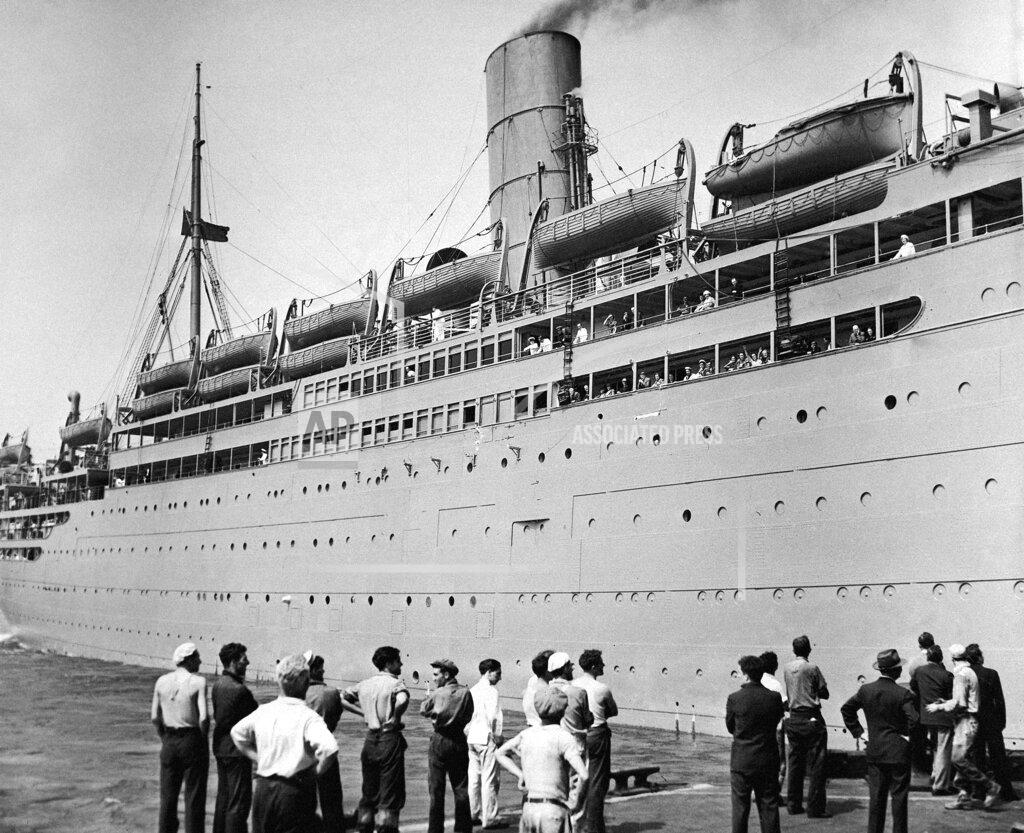
Around 2,000 touring United States citizens, now converts to the “See America First” school, scrambled aboard three British and French ships tonight and sailed homeward from Europe’s gathering war.
Convicted Mayor T. Frank Hayes resigns from his Waterbury, Connecticut, position, citing a “torrent of abuse” that prevents him from doing his job.
New York Mayor La Guardia barred all demonstrations “at this time” at foreign consulates and urged New Yorkers to cooperate in maintaining the normal calm of the city by respecting the views of all. Assuring citizens of complete safety, he said the city would be prepared to meet any emergency.
Consulates of the major European powers in New York City continued to receive offers of military service yesterday, with Germany apparently leading. From 600 to 700 men were reported to have passed through the doors of the German Consulate and some of them said they were German citizens being registered for army duty. The consulate made no statement.
The twin tubes of the Queens Midtown Tunnel under New York’s East River will be “holed through” about November 15, the New York City Tunnel Authority announced yesterday. Work on the $58,000,000 project is now about 75 percent completed and the tunnel headings, under construction from both the Manhattan and Queens shores, are steadily approaching each other under the river bed.
The Times Literary Supplement reports that the copy of the Magna Carta owned by the Lincoln Cathedral of England, United Kingdom, currently on display at the 1939 New York World’s Fair, will remain in the United States under the care of the Library of Congress for the duration of the war. It will be stored at Fort Knox until its return to Lincoln in 1944.
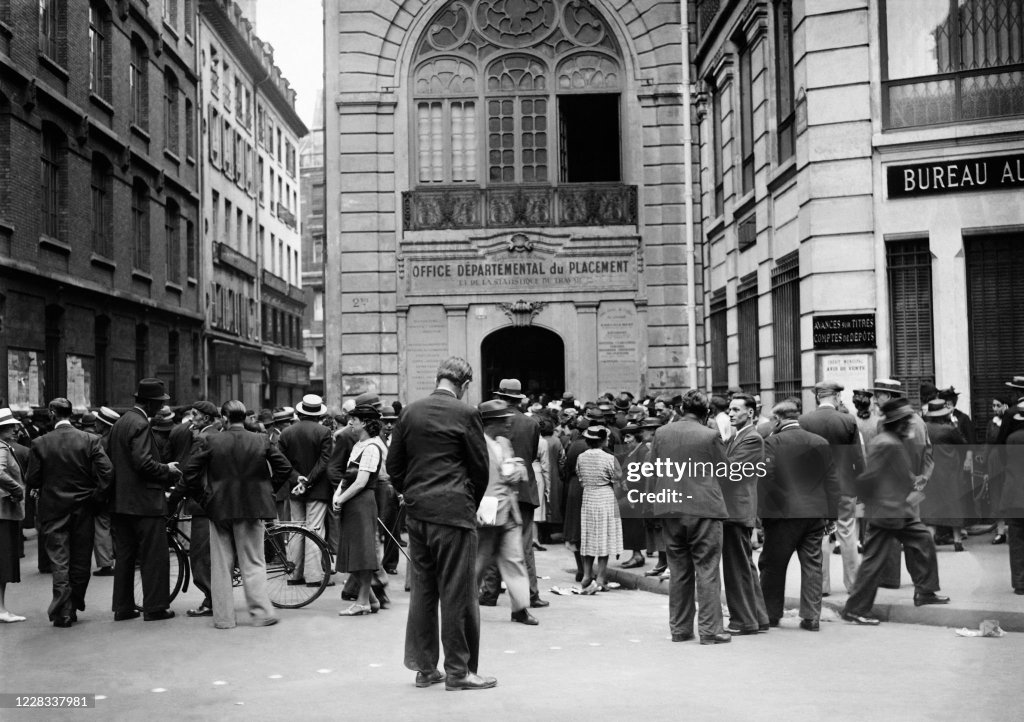
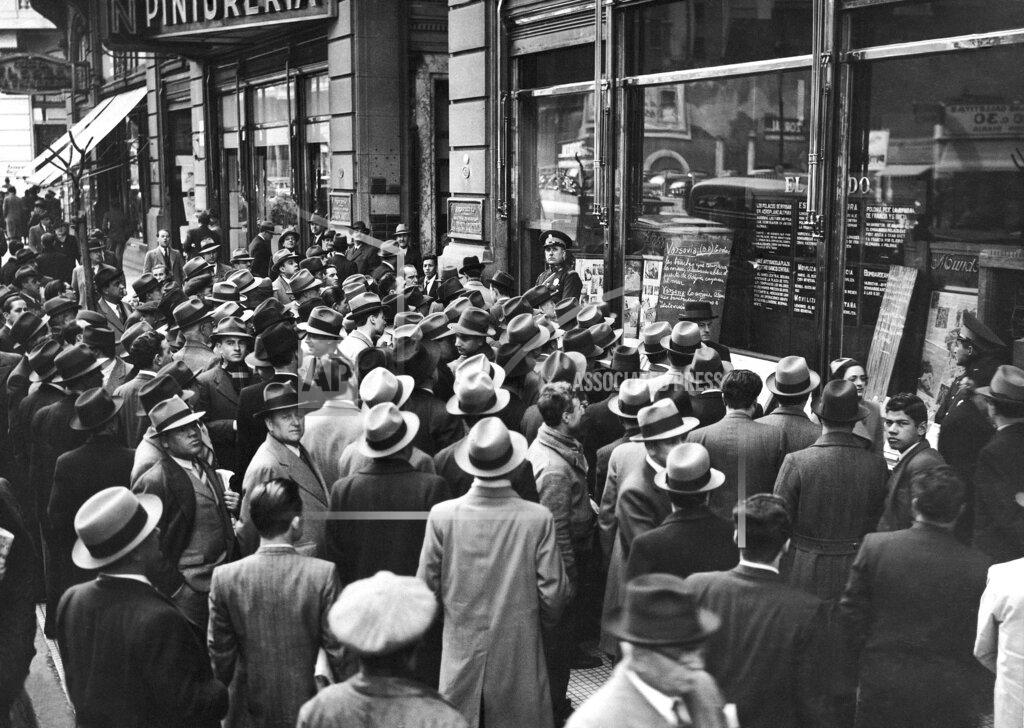
Speculation grips some commodities, as goods anticipated to become scarce are withdrawn from the market.
War relief preparations by the American Red Cross were announced yesterday in a letter to the New York chapter by Norman H. Davis, national chairman. Special arrangements of the American Red Cross to aid returning repatriated Americans, hastily evacuated from danger points in Europe, were announced today. Committees have been organized in New York, Brooklyn, Jersey City, Hoboken, Boston, Philadelphia, Baltimore, Norfolk, and New Orleans to meet incoming vessels and assist temporarily stranded Americans returning to this country. In all, some 17,000 Americans will be received at these ports within the next 30 days, the announcement said.
Michigan’s governor criticizes modern dance, saying that it “bewitches and controls” participants and viewers.
San Antonio groups demand the recall of their mayor after he allows a Communist group to meet.
Frank Fuller, San Francisco sportsman pilot, broke his own record in the Bendix Trophy Race from Burbank, Calif., to Cleveland yesterday and then kept on to Bendix, New Jersey, to break his own record for a transcontinental crossing in the event, opening feature of the National Air Races and the country’s outstanding air derby.
Heavy fog in Burbank forced Jacqueling Cochrane, last year’s Bendix winner, out fo the race. She said it was unsafe to take off in such heavy fog.
Researchers detect lightweight helium — Helium-3 — in the Earth’s atmosphere.
The American Chemical Society arranges a symposium about educational opportunities for women in the field.
An inventor receives a patent for his device that scans and maps out sea beds.
The Boston Red Sox raked Charlie Ruffing for nineteen hits, including a homer for Jim Tabor, and thrashed the New York Yankees, 12–7. It marked the sixth time in a row that Joe Cronin’s forces had polished off the Yanks and their ninth success in the thirteen games played between the two clubs to date, a rather embarrassing situation. For the Red Sox are still a matter of twelve and a half lengths behind the Yankees and this certainly is no way for an outfit so thoroughly outdistanced to be behaving. The Yankees, of course, did not submit meekly to the drubbing. They exploded a few long-range shots themselves. Joe DiMaggio fulfilled all obligations expected of the wonder player of his time by maintaining his blazing 400 batting pace by hitting a home run, his twenty-fourth of the year, as well as a double. This also extended DiMaggio’s current hitting streak to eighteen games in a row, longest of the season.
Manager Oscar Vitt put the Cleveland Indians’ reserve outfielder, Roy Weatherly, into the line-up today and Weatherly responded with four hits. He led the Indians to a sixteen-hit, 9–3 victory over the St. Louis Browns. Mel Harder held the Browns under control throughout except for a two-run flurry in the second inning.
Johnny Rigney turned back the Detroit Tigers today with a two-hit pitching performance, giving the Chicago White Sox a 2–0 victory and the pitcher his thirteenth triumph of the season, and his tenth in a row. The Sox got only six hits off Buck Newsom, but bunched three of them in the fourth for both their runs. Rigney pitched no-hit ball for six innings; Pete Fox getting the first blow off the young righthander in the seventh. Rudy York got the second, a ringing double in the ninth.
The Philadelphia Athletics defeated the Washington Senators, 3–0, today as Bill Beckman, their 32-year-old rookie right-hander, scattered nine hits to hang up his sixth victory of the year and his second straight shutout. Ken Chase, who went the route for the Senators, allowed only six blows, but twice Philadelphia bunched hits for runs and in the other scoring inning one hit was sandwiched between two bases on balls and a sacrifice.
Nine players hit homers, as the New York Giants beat the Brooklyn Dodgers 10–6 in the opener of a doubleheader at the Polo Grounds, falling one short of the record for two teams in one game set in 1923. Brooklyn wins the second game, 7–2. There are three more home runs in the nitecap, making a dozen for the day.
The Chicago Cubs took advantage of a shaky Cincinnati Red infield and added a sparkling defensive play for a 6–1 victory over the National League pace-makers today. Claude Passeau allowed eight scattered hits in turning his thirteenth victory of the season.
Back from a disastrous Eastern trip, the St. Louis Cardinals could not snap out of their slump today and they dropped the opener of a three-game series to the Pittsburgh Pirates, 11–3. St. Louis remained in second place, five and a half games behind the National League-leading Reds, but the Cubs were at their heels, only a game behind, in third place.
Rookie Ike Pearson won his second game for the Philadelphia Phillies today, gaining a 3–2 decision over the Boston Bees although Kirby Higbe had to come to the rescue in the ninth. Pearson held the Bees to three hits until the last inning. Tony Cuccinello led off in the ninth with a double, reached third on an infield out, then scored on a wild pitch with two out. Pinch-hitter Sam Andrews’s single scored Warstler, after which Higbe came in and retired Johnny Cooney on one pitch.
The Canadian premier asks parliament to ratify war action. The sending of a volunteer army is hinted.
The Japanese Cabinet has been notified to be ready for an urgent meeting to discuss Japan’s policy in regard to the European situation. At this moment, Japan is being cautious about its tie to Berlin. Some are every theorizing that the war might bring Japan closer to the United States, as its main trading partnet that will be uninvolved. This will, sadly, change in mid-1940.
Dow Jones Industrial Average: 138.09 (+2.84).
Born:
Sam Gooden, American soul vocalist (The Impressions – “People Get Ready”; “It’s All Right”), in Chattanooga, Tennessee (d. 2022).
Bobby Purify [Dickey], American soul singer (“I’m Your Puppet”), in Tallahassee, Florida (d. 2011).
Jim Vollenweider, NFL halfback (San Francisco 49ers), in Wisconsin (d. 1998).
Naval Construction:
The Вое́нно-морско́й флот СССР (ВМФ) (Soviet Navy) “K” (Katjusa)-class submarine K-53 is launched by A. Marti (Leningrad, U.S.S.R.) / Yard 194.
The Вое́нно-морско́й флот СССР (ВМФ) (Soviet Navy) “S” (Stalinec)-class (2nd group, Type IX-modified) submarine S-34 is launched by Marti Yard (Nikolayev, U.S.S.R.) / Yard 198.
 History Diaries