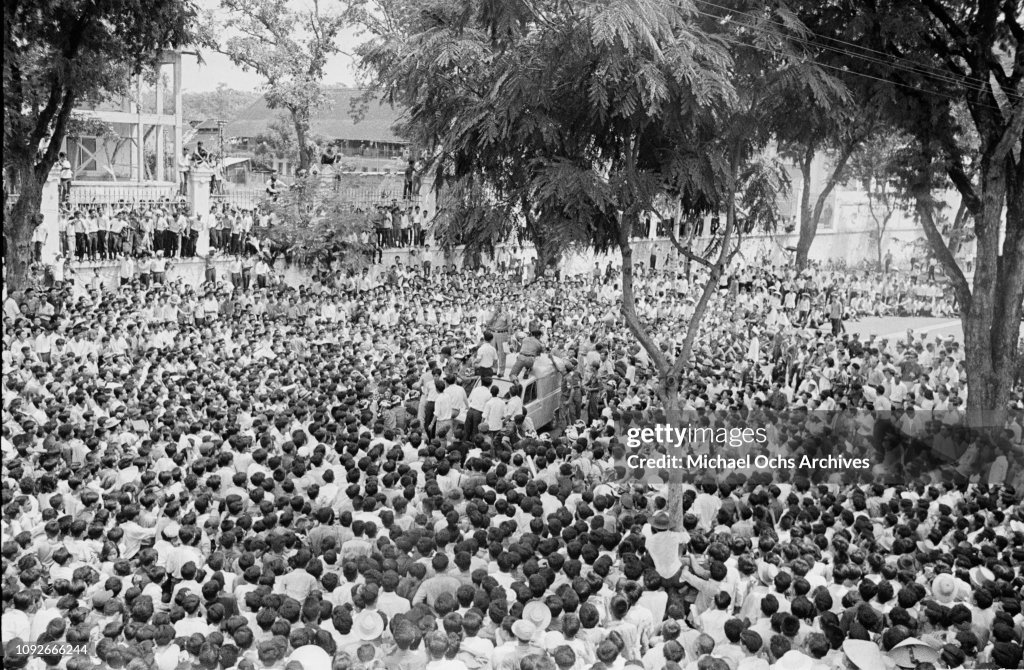
Ambassador Taylor confers at Đà Lạt with Nguyễn Khánh and reports that Khánh appears “rested and recovered” and ready to return to Saigon as premier shortly. The Ambassador and his, deputy, U. Alexis Johnson, flew to the mountain resort of Đà Lạt, where General Khánh was recuperating after the tension and violence of last week in Saigon.
In a statement after the talks Ambassador Taylor clarified the position of Dr. Nguyen Xuan Oanh, saying that he was only acting as Premier in General Khánh’s absence. Dr. Oanh, who was a Deputy Premier in General Khánh’s Government, assumed his post Saturday. After the mob violence of last week, American and Vietnamese officials are struggling to restore the governmental situation that prevailed on August 15, the day before General Khánh promulgated a new Constitution placing himself at the head of a presidentially dominated regime. The new setup was canceled after it aroused protests by Buddhists and student mobs. Buddhist leaders joined students in pledging a two-month moratorium on demonstrations, United Press International reported. The Buddhists said they would call a general strike if the Government failed to produce democratic reforms by October 27, the news agency added.
An aide of General Khánh denied today that Ambassador Taylor had lent his personal support to Major General Dương Văn Minh in an effort to unseat General Khánh. The aide said General Khánh had telephoned Saigon upon hearing that this implication was being drawn from an interview he had granted to a reporter, Beverly Deepe. The interview was published today in The New York Herald Tribune. “The general wanted to make clear that he spoke of the ‘personal friendship’ of Taylor and Minh, but never said Taylor had given Minh political backing against Khánh himself,” the aide said. General Khánh attributed the misunderstanding to the absence of an interpreter during the interview. The personal friendship of Ambassador Taylor and General Minh is widely discussed in Saigon. They played tennis together about a half‐dozen times during Mr. Taylor’s visits to Vietnam when he was a general at the head of the Joint Chiefs of Staff, but American officials insist that the relationship never went beyond that.
As officials try to turn the clock back to August 15, the status of General Minh poses a problem. He was chief of state, theoretically outranking General Khánh, who was Premier. Their relations have been strained since General Khánh took power from General Minh on January 30. Officials hope for now to deal with that uneasy relationship by retaining the military triumvirate as a joint head of state without effective power. Both generals, with Lieutenant General Trần Thiện Khiêm, are members of the triumvirate, which was set up during last week’s rioting. “It’s enough to drive a constitutional lawyer mad,” a harried American official said. “But it’s got to work, at least until something better can be worked out.”
In the coming weeks of political uncertainty, military men say, the war effort against the Việt Cộng can hardly help faltering. Military sources report a slowdown in Vietcong incidents last week, presumably because the insurgent leadership was preoccupied with taking psychological advantage of the anarchy in the capital. According to intelligence sources, many Việt Cộng agents infiltrated Saigon during the violence. With calm restored in the capital, military sources expected a rapid resumption of Việt Cộng activity, perhaps even more intensively because the government seems ill equipped to respond. Many Vietnamese field officials directly responsible for the countrywide pacification effort are said to have left their jobs to return to Saigon to see what the political situation will mean for future operations.
In Huế, the Buddhist professors announce formation of the People’s Revolutionary Council. Although anti-Communist it will challenge U.S. policies and offer its own program of economic reform. The faculty group, known as the People’s Revolutionary Council, has decided that the time has come for Buddhist intellectuals to take over the I Government in Saigon. They argue that the French, the Communists, the Roman Catholics, the Americans, and the generals have all failed to unify and lead the country.
In crisis‐ridden South Vietnam, proclamations from the university are read eagerly and scrutinized for shades of meaning. Yesterday, when it was rumored that the professors had seceded from South Vietnam and were forming a separate state in this central coastal city, a tremor was felt throughout the country. But the professors merely announced the formation of their council to work toward the kind of national government they favor. Their spokesman, Professor Lê Khắc Quyến, dean of the Faculty of Medicine, stressed that he was not anti‐American. But he contended that the United States had acted unwisely in encouraging the one‐man rule of Major General Nguyễn Khánh rather than backing a council of civilians.
A Roman Catholic soldier‐priest, whose parish lies in guerrilla-infested South Vietnamese territory, charged today that cruelty was being used in the war against the Communists. The priest, the Rev. Augustine Nguyễn Lạc Hóa, spoke in Manila at the presentation of six 1964 Ramon Magsaysay Awards for outstanding service to Asia. He said South Vietnamese leaders were placing priority on winning the war rather than winning the people. “When it is fought as an international war, we have no chance to win,” Father Hóa said after receiving his award. He added: “How can we explain to a mother when her child is burned by napalm? And how can we expect a young man to fight for us when his aged father was killed by artillery fire? Indeed, how can we claim to be with the people when we burn their homes simply because those houses happen to be in the Việt Cộng‐controlled territory?”
Admiral Thomas Moorer, chief of staff of U.S. Navy, announces that U.S. warships continue to remain on an around‐the‐clock alert in the South China Sea off North Vietnam in case there is any counterattack by North Vietnamese forces.Henry Cabot Lodge arrived in London today on the last stage of his tour of European capitals to explain American policy in South Vietnam. He said on his arrival that the United States expected a long struggle in the Southeast Asian republic. “Quick results had never been expected,” he said. Mr. Lodge, formerly ambassador in Saigon and now President Johnson’s special envoy, said he recognized Britain’s ”unique experience” in problems of terrorism and guerrilla warfare.
He said the United States had received a great deal of cooperation from the British advisory mission in Saigon, expecially in the effort to build an effective police force.
Admiral U. S. Grant Sharp, CINCPAC, at a meeting of the joint Security Consultative Committee in Tokyo, briefs the Japanese on the situation in Vietnam and acknowledges that the Japanese have just alloted $500,000 in aid to South Vietnam.
Prince Souvanna Phouma, the neutralist Premier of Laos, has proposed the neutralization of the strategic Plaine des Jarres, but a spokesman for the pro‐Communist Pathet Lao, whose troops control the area, indicated today that the plan would be rejected. The Premier put forward his suggestion in a meeting Friday with Prince Souphanouvong, chief of the pro‐Communist faction. Under the proposal, the area, which has been the scene of many military clashes, would be occupied by a mixed force of Pathet Lao, rightist and neutralist troops and placed under the control of the International Control Commission for Laos. The commission consists of members from Canada, Poland and India, which holds the chairmanship.
Premier Souvanna Phouma and Prince Souphanouvong met in Paris today. A spokesman for the Premier said the leftist leader had made no reply to the neutralization proposal. This evening Minister of Information Phoumi Vongvichit, Secretary General of the Neo Lao Hak Xat, parent movement of the Pathet Lao troops, said such a plan could be considered only after his faction’s major demands were met. These demands, he reiterated, are principally a cease‐fire, the restoration of the coalition government and a new meeting of the 14 nations that attended the 1962 Geneva conference, which declared Laos neutral and established its rightist‐leftist-neutralist coalition government. Since the right‐wing military coup d’état of last April, the leftists have scorned the government as rightist‐dominated. The neutralist and rightist factions say they will agree to the leftists’ conditions only after the Pathet Lao troops have withdrawn from the territories they overran last spring and after the leftists have recognized Prince Souvanna Phouma as Premier.
Today’s meeting between the princes, who are half‐brothers, was their second since their arrival here for a peace conference that is intended to include all three factions. The rightists are represented by Prince Boun Oum and the Minister of Public Works, Ngon Sananikone. The real talks here, however, are between Princes Souvanna Phouma and Souphanouvong. The rightist Prince, Boun Oum, made that clear today. He declared, after a courtesy call on the French Foreign Minister, Maurice Couve de Murville, that his faction’s case was in the hands of the neutralist Premier.
Dean Acheson, special United States representative at the mediation talks on Cyprus, will return from Geneva Friday because the talks are deadlocked. Officials insisted that, despite the stalemate, Mr. Acheson’s departure should not be construed as a collapse of the United Nations‐directed mediation effort because the Security Council’s Cyprus conciliation mandate remained in force and the “bargaining” had not been broken off. Reuters reported from Geneva that reliable sources there said “the talks as we know them are finished.” The negotiations were halted by a communiqué issued last week in which Premier George Papandreou of Greece and President Makarios of Cyprus declared they wanted the Cyprus question handed over to the General Assembly in November.
The State Department announced tonight Mr. Acheson’s plan to return, saying that he would consult with President Johnson and Secretary of State Dean Rusk on his conversations and “also explore with the President and the Secretary what further help the United States might extend in resolving this problem.” Robert J. McCloskey, the department’s spokesman, said that while the Geneva talks had narrowed the gap between Greece and Turkey, “it was not possible to find a solution acceptable to both sides.” The Cyprus crisis began last Christmas when fighting broke out between the majority Greek Cypriots and the minority Turkish population on the island. At issue were Greek Cypriot efforts to amend the Constitution, which, the Greek community contended, gave the Turkish minority excessive power to block legislation.
The diplomatic deadlock revolves around the so‐called “Acheson plan” that the former Secretay of State evolved during his stay in Geneva. In its broad outlines, this plan calls for union, or enosis, of Cyprus with Greece, with special compensations to Turkey, and the possible establishment of an Atlantic Alliance base on the island. Both Greece and Turkey are NATO members. While enosis with compensation has been accepted in principle by both Greece and Turkey, the Athens Government feels that the price asked by the Turks is too high. Greece regards the Turkish demands for participation in Cyprus affairs as a form of partition, and she remains highly reluctant to turn one of her Mediterranean islands over to Turkey to resettle the Turkish minorities from Cyprus. The latter idea is a variant in the compensation plan. Archbishop Makarios of Cyprus rejects the enosis concept altogether, as it would render him no longer a head of state but simply a provincial Greek politician.
India appeared today to have hardened her attitude toward Communist China following a reported refusal by Peking to withdraw “civilian posts” from the demilitarized zone in Ladakh as a prelude to negotiations. An Indian Foreign Ministry spokesman said it was clear that Communist China was “interested neither in the Colombo proposals nor in direct negotiations with India at present.” The Colombo proposals were formulated by six nonaligned African‐Asian powers in December, 1962, in the wake of the Chinese Communist invasion of India. They stipulated that a demilitarized zone of 12.5 miles be established in Ladakh, where the Chinese forces are in possession of 15,000 square miles of territory that India regards as her own.
President Antonin Novotny of Czechoslovakia and Premier Khrushchev began talks today at Hradcany Castle on the split in the Communist movement and relations between their two countries. An interim report issued this evening by Ceteka, the official press agency, said the discussions “confirmed the unity of our views” on all matters. Problems of the “international Communist movement” were a principal item on the agenda, the report said. The Foreign Ministers of Bulgaria, Hungary and Poland appeared tonight at a Government reception in the castle.’ Asked what he was doing here, on Adam Rapacki, the Polish Minister, said, “I have been here on vacation for five days.”
Syria created its 13th administrative province, the Quneitra Governorate, from portions of the Rif Dimashq and Daraa governorates, in order to unify the area around the Golan Heights. Most of the Quneitra province would be captured less than three years later by Israel during the Six-Day War.
The prevailing mood of the Black district of North Philadelphia was calm last night and early today, although there were isolated instances of stone throwing by teen‐age bands. After one night of sustained rioting and another of scattered looting, the disorders were well contained. False alarms were running ahead of real incidents, however minor, at a rate of ten to one. Between 4 PM yesterday and 1:30 AM today there were 44 arrests — 21 for looting and the rest for intoxication and breach of the peace. This brought the tally for the weekend’s violence to 333 arrests. Altogether, 248 persons have ’been injured, including 66 policemen and two firemen. All but seven of the injured were released after treatment in the hospitals.
A special squad of 100 patrolmen this afternoon raided the headquarters of an apostate from the Black Muslims who now leads a cult of his own in the Negro district of North Philadelphia. The police said they had found a .22‐caliber pistol, two bayonets and the ingredients for a dozen Molotov cocktails. Two of the Molotov cocktails had been assembled. The former Black Muslim, who calls himself Shaykh Muhammad, was arrested. The only other persons in the three‐story building when the police arrived were his wife and children. The police said the unusually large detachment of patrolmen had been used because they had had no way of knowing how many members of the cult might be inside the building, which is on Columbia Avenue in the heart of the section where rioting flared Friday night. Muhammad, whose original name was Abyssinia Hayes, was charged with possession of bombs and explosives.
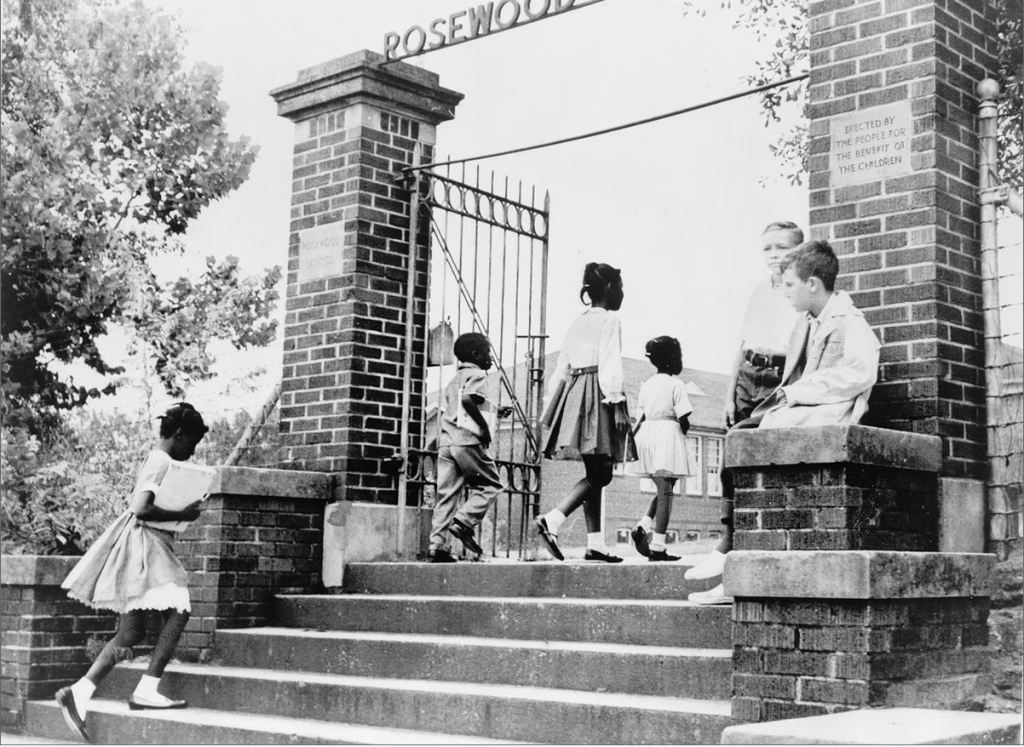
Schools in Biloxi, Mississippi, were integrated for the first time as 16 black first grade students were enrolled, without incident, in the four elementary schools that had previously been all-white (Lopez, Gorenflo, Dukate, and Jefferson Davis Elementary). The 12 girls and four boys had been registered pursuant to a U.S. District Court order, and were protected from protesters by 20 U.S. Marshals supplementing local law enforcement officials. An “emergency force” of 1,800 members of the Mississippi National Guard was on standby in the event that “federalization” needed to be ordered by President Johnson. The next day, state and federal officers protected Debra Lewis as the lone African-American to enroll in a white school in Leake County. On the other hand, 39 black first graders would peacefully be enrolled in the eight all-white schools in Jackson on September 14 as “history was made — most uneventfully”.
On the lawn of the Gorenflo Elementary School, a first grade class of boys and girls held hands around a pecan tree today for a game of drop the handkerchief. The teacher, a pretty blonde, chose a Black girl in pigtails and a prim white dress to go first. The girl skipped several times around the circle, as if she were trying to decide if it would be proper to be chased by one of the 25 white children. Finally, she dropped the handkerchief behind a grinning Black boy in black pants and a white shirt, one of the three other Blacks in the class, and scooted around the circle to his place before he could catch her. The children’s laughter rang out through the white residential neighborhood. But the streets were empty and the city of 60,000 seemed languid and unconcerned in the late August heat. This is how school Integration below the college level came to Mississippi after 10 years of angry, resourceful resistance.
Two major civil rights leaders said yesterday that they had no evidence that recent racial riots in northern cities were planned or were the work of paid agitators. However, the two — Whitney M. Young Jr., executive director of the National Urban League, and James Farmer, national director of the Congress of Racial Equality — asserted that an investigation into the circumstances surrounding the disorders would be useful. On Sunday Roy Wilkins, executive secretary of the National Association for the Advancement of Colored People, suggested that the riots might have been planned and asked for a Federal investigation. But he also said that he had no evidence that the riots were planned. Mr. Wilkins, in a telegram to Attorney General Robert F. Kennedy requesting the Federal inquiry, declared that because of the similarity of the riots, “the suspicion is widespread that they have been planned and that persons have been paid to start and to keep them going.”
An aide of the Attorney General said yesterday that Mr. Kennedy did not intend to take any special action on the request because none was necescessary. He noted that Mr. Kennedy had previously instructed the Federal Bureau of Investigation “to work to the limit of its authority and responsibility to ascertain the facts” about the recent disorders. Mr. Wilkins’s request was discussed yesterday morning at a meeting here of the Council for United Civil Rights Leadership, attended by the Rev. Martin Luther King Jr. and other leaders. After the meeting, Mr. Young said “the consensus was that there has been a pattern” to the disorders and “there was agreement that an investigation would be useful.”
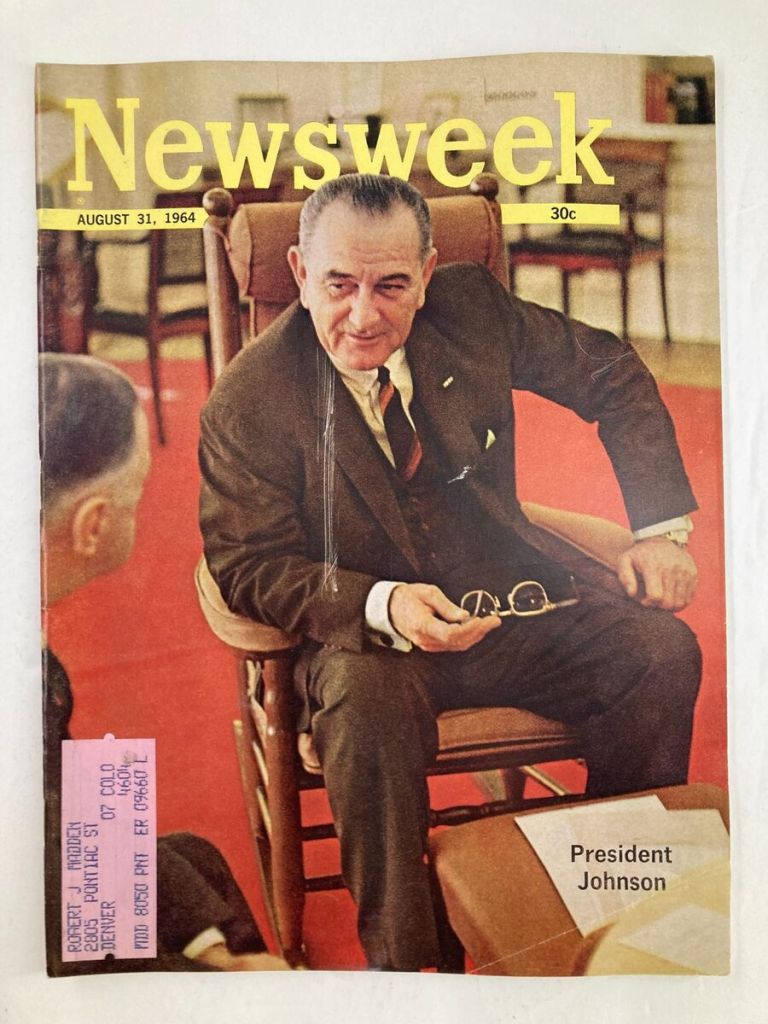
President Johnson signed legislation creating a permanent, nationwide food stamp program for impoverished Americans. Under the original guidelines, qualifying families could purchase ten dollars of food stamps for six dollars of cash, a system whereby the federal government would pay for 40% of food purchases. The stamps can be used to buy food in grocery stores. The signing ceremony took place at the White House a half‐hour after Mr. Johnson returned to Washington from his Texas ranch. The law expands a pilot program, now in operation in 43 counties, that was started by President Kennedy. It is expected to cost $25 million the first year, $75 million the next. $100 million the third year and $200 million for the fiscal year ending June 30, 1967.
A bill to provide a more equitable formula for payments to counties for the loss of taxable properties to the Federal wildlife‐refuge system was signed today by President Johnson. Under previous law, 25 percent of the net proceeds from the sale of surplus wildlife, products was paid to counties in which the refuges are situated, for use for public schools and roads.
The Administration opened its medical‐care fight in the Senate today by proposing a new package embracing both health insurance and increased cash benefits under Social Security. The move came after opponents had struck the first blow by proposing to raise Social Security cash benefits to such a high level that Federally financed health insurance would be squeezed out. Caught off guard, Administration leaders gathered in the office of Mike Mansfield, Senate majority leader, to draft their new package. The new Administration proposal would provide essentially the same hospital and nursing home benefits called for under the original plan, known as the King‐Anderson bill. It would also provide an added feature, a $7 monthly cash benefit increase for those on Social Security.
Senator Barry Goldwater’s campaign manager said today that race riots were becoming a “common and universal tragedy” in the United States and that President Johnson should exert more leadership to end them. The campaign manager, Denison Kitchel, spoke at a news conference here after conferring yesterday with Mr. Goldwater, the Republican Presidential nominee, aboard a yacht off Catalina Island. Mr. Goldwater ended a six-day yachting vacation today and returned to Newport Beach. He will go to Phoenix, Arizona, his hometown, tomorrow. Mr. Kitchel suggested that President Johnson should call a conference to discuss ways of ending racial violence in the nation’s cities.
A major New York labor group gave a rousing endorsement to President Johnson and Senator Hubert H. Humphrey here yesterday. However, it remained divided on whether to support Attorney General Robert F. Kennedy, who is to be named as the Democratic candidate for Senator from New York today. Fifteen hundred delegates to, the annual convention of the New York State American Federation of Labor and Congress, of Industrial Organizations endorsed the Democrats’ national ticket after hearing their president, Raymond R. Corbett, call upon organized labor to “bury” Senator Barry Goldwater in the Presidential election.
Alabama’s slate of unpledged Democratic Presidential elector nominees refused today to resign, despite a suggestion from Governor George C. Wallace that it might be a wise course. A prepared statement read to newsmen after a closed two-hour meeting made no mention of any recommendation by the Governor. But some of the candidates said later that Mr. Wallace had suggested stepping aside in favor of a substitute slate of electors favoring President Johnson, clearing the way for a direct Johnson‐Goldwater test in Alabama in the November election.
Ground is broken for Anaheim Stadium, future home of next year’s California Angels.
Bill Pleis snuffed out a Washington Senators rally in the eighth inning today and protected a 2–1 victory for the Minnesota Twins. Jim Grant was working on a three‐hitter until wildness got him into trouble in the eighth. Two walks and Don Blasingame’s single scored one run and put runners on second and third with two out. Pleis replaced Grant and struck out a pinch‐hitter, Fred Valentine, to end the threat. The Twins had staked Grant to a 2–0 lead on Zoilo Versalles’s 17th homer in the third and Jimmie Hall’s run‐scoring double in the fourth.
The Los Angeles Dodgers team doctor said today that X‐rays showed that Sandy Koufax did not require surgery for his injured left arm. Dr. Robert Kerlan recommended, however, that Koufax not attempt to pitch again this season. The doctor suggested that Koufax not even attempt to pick up a baseball for two weeks.
[Ed: Sandy Koufax will deal with elbow pain for the rest of his career, because of traumatic arthritis. He will need regular pain killing injections to be able to pitch. Despite that, he will remain one of the greatest pitchers in the history of baseball, right up to his retirement after the 1966 season. Koufax was the first three-time winner of the Cy Young Award, each time winning unanimously and the only pitcher to do so when a single award was given for both the leagues; he was also named the National League Most Valuable Player in 1963. He was the first major league pitcher to throw four no-hitters, including a perfect game in 1965. They called him “The Left Arm of God.” Since early in his career, Koufax was seen as an ally to minority players by both teammates and opponents. Maury Wills recalled that, after games, the two would sort through each other’s fan mail and sort out racist and antisemitic ones. His reputation for treating everyone with equal respect prompted catcher Earl Battey, a former opponent, to say of him: “I accused him of being black. I told him he was too cool to be white.” He was not only one of the greatest players, but one of the greatest men in the history of baseball.]
Don Drysdale singled home the first two runs for Los Angeles and struck out 12 batters tonight as the Dodgers won, 12‐3, and snapped the St. Louis Cardinals’ six‐game victory streak. Ken Boyer’s wild throw with the bases filled added three unearned runs for the Dodgers in a five‐run fourth inning. Maury Wills hit a two‐run homer in the sixth and Wes Parker hit a homer in the seventh. The Dodgers added four runs in the eighth when Derrell Griffith doubled home Wills and Roseboro’s double accounted for the other three. Drysdale had a bad first inning, yielding three singles, including Dick Groat’s two‐run hit. Successive doubles by Lou Brock and Bill White added the third Cardinal run in the fifth. Drysdale’s 12 strikeouts increased his season’s total to 202 — 21 strike‐outs fewer than Sandy Koufax’s league‐leading total.
Dow Jones Industrial Average: 838.48 (-0.61).
Born:
Duane Washington, German-born American NBA shooting guard (Brother of Derek Fisher; New Jersey Nets, Los Angeles Clippers), in Eschwege, West Germany.
Lybrant Robinson, NFL defensive end (Washington Redskins), in Salisbury, Maryland.
Raymond P. Hammond, American poet and editor of “New York Quarterly”, in Roanoke, Virginia.
Died:
Peter Lanyon, 46, English painter, was killed in a crash of a glider.
 History Diaries