Three days to war in Europe.
At 7.00 AM, Dahlerus telephones Cadogan with news of his meeting with Göring. The Führer “was in fact only considering how reasonable he could be,” he said, and was about to extend an invitation to the Poles for discussions in Berlin.
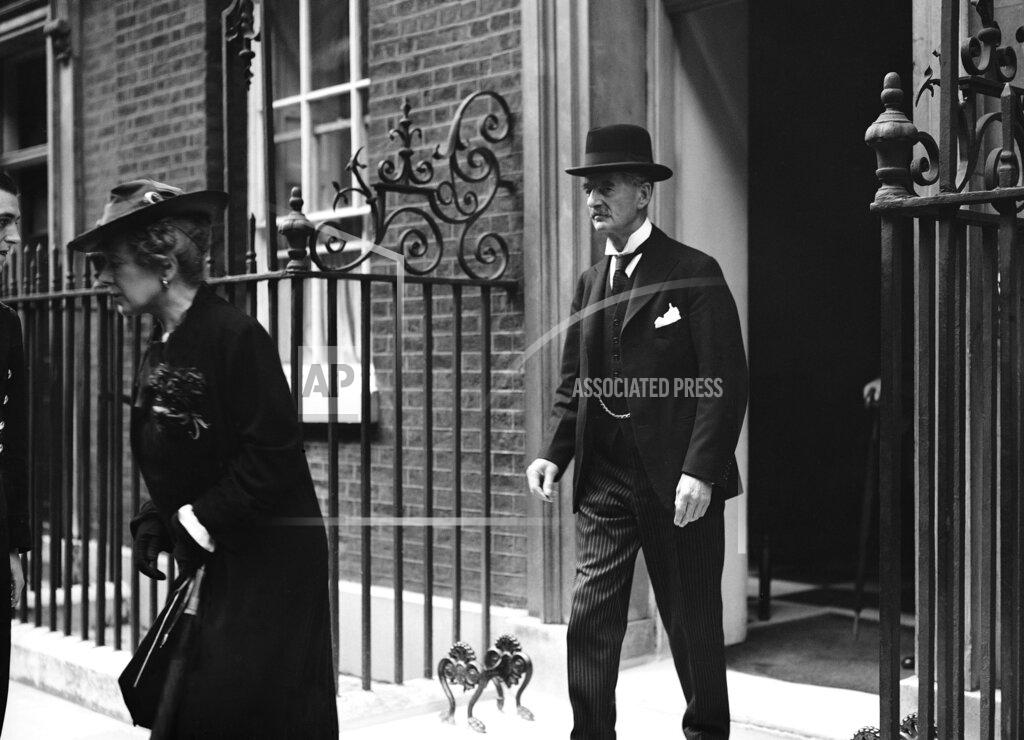
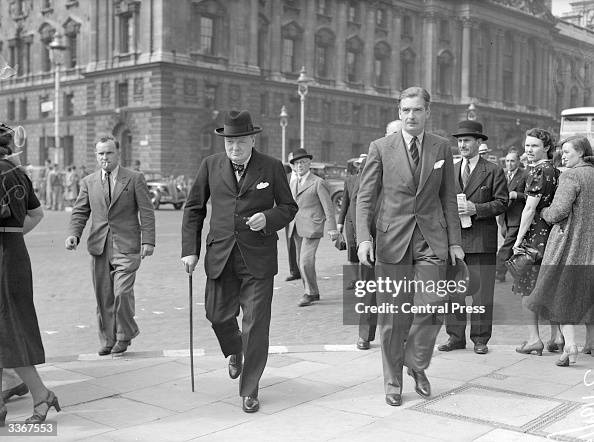
Neville Chamberlain addressed the House of Commons on the international situation and spoke in general terms of the discussions that had been going on with Germany. “The British people are said sometimes to be slow to make up their minds, but, having made them up, they do not readily let go”, Chamberlain said in conclusion. “The issue of peace or war is still undecided, and we still will hope, and still will work, for peace; but we will abate no jot of our resolution to hold fast to the line which we have laid down for ourselves.”.
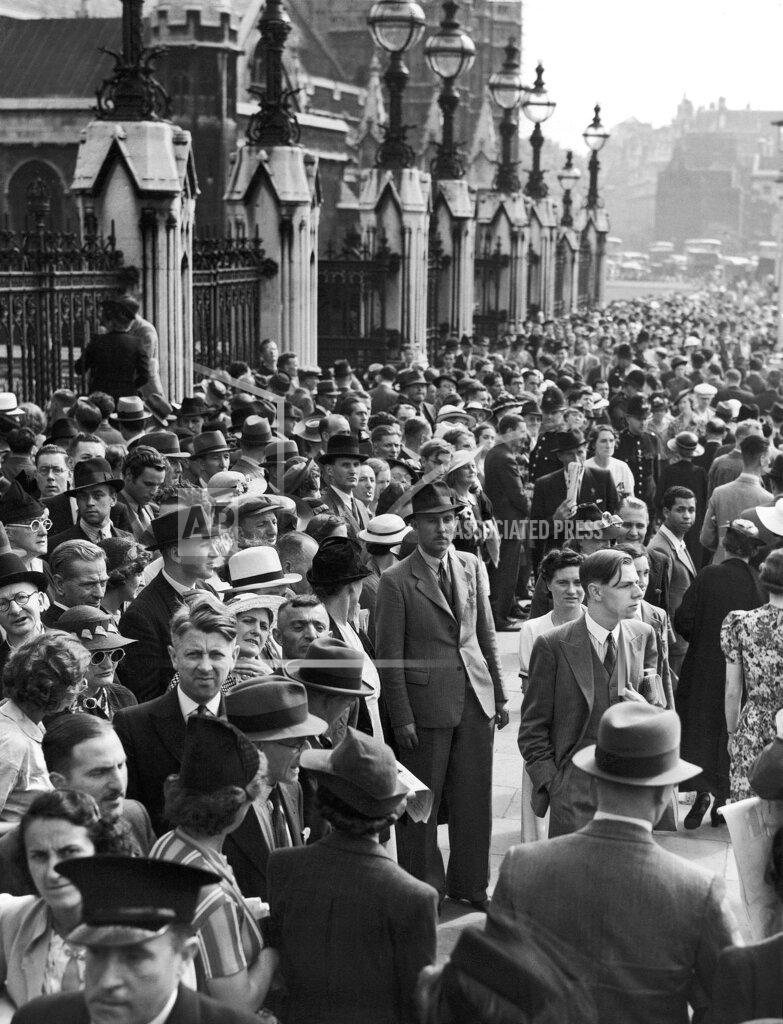
Chamberlain makes a firm uncompromising speech in the House of Commons, saying “The catastrophe is not yet upon us, but I cannot say that the danger of it has in any way receded.” He warns the press to exercise restraint, and apologizes for not being able to give more than an outline of his communications with Hitler. Today, in a fifty-five-minute session of the House of Commons, every one of Mr. Chamberlain’s references to “negotiation” or “settlement” was heard in silence or with a few scattered exclamations of “Hear! hear!” Every time he talked of resistance to aggression and of readiness to fight against it there was a roar of approval from all parts of the chamber.
The Prime Minister was firm in all that he said about the German threat to Poland. He did not accept the German idea of what “negotiation” means; on the contrary, he said that what mattered was not only “the manner in which the immediate differences between Germany and Poland can be handled,” but also “the nature of the proposals which might be made for any settlement.” If these words meant anything at all they meant that it was not enough for Herr Hitler to “negotiate,” but that his claims must also be reasonable and moderate enough for negotiation to be possible.
Hitler meets with Henderson, repeats his friendly sentiments towards the British Empire and grudgingly accepts direct negotiations with Poland, but demands that a Polish plenipotentiary must arrive in Berlin by the end of the following day. Henderson tells Hitler that the short term of 36 hours sounds like an ultimatum. Hitler replies that this is not an ultimatum, but has the purpose of stressing the urgency of a situation where two completely mobilized armies are confronting one another.
Hitler’s reply to Britain arrived that night. He demanded the return of Danzig and the Polish Corridor and wrote that Germany could “no longer share” Britain’s view that “these grave differences can be resolved by way of direct negotiations.” Despite this, Hitler wrote, Germany was prepared to enter direct discussions “to give the British Government and the British nation a proof of the sincerity of Germany’s intentions to enter into a lasting friendship with Great Britain.”.
On their Western border, only five German divisions man the Siegfried Line in front of the entire French Army. It is an opportunity of which the western Allies are unprepared to take advantage.
German troops enter Slovakia on Poland’s southern frontier, but Ambassadors Kennard and Nokl persuade Beck to postpone any further Polish mobilization. Warsaw was waiting all day for news from London and was greatly encouraged by the loyalty of her allies, France and Britain. Prime Minister Chamberlain’s speech made an excellent impression here. A Foreign Office spokesman declared that the Polish Government, in common with Britain and France, was ready to settle all disputes and outstanding problems by peaceful means, but will resist by force any aggression. The situation is generally described as stationary.
The occupation of Slovakia by German troops has caused strong government protests to Bratislava. An official communiqué, referring to President Joseph Tiso’s radio statement to the effect that Poland. was the common enemy of Slovakia and Germany, says that Slovakia is not master in her own territory. A Reuters Warsaw correspondent quotes the communiqué as follows:”Poland bears no malevolent intent toward the people of the Slovak State, for whom the Polish nation maintains a live friendship. That is why the Slovak people should be on their guard not to be unwittingly deceived. Today the Polish Government protested to Slovakia against President Joseph Tiso’s radio appeal and against any hostile action directed against Poland.” Polish military forces along the Slovak border have been increased.
In this tense atmosphere of waiting for developments that may decide the fate of the nation it was reported that general mobilization was expected to be proclaimed at any minute. The Poles, however, are hesitant about taking this drastic step even though they realize that the Germans have already done it. It was said, however, that the Cabinet had the matter under consideration after conversations with London and Paris and consultations with the French and British Ambassadors.
Ernst von Weizsäcker, State Secretary in the Foreign Ministry learns of a secret annex to the 1933 Concordat with the Vatican. It stipulates that in the event Germany introduces universal military training, students studying for the priesthood are declared exempt except in the case of general mobilization. In that event most of the diocesan clergy are to be exempt from reporting for service, while all others are to be inducted for pastoral work with the troops or into the medical corps.
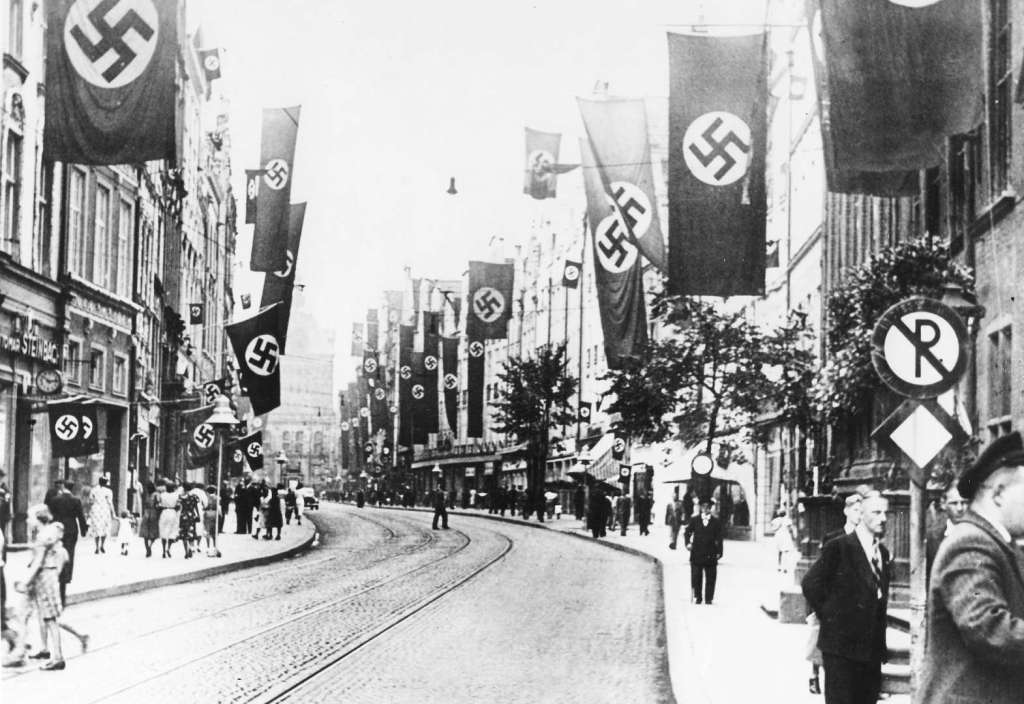
Germans occupy the Slovak capital. The army marches in “with invitation,” but most resent the Nazis. The occupation by armed forces of Germany of this capital city of Slovakia, not yet six months old as an independent State, took place last night and today. German troops in large numbers are reported on good authority to have reached Bardejov, in Eastern Slovakia. Jozef Tiso declared martial law in Slovakia. Articles were posted ordering Slovaks to accept German currency and furnish food to the German soldiers “here to protect our young state against the threatening Polish danger.”
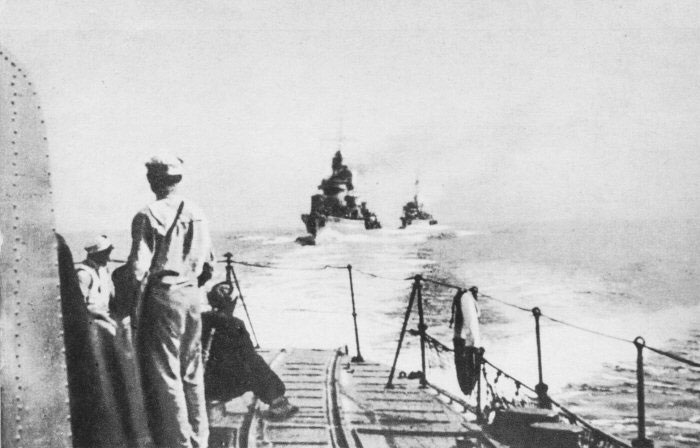
Peking Plan: Three Polish destroyers departed from Poland and headed to the United Kingdom so they would not be sunk or captured in a German invasion.
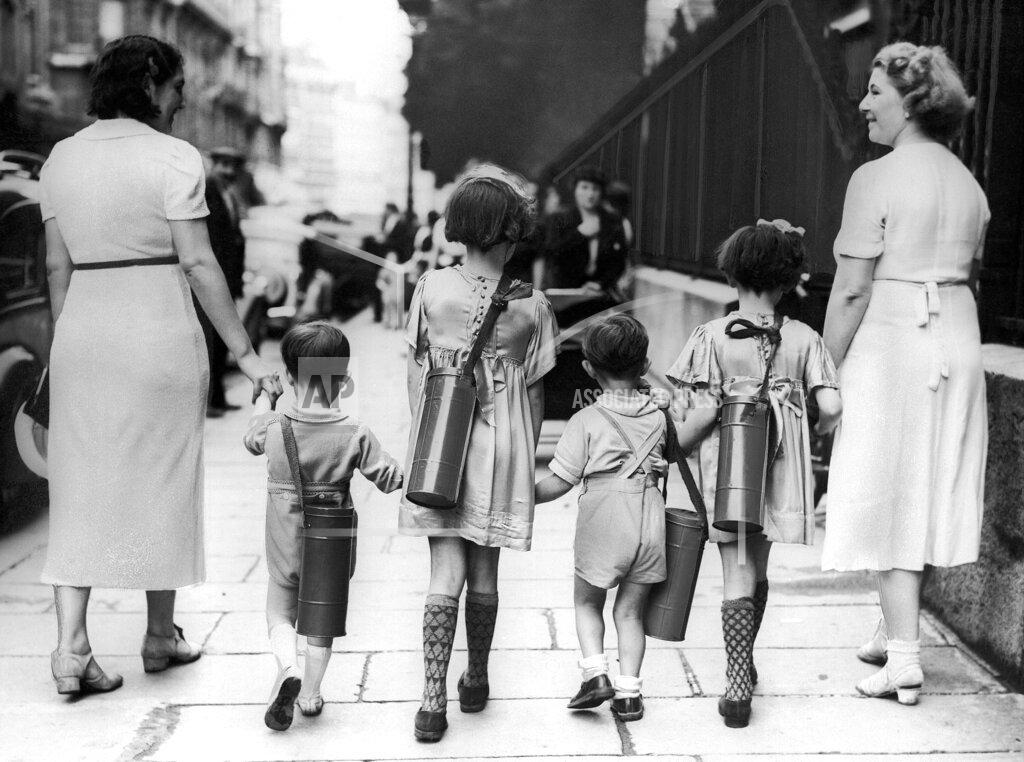
A diplomatic front engages Premier Mussolini. Britain is said to ask his influence for peace. The atmosphere in Rome today veered again toward optimism, although a few more war measures were taken and newspapers issued warnings that women, children and the aged ought to leave the big cities.
Rome conducted two test blackouts (one at 8 p.m. and one at 10 p.m.) lasting a few minutes each.
The French now think Hitler is worried. They feel Germans are under the greatest strain in the present phase of “war of nerves.” That Hitler now eagerly welcomes war and a total realignment of Europe is beyond their comprehension.
Autonomous Croats induct a governor.
Two Balkan states seek a tie to Hungary: Rumania and Yugoslavia press for a nonaggression pact. It was confirmed in Bucharest today that Rumania, Yugoslavia and Hungary were discussing some sort of nonaggression accord.
While Switzerland today was mobilizing 100,000 men, or practically one-fourth of the total strength of her army, a Federal Council meeting at Berne decreed a “state of active service” throughout the country.
Russians mass soldiers in the west. The fear of an Anglo-German move against Lithuania is held as the cause.
The British cargo ship Hilda ran aground on the Isle of May in the Firth of Forth. She was refloated later that day.
The Finnish cargo ship Porsanger came ashore at Östra Torp, Sweden. She was refloated the next day after jettisoning 400 tons of cargo.
The New York Times reported that the Supreme Soviet failed to act on the pact on its first day of convening. The paper also reported that American Professor Samuel N. Harper of the University of Chicago believed the pact concealed an agreement between Russia and Germany to plan spheres of influence in Eastern Europe.
Chaim Weizmann informs England that Palestine’s Jews will fight in the coming war.
President Roosevelt still thinks that the action of those members of Congress who blocked modification of the Neutrality Act helped to encourage Chancellor Hitler to assume his present stand in the European crisis. This Mr. Roosevelt indicated at his press conference today. In more emphatic terms than he has used in previous references to the failure of the Administration efforts to modify the Neutrality Act, Mr. Roosevelt said it was now common knowledge that careful note was taken in all the capitals of Europe of the divided counsel which prevented Congress from taking the action he desired on war policy legislation as the present crisis was brewing. The President characterized that situation as a contributing factor, but not, by inference, a major contributing factor, to Europe’s unrest.
The Congressional stalemate was attributed once again by the President to a solid Republican minority of the Senate plus a minority of the Democratic members, in a manner to intimate his belief that a majority of the Senate favored changing the law and that its wish was blocked by a combination of minorities. He did not mention the action of the House of Representatives in declining, by a majority vote, to eliminate the automatic arms embargo, which was the principal Administration objective.
Mr. Roosevelt’s remarks on the Neutrality Act were inspired by questions beginning with a query whether he agreed with the statement made in Boston last night by Louis Johnson, Assistant Secretary of War, charging that the minorities in question “played politics when peace was in the balance; and men may die as a result.” Mr. Roosevelt made clear at once that he did not intend to be as specific as Mr. Johnson had been, by characterizing the inquiry as an “iffy” question, one of his favorite methods of indicating that he does not intend to answer it as originally phrased. After a pause, he went on to say that the action, or inaction, of Congress had been duly noted in all capitals of the world, and that it had been a contributing factor, even a major contributing factor in the opinion of some.
Asked what he thought about its relative importance, he said he would content himself with calling it a contributing factor. Soon after Congress adjourned, the President, at Hyde Park, said not only had those members who. blocked modification of the Neutrality Act gambled with the chance of war, but they had impaired a growing wave of domestic prosperity. He said he hoped they would win their bet and was praying this would be the case.
Senator Bridges, who was in Washington today, said on the Neutrality Act question: “I have not found a single Senator who has changed his views on the neutrality law. In fact, I believe sentiment now is greater against a repeal of the embargo provisions than before the situation became so critical in Europe and before Germany made its pact with Russia.
President Roosevelt was reported today to have had several transatlantic telephone conversations with American Ambassadors in keeping abreast of the fast-moving European scene.
The Marquess of Lothian, new British Ambassador to the United States, arrived in New York this morning on the Cunard White Star liner Aquitania with “no news,” but a prepared statement that “the British Government, Parliament and people are united and resolute in preparing to resist aggression.”
The North German Lloyd liner Bremen, held in the port of New York all day yesterday while customs searchers combed through the vast passenger quarters and cargo holds for contraband or other violations unspecified, remained at her pier last night. She will be held for another day on order of Harry M. Durning, Collector of the Port, who notified the line last night that, despite yesterday’s search, he was not satisfied that the vessel should be permitted to sail and that another search would be conducted today.
It was authoritatively learned in shipping circles last night, however, that the Bremen, Normandie and Aquitania would receive their clearance papers in time to sail on the afternoon tide today provided the inspection of all three liners shows that they do not have gun emplacements, that their crews are “legitimate,” that their cargoes are within the law and that they meet all the other requirements. It was pointed out that the government made the same kind of examination of the Aquitania and Normandie as it did of the Bremen.
The government’s position in the matter was made clear in Washington yesterday by President Roosevelt, who declared that henceforth merchant vessels of potentially belligerent nations clearing from American ports would have first to satisfy federal authorities that they did not intend engaging in offensive warfare on the high seas.
A Gallup Poll shows that 82 percent of the U.S. population would cut off arms shipments to Japan.
New York authorities were requested today by the Dies Committee investigating un-American activities to prevent Fritz Kuhn, German-American Bund leader, from fleeing to Germany if he should attempt to do so.
Negotiations for a settlement of the labor war between the actors and stagehands collapsed abruptly yesterday afternoon and open union hostilities, involving virtually every branch of the entertainment world, appeared almost certain to start by Monday.
The American fish packer Defy struck a rock off Kaigani Point (54°45′10″N 132°39′10″W) in Cordova Bay, Territory of Alaska, then, while trying to reach shore in a sinking condition, was stranded on another rock. Her crew of two survived. By 30 August she had slid into deeper water and begun to break up gradually and was deemed a total loss.
The American fishing vessel Rustler sank without loss of life 0.75 nautical miles (1.39 km; 0.86 mi) south of Port Protection Point (56°19′20″N 133°36′35″W) in Sumner Strait in the Alexander Archipelago, Territory of Alaska. Her crew of four abandoned ship in a skiff and made it to shore, where the American vessel ARB 8 rescued them.
Military guards were put today on all ships going through the Panama Canal, and the practice will be continued as long as the tense international situation endures, Canal headquarters announced today.
The Detroit Tigers snap the Yankees’ win streak at 10 games by beating the visiting New Yorkers, 8–7. DiMaggio, hitting .408, hits a 3-run home run in the 9th to tie it, but the Bengals score off reliever Spud Chandler. After going 16–3 in their last 19 games, the Yankees now lead the American League by 12 lengths. During that span, the Yankees have scored an impressive 125 more runs than they’ve allowed.
The second-place Boston Red Sox score 6 runs in the 5th inning to down the Cleveland Indians, 7–4. Ted Williams’ grand slam, off Harry Eisenstat, is the big blow. The homer, off Harry Eisenstadt, was Williams’ 21st of the season.
The only National League game today saw the Boston Bees inflict another damaging blow to the St. Louis Cardinals’ sagging pennant hopes by taking the last game of the series, 2–1.
Gandhi prays for peace. He wishes that Hitler would listen to President Roosevelt’s appeal.
Nobuyuki Abe became Prime Minister of Japan. The newly appointed Premier, General Nobuyuki Abe, retaining the Foreign portfolio for the time being, has formed an administration said to be composed of moderates and mediocrities. The Cabinet, which will probably be installed today by the Emperor, has been reduced from fifteen to ten members, and consists of:
Premier and Foreign Minister General Nobuyuki Abe.
War: General Shunroku Hata, recently chief army aide de camp to Emperor Hirohito.
Navy: Vice Admiral Zengo Yoshida.
Finance: Hazuo Aoki.
Home Affairs and Public Welfare: Naoshi Ohara, former Justice Minister.
Justice: Dr. Chogoro Miyagi.
Commerce and Agriculture: Vice Admiral Takuo Godo, retired, former Minister of Commerce.
Overseas Affairs: Yasuo Kanemitsu.
Communications and Railways: Ryutaro Nagai, former Communications Minister, former Overseas Minister.
Education: Kakichi Kawarada,former Home Minister.
The obvious function of this Cabinet is to prevent friction while the real driving forces behind the scenes settle the direction that Japan’s policy will take in the future. All realize that for the present it must be a policy of isolation and independence and until it is seen whether the China affair can be settled on that basis the new administration will be virtually a Cabinet of caretakers.
The phrase “clean slate” describes the new Cabinet’s character as well as its proposed policy. Four of its members have held office before, but did nothing that stamped their names on the public’s memory. The newspaper Asahi calls this Cabinet “stale, lacking in freshness.” The paper says that it is unlikely to arouse friction and equally unlikely to develop vigor. The number of Ministers is fewer, it notes, but holds that none is large-calibered enough to justify hopes of greater efficiency.
General Abe, according to Asahi, is neither on bad nor on good terms with the army bureaucracy or the financiers. Mr. Ohara was beginning to create an impression of efficiency in the unfortunate Okada Cabinet when it fell. Admiral Godo is a retired officer who has been a success in business. Mr. Kawarada is Prince Fumimaro Konoye’s protégé and forms General Abe’s link with court circles. Mr. Aoki, the Treasury Minister, belongs to the same school as recent Finance Ministers, but is more sympathetic toward totalitarian ideas. The appointment of the Emperor’s aide as War Minister is welcomed as an indication that the army policy will be led by a moderate.
Dow Jones Industrial Average: 137.39 (+2.73).
Born:
Joel Schumacher, American filmmaker (“Lost Boys”, “Batman”), in New York, New York (d. 2020).
Kang Sok-ju, Vice Premier of North Korea (1939-2016) in Pyongwon County, Japanese-occupied Korea (d. 2016).
Dave Nicholson, MLB outfielder (Baltimore Orioles, Chicago White Sox, Houston Astros, Atlanta Braves), in St. Louis Cardinals (d. 2023).
Frank Zupo, MLB catcher and pinch hitter (Baltimore Orioles), in San Francisco, California (d. 2005).
Bob Ferguson, NFL fullback (Pittsburgh Steelers, Minnesota Vikings), in Columbus, Ohio (d. 2004, of complications due to diabetes).
Len Burnett, NFL defensive back (Pittsburgh Steelers), in San Diego, California.
Naval Construction:
The Вое́нно-морско́й флот СССР (ВМФ) (Soviet Navy) Project 68 (Chapayev class) light cruiser Frunze (Фрунзе) is laid down by the Marti Yard (Nikolayev, U.S.S.R.) / Yard 198.
 History Diaries