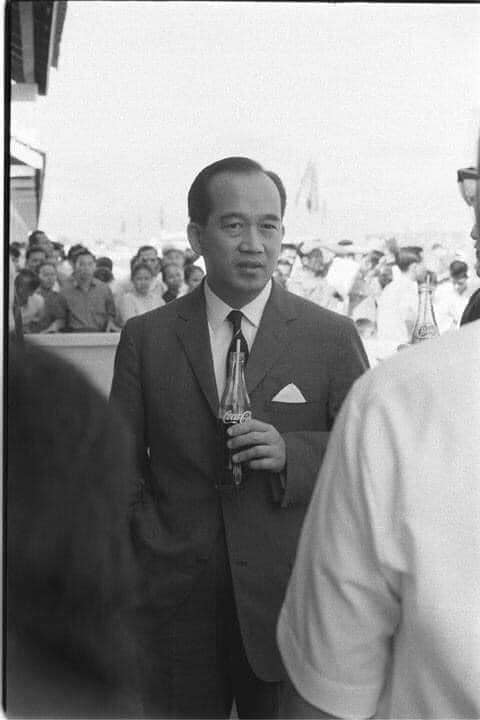
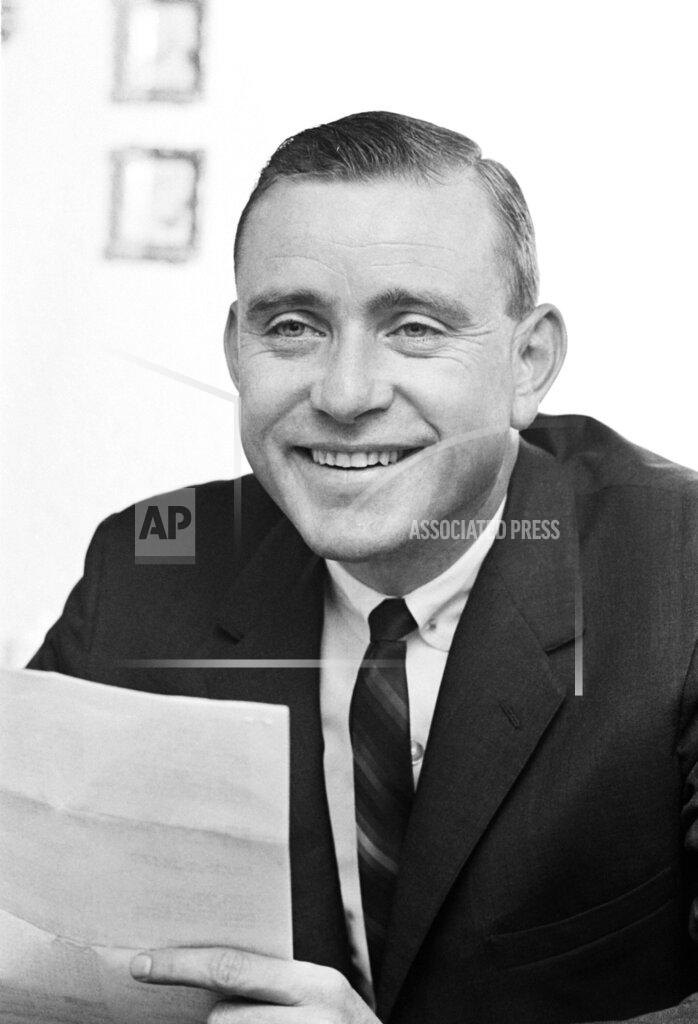
Nguyễn Xuân Oánh was appointed as Acting Prime Minister of South Vietnam and charged with forming a caretaker government until domestic unrest and rioting could be brought under control. Oánh had been a Professor at Trinity College in Hartford, Connecticut, from 1955 to 1960, where he was nicknamed “Jack Owen” by the students.
The civilian Acting Premier designated early today to head an interim Government announced that Major General Nguyễn Khánh, his predecessor, had suffered a physical and mental breakdown. General Khánh was said to have left the capital to recover in the mountain resort of Đà Lạt. The military triumvirate, of which General Khánh is still a member, set up the caretaker government for routine matters, but retained what it called “supreme command.” The Acting Premier, Nguyễn Xuân Oánh, was vague about relations between his government and the triumvirate. Speaking at a news conference, he did not specify which body was to be responsible for which decisions.
Observers in Saigon expected that only imperative decisions would be made in the immediate future. With at least a temporary end of street violence, after paratroopers cracked down on youth mobs last night, Saigon bore the air of a man awakened from a nightmare to face a long, hard day. Thirteen persons were known to have died in the rioting. Roman Catholic organizations planned to hold a funeral parade and a service for six Catholic victims tomorrow morning. Other victims were members of Buddhist and student groups. When troops finally moved in force to break up the defiant mobs, they arrested 119 youths, official sources reported. More than 30 failed to produce Government identity cards, automatically becoming Việt Cộng suspects. Eleven were found to have police records for terrorist activity.
The decision to move on the rioters followed a day of indecision by the triumvirate of generals set up Thursday as a makeshift compromise upon the resignation of General Khánh, whose assumption of the Presidency on August 16 set off the latest wave of demonstrations. Unrest had been building since August 7, when, amid reports of an impending coup d’état, General Khánh decreed a state of emergency and abridged civil liberties. His regime, dominated by military men but with civilian representatives, dated from last February. After rioting forced General Khánh’s resignation, he joined in the triumvirate with Lieutenant General Trần Thiện Khiêm and Major General Dương Văn Minh, the national hero whom he had supplanted as chief of state.
Official Washington was relatively optimistic today that Nguyễn Xuân Oánh’s appointment as Acting Premier could open the door to a solution of the crisis in South Vietnam. This optimism was based on the hope that the appointment of the American‐educated nonpartisan civilian as acting head of the government would reduce internal tensions and finally permit the achievement of the primary United States objective — active prosecution of the war against the Communist Việt Cộng. Officials here appeared to be concentrating more on the struggle for power in South Vietnam than on the bloody rioting in Saigon, Huế, and Đà Nẵng this week. They were confident that the Saigon Government had command of sufficient armed forces to suppress the rioters and restore order at any moment. They felt the struggle between contending military and political factions held the key to the problem of prosecuting the war.
Officials do not conceal the fact that the primary objective of American policy is to convince the contending South Vietnamese leaders to set aside their political differences and unite for the purpose of leading the country toward what the Americans consider the main target — a successful war against the Việt Cộng. United States officials regard all other Vietnamese problems as secondary and feel they should therefore be postponed until the war is won.
Officials doggedly refused to consider the possibility of a negotiated settlement of the Vietnamese war or of an escalation of the operations. The prevailing attitude toward a negotiated settlement was expressed by an official in the following terms: “Negotiate what? The problem is a simple one. All that Hanoi the capital of North Vietnam has to do is to give up its pretentions of interfering in South Vietnam. That would solve everything. “There can be no question of negotiating the Việt Cộng into the Saigon Government. That would be the beginning of a Communist takeover.”
About 10 o’clock Wednesday night two military jeeps with loudspeakers went screeching up to a Roman Catholic church on the outskirts of town, blaring out the word that mobs of Buddhist youths had sacked the offices of Saigon’s main Catholic newspaper and were moving to attack churches. A few minutes later the same jeeps roared past the Viện Hóa Đạo, the new national Buddhist center and pagoda, about two miles from the church. Here; the loudspeakers blared at the Buddhists living in houses near‐ by that Roman Catholics from outlying villages were swarming into town and would arrive at any moment to destroy the pagoda.
At both sites the forces mobilized with terrifying vigor. Buddhist youths grabbed heavy clubs, old wiring and logs, and threw up three defensive perimeters around the entrance of their pagoda, the farthest out about 200 yards in the direction of where the Catholics were coming. The Catholics, for their part, formed up in the streets to march into town to find the Buddhist mob that had wrecked their newspaper and church.
The two military jeeps disappeared after sounding the ”warnings,” for their mischief was done; neither story they had blared out was true. The police and military gendarmes, rushing to find out what was going on, learned that two loudspeaker jeeps had been stolen early in the evening. Someone had wanted to spread troublemaking rumors.
Buddhist professors at the University of Huế announced today that they would try to establish a civilian government for all of South Vietnam. Lê Khắc Quyến, dean of the Medical Faculty, said a new People’s Revolutionary Committee would immediately recruit members from every province. Mr. Quyến has been a leader of recent demonstrations against military rule in Saigon. “Within a few weeks — a month and half, at most,” Professor Quyến said in an interview, “we will hold a convention in Saigon to elect a new government.”
A United States Air Force officer, Captain Richard Dean Goss, and a Vietnamese Air Force officer were killed last night when their A‐1‐E Skyraider fighter-bomber was shot down during a training flight at Biên Hòa airfield, near Saigon. The crash brought to 274 the number of Americans killed in South Vietnam since December, 1961.
President Johnson assures his fellow Americans that he has ‘tried very carefully to restrain ourselves and not to enlarge the war/ but that ‘it is better to lose 200 [U.S. servicemen] than to lose 200,000. The United States will continue to aid the South Vietnamese but not fight a war for them. (The Defense Department issues the official casualty list revealing that 274 Americans have been killed in Vietnam between December 1961 and 17 August 1964.)
President Johnson gave his neighbors a folksy lecture on foreign affairs tonight and said he knew he was in for a “long and rough campaign.” The President, in his first stump appearance of the campaign since the Democratic National Convention in Atlantic City, told a rodeo‐grounds crowd of several thousand that ”we will not indulge in any smear or fear.” Here in Texas, on a hot summer night when war appeared far away, he told the crowd that when he had had to send planes over the Gulf of Tonkin to strike patrol‐boat bases in North Vietnam in early August, ”I gave an order I didn’t want to give.” He said he believed the action he had taken was in the best interest of the nation. “We let them know that we were prepared to back it up, and we did back it up,” the President said.
He said the action was taken to avoid bombing any cities. “We said to them you must leave your neighbors in peace and you musn’t shoot at American destroyers without expecting a reply.” The retaliatory action was taken after North Vietnamese patrol boats had fired on United States destroyers. Mr. Johnson spoke at a Democratic rally and barbecue that was scheduled as an informal campaign curtain‐raiser in his native Gillespie County. He was accompanied by his running mate in the Presidential campaign, Senator Hubert H. Humphrey of Minnesota.
Mr. Johnson described four alternatives in South Vietnam — to enlarge the war, to give up the country, to accept a neutralization that no one would guarantee and — the course being pursued — to give advice and assistance and try to hold the country together.
Communist China appears to be gratified by the current political crisis in South Vietnam. The satisfaction is all the greater as the Saigon events coincide with the first anniversary of a statement by Mao Tse‐tung, the party chairman, prophesying a slow but sure defeat in South Vietnam for Americans and their supporters. The main Communist newspaper, Jenmin Jih Pao, said in an editorial on South Vietnam that the events there werebearing out Mr. Mao’s prophecy. “The complete defeat of U.S. imperialism is now a foregone conclusion,” it declared. “U. S. aggressors will sink deeper and deeper, and will finally be drowned in the sea of struggle of the 14 million South Vietnamese people.”
The Laotian peace talks continued in Paris today with low‐level contacts between members of the pro‐Communist Pathet Lao and pro‐Western rightist factions. The leaders of all three Laotian factions — Prince Souvanna Phouma, the neutralist Premier, Prince Souphanouvong, the Pathet Lao leader, and Prince Boun Oum, the right‐wing leader—were not expected to meet before Tuesday. They will be dinner guests then of the French Foreign Minister, Maurice Couve de Murville. The princes were to have started tripartite talks Monday on the preservation of Laotian neutrality. Following a 90‐minute meeting yesterday between the Premier and his half‐brother, Prince Souphanouvong, a Pathet Lao spokesman said the main dispute concerned a cease‐fire between their respective troops on the Plaine des Jarres. Another issue, he said, involved the restoration of a national union government. The Pathet Lao does not recognize Prince Souvanna Phouma’s Government, set up after a rightist coup last April.
The Foreign Ministry in Ankara announced today that Turkey had decided to postpone “for a short time” replacement of part of her military force in Cyprus. An official confirmed that the British and United States Governments and the United Nations Secretary General, U Thant, had “put pressure” on Turkey to postpone rotation, which had been scheduled for Monday, in order to prevent a clash with the Greek Cypriots. Under the treaties by which Cyprus became independent of Britain in 1960, Greece, Turkey and Britain reserved the right to station troops on the island.
Archbishop Makarios, President of Cyprus, refused to permit rotation of part of the 650man Turkish force, and Ankara responded by “threatening to use force to carry out the move. Makarios, meeting with President Gamal Abdel Nasser in Alexandria, assailed the West’s position on Cyprus and pressed for material and diplomatic aid for the Greek Cypriots from the Arab world.
Turks demonstrated against the United States again today. At Izmir, mobs tore United States and Soviet flags and attacked British and United Arab Republic pavilions also at la fair. They also stoned the Greek consulate. There were also demonstrations in Istanbul, where the authorities ordered a strong force of policemen and soldiers not to permit demonstrators in the Beyoglu area, where foreign consulates are situated.
The Turkish Government’s decision to postpone the rotation of some of its troops based on Cyprus produced a cold response today from the acting President of the island republic. Glafkos Clerides, who is acting in the absence of the President, Archbishop Makarios, declared there was “no reaction from our side” because “we have not asked” for the delay “and our position remains the game.” The Cypriot Government’s position is that Turkey no longer has the treaty right to have troops on Cyprus and that if Ankara tries to land new troops here the action will be resisted by force.
Diplomats and United Nations officials were stunned by the obdurate Greek Cypriot reaction. “Certainly Turkey deserves more than a slap in the face for this gesture,” one diplomat said. Some observers here believed the Turkish decision was in effect an exchange for Washington’s reaffirmation yesterday of the treaty under which both Greece and Turkey, along with Britain, maintain contingents here, and of Turkey’s right to rotate troops.
The Communists, if not their ideology, have never been more popular in Cyprus. Great Britain and the United States are encumbered by having two allies involved in the crisis on opposing sides. The Soviet Union has no such problem, and she has been able to win the sympathy of the dominant Greek Cypriot population by doing little more than saying the right thing at the right time while the West struggled with the problem of trying to satisfy the Greeks and the Turks at the same time. Newsreels of Premier Khrushchev and other leaders draw cheers in the movie houses. Pavel K. Yermoshin, the Soviet Ambassador here, is the diplomatic lion of the hour. Government pronouncements and the local press rival each other in heaping flattery on their Communist supporters abroad. Conversely, British and American attitudes are regularly denounced in the most vitriolic terms.
For weeks, as Communist‐backed rebels swept almost unopposed through the eastern Congo, it has been clear that Premier Moïse Tshombe would have to pull a rabbit out of his hat if he hoped to stay in power. This week Mr. Tshombe pulled out his rabbit, but it was a white rabbit. On this continent, most of whose people are black or brown, it may be as much of an embarrassment as a help. The formation of a white mercenary force at the Kamina base in Katanga was not a great surprise. For more than a month a group of South Africans and Southern Rhodesians who fought for Mr. Tshombe when he was President of secessionist Katanga have been hanging around the Memling Hotel waiting for a nod from the Premier. Most of them are pilots, and by last week four or five had already drifted off to the Kasai region, where they were flying converted trainers against the leftist‐led rebels.
The government of the Soviet Union adopted a resolution favorable to the Soviet German minority, rescinding Joseph Stalin’s order of August 28, 1941, directing the repression of ethnic Germans. “Although this resolution meant little in terms of every day life for Germans,” an author notes, it did prompt a delegation of the German minority to (unsuccessfully) seek a restoration of the Volga German Autonomous Soviet Socialist Republic that had existed from 1918 to 1941.
Vishva Hindu Parishad (VHP), Hindu religious and political organization, was founded in India at a conference of 150 religious leaders in Bombay. Among its objectives was to establish unity among the several denominations within the Hindu faith, starting with the resolution of differences between the Vaishnava and Shaiva orders.
A police force of 1,500 men managed to put down scattered outbursts of racial violence tonight and early Sunday in the teeming Black section of North Philadelphia. After sustained rioting there Friday night and yesterday morning, Mayor James H. J. Tate invoked emergency powers under an 1850 law and proclaimed a quarantine for 125 blocks of the troubled neighborhood. Using the language of the old statute, the Mayor’s proclamation ordered residents of the neighborhood “to disperse themselves and peaceably depart to their habitations.” Last evening the Mayor made a television appeal for cooperation with his order.
Shortly after 10 P.M., gunfire was heard for the first time here this weekend. A volley of five or six shots was fired at a group of patrolmen, from the roof of a building on Norris Avenue. No one was hit. The policemen took cover without returning fire. But window‐breaking by juvenile bands was the most common form of trouble. Reports of such incidents were broadcast over the police radio at the rate of one every 10 to 15 minutes. In almost all cases, patrol cars arrived at the scene in time to prevent looting.
Shortly before midnight, Mayor Tate urged all residents in the riot‐torn section not to attend church this morning. He said he had the full support of representatives of all religious denominations. Archbishop John J. Krol, head of the Philadelphia Roman Catholic Archdiocese, toured the area, the Mayor said, and agreed to this procedure because “safety of the people is paramount.” Mr. Tate called the situation “definitely under control” shortly before midnight.
Tension ran high on the streets. But the people responded to police appeals, over electronic megaphones, to go indoors and not congregate. Twenty clergymen, white and Black, toured the neighborhood in an attempt to act as a calming influence. Just before 8 tonight patrolmen responding to an alarm at Eighth Street and Columbia Avenue were pelted with rocks for five minutes by teen‐agers who had just broken into a drycleaning store. Deputy Police Commissioner James F. Driscoll said that the police were equipped with tear gas but were under strict orders not to use it unless under severe attack. This order also applied to revolvers.
Four men were arrested last night when the police stopped their car and found it contained hundreds of copies of a Black Muslim publication. The car had been halted for a minor traffic violation. Detective Lieut. William Fritz said the four “appeared to be headed for the trouble zone.” He said they would be charged with disorderly conduct. The police used the Temple University campus as a staging area. A helicopter hovered over the riot district and policemen were stationed on roofs.
The story of the violence was strikingly similar in detail to the New York and New Jersey disorders earlier in the summer. Friday was a hot, humid night in the crowded Black ghetto of North Philadelphia, variously known as the Jungle and the Black Belt. At 9:35, the police were called to a three‐way intersection at Columbia Avenue where an automobile had stalled. Two policemen responded and, the authorities said, found Rush Bradford and his wife Odessa in the midst of a quarrel. They asked Mrs. Bradford to leave the car so that it could be moved. When she refused, the policemen, one of them a Black, pulled her out. A crowd gathered. The policemen, who said they were attacked from behind, sent out an “assist patrolman” alarm, the first of 50 that went out during the night. Rocks and bottles showered down on the policemen who rushed to the scene. Finally, they were able to contain the mob. But an hour and a half later, violence, broke out again and the looting began. It spread up and down Columbia and Ridge Avenues, west of Broad Street, the main north‐south street, and was not contained until daybreak.
The police kept their pistols in their holsters through the night, and no shots were fired. But nightsticks were freely used. Mrs. Bradford was later held in $500 bail on charges of assault and inciting to riot. Held on these same charges with bail of $1,500 was James E. Nettles, 41, who, the police said, had been the first to attack the officers. Black leaders who went to the scene to urge the crowds off the streets were hooted; down. Stanley Branche, the militant leader of the Committee for Freedom Now in nearby Chester, was hit in the leg with a rock. Looting was large‐scale and ambitious. One man was seen carrying a sofa out of a furniture store and a woman pushed a full rack of clothes from a dress shop. After dawn, most of the looters appeared to be teenagers. The police arrested one youth who was carrying an ax.
From atop City Hall the statue of William Penn looks out toward the Jungle, today a riot‐scarred battleground of smashed store windows, looted shops, battered police cars and streets littered with broken bottles and other debris hurled from windows and roofs. Policemen patrolled the area. They sought, without much success, to keep roving bands of Blacks, mostly young men and women and teenagers, from carrying off television sets, radios and armloads of clothing and groceries. Many marauders filled shopping bags with stolen articles and fled before the police could stop them.
Many shops, with their windows smashed and goods scattered, looked as though they had been ripped by a hurricane. Mannequins from looted displays were strewn about, along with merchandise dropped by the marauders. Damaged automobiles stood disabled and abandoned at curbs. Police cars were dented and their windows smashed. The scene of destruction in the overpopulated, crime‐breeding Jungle section of North Philadelphia is a far cry from the “greene countrie towne” of two square miles that William Penn founded for 400 residents in 1682.
Now the nation’s fourth largest city, Philadelphia has grown to 130 square miles with a population of two million and more than half a million dwellings. The Jungle sprouted over the years as former residents, including many prominent families, moved to the suburbs with the coming of the automobile era. Its core covers only four square miles, less than one-thirtieth of the city. But it houses an eighth of the city’s population — nearly 250,000 persons, or more than 60,000 a square mile, according to the 1960 census. The district contains the highest concentration of Philadelphia’s 550,000 Blacks. It is bounded on the south by Fairmount Avenue — six blocks north of City Hall — on the north by Lehigh Avenue, on the west by Fairmount Park and the Schuylkill, and on. the east by Fifth Street.
Senator Barry Goldwater continued to attack the Johnson Administration on his yachting vacation today. The Republican Presidential nominee accused the Democrats of neglecting — indeed, refusing — to discuss foreign policy. He said that the public “should be told just how deeply we have been involved in the runaway rioting and governmental musical chairs going on in South Vietnam.” The Arizonan said that a “full, frank revelation of just what our Vietnam policy actually is would be welcomed.” “It is long overdue,” he declared.
Mr. Goldwater is vacationing until Monday on a borrowed 83‐foot motor yacht called the Sundance, cruising among the islands off the Southern California coast. He was reported to be heading southward from Santa Cruz Island to Catalina Island on a “slow troll” for game fish. The Senator authorized a statement today in a radio‐telephone conversation with his press secretary, Paul Wagner. Mr. Wagner said the statement was decided upon after he had “filled in” Mr. Goldwater this morning on the political crisis and religious rioting in South Vietnam.
Mr. Wagner said that Mr. Goldwater felt that “instead of talking so much about the ’Great Society,’ the Democratic party should be telling the American people more about foreign policy.” Mr. Goldwater’s statement said that “the events of the past week have made a mockery of the Johnson Administration attempts to avoid all questions regarding foreign policy.” “The questions are being asked around the world,” the Senator continued. “The answers must be given even though they prove politically embarrassing.”
Three more deaths were attributed today to an outbreak of encephalitis that finally appeared to have reached a standstill in Houston. But more probable cascs off the disease were reported in west Texas. Medical authoritieš reported a total of 19 deaths from encephalitis in Houston on the Gulf Coast in the last two months. The deaths reported today occurred during the rise of the disease and were confirmed by laboratory analysis.
The atomic energy legislation signed last Wednesday by President Johnson will enable the United States to become a world processing center for nuclear fuels, Dr. Glenn T. Seaborg, chairman of the United States Atomic Energy Commission, said here today. Under the legislation the commission will be able, starting in 1969, to enrich foreign ores intended for use abroad. The commission will not be permitted to offer enriching services to foreign ores intended for use in the United States if such imports would undermine “the maintenance of a viable domestic uranium industry.”
Nimbus I, its cameras functioning perfectly, transmitted back to earth today a steady stream of pictures rated the best ever received from a weather satellite. In one four‐picture sequence, the satellite mapped weather south from Hudson’s Bay, Canada, the Great Lakes, along the Atlantic Coast down to Florida and Cuba. The coast of Venezuela was also shown. Officials at the National Aeronautics and Space Administration said the cameras were working perfectly and the pictures received were unusually clear.
A Houston authority on fertility says women with small breasts generally are more intelligent than the bosomy kind. Dr. Erwin O. Strassman, a Clinical Professor at Baylor University College of Medicine, has published his findings in the current issue of the International Journal of Fertility. He said that after a study of 717 childless women he could offer doctors this rule of thumb: “The bigger the brain, the smaller the breasts, and vice versa, the bigger the breasts, the smaller the I. Q. There is a basic antagonism between intelligence and the reproductive system in infertile women.”
[Ed: Umm. I got nothing…]
Future 46th U.S. Vice President Dick Cheney (23) weds Lynne Ann Vincent (23) at the First Presbyterian Church of Casper in Wyoming.
Stephen Sondheim’s Tony Award-winning Broadway play “A Funny Thing Happened on the Way to the Forum,” a musical with lyrics and music by Sondheim, starring Zero Mostel, and Jack Gilford, and inspired by the 3rd century BC playwright Plautus, closed its run after 964 performances.
James Baldwin’s stage drama “Blues for Mister Charlie”, directed by Burgess Meredith, closes at the ANTA Playhouse, NYC, after 148 performances.
On Elston Howard Night, the Yankees take two games from Boston, by scores of 10–2 and 6–1. Joe Pepitone’s 3 home runs, including a grand slam, and Roger Maris’s 6 singles lead the offense. Mickey Mantle hits home run number 447 in the opener and ties Babe Ruth’s career strikeout record (1,330) in the nightcap. Jim Bouton pitched a 4-hitter in the first game for his 15th win. Whitey Ford got his 14th in the nitecap.
Sam Bowens knocked in three runs and Milt Pappas pitched a six-hitter tonight as the Baltimore Orioles whipped the second-place Chicago White Sox, 5–0, and increased their American League lead to a game and a half. Pappas yielded singles to Tom McCraw and Don Buford on his first two pitches, but didn’t allow a Chicago runner past second base the rest of the way. The 27‐year‐old righthander, who has won seven of eight decisions since June 16, put his won‐lost record at 12–5 and hurled his fifth shutout of the season.
Dean Chance, collecting his 16th victory, hurled the Los Angeles Angels to a 3–2 victory over Detroit tonight, stopping the Tigers’ victory streak at six games. The Angels came up with two runs in the seventh inning on Joe Adcock’s run‐producing single and Lou Clinton’s sacrifice fly to overcome a 2–1 Tiger lead.
Fred Whitfield’s leadoff homer in the 11th inning today gave the Cleveland Indians their eighth straight win, a 4–3 victory over the Kansas City A’s. Whitfield’s homer, his eighth, came off reliever, Wes Stock, who suffered his second setback in nine decisions. The hit travelled about 450 feet and cleared both fences in right field. It marked the sixth time in the history of Kansas City’s Municipal Stadium that a ball cleared the back wall in right. The A’s had tied the score in the sixth, scoring a run without a hit.
Don Lock was squeezed home on Don Zimmer’s bunt in the 10th inning, giving the Washington Senators a 5–4 triumph over the Minnesota Twins today. Lock opened the inning with a single and continued to second when Jimmie Hall, the centerfielder, bobbled the ball for his second error of the game. Lock moved to third on an infield out, then came home as Zimmer bunted and was thrown out.
Bob Skinner’s pinch‐hit three-run homer and Bob Gibson’s pitching carried the St. Louis Cardinals to their fifth straight victory today, a 4–1 triumph over the Los Angeles Dodgers. Skinner was called on in the Cardinals’ four‐run second inning when Julian Javier was forced out of the game by an upset stomach. The homer off Howie Reed was Skinner’s fourth of the season, but his first for the Cardinals since they obtained him from Cincinnati in mid‐June. The triumph was the Cardinals’ 23rd in their last 33 games. Gibson, bringing his record to 12–10, lost a shutout when Derrell Griffith hit a homer with one out in the ninth. Gibson allowed seven hits.
Richie Allen drove in four runs and Johnny Callison knocked in three to pace the National League‐leading Philadelphia Phillies to a 10–8 triumph over the Pittsburgh Pirates today. Allen tripled across two runs in a four‐run second inning and slammed his 24th homer, a two-run blast, in the sixth. Callison drove in Allen with a single in the second and brought in Tony Gonzales, who had singled, with his 23d homer in the eighth. Despite the Phillies’ offensive fireworks, Art Mahaffey was unable to finish although he gained his 12th victory He was taken out in the eighth when the Pirates rallied for four runs.
Ellis Burton, a 28year‐old outfielder just back from the Texas League, lined a tenth-inning single to right‐center to give the Cubs a 4–3 victory over the New York Mets. The hit decided a pitching duel between the Cubs’ Dick Ellsworth and the Mets’ Galen Cisco in favor of the Chicago left‐hander and ended his four‐game losing streak. It ended a small winning streak of two games for the Mets and imposed on them their third defeat in 12 games.
Deron Johnson’s seventh-inning homer snapped a 7–7 tie, and gave the Cincinnati Reds an 8–7 victory over the Houston Colts and a sweep of a doubleheader today. The Reds won the opener, 2–1, on Steve Boros’s run-producing single in the 11th inning. The Colts had tied the second game with three runs in the seventh. Walt Bond doubled home one run, Bob Aspromonte singled in another and Bond scored on a grounder. The Reds had built an early 7‐1 lead in the second game with Franks Robinson tripling home two runs in a four‐run third-inning rally and driving in another run with a single in a three‐run fifth. Gordy Coleman slugged a run‐scoring triple for the. Reds in the fifth.
The San Francisco Giants, led by the seven‐hit pitching of Ron Herbel and the hitting of Willie Mays and Jim Ray Hart, scored a 7–2 victory today over the Milwaukee Braves. Mays started the Giants off with a run‐scoring triple in the first inning and scored on Willie McCovey’s ground out. Hart, who returned to the starting line‐up for the first time since he was hit in the head Wednesday night, hit his 22nd home run of the year and a double that sent in the first of three runs in the fourth. Hart was robbed of a second possible home run in the first when a fan in the left‐field bleachers reached out and interfered with Rico Carty’s attempt to catch a ball hit by Hart. The ball went into the stands, but the umpire, Doug Harvey, ruled Hart out because of interference.
Born:
Rick Graf, NFL linebacker (Miami Dolphins, Houston Oilers, Washington Redskins), in Iowa City, Iowa.
Tony Settles, NFL linebacker (Washington Redskins), in Laurinburg, North Carolina.
Greg Sinnott, NFL tackle (Los Angeles Rams), in Santa Cruz, California.
Pasteur Ntoumi, Republic of the Congo clergyman, warlord and politician, as Frédéric Bintsamou in Brazzaville, Congo.
Jordi Arrese, Spanish tennis player, in Barcelona, Spain.
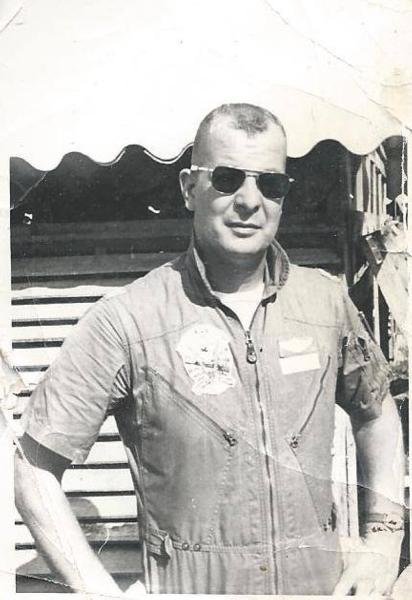
Captain Richard Dean Goss was awarded the Silver Star Medal for conspicuous gallantry and intrepidity in action. Richard, from Seattle, Washington, is buried at Evergreen Cemetery in Seattle, Washington. He is remembered on the Wall at Panel 1E, line 66.
 History Diaries