Four days to war in Europe.
The Tarnów rail station bomb attack was carried out in southern Poland. A time bomb left by a German agent exploded, killing 20 and wounding 35.
The British government responds to the German note on Poland, urging a truce and negotiations to settle the crisis, while simultaneously issuing a warning in the event of German aggression against Poland. The British government recalls shipping from the Baltic and Mediterranean and the German government introduces emergency rationing as both countries prepared for war.
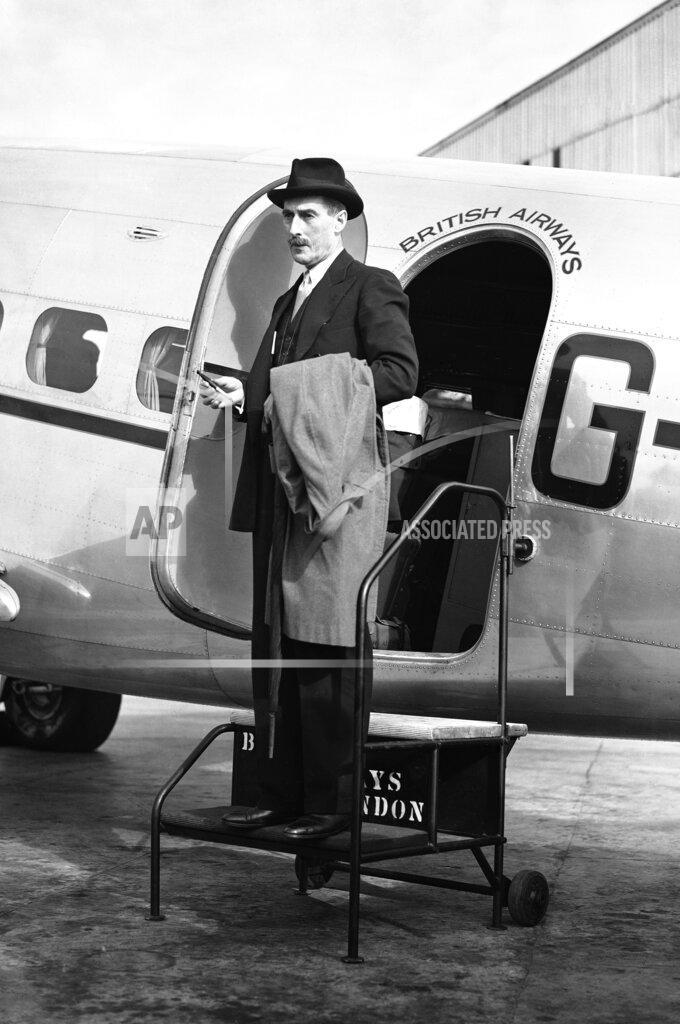
Nevile Henderson flew back to Berlin with his government’s official reply. Britain was prepared to take Hitler’s proposals as “subjects for discussion” and agreed that there must be settlement of differences between Germany and Poland, but noted that everything turned “upon the nature of the settlement and the method by which it is to be reached.” Germany was reminded that “His Majesty’s Government have obligations to Poland by which they are bound and which they intend to honour. They could not, for any advantage offered to Great Britain, acquiesce in a settlement which put in jeopardy the independence of a State to whom they have given their guarantee.” Britain suggested that the next step “should be the initiation of direct discussions between the German and Polish Governments on a basis which would include the principles stated above, namely, the safeguarding of Poland’s essential interests and the securing of the settlement by an international guarantee.” The reply concluded with a warning that failure to reach a settlement “would ruin the hopes of better understanding between Germany and Great Britain, would bring the two countries into conflict, and might well plunge the whole world into war. Such an outcome would be a calamity without parallel in history.”.
Hitler read a German translation of the British government’s note and told Henderson he was willing to negotiate, but Poland could not be reasonable. Henderson firmly replied that Hitler would have to choose between war with Poland or friendship with Britain. Hitler said he would prepare a written reply of his own.
Journalist Clare Hollingworth observes the “large numbers of troops, literally hundreds of tanks, armored cars and field guns” Germany had aligned along the Polish border. Three days later, Hitler invades Poland and WWII begins. Hollingworth was a rookie reporter for The Daily Telegraph when she traveled from Poland to Germany in August 1939. She witnessed German tanks massing on the Polish border and reported the incident to the British and Polish authorities, as well as to the newspaper. Three days later, she was the first to report the German invasion of Poland, which The Daily Telegraph headlined as “1,000 tanks massed on Polish border”. Hollingworth’s reporting is considered one of the greatest scoops of modern times.
Danzigers anticipate a big event. Anti-aircraft guns are moved by the Polish border and stores are closed.
Berliners anticipating more rationing made the greatest run on food stores in decades.
France closes its borders with the Reich. Rigid censorship is declared as Hitler’s decision on war or peace is calmly awaited. All necessary precautions in the event of an outbreak of war have now been completed in France. All essential services of control have been set up.
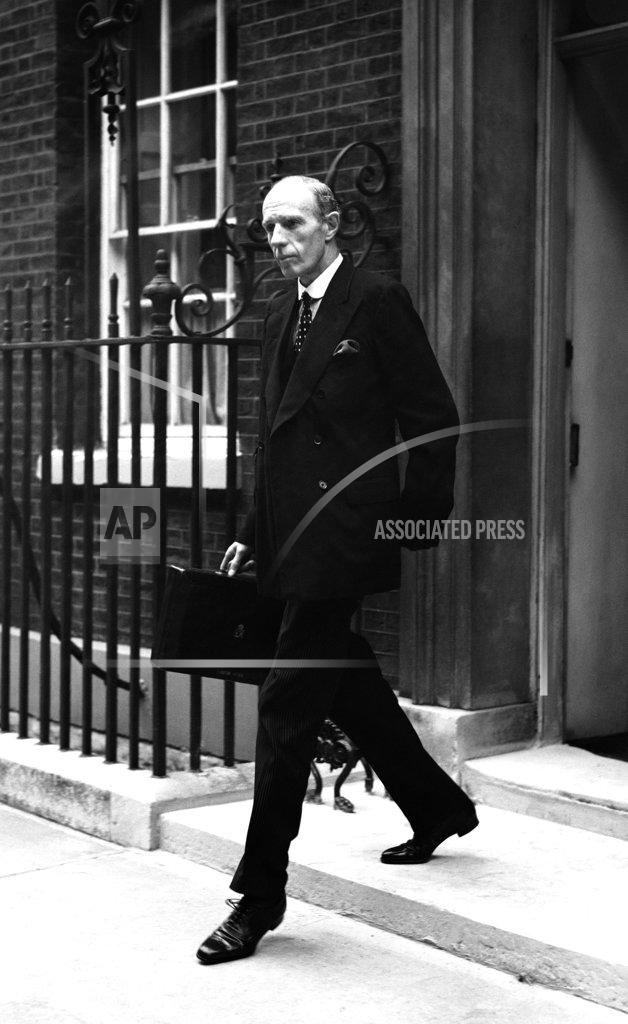
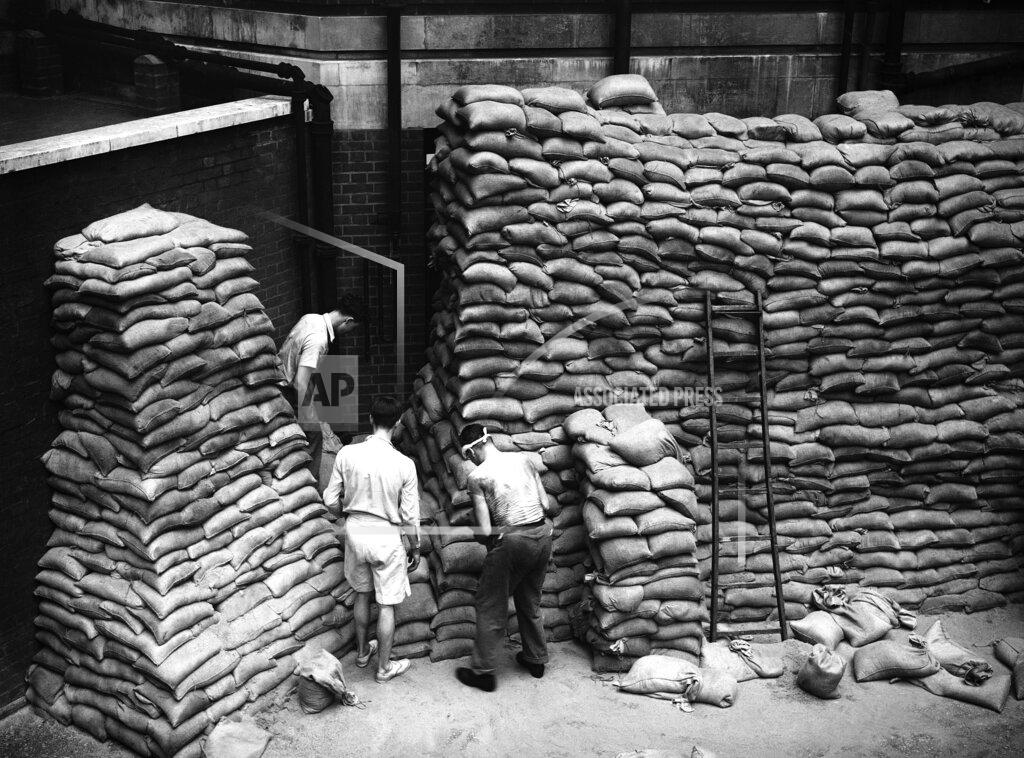
Britain lays down rules for citizens. The government assumes sweeping control of life, property, and communications. The mere possession of defense data is forbidden. The government has taken on a range of extra powers today, with the publication of 104 Emergency Regulations. These follow the passing of the Emergency Powers Defence Act which became law last week. They give the Government the means of putting the country onto a war footing.
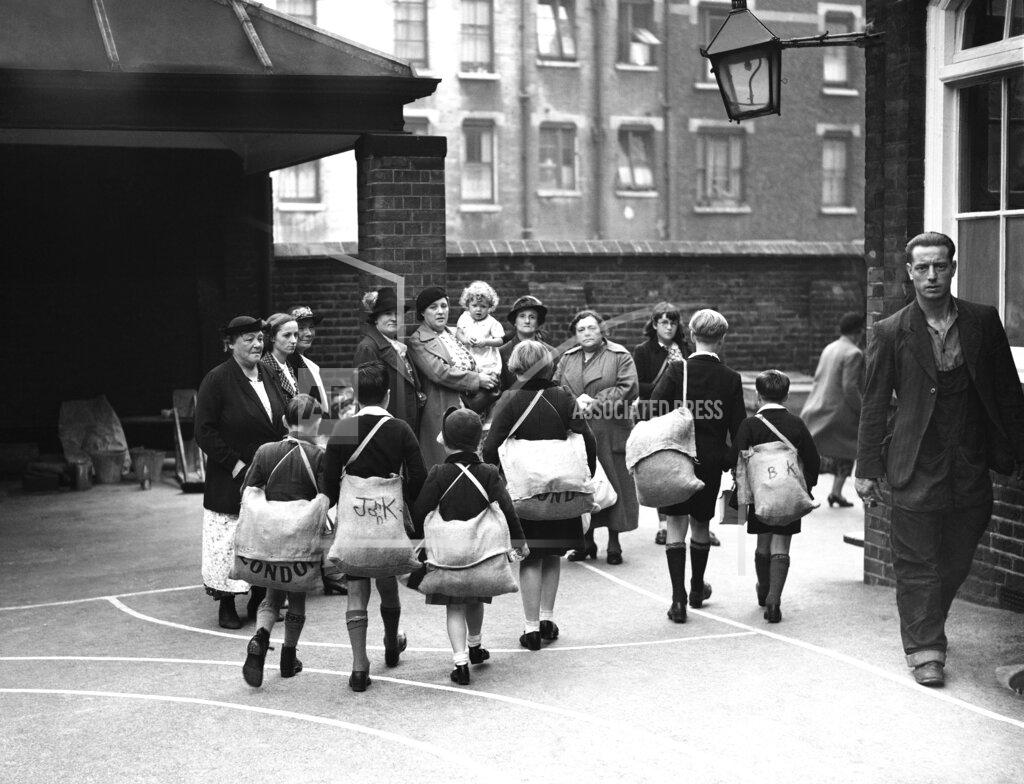
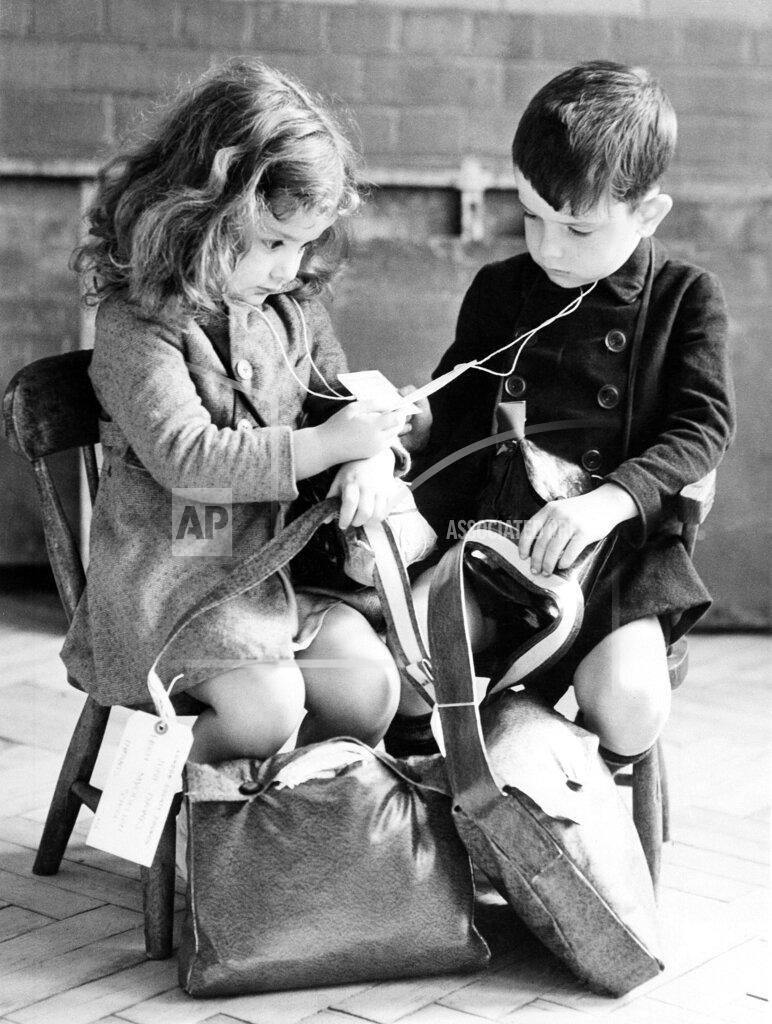
Some 650,000 London school children went back to school today carrying not their books but their gas masks and two days’ emergency rations. A full-scale rehearsal of evacuation plans took place throughout the country today. Nine hundred schools in London and those from about 30 other vulnerable areas were involved. Many secondary school children, whose term does not begin for another two weeks, were away on holiday and so missed the rehearsal, since returning home especially for it was not thought necessary by the Board of Education. For those at elementary schools, where the autumn term was due to start tomorrow, work began one day early — with what most of them saw as a great adventure.
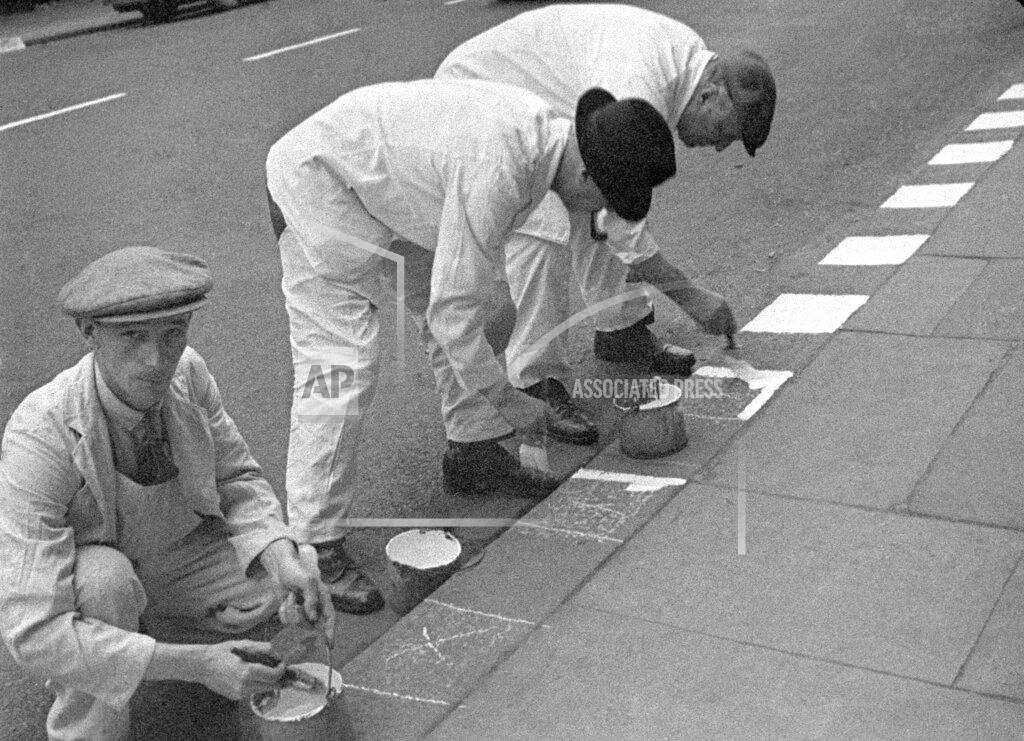
An early casualty of the present crisis was Mr Henry Godfrey, aged 56, an employee of Marylebone Borough Council in London. He was killed by a car near Marble Arch, while painting the kerb white in preparation for the possible blackout.
The British admiralty bans ships in the Mediterranean. It orders shipping to shun the “lifeline” route.
Imperial Airways have cancelled the 6.45pm and 8.45pm flights from London to Paris and the 8.45pm Paris to London flight, until further notice. This is a result of a blackout at Le Bourget Airport.
Air France has suspended many services from the east and south of France but is still running its Paris-London service. On the ferries, the Harwich-Zeebrugge service will be suspended after tonight’s inward sailing.
General Bernard Montgomery (“Monty”) becomes commander of the British 3rd “Iron” Infantry division.
London hangs identity labels on 650,000 children as part of an evacuation rehearsal.
Italy still stood on the sidelines today anxiously watching and waiting while Premier Mussolini and Count Ciano, his Foreign Minister, went on with their intense diplomatic negotiations.
Netherland mobilizes. Mobilization of the Dutch army and navy was ordered after the Cabinet meeting today. Sixteen classes from 1924 to 1939 are being called up and the number of men affected by the order is being estimated between 300,000 and 400,000. Tonight Queen Wilhelmina addressed her subjects in a broadcast speech exhorting them to face their task in a spirit of concord.
The announcement of mobilization was accompanied by the following official statement: “In order to be fully prepared for the duties incumbent upon the Netherlands to maintain the country’s independence with all means, and in all directions in case of armed conflict abroad the government has decided to take this extreme measure of precaution. The government appeals to all citizens to overcome all difficulties in a common effort.” Lieutenant General I. H. Raynders, chief of the General Staff, was appointed Commander in Chief of the Army and Navy by a royal decree. No outward signs of nervousness were shown by the population at the announcement of the mobilization order which had been expected for some days.
Switzerland orders full mobilization of its frontier forces.
Premier Joseph Tiso tonight issued a proclamation stating that German soldiers during the night would occupy Slovakia.
Americans are unable to leave Italy; 450 are waiting as two liners drop sailings.
The Soviet Union fails to act on its pact with the Reich. It waits to see the lineup of Europe before ratifying the agreement. The Supreme Soviet, the joint assembly of the Soviet Union’s two representative chambers, called in special session to act on the Russo-German nonaggression pact and other matters, recessed after its first sitting this evening without even taking up the matter of the treaty with the Reich.
Georgy Zhukov is made a Hero of the Soviet Union for the first time and is awarded the Order of Lenin for the second time.
Immediately after his return to London from the twenty-first Zionist congress in Geneva, President of the World Zionist Organization Chaim Weizmann pledges to British Prime Minister Neville Chamberlain the fullest active support of Jews in Palestine and around the world “in this hour of supreme crisis.”
President Roosevelt canceled his original plan to leave for Hyde Park in the evening and remained in the White House for the word, that would show what direction the crisis in Europe would take. Secretary of State Cordell Hull, when not in his office, was in constant touch with his official aides from his hotel a few blocks away. The European Division in the State Department was open, receiving dispatches, and prepared to communicate promptly with the White House and the Secretary of State. Official reports told little or nothing, nor were they expected to, so soon after the conference between Herr Hitler and Sir Nevile Henderson, the British Ambassador. Consequently, chief reliance was placed upon the newspapers and the radio for immediate developments.
The U.S. ambassador to Germany and the Assistant Secretary of War say that the U.S. arms ban breeds war and that it favors the Reich and spurs Hitler. Hugh R. Wilson, Ambassador to Germany, and Louis Johnson, Assistant Secretary of War, joined today in attacks on the unchanged Neutrality Act before delegates of the Veterans of Foreign Wars, meeting in convention here. Both administration members intimated that there would be a renewal of efforts to change the present neutrality policy. Mr. Johnson charged that maintenance of the embargo on arms shipments “discriminated in favor of Germany” and was a “direct move encouraging war,” being “very nearly equivalent to presenting Germany with an Atlantic fleet.”
It cannot be denied, the assistant secretary asserted, that the Republican group and the Democratic minority which defeated the Administration’s attempt to repeal the arms embargo shared “responsibility as a contributing factor” in “the present crisis which threatens the peace of the world.”
“However honorable may have been their intentions, they have much to answer for,” Mr. Johnson held. “They played politics when peace was in the balance; and men may die as a result.” Mr. Wilson, who has been in the United States since November when President Roosevelt called him back. to report and confer after an antisemitic outbreak in Germany, said that the act’s distinction between. war materials and war munitions “does not seem to me logical or likely to accomplish any useful purpose.”
Supporting Mr. Johnson’s contention that the act now discriminates in Germany’s favor, without naming that nation, the Ambassador to Germany continued: “Rather, the contrary, it would seem in many cases to put a penalty where our public opinion would not care to put it.” Ambassador Wilson, referring to the President’s failure to find that a state of war existed between Japan and China, in that Japan did not declare war, and to the revision of the act made necessary by the outbreak of the civil conflict in Spain, said that “experiences have shown that in two important external contingencies of the past two years the neutrality legislation was not adequate to meet the situation.”
U.S. ships cancel sailings to the Reich. All sailings of American vessels to German ports have been suspended, it was disclosed today following conferences in which the Maritime Commission, the State Department and operators of the lines participated.
While the German liner Bremen is searched in New York, President Roosevelt asserts the right to search ships of potential belligerents for arms. The French liner Normandie and the North German Lloyd liner Bremen arrived in the Port of New York yesterday. Officials of the North German Lloyd expected to send the Bremen right back to a German. port without passengers, but were prevented from doing so by an unexpected decision of the United States Treasury Department to subject the vessel to a thorough-going inspection. Moreover, it was disclosed early this morning, the Normandie would be inspected first and the Bremen would have to wait her turn.
The precedence to be given to the French liner, which, unlike the Bremen, has no immediate turnabout orders, was revealed by Gregory O’Keefe, assistant Collector of the Port, after the line had insisted that the vessel would sail at 5 or 6 o’clock this morning, three hours after the time that her officials had scheduled for her departure.
When officials of the line set between 5 and 6 o’clock as the sailing time, at 2 o’clock this morning, the vessel was virtually prepared to leave. All the cargo apparently had been removed, the police said, and while two tankers continued to pour oil into her storage tanks the operation of refueling appeared to be near completion. The vessel had full steam up. But Mr. O’Keefe said, in answer to the line’s announcement, that there was no possible chance that the vessel would be able to leave until later in the day.
“The customs service will inspect both the Normandie and the Bremen and the Normandie will be inspected first and then it will be the Bremen’s turn,” he said. “After the inspection has been completed it) will be up to the Collector of the Port to decide whether to okay her clearance papers. The inspections can’t begin until some time today.” Earlier the line had been told that the inspection would be made at 8 AM and that the ship might be able to sail before noon, but Mr. O’Keefe was less definite about this at 2 AM and he would not set a probable time for her departure. He indicated that the inspections would be unusually thorough.
“This is an emergency and therefore the ships must undergo an inspection which consists of checking over the cargo, going over the ship itself, and checking over the crew,” he said. When asked if the vessel might have to be fumigated, he replied: “If that is found necessary it will be done, too.”
Officials of the line did not indicate what they proposed to do about the situation, but insisted that the vessel would leave at the hour they had fixed. A detail of police kept a watch at the pier to report any move for departure, a practice which has become routine recently. They report directly to the Bureau of Operations at Police Headquarters. It was the first time in the memory of shipping men that a vessel of the Bremen’s size and importance had been affected by such an order, which surprised officials of the shipping concern in the midst of their preparations for the liner’s home journey.
The passengers who arrived yesterday afternoon on the North German Lloyd liner Bremen testified that, if it had not been for their own fears and for the rumors they spread among themselves, their passage from Europe would have been normal and pleasant.
President Roosevelt urged a world conference of Catholic students to “pray for peace and have faith that, despite all discouragements, counsels of wisdom ultimately will prevail among nations.”
For the second time in three months the bow of the ill-fated submarine Squalus thurst itself above the surface of the Atlantic in a wild smother of foam today, but once again the craft and her twenty-six dead settled back to the bottom.
The Norwegian tanker Sildra came ashore at “They Roustant” whilst on a voyage from Corpus Christi, Florida, United States to Port-de-Bouc, Bouches-du-Rhône, France. Refloated the next day.
Sammy Fain and Jack Yellen’s musical “George White’s Scandals” premieres in NYC.
At Cleveland, Indian outfielder Jeff Heath punches a taunting fan leaning over the railing, but the umpires miss the incident and he goes unpunished. But Ted Williams hits one of Mel Harder’s three-two pitches over the rightfield wall at League Park and gave the Boston Red Sox a 6–5 victory over Cleveland.
A day after whipping the Detroit Tigers, 13–3, the New York Yankees unload on the Bengals again, winning, 18–2. Joe DiMaggio leads the way with a grand slam.
John Duncan Rigney pitched his ninth straight triumph tonight, when he limited the Philadelphia Athletics to seven hits as the Chicago White Sox scored in the ninth inning to win, 5–4.
The St. Louis Browns, behind the four-hit pitcher of Bill Trotter, wallop the Washington Senators, 12–2.
Chicago Manager Gabby Hartnett tied a major league record today as his Cubs, behind the effective pitching of the veteran Charley Root, tumbled the Philadelphia Phillies, 5–3. Hartnett caught his 1,721st game for Chicago, equaling the mark of catching for a single club established by Ray Schalk of the White Sox. The Cubs scored four runs in the second on singles by Dick Bartell and Stanley Hack, a triple by Root and a double by Augie Galan. They got the other in the ninth on a homer by Glen Russell.
Mel Ott’s two-run homer in the fourth inning powers the New York Giants to a 3–1 winover the league-leading Cincinnati Reds. Bill Lohrman won his 11th of the season for the Giants.
The Boston Bees drubbed the St. Louis Cardinals, 10–5, today behind a youngster making his first major league start. Al Moran, lanky right-hander from the Hartford farm, went the distance and allowed nine hits, one a homer by Terry Moore in the fifth inning. Boston scored six runs in the first on four hits, two errors and two passes and added a seventh in the second when Buddy Hassett tripled. The last three crossed in the fifth.
The Argentine tug Tucuman capsized and sank at South Darsena with the loss of two crew while assisting the Argentine MV Glasgow to dock.
Wang Ching-wei, disaffected former Chinese Premier and leading advocate of peace with Japan, was today reported to have been elected president of the “New Kuomintang” party at a party congress in Shanghai.
The Japanese Cabinet, headed by Premier Kilchiro Hiranuma, resigned in a body this morning. A major shift in policy, swinging from European alliances to virtual isolation, coupled with energetic prosecution of the war in China, had already been decided upon in Cabinet discussions. The Japanese Army has approved this policy.
This morning Premier Hiranuma called a special meeting of the Cabinet and announced his decision to resign. Thereafter he went through the formality of asking their assent to that course. As he had seen them. all separately prior to the meeting, the consent was assured. After the meeting Premier Hiranuma went to the Imperial Palace to present the mass resignation. Kurahei Yuasa, Grand Keeper of the Imperial Seal, was waiting for him there, and the Emperor’s senior advisers were on hand to take over their customary duties when there is a change of government.
Some formal announcement is expected this afternoon or tomorrow morning and until then there is much speculation as to Baron Hiranuma’s successor. In that connection it is significant that today’s newspapers, guardedly discussing probable political changes, give great emphasis to the name of General Nobuyuki Abe. Like many Premiers of the past decade, General Abe is a dark horse as far as the public is concerned. He is looked on with favor by inner political circles because of his administrative ability and firm character.
His only previous experience in connection with the Cabinet was an occasion in 1928 when he served temporarily as War Minister during the illness of General Kazushige Ugaki. His only experience in active military service was gained during the interallied Siberian campaign after the World War. With other senior generals General Abe retired from the army after the mutiny of February, 1936.
General Nobuyuki Abe tonight received the Emperor’s command to form a new Cabinet.
Dow Jones Industrial Average: 134.66 (-1.73).
Born:
Clem Cattini, British rock drummer (The Tornados), in Stoke Newington, North London, England, United Kingdom.
[Catherine] Cassie Mackin, American newswoman (NBC TV) and 1st woman to regularly anchor an evening network newscast alone, in Baltimore, Maryland (d. 1982).
Naval Construction:
The U.S. Navy Tambor-class submarine USS Trout (SS-202) is laid down by the Portsmouth Navy Yard (Kittery, Maine, U.S.A.).
The Вое́нно-морско́й флот СССР (ВМФ) (Soviet Navy) Project 7U-class (Storozhevoy-class) destroyer Svirepy (Свирепый, “Fierce”) is launched by Zhdanov (Leningrad, U.S.S.R.) / Yard 190.
The Koninklijke Marine (Royal Netherlands Navy) O 19-class submarine HrMs (HNMS) O 20 is commissioned. Her first commanding officer is Luitenant ter zee 1e klasse (Lt.Cdr.) Antonie Jacobus Bussemaker, RNN.
The Kriegsmarine (German Navy) Type 1934A-class destroyer Z13 Erich Koellner is completed.
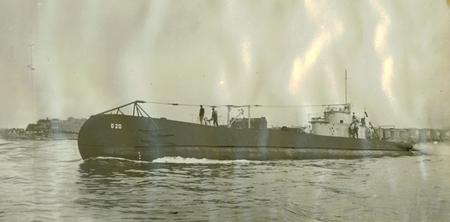
She was put into a squadron that consisted of two submarines: O 20 and O 15, and the sloop Van Kinsbergen. This squadron departed the Netherlands for the Netherlands West Indies on either 2 or 3 October 1939. By December 1939 O 20 reached the Dutch East Indies via the Panama Canal.
On 10 May 1940 Germany attacked the Netherlands. On 7 December 1941, the Japanese attack on Pearl Harbor brought the U.S. into the war. The Netherlands followed suit hours later. By early December 1941, O 20 had been stationed at Singapore Submarine Base and was under the command of the British Eastern Fleet. On 14 December 1941 O 20 was under orders to patrol the South China Sea. When two battleships and six cruisers were sighted, O 20 and O 19 were given orders to gain position on the enemy ships. The two subs would split paths en route to the target when 13 transports were spotted off Patani, Thailand and another 20 off Kota Bharu, Malaysia. Given a new patrol route, O 20 spotted Japanese destroyers off and on from 17 to 19 December.
Lost 19 December 1941
On 19 December at 7:00, she spotted two Japanese transports being escorted by two destroyers. In a few hours a third destroyer joined them. These destroyers were Ayanami, Uranami, and Yugiri. At 11:00, O 20 was spotted by enemy planes which dropped two bombs on the submarine and alerted the destroyers to her presence. The submarine dived and was able to avoid the bombs but the destroyers began to drop depth charges which soon destroyed the submarine’s listening device and caused other minor damage. O 20 then surfaced after dark but was spotted and engaged with gunfire by Uranami. HrMs O 20 (Lt.Cdr. Pieter Gerardus Johan Snippe, RNN) was scuttled by her own crew, about 25 miles east of Kota Baru, to prevent her capture by Japanese destroyers. The Commanding Officer and 6 others died, the remainder of the crew were saved by the Japanese destroyer Uranami and made prisoners of war.
 History Diaries