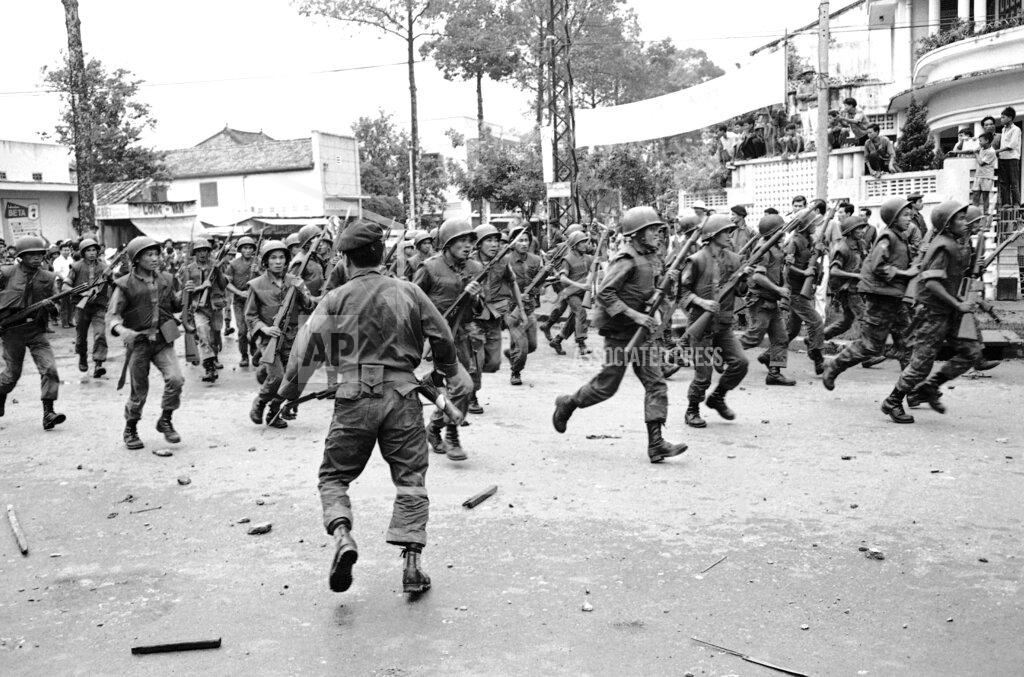
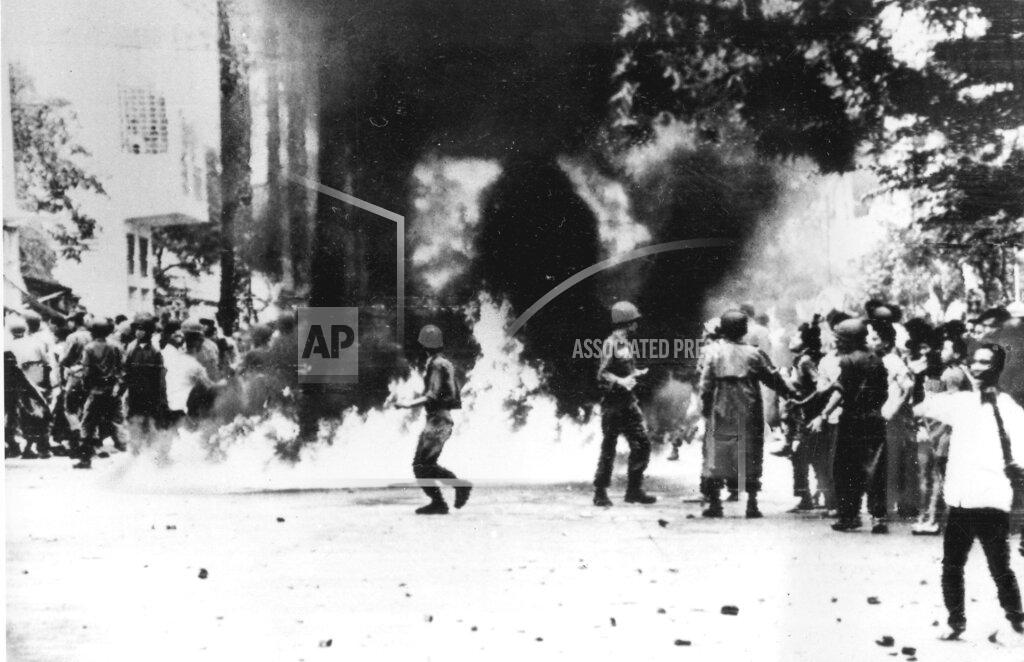
In Saigon, paratroopers with fixed bayonets dispersed mobs of rioters in the streets of the capital. Rioting, directed against authoritarian military rule, erupted Aug. 16 when Major General Nguyễn Khánh’s title was changed from Premier to President and his power greatly increased. At least nine persons died and scores were wounded in the latest outbreaks. Soldiers swept aside makeshift barriers thrown across main streets by the demonstrators and set up barbed‐wire barricades of their own. “From now on,” a security officer said, “law and order will be enforced.”
Nevertheless a Communist broadcast called on the people of Saigon to rise in revolt. Some, reported to be students from Communist‐held territory to the south, were reported to be marching toward the capital. The main points of violence, scattered around the city and the suburbs, were under army control. Radio‐equipped mobile units of paratroopers raced around the city, pouncing on random knots of demonstrators, piling them into trucks and driving them away. Five hundred demonstrators were arrested during the night, and the police said 150 of them had criminal records. At least 15 were held on suspicion of links to the Việt Cộng.
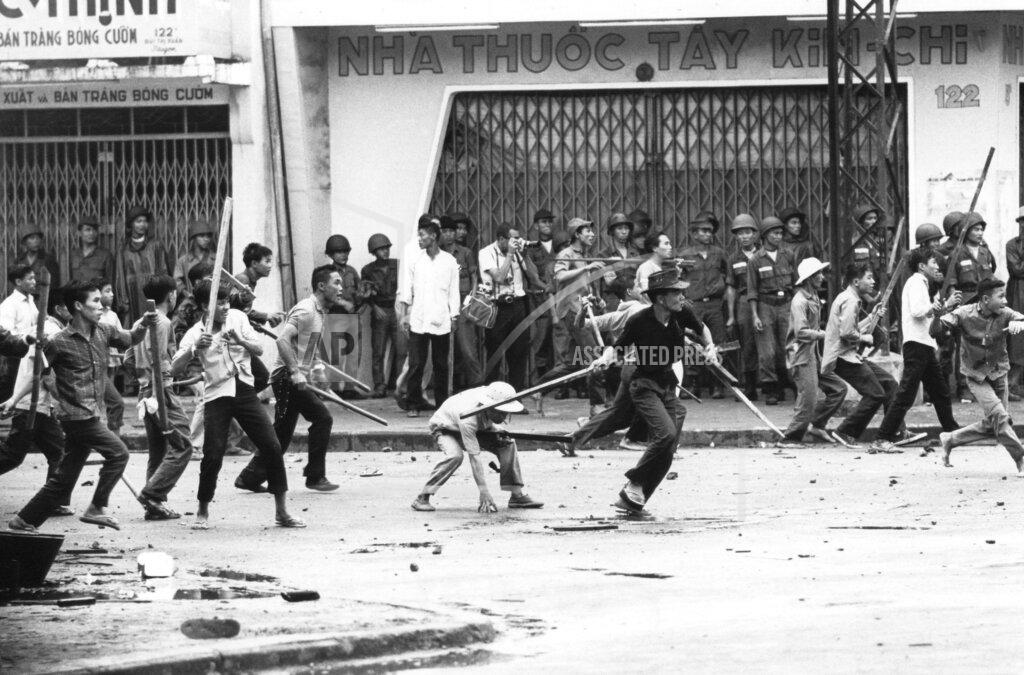
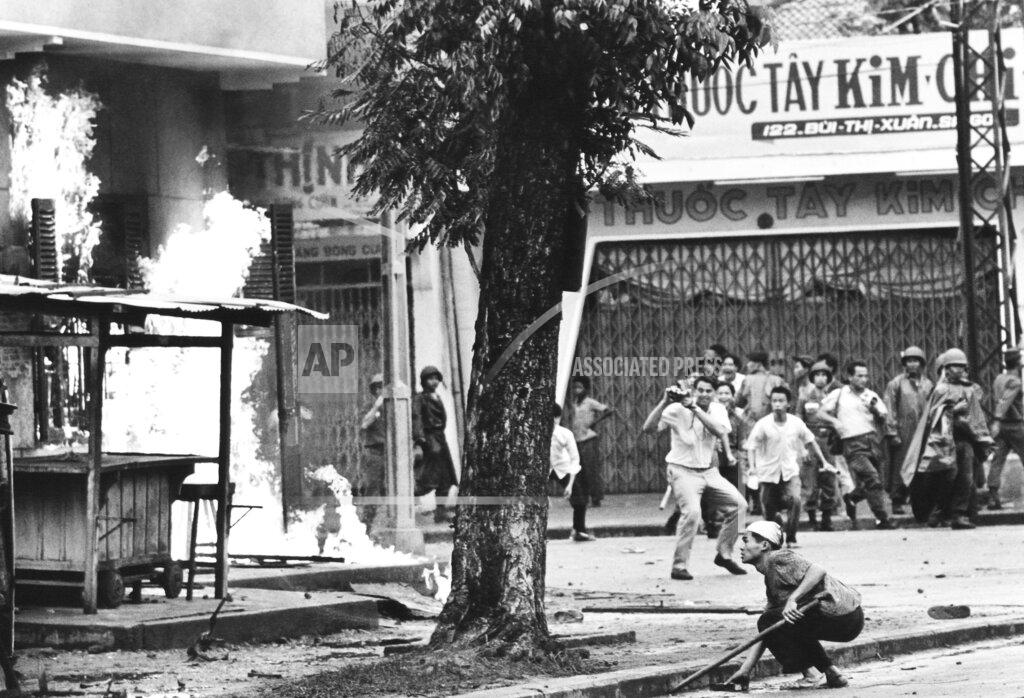
“This violence is terrible and against everything that we preach, but when our survival is at stake we have no choice.” A young Roman Catholic priest was speaking at the sprawling Nguyễn Da Tông secondary school in downtown Saigon. It had been under siege from Buddhist mobs all afternoon. Three youths, badly wounded in earlier rioting, were being tended by nuns in a poorly equipped aid room. One had been beaten on the head with a hatchet. Seven other youths had various head wounds but were walking. Two hours earlier a Buddhist youth, captured by Catholics, had been beaten severely on the street outside the school. The Buddhists took revenge two hours later by parading a Catholic prisoner through Saigon’s central market and then setting upon him with clubs and machetes. Several Western photographers said they were sure he had been killed.
The priest, who declined to give his name, spoke softly: “Why don’t the authorities help us? All we are doing is protecting ourselves.” As he spoke, paratroopers with fixed bayonets kept back several thousand Buddhists who were pressing up the streets to the school. The paratroopers arrived an hour earlier, after the Buddhists had again attacked a newspaper office in the school compound with Molotov cocktails and rocks. The iron grilles on the newspaper’s doors had meanwhile been electrified, and many youths bounced howling back into the street after attempting to tear them down. Unarmed infantrymen arrived at the scene and were manhandled by Buddhists, but the paratroopers brooked no insults. They dispersed the crowds by charging at them. One youth was bayoneted, then carried through the crowd. The priest, a Vietnamese, said: “This attack was unprovoked. For our own safety, we summoned our Catholic faithful to assist us.” Church bells began pealing, and the faithful streamed into the school armed with sticks, hatchets and machetes — not unusual these days in this riot-torn city.
Ambassador Maxwell D. Taylor informed the State Department in a message from Saigon today that he was postponing his visit to Washington in view of the governmental crisis in South Vietnam. Ambassador Taylor had been expected to come to Washington this weekend and report on the situation to the department and President Johnson. Robert J. McCloskey, State Department spokesman, said that Ambassador Taylor and other American officials were in constant consultation with the Vietnamese leaders. In reply to a question, Mr. McCloskey said the United States continued to support the Saigon Government and that as far as he knew the power struggle and the disorders had not impaired the war effort against the Communist guerrillas. The serious view taken of the developments in Vietnam was reflected in instructions issued to all Americans in Saigon, Huế and Đà Nẵng to stay away from crowds and to refrain from doing or saying anything that might tie “construed as provocative.”
South Vietnam has proposed to the Security Council the establishment of a joint Cambodian ‐ Vietnamese commission to deal with border incidents. The proposal was made today in a memorandum to Sivert A. Nielsen of Norway, the Council President for August. It said such a commission should investigate alleged incidents, take preventive measures and decide compensation claims. The memorandum proposed that the joint commission, which it described as a bureau of liaison, might include representatives of the two countries and a United Nations official, and that it have its headquarters in Saigon or Phnom Penh or alternate between the two capitals. The memorandum made it clear that Saigon still would like to see an international police force established to control the troubled border. But it complained that Cambodia not only had refused to accept this procedure but in recent weeks also had disavowed more modest suggestions it previously approved.
Prince Souvanna Phouma has been in Paris through most of August trying to rebuild a coalition government with the various factions and to gain international support for his talks with the leftists. But with U.S. advisors working behind the scenes, he is encouraged to make demands that only draw out the discussions. The United States is convinced that a negotiated ceasefire will not lead to a true end of the threat of a Communist takeover. Souvanna Phouma breaks off his conference with Prince Souphanouvong, the leader of the Pathet Lao, on the grounds that the latter’s demands are too extreme, and by the end of September the negotiations in Paris break down completely.
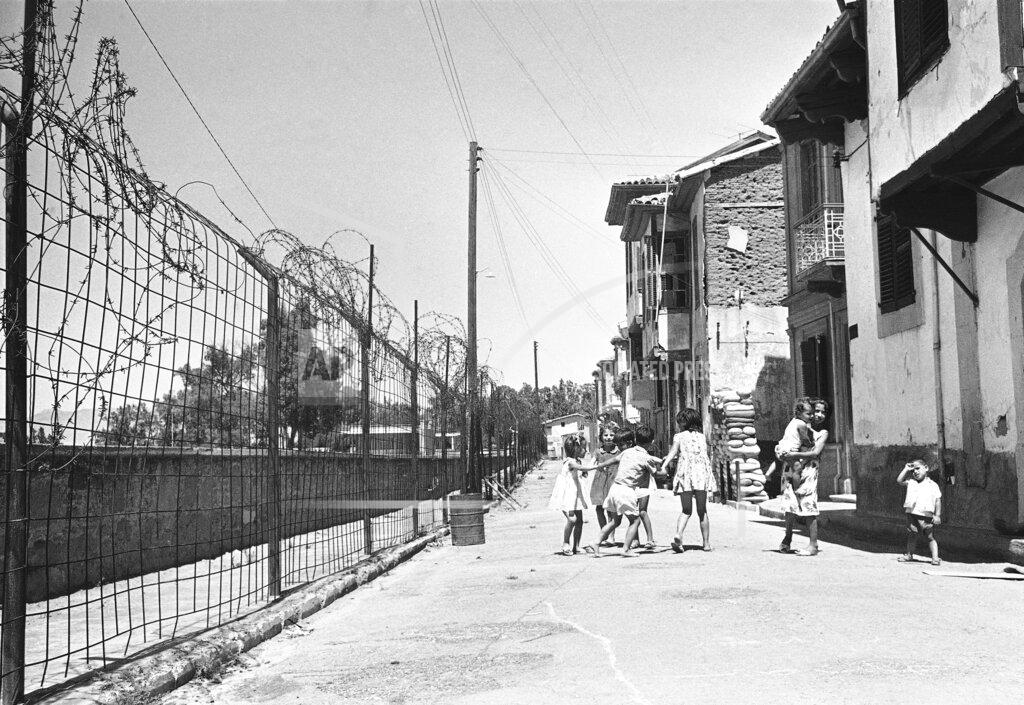
President Makarios’s refusal to permit normal rotation of Turkish troops on Cyprus is part of a war of nerves through which he hopes ultimately to force Ankara to accept unlimited Greek Cypriot rule of the island. The Archbishop’s strategy is to keep the caldron seething while he seeks a vote from the United Nations General Assembly in November nullifying the treaties that authorize Turkey to intervene militarily in defense of the Turkish Cypriot minority. It is far from certain that he can get such a vote and even more unlikely that Ankara would heed it if he did. But Cyprus’s President seems determined to take this route rather than accept the compromise settlement Greece and Turkey have been trying to negotiate in Geneva. That settlement would provide for enosis — union with Greece — and compensation to Turkey. Enosis is so popular among Greek Cypriots that the Archbishop, after a lapse of many months, has been forced this week to pay lip service to it again. But his violent opposition to any compensation to Turkey is designed to block an agreement on this basis — an agreement that would reduce his position from chief of state to that of a provincial Greek politician. His aim is to retain his position by achieving “unfettered independence.”
For the second consecutive day a mob of shouting Turks demonstrated late today before the United States Embassy in Ankara. Then they moved on to the nearby Greek Embassy, where they shattered most of the windows and battered two automobiles belonging to Greek officials. The mob, estimated at 10,000 at the height of the demonstration, included many adults and army, navy, and air force officers. A window in the United States Embassy was splintered by a rock and three unidentified Americans were beaten when they attempted to photograph the demonstrators.
In the Ankara demonstration, a Turkish policeman who tried to disperse the throng at the embassy was reported to have been badly injured. Many Turks are angered because they feel that the mediation talks on Cyprus in Geneva are going badly for Turkey and that the United States is strongly supporting the Greek negotiators there. These Turks also blame the United States for having prevented the Turkish armed forces from making a landing on Cyprus.
In a message to Premier İsmet İnönü on August 16, President Johnson is said to have warned that American aid to Turkey might be cut off if Turkey persisted in using American‐supplied war equipment in a Cyprus intervention move. The allegedly blunt tone of the President’s message has aroused the ire of many Turks in high Government positions. United States Embassy sources said that today’s demonstration was well organized and that there appeared to be little effort by the police and soldiers to halt it. The sources said that no protest had yet been made to the Turkish Government and that the latter had not communicated with the embassy about last night’s demonstration. When the demonstrators marched and milled about the embassy, they chanted “Yankee go home!” and “The army to Cyprus!”
President Makarios of Cyprus flew to Egypt and began talks with President Gamal Abdel Nasser on what Archbishop Makarios called “even closer cooperation between our two countries.” President Makarios is counting on Afro‐Asian and Soviet bloc support — and has promised a nonaligned Cyprus for this reason — to win his General Assembly vote. That evidently is one of the main subjects he will be discussing with President Nasser during his visit to Egypt. But arms aid may also be involved now that pressure from Athens has forced him to postpone the dispatch of a mission to Moscow to discuss Soviet military aid.
Turkey has filed a charge with the Secretary General, U Thant, that 200 “Greek Army personnel in full uniform” were landed at Limassol, Cyprus, about midnight Monday. “Immediate and effective steps to prevent any further landing” were asked in a telegram from Dr. Pazil Kutchuk, Vice President of Cyprus and leader of the Turkish Cypriot community, dated yesterday and made public today. Turkey’s representative, Orhan Eralp asked for its circulation as a Security Council document but did not call for any immediate Council meeting.
Antoine Gizenga, the leftist leader who was released from prison last month by Premier Moïse Tshombe, declared political war on the Premier today. In a bitter polemic read at a news conference this morning, Mr. Gizenga did not mention the Premier by name, but he said “the present de facto Government has shown itself incapable of finding a political solution to the country’s problems.” Instead, he said, “certain politicians are becoming accustomed to ruling over corpses.” Mr. Gizenga announced the formation of a new political party, the United Lumumbist party, which he said would be “animated by the principles of the national hero, Patrice Lumumba.” Mr. Lumumba, the Congo’s first Premier, was murdered in Katanga Province in January, 1961. Mr. Tshombe has been widely held responsible for Mr. Lumumba’s death.
Southern Rhodesia’s Prime Minister, Ian D. Smith, declared in Parliament today that “this country’s racial problems will never be solved until we get independence.” Mr. Smith plans to leave next Thursday for visits to Lisbon and London. In London he is to have talks with Prime Minister Sir Alec Douglas‐Home on the Southern Rhodesian Government’s demand for independence.
After pressure from the United States, Japan’s Prime Minister Hayato Ikeda announced that American nuclear submarines would be welcome in Japanese ports, though only if they were equipped with conventional weapons rather than nuclear weapons.
A spokesman for the Indian Home Ministry said today that 11,000 persons had been arrested throughout India during the three‐day civil disobedience campaign organized by the Communist party earlier this week. He said the figure was based on reports from all state governments. The Communist demonstrations and passive resistance campaign were organized to protest against high food prices and were designed to embarrass the Government of Prime Minister Lal Bahadur Shastri.
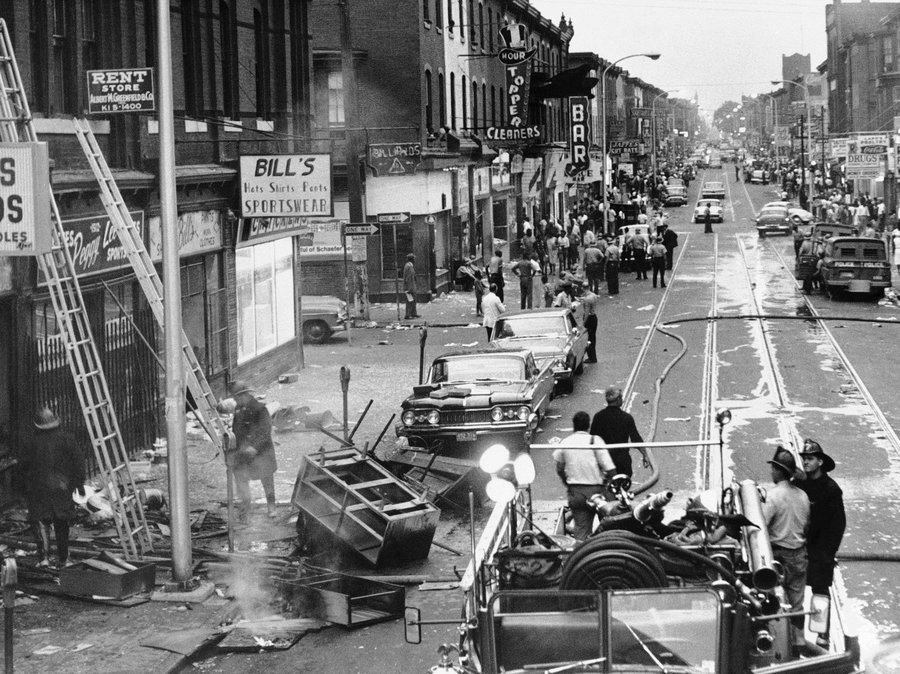
Hundreds of Blacks rioted in a densely populated section of North Philadelphia tonight, smashing windows, looting stores and hurling bricks and bottles at the police. A race riot in Philadelphia began after tensions between African American residents and the city police escalated. During the two nights of violence, two people would be killed, 339 injured, and 774 arrested. The triggering incident happened when two city policemen, one black and one white, had attempted to move an automobile that was blocking the intersection of North 29th Street and West Norris Street, and the owner’s wife, an African-American, confronted them. When the woman was arrested, bystanders began attacking the two police. A rumor quickly spread that a pregnant Black woman had been beaten and killed by police officers. Before officers Robert Wells and John Hoff could leave the scene, hundreds of people arrived at 22nd Street and Columbia Avenue and began throwing bricks, bottles, and other projectiles at the officers. The most seriously injured person in the rioting was the driver of a bus that was traveling on Columbia Avenue when the disorder began. The driver, Alfred McCullough, suffered face and shoulder cuts when a brick smashed through the windshield.
Philadelphia Mayor Howard Tate and the city’s Police Commissioner, Howard Leary, initially ordered police officers not to shoot at the people engaged in the uprising nor to interfere with looters. Police were finally allowed to use their firearms after receiving reports that armed men were standing on rooftops. Mayor Tate established a citywide curfew, banned liquor, and ordered heavy patrolling of the rioting area. Community and religious leaders tried to intervene by encouraging the crowd to be peaceful. They paraded Odessa Bradford through the neighborhood to prove she was unharmed and to encourage the Mayor to lift the curfew and address the longstanding problem of police brutality.
Local leaders recognized police brutality as one of the prominent issues facing black Philadelphia and other African American communities. It accounted for uprisings in numerous cities across the nation in the summer of 1964. As in other cities, police brutality was rampant throughout Philadelphia. Police officers were infamous for planting evidence, beating innocent Black people, making random raids and searches, and demanding harsher sentences for African Americans accused of crimes. In 1964, blacks accounted for 18 percent of Philadelphia’s population but were 40 percent of the inmates in the city’s jails and prison.
The rioting that began that Friday continued throughout the weekend; protesters vandalized and looted white-owned businesses. By the end of the uprising on Sunday, two people had been killed, 350 were wounded, and damage to the establishments on Columbia Avenue totaled approximately $4 million. Over 1,000 people were arrested and countless others were beaten by police officers.
President Johnson and his running mate, Senator Hubert H. Humphrey of Minnesota, started to plan their joint campaign during their flight this afternoon to the LBJ Ranch for a round of weekend strategy conferences. It was a quiet beginning after the frenzy of the Democratic convention in Atlantic City. A crowd of about 1,000 persons, considered average for an arrival of the President at Bergstrom Air Force Base near here, was on hand to greet the two nominees. But they took advantage of it. The President and Senator Humphrey, together with their wives, ranged along the airport fence for 15 minutes, shaking hands. Then they flew by helicopter to the ranch, 55 miles away.
On the three‐hour flight from Atlantic City the President and Senator Humphrey were closeted together almost the entire time. Senator Humphrey emerged from the plane’s stateroom in shirtsleeves for about 10 minutes to greet passengers, who included Governor John B. Connally Jr. and former Governor Price Daniel, both of Texas. President Johnson passed the entire flight in the stateroom, to emerge only after landing, wearing a big straw Texas hat. Tomorrow, it was understood, the two candidates will map the details of the autumn election campaign. They will hold their talks, as the President foresaw it at Atlantic City, sitting “in the shade of the live oaks on the banks of the Pedernales” — a river that flows through the LBJ Ranch.
Soon after his arrival today, the President was in touch with the National Security Council’s staff end the State and Defense Departments in Washington for what were described as regular briefings on the world situation. These included the precarious problem in Vietnam. Beyond that, however, the first concern at the ranch was relaxation from the strenuous events of the last few days in Atlantic City. A White House spokesman indicated it was doubtful that President Johnson and Senator Humphrey had discussed the campaign at any length.
The Democratic National Committee voted today to accept the credentials of Mississippi representatives chosen by the regular party organization of that state, subject to the loyalty affirmation required of all committee members. The committee, on President Johnson’s personal recommendation, also re‐elected its chairman, John M. Bailey, and all other officers. A grace period of 30 days to Sign the affirmation was extended to all. The Mississippians, E. K. Collins, a state senator, and Burnett Y. Hennington, did not immediately sign. If these two take the pledge — which is doubtful — it will freeze out the Freedom Democratic party, a largely Black group that had contested Mississippi’s convention seats. The terms of national committee members run until the end of the party’s 1968 convention.
One Alabaman, Mrs. Ruth Johnson Owen, signed the affirmation. The other memberdesignate from Alabama, Eugene Connor, left without signing. He tried to speak to the meeting, but Mr. Bailey ruled that only members could speak and that a loyalty affirmation was a requirement of membership. Mr. Connor signed four years ago. He had objected to taking the pledge as a condition of sitting in the convention because the pledge was not required of all delegates. In the national committee, however, the requirement is uniform and Mr. Connor had indicated he would go along.
Senator Barry Goldwater said today that President Johnson delivered “perhaps the most isolationist acceptance speech in modern American history” last night. He based his criticism on Mr. Johnson’s failure to mention Communism and his relatively brief mention of foreign affairs. Senator Goldwater is vacationing on a yacht cruising off the California coast until next week. He read a statement on Mr. Johnson’s speech to his press secretary, Paul Wagner, over a ship‐to‐shore telephone this morning. Mr. Wagner said Mr. Goldwater had not seen the President deliver the speech to the Democratic National Convention on television, but that he had read the text of it to the Senator this morning.
In Chautauqua, New York, Representative William E. Miller, the Republican Vice‐Presidential nominee, criticized President Johnson’s war record, saying that Mr. Johnson had “elected to be a Congressman instead of a soldier,” whereas “Barry Goldwater stayed in the service for four long years.”
Blacks ran into trouble in three Georgia cities today when they tried to push back racial barriers further than provided for by the courts and local school boards. About 25 Black parents tried to enroll their children in allwhite Kirkwood Elementary School in Atlanta, but were turned away by officials who explained the city’s court‐ordered grade‐a‐year desegregation plan had not been extended to the elementary schools. Similar situations developed in Monroe and Covington when four Black youths attempted to enter all‐white high schools. In other spots across the South where students got an early start to school, desegregation was carried out without a hitch.
In Leake County, Mississippi, four schools opened their doors to integrated registration at the first grade level, but no Black students showed up.
Nineteen Blacks were admitted to white schools in Orangeburg, South Carolina, and four other Blacks became the first of their race to attend public schools with whites in Ocone County, South Carolina, on the Georgia border.
Jackson, Mississippi Mayor Allen Thompson offered a $1,000 reward today for clues in the bombing of The Northside Reporter, a weekly newspaper published by Hazel Brannon Smith, a Pulitzer Prize winner. A policeman said a bomb apparently had been thrown through a rear window last night. No one was in the building. The blast destroyed equipment and knocked a four‐foot hole in a rear wall of the building. Mrs. Smith, who won the Pulitzer prize earlier this year for her editorials, was in Atlantic City, where she served as a commentator for the National Broadcasting Company at the Democratic Convention. She has been criticized by many segregationists in the state for the liberal editorial policy of her newspapers. She also publishes weekly newspapers at her home town of Lexington, some 70 miles north of here, and at Durant and Flora.
The U.S. performs a nuclear test at the Nevada Test Site.
The Soviet Union launched its first weather satellite, Meteor 1, but the payload was not able to orient itself properly to transmit any useful images back to Earth.
The United States launched the weather satellite Nimbus 1, the first man-made object to be placed into a near-polar sun-synchronous orbit around the Earth. Traveling in an elliptical orbit 263 miles (423 km), Nimbus 1 was always above an area of the globe during a period of maximum sunlight, which allowed almost full coverage of the planet and powered the satellite’s 10,500 solar cells. The satellite would go out of commission 26 days later, due to a malfunction of its solar panels, but managed to transmit 27,000 images during the 1964 Atlantic hurricane season, including Hurricane Dora and Hurricane Gladys.
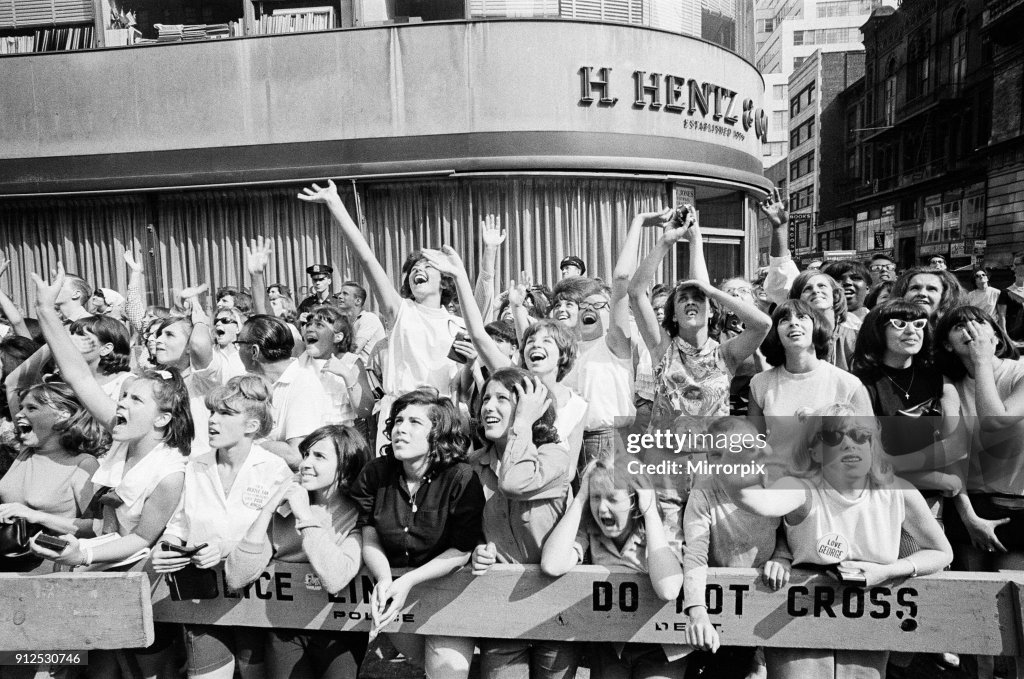
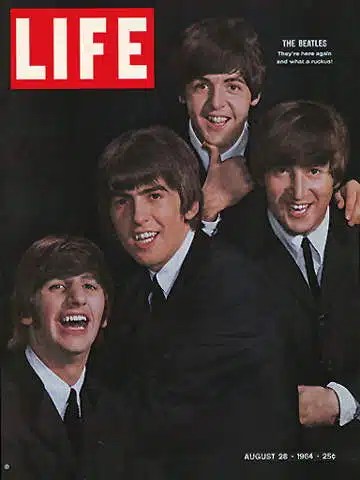
The Beatles performed the first of two weekend stadium concerts at Forest Hills, New York, outside of New York City. All 15,983 tickets were sold out.
Bob Dylan introduced The Beatles to marijuana during their first tour of the United States. The first meeting between the legendary artists took place at the Delmonico Hotel in New York City.
Hank Aguirre, one of the weakest major league hitters, got two hits and drove in three runs tonight while pitching the Detroit Tigers to a 12–1 victory over the Los Angeles Angels in the first game of a double‐header. The triumph was Detroit’s fifth straight. The Tigers then took the nitecap, 8–7, for the sweep and their sixth consecutive win.
The Washington Senators capitalized on Rich Rollins’s error for two runs in the sixth inning tonight and went on to defeat the Minnesota Twins, 3–1. Frank Kreutzer and Ron Kline yielded four hits for the winners. Kreutzer, who gave a homer to Zoilo Versalles in the first inning, had a three‐hitter until he tired in the eighth.
Sonny Siebert checked the Kansas City Athletics on seven hits tonight and belted a home run to lead the Cleveland Indians to a 4–1 victory. The ex‐University of Missouri athlete hurled his second complete game and worked out of an eighth‐inning jam en route to his fifth victory against five losses.
A three‐run homer by Felix Mantilla in the seventh inning wiped out a 3–1 New York Yankee lead and enabled Dick Radatz to lock up a 5–3 victory for the Boston Red Sox. Al Downing took a 3–0 lead in the sixth and a 3–1 lead into the seventh. Downing has lost leads in his last three consecutive starts, all in the 7th and 8th innings.
The Baltimore Orioles smacked three homers, including a two‐run shot by Norm Siebern, and crushed the Chicago White Sox, 8–3, tonight in the second game of a double‐header to remain in first place in the American League pennant race. The White Sox won the opener, 2–1, on Floyd Robinson’s two‐run single in the ninth inning after an error by Siebern had opened the way for the rally. The split left Baltimore a half‐game ahead of Chicago and 4½ games ahead of the thirdplace New York Yankees, who lost, 5–3, to Boston.
Wrigley Field, a pleasant ball park with ivy‐covered walls where nine home runs were hit by the Cubs and Pirates in one game in April and where 19 runs were scored by the New York Mets one afternoon in May, was the scene of even more remarkable devastation today. The Mets and Chicago Cubs struggled through 3 hours 15 minutes of a free‐swinging game in which the lead changed hands five times before the Mets won with four runs in the eighth inning, 12–10. Between them, the eighthplace Cubs and the 10th‐place Mets made 33 hits that included five home runs, one triple and six doubles. Twice the Mets made five hits in one inning and the Cubs got eight in one inning. A total of 11 pitchers labored with mixed success to hold down the score — six for New York and five for Chicago — before Al Jackson was declared the winner in relief and Don Elston the loser.
Bill White’s three‐run homer in a five‐run third‐inning gave Ray Sadecki his 16th victory tonight as the St. Louis Cardinals beat the Los Angeles Dodgers, 5–3. Curt Flood singled in the third inning, Lou Brock walked and White hit his 17th homer. Tim McCarver walked and Julian Javier doubled him home. Mike Shannon reached first on an error that enabled Javier to score the fifth run.
Smoky Burgess’s three‐run homer capped a four‐run rally in, the ninth inning tonight and gave the Pittsburgh Pirates a 4–2 victory over the Philadelphia Phillies. The Phillies led, 2–0, on Jim Bunning’s three‐hitter entering the ninth. Bill Virdon started the ninth with a bloop single to center field. One out later, Jerry Lynch walked, bringing on Ed Roebuck for Bunning. Willie Stargell hit Roebuck’s first pitch for a single, scoring Virdon. Burgess, who has been ailing much of the season, then smashed a home run into the right‐field stands, scoring behind Manny Mota and Stargell.
Jim Davenport scored from first base on Lee Maye’s ninthinning error tonight as the San Francisco Giants nipped the Milwaukee Braves, 3–2, and snapped a three‐game losing streak. The Braves had taken a 2–0 lead in the second inning on Joe Torre’s 16th home run, but Willie Mays evened the score in the sixth when he hit his 39th homer, Harvey Kuenn scoring ahead of him.
Dow Jones Industrial Average: 839.09 (+3.84).
Born:
Lee Janzen, American golfer (U.S. Open 1993, 1998), in Austin, Minnesota.
Greg Baty, NFL tight end (New England Patriots, Los Angeles Rams, Phoenix Cardinals, Miami Dolphins), in Hastings, Michigan.
Died:
Lumsden Hare, 89, Irish actor (“Oregon Trail”, “Desert Fox”, “Young Bess”).

 History Diaries