Some German units ordered to lead the invasion of Poland, originally planned for this date, do not receive the message that the invasion had been postponed in the previous evening and cross the borders, attacking Polish defenses with rifles, machine guns, and grenades; they will be withdrawn back into Germany within hours. Because Poland has experienced so many German provocations in the past few days, Polish leadership brushed off the attacks as another act of provocation, despite having reports that the attacks wore regular uniforms. In the late afternoon, Adolf Hitler sets the new invasion date at 1 September 1939.
The Jabłonków incident concludes. The task of the Abwehr detachment under Lieutenant Hans Albrecht Herzner was to capture both the rail station at Mosty and the strategic tunnel to prevent its destruction by Polish forces. It was ordered to occupy the Jablunkov Pass before actual hostilities started. The Germans were ordered to disable possible Polish demolition systems and make way for the 7th Infantry Division from Munich, stationed nearby. This was to prepare the way for the assault of the 7th Infantry Division.
The German detachment of some 70 agents dressed in civilian clothes (some sources put the number at 24), set off from Čadca on 25 August late in the evening. During the night, they crossed the Polish-Slovak border near the mountain of Velký Polom and reached the station at Mosty at around 04:00 on 26 August unaware that Hitler had cancelled his order and delayed the attack on Poland until 1 September. The Germans set up positions on a hill near Mosty station and began shooting at the station building, as well as at a house where the principal of a local Polish school lived. In the following minutes, the Germans captured the station after some fighting, and took prisoner a group of workers on their way to the Třinec Iron and Steel Works.
The German unit had no idea that the station was equipped with a military communication system, located in the basement. A female telephonist managed to call Polish units guarding the tunnel, and the alarm was raised. Polish sentries armed with machine guns took positions at both ends of the tunnel and an observation post was established. A chaotic exchange of fire took place after which the Germans realised that the operation was a failure and scattered in the nearby woods. Some attackers managed to capture a locomotive and tried to enter the tunnel, but were repelled by Polish police. The Germans remained under heavy fire, while trying to withdraw to Slovakia. They finally managed to withdraw at around midday on 26 August, with two wounded. The Jabłonków Incident has been named the first commando operation of the Second World War.
The incident provided the Polish Armed Forces with a warning that an invasion was likely imminent, causing the Polish government to quietly begin accelerating mobilization efforts. A full scale mobilization was not yet initiated due to fears of provoking the Germans and potentially angering Britain and France. The Polish Air Force would disperse most of its operational aircraft to secondary airfields leaving only trainers and non-operating aircraft at their normal bases. As a consequence the Luftwaffe would bomb mostly empty airfields on the first couple days of the war.
French Prime Minister Édouard Daladier sends a message to German leader Adolf Hitler, noting that while France desired peace, it would fight for Poland should it be invaded. French Ambassador Robert Coulondre sees Hitler and appeals to him as one soldier to another. When Coulondre cites the probable fate of women and children in any war, Hitler hesitates, but Ribbentrop quickly strengthens his resolve.
Birger Dahlerus met with Lord Halifax a second time and convinced him to write a letter expressing Britain’s desire to reach a peaceful settlement. Dahlerus flew back to Berlin and gave the letter to Göring that night, who declared that Hitler must be informed immediately of its contents. Dahlerus accepted Göring’s invitation to come to the Chancellory and meet Hitler for the first time, despite the lateness of the hour.
The British Cabinet learns from Lord Halifax of “Mr D” (Birger Dahlerus) and his efforts on the Nazis behalf. Dahlerus arrives back in Berlin about midnight.
Polish Foreign Minister Beck agrees to consider an exchange of population between predominantly German and predominantly Polish areas.
The Poles look forward to a quiet Sunday confident that there will be no outbreak of hostilities at least within the next twenty-four hours — which is a comforting thought these days.
Nevile Henderson flew back to London to relay Hitler’s “offer” to the British government.
Hitler demands Britain drop its alliance with the Polish. Immediate abandonment of the Anglo-Polish alliance is among the so-called “minimum demands” that Chancellor Hitler made to Sir Nevilo Henderson, the British Ambassador, it became known tonight. Herr Hitler also demanded the unconditional return of Danzig to Germany and a “corridor” across Pomorze, the Polish Corridor. He told the Ambassador that unless all three of these were conceded in advance he would not negotiate on “other matters” with the Poles or with anyone else.
Sir Nevile is expected to return to Berlin tomorrow with the British Government’s reply, which will amount to rejection, but may at the same time try to keep the door open to negotiations. Whether this can be done by asking for “clarification” or by proposing an alter native plan is a question that the Ministers themselves had not finally decided tonight. The Cabinet met for two and a half hours this evening after the Ambassador had reported to Prime Minister Chamberlain and King George on his long interview with Herr Hitler yesterday. The Ministers had before them the draft of a blunt and uncompromising rejection, for this was the mood of the government throughout a day of mounting tension on the Continent.
Nevertheless, at least one powerful Minister whose name has been associated with the “appeasers” of last year is said to have objected that the draft was too strong. So an attempt was being made tonight to draft a reply in more legalistic and conciliatory terms in the hope of avoiding anything that would bang the door irrevocably or enable the Germans to blame Britain for a new world war if it should come. Another meeting of the Cabinet has been summoned for 10:30 tomorrow morning, and Sir Nevile presumably will await the outcome before returning with his message to Herr Hitler.
The full report that the Ambassador brought back from Germany this morning showed Herr Hitler to have been in his most truculent mood and manner in his talk with Sir Nevile yesterday. Far from being an “interview,” it was more of a violent and abusive monologue. It is true that Herr Hitler put forward concrete demands, but they floated on a torrent of an hour and a quarter of angry rhetoric, all of which Sir Nevile dutifully reported to his superiors today.
Herr Hitler began it, according to the British version, with a diatribe against Poland. He said it was impossible to have neighborly relations with a country that was “martyring” its Germans and was bent on war. He was contemptuous of Poland’s “sovereign rights” and talked menacingly of what Germany and Russia together could do to Poland if they were driven to it.
Nazi Germany announced rationing for shoes, textiles and certain food items. Every person in the country would require a rationing card in order to make purchases.
Nazis block the Rhine to its own nationals. The Franco-German border became more warlike today as German troops took possession of Kehi, opposite Strasbourg, which also had its first practice blackout. The blackout was total, affecting all street lights. The Germans have tightened border controls to the point where even mos tof their own nationals are not permitted to cross.
The 1939 Nuremberg Rally, scheduled to begin September 2, was postponed indefinitely.
Winston Churchill declares the situation very grave, saying it is too late for appeasement. “Poland probably will be attacked shortly,” Mr. Churchill declared, “and a historic error of 150 years ago will be repeated. The situation is very grave, very grave.” Mr. Churchill decried ‘lies’ that are coming out of Germany, and said: “Germany is putting out a lot of lies, but they’re going to get more than lies before we’re through with them this time.”
France is adamant, holding the Hitlerite system must go to end periodical crises.
Hungary rejects the Romanian accord.
Mussolini sent Hitler another message, this time expressing his desire to have Italy march side-by-side with Germany. Attached to the message was a long list of materials Italy would require to fight a war and needed Germany to provide, a list so long that Mussolini knew there was no way Germany could supply it. When the German officials asked the Italian ambassador when the delivery was expected, he replied “immediately before the beginning of hostilities”, leaving no room for negotiation on the matter.
Italy is optimistic, feeling Poland and the Allies will surrender to Hitler’s demands. A great wave of optimism swept over Italy today when the news of Chancellor Hitler’s supposed peace proposal arrived. The confidence is based on the belief that Poland, Britain and France will yield and that a “new order” will be founded in Europe, sweeping away the last vestiges of the Versailles Treaty and giving Italy and Germany the “living space” they have been demanding. There are, however, some sober voices calling attention to the fact that these hopes may not be fulfilled and that the situation still remains highly critical.
Intense preparations for war and diplomatic efforts for peace are still going neck and neck. Premier Mussolini today again conferred with his chiefs of staffs; the frontiers were reported to have been closed to departing Italians although not to Italian Jews or foreigners; the prices of gasoline and coffee were raised to discourage private consumption and all previous measures such as the commandeering of vehicles and boats, partial mobilization, and the strengthening of frontier forces, continue.
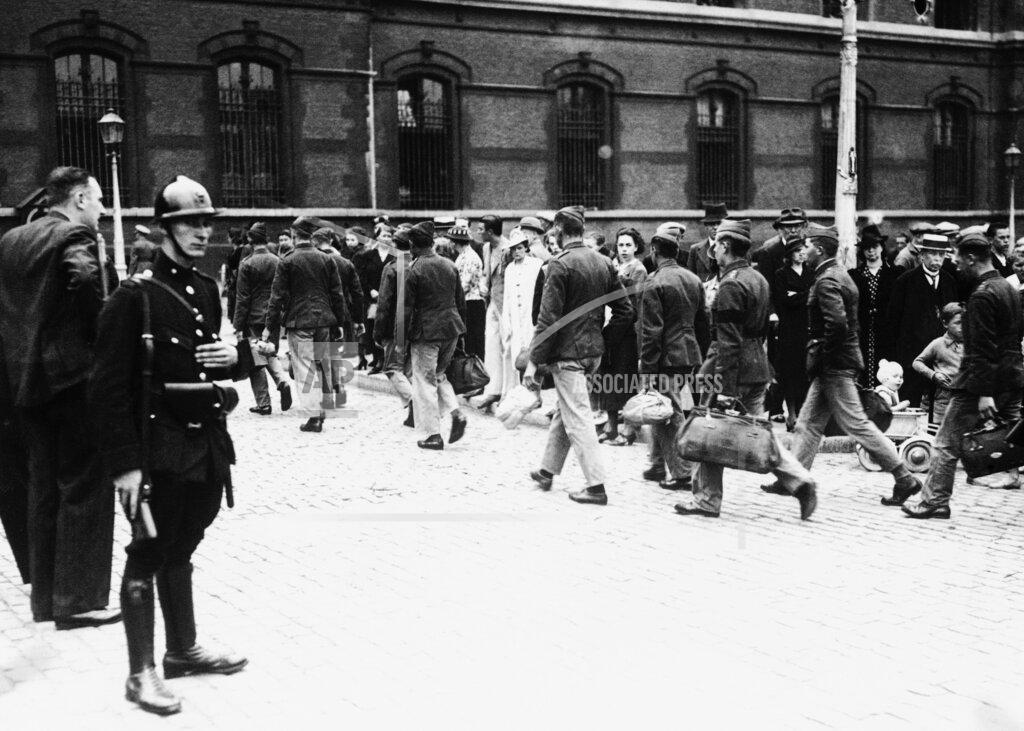
Belgium mobilizes. King Leopold today received in audience German Ambassador Vicco von Buelow-Schwante, who was reported to have renewed assurances from his government that Germany will respect Belgian frontiers in the event of war. The Ambassador was understood to have said the German note of October 13, 1937 — pledging respect for Belgian neutrality — remained in force and that Germany would in no way attack the integrity of Belgium and would respect her frontiers as long as Belgium maintained her attitude of strict neutrality. Earlier in the day the Belgian Cabinet had drafted a decree for use by the King in advancing the partial mobilization of military forces if the European crisis becomes worse. Heavy reinforcements of frontier patrols, involving the calling up of a large number of army reserves, already have been made.
The German Minister Otto Koecher called on President Giuseppe Motta yesterday and informed him that in case of war Germany would respect Switzerland’s neutrality.
The Cvetković government restores democratic government in Yugoslavia, including secret ballots. The state is reorganized on a federal basis and the Croats receive complete autonomy in cultural and economic issues. Vladko Maček, the leader of the Croats, becomes Vice Premier and five other Croats join the government. This political settlement addresses a long-standing dispute between the Croats and the Serbs. The Cvetković–Maček Agreement established the Banovina of Croatia.
The British and French military missions left Moscow for Leningrad and Helsingfors, Finland, at 12:30 AM today. Colonel R.C.W.G. Firebrace, British military attache, is accompanying the British mission to Helsingfors.
For the first time since the abrupt conclusion of the negotiations with the British and French military missions, on the signature of the Russo-German neutrality pact, Soviet authorities today allowed a statement to be issued on the subject of the breakdown. This statement, to be issued tomorrow in the form of answers by War Commissar Klementi E. Voroshilov to questions posed by Izvestia, confirms your correspondent’s dispatch of August 23 saying that, from the Soviet standpoint, the breakdown was due to the refusal of the other bargaining parties to establish a limited collective security pact, particularly between Poland and the Soviet Union. In his replies Marshal Voroshilov says the conversations were dropped on account of serious disagreements. Their basis was the attitude of the Soviet delegates to the conference that the Soviet Union, not having a common border with the anticipated aggressor, needed freedom of transit for Soviet troops through Polish territory toward the frontiers of the aggressor States, just as in the last war Britain received permission to cross French territory with the support of French troops to resist aggression by the central powers.
The Zionist paramilitary organization Irgun assassinated Ralph Cairns, 31, commander of the Jewish Section of the Palestine Police Force’s Criminal Investigation Department, and Inspector Ronald Barker of the Arab Affairs division, in Rehavia, Jerusalem. Irgun member Haim Corfu, a future Israeli politician, killed Cairns and Barker by remotely detonating a land mine containing 15 kilograms (33 lb) of blasting gelatin and 5 kilograms (11 lb) of metal pieces. Cairns is buried in the Jerusalem Protestant Cemetery. At the time, the deaths caused outrage in both the Jewish community, where both men had a wide circle of friends, and among the ex-pat population. Articles in the Jerusalem Post and the Jewish Chronicle condemned the attacks as an outrage.
President Roosevelt departed from his Saturday custom and remained in the executive offices of the White House today to watch the rapidly moving European situation closely, alert for any opportunity to throw his influence again into the scales for peace as reports indicated that there had been a pause in the alarming drift toward war.
Existence in the United States of widespread wartime propaganda from many countries, each eager to draw America to her side or keep it at a distance, and all the propaganda constituting an invasion of words. from abroad was charged in a preliminary report issued tonight by the Special House Committee on Un-American Activities. The committee. which is headed by Representative Dies, promised further detailed reports issued on the subject. Tonight’s report, prepared by J. B. Matthews, research director, declared that the committee had evidence supporting the following preliminary conclusions:
- Foreign powers have agents and organizations propagandizing in this country for the purpose of shaping American foreign policy.
- These foreign powers have set aside large sums in their budgets for this purpose.
- Many well-meaning Americans. have already become the unwitting dupes of this propaganda.
- Every medium for the communication of ideas is being employed for the purpose of molding American public opinion in the selfish interests of governments other than our own.
Apprehension over financial repercussions of events in Europe receded with reports from Europe received in Washington before noon today. Treasury officials, exhausted from a nerve-racking week, spent mostly at their posts, left for their homes hopeful for a restful weekend.
U.S. workers whose old-age insurance privileges ended on their sixty-fifth birthday under the original Social Security Act are now included in the security program, and their wages, hitherto exempt, are taxable not only from August 10, the date of the new legislation, but from January 1 of this year, to which the law was made retroactive. Employers of workers over sixty-five who attained that age prior to the first of this year are now required to deduct from their wages for services performed on and after August 10, not only the 1 percent employees’ tax on those wages but also back employees’ tax at the same rate on all taxable wages paid for services performed from January 1 through August 9, 1939, inclusive.
Federal old-age insurance funds will be sent abroad under the amended Social Security Act, it became known yesterday. Workers reaching the age of 65, or widows and children eligible for pensions under the act, may move to Tahiti, Turkey or Timbuctoo without jeopardizing their right to monthly payments from the United States Government, officials of the Social Security board said. The lack of any prohibition on payments outside the United States will compel the board to extend its system of administrative controls to the far ends of the globe. Some system will have to be worked out to determine whether widows who take up residence in other lands remain single, and to check on whether children between the ages of 16 and 18 really go to school.
The Young Democratic Clubs of Virginia, in a tumultuous session at their State convention today, adopted a resolution opposing a third term for any man as President of the United States.
Democratic voters in forty-three States and Republican voters in forty-four States favor Vice President Garner of Texas and District Attorney Dewey of New York for the 1940 Presidential nominations, according to a country-wide poll completed by Pathfinder Magazine.
A poll of the public indicates praise of Congress, considered to be doing a good job overall. Republicans fare best with 64%; Democrats still have a majority at 52 percent.
The questioning of Louis (Lepke) Buchalter, the $50,000 fugitive from rackets prosecution who saved the reward for city and Federal governments by turning himself in, continued yesterday in the detention pen of the Federal Courthouse.
The U.S. farmer appeared certain today of a better-than-average harvest from his 1939 operations.
The Chicago Herald and Examiner, morning unit here in the Hearst newspaper chain, announced tonight in its early Sunday edition that it would suspend publication with the current issue and would be merged with The Chicago Evening American on Monday as “a new and greater afternoon newspaper.”
Grave deficiencies in U.S. Army training were revealed by the First Army maneuvers, just concluded, according to observers who witnessed the exercises.
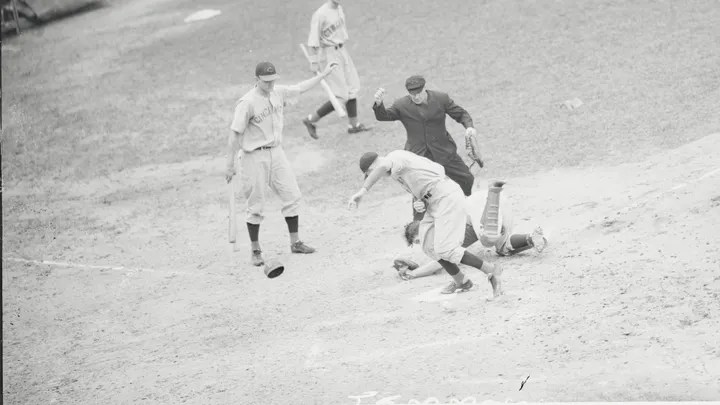
The New York Yankees win their 8th consecutive game, downing the St. Louis Browns, 6–1. Bump Hadley spun a three-hitter to win his tenth game of the season. One of the hits was a homer by Chet Laabs, which kept the Browns from a shutout.
The Tigers bunched their hits today to beat the Senators, 6–3, and sweep the three-game series. Southpaw Arch McKain allowed only six hits, and struck out four to get the win. Joe Krakauskas started for Washington and retired the first twelve batters. However, Detroit drove four hits, including doubles by McKain and Birdie Tebbetts, in the fifth inning for four runs. Charlie Gehringer hit his thirteenth home run of the season in the eighth off Alejandro Carrasquel, who finished for the Senators.
The surprising Chicago White Sox squelched Boston’s ninth-inning rally just in time today, retiring the side with the tying and winning Red Sox runs on base for a 5–4 victory. It was the third straight White Sox triumph over Boston and their tenth decision in their last thirteen games, cutting the margin between the two teams to seven and a half games. Boston knocked starting pitcher Bill Dietrich and Johnny Marcum out of the box in a two-run uprising in the sixth, but Clint Brown, making his fiftieth relief appearance of the season, halted the rally and held the visitors runless thereafter.
The Cleveland Indians chalked up their fourth straight victory in three days over Philadelphia today, 7–5, the Athletics donating three runs on two eighth-inning errors.
The first televised major league baseball games are shown on experimental station W2XBS, a double-header between the Cincinnati Reds and the Brooklyn Dodgers at Ebbets Field. Red Barber broadcasts the game over W2XBS, the 2 referring to the number of sets able to view the game: one is in the press box, while the other, at the RCA Pavilion in Rockefeller Center, attracts a huge crowd. An estimated 3,000 viewers watched. The Dodgers win the first game, 5–2, and the Reds take the second, 6–1, behind Bucky Walters 2-hitter.
The New York Giants swept two from the foundering Pittsburgh Pirates today, winning the first game 6–2, largely powered by two Mel Ott home runs, then shutting out the Pirates 8–0 in the nitecap on the strength of Cliff Melton’s three-hitter.
By winning both ends of a doubleheader with the Philadelphia Phillies today while the Reds split in Brooklyn, the St. Louis Cardinals cut the Cincinnati lead to 4 games. The scores were 5–0 and 11–4. Curt Davis won the opener for the Cardinals, giving him 18 wins on the year.
The Chicago Cubs continued their late-season surge today by sweeping both games of a double-header from the Boston Bees by identical scores of 8–1. Larry French won the opener; Vance Page the nitecap.
Canada appeals to three rulers: Premier William MacKenzie urges Germany and Poland to calm their dispute and asks for the Italian premier’s help.
Cheered by vast crowds of his supporters, General Juan Andreu Almazan, leading Opposition candidate for the Presidency, today left his home at Monterrey for Mexico City, where all elements that are out of sympathy with the present government’s policies are planning to give him an overwhelming reception..
At Khalkin Gol (Nomonhan) the Japanese launch an attack to relieve the surrounded 23rd Division, but the attack fails. The Japanese position is critical and untenable.
All Americans are reportedly safe in the Tientsin flood. Authorities tonight considered the possibility of a mass evacuation of all foreigners from the flooded North China area as the scope of the disaster increased. All Americans are accounted for. But the danger of an epidemic is still very great.
Japan, deserted, vows to carry on. The Nazi-Soviet pact — between its enemy and ally — does not change national policy. The lead in Japan’s new “clean slate” diplomacy has been taken by the army. Army leaders yesterday issued a statement the purport of which is that Japan will neither seek a rapprochement with Russia nor will she accept overtures from Britain, but will resolutely carry out her fixed China policy. Both of the other courses will find supporters and the army believes it advisable to discourage both until the confusion caused by the German-Soviet accord has subsided and a new policy has been evolved.
The statement admits that the Japanese people are disappointed to find Germany, “a partner in the anti-Comintern accord and therefore Japan’s friend until yesterday,” effect a rapprochement with the Soviet Union. Regardless of any changes in the international situation, it says, Japan’s fixed policy regarding China remains unshaken and the principle of opposing the Comintern is not altered. Japan will not yield to any “temptations and machinations” addressed to her, say the officers, but will proceed resolutely to dispose of the China incident. Important conversations are continuing behind the scenes. In addition to the military men who were already here, General Kasushige Ugaki and General Nobuyuki Abe have now arrived.
There was an interesting sidelight on the European situation here today. Japanese soldiers, reflecting the Tokyo government’s displeasure over Germany’s signing of a nonaggression pact with Russia, were reported to have slapped the faces. of several Germans at the barriers. to the foreign concessions. Britons had been the chief victims of these incidents previously.
A day of intense political activity was said to have cleared the way for a reshuffle of the Japanese Cabinet following close upon the government’s decision to turn away from the Rome-Berlin Axis to a position of “splendid isolation.” Domei, Japanese news agency, predicted an emergency Cabinet session early next week, possibly Monday, to consider reorganization.
Dow Jones Industrial Average: 136.39 (+2.66).
Born:
Fred Milano, American doo-wop singer (Dion & The Belmonts), in The Bronx, New York, New York (d. 2012).
Jorge Paulo Lemann, Swiss-Brazilian investor, in Rio de Janeiro, Brazil.
Bill White, Canadian NHL defenseman (Los Angeles Kings, Chicago Black Hawks), in Toronto, Ontario, Canada (d. 2017).
Naval Construction:
The Вое́нно-морско́й флот СССР (ВМФ) (Soviet Navy) Project 7U-class (Storozhevoy-class) destroyers Smyshlyony (Смышлёный, “Clever”) and Soobrazitelny (Сообразительный, “Astute”) are launched by 61 Kommunara (Nikolajev, U.S.S.R.) / Yard 200.
The Royal Navy rescue tug HMS Norman is commissioned.
The Kriegsmarine (German Navy) Type IX U-boat U-43 is commissioned. Her first commander is Kapitänleutnant Wilhelm Ambrosius.

 History Diaries