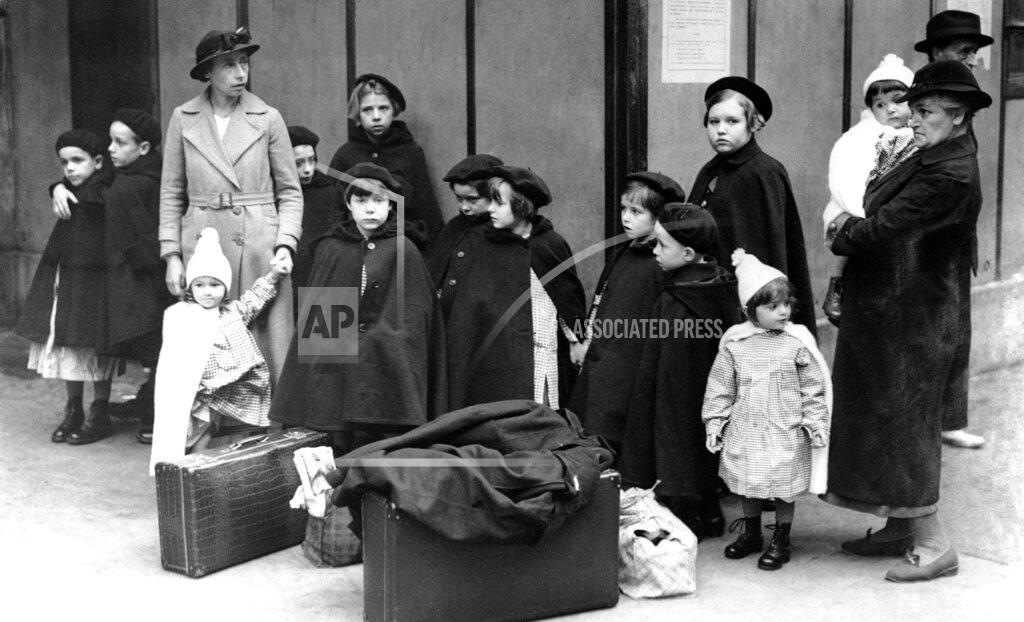
Seven days to war. Europe begins her final week of peace for the next six years. While rival armies faced one another across fortified frontiers throughout the larger part of the European Continent and guns went off in occasional, though not yet irreparable, frontier incidents, the statesmen and diplomats of the European powers were making last frantic efforts late yesterday to save the world from war.
Germany cut off all telecommunication going beyond its borders.
The German Navy orders all German merchant ships to sail for the nearest German port.
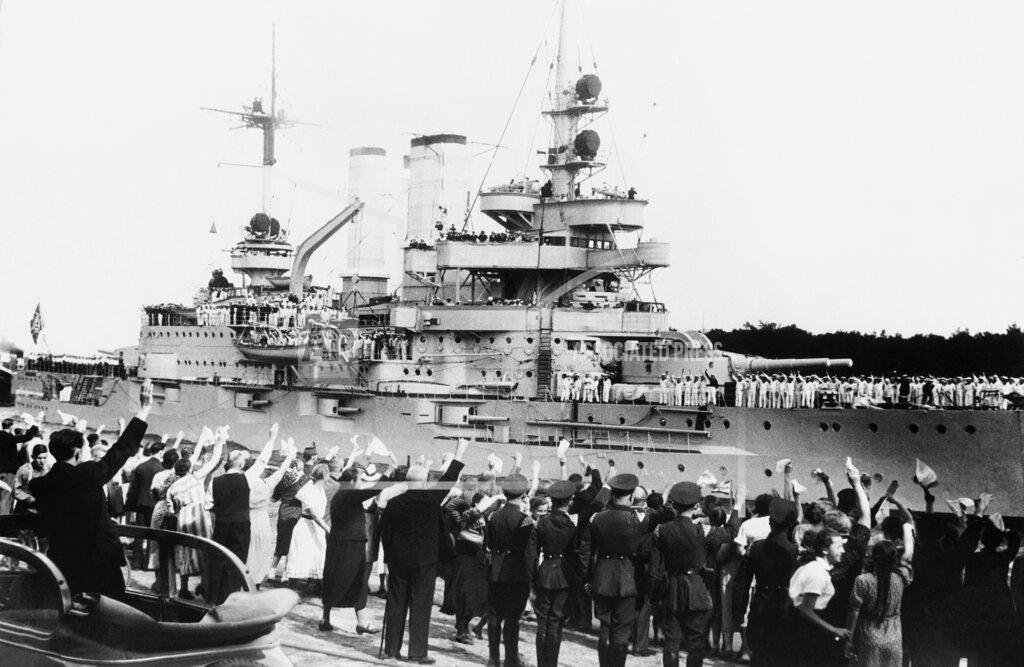
The German battleship Schleswig-Holstein arrived in Danzig this morning. The commander in the course of the day visited Albert Förster, Nazi Chief of Danzig; Arthur Greiser, Karl J. Burckhardt, League High Commissioner; and the Polish Commissioner, Marian Chodacki, who later paid return visits on board.
Hitler notified Benito Mussolini that war with Poland was imminent.
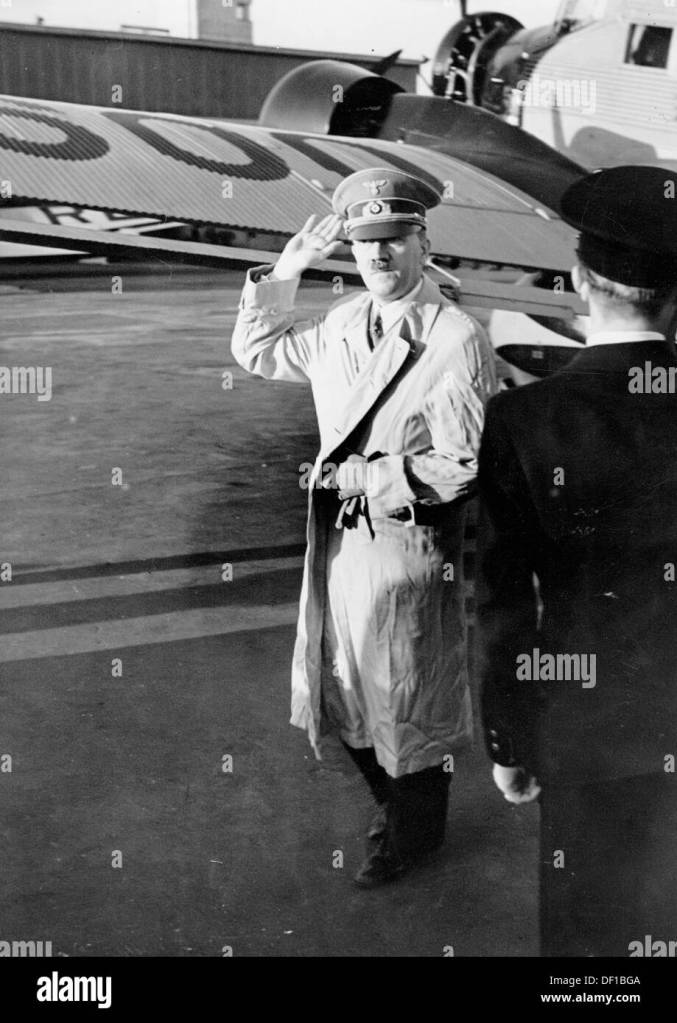
At 12:45 p.m. Hitler summoned the British Ambassador to Germany Sir Nevile Henderson and talked with him for about an hour. Hitler said it was necessary to solve the Polish question once and for all and offered to make a pact with Britain guaranteeing the Empire’s existence and potentially leading to an agreement on armaments limitation in the future. Hitler confers with Henderson, telling him that “Poland’s provocations have become intolerable.” Hitler then makes several new proposals to Britain, whose friendship, Hitler says, he has “always sought.” In conclusion, Hitler strongly urges Henderson to leave for London that same day with these new proposals.
British Ambassador to Germany Henderson tells Hitler that Britain would not abandon Poland to her fate: The “Russian Pact in no way altered standpoint of His Majesty’s Government.”
At 3:02 p.m. Hitler gave the order to invade Poland the next day.
Italy calls up 500,000 for military duty. Italy was last among the great powers to make her big war move, calling to the colors today the classes of 1903 and 1913 and thirty-five militia battalions.
Benito Mussolini sent a telegram to Hitler informing him that Italy would remain neutral in a war between Germany and Poland. Mussolini submits a list of Italian requirements before she will commit to aiding Germany in war to Ribbentrop.
Italian Ambassador Attolico tells Hitler that Italy will not honor the Pact of Steel and support Germany without German help with arms. On hearing of this, Hitler cancels his invasion of Poland scheduled for 4:30 AM the following morning. Hitler delays the launch of Fall Weiss by five days to provide more time to secure British and French neutrality.
Colonel Walery Slawek, a Polish opponent of the anti-German policies of Marshal Smigly-Rydz and President Mościcki, and a strong proponent of Marshal Pilsudski’s pro-German policy, is murdered and his death ruled a suicide, even though two bullets are found in his body.
The number of incidents along the Polish-German border increase. In Makeszowa, near Katowice, German soldiers take over the court house and railway station. Poles break into and wreck the offices of a German newspaper.
Poland accepts President Roosevelt’s offer of last night and will attempt direct talks with the Reich. This of course comes to nothing.
The Polish government in Warsaw increases the pace of its military mobilization. More Polish reservists are called up and cars and horses are requisitioned. Poland is in a state of full war preparedness, with the first stage of mobilization practically reached without, however, a general calling of reservists. All frontiers with Germany are fully manned, and the troops are prepared for their task of protecting the country’s inviolability.
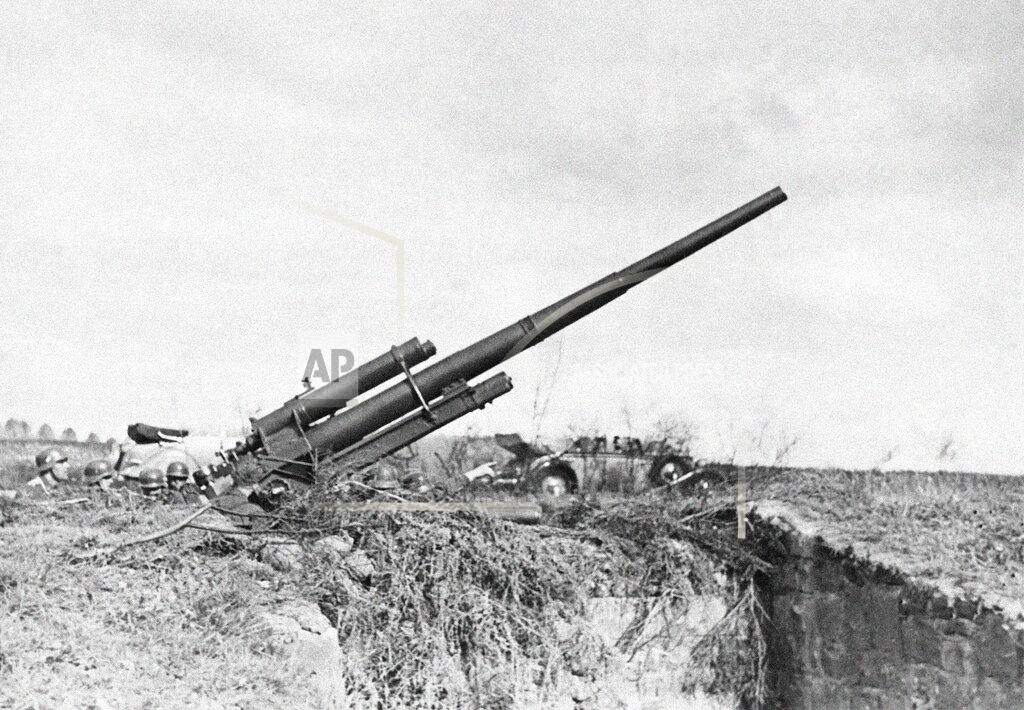
Military authorities, taking no chances, have ordered the evacuation of a number of frontier districts in order to “facilitate army movements.” In Pomorze all night traffic was suspended, while stronger restrictions are in preparation. All over Poland important military centers, such as railways, bridges, etc., are being guarded. In Warsaw and other large towns air raid precautions are at present in force. Householders are now equipped with gas masks, and trenches have been dug on the outskirts of cities for air raid shelters. In the main squares of Warsaw anti-aircraft guns will soon be moved into position.
All is calm efficiency. Neither a general mobilization nor a state of emergency has been proclaimed. There is no sign of war fever; food is plentiful. Shops quickly renewed their stocks after Thursday’s heavy purchases. Liquor control was decreed throughout the country. Vacationing ministers were recalled. The chances of peace or war are estimated to be even.
President Ignacy Mościcki has replied to King Leopold’s plea on behalf of the Oslo group. His reply was that it always has been Poland’s principle that permanent peace cannot be based on the hegemony of stronger nations over weaker powers, therefore the best foundation of peace would be a settlement of all outstanding international disputes in direct talks between the interested nations-on a condition of equality and respect for mutual rights and interests.
Göring’s friend, Swiss businessman Birger Dahlerus, lands in Croyden, England, in Göring’s private plane. Dahlerus personally gives copies of Hitler’s proposals for a peaceful settlement of the Danzig problem to Lord Halifax.
Military preparations are stepped up in both nations as Britain withdraws shipping from the Mediterranean and Baltic Seas, and as Germany institutes rationing.
French engineers cut Rhine bridges by the German border. French engineers tonight cut pontoon bridges across the Rhine between France and Germany north of this Swiss border city. The pontoons on the German side of all eight bridges from Basel north to Strasbourg were reported to have been pulled out.
Premier Edouard Daladier rallies the nation; the French are resolved to see Hitler’s “bluff” through. Whatever hopes there may be that war can be avoided now depend on Chancellor Hitler of Germany. For here in France there is every evidence that there will be no backing down. This bluff, if it is bluff, is going to be seen through.
The Louvre was closed to the public (officially for “repair work”) so its art treasures could be packed up and transported to secret locations for safekeeping.
The Nazi-Soviet pact stuns Parisian Communists. They call a meeting to affirm their loyalty to France. The disclosure of the terms of the German-Soviet accord today produced severe repercussions in the Communist party in France. Leaders who have professed blind faith in Moscow were stunned by the blow. Hardliners, however, insist the whole thing is the fault of the British and French imperialists.
At 5:30 p.m. Hitler met the French Ambassador Robert Coulondre, who told Hitler that if Poland was attacked France would come to its aid.
Poland and the United Kingdom signed the Agreement of Mutual Assistance, formalizing Britain’s March 31 declaration of support for Poland. British and Polish representatives sign a mutual assistance pact. If Germany attacks either nation, the other will aid in its defense. The British government wants to demonstrate its support of Poland to deter a German invasion.
At 6:00 p.m., Joachim von Ribbentrop arrived with the news of the Anglo-Polish treaty. Hitler decided to postpone the invasion of Poland.
The British Chiefs of Staff advise the cabinet that the earliest possible date for any ultimatum to Germany is September 1.
Eighteen trawlers are provisionally allocated to Fleetwood command for minesweeping and anti-submarine patrols. 8 of these are sent to Larne. Milford Haven Command gets 15 trawlers and assigns 2 to Belfast. Operational Command at Belfast is vested in the FOIC Belfast, who sets up his headquarters at the Custom House.
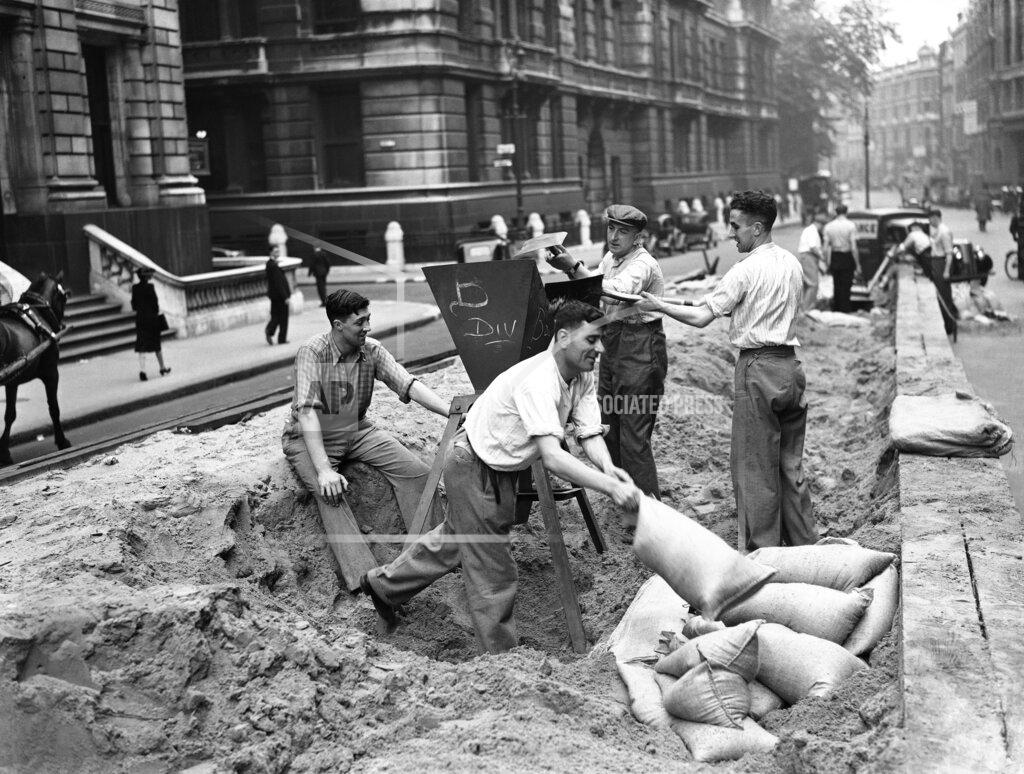
70% of Britain’s Air Defences forces are now deployed, which effectively means that 900 guns and 3,000 searchlights are ready for action.
Five people were killed and 70 were injured by an IRA bomb explosion in Coventry.
Birger Dahlerus arrived in London and relayed the German message to Lord Halifax, who said official channels were open, thanked Dahlerus for his efforts and assured him that his services were no longer needed. Later that evening when Dahlerus telephoned Göring to let him know, Göring was adamant that Dahlerus had to do everything possible to arrange a conference between Britain and Germany.
The Polish charge raids on the border; Nazi gangs are said to cross over and attack.
Jabłonków Incident: A group of German agents — unaware that the invasion of Poland had been postponed — attacked a rail station in Mosty overnight, but the attackers were repelled.
Deputy George Markov, Vice President of the National Assembly, said tonight that Soviet Russia had signified its full approval of Bulgaria’s territorial claims on Rumania.
In light of the political tensions in central Europe, the Yugoslav government extends autonomy to Croatia in an attempt to restore political stability in the kingdom.
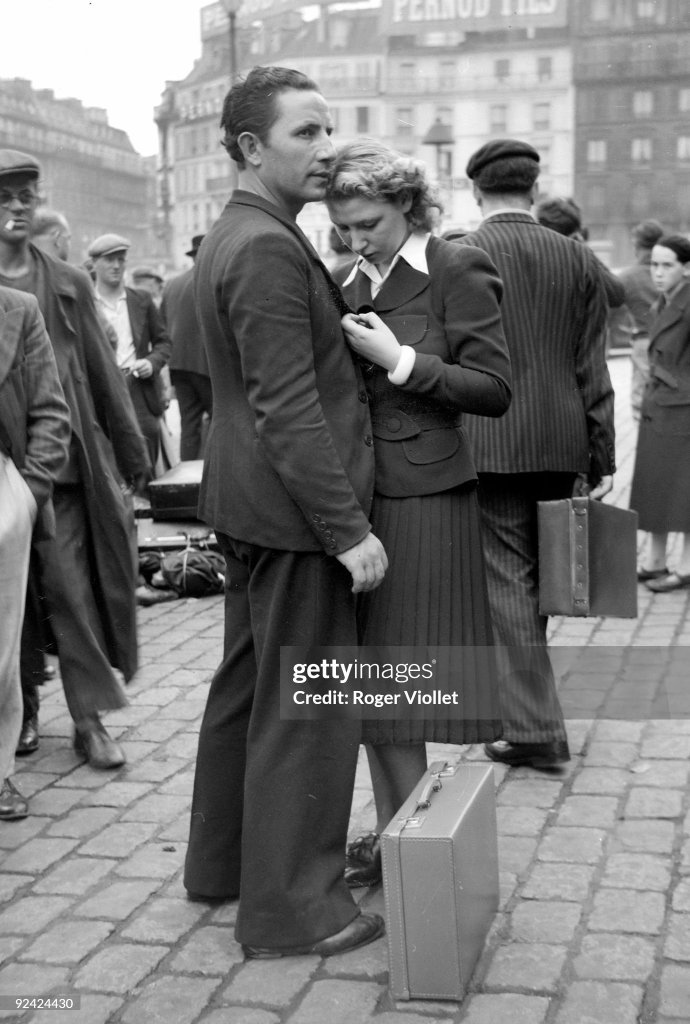
Americans in Europe hurry to find bookings home. Canceled ship sailings are leaving many stranded.
U.S. President Franklin Roosevelt works on war measures. The machinery of the United States to cushion the effect of foreign conflict upon American life and economy is probably at the greatest efficiency in its history, President Roosevelt said at his press conference today.
U.S. President Franklin D. Roosevelt sends a second appeal to Hitler: “In his reply to my message the President of Poland has made it plain that the Polish Government is willing, upon the basis set forth in my messages, to agree to solve the controversy which has arisen between the Republic of Poland and the German Reich by direct negotiation or through the process of conciliation.”
“Countless human lives,” President Roosevelt declared in his latest message to the German Chancellor, “can be yet saved, and hope may I still be restored that nations of the modern world may even now construct the foundation for a peaceful and happier relationship if you and the government of the German Reich will agree to the pacific means of settlement accepted by the government of Poland.
“All the world prays that Germany, too, will accept.” It was the second appeal the President had made to Herr Hitler in the present crisis. He acted without awaiting a reply to his first message and within an hour of his receipt of a reply to his similar-appeal last night to President Mościcki.
Mr. Roosevelt, the State Department announced, was highly gratified at the response of the Polish President. Professor Ignacy Mościcki declared that Poland had always favored direct negotiations of difficulties, especially between neighboring countries, and also favored the method of conciliation. “We consider, likewise,” he said in this connection, “the method of conciliation through a third party as disinterested and impartial as Your Excellency to be a just and equitable method in the solution of controversies arising between nations.” It was only natural, the Polish President declared, “that Poland agrees to refrain from any positive act of hostility, provided the other party also agrees to refrain from any such act, direct or indirect.”
Mr. Roosevelt in his appeal to President Mościcki had suggested adjustment of the controversy by direct negotiation, by conciliation, possibly through some nation in the Western Hemisphere, or by arbitration. The Polish reply made no mention of arbitration. President Roosevelt incorporated the text of the Polish reply in his message to Chancellor Hitler and recalled that the leader of the Reich “has repeatedly and publicly stated that the ends and objectives sought by the German Reich were just and reasonable.” He then made his direct appeal for specific settlement of the dispute.
U.S. President Franklin Roosevelt also sends the Italian King Vittorio Emmanuel III an appeal for peace after he hears a report that the monarch warned Premier Benito Mussolini against war.
With thousands of Americans rushing to book passage home from Europe on already crowded liners and hundreds stranded in England, France and Italy by cancellation of sailings, the State Department announced tonight that plans for the evacuation of Americans from Europe were sufficiently advanced to be made public in outline. Preparations have been under way for several months, culminating in the studies in the past few days by a group of ranking officials of the State, War, Navy, Treasury and Justice Departments, to meet all the problems that will confront the nation in event of a world war. The evacuation plan, the State Department says in its announcement, involves:
- Establishment in the Department. of State of a special unit that will occupy itself with the many details relating to the repatriation and protection of nationals in disturbed areas. This unit will absorb and centralize existing facilities in the department, which are adequate for meeting peacetime problems, but must be expanded to meet the burdens that would fall upon them during a period of major hostilities in Europe.
- The setting up in certain of our establishments in foreign capitals and in important commercial centers abroad of special sections to deal with these and related problems, such as the protection of the interests of foreign governments after a rupture of diplomatic relations; and
- Appropriate arrangements, where it has not appeared to be necessary to set up a special section, for adequate attention to be devoted to these problems by the existing staff.
“Working with this machinery,” says the announcement, “every effort is being made to solve the immediate problem of the repatriation of the very considerable number of Americans resident in Europe for business and other reasons and of the great number of Americans who are at present in European countries as tourists.
“It will, of course, not be possible for all of the Americans in Europe to return as rapidly as some of them may wish. It has always been envisaged in the plans formulated by this government for such a situation that the Americans in Europe should be advised, in case of emergency, to leave metropolitan centers for as safe places as may be found where they may await the availability of transportation.
“Our diplomatic and consular officers in Europe have been giving thought to this problem for months and are in a position to give appropriate advice and counsel to Americans in their respective districts.
“Pressure on existing steamship facilities is already pronounced, and it will increase manifoldly in the event of an actual outbreak of hostilities. The Department of State, as a consequence, in collaboration with the Navy Department and the Maritime Commission, has been considering carefully all means of assisting in the immediate return to this country of the many thousands of Americans who will wish to return without delay. A well considered program has been worked out, which will be put into effect as the situation develops.”
Nine thousand men are employed on warship construction at the New York Navy Yard, Wallabout Basin in Brooklyn, many of them working at night as emergency shifts around the clock, it was learned yesterday.
Elliot Roosevelt urges a political truce. He says his father, the president, would die in defense of his country.
Louis (Lepke) Buchalter, the $50,000 fugitive from rackets prosecution who turned himself in to the FBI Thursday night, was arraigned and held without bail yesterday on indictments charging narcotics smuggling after hours of questioning by the Federal authorities, from which representatives of the office of District Attorney Thomas E. Dewey were shut out. While both sides were guarded in their comment, it became obvious during the day that considerable friction had developed between Mr. Dewey’s office and that of United States Attorney John T. Cahill, whose property for purposes of prosecution the celebrated racketeer elected to become by surrendering himself to J. Edgar Hoover, chief of the FBI. Unless a murder indictment is forthcoming from the county grand jury, which was described yesterday as unlikely, he will be tried in the Federal courts, possibly in the Fall.
A yelling, jeering crowd of thousands broke up a meeting of Communists in San Antonio, Texas tonight, then was dispersed by a storm of tear gas and water from fire hoses manned by police and firemen.
“The Wizard of Oz” was released throughout the United States. The movie had already had several test screenings around the nation, and had opened in Hollywood and New York to great fanfare.
At St. Louis, the Yankees sweep the Browns, 11–0 and 8–2. Red Rolfe scores for the Yankees in both games giving him 18 straight in which he’s tallied a run. In the 18 games he’s scored a total of 30 runs. Joe Gordon hit two home runs in the opener. In the nitcap, Lefty Grove hurled a three-hitter. The Browns will end the season with a dismal home record of 18–59: the .234 winning percentage is the worst home record in the 10th century.
The Chicago White Sox inflicted a second straight defeat on the Boston Red Sox today, winning 9–2 with an eighth inning splurge of seven runs before a ladies’ day crowd of 16,000.
The Cleveland Indians blanked the Philadelphia Athletics, 6–0, today in a contest that lasted only one hour and twenty-seven minutes, during which Southpaw Harry Eisenstat held the A’s to half a dozen scattered singles. It was the Tribe’s third consecutive victory over Philadelphia.
With big Buck Newsom pitching four-hit ball the Detroit Tigers defeated the Washington Senators, 5–2, today. It was Newsom’s fifteenth victory of the season. The Tigers made twelve hits off Joe Haynes, Earl Averill leading the attack with two doubles and a single.
The militia is called to duty in Canada to protect coastal defenses and vulnerable industrial points. The Cabinet hears that hope of peace is almost abandoned.
Acting with lightning speed, the government in Santiago, Chile, without firing a single shot, suppressed a military revolt headed by General Ariosto Herrera and General Carlos Ibanez del Campo, former President of the Republic, when they were entering the barracks of the Tacna Regiment in the capital at 6 o’clock this morning.
The biggest welcome ever accorded to a foreign visitor in the Chinese wartime capital of Chungking was given to Pandit Jawaharlal Nehru, President of the Indian National Congress, upon his arrival here Wednesday. Headed by Chu Chia-hua, secretary general of the Kuomintang, more than 200 representatives of public organizations and official delegates greeted the Indian leader at the airfield.
China is not jubilant over the Nazi-Soviet pact. Officials think it may create a clash disastrous for the East.
It was announced tonight that the Japanese Ambassador to Berlin, Lieutenant General Hiroshi Oshima, had been instructed to file a protest in Berlin against the new German-Russian non-aggression pact on the ground that it violated the spirit of the anti-Comintern agreement. This action was taken in accordance with a decision of the Cabinet today. The Cabinet today wiped out all proposals that had been made for strengthening the anti-Comintern pact. Its decision virtually wiped out the pact itself as far as Japan is concerned.
The decision was announced tonight by the Cabinet’s chief secretary in the following terms: “It is unnecessary to say that the Japanese Government should pursue an independent foreign policy, based on morality, irrespective of the international situation. But in view of the new situation that the German Russian non aggression agreement has created, the Japanese Government has decided to abandon the plans that it has been preparing for dealing with the European situation.”
The British cargo ship Tyalgum ran aground in the Tweed River at Newcastle, New South Wales, Australia, and was wrecked.
Dow Jones Industrial Average: 133.73 (+2.40).
Born:
John Badham, English-born American director (“Dracula”, “Short Circuit”), in Luton, England, United Kingdom.
Liselot Beekmeyer, Dutch actress (“Issue Blum”), in Schiedam, Netherlands.
Dooley Womack, MLB pitcher (New York Yankees, Houston Astros, Seattle Pilots, Oakland A’s), in Columbia, South Carolina.
Died:
(Charles) “Babe” Siebert, Canadian NHL ice hockey player, 1925-39, 3x All-Star (Montreal Maroons, Boston Bruins, and 2 other teams), drowns in Lake Huron.
Naval Construction:
The Royal Navy Tree-class minesweeping trawler HMS Blackthorn (T 100) is laid down by Cook, Welton & Gemmill (Beverley, U.K.); completed by Holmes.

 History Diaries