General George Grivas, the former guerrilla leader, again called for enosis, or union of Cyprus with Greece, today. He made the call during ceremonies at which he placed a wreath at a monument honoring Lieutenant Gregorios Afxentiou, his second in command who was killed in 1957 in the underground movement that fought the British.
[Ed: Grivas now will increasingly be at odds with Cypriot leader Archbishop Makarios, who has no intention of yielding his power to Athens.]
Glafkos Clerides, President of the Cyprus House of Representatives, today rejected union of the island with Greece unless Cyprus was freed from the inhibitions of the treaties under Which Britain granted her independence. Speaking to a group of Yugoslav journalists visiting the island, Mr. Clerides, who is a Greek Cypriot, said: “If union with Greece is to take place first and then Greece is to negotiate with Turkey what the rights of the Turkish community in Cyprus are going to be and whether there will be a Turkish or NATO base in Cyprus, then this is an unacceptable proposition.”
Mr. Clerides’ observations amounted to a rejection of the suggestions reported to have been advanced at the Geneva mediation talks by Dean Acheson, President Johnson’s special envoy, that Cyprus become a part of Greece in exchange for a Turkish presence on the island. The President (Speaker) of the House said the formula would amount “to an attempt to force the solution of the Cyprus problem from within the Western alliance and to deprive Cyprus of the support of countries out side that alliance.” Greek Cypriot ministers blame the Noorth Atlantic Treaty Organization in general and Britain and the United States, as members of it, in particular for all of Cyprus’s problems. To counter the West, the Cyprus Government has embarked on a courtship of the Soviet bloc and the Asian‐African countries. The government hopes that this courtship will be translated into open expressions of support for its case when the United Nations General Assembly discusses the Cyprus question in November.
However, the Government’s hopes for a resolution from the Assembly stressing both Cyprus’s territorial integrity and the island’s right to unfettered independence are likely to stumble on procedural regulations. As long as an issue is pending before the Security Council, as is the case with Cyprus, the Assembly may discuss the question but cannot vote any recommendations unless requested to do so by the Council. Mr. Clerides said he thought the people of Cyprus should be permitted to decide for themselves “the destiny of their country after they have been freed from all restrictions.”
“We want to be freed from all the treaties and have complete independence,” he said, referring to the Treaties of Alliance and Guarantee under which Cyprus was granted independence from Britain in 1960. The Greek Cypriots have argued from the beginning of communal strife last December that the treaties permitting the presence of Greek and Turkish troops on the island, and permitting intervention by Greece, Turkey and Britain separately or jointly to preserve the status quo, constitute an abridgment of the island’s independence. The strife broke out after the Greek Cypriots tried to amend the island’s Constitution. The Greek Cypriots contended that the Constitution gave the Turkish Cypriotes excessive power to block legislation.
[Ed: Clerides is the yutz who in 1974 conspires with the Greek generals to depose Makarios, and then begins a campaign of ethnic cleansing against the Turks, which prompts a Turkish invasion and partition of the island. Not the brightest bulb on the tree…]
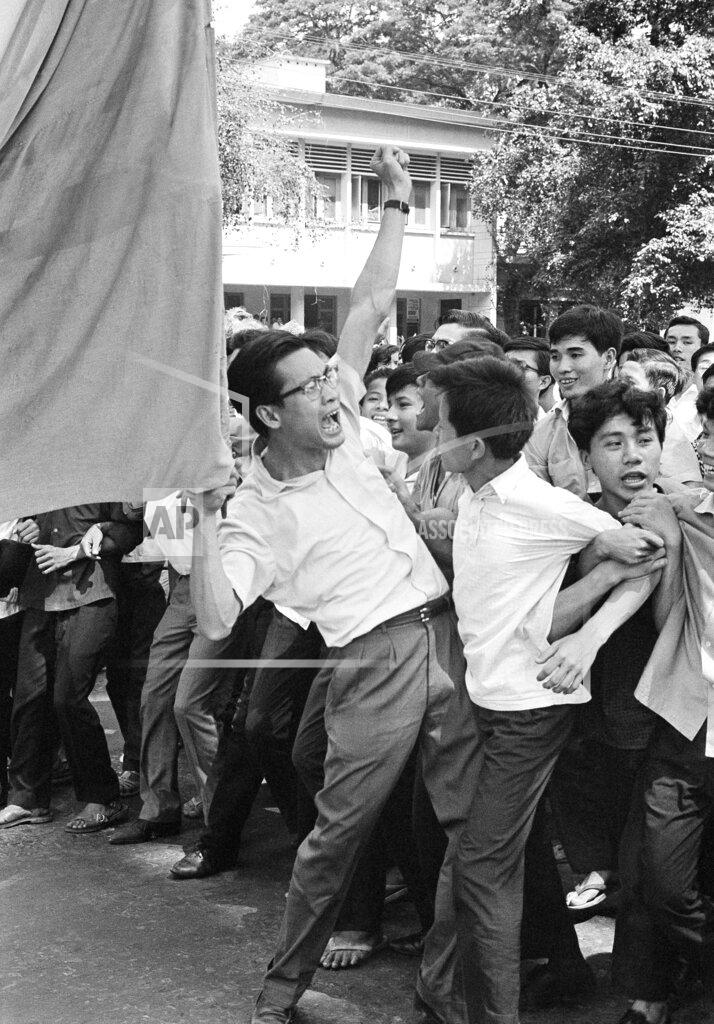
Hundreds of indignant students in Saigon broke down the doors of the national radio station today, swarmed inside and sacked studios and offices in anger over a news broadcast saying that their grievances against the Government had been satisfied. Another crowd met at the Pharmacy School of Saigon University in the afternoon, threatening to march on the Ministry of Information and other Government departments. Fiery speakers moved through the student crowds here whipping up anti‐Government sentiment and demanding an end of the. emergency restrictions decreed on August 7. They said the rules trampled on democratic liberties.
At the radio station, dozens of unarmed policemen ringed the yellow plaster building, but they were powerless. The demonstration started with speeches denouncing the Government and particularly the radio’s claim that student leaders, meeting yesterday with President Nguyễn Khánh, had resolved their differences. At the meeting, held yesterday in the presidential palace, the students were in fact told that censorship would be eased and that President Khánh’s new Cabinet would comprise more civilians than military men. But most of their complaints met with the reply that emergency restrictions were vital now to stave off a Communist victory that could end all freedom in Vietnam. At one of today’s protest rallies, students ceremonially tore up a copy of the Constitution promulgated by General Khánh a week ago, providing for a presidentially dominated government. Then they set fire to the torn papers.
The events brought to a violent climax several days of demonstrations and agitation by student organizations and Buddhist groups, all accusing the Government of turning into a military dictatorship. As leaders harangued the crowd, heavy rain started to fall. Instead of dispersing more than 200 students broke through the wooden police barriers and made for the radio‐station entrance. They battered down a heavy door with fragments of the shattered barriers, then streamed inside, heading for office of the director general, Nguyễn Ngọc Linh. Mr. Linh had been asked to come out and address the crowd and he had refused, asking the students to send in a delegation to discuss their complaints. They roared out their rejection. Apparently Mr. Linh had left the building before the students entered. They wrecked his office. After about 20 minutes inside, the students dispersed without police interference. The station returned to the air with recorded music after a 10‐minute interruption.
Early Monday, Saigon students sacked Information Ministry offices, Reuters reported. At Đà Nẵng to the north, The Associated Press said, a mob stoned a United States Army billet and at Huế a Roman Catholic school was attacked.
Last year key generals were working behind the cover of Buddhist and student demonstrations to overthrow President Diệm. Now their position is far from clear, but there are indications that leading general have rallied behind General Khánh in the last few days and are urging him to take firm measures against demonstrators. The measures could include drafting student leaders into the army. Yesterday General Khánh was scheduled to pay a goodwill visit to a shattered Ranger battalion in Kiến Hòa, which suffered 75 fatalities in a Việt Cộng ambush Thursday. But because of the students’ demands General Khánh felt that he had to stay in Saigon to confer with six of their leaders. He sent his senior military colleague, General Trần Thiện Khiêm, to Kiến Hòa in his place. According to informed sources, military leaders increasingly consider the war against the Việt Cộng so serious that the government must not be diverted by agitation in Saigon.
The Government in Saigon has smashed a ring suspected of having been engaged in smuggling Vietnamese piasters and foreign currency to Hong Kong for conversion into gold and jewels.
Prince Souphanouvong, leader of the pro-Communist Pathet Lao faction in Laos, left Peking today by air for Moscow on his way to Paris for meetings this week with the Laotian right‐wing and neutralist leaders. Soviet sources said that he would take the first available plane from Moscow to Paris. But it was uncertain whether he would arrive today, when the talks were scheduled to begin. The Prince was seen off at the airport by the Chinese Foreign Minister, Chen Yi, and the army chief of staff, General Jo Jui‐ching. He spent most of yesterday in informal talks with the foreign minister and other officials on the tactics he will adopt in the Paris talks.
South African adventurers, many of whom fought in the mercenary force of Moïse Tshombe in secessionist Katanga Province, are signing up for his Congolese Army. Two secret flights from Jan Smuts Airport recently took more than 65 men to the Congo to join a special brigade of white “shock troops” that has been formed to fight Communist‐backed rebels. Officially, the South African Government frowns on such recruiting. However, there is little it can do provided there is no infringement of the law and the mercenaries’ passports are in order. Major Jacques C. Puren, a former Katanga mercenary, was reported to be recruiting for Premier Tshombe in the republic. Young South Africans and Rhodesians are reported to be offered the equivalent of $280 a month and extra “danger money.”
Several young men from the army of the former Federation of Rhodesia and Nyasaland are said to be among the mercenaries. It is believed that they will join the newly established Command No. 5 of the Congolese Army. The command is reported to be led by Major Mike Hoare, a former British Army officer who was one of Mr. Tshombe’s Katanga officers. At present a number of South African pilots in the Congo are flying Harvard trainers that have been equipped with rockets and machine guns, according to reports reaching Johannesburg.
Reliable Haitian exile sources in the United States reported tonight that a new wave of mass executions had swept Port‐au‐Prince, Haiti’s capital, in the wake of the regime’s two growing guerrilla movements in the mountains. Executions of the families of guerrilla fighters who have been operating since late June near the Dominican border, or of suspected sympathizers, were reported in July by diplomats whose information came from embassies in the Haitian capital. Since then a second guerrilla force has landed in the Jérémie area of southwest Haiti. Reports have emphasized both the growing tension in the country and the harsh repressive measures taken by the regime of President François Duvalier.
Tonight’s reports, which could not immediately be verified in diplomatic quarters, spoke of executions that may have taken between 200 and 300 victims. Some diplomatic sources said rumors of new executions had been received in the last week. Informants said the new executions were mainly of university and high‐school students taken as hostages or suspected of efforts to join the guerrilla movements.
One report said that Jean‐ Claude Duvalier, 16‐year-old son of the President, fatally shot an army major, Delande Duperval, last week during a quarrel at the Presidential Palace. A diplomatic report said Major Duperval had been wounded in the arm by the President’s son. Reports from Haitian exiles said the shooting had increased tension within the Haitian Army, thus raising dangers to the regime of Dr. Duvalier. Earlier this year Dr. Duvalier proclaimed himself President for life.
The main element of power in Haiti is the Tonton Macoute movement of armed militiamen organized by Dr. Duvalier to offset the influence of the army. The regime has been using Tonton Macoute units in its unsuccessful efforts to flush out the guerrillas on the Dominican border in eastern Haiti, and on the tip of the southern peninsula. Exiles have reported heavy defections lately among the Tonton Macoutes. Some of the militiamen were said to have defected by leaping out of their trucks when a task force was sent recently to the town of Gonaïves, north of Port‐au‐Prince, to quell an uprising. The area is not involved in the guerrilla operations. The exiles also said an important Tonton Macoute leader, identified as Elouisé Maitre, had defected from the regime and sought asylum in an embassy in Port‐au‐Prince. He was reported to have fled after Dr. Duvalier told the militamen he would burn Port‐au‐Prince if opposition to his regime did not cease.
Malaysian troops killed four Indonesians and captured four more today in a swamp clash with one of three guerrilla groups that landed in southwestern Malaya six days ago. Troops also discovered an arms cache in a raid started after a villager reported that 11 guerrillas were hiding in a shack at a rubber plantation near here. There were fears that one group of about 40 Indonesians might have broken through the coastal security cordon. They would now be in the mountainous interior of the southern peninsula. This weekend 23 Indonesians and 11 Malays and Malaysian Chinese appeared in court here most of them charged with carrying arms in the security area. The mandatory penalty is death by hanging.
East German border guards opened fire today on two groups of young West Germans who accidentally stepped on Communist soil, but injured no one. West German police did not return the fire because the bullets did not strike into West Germany. Three young West Germans walked toward the border near a superhighway checkpoint here about noon. When they stepped on the plowed strip at the barbed wire, guards in a nearby Communist watch tower opened fire. The youths ran back. Two other West Germans again stepped on the plowed strip about an hour later, and the Communist guards again fired at them.
Layla Balabakki, a Lebanese Shi’ite Muslim, feminist, journalist and bestselling author, was exonerated from obscenity charges arising from her collection of short stories, “Safinat hanan ila al-quamar” (“The Spaceship of Tenderness to the Moon”). Charges against her were dropped and the copies of the book (which had been confiscated by police from all bookstores in Beirut) were returned to their owners.
Killer hurricane Cleo, that killed 14 on Guadeloupe, lashed the island of Hispaniola with gales and its 140 m.p.h. winds were expected to hit later.
Typhoon Kathy, with center winds of 86 m.p.h., swept through southwestern Japan, leaving widespread property damage in its wake. Police reported one person killed, another missing and 11 injured.
The 34th Democratic National Convention, the largest, but one of the least eventful in the party’s history, will begin at 8:30 PM tomorrow. A total of 5,260 delegates, alternates and national committee members will gather on the spacious floor of the Atlantic City Convention Hall, newly air‐conditioned at a cost of $3 million. On Wednesday night the 2,944 delegates and the 108 national committee members (two from each state, the District of Columbia and three territories) will cast 2,316 official votes for a Presidential nominee — if all the states have their full quota of delegates on the floor. It is expected that all votes cast will go to President Johnson.
The chances are equally good that most if not all the convention votes will go to the man Mr. Johnson designates as his running mate. His identity is virtually the sole unresolved question about this convention. Mr. Johnson has told his associates that he may not even make up his own mind, much less announce his choice, before Tuesday or Wednesday. Speculation continued, however, to center on Senator Hubert H. Humphrey of Minnesota. Governor Edmund G. Brown of California, himself one of those frequently mentioned for the Vice‐Presidency, arrived this morning and immediately predicted that Mr. Johnson would choose Senator Humphrey.
On the other hand, Gov. John B. Connally Jr. of Texas, who had breakfast this morning with Mr. Johnson, came to Atlantic City later and said the President was giving the Vice‐Presidential choice continued and intense consideration. Governor Connally said he would willingly accept Senator Humphrey as Mr. Johnson’s running mate. President Johnson will he placed in nomination Wednesday night by Mr. Connally and Mr. Brown, both of whom were at the White House this weekend with other Democratic Governors. The Vice‐Presidential question, offering all the drama that the convention proper is likely to offer, will not come to the floor before Wednesday, when ballots will be taken.
The feature of tomorrow’s opening session will be the keynote address by Senator John O. Pastore of Rhode Island, who will also serve as temporary chairman of the convention. The gathering will be called to order by John M. Bailey of Connecticut, the Democratic National Chairman. On Tuesday night, there will be an address by Speaker of the House John W. McCormack of Massachusetts, the permanent chairman of the convention. In addition, the 1964 platform will be formally adopted. Mr. Johnson’s chosen running Mate will speak Wednesday night. The grand finale, on Thursday, will feature Mr. Johnson delivering his acceptance speech. There will be a mammoth outdoor birthday celebration on the boardwalk for the President. He will be 56 that day.
Senate Democratic whip Hubert H. Humphrey said President Johnson’s running mate will “have to carry a good deal of the burden of the campaign” because the people want the President at work in the White House.
The Credentials Committee of the Democratic National Convention decided today to seat those members of the Alabama delegation who would sign a pledge to support the convention’s nominees for President and Vice President. Most of them promptly refused. After a session that lasted three hours 45 minutes, David L. Lawrence, former Governor of Pennsylvania, who is chairman of the Credentials Committee, told a news conference that those Alabama delegates who refused to sign the pledge of support “will not be seated.” An hour and a half after the committee action, the Alabama delegation voted overwhelmingly to refuse to sign a loyalty pledge in order to be seated. The vote was 33 to 3 against the pledge.
The three who voted for the pledge would be seated and allowed to cast their own convention votes. In the case of Alabama, a pledge of support by the state’s delegates would not guarantee that its electors, who are designated as unpledged by state law, would vote for the party’s nominees. The committee recessed until 10:30 AM tomorrow after failing to dispose of the contest over the Mississippi delegation. A subcommittee was named to report back to the full committee then with recommendations.
A predominantly Black delegation of the Mississippi Freedom Democratic party is contesting the seats of the regular delegation on the ground that Negroes have been systematically excluded from party activities in Mississippi, including the process of selecting convention delegates. Mr. Lawrence and Harold Leventhal, the counsel of the Democratic National Committee, made clear that members of the regular Mississippi delegation will be required to take the same written pledge as those from Alabama if they are to be seated.
It is believed that many in the Mississippi delegation would follow the example of Alabama delegates tomorrow. And some observers thought some of the Arkansas and Louisiana delegates might walk out in protest. Mr. Leventhal said that, white no determination had been made on the Mississippi contest, the committee had agreed on the general principle that whenever there was a contest or a challenge to a state’s delegates, those delegates would be required to affirm in writing their support of the nominees. This means that, however the Mississippi contest is disposed of, the delegates will have to sign the pledge.
The Democrats told the country today that they could bring restraint, experience and unity to the conduct of foreign affairs. Those were among the major themes of the foreign policy and national security planks released by the Platform Committee of the Democratic National Convention this afternoon. The final section of the platform, on domestic policy, is scheduled for publication tomorrow, when the convention formally opens. Leaders of the committee agreed tonight on a civil rights plank that pledges “fair and effective enforcement” of the new Civil Rights Law but indicates that the Federal Government should act only “if there is default” by local authorities.
This language seemed to steer a careful course between Northern and Southern desires, but some Southern delegates promised to fight to tone it down further. The full committee will consider the issue tomorrow morning. There was still a possibility of a real fight over the desire of some members to endorse the Supreme Court’s decision on legislative districts. But indications are that the committee will follow President Johnson’s wishes and omit that subject. The committee leaders also reached a preliminary agreement on a condemnation of political extremist tactics. Sources said that another plank would decry the actions of specific organizations and would name the John Birch Society, the Ku Klux Klan and the Communist party.
The foreign policy plank pledged continued firm resistance to Communist aggression around the world. But it sought to present an appearance of restraint in contrast to the more aggressive tone of the Republican platform and candidate, Senator Barry Goldwater. “The complications and dangers in our restless, constantly changing world require of us consummate understanding and experience,” the Democrats said. “One rash act, one thoughtless decision, one unchecked reaction — and cities could become smoldering ruins and farms parched wasteland.”
This language was evidently designed to fit a picture of Senator Goldwater as “reckless.” His moderate Republican opponents used that term for him at the Republican convention in San Francisco and it is emerging as a Democratic campaign point. The platform also drew a sharp line with the Republicans on the issue of Presidential control of nuclear weapons, writing into the plank what the Gold‐water forces rejected in San Francisco. “Control of the use of nuclear weapons,” the Democrats said, “must remain solely with the highest elected official in the country — the President of the United States.”
The space program won an unqualified endorsement in the plank, which said “the United States must never again settle for second place in the race for tomorrow’s frontiers.” The Republicans suggested a slower pace in space exploration.
In the draft civil rights plank, the key for Northern forces was the word “enforcement.” The Goldwater majority at San Francisco rejected that word as offensive to the South and instead pledged “implementation” and “execution” of the Civil Rights Act. Southern members of the platform executive committee made no issue of the civil rights language in today’s session. They planned a meeting to consider a united stand on the question.
The behind-the-scenes power struggle between California’s Governor Brown and Assembly Speaker Jesse M. Unruh over control of President Johnson’s Southern California campaign flared into the open at Atlantic City.
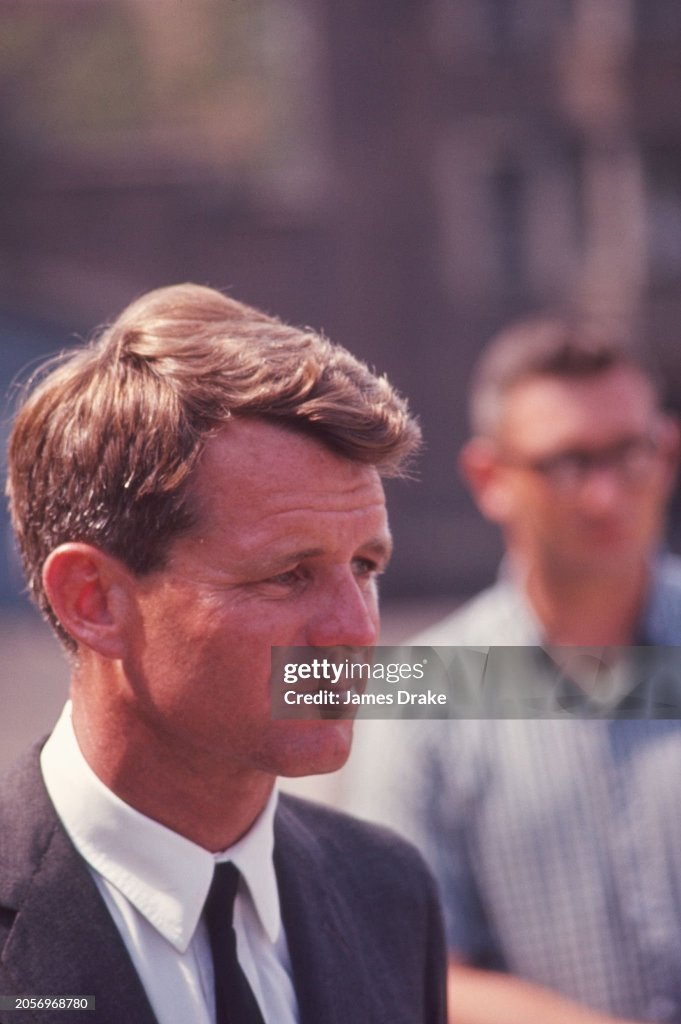
Adlai E. Stevenson endorsed Attorney General Robert F. Kennedy for the Senate last night, describing him as “the strongest available Democratic candidate.” Mr. Stevenson’s declaration followed by only a few hours the Attorney General’s resignation from the Massachusetts delegation to the Democratic National Convention, which opens tonight in Atlantic City. Mr. Kennedy, who will almost certainly be nominated for the Senate at the New York State Democratic convention here September 1, took this step to make less conspicuous the fact that he votes in Massachusetts and lives in McLean, Virginia. It was authoritatively reported yesterday that the Attorney General would announce his candidacy tomorrow morning at Gracie Mansion. Mayor Wagner will come here briefly from Atlantic City for the announcement ceremony.
Some top state Republican leaders threatened yesterday to withdraw their support of the Goldwater‐Miller Presidential ticket if Mrs. Clare Boothe Luce persisted in her determination to oppose Senator Kenneth B. Keating for re‐election. Mrs. Luce, former diplomat and Republican Congresswoman from Connecticut, announced Saturday that she would accept the Conservative party’s nomination to oppose Senator Keating “if it is offered to me.” The threat by top moderate Republicans not to support the Goldwater-Miller ticket unless Mrs. Luce got out of the race amounted to an open declaration of war against the young but aggressive Conservative party. It also presented Senator Barry Goldwater with his most serious challenge in his efforts in New York to achieve unity among Republican factions.
Senator Barry Goldwater criticized President Johnson’s farm program as “based on increased government intervention” and outlined his own proposals.
The White House issued new figures about government thrift and national economy which showed further federal savings and a rising American living standard.
Concentrations of insecticides set out in Houston to control an epidemic of sleeping sickness which has claimed 14 lives were washed out by heavy rains.
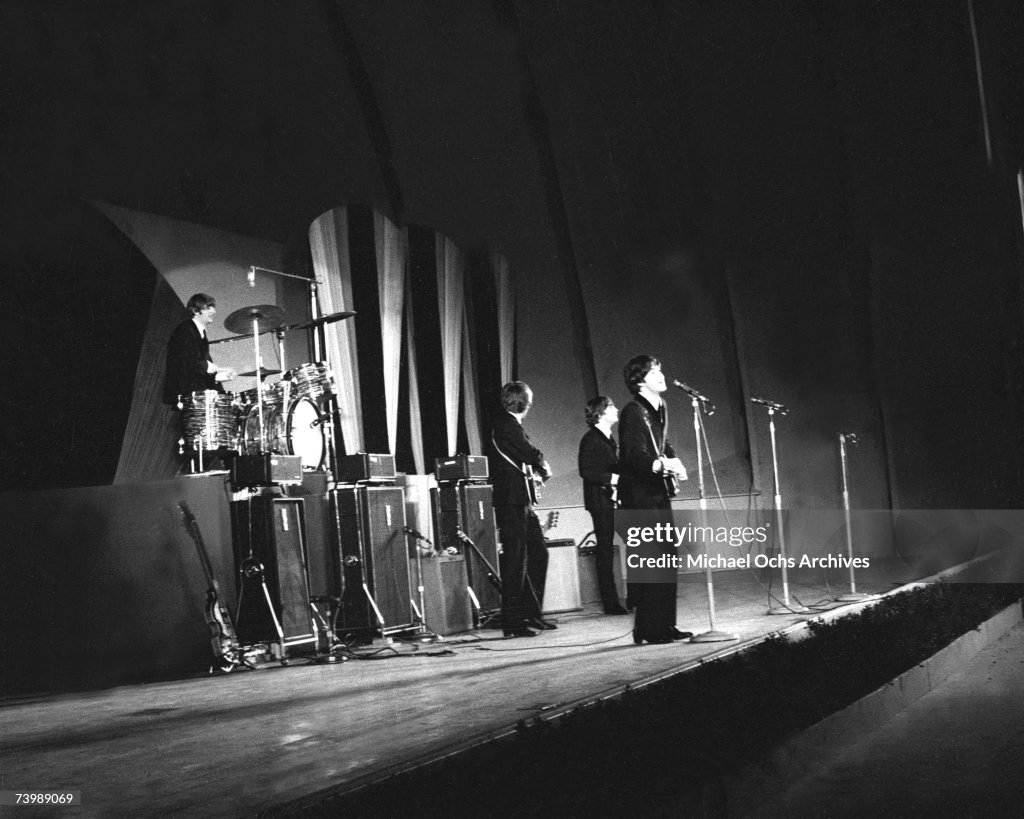
The Beatles performed at the Hollywood Bowl in Los Angeles, California, one of the two concerts that were compiled as the live album The Beatles at the Hollywood Bowl.
Abraham and Isaac, an orchestral ballad composed by Igor Stravinsky, was performed for the public for the first time, with a concert at the Binyanei HaUmmah in Jerusalem. Stravinsky, who had composed the work on commission from the Israel Festival Committee, wrote the original lyrics in Hebrew.
The Chicago Bears obtained running back Jon Arnett from the Los Angeles Rams in a trade for guard Roger Davis and two rookies.
The New York Yankees top the host Boston Red Sox, 4–3, as Mantle starts the scoring with a 2-run homer in the 3rd inning off Earl Wilson. The homer by Mickey Mantle, two scoring flies by John Blanchard, and sufficiently tight pitching for nine innings by Jim Bouton enabled the New York Yankees today to close their unhappy road trip with a victory. They headed home in third place, five games behind the American League‐leading Baltimore Orioles. The Yankees have 39 games left. New York will win 26 of their next 33 games.
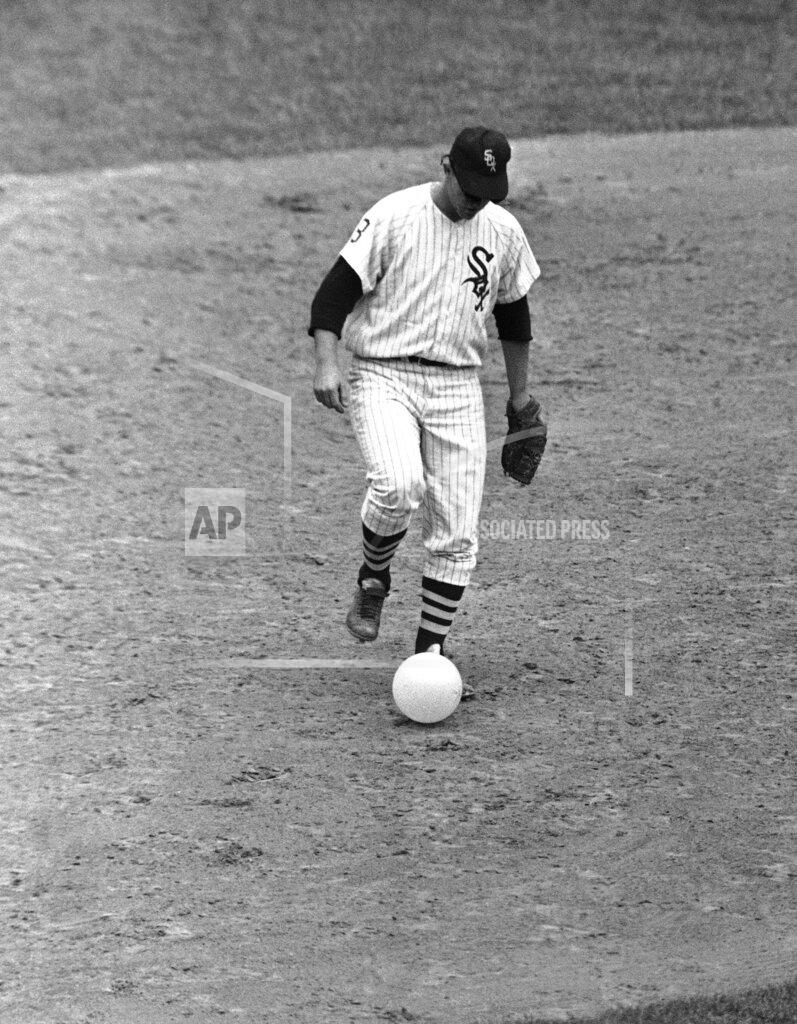
The Baltimore Orioles maintained their 1½‐game lead in the American League pennant race today by splitting a doubleheader with the Chicago White Sox. The Orioles whipped the second‐place White Sox, 7–3; before Chicago salvaged the final game, of the four‐game series with a 3–1 victory. The White Sox, who had entered the series with a halfgame lead, won the finale behind Gary Peters’s seven‐hit pitching and a three‐run seventh inning. Baltimore’s starter, Steve Barber, had allowed only two hits over the first six innings. Wally Bunker hurled a sixhitter in the first game for his 13th triumph against three losses. The Orioles scored four runs in the fifth, Earl Robinson singling in a pair.
The Minnesota Twins and Detroit Tigers split, with Minnesota coming from behind to win game 1, 6–5, on Don Mincher’s grand slam in the 8th. Detroit takes game 2 by a 5–2 score on a pair of homers by Bill Freehan and a two-run home run by Gates Brown. Hank Aguirre went all the way for Detroit in the second game, picking up his third triumph of the season and his first since July 1. He has lost seven.
Cleveland scored three unearned çuns in the third inning, two of them on John Romano’s single, and defeated the Los Angeles Angels, 3–2, to sweep a double‐header today. The Indians won the opener, 6–4, behind Luis Tiant’s six‐hitter. The double victory gave the Indians four straight over the Angels. Jack Kralick got credit for the triumph in the second game. It was his first victory since July 10 and raised his won‐lost record to 10–4. Tiant, a 23‐year‐old rookie right‐hander, survived a shaky fifth inning in which he yielded consecutive homers to Lenny Green and Jim Fregosi.
The Washington Senators downed the Kansas City Athletics, 8–5, today after the A’s had won the opener of a doubleheader, 3–1. Willie Kirkland hit a two‐run single in the fourth inning of the finale as the five‐run inning put Washington ahead, 6–0. In the seventh, after the Athletics had reduced the lead to 6–5, Kirkland hit a bases-empty homer. In the opener, John Wyatt relieved Diego Segui in the ninth with Senators on second and third, and struck out two pinch‐hitters, Don Zimmer and Chuck Hinton. Bill Bryan’s 11th homer and two doubles led the A’s.
The first-place Philadelphia Phillies rout the Pittsburgh Pirates, 9–3, on Dick Allen’s 4 RBIs. A pair of home runs by Richie Allen and one by Gus Triandos helped Jim Bunning gain his 14th victory of the season. Bunning was shaky at the start, walking Bill Virdon before Roberto Clemente slammed a home run off the light tower in right. Bunning settled down after that, however, and checked the Pirates with the exception of a seventh‐inning home run by Donn Clendenon. Bunning, who has lost four games, apparently tired in the 91‐degree heat and was relieved by John Boozer at the start of the eighth. Allen tied the score in the third off the Pirate starter and loser, Joe Gibbon, with his 22nd home run. It drove in Cookie Rojas, who had singled. In the fourth, Tony Taylor doubled and Triandos followed with a home run onto the roof of the left‐field stand. The Phillies routed Gibbon in the fifth with a three‐run surge on five hits, including Allen’s 23rd homer. Four singles and a bases‐filled walk accounted for two of the runs.
The Houston Astros’ Don Larsen, of World Series no-hit fame, tosses a five-hitter in the Texas heat to best Warren Spahn and the Milwaukee Braves, 7–1. It is Larsen’s first complete game in five years. It was only Larsen’s third start of the season, and he had gone only seven innings in each of the two previous games. He walked two and fanned one and allowed the Braves’ lone run in the ninth on a double by Lee Maye and Ed Mathews’s single. Bob Aspromonte and Walt Bond launch solo bombs to pace the Colts. Rookie catcher Jerry Grote adds two hits, including a two-run double.
New York Mets pitcher Willard Hunter picks up half his career wins (4) today as New York sweeps the Chicago Cubs, 2–1, in 10 innings, and 5–4 in the nightcap. No one has ever won a pair more efficiently as he totals 1⅔ innings of work. He faced only two batters in the opener and three in the finale. Bob Buhl and Don Elston pick up losses. A delighted Banner Day crowd of 27,008 watched on a Warm, sticky afternoon as Ed Kranepool broke up the opener with a bases‐filled single in the 10th. Charlie Smith broke up the second game with a bases‐filled single in the ninth. The result left the Mets with seven victories in their last eight games a most unusual circumstance. The Cubs lose Ernie Broglio, who woke up with a locked elbow and will need surgery to repair the ulnar lateral ligament damage in his elbow. He’ll be 1–6 in 1965.
At San Francisco, the Giants edge the St. Louis Cardinals, 3–2, as Jesus Alou raced home from third base with the winning run on Dal Maxvill’s error in the 10th inning. Lou Brock tied the game in the St. Louis eighth with a homer to right-center. The Giants are tied with the Reds for 2nd place, with the Cardinals (65–58) in 4th place. St Louis Cardinals are 11 games back in the NL; they go on to win the Baseball World Series, 4-3 vs. the New York Yankees.
Phil Ortega, who had not completed a game in more than three months, pitched a three‐hitter for the Los Angeles Dodgers, today as the Dodgers beat the Cincinnati Reds, 1–0. The defeat ended the Reds’ winning streak at six games. It was the fourth victory for Los Angeles in 18 games with the Reds this season. Ortega, whose won‐lost record is 6–5, hurled his third shutout. He struck out eight and walked four and did not permit a Red past second base.
Born:
Ray Ferraro, Canadian NHL centre (NHL All-Star, 1992; Hartford Whalers, New York Islanders, New York Rangers, Los Angeles Kings, Atlanta Thrashers, St. Louis Blues) and broadcaster (TSN Radio, TSN, NBCSN), in Trail, British Columbia, Canada.
Jeff Manto, MLB third baseman and first baseman (Cleveland Indians, Philadelphia Phillies, Baltimore Orioles, Boston Red Sox, Detroit Tigers, New York Yankees, Colorado Rockies), in Bristol, Pennsylvania.
Steve Holloway, NFL tight end (Tampa Bay Buccaneers), in Montgomery, Alabama.
Kong Hee, Singaporean pastor and founder of the City Harvest Church who was later convicted for the embezzlement of $50 million (USD) of church funds and the subsequent coverup; in Singapore.
Died:
Estella Canziani, 87, British travel writer, folklorist and painter

 History Diaries