Premier Bulent Ecevit said that Turkey could compensate for any weaknesses in the United States defenses in the Mediterranean caused by Greece’s military withdrawal from the North Atlantic Treaty Organization. He said in an interview that “even though Greek withdrawal from the military structure of NATO would inevitably cause some damage to the eastern flank of NATO, I think we would be in a position to compensate this to a large extent.” He suggested that a new and improved relationship between the United States and Turkey, based on mutual confidence, had developed out of the Cyprus crisis.
Asked whether Turkey would provide port facilities for the United States Sixth Fleet if the facilities in Greece were withdrawn, Mr. Ecevit replied: “I don’t want to go into details in that direction because I might sound as If I were trying to take something away from under the feet of the Greeks, but I have indicated enough by saying that we should be able to compensate for any weakness that ensues as a result of Greek withdrawal.” At present Turkey’s air force and most of the 500,000‐man army are included in North Atlantic defense plans, but the navy is not. Military sources indicated that the navy would like to be included.
The civilian leaders of the Greek Cypriote and the Turkish Cypriote administrations in Cyprus agreed to meet each other for the first time since the Turkish army gained control of 40 percent of the island. The meeting is expected to take place next week, after the scheduled visit to Cyprus of Secretary General Waldheim of the United Nations. Glafkos Clerides, the acting President of Cyprus and leader of the island’s Greek majority, and Rauf Denktash, the Vice President of Cyprus and head of the Turkish administration here, said they wanted to discuss the country’s severe problems. The meeting is expected next week, after the scheduled visit to the island of Secretary. General Waldheim of the United Nations.
Since the breakdown of Cyprus negotiations in Geneva last week and the second offensive by the invading Turkish Army, Mr. Clerides has stayed in the Greek sector of this capital. Mr. Denktash is remaining on the Turkish side. Mr. Clerides has been publicly nudging Mr. Denktash to meet him to discuss “humanitarian” problems, such as refugees. Mr. Denktash has replied that he is handling such problems well enough without consultations with the Greek side. Diplomats here view the parrying as tactics designed to gain a slight initiative in the resumption of formal contacts between the two Cypriote administrations. The diplomats said that while the talks would improve the atmosphere on this embittered island, final policy decisions on the political future of Cyprus would be controlled by Turkey and Greece.
The Soviet Union today called for an international conference under the auspices of the United Nations to deal with the problem of Cyprus. In an official statement, the Government proposed that such a conference should include the 15 member states of the Security Council of the United Nations as well as Cyprus, Greece and Turkey. It said other countries, particularly nonaligned states, could also be invited to participate. The Soviet Union asked for the other Security Council members to support its call, asserting that they could provide “appropriate effective guarantees” that a settlement worked out by such a conference was implemented. The statement, which was circulated by the official press agency, Tass, did not indicate whether such a conference should take place within the formal structure of the Security Council or, otherwise, where or how it could be held.
The 25-nation disarmament conference concluded its 17-week 1974 session in Geneva widely split on the main issues of banning underground nuclear tests and chemical weapons. The only agreement during the talks, which included spring and summer meetings, was to enlarge the conference to 30 nations next year. New members will be East and West Germany plus neutrals Iran, Peru and Zaire.
Rumania, the independent‐minded member of the Soviet bloc, apparently took a long step toward better relations with Moscow tonight with a statement by. President Nicolae Ceaușescu that the Soviet Union ranked first in his country’s foreign relations. The remark was one of many Mr. Ceaușescu made in praise of the Soviet Union during a two‐hour‐and‐twenty‐minute speech commemorating the 30th anniversary of Rumania’s liberation from Axis role. With Mr. Ceaușescu on the platform facing an audience of thousands were the Soviet Premier, Aleksei N. Kosygin, and one of China’s five Deputy Premiers, Li Hsien‐nien. Mr. Li seemed to be annoyed by many of President Ceaușescu’s remarks, and abstained from applause at many points during the speech.
France will soon announce plans to ration supplies of home heating oil this winter, but does not at present envisage similar curbs for industry, a Government spokesman said today. His remarks followed speculation that the relative failure of Government efforts to encourage voluntary oil saving had increased the likelihood of widespread rationing.
For the first time, the International Monetary Fund (IMF) provided crude oil from its own storage facility to give aid to a developing country.
The United States has received an intelligence report that Arab governments are offering Portugal an undisclosed sum of money — unofficial reports put it at $400 million — to deny the use of the Azores islands for military bases, the State Department said. Department spokesman Robert Anderson said he could give no further details. The United States used its base at Lajes in the Azores to refuel aircraft carrying military supplies to Israel during last October’s Middle East war.
Israeli security forces have jailed hundreds of Arabs from the occupied West Bank of Jordan in the last six months in an effort to counter an upsurge in terrorism and to break a new resistance movement that has come to the surface since the Arab‐Israeli war last October. The new movement, known as the Palestinian National Front, is regarded as the first serious resistance organization to be formed in the West Bank territory since it was occupied by Israel in the 1967 war. Its core, according to Israeli officials, is the Jordanian Communist party, which was outlawed by King. Hussein and only recently has emerged as an active pro‐Palestinian organization. A total of 896 West Bank Arabs have been rounded up on security charges and are being held in prisons in the occupied territory and in Israel, according to government, officials. Of the total, 549 have been tried and are serving sentences; 314 are awaiting trial and 33 are being held under administrative detention.
Press attacks against Ethiopia’s Emperor Haile Selassie reached a new peak with an article in a weekly newspaper saying he has been squandering the nation’s money on lavish journeys abroad. The writer, who works for the government news agency, said in the publication Ethiopia that there was no need for a monarch and that such a personage is against the interests of the people. The Armed Forces Committee, which is in control of the country, apparently is allowing current attacks against the emperor.
The government of India ratified the nation’s National Policy for Children to reduce poverty, with the objective of guaranteeing that “all children in the state get the necessary prenatal, postnatal and developmental care to ensure optimal health”, to be accomplished by a comprehensive health program, funding for nutrition for women and children, free education for all children up to age 14, and prevention of the exploitation of child labor.
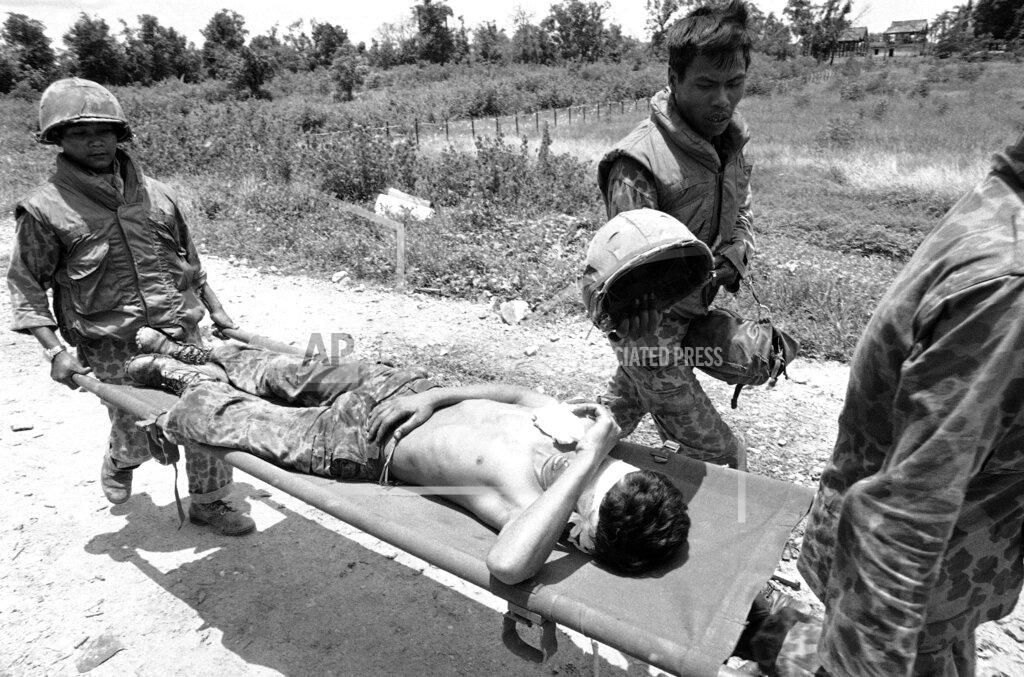
Communist forces overran another post guarding Tây Ninh, a city of 67,000 located 60 miles northwest of Saigon, and government commanders ordered infantry and armor reinforcements to the beleaguered provincial capital. Officers said a 10-minute ground assault captured Lâm Bưu Lâm outpost, less than eight miles west of the city, and that half the 100-man garrison was missing. Communist forces surround Tây Ninh, but have left open the highway linking the city with Saigon, field officers said.
President Park Chung Hee of Korea lifted two politically repressive emergency decrees. One forbade all discussion, criticism and demands for revision of the Constitution. The second prohibited all dissent against the government and its policies. The President left intact two other emergency measures—one imposed on January 8 to establish secret courts‐martial and to permit arrests without warrant, and the other announced on January 14, that cut taxes for low‐income persons, raised taxes on luxury goods and increased import tariffs. He said there would be no amnesty now for opponents of the government who had been arrested and tried under the two emergency decrees.
The Cuban government of Fidel Castro and that of Panamanian strongman Omar Torrijos formally re-established diplomatic, economic and cultural relations, Havana Radio reported. Officials of both countries signed a document in Havana ending 12 years of estrangement of the Castro regime, the radio said in a broadcast monitored in Miami.
Leftist guerrillas armed with anti-tank weapons and submachine guns fired hundreds of bullets into a police station in suburban Buenos Aires and seriously wounded a patrolman before being driven off, police said. One guerrilla was carried away by his comrades and was presumed to be wounded. The dawn attack marked the second anniversary of the killing of 16 guerrilla captives at the Trelew naval base in southern Argentina. Police also reported a series of nuisance bombings against both left-wing and right-wing targets in the Buenos Aires region.
The scientific director of Brazil’s Center of Physical Research, Alfredo Marques, said yesterday that “Brazil already has the necessary conditions for building its first atomic bomb.” But Mr. Marques, speaking at an astronomy seminar, said there were other problems to be solved in making the bomb, because “a project of this nature involves rather ample questions, including the diplomatic field.” Brazil presently depends on the United States for plutonium and enriched uranium. The supplies are covered by an agreement signed with the United States Government two years ago, providing radioactive materials for Brazilian nuclear power plants for 30 years. The agreement says the United States understands Brazil will not use the atomic minerals for “explosions of any kind.”
The Sahelian desert zone of western Central Africa, stricken by a devastating six-year drought, has been hit by torrential rains that have caused floods, cut roads and isolated large pockets of people. A U.N. Food and Agriculture Organization spokesman said camels had been pressed into service to carry 5,000 tons of U.S. relief food to stranded communities. On the plus side, he said, “If the rains continue through September, we may see a reasonably good harvest.”
Leaders of the Anglican, Ranan Catholic and Methodist churches of Rhodesia have circulated a report charging members of the Rhodesian security forces with 10 cases of brutality to blacks. The document, which asserts that two persons died after having been beaten, was accompanied by a letter saying the report was being sent to “a chosen and responsible group” of community leaders because requests for an official inquiry by the white‐minority Government had gone unheeded.
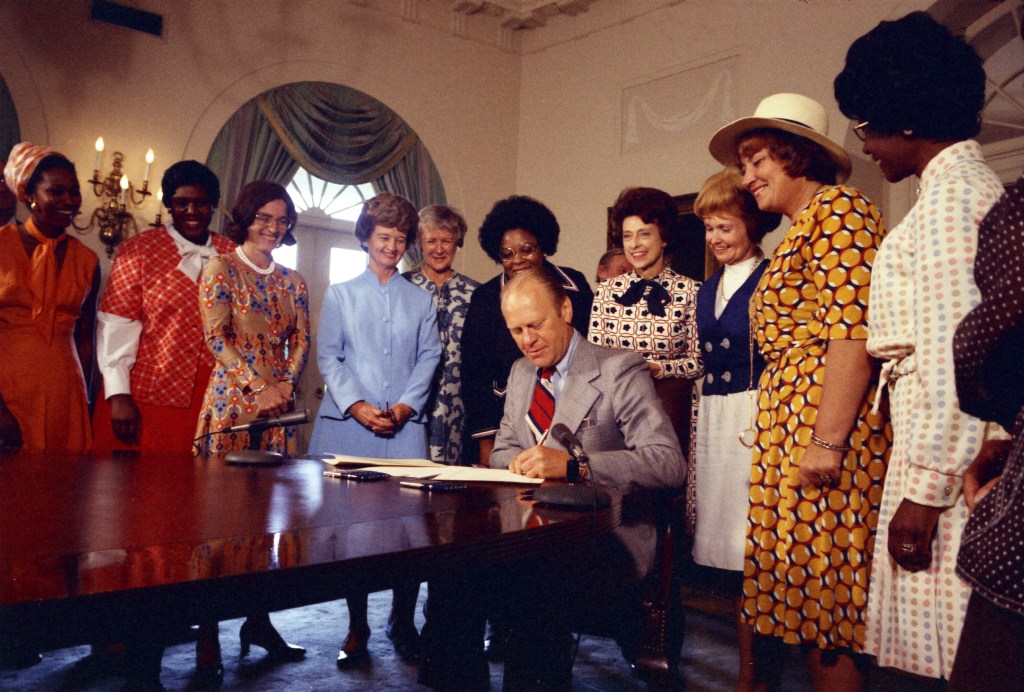
The Housing and Community Development Act of 1974 was signed into law by U.S. President Gerald Ford, after being approved in the Senate, 76 to 11, and by the House, 351 to 25. The law created the Community Development Block Grant (CDBG) for public housing authorities in the U.S. to spend on housing, public facilities, child care and economic development to fill local needs. In effect, as one historian noted, “the U.S. government got out of the construction business,” with the housing authorities being allowed to distribute Housing Choice Vouchers to low-income families and “letting the tenants shop around the private market to find an apartment of their own choosing.”.
A landmark pension reform bill that sets standards for private pension plans and is intended to protect the pension rights of 30 million employees who belong to company and union plans was approved by the Senate, 85 to 0. President Ford is expected to sign it. The bill would establish a pension benefit guarantee corporation under the Department of Labor. The pension measure is a result of three years of work by, several Congressional committees. Senator Jacob K. Javits, Republican of New York, who was one of the bill’s prime sponsors, hailed it as a “truly monumental” measure and “the greatest development in the life of the American worker since Social Security.”
The House Judiciary Committee published its final impeachment report, providing the historical, official record on which former President Nixon, had he not resigned, would have been brought to trial in the Senate. The 528-page document gives in detail the “clear and convincing evidence” on which the committee concluded that Mr. Nixon had obstructed justice in the Watergate case, had abused his presidential powers for his personal and political benefit and had defied congressional demands for information. It also sets precedents for impeachment proceedings by future Congresses. The document also contains personal statements of views by all the Judiciary Committee members except the chairman, Representative Peter W. Rodino Jr., Democrat of New Jersey.
The Republicans who voted against impeachment but who supported Mr. Nixon’s removal from office after he produced new evidence early this month declared in a signed statement that Mr. Nixon had not been “hounded from office” by his critics. Rather the Republicans stated, the former President had “imprisoned the truth about his role in the Watergate cover‐up long and so tightly within the solitude of his Oval Office that it could not be unleashed without destroying his Presidency.”
The Watergate cover-up trial, which was scheduled to start September 9, was postponed by federal Judge John Sirica to September 30 at the urging of the Court of Appeals. The postponement gives the parties to the case at least some of the additional time they said was necessary to prepare for the trial. It also gives Leon Jaworski, the Watergate special prosecutor, more time to resolve the legal status in the Watergate case of former President Nixon.
President Ford’s advisers have recommended that the Office of Management and Budget be stripped of its policy-making power, according to Secretary of the Interior Rogers C. B. Morton, one of the four advisers appointed by Mr. Ford to aid him in the transition from the Nixon administration. Mr. Morton, in remarks to reporters, indicated that Mr. Ford had approved the recommendation. He said the “Office of Management and Budget was becoming too involved in the policy development of the departments” under the Nixon administration, and consequently had “inhibited the creativity” of the departments and cabinet officers.
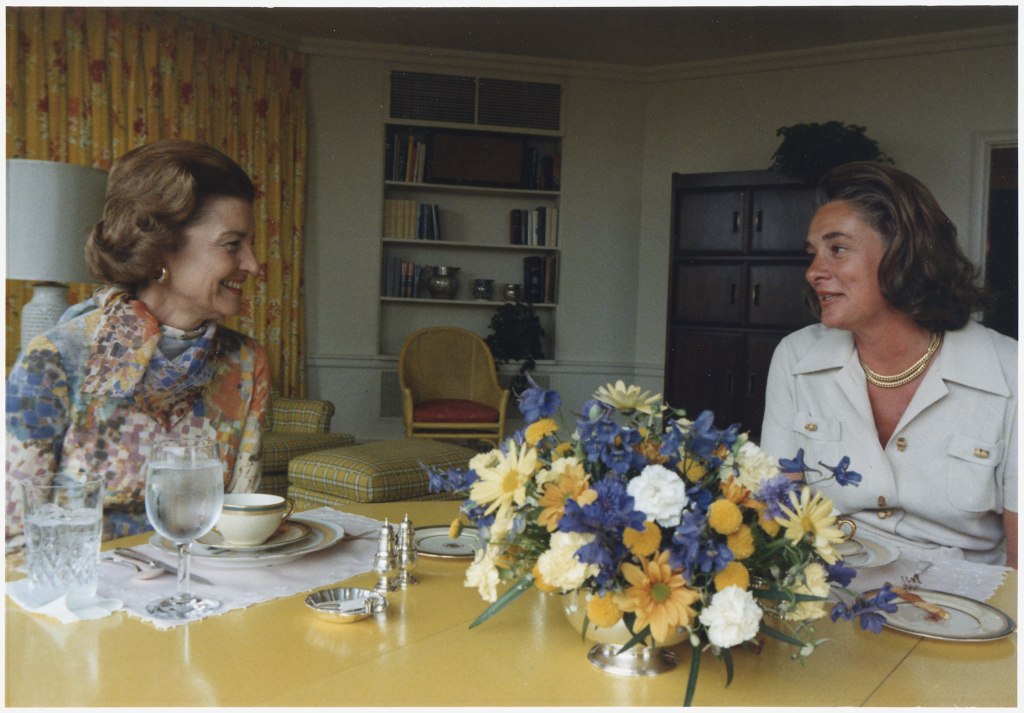
Mrs. Nelson A. Rockefeller flew to Washington in the family private plane, had lunch in the White House with First Lady Betty Ford and then flew back to Seal Harbor, Maine, to care for the couple’s two children, Nelson Jr., 10, and Mark, 7, leaving her husband to attend a White House dinner on his own. It was Happy Rockefeller’s first appearance in the nation’s capital since her husband was nominated to be Vice President. She and Mrs. Ford, who are well acquainted from past Republican Party occasions, dined in the Solarium, and the First Lady’s press secretary, Helen McCain Smith, said the two talked about “how their children’s lives would be changed.” Mrs. Ford also gave her guest full details about the Admiral’s House, the 81-year-old white brick Victorian mansion on the grounds of the Naval Observatory that Congress has designated as the new official residence for Vice Presidents.
General Creighton W. Abrams, Army chief of staff, remained in serious but stable condition at Walter Reed Army Medical Center in Washington, D.C., a hospital spokesman said. Earlier in the day doctors indicated concern that the general might have a blood clot in an artery of his remaining lung. “Although this diagnosis has not been confirmed, his current treatment addresses that possibility,” said a bulletin. Abrams, 59, entered the hospital Saturday suffering from a clot in a leg. One of his lungs was removed 11 weeks ago because it was cancerous and he seemed to be making steady progress until last Saturday.
Too much rain, last spring and drought this summer will mean an estimated $500 million in government subsidies to stricken farmers under a natural disaster clause put into new farm legislation by Congress last year. The Agriculture Department said farmers who produce wheat, corn, sorghum, barley or upland cotton might be eligible for the payments to recover some of their losses. If the loss estimate of $500 million is correct, it would boost farm subsidies this calendar year to at least $800 million, a spokesman said.
The International Longshoremen’s Association and New York shippers reached final agreement on a three-year contract effective October 1, the first time since the end of World War II a pact has been ratified without a strike. The New York Shipping Association unanimously accepted the contract after locals overwhelmingly voted for it. James J. Dickman, president of the shippers’ group, said the contract provided increases in wages and fringe benefits for 14,000 longshoremen, checkers and others in the Port of New York. Details were not available. In Baltimore, the pact was rejected, leaving the situation uncertain, but many shippers were expected to send their cargo elsewhere rather than risk facing a strike.
A spirited band of 2,000 union miners and their supporters paraded today through the narrow streets of Harlan, Kentucky without incident in the climax of “memorial week,” which has shut down most of the nation’s mines. But as the miners prepared for an overnight bus trip back to their home states, a bitter impasse remained between the United Mine Workers and the Eastover Coal Company. Meanwhile, a number of coalburning utilities voiced fear that the coal‐mining shutdown, which ends tomorrow, would add to the possibility of another fuel shortage later this year.
A team of Soviet and American archeologists said their discovery of 9,000-year-old artifacts on the Aleutian island of Arangula this summer was the “first direct link” that” the first men in North America came from Siberia. The scientists said several kinds of tool blades unearthed matched other blades previously discovered in Siberia. “With this recent expedition, we have now found all three links” that the Aleuts came to the United States via the Bering land bridge, said William Laughlin of the University of Connecticut. He named the three artifacts as “the skeleton of the Aleut who killed a whale, what he killed it with and the bones of the whale.”
The Tennessee highway patrol ruled that Wednesday’s fiery auto crash that took the life of former crime-busting Sheriff Buford Pusser was accidental. Pusser, 36, became famous as a result of the movie box office smash “Walking Tall.” It depicted his bloody battles against crime in McNair County, Tennessee, in the 1960s. “We consider this just another unfortunate highway accident,” said Captain Jerry Simmons of the crash of Pusser’s 1974 red Corvette. Pusser was thrown from the car and died of a broken neck.
What is believed to be the last male timber wolf in Michigan’s Upper Peninsula has been shot to death, delaying biologists’ hopes of establishing a wolf pack in the state. The wolf was one of four imported from Minnesota last March in an attempt to re‐establish the species on the Upper Peninsula. The other male was hit by car and the two females are reported far apart in the Upper Peninsula. Dr. L. D. Fay, a wildlife pathologist, said, “it appeared the animal had been shot several times, though, with small caliber weapon. The head shot was the coup de grace.” A $1,000 reward was offered for information about the animal’s killer.
During preliminary trials for the 1974 America’s Cup, a television helicopter crashed into Rhode Island Sound 4 miles (6.4 km) east of Point Judith, Rhode Island, killing a technician and injuring a cameraman and the pilot.
Salem (Carolina League) outfielder Alfredo Edmead is killed in a collision with a teammate during a game with Rocky Mount. The cause of death is given as a massive skull fracture.
Toby Harrah hit a three‐run homer during a five‐run Texas rally in the fourth inning that chased Jim Palmer and helped the Rangers to a 6–2 victory over the Baltimore Orioles tonight. The Rangers nicked Palmer for a run in the second on Mike Hargrove’s double and a single by Joe Lovitto. In the, fourth, Hargrove opened with a single and, one out later, Lenny Randle walked to set up Harrah’s homer. Palmer departed after Jim Sundberg’s double and Dave Nelson’s single accounted for the fourth run of the inning. Then Jeff Burroughs singled off the reliever, Doyle Alexander, for his 103d run batted in of the season. Ferguson Jenkins, trying to become a 20‐game winner for the seventh time in eight seasons, pitched seven innings and ran his won‐lost record to 18–11 for the Rangers.
Home runs by Amos Otis and Hal McRae and Paul Splittorff’s pitching led the Kansas City Royals to a 3–1 victory over the Cleveland Indians tonight. The triumph put the Royals 4½ games behind Oakland in the American League West. Vada Pinson led off the, fourth inning with a single to right field, and Otis followed with his 12th homer of the season. McRae hit his 13th leading off the ninth. Splittorff held the Indians hitless the first three innings, but he ran into some trouble in the fourth when Rico Carty singled and Charlie Spikes followed with a ground‐rule double, putting men on second and third with two out. But Splittorff got out of the inning by striking out John Ellis.
Before a crowd of 35,866, the largest in 18 years at Fenway, the Boston Red Sox turn back the Oakland A’s. 3–0. Luis Tiant wins his 20th for Boston this year. Boston (70–54) now leads the American League by 7 games.
Dow Jones Industrial Average: 704.63 (-6.96, -0.98%).
Born:
Cory Gardner, American attorney and politician (Senator-R-Colorado, 2015-2021), in Yuma, Colorado.
Melinda Page Hamilton, American actress (“Mad Men”, “Devious Maids”), in New York, New York.
Stefano Verderi, Italian guitarist (Le Vibrazioni), in Milan, Italy.
Died:
Alfredo Edmead, 17, Dominican minor league baseball player, died of a skull fracture and cerebral hemorrhage after an on-field collision with teammate Pablo Cruz while playing for the Salem Pirates in the Carolina League. Edmead remains the youngest professional baseball player ever to die on the field.
Sir Charles Wheeler KCVO CBE PRA, 82, English sculptor and president of the Royal Academy of Arts from 1956 to 1966.
Robert Wilder, 73, American novelist, playwright and screenwriter known for “Flamingo Road”.
Jacob Bronowski, 66, Polish-Jewish British mathematician, biologist and science historian, did of a heart attack.



 History Diaries