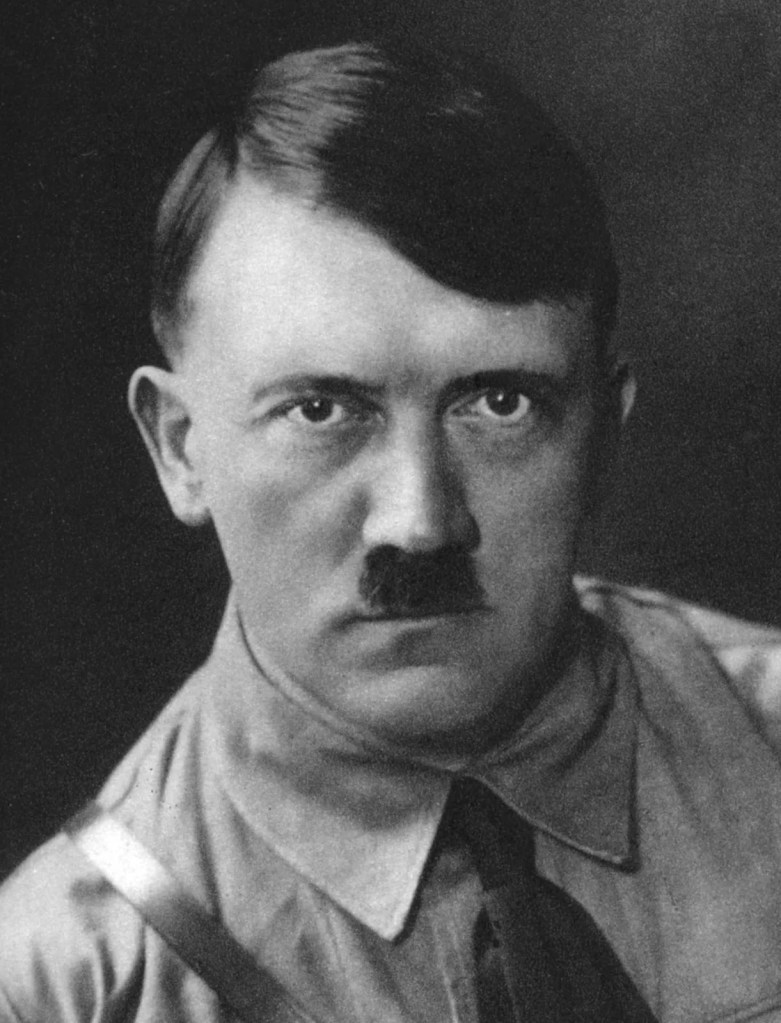
The Trade and Credit Agreement is signed between Germany and the Soviet Union. Stalin cables Hitler: “THE SOVIET GOVERNMENT HAVE INSTRUCTED ME TO INFORM YOU THAT THEY AGREE TO HERR VON RIBBENTROP’S ARRIVING IN MOSCOW ON AUGUST 23. — J STALIN.”
German Chancellor Adolf Hitler receives the telegram from Soviet Marshal Josef Stalin, acknowledging agreement on a non-aggression pact. Hitler, who was having dinner with Eva Braun and guests at the time the message arrived, responds by banging his fist on the dinner table, exclaiming “I have them! I have them!” (This is in reference to his diplomatic out-maneuvering of the British and French.)
The New York Times reports:
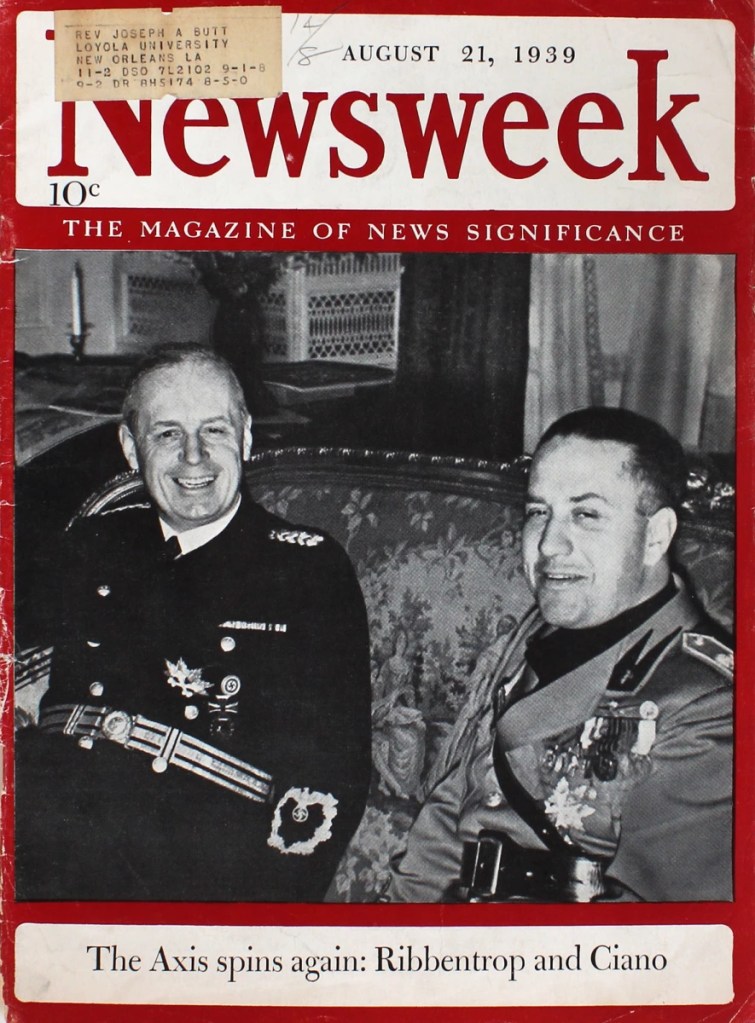
German Chancellor Adolf Hitler threw another bombshell into the camp of those trying to halt him when it was officially announced here last night that Germany and Soviet Russia had agreed to conclude a non-aggression pact and that Foreign Minister Joachim von Ribbentrop, author of the anti-Comintern pact, would arrive in Moscow Wednesday to “conclude the negotiations.” This announcement, distributed throughout Germany by extra editions of newspapers, was hailed with supreme elation as a great diplomatic victory over Britain because it was taken to mean the end of the Anglo-French-Russian alliance negotiations and the collapse of Britain’s “encirclement” policy, lifting from German minds the specter of the Russian steamroller in case of a new war.
It is still too early to judge the implications of this new coup, repeatedly predicted in these dispatches because it affects the alignment of many powers, particularly Japan. But one immediate significance revealed itself when German quarters spread the rumor that Herr Hitler was also determined to force a solution this week of the Polish-German conflict, which started over Danzig and now involves the fate of Poland and the issue of a new world war. A German solution will be sought by diplomacy if possible; if not, by the German Army.
According to usually well-informed sources, the German General Staff has orders to be ready for immediate military action by Thursday, and these, perhaps, are not unintentional revelations. This information is taken as a German warning that unless diplomacy finds a way out of the deadlock by that time Herr Hitler is determined to break the deadlock by force of arms.
Before the Russo-German non-aggression pact was announced, some circles were still inclined to regard this threat as merely another move in the “war of nerves,” and Polish circles in particular characterized it as “bluff.” But the Russian pact, which completely isolates Poland in the east and holds over her the menace of a new partition between her mighty neighbors, puts a different light on matters, and this threat is also backed up by troop concentrations on both sides of the entire German-Polish frontier.
On the German side East Prussia — where most able-bodied men up to 55 are mobilized — is virtually an armed camp. Considerable troop concentrations are also reported in Pomerania, Silesia and Slovakia. According to the best military opinion, these troops are still insufficient for an invasion of Poland, but they are rapidly being increased and preparations are being made to rush flying divisions to their aid. Some bombing squadrons and tank contingents — the latter painted black with a white cross for identification — are passing through Berlin itself, heading east, and trucks and automobiles are being concentrated at strategic points to move troops quickly. Extensive Polish troop concentrations, admitted in Warsaw, now make big headlines in the German press.
From this date, war in Europe is now inevitable.
French Prime Minister Édouard Daladier orders his representatives in Russia to speed up negotiations with the Soviet Union; since Poland will not agree to Soviet troops within its borders, the French representatives are given the authority to accept a military treaty excluding Poland. Soviet representative Kliment Voroshilov notes to the British and the French that if Poland is unwilling to allow Soviet troops to cross its borders, then there is little point for the Soviet Union to be a part of this military alliance.
The Soviet Union informed the Anglo-French mission that no military pact was possible unless Poland consented to having the Red Army pass through its territory. Since this condition was not acceptable, the negotiations were called off.
The article “On Soviet–German Relations” in the Soviet newspaper Izvestia of 21 August 1939, stated: “Following completion of the Soviet–German trade and credit agreement, there has arisen the question of improving political links between Germany and the USSR.”
Envoys in Moscow are shocked by the new ties to Germany. The British and French military are expected to leave after failing to achieve an alliance. The news was met with utter shock and surprise by government leaders and media worldwide, most of whom were aware of only the British–French–Soviet negotiations, which had taken place for months; by Germany’s allies, notably Japan; by the Comintern and foreign Communist parties; and Jewish communities all around the world.
London staggers under the blow of a Nazi-Soviet pact. The British face a crisis of Reich domination in Europe. The deadliest high explosives could not have caused more damage in London than the news late tonight that the Nazi and Soviet Governments had agreed on a non-aggression pact behind the backs of the British and French military missions in Moscow. Anger and stupefaction were the first reactions in London. They were all the more intense because neither of the Western governments appeared to have had any inkling of what was impending. It will take some time for the smoke to clear away, but when it does the diplomatic picture may well be changed beyond all recognition.
First impressions were that the Russian-German pact would complete the encirclement of Poland by showing that Russian help would not be forthcoming in the event of invasion and that it would make continuance of the three-power talks in Moscow difficult if not impossible. Moreover, the news conjured up the specter, always dreaded in this country, of Germany and Russia, as allies, dividing the Baltic States and Eastern Europe between them.
Such speculation may prove to be too highly colored, but there could be no doubt tonight that Britain had suffered a humiliation of the first order and that German diplomacy had won one of its biggest triumphs. It remains to be seen how the anti-aggression “front” will survive this bombshell, especially in view of Russia’s close relations with Turkey and her long frontier with Rumania. Prime Minister Chamberlain and his Ministerial colleagues will feel the full shock of the news from Berlin when they meet tomorrow afternoon in a full-fledged Cabinet meeting originally intended to cope with the danger of a German invasion of Poland. All day today, there had been signs of a swiftly developing crisis, with ominous reports from Berlin, Prague, Vienna, Bratislava, and other cities of vast numbers of German troops on the move eastward.
It had been intended that after the Cabinet meeting Viscount Halifax, the Foreign Secretary, might make a statement over the radio repeating once more and in most detailed terms that Britain would fight in fulfillment of her pledges whenever the Poles felt that their independence was threatened. The general idea was not only to repeat the explicit terms of the British guarantee but also to recall Mr. Chamberlain’s warning of last year that Britain would fight any attempt to “dominate Europe by force.”
It was not known tonight whether this speech would be made or whether its contents would be altered because of the German-Soviet development. Certainly the British feel that the ground has been cut from under their feet, but still more from under the Poles. Unofficially it is thought here that the Poles may yield quickly now without any “pressure” from anyone or anything except the force of the sudden event that has made their position untenable.
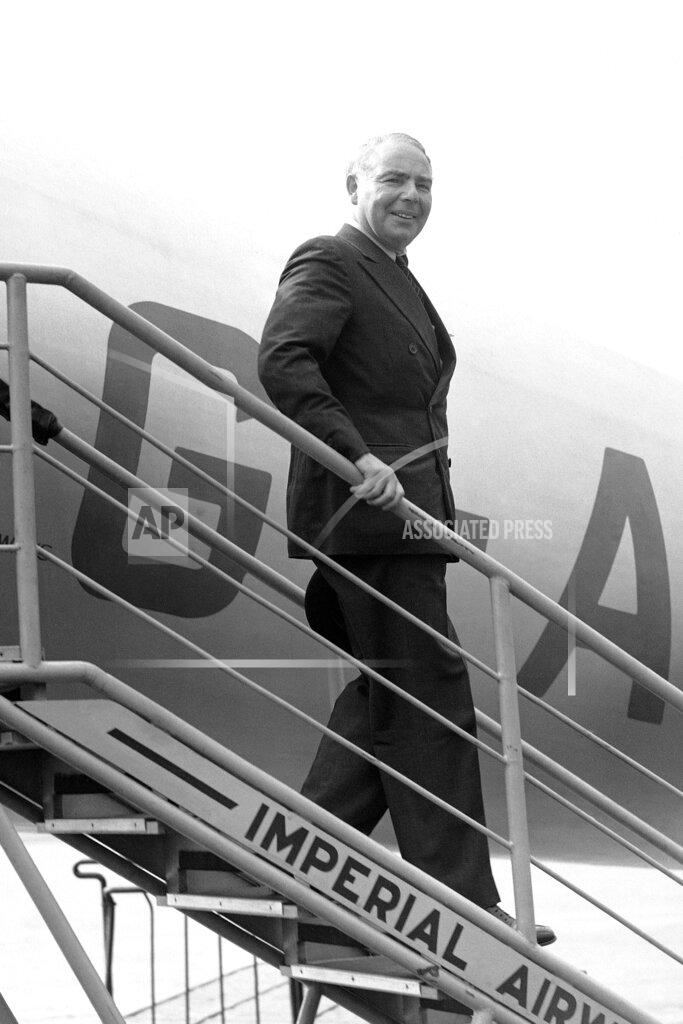
Neville Chamberlain arrives in London, having travelled overnight from Scotland.
Paris is skeptical of the Russian treaty. France is in a nonaggression pact with Germany, but it would not bar aid to Poles.
Reports that Germany and the Soviet Union will sign a non-aggression pact hit Rome tonight as a tremendous surprise. Officials, apparently taken as much unawares as the man in the street, offered no comment.
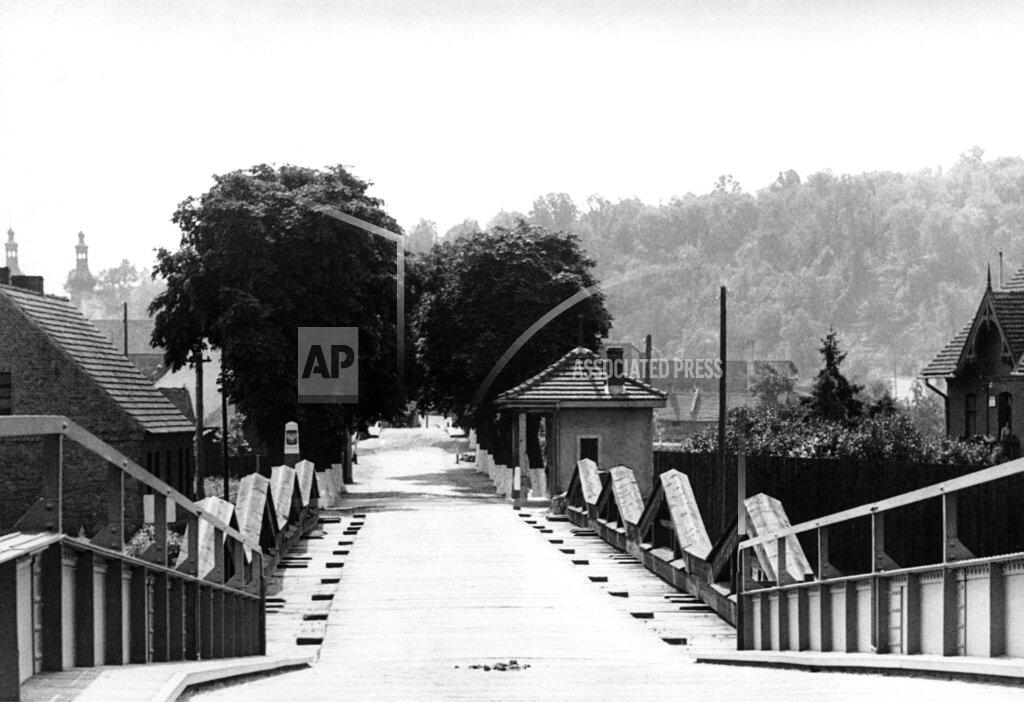
Reich troops jam the roads to Poland. The border bristles with guns and ambulances ready for action. Four of Germany’s famous motorized “super guns” and an attendant ammunition train rolled through Gleiwitz at 2:50 AM. Each sixteen-foot, 10-inch caliber barrel was carried on three sets of trucks and the ground and firing mechanism on three other sets of trucks drawn before them. From the direction of the railroad station the half-mile column approached and disappeared into the dark, headed toward this city’s military garrison. The Polish border lies within two miles of these barracks. The group going through the town this morning is the second artillery section to be seen here within the last week. The other, heavy mortars, took the same route at 3:45 PM yesterday.
Following the heavy pieces, the short muzzles of anti-aircraft machine-guns jutted above the helmeted heads of soldiers. Twenty-man motor trucks clattered rapidly through the streets on caterpillar treads. One was entirely filled with hawsers and inch-thick towing ropes. Another carried iron strips suitable for tracks. for wide-tread motor carriages. Many trucks carried square boxes covered with tar paper, there were also some rolling field kitchens. Ambulances criss-crossed Gleiwitz streets this afternoon. Besides the regular army ambulances, civilian and Red Cross units were observed.
The Hungarian foreign minister, Count Stephen Csáky, denies pressure on Hungary and asserts its independence is essential for balance in Europe.
Belgium summons a neutrals’ parley. Seven small nations are to discuss security; a mediation idea is denied. In a move to insure the neutrality of small nations bordering or near Germany in the event of the outbreak of war, the Belgian Cabinet, in an emergency council this morning, sent urgent invitations to six Baltic and North Sea nations asking them to send delegates to a meeting here Wednesday to discuss ways and means of obtaining food and raw materials.
The announcement in Berlin tonight that Germany and the Soviet Union would sign a non-aggression pact Wednesday caused little surprise in U.S. State Department circles in Washington, D.C.
The United States declares peace with honor as its aim. Disturbed conditions in Europe and in the Far East have increased the determination of the United States to remain neutral, provided “we can preserve peace with honor,” Louis Johnson, Acting Secretary of War, declared tonight in a radio address.
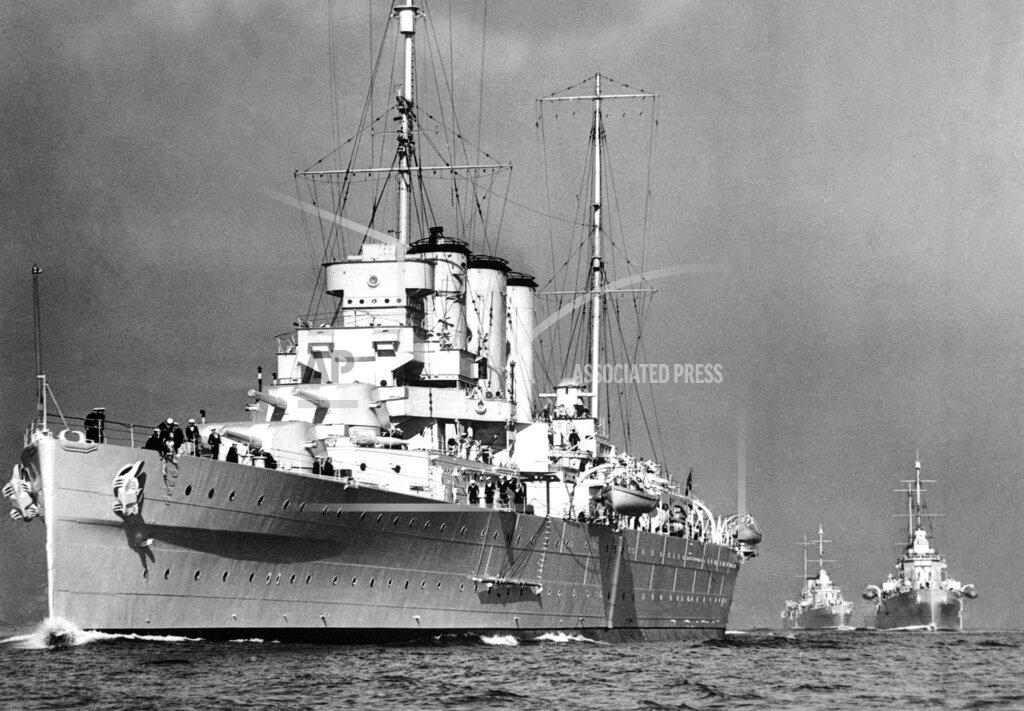
Fog shrouding the Nova Scotia coast kept President Roosevelt, aboard the cruiser USS Tuscaloosa, in Halifax Harbor tonight after a visit to pick up mail forwarded to Halifax from the White House.
American manufacturers have pushed the production of high-speed airplane motors to meet urgent French military needs to 400 a month and are trying to step up their output even more as the danger of war in Europe threatens to halt shipments under the Neutrality Act.
The American Civil Liberties Union in a statement declared as “false” the linking of the union to the Communist party as a “front” organization in remarks by Representative Dies, chairman of House Committee on Un-American Activities, quoted in a news dispatch from Washington Sunday.
In a telegram to Mr. Dies, Arthur Garfield Hays, general counsel of the Civil Liberties Union, said: “The press today reports that you have identified the American Civil Liberties Union as an agent of the Communist party and requested the Department of Justice to criminally prosecute the union for failure to register as an agent of foreign interest. We demand an immediate, unequivocal public retraction of this false charge. We challenge you to produce any of the evidence you claim to have of the union’s foreign or political connections and to give us an opportunity to appear before your committee to refute these charges. Our record of twenty years’ work in defense of the Bill of Rights, sponsored by men and women prominent in American life, should satisfy any honest investigator. But your investigation has from the beginning been conducted in an unjudicial and unprincipled manner.”
New York Mayor La Guardia announced shortly after 1 o’clock this morning, after nearly ten hours of conferences, that a “formula for an agreement” in the week-old milk strike had been reached and would become effective if the acceptance of three-quarters of the striking members of the Dairy Farmers Union could be obtained.
Sentences of not less than ten and not more than fifteen years in State’s prison were imposed tonight in Waterbury, Connecticut by Judge Ernest A. Inglis on T. Frank Hayes, Mayor and former Lieutenant Governor, and Daniel J. Leary, former City Controller, for their parts in a conspiracy to defraud the city of Waterbury of more than $1,000,000 from 1930 through 1937.
A fire engine responding to a false alarm and a Washington-bound Greyhound bus from New York crashed early today on Roosevelt Boulevard in Philadelphia , with injury to twenty-nine persons. Five remained at Frankford Hospital.
The last trolley cars are scheduled to disappear soon from Manhattan and the Bronx, according to a plan disclosed yesterday by New York Mayor La Guardia. As the trolley cars are eliminated they will be replaced by buses.
Attorney Samuel Tucker organizes a peaceful sit-in at the public library in Alexandria, Virginia, in effort to grant Black patrons equal access; five young men are arrested for disorderly conduct – no trial is ever held and charges officially dropped 80 years later, and community builds a separate facility nearby.
Another Huey Long leader was indicted today by a Federal grand jury in New Orleans. Abe Shushan, chief of the Levee Board, was accused of using the mails to defraud.
With no one aboard but a mechanic who was testing her engine, the American fishing vessel Wanda caught fire while tied to a dock at Dayville, Territory of Alaska, when the engine sparked and ignited gasoline in the bilge. The mechanic escaped. When people on the scene could not extinguish the fire, Wanda was towed to a beach across from a local cannery, where the fire completely destroyed her.
Charlie Chaplin delayed production on his new film, tentatively called “The Dictators,” due to the uncertainty of the situation in Europe.
The Brooklyn Dodgers amass fourteen hits in routing the St. Louis Cardinals, 7–1. Luke “Hot Potato” Hamlin wins his 15th game of the year as he snaps the Cardinals’ seven-game winning streak.
Cincinnati’s desperate Reds, smarting under yesterday’s double defeat by St. Louis, revamped their line-up and slapped two pitchers for nine hits and a 7–0 victory over the Philadelphia Phillies behind Rookie John Niggeling’s airtight pitching today.
The Chicago Cubs edge the New York Giants, 4–3. The Giants managed to get the tying and winning runs to second and third with two outs in the ninth inning, but a ground out by Billy Jurges ended the game. Larry French struck out six for the Cubs and got the win.
The British cargo ship Sire ran aground in the Saint Lawrence River, two nautical miles (3.7 km) upstream of the Cape Maillard Buoy. She was refloated later that day.
The Tientsin flood continues to rise. It may reach its crest, but observers note interior rains. Swirling waters rose rapidly in the Tientsin area tonight as this North China city of 1,300,000 population lay virtually prostrated under its worst flood disaster in history.
The incident precipitated at Tientsin when a Japanese sentry slapped Mrs. Mary Frances Richard, an American citizen, is closed, Sumner Welles, Acting Secretary of State, announced today on the basis of reports received from Tientsin, Peiping and Tokyo.
The Japanese report Mongol air defeats, saying 40 planes were shot down Saturday. In fact, the Soviets under Zhukov are in the process of completing a double envelopment of the Japanese at Khalkin Gol and are about to achieve a decisive victory in the fighting there. Air combat claims on both sides were largely fantasy. Postwar records seem to indicate rough parity; both sides lost two-hundred-some aircraft.
Dow Jones Industrial Average: 132.81 (-2.30).
Born:
Clarence Williams III, American actor (“The Mod Squad”); in New York, New York (d. 2021).
Jim Beauchamp, MLB pinch hitter, first baseman, and outfielder (St. Louis Cardinals, Houston Astros, Milwaukee-Atlanta Braves, Cincinnati Reds, New York Mets), in Vinita, Oklahoma (d. 2007).
Ernie Maresca, American singer and songwriter (“Runaround Sue”; “The Wanderer”), in The Bronx, New York, New York (d. 2015).
Harold Reid, American country bass vocalist (Statler Brothers – “Bed Of Rose’s”), in Staunton, Virginia (d. 2020).
James Burton, American guitarist (Ricky Nelson; Elvis Presley; Elvis Costello), in Dubberly, Louisiana.
Festus Mogae, Third President of Botswana (1998-2008), in Serowe, Bechuanaland, Botswana.
Naval Construction:
The Royal Navy Tree-class minesweeping trawler HMS Birch (T 93) is laid down by Cook, Welton & Gemmill (Beverley, U.K.); completed by Holmes.
The Koninklijke Marine (Royal Netherlands Navy) minelayer HrMs (HNMS) Willem van der Zaan (M 08), sole ship of her class, is commissioned. Her first commanding officer is Luitenant ter Zee 1e klasse (Lt.Cdr.) Hendrik Dirk Lindner, RNN.

 History Diaries