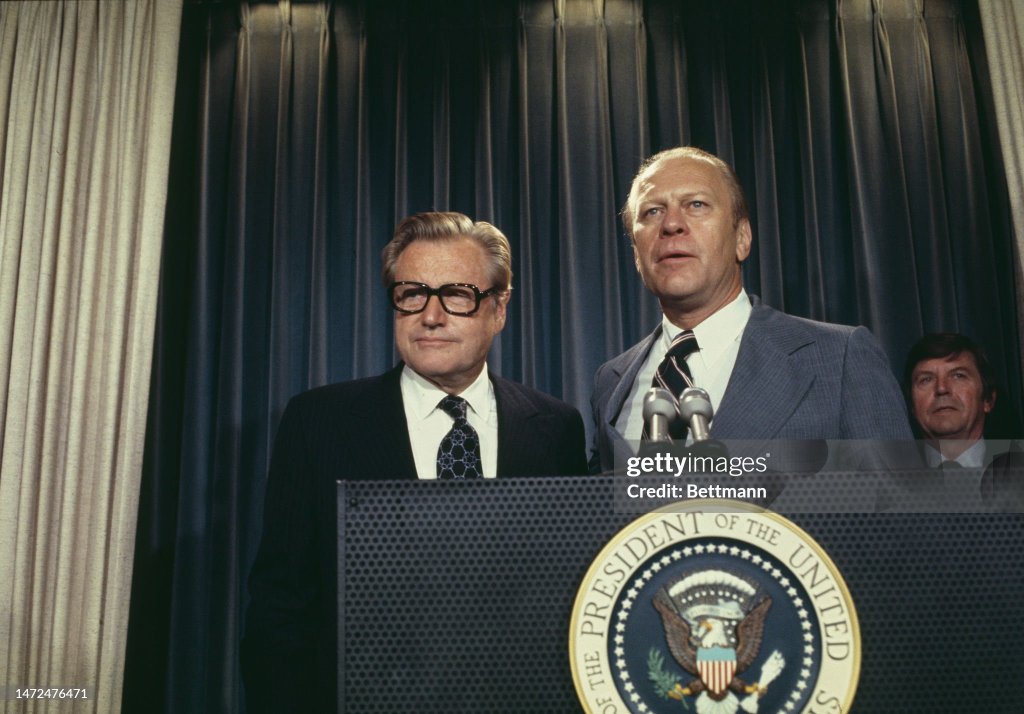
Secretary of State Kissinger said that one of President Ford’s acts in office had been to ask Soviet leaders to intensify efforts “to negotiate an effective and equitable limitation of strategic arms.” In a speech delivered to the American Legion convention in Miami Beach, he pledged without such agreements “we will maintain American strategic strength.”
The House Foreign Affairs Committee voted to cut military aid to foreign nations by $340 million but delayed until today action on a proposal to cut off military aid to Turkey. The committee, which is nearing the end of its consideration of the Administration’s foreign aid bill, approved $645 million for the military aid program to more than 40 nations.
The U.S. Senate Appropriations Committee called for a reduction of 25,000 servicemen stationed overseas, preferably in Asia. This is believed to be the first time that any of the four congressional committees that oversee the military had voted such a cut abroad. The reduction will have to be approved by both houses of Congress.
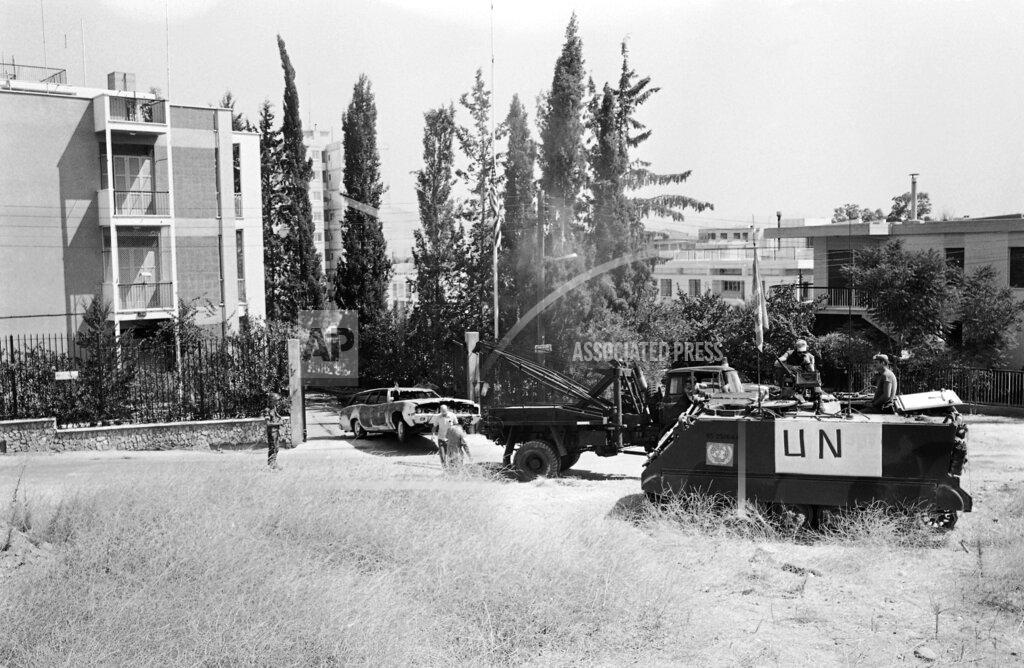
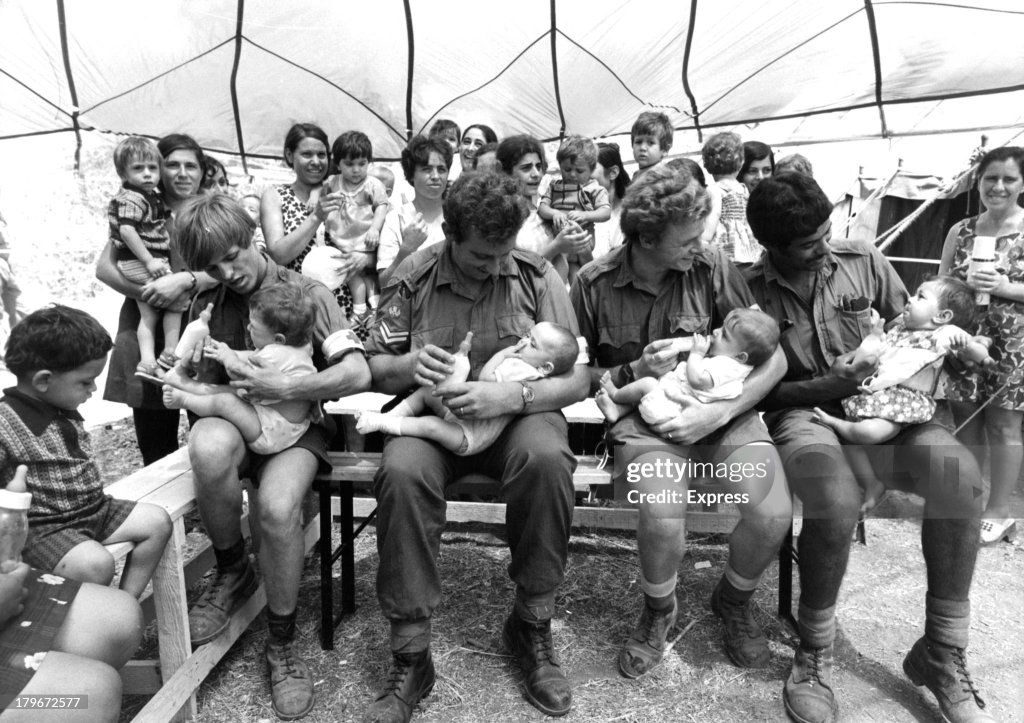
A Cyprus government announcement said warrants were issued for three unnamed persons to facilitate investigation of the killing of Ambassador Rodger Davies of the United States. Acting President Glafkos Clerides visited thousands of Cypriote Greek refugees from areas held by Turkish forces. In talking with them he emphasized that their return home was dependent on goodwill of the Turkish armed forces.
Andreas Papandreou, one of the leading figures of the Greek left, does not intend to organize large public demonstrations here, because he fears they could bring back military rule. “I am not prepared to provoke a return of the military,” Mr. Papandreou said in an interview, adding: “At the same time I am not prepared to give up any of my positions. But tactically I shall give them no opportunities to throw the burden on our camp for any change. I won’t give them that great pleasure. Seven years ago I led the demonstrations,” added the political leader. “Right now I am not looking for demonstrations; times are different.” In 1967 Mr. Papandreou campaigned for Parliament on a platform of withdrawing Greece from the North Atlantic Treaty Organization and removing American bases here. Many Greeks — and many American diplomats—felt that his methods and his goals were too extreme.
Britain’s Labor government announced plans to nationalize all the nation’s commercial seaports and place them under control of a national ports authority with power to acquire port businesses and license operations. The announcement stressed that no firm decision had been reached but said legislation was being prepared. Almost all major British ports, including London, Manchester and Liverpool, already are run by public trusts or boards. Profitable private enterprise ports like Felixstowe and Shoreham would be taken over under the new plan.
Many of the Common Market’s farmers are on the rampage again, burning crops, blocking roads and pelting manure to protest the failure of their incomes to keep pace with the cost of living. The farmers are 10 million strong and bursting with anger. Political leaders are listening to the complaints and even reacting with plans for special assistance because Europe’s farm lobby, despite the steady exodus of the rural population to the cities, remains one of its most powerful pressure groups. More than 10 percent of the civilian working population still labors do the land, compared with well under 5 percent in the United States. And most farmers in Europe work small farms where the squeeze caused by higher oil and fertilizer prices is the tightest. Droughts in the United States, which could reduce quantities and raise prices of feed grains available in Europe, are an added worry to the producers of livestock.
Spain announced that a referendum on self-determination for the Spanish Sahara would be held in the first six months of 1975. In response, Morocco, which claimed the same area, announced that they would take the issue to the International Court of Justice, and Spain would postpone the referendum in December.
Three Israeli settlements have been established in the Rafah region of the northern Sinai, an area Egypt has demanded be evacuated as a price for peace. Military radio said the armed forces’ Pioneer Youth had set up the villages, named Succot, Messora and Eshel, and that they would ultimately become collectives. No population figures were given. The broadcast said three more Pioneer Youth settlements would be set up in the same area.
Kurdish rebels fighting in the mountainous north of Iraq have killed more than 1,000 Iraqi troops, part of a major force striking toward the rebels’ headquarters, a spokesman for the Kurdistan Democratic Party said in London. The spokesman said the Iraqi offensive began Aug. 6 when infantry and armor struck toward the Ranivah district. Fighting was reported to be continuing.
Fakhruddin Ali Ahmed is elected fifth President of India. A veteran Muslim politician won election as president of predominantly Hindu India. Fakhruddin Ali Ahmed, Prime Minister Indira Gandhi’s handpicked nominee for the largely ceremonial post, defeated his opponent in a landslide that went beyond even the expectations” of the ruling Congress Party and served as a personal triumph for the prime minister.
South Vietnamese forces lost another town to a Communist push in the country’s northern and central provinces-the third in two weeks. Măng Búk, about 305 miles northeast of Saigon, was abandoned by a local defense garrison. Meanwhile, government troops reopened Highway 22, which links the capital to Tây Ninh city, 50 miles to the northwest, and waged a heavy assault to retake Đức Thông, one of the three towns recently lost to the Việt Cộng. Some 70,000 Vietnamese have fled the recent fighting, becoming refugees.
The South Korean Government announced today that President Park Chung Hee had accepted the resignation of his long‐time confidant and bodyguard, Pak Chong Gyu, who took responsibility in the assassination attempt against the President last Thursday. The President also accepted the resignation of the Home Minister, Hong Jong Chul, whose ministry includes the police assigned to protect the President. He was succeeded by Pak Kyong Won, who was shifted from the Unification Council. Pak Chong Gyu’s successor was not disclosed. The President rejected the mass resignations offered by Premier Kim Jong Pil and thp rest of his Cabinet, eight senior presidential aides, five leaders of the governing Democratic Republican party, the Ambassador to Japan and the Mayor of Seoul.
Widespread flooding of the Irrawaddy River has left more than half a million persons homeless in Burma, offical reports received in Rangoon said today. Waters from the river, swollen by monsoon rains, have left 1,826 villages submerged along its 1,000 mile banks, officials said. So far, 12 persons — six of them children — are reported to have died. Roads and rail lines have been washed away in densely populated areas of central Burma, the reports said.
With the number of refugees nearing a million, Philippine autorities expanded emergency relief operations today in the flood‐devastated central Luzon region. Latest Red Cross figures put the total number of persons in need of relief aid at, 928,121, while the death toll stood at 71 in the worst floods to hit the country in two years.
Panama announced resumption of diplomatic ties with Cuba, making it the eighth member of the Organization of American States to break with U.S. policy. Panamanian head of state General Omar Torrijos was to fly to Havana to make the act official. Ties were broken in July, 1964, at the behest of the OAS.
Latin America’s largest, fastest‐growing industrial capital, Sao Paulo, Brazil, has been stricken by a serious meningitis epidemic. Officials are reluctant to give the death toll, but knowledgeable epidemiologists estimate that 800 to 900 people have died this year in greater Sao Paulo, an area with seven million inhabitants. Eleven thousand cases have been registered in the state of São Paulo this year, and the nationwide death rate, according to the Minister of Health, Paulo de Almeida Machado, is roughly 10 percent. This is actually the fourth year of a wave of meningococcal meningitis in Sao Paulo, although the disease, which attacks the cerebrospinal system and may cause death or disability, was given wide publicity only with an upsurge last month. The first recorded outbreak began in 1945 and lasted seven years.
The White House announced today that the Ford Administration favored the repeal of an amendment that permitted the United Stales to import Rhodesian chrome in violation of United Nations sanctions. The announcement comes at critical time. The House of Representative is expected to vote tomorrow on repeal of the amendment. Congressmen involved in the repeal effort had said they thought the vote would be close, but that was before today’s White. House support. Last December, the Senate repealed the amendment by 54 to 37. The White House spokesman, J. F. terHorst, was asked at press briefing today whether President Ford’s decision was result of an oversupply of chrome in the United States.
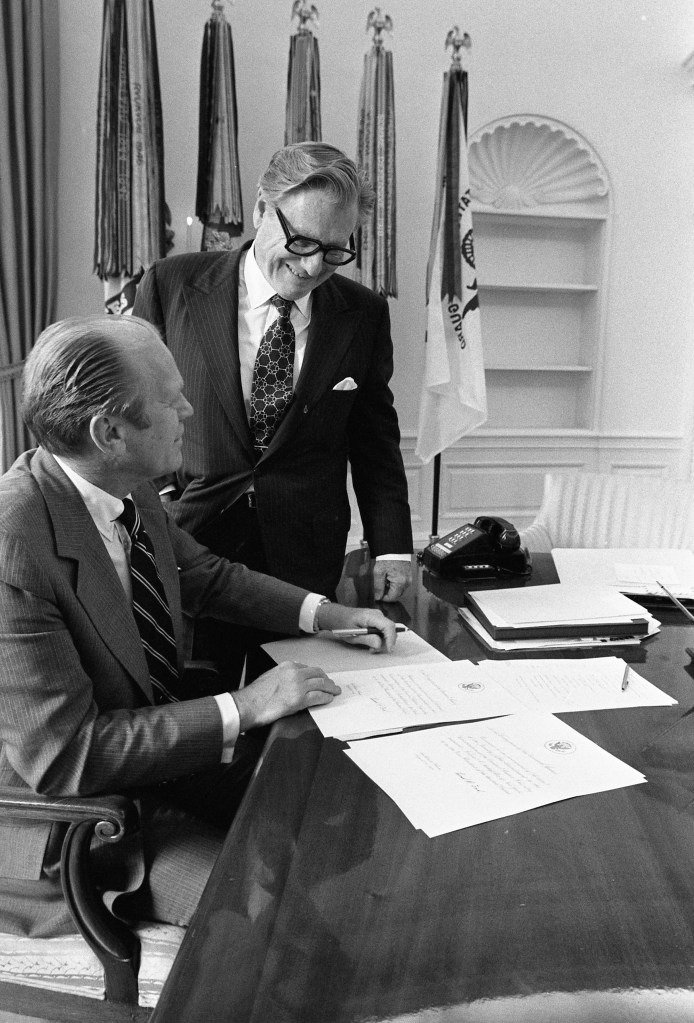
U.S. President Gerald Ford nominated Nelson Rockefeller, the former Governor of New York, to be Vice President of the United States. Rockefeller was selected despite a poll of Republican leaders showing a preference for Republican National Committee chairman George H. W. Bush. In compensation, Ford offered Bush the chance to be a major U.S. diplomat and Bush asked to be the first representative to Communist China. The U.S. Senate and the House of Representatives would confirm Rockefeller in December.
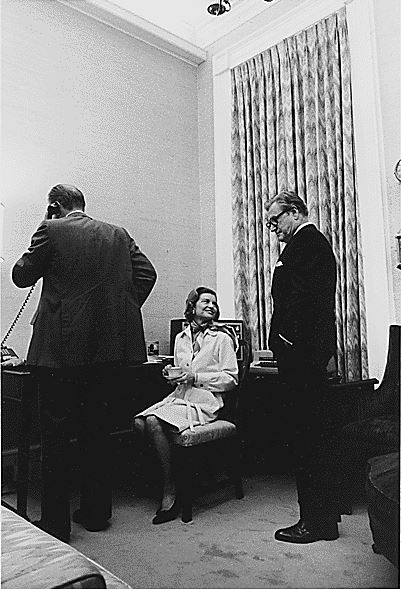
Nelson Rockefeller, 66-year-old former Governor of New York, was nominated as Vice President by President Ford, who, in a simple White House ceremony, called him “a good partner.” Aides said he had been chosen as the best-qualified Republican to “step into the presidency should that need arise.” The move also broadens Mr. Ford’s political base for the 1976 election the selection of a moderate Easterner.
President Ford’s selection of Mr. Rockefeller followed his own instincts to look for unifying balance, as well as the advice of his senior counselors such as Melvin Laird and Secretary of State Kissinger, who often disagree. In recent months Mr. Ford had been making a conscious effort to get to know him better.
The nomination won much bipartisan applause in Congress with Senate and House leaders predicting swift and easy confirmation. At the same time, Mr. Rockefeller faced intensive scrutiny of the family’s vast fortune and a full inquiry into his political and personal life. There were a few rumbles from a few liberals and conservatives.
President Ford also nominated former child actress Shirley Temple Black as United States Ambassador to Ghana.
President Ford announced after a meeting with leaders of Congress that there would be no federal mandatory wage and price controls. He said that the leaders were unanimous in believing that Congress would not approve such legislation. His brief statement evidently sought to head off price increases or wage demands made in anticipation of new controls.
A White House spokesman said President Ford would sign a $25 billion aid-to-education bill today. It was passed last month after one of the bitterest controversies of the current Congress. The bill’s provision for state and local programs became ensnarled with the emotional issue for busing school children to achieve racial desegregation. The House took a stronger stand against busing than did the Senate. But the adoption of a compromise was helped by the July Supreme Court decision striking down a controversial across-boundaries busing order in Detroit. The compromise will permit courts to order busing when needed to protect constitutional rights but not permit the reopening of old cases.
More than 200,000 letters to former President Richard M. Nixon lay unanswered in San Clemente because there is no money to pay for stationery and personnel. But help is on the way, the General Services Administration said in Washington, D.C. GSA Administrator Arthur F. Sampson said his agency was pushing for approval so that presidential transition funds could be rushed to Mr. Nixon’s office in the next few days. Federal law already authorizes $450,000 for an outgoing President to spend to wind down his affairs. But due to Mr. Nixon’s abrupt departure there has been no time to appropriate the money.
A federal appeals court in Washington, D.C., asked all parties in the Watergate coverup case to submit written arguments by noon today on whether the trial should be delayed beyond the September 9 date set by U.S. District Judge John J. Sirica. An attorney for John D. Ehrlichman, one of the six defendants, asked the court to overrule Sirica, who has rejected pleas from all sides to set a new trial date. A petition to the appeals court claimed that a prejudicial climate existed that would make a fair trial impossible at this time.
The Atomic Energy Commission released a two-year study of nuclear power plant safety, estimating the chance of mass destruction from a reactor accident as the same as the chance of a meteor striking an urban area — once in a million years. Prof. Norman Rasmussen of Massachusetts Institute of Technology, who directed the study, said the A.E.C. never influenced it. Dr. Dixy Lee Ray, the chairman, said “there is no such thing as zero risk.”
The House of Representatives accepted without debate the 200,000-word report of its Judiciary Committee recommending the impeachment of President Nixon, moot since his resignation. The vote accepting the report and commending the committee was 412 to 3.
The United States Court of Appeals in Washington ordered all parties in the Watergate cover-up trial to file by noon tomorrow their views on the postponement sought by the prosecution and four of six defendants. They had appealed the ruling of federal Judge John Sirica that the trial would begin on Sept. 9.
The Federal Energy Administration reported that 10 oil companies had repaid $103.7 million in alleged overcharges following its audit and notices of possible violations. Four other companies suspected of $90.7 million in overcharges may challenge the notices.
The House of Representatives gave overwhelming approval to a six-year mass-transportation bill. It was a major victory for President Ford, but the slashing of the fund from $20 billion to $11 billion may have doomed New York City’s 35-cent transit fare if the Senate follows the lead of the House of Representatives.
Wyoming state Senator Thomas F. Stroock breezed to an easy primary election victory over two opponents to win the Republican nomination for Wyoming’s only seat in the U.S. House. Stroock, an oil broker from Casper, will face Democratic incumbent Teno Roncalio in the November election. Roncalio was unopposed in the primary. In the four-man Republican gubernatorial primary, former state Sen. Dick Jones of Cody took the lead, and in the three-man Democratic gubernatorial primary, former state Rep. Ed Hershler was narrowly out in front.
E. Duke McNeil, 37, a black attorney, became the second person to announce his candidacy for the Democratic nomination for mayor of Chicago in next February’s primary. The other is Alderman Williams S. Singer, 33. Neither candidate has been a part of the Democratic organization headed by Chicago Mayor Richard J. Daley, 72. McNeil and Singer will either oppose Daley in the primary or will oppose an organization backed candidate. Chicago, which is about 37% black, has never had a black mayor.
A smoky fire in a subway tunnel deep beneath New York City’s East River stalled four evening rush-hour subway trains, trapping thousands of passengers, some of them for as long as two hours. During the massive underground evacuation to emergency exits, 200 persons were treated at the scene or hospitalized for smoke inhalation and injuries. Others sweated out the long ordeal. in the heat in their stalled trains. The fire broke out in a power line in a tunnel between Manhattan and Brooklyn, much like a similar fire a week ago that also trapped thousands during the morning rush hour.
In the deciding game of the European ice hockey championship, HC CSKA Moscow, champions of the Soviet Union on a team composed of members of the Soviet Army, defeated the champions of Sweden, Brynäs IF, located in Gävle. After losing the first game, 2 to 6, on November 20, Brynäs needed to win by 7 or more points in the second game, but CSKA Moscow won, 12 to 2, for an aggregate of 18 to 4.
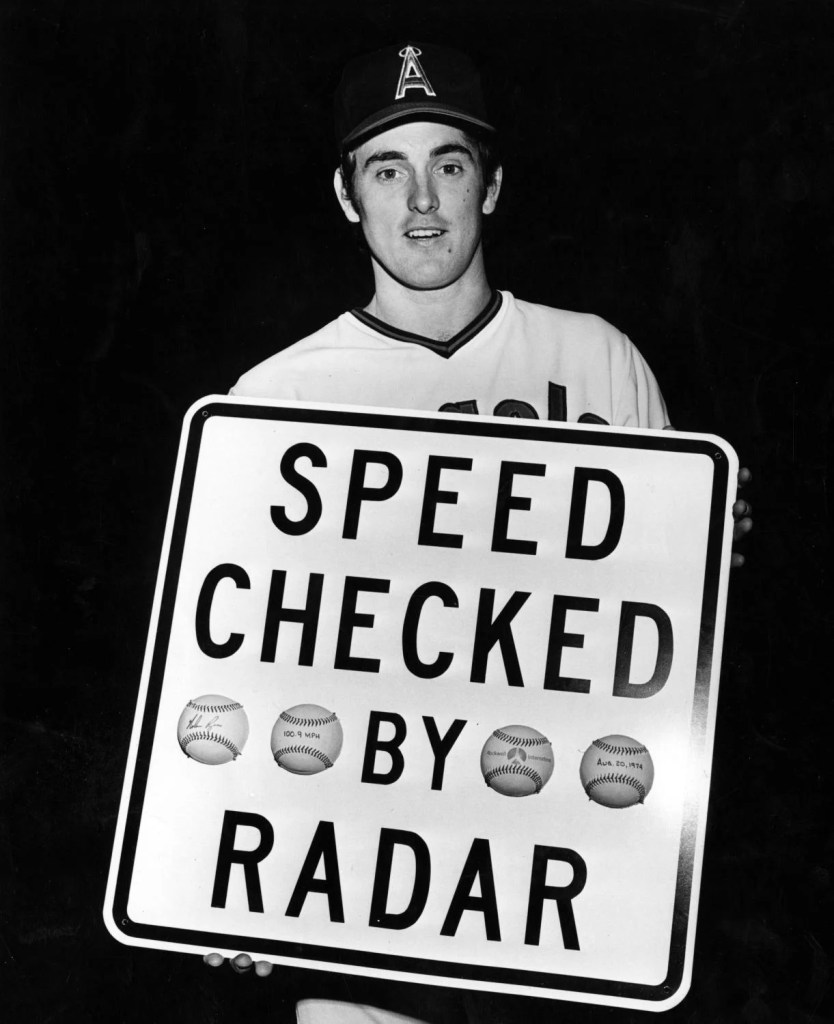
In a grand matchup, the California Angels’ Nolan Ryan strikes out 19 in 11 innings, but loses to the Detroit Tigers 1–0 at Anaheim Stadium. Mickey Lolich goes the distance for the win. Ron LeFlore strikes out 4 times. A Nolan Ryan pitch is measured at a MLB record 161.6 kph (100.4 mph).
The Baltimore Orioles edged the Texas Rangers, 2–1. Mike Cuellar pitched five‐hit hall to win his 15th game of the season, and Brooks Robinson and Mark Belanger drove in second‐inning runs. Cuellar (15–9) held the Rangers hitless until Alex Johnson singled with one out in the sixth. Robinson’s double scored Baltimore’s first run, then Belanger’s sacrifice fly chased Robinson home after Ellie Hendricks singled him to third. Jackie Brown was the loser (9–10).
Catfish Hunter scatters three hits in winning his 18th and Gene Tenace belts a grand slam off reliever Bill Travers as the Oakland A’s down the Milwaukee Brewers, 7–1. The A’s score 6 in the 8th.
According to Jorge Orta of the Chicago White Sox, Gaylord Perry is not pitching the Way he was earlier in the season. “He seems to be throwing a little different,” Orta said recently after the White Sox had defeated the Cleveland ace. “The ball isn’t moving as much as it used to.” Something definitely is missing from Perry’s arsenal, as the Kansas City Royals discovered happily last night in Municipal Stadium. Tony Solaita and Fran Healy hit home runs, and Al Fitzmorris and Lindy McDaniel combined on a five‐hitter to give the Royals a 2–0 triumph over the Indians.
Last night in Shea Stadium, the Minnesota Twins left the plate unguarded for a few instants in the third inning, and the New York Yankees took them up on it. The Twins suffered their collective lapse during a smart pitching duel between Pat Dobson of the Yankees and Bert Blyleven of the Twins, a pair of right‐handers with old‐fashioned breaking stuff. They were so tight that it took a break to tilt the game — and when Blyleven and the other Twins left the plate undefended, Bobby Murcer sneaked across and the Yankees sneaked off with a 2–1 victory.
Davey Lopes sets an Los Angeles Dodger record when he totals 15 bases against Chicago in an 18–8 drubbing of the Cubs at Wrigley. Lopes has 3 home runs, a 400–foot double to centerfield and single in the Dodgers’ 24–hit attack. The Dodgers total 48 bases in the game, a team record. Carmen Fanzone provides a bit of solace with a grand slam for Chicago, off Charlie Hough, in relief of starter Don Sutton (11–9).
The Cincinnati Reds beat the Philadelphia Phillies, 7–1. Johnny Bench hit a homer (No. 25) with two men on base, and Joe Morgan smacked his 18th to back the five‐hit pitching of Clay Kirby, who won his eighth game in 15 decisions. The victory gave the Reds a 75‐49 mark after 124 games, the identical record they had at the same point last season when they trailed by 1½ games. They still trail the Dodgers—this time by 2½ games—in the Western Division race.
The New York Mets are finding hits difficult to produce. Tonight, the Mets were held to only three in bowing to the Houston Astros, 6–2. They now have lost four straight games. Tonight’s weak hitting by the Mets followed their 11-inning, 2–1 setback 24 hours earlier during which they had only six hits. In their current five‐game road trip, their average output has been 6.6 hits per game.
Darrell Evans hit a two‐run homer and a triple, and Henry Aaron and Marty Perez had three hits each, as the Atlanta Braves outduelled the St. Louis Cardinals, winning, 8–6. The victory, Atlanta’s ninth in the last 11 games, went to Phil Niekro the knuckleballer, who worked seven Innings to earn his 14th triumph in 24 decisions. Lou Brock, the St. Louis swifty, stole his 85th base of the season, putting him far ahead of Maury Wills’s record 104 set in 1962.
The San Diego Padres shut out the Montreal Expos, 3–0. Dave Friesleben held the Expos to three hits, and Willie McCovey supplied all the runs with a three‐run homer in the fourth. It was McCovey’s 19th of the campaign. Friesleben earned his ninth triumph, although he walked seven and struck out only three. In the fourth, Dave Hilton led off with a single and John Grubb walked before McCovey whacked a pitch from Steve Rogers (12–16) over the right‐center field fence. Gene Mauch, manager of the Expos, was ejected from the game after the homer for using abusive language to Art Williams, the plate umpire. It was the first ejection for Mauch this sea.
Dow Jones Industrial Average: 726.95 (+5.11, +0.71%).
Born:
Amy Adams, American film actress (“Enchanted”, “Man of Steel,” “Arrival”); winner of two consecutive Golden Globe Awards for Best Actress (for “American Hustle”, “Big Eyes”); in Vicenza, Italy, where her father was stationed at the U.S. Army’s Caserma Ederle base.
Misha Collins (stage name for Dmitri Tippens Krushnic), American actor (“Supernatural”), in Boston, Massachusetts.
Andy Strachan, Australian musician (The Living End), in Adelaide, South Australia, Australia.
Maxim Vengerov, Russian-Israeli violinist; in Novosibirsk, Russian Soviet Federative Socialist Republic, Soviet Union.
Died:
Ilona Massey (stage name for Ilona Hajmássy), 64, Hungarian-born U.S. film, stage, and radio actress, died of cancer. She was known for the films “Love Happy” and “Frankenstein Meets the Wolf Man” and for the DuMont Network variety program, “The Ilona Massey Show”, in 1954.
Magda Sonja (born Věnceslava Johana Veselá), 88, Austrian film actress.
Mort Lloyd, 43, the Democratic nominee for the U.S. Congress in the 3rd Congressional District of Tennessee, was killed when his light plane crashed, three weeks after he won the Democratic primary. Lloyd, a newscaster for a Chattanooga TV station, was flying to visit his parents in Shelbyville when the aircraft lost part of its propeller. Lloyd’s widow, Marilyn Lloyd, would be named to replace him on the ballot, and would go on to serve ten terms in the U.S. House of Representatives from 1975 to 1995.
Dr. Latunde Odeku, 47, Nigerian neurosurgeon and the first neurosurgeon in West Africa.
Tio Ie Soei, 84, Indonesian novelist who wrote under the pen name Tjoa Pit Bak .
W. D. Jones, 58, former member of the Barrow Gang and associate of Bonnie and Clyde during 1933, was shot and killed by a friend with whom he had gotten into an argument.

 History Diaries