South Vietnamese fighter-bombers, some piloted by Americans, attack a major Việt Cộng headquarters south of Saigon. The target area, said to have been devastated, was reported to be the headquarters of an important guerrilla battalion. It is about 75 miles south of Saigon.
South Vietnam’s moves against the Việt Cộng rebellion maintained their normal pace last week, a military spokesman said today. According to this source, there was no increase in these measures despite fears of Communist retaliation for United States air strikes against North Vietnam. The Việt Cộng attacked Government units once in battalion-size forces and once in company size. This was not significantly different from their actions in preceding weeks. It is now two weeks since the second attack by North Vietnamese patrol boats on United States destroyers in the Gulf of Tonkin — an attack that set off 64 American air sorties against North Vietnamese naval installations.
The South Vietnamese and American forces in Vietnam were immediately put on the alert for North Vietnamese or Việt Cộng retaliation. A partial alert is still maintained. Reported “incidents” of all kinds — terrorism, sabotage and propaganda distribution — by the Việt Cộng rose to 595 last week from 585 the week before. This was still well below the figures in July. “Toward the end of the week there were signs of an upward trend in the number of Việt Cộng incidents,” the spokesman said, “but there were fewer actual attacks than in the previous week.”
South Vietnamese President Nguyễn Khánh appealed for support today from students and soldiers, two groups that could challenge his newly reorganized regime. In broadcasts, he warned against “extremism and dissension and all the malicious propaganda of the enemies of the people.” Citing the hardships and frustrations of the long war against Communist guerrillas, President Khánh told the nation’s students: “I understand that youth, being eager, wants everything to be finished right now, and completely. But in reality, it is not that easy.” To the rank and file of the army, he said: “Do not let yourselves be exploited by political parties and religious groups. And do not accept any leadership other than that provided by the armed forces. The two presidential messages were simple and direct, unlike many pronouncements by other Vietnamese leaders.
They indicated once again that General Khánh could expect difficulties in winning over some elements of the population to the presidential regime he established Sunday, which changed his title from Premier to President and gave him nearabsolute power. The “military dictatorship” was denounced today at a meeting of a Saigon student organization. Speakers voiced disillusionment over the recent state of emergency decrees, which were introduced as preparations for an intensified war against the Communists. Now, several speakers said, the measures seem like a ruse to strengthen the government’s hand. Student agitation has been expected since General Khánh moved to tighten his control, and many reports are circulating in Saigon about demonstrations in the northern city of Huế. According to independent reports from Huế, however, many of these reports are exaggerated.
President Khánh also made a conciliatory gesture today, paying a friendly call on Major General Duong Van Minh, the popular officer who was depose? as chief of state in the reorganization. General Minh was said to be ailing and confined to bed. The government also removed a small but nagging source of discontent among some Roman Catholic groups in Saigon — a small, stark monument to President Kennedy in the square in front of Saigon Cathedral. The Catholics say they had no objection to honoring him — the square itself is now called John F. Kennedy Square — but they expressed annoyance at the government’s decision to place the memorial alongside a religious monument without asking the permission of the diocese.
Buddhist groups, including students, are planning ceremonies and demonstrations tomorrow on the first anniversary of raids on Buddhist pagodas under President Ngô Đình Diệm. The raids crystallized the opposition that led to his ouster and his death last November. General Khanh’s appeals were apparently directed at all these agitating groups, in the hope that they would not challenge the authority he feels he must have to pursue the war effort.
Antiaircraft gunners shot down a Laotian Air Force fighter‐bomber yesterday during a raid on pro‐Communist Pathet Lao forces, a government military spokesman said today. The spokesman said that the pilot of another T‐28 had bailed out and that a helicopter search was under way.
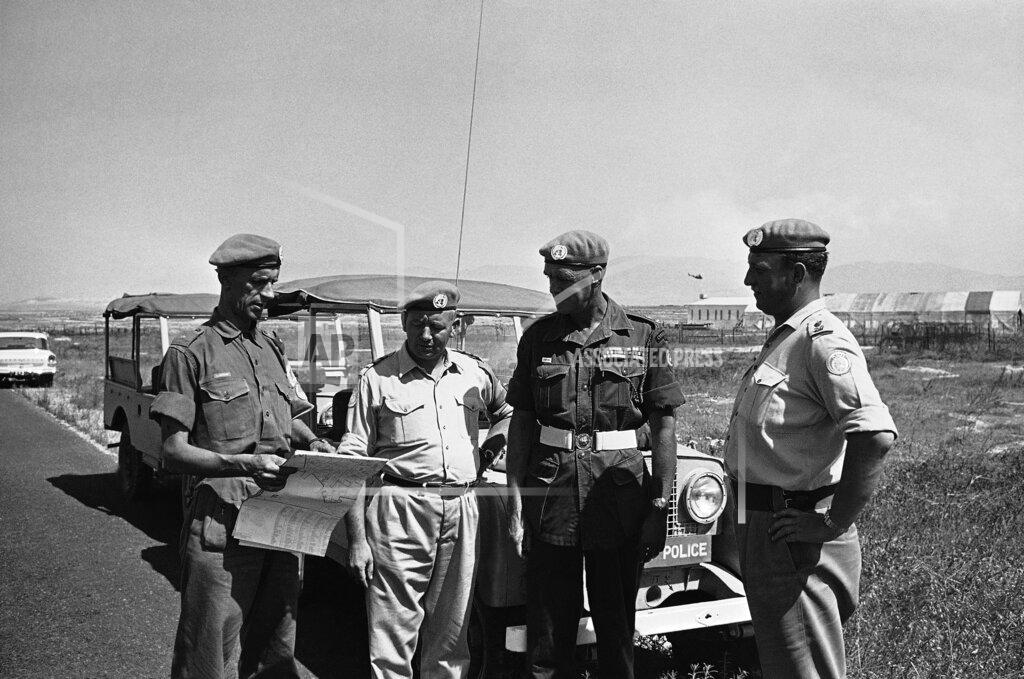
Turkey and Greece agreed today to return to the command of the North Atlantic Treaty Organization the military forces they had withdrawn during the Cyprus crisis. Turkey, which withdrew her air units August 9, announced this morning that they were being returned to the alliance. Tonight, after a day of hopeful waiting in political and military circles of NATO, Greece made known her decision. Athens announced Monday that it was withdrawing some ground, naval and air units and was shifting to Salonika, Greece, the Greek personnel that was at the alliance headquarters in Izmir, Turkey. A spokesman for General Lyman L. Lemnitzer, Supreme Allied Commander, said tonight that he was “mightily pleased” by the day’s developments.
The only actual transfer of personnel or equipment was the withdrawal of the Greek officers serving at Izmir. No transfer of Greek or Turkish fighting units was involved. Troops and equipment assigned to the alliance remained at their bases but were put under national command. Although Greece had not yet announced her decision when the alliance’s Permanent Council gathered today for its regular meeting, Turkey’s step had created a mood of optimism among the delegates. Allied diplomats and military leaders were seriously concerned over the reduction of the alliance’s forces on its southeastern flank.
The Council delegates heard a report from Secretary General Manlio Brosio on his efforts to settle the dispute that pits two important members of the organization against each other. The Italian diplomat said that he had urged Premier İsmet İnönü of Turkey and Premier George Papandreou of Greece to reconsider the withdrawal of their contingents. It is believed, however, that Mr. İnönü had made his decision to return the Turkish forces even before Mr. Brosio’s appeal.
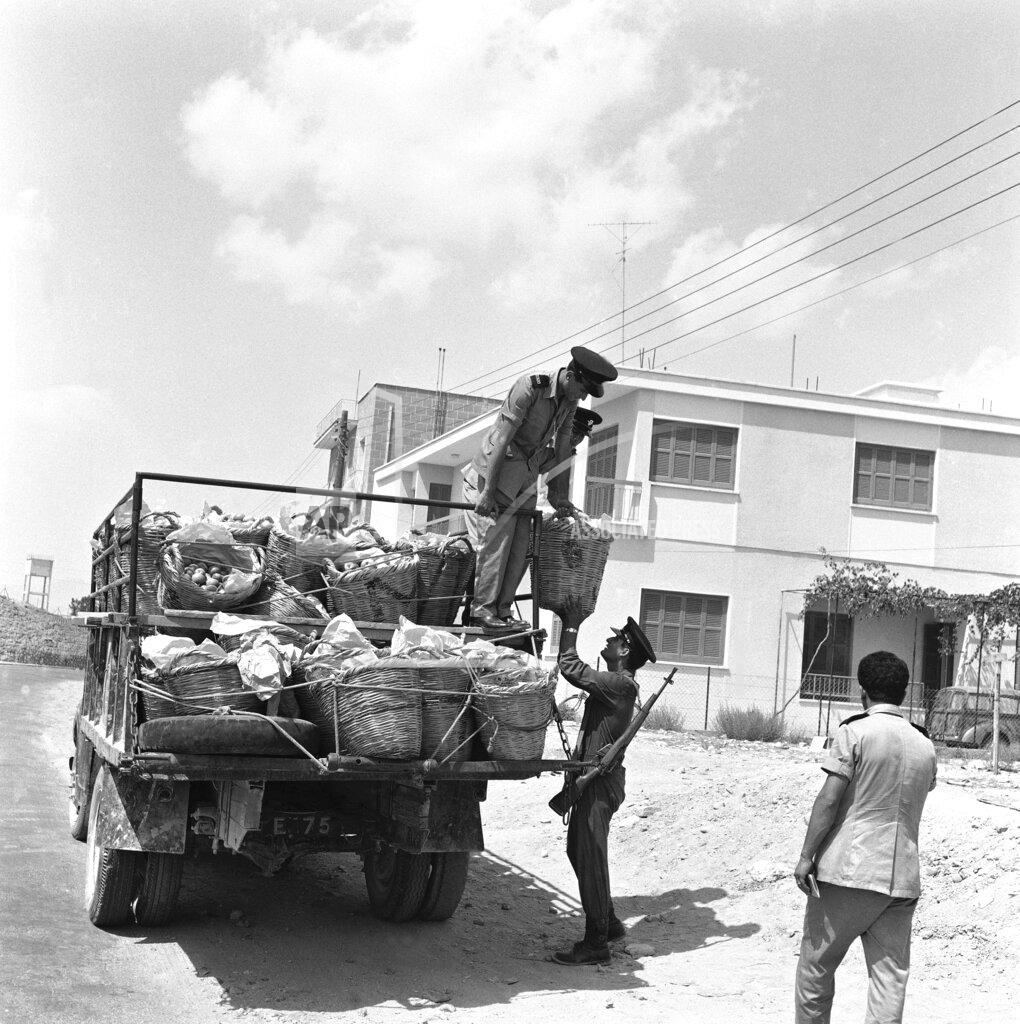
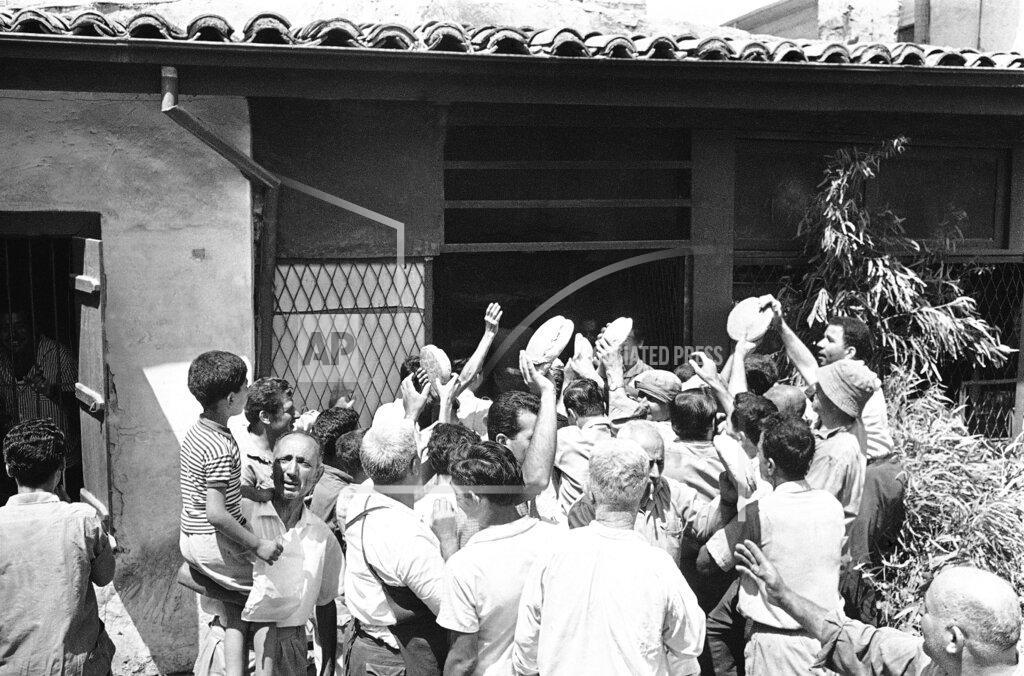
The delegates expressed their satisfaction with Ankara’s move and with the Cypriot Government’s willingness to lift a blockade on food and other supplies to the Turkish minority on the island. Many delegates, informed sources said, have expressed the belief that Greece and Turkey are showing a genuine desire to settle their differences and to prvent new outbreaks of violence.
President Makarios has sent a telegram to Premier Khrushchev thanking him for expressions of support, the Soviet press agency Tass reported today. “With the mighty support of your great country,” the message said, “the people of Cyprus believe that their just struggle for full independence and the right to be master of their own fate will be completed successfully. Your unequivocal warning to the aggressor is an invaluable contribution to the international peace which is being endangered by the forces wno act in their own narrow self-interest.”
Turkey threatened today to close the strategic Bosporus to Soviet ships “if there is a danger of war” over Cyprus. Foreign Minister Feridun, C. Erkin made the statement when he was questioned about a Soviet freighter reported to be carrying war equipment to Cyprus. “If Russia sends military aid to Cyprus we will act accordingly,” the Foreign Minister said. “If there is a danger of war we might close the strait.” The Bosporous connects the Black Sea with the Sea of Marmara, which opens into the Mediterranean.
Reports reaching the United States Government tonight indicated that Bukavu, a key city in the eastern Congo, had fallen into rebel hands. Officials here said that the staff of the United States Consulate had reached safety at the Kamembe airport, across the Rwanda border from Bukavu. A C‐130 transport of the United States Air Force, with a paratrooper guard, was reported tonight to have been sent to Kamembe to transport the consular officials to Leopoldville, the Congolese capital. In a radio message early today, the consulate reported that fighting had broken out between government troops and rebels in Bukavu and that the staff was being evacuated. It was believed here that the evacuation would not have been undertaken if the situation had not become critical. A message from a United States Air Force transport plane parked at the Kamembe airfield confirmed the arrival of the consulate staff from Bukavu.
The presumed fall of Bukavu was viewed with utmost seriousness here tonight. It suggested that the new United States aid had not arrested the collapse of the Congolese Army’s capacity to control the rebels. Although there was no identification of the rebels fighting in Bukavu, it was suggested that the city might have been taken from within by surreptitiously infiltrated forces. Two rebel movements, one attacking from Albertville in the south, and the other pressing from Stanleyville in the northwest, had been attempting to capture Bukavu for some time.
With the return here, probably tomorrow, of G. Mennen Williams, Assistant Secretary of State for African Affairs, the Congo situation was expected to come up for immediate review, particularly in the light of the reported Bukavu upset. Mr. Williams had spent several days in Leopoldville conferring with Premier Moise Tshombe, and the most recent United States moves to support the Congolese Army had resulted from those talks.
A Malaysian Defense Ministry spokesman reported that more Indonesian infiltrators were captured today in the Pontian swamps of southwest Malaya. Earlier, Defense Minister Abdul Razak said, “We have got most of them.” He was referring to a party of 30 to 40 men who landed Monday. In Singapore, the Malaysian Prime Minister, Prince Abdul Rahman, said he could not understand why President Sukarno had ordered the landings. He described President Sukarno as “a chameleon” who during recent peace talks “kept changing the color of his uniform — khaki, white, blue, and brown — and his mind.”
A Dominican Republic Government spokesman said today that 10 armed Dominicans who entered the country from Haiti had attacked a Dominican border post Monday night. One was taken prisoner and the other nine fled back across the Haitian border, the spokesman said. He described the incident as minor and said that no protest to Haiti was planned. News agency reports from Port‐au‐Prince yesterday, coinciding with the border incident, said Dominican rebels had landed on Dominican soil near the Haitian border at Pedernales. Newspapers in Santo Domingo ridiculed these reports, which they described as a maneuver by the Haitian regime to hide growing rebel activity in that country.
Senator Barry Goldwater, in Springfield, Illinois, accused President Johnson today of endangering the lives of American pilots by giving the North Vietnamese warning that patrol boat installations in that country were to be bombed. “This Administration,” he told a crowd of some 15,000 at the Illinois State fair, “has shown little skill when negotiating with the Communists. Now it appears they have as little skill when fighting with Communists.”
The Republican Presidential candidate also drew loud applause when he deplored “lawlessness” and “violence” in the United States. The indirect references to disorders and riots growing out of the civil rights movement seemed to be well understood by his audience. The Arizona Senator also charged that “scandal haunts” the federal government and said that dishonesty and cynicism in high places had led to increased crime of all sorts. Saying that it was unnecessary for him to amplify, he continued: “Every wife and mother, yes, every woman and girl, knows what I mean, knows what I am talking about.”
Mr. Goldwater returned to Washington this afternoon, but his chartered Eastern Airlines Electra aircraft was diverted from Washington National Airport because of a threat on his life. Senator Goldwater’s plane landed at the more remote Dulles International Airport. His press secretary, Paul Wagner, said this was done on orders from an official of the Federal Aviation Agency to Eastern Airlines. Mr. Wagner said the order followed a threat on Mr. Goldwater’s life received by the Federal Bureau of Investigation office in Chicago. It was understood that the threat was that an attempt on Mr. Goldwater’s life would be made at about the time he was due back in Washington.
The House of Representatives voted tonight to close the doors of all federal courts to complaints that state legislatures are apportioned unconstitutionally. The vote on the bill was 218 to 175. The party division was 122 Republicans and 96 Democrats in favor of withdrawing the jurisdiction of the Federal courts, and 140 Democrats and 35 Republicans opposed. The bill now goes to the Senate, where it is almost certain to expire since the Senate has another, and much less restrictive, apportionment proposal before it.
That proposal, sponsored by the Republican leader, Everett McKinley Dirksen, as a rider to the foreign aid authorization bill, would stay federal court proceedings on reapportionment at least until January 1, 1966. A group of liberal Democrats is filibustering against the Dirksen rider, and Democratic mayors of many large cities are urging the President to throw his weight against it. The intent of the bill passed by the House was to nullify the ruling of the Supreme Court last June 16 that districts of both houses of state legislatures must be “substantially equal” in population.
The Senate Foreign Relations Committee adopted today a resolution urging the United States delegate to the United Nations to press for the removal of the voting rights of any country two years or more in arrears in dues and assessments. Fifteen members including the Soviet Union and other Iron Curtain countries, fall into this category. In terms of Article 19 of the United Nations Charter they could he deprived of their votes when the General Assembly meets in the fall. The resolution, sponsored by Senator Frank Church, Democrat of Idaho, is identical to one passed by the House Monday. It has the support of Secretary of State Dean Rusk.
The Johnson Administration urged the Senate Finance Committee today to reject a House‐passed bill that would increase veterans’ pension payments by $72.6 million the first full year. Phillip S. Hughes, Assistant Director of the Budget Bureau, said the $72.6 million estimate was likely to be low and that enactment of the bill “would be inconsistent with the objectives of the Administration.” Veterans’ organizations told the committee they considered the measure modest and urged that it be passed.
The five men who have been chief economic advisers to Democratic and Republican Presidents since 1946 reached a wide measure of agreement today on the state of the economy and its outlook, and on what the general direction of future Government policy should be. The occasion was a meeting in President Johnson’s office of the four former chairmen of the Council of Economic Advisers and the present chairman, Walter W. Heller. Mr. Heller summarized the 45‐minute meeting later for reporters. “The general feeling of broad consensus,” he said, “was to me the dominant note of the meeting.” Those present were President Johnson; Edwin G. Nourse, Leon H. Keyserling, Arthur F. Burns and Raymond J. Saulnier, all former chairmen; Mr. Heller and Gardner Ackley and John P. Lewis, the two other members of the present council.
All the economists “expressed confidence in the present economic picture and outlook”, and agreed that the tax cut had been effective. For the future, Mr. Heller said, the group agreed that, because of the rapid growth of Federal revenues, “we would again in a year or two have the problem of another fiscal dividend to declare.” Some of the group, he said, thought this should take the form of another tax cut. Others favored either an increase in Federal spending or a larger distribution of funds to the states.
The summer civil rights project in Mississippi, which ends this week, brought few tangible changes in the social order. But many Mississippians feel that the state has passed through a crisis and will never again be the same. The presence of hundreds of college students in Black communities, the massive investigation of the murder of three civil rights workers and the influx of FBI agents, ministers, lawyers and reporters brought to its citizens a realization that Mississippi is no longer insulated from the Black revolution. Even those most opposed to change now say that the state will not be left alone for a long time to come. As a result, they have become more cautious in their opposition to segregation, some observers feel. Stickers appeared on automobiles last week saying: “You Are in Occupied Mississippi — Proceed With Caution.”
Sponsors of the civil rights project contend that despite three deaths and other violence the movement succeeded in its primary purpose — to establish racial integration, if only on a limited basis. The “freedom schools,” community centers, voter ‐ registration drives and other phases of the project will continue on a limited basis through the fall and winter. Bob Moses, project director, said a number of the volunteers wanted to stay, and applications had been received from others in the North “and West who wished to do civil rights work in Mississippi later in the year. Some students plan to stay out of school for a semester. Mr. Moses said the project was expected to be renewed next summer, possibly on an even larger scale.
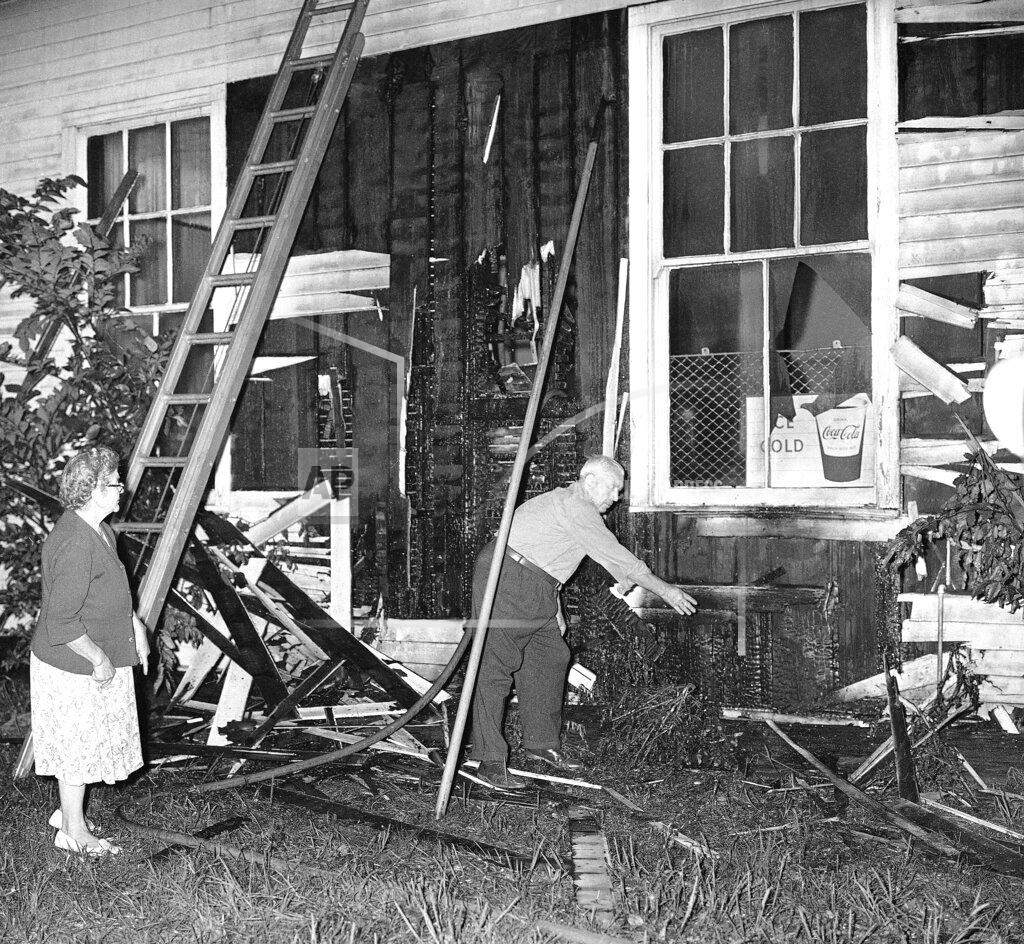
The acute apprehension that preceded the project waned during the summer when Mississippians learned that volunteers were not in the state to start riots. The awareness that Mississippi had become a focus of national attention and would be for some time brought some restraint. But a summary of the summer’s violence is an indication of the resistance to change in the status quo. According to information compiled by the Council of Federated Organizations, the project’s sponsor, at least four persons were shot and wounded, 52 were beaten or otherwise injured and about 250 were arrested in connection with the project in addition to the three slain. Thirteen Black churches were destroyed by fire, 17 other churches and buildings were damaged by fire or bombs, 10 automobiles were damaged or destroyed, and there were seven bombings in which there was no damage.
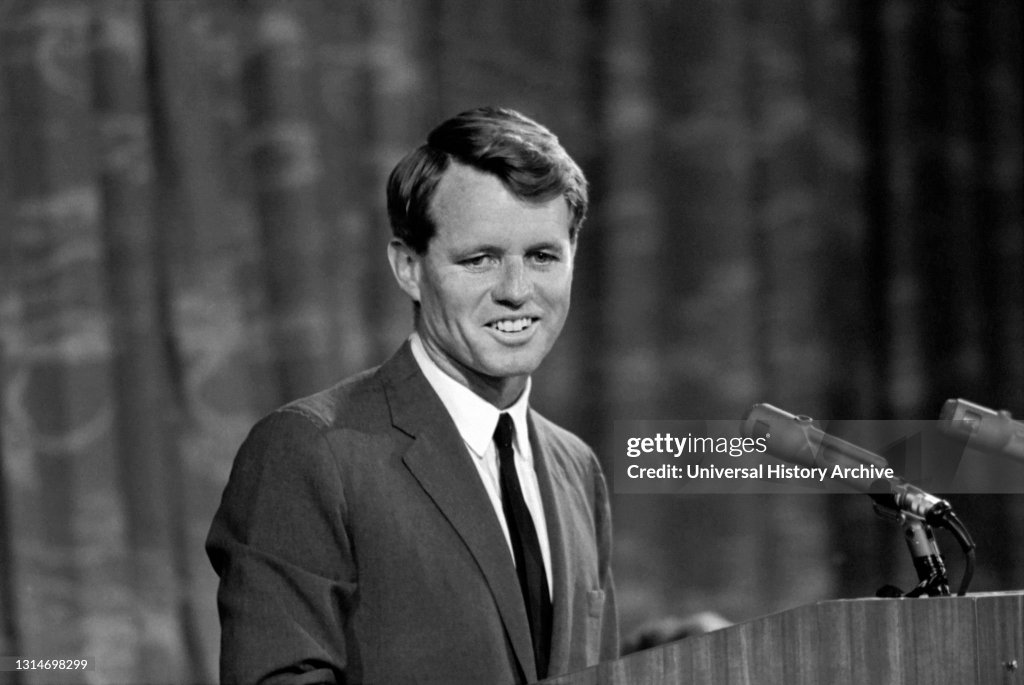
Democratic leaders grappled today with two prickly issues hanging over the convention next week — civil rights and legislative apportionment. Spokesmen for civil rights organizations pressed the party to exclude the all‐white Mississippi delegation from the convention opening Monday in Atlantic City. Leaders still awaited some word from President Johnson on how to handle the seating problem. At the Platform Committee hearings, Attorney General Robert F. Kennedy said he was “strongly against” any Congressional move to tamper with the Supreme Court decision requiring state legislative districts to be equal in population.
A Congressional committee asked today for delay in application of the new federal rule requiring all cigarette labels and advertising to warn that smoking “may cause death from cancer and other diseases.” The rule, set down by the Federal Trade Commission, is due to go into effect in 1965 — on January 1 for labels, on July 1 for advertising. At a closed session, the House Commerce Committee voted to authorize its chairman, Representative Oren Harris, Democrat of Arkansas, to ask for a six‐month delay in a letter to the commission’s chairman, Paul Rand Dixon.
The Senate completed Congressional action today on the bill imposing an interest‐equalization tax on American purchases of foreign securities. The bill went to the White House for signature 13 months after President Kennedy proposed it. Despite the long delay and the controversy that it aroused, the bill was approved by Congress essentially as the Administration proposed it. Its aim is to reduce the deficit in the nation’s balance of payments, or the excess of payments to foreigners as compared with receipts from abroad.
The United States launched the world’s first geostationary satellite, sending Syncom 3 into orbit in advance of the Summer Olympics in Tokyo, with a dual purpose of televising the games back to the U.S. and to provide “an emergency communication link with hard-to-reach Asian trouble spots”. The next day, a ground station in ground control at Salisbury, South Australia sent a command to fire rockets to increase Syncom 3’s altitude from 695 miles (1,118 km) to 22,245 miles (35,800 km) above the equator, where it would match the Earth’s rotation. Over a period of two weeks, other ground stations would send commands at precise times to gradually move Syncom 3 to a position “above the intersection of the equator and the international date line.”
The nightmare continued for the New York Yankees at Comiskey Park tonight as they handed the Chicago White Sox four unearned runs and a 4–2 decision before a crowd of 37,354. The first of their three losses in this series was caused by letting a man escape in a rundown. Last night’s 10‐inning defeat was set up by the only home run the White Sox have hit here in 10 games. This time Jim Bouton, New York’s starting pitcher, overhustled himself out of one run, lost his temper for another, and lost the game when Clete Boyer dropped the ball on what would have been an out at third. Meanwhile, in all three games, the Yankee attack sputtered as Mickey Mantle remained unavailable with his damaged left knee unimproved and as yet officially undiagnosed.
A 10th‐inning double by Tony Horton, a rookie, gave Dick Radatz and the Boston Red Sox a 4–3 victory over the first-place Baltimore Orioles tonight. The young Red Sox outfielder hit his two‐bagger into the leftfield corner off a Baltimore relief pitcher Harvey Haddix after Carl Yastrezemski had opened the inning with a single.
Don Demeter’s pinch‐hit single in the seventh inning provided the Detroit Tigers with their game‐winning run in a 5–2 victory over the Los Angeles Angels tonight. Demeter pinch‐hit for the winning pitcher, Joe Sparma, with runners on first and second and two out and the score tied 2–2. He lined a single to centerfield off Bob Lee that scored Bill Freehan with the game’s winning run. Sparma hurled the first seven innings and gave up only five hits to gain his fourth victory.
Vic Davalillo drove in three runs with a third‐inning single to help the Cleveland Indians to a 6–4 victory over the Kansas City Athletics tonight. Davalillo’s single broke a 2–2 tie. The Indians had filled the bases with two out on walks to Dick Howser, Leon Wagner and Tito Francona. All scored on Davalillo’s hit.
Jim Kaat, with relief from Al Worthington, posted his 13th victory tonight as the Minnesota Twins defeated Washington, 3–1, for their sixth straight triumph. Kaat, who has lost six games, left in the ninth inning after he walked Don Leppert and gave up a single to Dick Phillips with one out.
The Los Angeles Dodgers lost most of a five‐run lead tonight, but Ron Perranoski pitched them out of a bases‐filled jam in the eighth inning and preserved a 7–6 victory over the Milwaukee Braves. Frank Howard of the Dodgers slammed his first homer in 25 days and drove in three runs. Tommy Davis and John Roseboro each knocked in two runs for the Dodgers, who got 14 hits off five Milwaukee pitchers. Ed Mathews batted in two runs for Milwaukee, one with his 19th homer.
Frank Robinson slammed two home runs and Chico Ruiz got four hits as they led the Cincinnati Reds to a 7–1 victory over the San Francisco Giants today. Four batters were hit during the game. Bob Purkey stymied the Giants on six hits, evening his won‐lost record at 7–7. The Giants played without Willie Mays. Manager Al Dark said the league’s home run leader was removed from the lineup for a rest. Robinson led off the third inning with his 23rd homer of the season when Billy Pierce was pitching. He got his other homer at the start of the seventh off Bob Shaw.
Wes Covington’s two-run, pinch‐hit double triggered a five‐run uprising in the eighth inning that gave the Philadelphia Phillies a 9–5 victory over the Chicago Cubs tonight. The victory increased the Phils’ lead in the National League to six games over the San Francisco Giants, who lost their fourth straight to Cincinnati.
At Shea, Jim Hickman provides all the Mets scoring with a 6th-inning grand slam off Vern Law as New York beats the Pittsburgh Pirates, 4–2. Bill Virdon’s 9th inning 2-run homer off starter Tracy Stallard plates all the Bucs runs.
Nellie Fox delivers his third hit, scoring Al Spangler for an 8–7, ten-inning Houston Astros triumph over the St. Louis Cardinals. Spangler singled with two out and continued to second when Curt Flood bobbled the ball. Gordon Richardson replaced Barney Schultz, and Fox rifled a single to center, scoring Spangler. Bob Aspromonte drives in four, including a game-tying hit with two out in the ninth to push the game into overtime.
Dow Jones Industrial Average: 841.76 (-1.07).
Born:
Pete Ricketts, American businessman (TD Ameritrade) and politician, Governor of Nebraska (2015-2023), Senator-R-Nebraska (2023-), in Nebraska City, Nebraska.
Butch Rolle, NFL tight end (Buffalo Bills, Phoenix Cardinals), in Miami, Florida.
Greg Cleveland, NFL nose tackle (Miami Dolphins), in Winter Park, Florida.
Mike Jones, NFL linebacker (Buffalo Bills), in New York, New York.
Tom Rust, British jazz vocalist, born in Manchester, England, United Kingdom.
Died:
Hans Peter Luhn, 68, German computer scientist who invented the Luhn algorithm and the Key Word in Context (KWIC) search system, as well as developing the Selective dissemination of information (SDI) concept.

 History Diaries