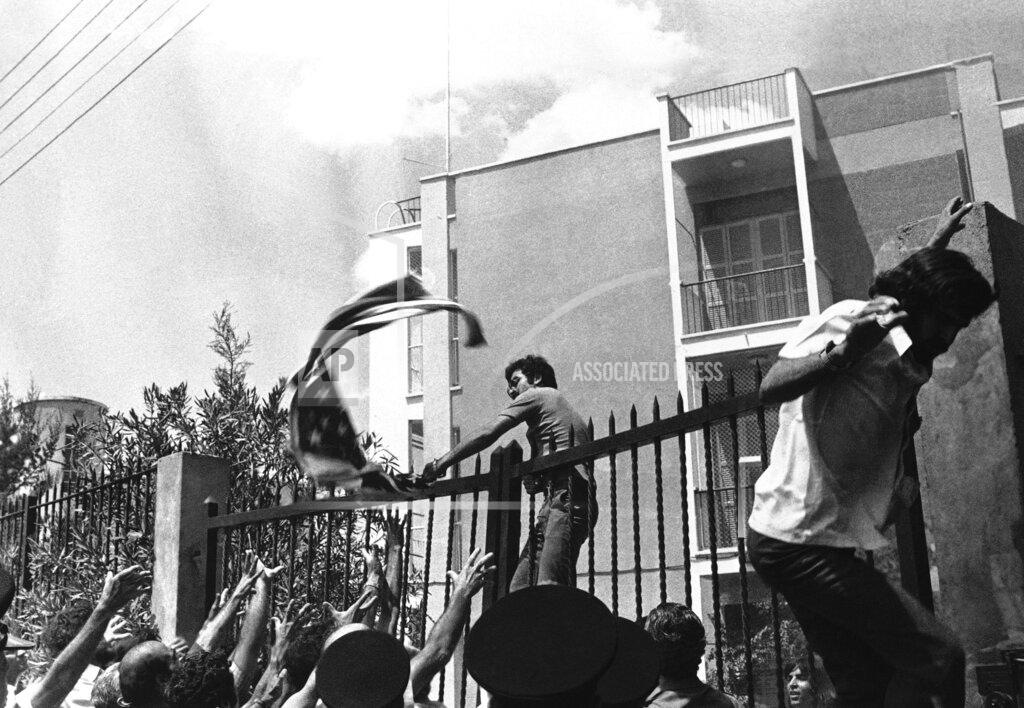
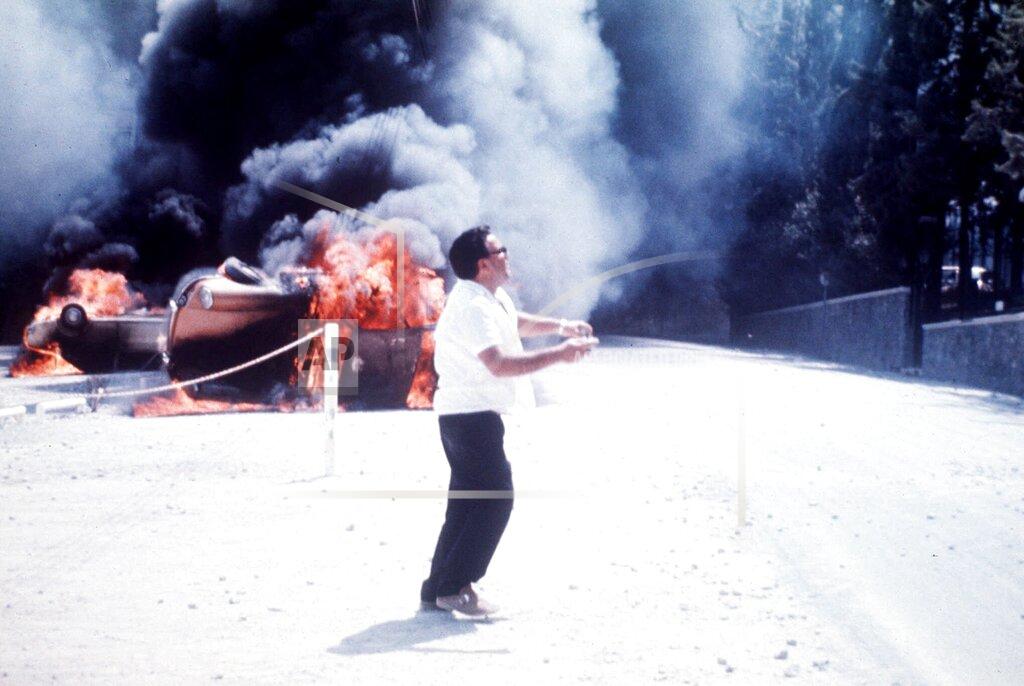
Rodger Davies, the United States Ambassador to Cyprus, was shot and killed while standing in the central hall of the U.S. Embassy in Nicosia during a demonstration outside the embassy by Greek Cypriots, angry over the Turkish invasion and division of the capital. A bullet fired from outside passed through the shuttered window of Davies’ office and through another office before striking him in the chest. Antoinette Varnavas, an embassy secretary who was a Greek Cypriot national, was struck in the head by a bullet and killed after going to Davies’ assistance. The shooters were believed to be gunmen from the Greek Cypriot paramilitary organisation EOKA B.
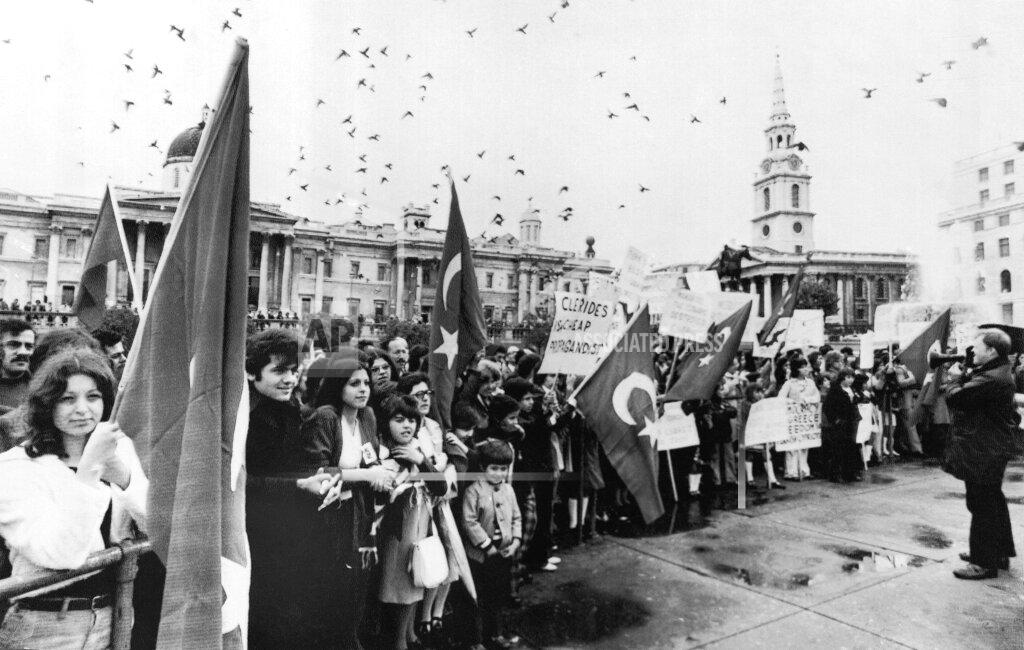
Turkish officials said the killing today of Rodger P. Davies, the United States Ambassador in Cyprus, was an example of the kind of violence that the Turkish Cypriot minority on the island had faced for years from Greek Cypriots. Premier Bulent Ecevit sent messages of condolence to President Ford and to Mr. Davies’s family. “This is a profoundly sad event,” Mr. Ecevit said in statement to the Anatolian News Agency, “but for many years Turks on the island have faced such events daily.” Mr. Davies was fatally wounded by gunfire during a demonstration by Greek Cypriots at the embassy and a secretary was killed as she tried to aid the Ambassador. Foreign Minister Turan Güneş said in Parliament that the demonstrators who attacked the Embassy were “enemies of humanity.” He recalled attacks by Greek Cypriots on Turkish Cypriot villages in 1963 and 1967.
Several thousand Turkish Cypriots are being held as hostages in southern Cypriot cities, and many Turkish enclaves outside the region occupied by the Turkish armed forces on Cyprus are surrounded by Cypriot Greek National Guardsmen or groups of armed irregulars of the EOKA‐B movement. Last night, Mr. Ecevit issued a strong warning that his forces on the island would not hold back if any harm came to the Turkish Cypriots. In his statement today on the killing of the Ambassador, Premier Ecevit said that Greek hostility toward the United States for not preventing Turkish military action on Cyprus was unjusified. “The Greeks are making a major error in trying to make others pay, for their errors, and they are doing harm to themselves and to humanity,” he said.
In a quickly arranged news conference in Washington, Secretary of State Kissinger, hoping to persuade Greece to resume Cyprus peace talks with Turkey, pledged that the United States would use its influence “in any negotiation to take into full account Greek honor and national dignity.” He offered as a negotiating incentive to Athens assurances he said he received this morning by telephone from Premier Bulent Ecevit of Turkey. Mr. Ecevit reportedly said that Turkey would be flexible in negotiating demarcation lines between the Greek Cypriot and Turkish Cypriot communities in Cyprus, would reduce the size of her holdings in Cyprus, and would carry out phased reductions of armed forces on the island.
In one of the most important steps the Greek government has taken in breaking the power of the military, which ruled the nation for seven years, Athens made changes in the command structure of the armed forces. The changes were ordered by the Supreme Council of National Defense, a civilian-dominated body. The council, abolished by the junta and reinstituted, by Premier Konstantine Karamanlis, returns to civilian control the ultimate power over military transfers and promotions.
The new Greek Government has moved cautiously to dismantle the structure established by the junta, and most Greeks have heeded calls for national unity and refrained from criticism. However, Andreas Papandreou, the leftist leader, has called for criminal charges against junta leaders, and that demand is likely to spread. Earlier today, following the killing of the American ambassador in Cyprus, Mr. Karamanlis warned that violent demonstrations in Athens would be met with “unbending severity.” His comments came amid rising concern over anti‐American protests. Last night, a crowd of several thousand clashed with police following a demonstration in midtown Athens, causing injuries on both sides. Guards have been increased around the American embassy and military personnel have been advised to avoid movement outside base areas.
Thousands of troops and police aided by helicopters and spotter planes engaged in Ireland’s most intensive manhunt, north and south of the border, in a search for 19 Irish Republican Army guerrillas who blasted their way out of a maximum security jail. The escape was an embarrassment to the Irish government, which earlier boasted of the tight security at Portaloise Prison, 50 miles southwest of Dublin.
With Premier Aleksei N. Kosygin due in Bucharest later this week, President Nicolae Ceaușescu of Rumania today delivered a speech that appeared aimed at smoothing Rumania’s sometimes ruffled relations with the Soviet Union. Mr. Ceaușescu made his speech at the opening of the World Population Conference sponsored by the United Nations. Strongly political in tone, the speech endorsed the speedy conclusion, at summit level, of the European security conference, which is in summer recess. For months, Moscow has been demanding the same thing, insisting that its allies do the same.
Egyptian President Anwar Sadat, In an apparent shift in policy, declared the Palestinian Liberation Organization the sole legitimate representative of all Palestinians. In a Joint communique last month with Jordan’s King Hussein, Sadat had exempted Jordanian Palestinians from the group. But in the latest joint communique with Sheik Zaid bin Sultan of the United Arab Emirates, Sadat withdrew that exception. Palestinian leaders had reacted angrily to Sadat’s agreement with Hussein.
Egyptian Foreign Minister Ismail Fahmy said Egypt will ratify the 1968 nuclear nonproliferation treaty “the moment Israel” does so. In a statement issued at the United Nations in New York, Fahmy also pledged that Egypt “will not be the first to introduce nuclear weapons” to the Middle East. He urged the United States and the Soviet Union to press for Israel’s signature.
An armed forces group is ruling Ethiopia in all but name now, and the big question here is whether it will push aside Emperor Haile Selassie completely. Long‐time foreign residents and many informed Ethiopians think that the army officers who have gradually seized power since early this year do not want to consummate the ultimate humiliation of the 82‐year‐old Emperor, who has been on the throne of this East African country since 1930. “The Emperor’s downgrading is almost complete,” a Western diplomat said. “The armed forces removed virtually his entire entourage. I don’t think they will depose Haile Selassie — he is still a national symbol.” Nominally, the Emperor, as Ethiopia’s sole field marshal, remains commander in chief of the armed forces. However, the country of 27 million people is on effect governed by a group of anonymous officers, including captains and majors, known as the Coordinating Committee of the Armed Forces, Police and Territorial Army.
Relief aid began pouring into flood-ravaged Bangladesh from around the world and authorities rushed vaccines and food supplies to the millions of homeless and hungry. Britain offered to rush 22,000 tons of wheat to the area, where floods reportedly have claimed 3,000 lives, and a first planeload of blankets, tents and foods arrived from the U.S. air base in Guam. West Germany and Australia also were sending medical and food supplies.
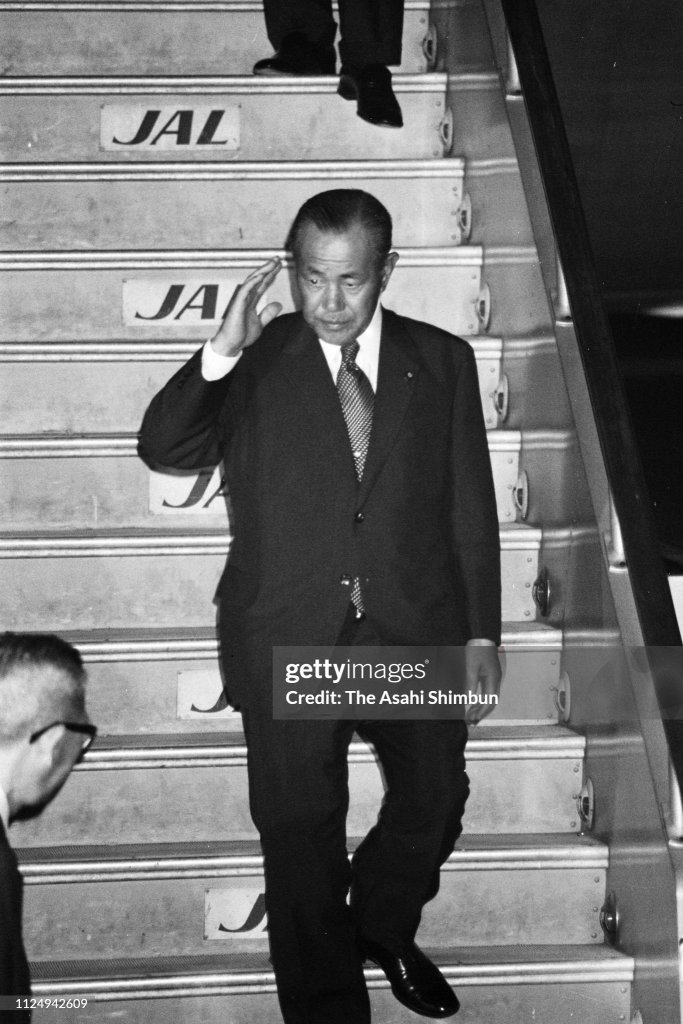
Premier Kim Jong Pil of South Korea, his entire cabinet and other top government leaders, submitted their resignations to President Park Chung Hee as a gesture of responsibility for permitting the assassination attempt last week that killed Mrs. Park. Kim has been premier since June, 1971. Also resigning were several senior aides and the Korean ambassador to Japan. Though such a resignation is symbolic in South Korea, it may have political significance by giving President Park a sweeping opportunity to reconstitute his troubled government. There was no indication of which of the resignations would be accepted.
North Vietnamese frogmen blew up a bridge in central South Vietnam, isolating a key army base, while Communists mounted offensives throughout the country. The attacks coincided with the anniversary of the August 19, 1945, start of the Communist revolution against the French occupation of Indochina.
After two decades of fratricidal warfare the Government of South Vietnam has been left with a legacy of corrosive suspicions directed in large measure against its own citizens. The chief instrument and repository of these suspicions is the police apparatus. In a war in which the enemy cannot always be seen, the police structure tends to see him everywhere, attributing to him immense, almost superhuman powers of deviousness and persuasion. Some South Vietnamese see a self‐fulfilling prophecy in the Government’s compulsion to label all opponents as Communists. A prominent civilian judge, for instance, declared in a recent interview that no matter what the national emergency, martial law “can reach too many innocents and transform these innocents into Communists because they are angry against the unjust measures taken against them.”
The wreckage of a U.S. Air Force cargo plane, missing since Sunday with seven crewmen aboard, was sighted in the mountains near the Bolivian capital of La Paz. American Embassy officials said there were no signs of survivors in the wreckage of the Hercules C-141. The plane was carrying 16 tons of cargo, bound for La Paz from Charleston, South Carolina.
More than 600 people have died and 10,000 have been hospitalized in the meningitis epidemic in Sao Paulo, Brazil’s largest city, since June 1, according to unofficial press figures. Health authorities have added 200 more hospital beds in the city because doctors fear the epidemic has not yet peaked and that it will continue until October or later. A shipment of 600,000 more doses of vaccine is due from France.
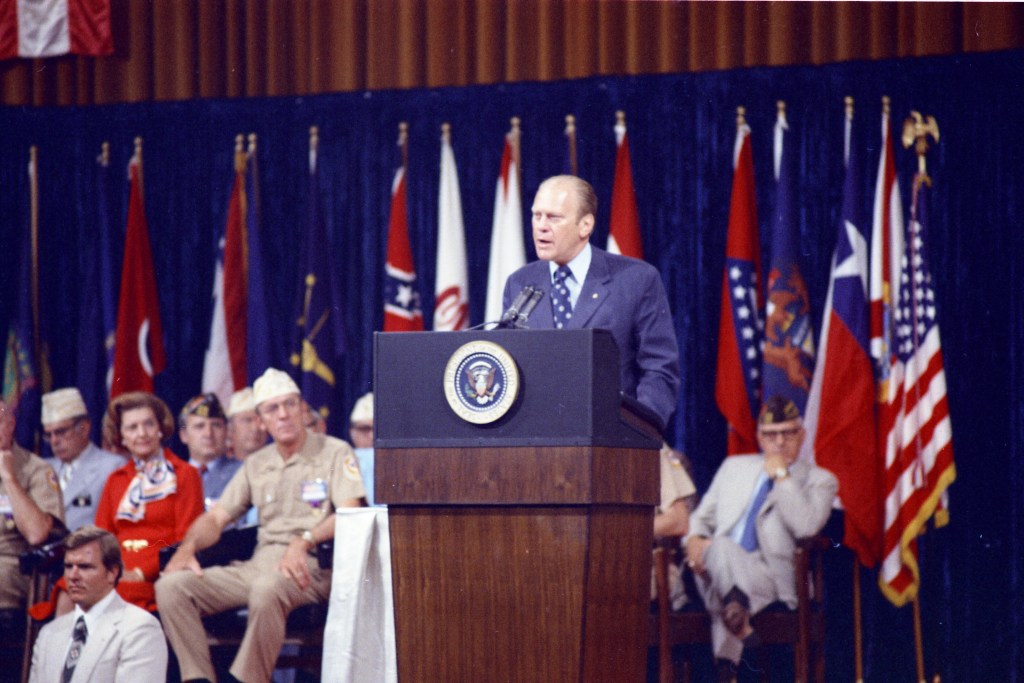
President Ford announced that he intended to grant limited amnesty for the nation’s 50,000 Vietnam war draft evaders and deserters “to bind up the nation’s wounds.” In a statement that took his audience at the National Convention for the Veterans of Foreign Wars in Chicago by surprise, Mr. said even though he continued to oppose “unconditional blanket amnesty,” he had ordered a study to determine how the young men who refused to fight in the Vietnam war might be permitted to “work their way back” to full citizenship. As he outlined his plan, a hush fell over his audience and the subsequent applause was restrained. Members of the veterans organization had apparently expected him to continue the policy of President Nixon, who had strongly opposed amnesty.
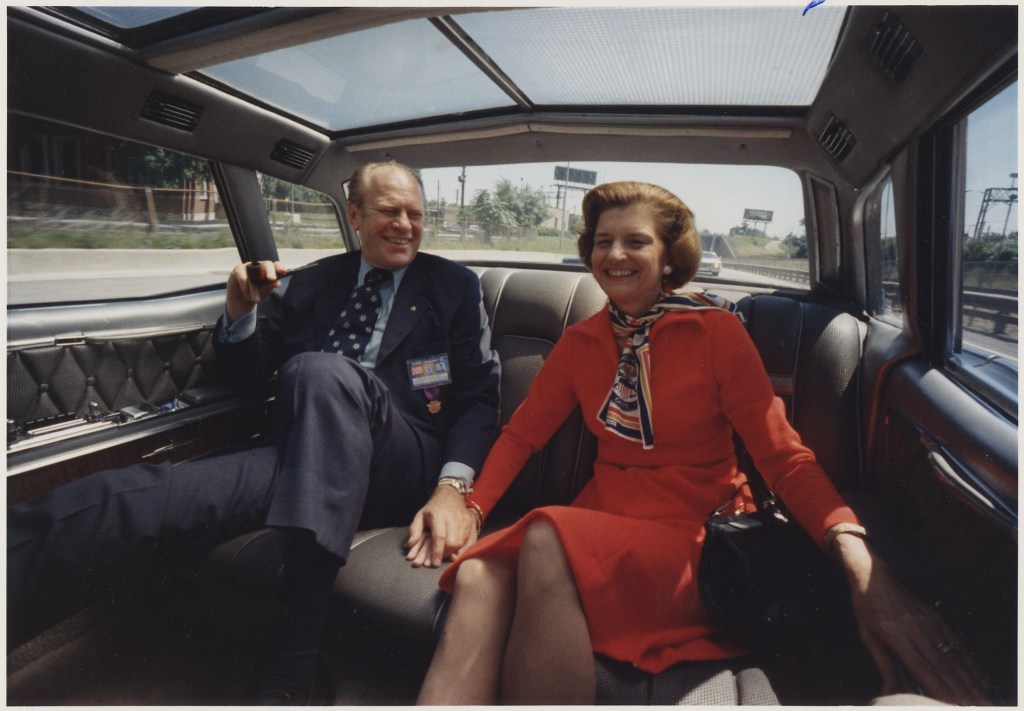
After 10 days of the U.S. presidential residence being at the home of Gerald and Betty Ford at 514 Crown View Drive in Alexandria, Virginia, U.S. President Gerald R. Ford and his family moved into the White House at 1600 Pennsylvania Avenue in Washington, D.C. During his first ten days as President, Ford had been driven to and from his office at the White House, along with his Secret Service escorts and with help from the Alexandria police.
The Senate and House passed slightly differing versions of legislation that would establish a federal group to help President Ford monitor the national economy and perhaps “jawbone” it. Neither bill gives the President the authority to institute wage and price controls, power that Mr. Ford said he does not want. The two measures are intended instead to prod labor and management into exercising some degree of restraint in seeking wage and price increases. Liberals sought but failed to put some teeth in the Senate bill.
Despite requests by the prosecution and four of the Watergate defendants for a delay, Judge John Sirica of the Federal District Court in Washington ruled that the Watergate cover-up trial would begin as scheduled on September 9. The judge’s ruling, if it withstands appeal, may put pressure on the special Watergate prosecutor, Leon Jaworski, to decide within the next few weeks how to resolve the legal status of former President Richard M. Nixon. Mr. Nixon was subpoenaed last week to testify at the trial as a defense witness for John D. Ehrlichman, once his domestic affairs adviser.
Beyond that, though, Mr. Nixon faces possible prosecution himself on charges arising out of the cover‐up. And if Mr. Jaworski decides to prosecute him, some lawyers have suggested, he may want to join Mr. Nixon’s case to that of the six defendants in the current case, rather than carry on two separate prosecutions based on the same set of events.
Judge Sirica’s ruling was appealed immediately to the United States Court of Appeals for the District of Columbia Circuit by lawyers for Mr. Ehrlichman, with lawyers for a second defendant, H. R. Haldeman, a former White House aide, saying they would join the appeal.
Seven years after battlefield complaints, a civilian advisory committee has blamed Vietnam-era Pentagon officials for ordering production of the M-16 rifle “in spite of known deficiencies.” This in effect refuted Army and Marine contentions in 1967 that the gun jammed in combat principally because riflemen were not maintaining their weapons properly. The Army’s Materiel Acquisition Review Committee suggested in a report that a major cause of the difficulties was “a need for a very large quantity in a very short time.”
Robert S. Strauss, the Democratic national chairman, said a walkout by 50 liberals on the Democratic Charter Commission was a publicity tactic by California Assemblyman Willie Brown Jr. “because he’s in political trouble in his own state.” Strauss made the comment in Kansas City during a break in a meeting of the arrangements committee, which is preparing for the party’s mid-term convention in December. The two-day charter meeting ended abruptly with the Sunday walkout, leaving the committee without the necessary quorum. The liberals left after charging that a proposal by Doris Hardesty, a Strauss appointee from Maryland, was an effort to return to the scrapped “unit” rule procedure that prevents individual voting.
The cosmonaut corps of the Soviet Union is being built up at the same time the American astronaut force is dwindling. That was the observation of U.S. astronauts returning from the Soviet Union after training stints for next summer’s Apollo-Soyuz test flight in which Thomas Stafford, Donald K. Slayton and Vance Brand will dock their Apollo spacecraft for two days with a Soyuz spacecraft piloted by Alexei Leonov and Valery Kubasov. Observers said the Russians have 75 to 80 cosmonauts, a sharp increase over the estimated 55 of five years ago. In contrast, the astronauts have fallen to 34, down from a high of 60.
A lawsuit filed in Federal District Court here today charged that Governor George C. Wallace had fulfilled a 1963 pledge of “segregation now, segregation tomorrow and segregation forever” by discriminating against blacks in making appointments. Morris Dees, a lawyer, said in a brief that Governor Wallace had named blacks to state boards and commissions only when the appointments were required for receipt of Federal funds. The suit, filed on behalf of group of blacks, sought to compel the Alabama Governor to appoint blacks to be trustees of colleges and universities and members of boards for prisons and other state agencies that have substantive powers.
The House voted to create a new national monument and five national historic sites at a cost of $18.5 million, It also approved a $42.4 million package of additions and improvements to existing national park system units in 11 states, the Virgin Islands and Puerto Rico. The additions would be made under two bills sent to the Senate. One bill would establish the John Day Fossil Beds National Monument in Oregon at a cost of $4.4 million. Affected in California would be Channel Islands National Monument with $2,936,000 authorized for a mainland visitor center at the Ventura Marina.
A man charged with gunning down a 12-year-old girl when she delivered his newspaper in Highland Park, Michigan, will surrender to police Wednesday morning, his lawyer said, Rudolph Acosta, 24, was charged with manslaughter and released on $2,500 bond Sunday, but the charge was raised to second-degree murder after a public outcry and Acosta had disappeared. Edith Perchman was hit at least 15 times when Acosta opened fire. Police were checking the possibility that Acosta was involved in a family feud over drugs and mistook the girl for an enemy.
City attorneys have ruled that Dallas policemen may no longer arrest Mexican aliens for being in the country illegally. Under the ruling, they may arrest the aliens only for breaking state or municipal laws. It estimated that there are more than 30,000 illegal Mexican aliens in Dallas. The city officials have based their new policy on the fact that the Federal Immigration and Nationality Act of 1952 does not specifically delegate the authority to arrest persons entering this country unlawfully to anyone other than Immigration and Naturalization Service officers.
Connecticut’s three Roman Catholic Bishops spoke out against abortion yesterday, charging that physicians who performed abortions violated the Hippocratic Oath and noting that Catholic health workers who participated in them faced excommunication. The Bishops — the Most Rev. John F. Whealon of Hartford, the Most Rev. Walter W. Curtis of Bridgeport and the Most Rev. Vincent J. Hines of Norwich — addressed themselves to the abortion issue in a news conference called to discuss a new 16‐page pamphlet advising Catholics to refuse to participate in abortions.
Union coal miners began a nationwide shutdown in support of a strike by 400 men against two mines in Harlin County, Kentucky. The stoppage is expected to involve 125,000 men in a dozen states and cut coal production by eight million tons.
British EGOT (Emmy; Grammy; Oscar; and Tony Awards winner) lyricist Tim Rice (29) weds British actress Jane McIntosh.
A bomb threat forced American musician Ray Charles to cut short a performance at the Schaefer Music Festival in Central Park after only four songs. No bomb was discovered. Charles would return to Central Park to fulfill his engagement on September 2.
RCA records releases “Pussy Cats”, the tenth album by American singer Harry Nilsson in the US; album was produced by John Lennon and Nilsson worked through a serious vocal chord injury which diminished his vaunted range.
Thanks to a totally ineffective performance by Sam McDowell as the starting pitcher, the New York Yankees never had a chance in the opener of a three‐game series against the Minnesota Twins last night at Shea Stadium. The Yanks absorbed a 6–2 setback that dropped them once again beneath the .500 mark in the American League East standings. The once brilliant lefthanded strike‐out king, who seems to have lost the knack of winning this season, lasted only 1⅓ innings against Minnesota.
And to compound the Yankees mound problems, Dr. Sidney Gaynor examined Mel Stottlemyre before the game and described as a form of tendinitis the chronic soreness the right‐handed pitcher has felt in his pitching shoulder. Gaynor prescribed sound and heat therapy for the former Yankee ace who was placed on the 21‐day disabled list on Sunday. The Yankees are hoping Stottlemyre will be available for the final three weeks of the season, but the possibility exists that he may be through pitching for this year.
[Ed: Mel Stottlemyre, in fact, is finished. He’ll never pitch again.]
Rookie Frank Tanana pitched his second straight shutout for California, as the Angels edge the Detroit Tigers, 1–0. The Angels got the game’s only run in the bottom of the ninth on Joe Lahoud’s single, a sacrifice, an intentional pass, a passed ball, another intentional pass and Tom Egan’s sacrifice fly.
The Boston Red Sox downed the Chicago White Sox, 6–1. Bill Lee and Diego Segui combined to pitch five‐hit ball and six Red Sox batters drove in runs, led by Carl Yastrzemski, who had two hits and scored twice. Lee (14–11) retired the first nine batters before yielding a leadoff single to Dick Allen in the fourth. But moments later Lee recorded his 13th pickoff by catching Allen off first base.
The Oakland A’s get shut out 1–0 by the Milwaukee Brewers at the Oakland Coliseum. A disgusted Reggie Jackson pops up in the ninth inning, then hurls his bat over the backstop screen and into the stands, grazing two boys and landing in a woman’s lap. Fortunately, no one is injured by Jackson’s temper tantrum.
Reds’ second baseman Joe Morgan drives in 7 runs as Cincinnati rolls over Philadelphia 15–2. Morgan has a grand slam and a 3–run homer, then leaves after 3 innings when the Reds build a 14–0 lead. Don Gullett pitched seven innings to pick up his 14th victory against 8 defeats.
The Los Angeles Dodgers halted their six‐game losing streak at the expense of the hapless Chicago Cubs, winning 8–7, behind the six innings of shutout relief by Mike Marshall. Marshall also started the Los Angeles rally by opening the 12th with a single. He moved to second on a sacrifice and scored all the way from second when the Cubs left the plate unguarded on Rick Auerbach’s infield out. Billy Williams of the Cubs was placed on the 15‐day disabled list after suffering an injury to his right ankle in the 11th.
The New York Mets’ Tom Seaver ended up on the losing end of a 2–1 game that extended over 11 innings. A line single by Milt May that sent Greg Gross rushing home from second with two out produced the winning run for the Houston Astros. Seaver, who had allowed only six hits in 10 innings, had crashed to the Astrodome’s artificial turf shortly before May produced the winning hit. The Mets’ pitcher limped slightly when he arose, but when he assured Manager Yogi Berra he had not been hurt, he was allowed to continue.
The San Francisco Giants clipped the Pittsburgh Pirates, 5–3. The Giants put a crimp in the Pirates’ Eastern Division hopes, ending a three‐game losing streak and halting Pittsburgh’s three‐game winning streak. Dave Kingman doubled home the go‐ahead run in the ninth inning, then scored an insurance run to give Ron Bryant his first triumph since May 31.
Henry Aaron cracked a two‐run homer, Darrell Evans also hit a two run homer, and Marty Perez hit a pair of two‐run doubles to pace the Atlanta Braves to an 11–6 victory over St. Louis. The defeat broke a four‐game Cardinal winning streak, but kept St. Louis 2½ games in front of Philadelphia and Pittsburgh, which both lost.
The stock market registered its eighth consecutive loss yesterday as the Dow Jones industrial average fell to its lowest closing level in four years. The decline was broad, with the biggest losers among the blue‐chips, glamours and special‐situation issues. No group of stocks advanced. The widely followed Dow Jones average reflected the selling pressure and closed off 9.70 points at 721.84, its lowest close since August 18, 1970, when it finished at 716.66. In the last eight sessions, the Dow has lost 75.72 points.
Dow Jones Industrial Average: 721.84 (-9.70, -1.33%).
Born:
Sergey Ryzhikov, Russian cosmonaut who served on two missions aboard the International Space Station for 173 days in 2016 and 2017 (ISS Expedition 49) and for 184 days in 2020 and 2021 (ISS Expedition 63); in Bugulma, Tatar ASSR, Russian SFSR, Soviet Union.
David Patten, NFL wide receiver (Super Bowl 36, 38 and 39-Patriots, 2001, 2003, 2004; New York Giants, Cleveland Browns, New England Patriots, Washington Redskins, New Orleans Saints), in Columbia, South Carolina (d. 2021, in a motorcycle accident).
Brian Cooper, MLB pitcher (Anaheim Angels, Toronto Blue Jays, San Francisco Giants), in Hollywood, California.
Died:
Rodger Davies, 53, United States ambassador to Cyprus, murdered Greek Cypriot gunmen during a demonstration outside the U.S. Embassy in Nicosia.
David Bamberg, 70, British stage magician and illusionist.
 History Diaries