In the Mekong Delta, ARVN troops upset a Việt Cộng ambush plan and in three days of fighting claim to have killed about 280 guerrillas; but U.S. military advisers will report finding only 10 Việt Cộng dead and no sign of the other 270. United States military advisers said today that South Vietnamese Government forces had upset a Communist ambush plan and killed about 280 guerrillas. This was the largest number reported killed in a single battle in the war against the Vietcong. The dead in the three‐day battle in this Mekong Delta area fell before a heavy barrage of artillery fire from government howitzers, strafings and bombings by two Skyraider fighter‐bombers and fire from armed helicopters. United States advisers said that 10 bodies had been found and that the Communists had been able to carry away about 270 bodies.
The Americans said 500 Việt Cộng regulars had taken part in the engagement, which began Saturday morning with an attack on Hòa Mỹ and neighboring Hiệp Hưng. The government reported 36 of its troops killed, 76 wounded and 10 missing and presumed dead or captured. Reports from Saigon yesterday told of an early phase of the three‐day battle, in which the government forces appeared to have suffered their worst setback in weeks. The reports described the battering of the outposts at Hòa Mỹ and Hiệp Hưng and the loss or wounding of 117 soldiers. The advisers said the Communists had finally broken under a barrage of artillery fire from government howitzers at Phụng Hiệp and headed for Hòa Mỹ and Hiệp Hưng, where they resumed their attacks on the two outposts, which had been pinned down for 48 hours.
The original government relief force that had been ambushed finally reached the outposts last night. Of the 51 defenders in the posts, eight had been killed and 20 wounded, five of them women whose husbands were among militia stationed there. Both posts were in shambles. Before dawn yesterday, the government flew a battalion of fresh, battle‐hardened rangers to an area south of the fighting where the Việt Cộng were expected to start withdrawing. The rangers immediately ran into a strong Việt Cộng force and called for artillery support. United States advisers said government howitzers had bombarded the Việt Cộng positions with 748 rounds. The guerrillas withdrew and were chased by armed helicopters, some piloted by Americans. One of the American pilots said it was like a “turkey shoot.”
Ambassador Maxwell D. Taylor of the United States paid his first call today on General Nguyễn Khánh since the general became President and expressed satisfaction with the new government’s intentions in the war effort against the Việt Cộng. Emerging from a 45‐minute conference, General Taylor said, “I am always happy when something is done to strengthen the Government’s position against the Việt Cộng and I know that is the intention.” The visit was a combination courtesy call on the new head of state and a working session. The Ambassador gave General Khánh several photos of the moon taken recently from the Ranger 7 spacecraft.
Reaction to the Saigon Government reorganization last Sunday remained muffled among the South Vietnamese. No further announcements have been made about the composition of the regime. Under the Constitution approved Sunday, General Khánh, as President, holds all executive power, as in the American system. Pending national elections, General Khánh has said, the Military Revolutionary Council will appoint a 150‐member Provisional National Assembly and a judicial body.
Henry Cabot Lodge expressed confidence tonight that some members of the North Atlantic alliance would soon step forward to help the United States “carry the load” in South Vietnam. Mr. Lodge, who is touring Western European capitals to acquaint them with United States policy in Vietnam, said that he had not asked for assistance in his address today to the Permanent Council of the North Atlantic Treaty Organization. But, he said, “five or six, or maybe more,” delegates from the 15 member nations suggested measures their governments might take to help the Saigon regime in its campaign against the pro‐Communist Vietcong rebels. “I think before I leave for the United States I will get a number of assurances and they will be very much appreciated,” the former United States Ambassador to Saigon said at a news conference after the council meeting.
The Greek Cypriot Government agreed today to lift the blockade of food, fuel and water imposed on the Turkish Cypriots. The agreement was worked out between the United Nations civilian and military command here and the government, which is headed by President Makarios, leader of the Greek Cypriot community. It had been feared in responsible neutral quarters that if the blockade, which was instituted a month ago, continued much longer, serious violence would flare anew on the island.
The clashes between the Greek Cypriot majority and the Turkish Cypriot minority, which began last December over Greek Cypriot efforts to amend the Constitution, have recently raised threats of warfare involving Greece and Turkey. The Constitution gave the Turkish Cypriots guarantees in an independent Cyprus that the Greek Cypriots assert made government impossible. Under Archbishop Makarios, Cyprus’s President, the Greek Cypriots are now fighting for self‐determination, which Turkish Cypriots are resisting as a threat to their security. The United Nations is attempting to prevent further fighting and pave the way for a long‐range political solution.
The United Nations communiqué on the blockade agreement stated that the bargaining teams had worked out “practical arrangements to do away with severe economic restrictions for several Turkish Cypriot communities… without prejudicing the normal military security measures that are inevitable in view of present circumstances.” The communiqué added that “it was understood that the humanitarian aspect of the situation should be put in the hands of the International Committee of the Red Cross with the full backing and assistance of the United Nations peace‐keeping force in Cyprus.” The Turkish Cypriots called the agreement “an encouraging step,” but said there were “many points that need clarification.”
“We will have to wait and see the details of the various arrangements in practice,” they added. The Turkish Cypriots thanked the International Committee of the Red Cross and the peace force for “their determined efforts to induce the Greek Cypriot leadership to remove the economic blockade in order to save the beleaguered Turkish Cypriot community from starvation.” About 30 items, including batteries, car parts, iron and explosives, which the Greek Cypriots declared a month ago to be strategic materials that could not be sold to Turkish Cypriotes, were not covered by the agreement. The communiqué also made it clear that the government would not permit excessively large quantities of foodstuffs that might be used to build up stocks in the Turkish Cypriot villages and Turkish Cypriot sectors of the larger towns.
Turkish warships and jet planes have begun a large-scale military exercise 12 miles off Cyprus, naval sources said today. More than 50,000 troops were under stand‐by orders in the port city of Iskenderun.
The leadership of the Soviet Communist party attacked Chinese Communist policies on the Soviet role in Asia today, but defended those policies for the Congo. Pravda, the official party newspaper, accused the United States of having started an “intervention in the Congo.” In effect, it absolved the Chinese Communists of chprges that they were directing and arming the Congolese rebel movement. A commentary in the newspaper described the dispatch of American paratroopers and military equipment to the Congo as a “criminal strategem” and the “beginning of United States intervention.”
The International Olympic Committee banned South Africa from future participation in the Olympic Games after the nation’s white-minority government declined to disassociate itself from its apartheid policy of barring non-whites from its Olympic team. Frank Braun, President of the South African Olympic Committee, had informed the IOC that it did not intend to change its policies.
At the Wartburg Castle in Eisenach in East Germany, Socialist Unity Party Chairman Walter Ulbricht met with Moritz Mitzenheim, the Evangelical Lutheran Bishop of Thuringia, and the two signed a “document on church-state understanding”. Although Bishop Mitzenheim was not authorized to speak on behalf of all of East Germany’s Protestant churches, there were concessions made, with the East German evangelical Lutherans associating less with the West German church, and East Germany allowing pacifists an alternative form of military service that did not require them to bear arms.
Lebanon’s Parliament voted, 99 to 5, to elect Education Minister Charles Helou as the nation’s new President. Helou would take office on September 23. The USSR launched 3 Kosmos satellites. An announcement by Tass, the Soviet press agency, said that satellites Kosmos 38, 39 and 40 had been placed in identical orbit with a “new type” of carrier rocket. A month ago an Atlas‐Agena rocket at Cape Kennedy, Florida, injected three satellites, designed to detect nuclear tests in space, into separate orbits.
The U.S. Senate voted, 44 to 41, to table a bill that would have required equal television and radio time to Lyndon Johnson and Barry Goldwater in the presidential campaign if the two candidates did not participate in a debate. All 44 of the votes for postponing consideration of the legislation were from Democratic Party senators; 12 other Democrats joined all 29 Republican senators in opposing the move.
The action ruled out hope for any “great debates,” as they were called in 1960. Those debates between John F. Kennedy and Richard M. Nixon were made possible by Congressional suspension of the equal time provision. By failing to suspend the equal‐time provision, the Senate action would appear to limit the television industry to functioning solely within the framework of existing TV news programs except for paid political time. If a network undertook any special reporting of candidates, it could leave itself liable to having to offer costly air time to all other candidates, including those from minor parties. Thus far, there has been no test before the Federal Communications Commission on whether news conferences by Presidential or Vice‐Presidential candidates would entitle minor candidates to equal time.
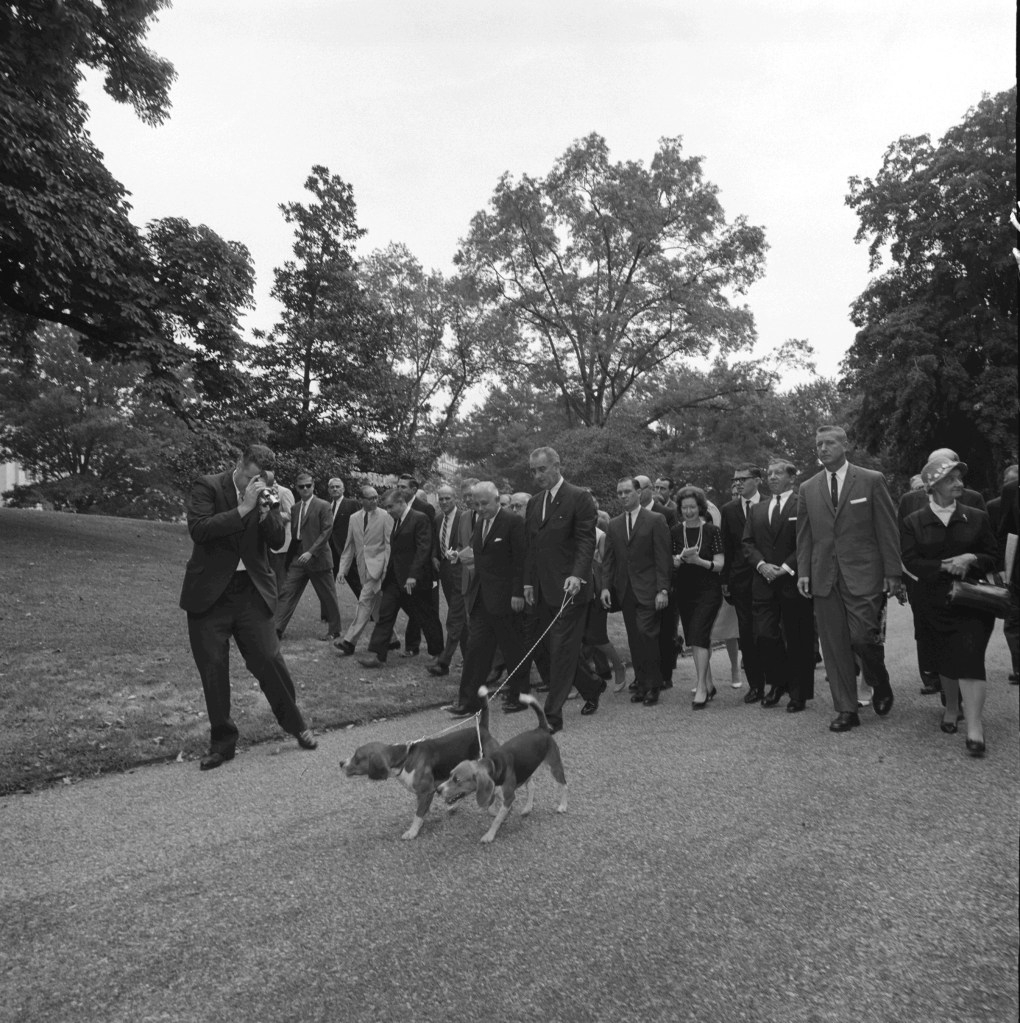
President Johnson said today that the time had come “to cease telling ourselves and the world that the destiny and fate of this nation will be decided by street rioters and night riders.” Addressing the first meeting of the National Citizens Committee for Community Relations, Mr. Johnson said it also was time “to cease this cynical guessing of who will be helped, who will be hurt, by disorders and disobedience and disrespect for the decency of our society.” “All will be hurt,” he said. “None will be helped.” The statement on “cynical guessing” was an apparent allusion to speculation on the effect of racial rioting on the voting in the November election. The President declared: “The question before our nation is not how whites will vote — or how Blacks will vote — next November. The question is how we shall work together and succeed for a hundred Novembers to come.”
The President spoke to the 450 members of the committee, which was established under the new Civil Rights Act, in the White House Rose Garden. The real problem, he suggested, is not “the shadow of race itself.” Rather, he said, it is “the darker shadow of indefensible counsel about what our response should be.” In both white and Black communities, he said, “men are being told that no answer is better than any answer, no progress is better than any progress, no peace is better than any peace.” There are only two courses open to the nation, Mr. Johnson said: “We can meet the challenge, or we can turn away from it. We can master the problem, or we can leave it to master us.”
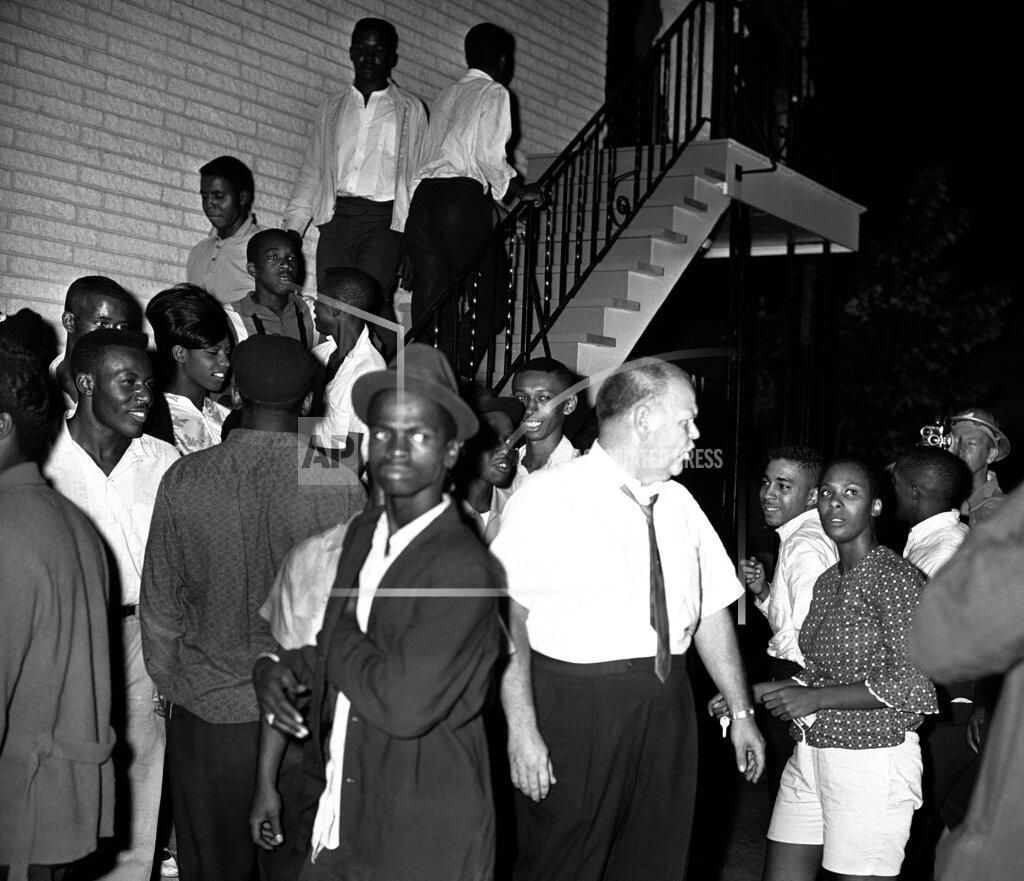
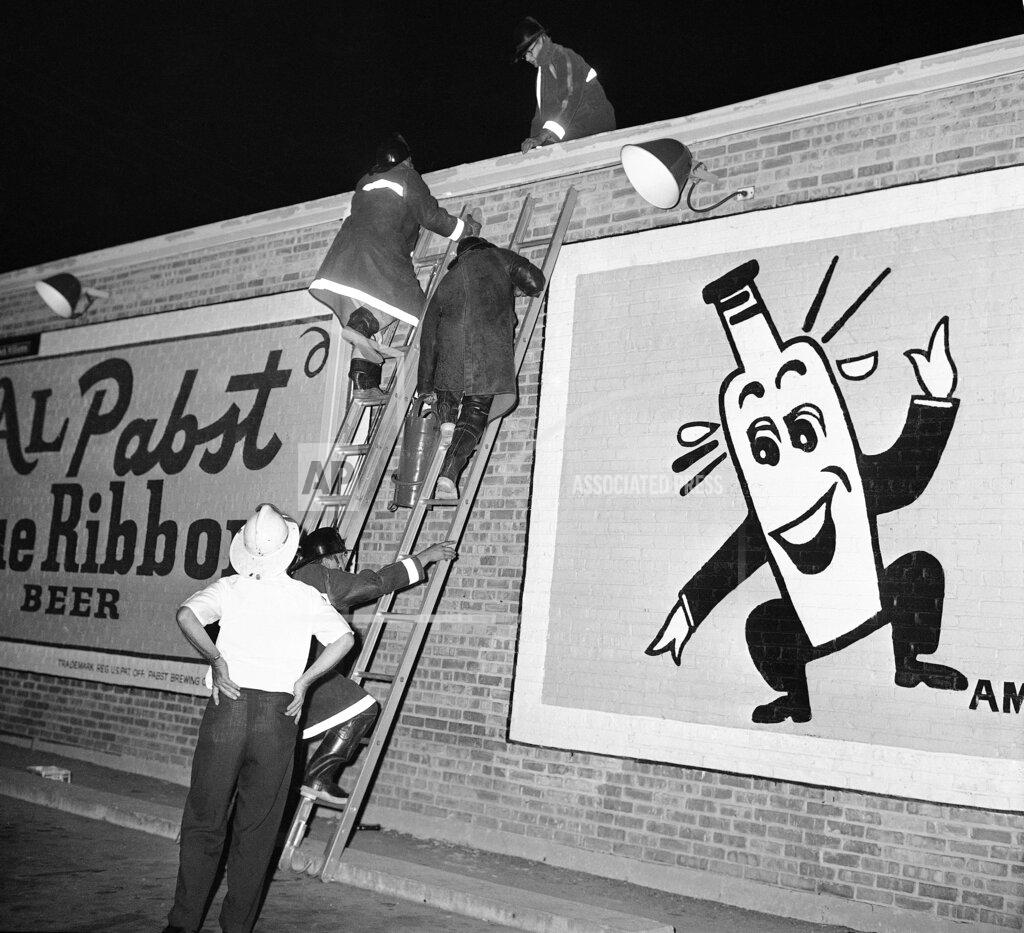
The clubhouse of the Dixie Hotel Golf Course caught fire tonight in the riot‐torn suburb of Dixmoor, and authorities said they believed the blaze was the work of arsonists. The fire burst forth soon after Sheriff Richard B. Ogilvie of Cook County had expressed hope that the “unusual quiet” meant an end to rioting by up to 1,000 Blacks during two nights. Sheriff Ogilvie said he believed the fire in the clubhouse of the daily‐fee, nine‐hole course, a half mile south of the riot area was deliberately set. He said the son of the golf course owner had seen three or four Black boys loitering near the clubhouse about 20 minutes before the structure burst into flames. Firemen from Harvey said they had the flames under control.
Elsewhere in the riot area, streets were nearly deserted. About 100 persons, a third of them newsmen, clustered in a parking lot across the street from the Dixmoor liquor store where the rioting began Sunday night. A tight police cordon around an area one‐half mile square maintained an uneasy peace. At barricades, officers questioned passersby and admitted only residents of the area and newsmen.
The Alabama Court of Appeals reversed today the conviction of 10 Freedom Walkers arrested a year ago while following the trail of a slain Baltimore mailman. In a brief opinion, the court said the facts brought out in the trial of the five white and five Back defendants “do not sufficiently show the commission of any offense.”
The walkers were charged with a breach of the peace and fined $200 each in County Court at Fort Payne June 6, 1963. They were en route from Chattanooga to Jackson, Mississippi, Along the route chosen by William Moire before he was slain in Alabama.
President Johnson and three civil rights workers slain at Philadelphia, Mississippi, were named to receive “Christian Citizens in Action” awards at the National Christian Missionary convention today. The organization is made up of Black members of the Christian Churches (Disciples of Christ). President Johnson, who is a member of the Disciples of Christ, was cited for the “personal moral leadership he has given the nation and the example he has set as a world leader in the field of civil rights.” James Chaney, Andrew Goodman and Michael Schwerner, the three civil rights workers whose bodies were found near Philadelphia, Mississippi, were honored as symbols of “the many who have given their lives for the cause of civil rights.”
The House and Senate in quick succession passed and sent to the White House today a compromise bill designed to keep imports of beef, veal and mutton 15 per cent below last year’s record level. There was opposition in both houses by some Democrats and Republicans. They protested that the bill would increase prices of hamburger and other inexpensive meats. Supporters argued that the bill would help restore slumping prices at the beef‐producer level without raising prices unreasonably for the consumer.
The Senate‐House compromise version was passed, 232 to 149, in a House roll‐call vote. Then the Senate adopted it by voice vote after several Senators had criticized the State Department’s opposition as “too much interfereence in domestic legislation.” The meats that have been coming in from Australia, New Zealand, Ireland and Mexico in increasing quantities until this year have been inexpensive meats for the most part. This year, those countries cut back their sales to the United States and began sending more meat to Europe.
The compromise had the backing of the cattle interests, which complained that the imports were causing a price slump in the United States market. It also had the reluctant consent of the State and Agriculture Departments, which feared that a quota system would weaken the position of American negotiators at Geneva who are trying to lower many trade barriers. Representative Wilbur D. Mills, Democrat of Arkansas, chairman of the House Ways and Means Committee, said under questioning that it was hoped the bill would help restore higher prices at the beefproducer level without causing “unreasonable prices” to consumers.
Still unreconciled to backing Senator Barry Goldwater for President, Senator Kenneth B. Keating announced yesterday that he would seek re‐election to a second term. The New York Republican said at a crowded news conference in the Overseas Press Club that he was still withholding his support from his party’s Presidential candidate because of their “deep differences.” “I seriously doubt that any voter in New York would be impressed by any lip service I might give Senator Goldwater or he might give me in the name of party unity,” the 64year‐old, white‐haired lawyer declared.
The Liberal Party’s State Policy Committee in New York joined yesterday in the drive to nominate Attorney General Robert F. Kennedy for U.S. Senator. The action, voted at a meeting on Monday night, was disclosed after an unannounced early‐morning conference at Gracie Mansion between Alex Rose, vice chairman of the party, and Mayor Wagner.
Under direct guidance from President Johnson, the Democratic National Committee has been converted into a highly complex and integrated campaign organization — with a blend of “Kennedy men” and “Johnson men” at the top. A number of innovations have been incorporated in the committee structure and campaign planning. The President is expeoted to announce soon that John M. Bailey will run the campaign in his capacity as chairman of the Democratic National Committee. In the last three Democratic campaigns, separate organizations largely bypassed the National Committee. Mr. Bailey, prominent in Connecticut politics for the last dozen years, was Northeastern manager for the Kennedy campaign in 1960 and was Mr. Kennedy’s choice for national chairman.
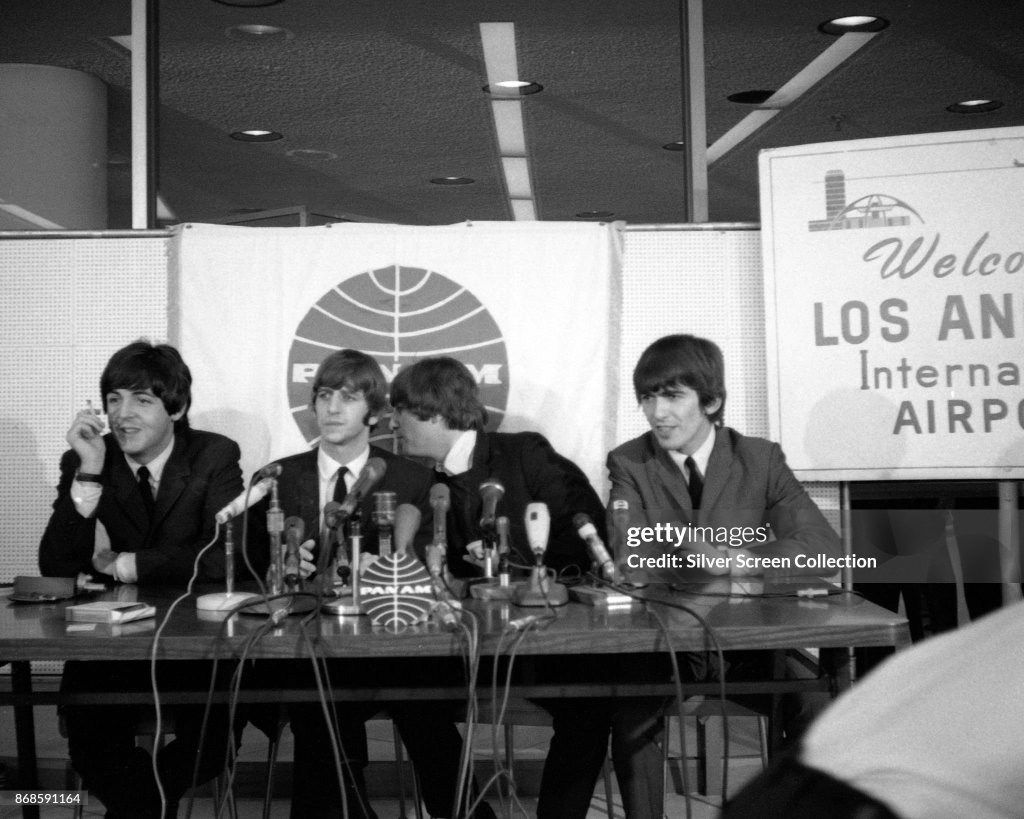
The Beatles arrive in San Francisco, California on their second U.S. visit, and first cross-country tour, encompassing 32 shows in 25 cities over 31 days.
In The Ashes, the five-match test cricket series between Australia and England, Australia retained its title despite having won only one of the matches, and despite the consensus that the English team was the better of the two. The other four meetings ended in draws, including the final match, which was ruined by the weather, giving Australia the 1-0 victory for the series.
At Tiger Stadium, the Detroit Tigers and California Angels swap 1–0 shutouts. Dean Chance wins the opener as Vic Power’s homer, off Hank Aguirre, is the only score. Chance allows two hits. The 22‐year‐old right‐hander walked three and struck out nine while lowering his earned run average to 1.60. Mickey Lolich wins game 2, allowing just three hits, all in the 1st inning. Lolich, who was given a special one‐day furlough from the Air Force National Guard, allowed only two men to reach base during the final eight innings while posting his 13th victory.
The New York Yankees lost another game tonight in the pattern that has proved so disturbing to them, all season. They were tied by Floyd Robinson’s three‐rur homer in the eighth and beaten, 4–3, by Mike Hershberger’s 10th‐inning single with two or and two out. The two key blows off Al Downing gave the Chicago White Sox a 2–0 lead in this four‐game series and a record of four victories in their last six games against the Yankees, who had swept the first 10 meetings between the teams. It kept the White Sox within a game and a half of the leagueleading Baltimore Orioles and dropped the Yankees four games off the pace. It also delighted a crowd of 35,403.
Norm Siebern and Boog Powell hit two‐run doubles and Robin Roberts and Dick Hall made them stand up as the American league‐leading Baltimore Orioles defeated the Boston Red Sox, 5–2, tonight. Roberts yielded seven hits in six innings, but was tough in the clutch. The 37‐year‐old hurler gained his 11th victory against five defeats.
Luis Tiant scattered six hits and struck out 12, leading Cleveland to a 5–1 victory over Kansas City tonight after the Athletics had walloped the Indians, 13–9, in the opener. Tiant recorded his sixth triumph against two defeats. The Indians scored three runs in the fourth inning of the second game, two on solo homers by Fred Whitfield and Tito Francona. In the opener, the A’s slugfest included Jim Gentile’s two-run homer and Rocky Colavito’s bases‐filled triple.
Joey Amilfitano hits a homer in the 8th and a 2-run double in the 16th as the Chicago Cubs top the first-place Philadelphia Phillies, 4–3, at Connie Mack Stadium. Clay Dalrymple’s solo homer in the bottom of the 16th, off winner Freddie Burdette, completes the scoring. This is Burdette’s lone Major League decision. The Phillies maintained their five‐game lead over the San Francisco Giants, who lost to Cincinnati, 1—0.
Chico Ruiz sped home from third on a disputed force play in the eighth inning as the Cincinnati Reds defeated the San Francisco Giants, 1–0, tonight behind Jim O’Toole’s four-hit pitching. With one out, Ruiz walked and reached second on Marty Keough’s bunt single. Vada Pinson then hit a fly to short center and José Pagan brushed into the center fielder, Willie Mays, as both raced for the ball. It dropped between them, filling the bases.
Joe Christopher slugged Pittsburgh Pirate pitching for a double, two triples, and a home run last night and set one record and matched two in the most productive performance ever turned in by a New York Met at bat. The 28‐year‐old outfielder also scored two runs and batted in three with 12 total bases that powered the Mets to a 7–3 victory over the Pirates. By the time Pittsburgh finally got Christopher out on a grounder to third base in the eighth inning, Alvin Jackson was within sight of his seventh victory of the season and the Mets were within sight of their third straight, which also equaled a season’s high.
Ray Sadecki scored his 15th victory and tallied the tie-breaking run tonight after belting a triple in the seventh inning as the St. Louis Cardinals defeated the Houston Colts, 5–2. Sadecki, who has lost nine games, scored on Lou Brock’s single off Don Larsen with two out. Sadecki earlier had doubled. The Cardinals’ left‐hander needed help from Barney Schultz in the seventh. Schultz went in after Jerry Grote walked and Eddie Kasko singled. The reliever got Joe Gaines on an inning‐ending grounder.
Dow Jones Industrial Average: 842.83 (+2.62).
Born:
Cliff Hicks, NFL cornerback (Los Angeles Rams, Buffalo Bills, New York Jets, Denver Broncos), in San Diego, California.
Kenny Walker, NBA small forward and power forward (New York Knicks, Washington Bullets), in Roberta, Georgia.
Andi Deris, German heavy metal vocalist (Helloween, 1994-present), in Karlsruhe, West Germany.
Craig Bierko, American actor, in Rye Brook, New York.
Edith Frost, American singer and songwriter, in San Antonio, Texas.
Died:
Hildegard Trabant, 37, was shot by East German border guards while attempting to cross into West Berlin. Unlike almost all other deaths at the Berlin Wall, Trabant’s killing would go unnoticed in the West until the discovery of the incident 26 years later in East German files in 1990.



 History Diaries