The Reich feels a Polish rebuff in ignoring its terms, calling for action in a matter of days. All political quarters and the press strove to emphasize today that the new crisis over Danzig and the Polish Corridor was rapidly coming to a climax and that “a German solution of the Polish problem” was merely a matter of days, and might even occur before “the Nuremberg party diet of peace” scheduled for September 2. There was gloomy unanimity in all German circles that the situation was rapidly taking a grave turn that might require early German action. And the responsibility for this turn for the worse was very emphatically put on Poland’s stubborn attitude and the “encircling powers” that are stiffening Poland’s back.
Having announced yesterday that the German terms include not only the unconditional return of Danzig to the Reich with a free port for Poland but also a solution of the Corridor problem on “a more solid and more substantial basis” than was offered by Chancellor Hitler to a “friendly” Poland earlier this year, German quarters reluctantly admitted today that Poland was showing no inclination to accept these terms and, in the words of authoritative press comment, “still rejects unconditional acquiescence to the German standpoint.”
This checks with Warsaw reports. that if, as is generally believed, Marian Chodacki, the Polish Commissioner in Danzig, yesterday took to Warsaw Herr Hitler’s ideas for a settlement of the Danzig and Corridor issues as revealed to Dr. Karl J. Burckhardt, the League of Nations Commissioner in the Free City, these ideas found no response whatever in the Polish capital, which chooses to regard Dr. Burckhardt’s trip to Berchtesgaden merely as a private enterprise.
In view of this new rebuff the press today concentrates on reports of new terrorism and mass arrests of Germans in Poland, which dominate the front pages, and find a climax in the following banner headline from the Voelkischer Beobachter: “Poland Threatens Massacres in Upper Silesia.” According to the charges in the press “the Polish terror has been raging in Upper Silesia since the beginning of the week,” the Polish insurgent organizations that captured Silesia from the Germans immediately after the World War are being armed and no fewer than 1,000 Germans have been thrown into Polish jails, where they are being beaten so that their cries can be heard in the streets, with the result that the German populace is in a panic and is fleeing into the woods or across the borders, which are being closed.
These charges and their sensational display, backed up with additional reports that no fewer than 2,000 Ukrainians have likewise been arrested and that the Poles are impressing Czechs for military service, are in every respect a repetition of the similar press campaigns against the Czechs that preceded the German march into the Sudetenland and have their own significance.
Poles deny tales of atrocities, but admit to some arrests of Germans along the border for espionage.
General Halder makes a strange entry in his diary: “Canaris checked with Section I (Operations). Himmler, Heydrich, Obersalzberg: 150 Polish uniforms with accessories for Upper Silesia.” The uniforms will be used on the night of the 31st, for the “Canned Goods” of Naujocks’ operation.
The semi-official Polish newspaper Kurjer Poranny demanded confiscation of property held by German citizens in Poland in retaliation for the confiscation of property owned by Polish Jews in Germany.
The German Government has refused admittance to many priests of Lower Tyrol who had been advised by the Holy See to accompany the populace on its emigration to the Reich, on the grounds that they constitute “undesirable elements,” it was learned from the Vatican today.
British Government quarters today rejected any suggestion of a four-power conference on Danzig and branded it as nothing but propaganda in the “war of nerves.” In the most emphatic terms it was stated that there could be no such conference without Poland and Russia. It was said, In fact, that Poland would have to be the principal country represented. This sounded like an announcement to Germany and Italy — and to any suspicious persons elsewhere — that the British Government just was not interested in another meeting of the four Munich powers to arrange a settlement of the 1939 crisis on the 1938 model. In any case, officials said rumors of such a conference were intended only to plant suspicion in Poland as to Britain’s intentions and to give “other powers” an opportunity to complain of the rejection of such a plan by what might then be called the “warlike democracies.”
Officials have said the impossibility of solving the Danzig problem by any such methods was obvious. And as a footnote it was added that nothing was known here of any peace conference and the British Government would not even express an opinion on the desirability of such a meeting, since it was not a matter for the British Government to decide.
London does not overlook the ominous resemblance between this week’s German press campaign against Poland and the campaign against the Czechs a year ago. It would be no surprise now to see the establishment of refugee camps on the German side of the Polish border and the creation of a “free corps” of Germans from the Corridor and former German parts of Silesia.
None of this is material for optimism, and yet British Government quarters try to give the impression of coolness and confidence over the present situation. The government here knew in advance of the mass arrests in Silesia, for there had been continual conferences between Foreign Minister Josef Beck and British Ambassador Sir Howard Kennard at Warsaw. The reaction here is full of approval for what is described as Poland’s calm and patience in the face of ever-increasing provocation.
Molotov is highly gratified by the German’s obvious haste to achieve a political agreement. Soviet Marshal Voroshilov, who is by now sure that neither the French nor the British mean business, dismisses their delegates for four days. The western Allies have dissembled and stalled too long; they have now run out of time.
Sumner Welles, U.S. Under Secretary of State, passes information concerning the German overtures to Moscow to British Ambassador Sir Ronald Lindsay, who immediately telegraphs London, confident his message will be in the Foreign Office first thing in the morning, London time. It is, but will not be deciphered for four days.
A banquet given by the French Embassy last night in honor of War Commissar Klementy E. Voroshiloff, in return for the Soviet Government’s banquet last Friday to the British and French military missions here, was characterized by the same cordial atmosphere that has marked the negotiations and social contacts between the British and French missions and the Russians since the missions arrived in Moscow.
[Ed: But no progress towards a deal; while the Russians are now preparing to deal with Hitler.]
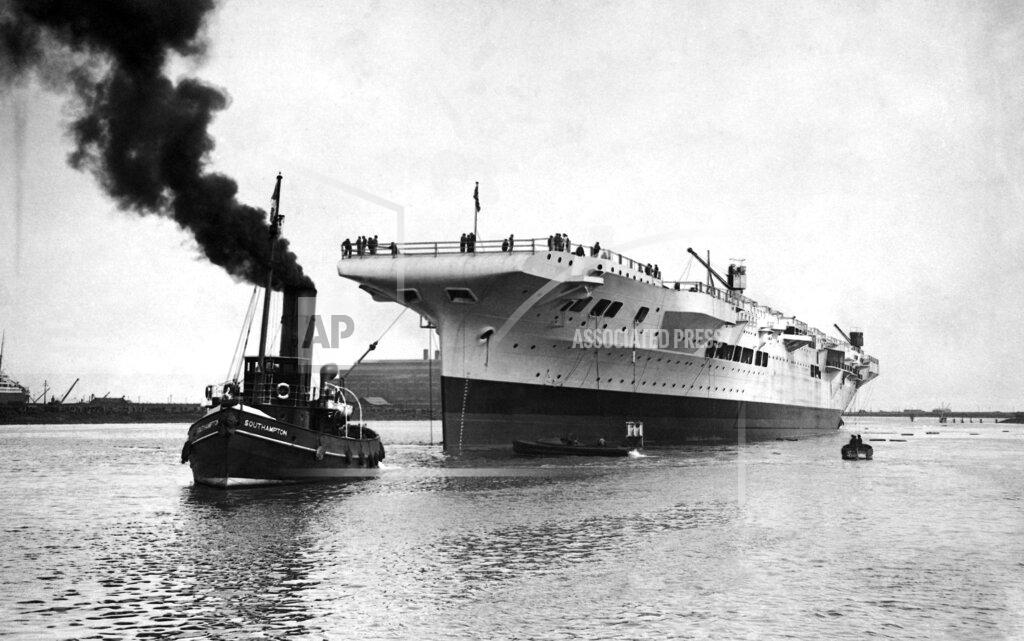
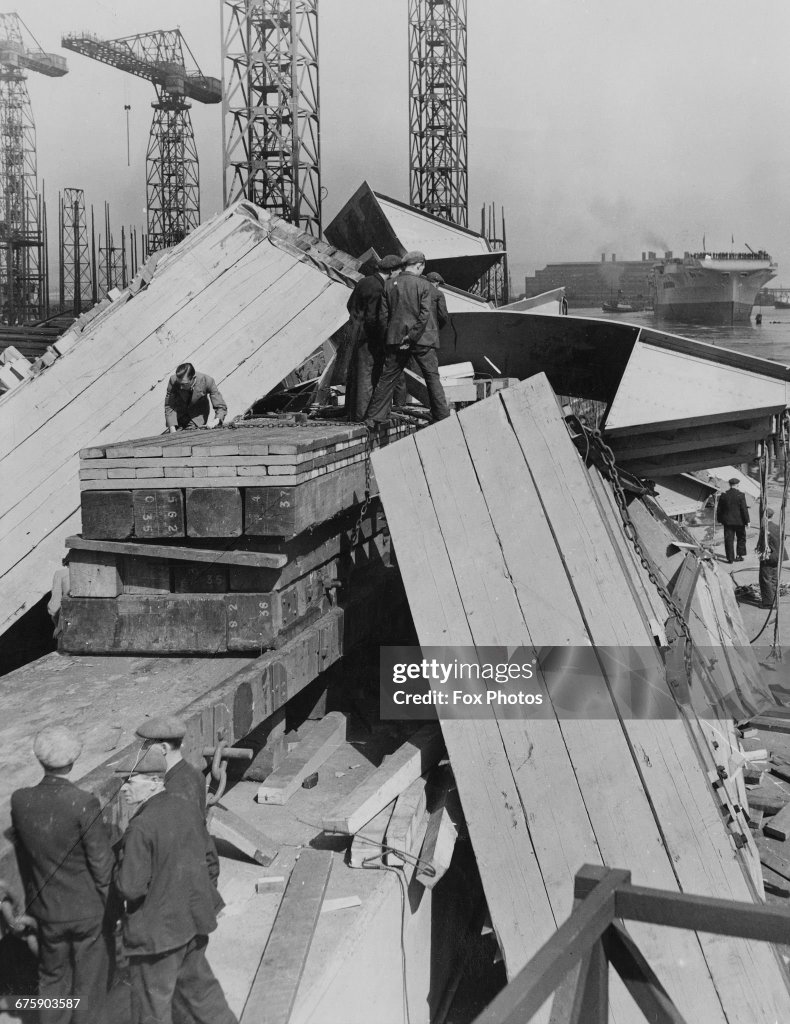
Amid the crashing and rending of huge timbers, the cries of injured persons and blasts from warning sirens, Britain’s new £4,000,000 aircraft carrier, HMS Formidable, slipped from her forward “poppet,” or launching cradle, in Harland & Wolff’s yard in Belfast today and went staggering backward into the sea twenty-five minutes before she was due to be launched. One woman, the wife of a shipyard worker, was killed and twenty other persons were injured by timbers from the launching ways sent flying right and left by the 23,000-ton ship in its wild and uncontrolled dive into the water.
Lady Wood, Air Minister Sir Kingsley Wood’s wife, who had just arrived on the platform to perform the naming ceremony, hurled a bottle of wine after the retreating ship and then burst into tears as workmen rushed amid the wreckage searching for injured mates. Scores of shipwrights, who were under the vessel knocking away at the keel blocks, were trapped between the launching ways as it thundered over them. They escaped death by inches.
The British passenger ferry Prague ran aground at Harwich, Essex. She was refloated later that day.
A serious incident took place today on the Hungarian frontier near Ateiashulnou near Salonta Transylvania, when a Rumanian frontier patrol was attacked while making its rounds. Several shots were fired, one soldier was shot dead, a sergeant was bayoneted and is in serious condition.
Rumania placed an additional order to purchase 6 more German Heinkel He 112 fighters.
Britain presses its plans for Palestine, confident of success in the League of Nations Council. The Mandates Commission finds Britain’s policy contrary to the original commitment. The League of Nations made public today the report of its Permanent Mandates Commission on the work of its thirty-sixth session, held in Geneva last June. This report, which will be submitted to the League Council at its next session, opening here on September 8, is unanimously of the opinion that the recent British White Paper is not in accordance with the Interpretation that the Mandates Commission, in agreement with the League Council and the mandatory power [Britain), had always placed on the Palestine Mandate.
However, as to whether the mandate might not be open to a new interpretation, that, while still respecting its main principle, would be sufficiently flexible so that the White Paper policy would not appear to be at variance with it, the commission’s members did not agree. Four of them — the chairman, Dr. Pierre Orts of Belgium, the vice chairman, William E. Rappard of Switzerland, Baron Frederick Mari van Asbeck of the Netherlands and Mlle. Valentine Dannevig of Norway — felt unable to state that the White Paper policy was in conformity with the mandate, any contrary conclusions appearing to them to be ruled out by the very terms of the mandate and the fundamental intentions of its authors.
Three other members — Lord Hankey of Britain, Augustin Giraud of France and Count Franco de Penha-Garcia of Portugal — were unable to share that opinion. and considered that the existing circumstances would justify the White Paper policy provided it was unopposed by the League Council. The report, covering seventeen printed pages, does not make any. recommendations. It simply “passes the buck” to the council. What action the council will take regarding it remains to be seen, but there appears to be little reason to suppose that it will reject either the report or the White Paper proposals.
Egypt’s new Premier Ali Maher Pasha forms a Cabinet.
Diplomatic reports indicating that Europe is approaching another major crisis like that of last Fall were transmitted today by the State Department to President Roosevelt, who is vacationing off the Canadian coast.
Leaders of industry, banking, labor, commerce, agriculture and the professions were asked today by John W. Hanes, acting Secretary of the Treasury, to cooperate in the study of the Federal tax structure being made by the Treasury and a subcommittee of the House Ways and Means Committee.
The new War Resources Board, of which Edward R. Stettinius Jr., chairman of the United States Steel Corporation, is the chairman, met for the first time in the office of Assistant Secretary of War Louis Johnson today.
U.S. Secretary of the Interior Harold Ickes suggests using Alaska as a refuge. He favors admitting those oppressed abroad to the territory, citing the need to populate the area. Modification or amendment of existing laws to facilitate the immigration to Alaska of political refugees and other aliens whose ability and skills would contribute to the development of the Territory is favored by Secretary Ickes and under consideration by officials of the Interior and Labor Departments.
The convention of the New York State Federation of Labor, at its final session yesterday, adopted a resolution condemning the National Labor Relations Board, charging discriminatory construction and administration of the National Labor Relations Act, and demanded amendment of the law in a manner designed to eliminate abuses if the board failed to alter its conduct. The resolution characterized the conduct of the board as “unfair, inequitable and subversive of the true principles of collective bargaining,” particularly with respect to the rights of craft unions and groups. The resolution charged that the NLRB had so construed the law “as to deny minority craft groups any right of direct, independent representation to bargain collectively with their employers” and “has proven its blas against the fundamental rights of minority craft groups to bargain collectively for themselves.”
A conspiracy by which five New York WPA timekeepers made it possible for twelve WPA workers to continue collecting salaries after they had left to take private jobs was charged in an indictment handed up yesterday by a Federal grand jury. All seventeen of the men involved were named in the indictment.
Five armed men held up the Wyoming Bank and Trust Company, in the Olney section of Philadelphia, early this afternoon and escaped with $37,000.
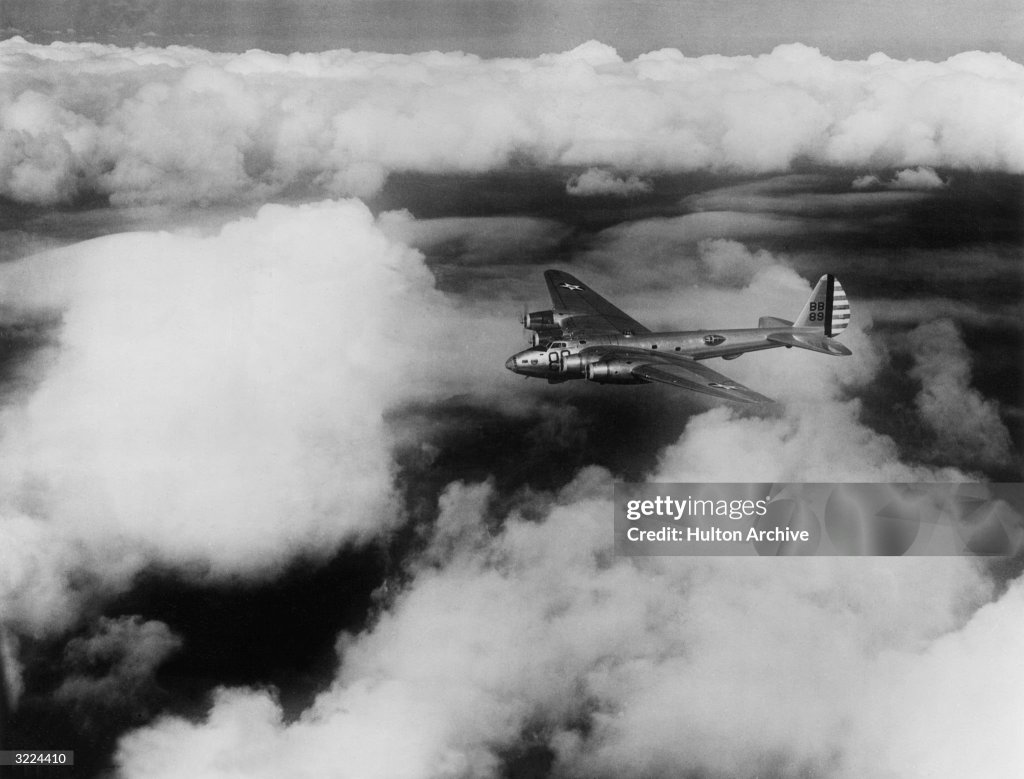
The Douglas DB-7 Boston (A-20 Havoc) attack bomber makes its first flight. The Havoc was used as a light bomber, attack aircraft, night intruder, night fighter, and reconnaissance aircraft. Designed to meet an Army Air Corps requirement for a bomber, it was ordered by France for their air force before the USAAC decided it would also meet their requirements. French DB-7s were the first to see combat; after the fall of France, the bomber served with the Royal Air Force under the service name Boston. From 1941, night fighter and intruder versions were given the service name Havoc. In 1942 USAAF A-20s saw combat in North Africa. It served with several Allied air forces, principally the United States Army Air Forces (USAAF), the Soviet Air Forces (VVS), Soviet Naval Aviation (AVMF), and the Royal Air Force (RAF) of the United Kingdom. A total of 7,478 aircraft were built, of which more than a third served with Soviet units. It was also used by the air forces of Australia, South Africa, France, and the Netherlands during the war, and by Brazil afterwards.
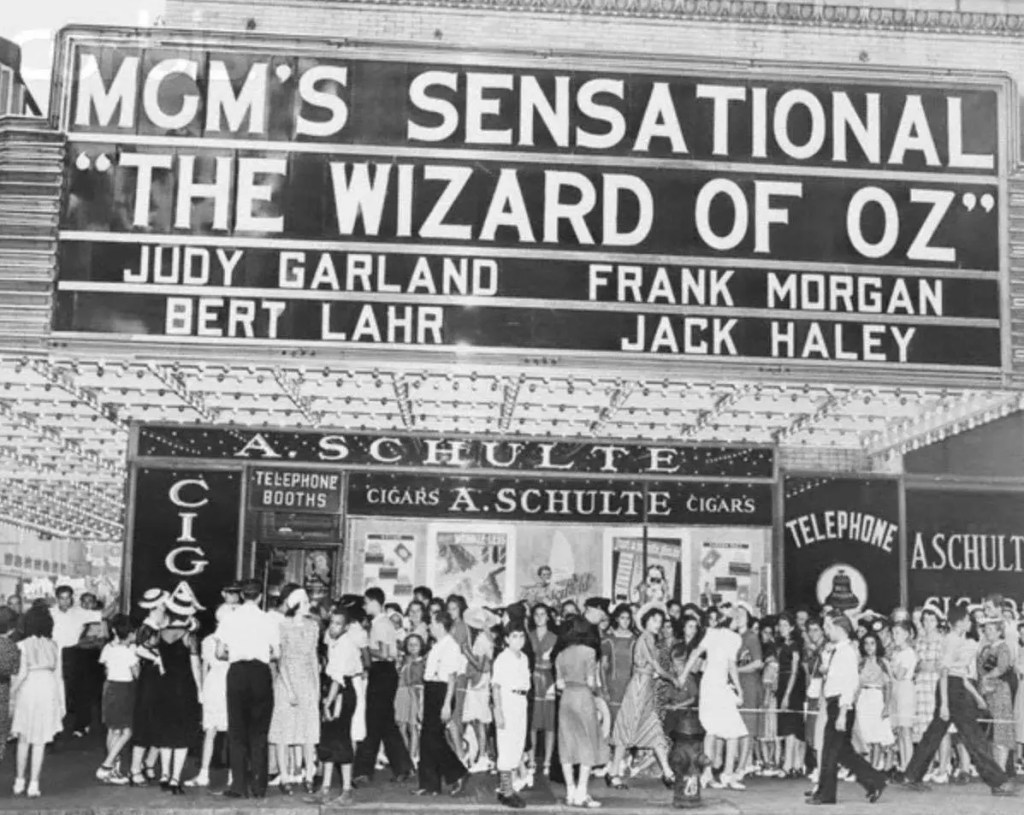
Musical film “The Wizard of Oz”, starring Judy Garland, Ray Bolger, Bert Lahr, Jack Haley, and Margaret Hamilton opens at Loews Capitol Theatre, NYC.
Behind gilt-edged pitching by Lefty Grove, the Boston Red Sox defeated the Philadelphia Athletics, 7–1, today before a ladies’ day crowd of 12,302. The victory gave Boston an even break in the two-game series with Philadelphia. Grove kept ten hits scattered, hurling best with men on the bases. The lone tally off him came in the second inning when Frank Hayes scored on an infield out. The Red Sox pounded seventeen hits. fifteen at the expense of the starting pitcher, Jim Reninger, just recalled from Baltimore.
The Cincinnati Reds pull off their second big rally in 3 days as they spot the Chicago Cubs a 6–1 lead in the 4th inning, then rally to win 7–6 in 10 innings. Backup backstop Dick West drives in the winner with his 2nd (of 4 this year) Major League hit. Eddie Joost scores the winning run. Whitey Moore got the win for the Reds.
The red-hot Red Birds of St. Louis handed the Pirates their ninth consecutive defeat today, 4–2, as the Cardinals fought their way to their fourth straight victory and the sixteenth in their last eighteen starts.
A Japanese army spokesman disclosed today that Japan had refused to accept responsibility for the destruction of two British ships in air raids at Ichang Aug. 6. The British had protested the bombings, in which two Yangtze River steamers were destroyed near Ichang, about 1,000 miles upriver from here, and a British gunboat narrowly escaped damage.
A representative of the Japanese Embassy in Peiping has informed the United States Embassy there that the Japanese military authorities very much regret the recent slapping of Mrs. Mary F. Richard, an American, by a Japanese sentry. This was revealed today by Sumner Welles, acting Secretary of State, who said that the Japanese representative further stated that Japanese military authorities were now making a thorough Investigation of the case. Mr. Welles emphasized that the report received by the State Department on the matter was preliminary.
Hopes voiced in the Japanese press that the Anglo-Japanese conversations would reopen today have been disappointed. Nichi Nichi declares the conference is becoming shopworn.
The Australian barge Robbie Burns sank north of Kangaroo Island.
Dow Jones Industrial Average: 138.33 (-0.14).
Born:
Luther Allison, American blues guitarist (“Bad News Is Coming”), in Widener, Arkansas (d. 1997).
Anthony Valentine, British actor (“Colditz”), in Blackburn, Lancashire, England, United Kingdom (d. 2015).
Chico Maki, Canadian NHL right wing (NHL All-Star, 1961, 1971, 1972; Chicago Black Hawks), in Sault Ste. Marie, Ontario, Canada (d. 2015).
Larry Comley, NBA guard (Baltimore Bullets), in Kansas City, Kansas (d. 2006).
Naval Construction:
The Royal Navy Tree-class minesweeping trawler HMS Acacia (T 02) is laid down by the Ardrossan Dockyard (Ardrossan, Scotland); completed by Plenty.
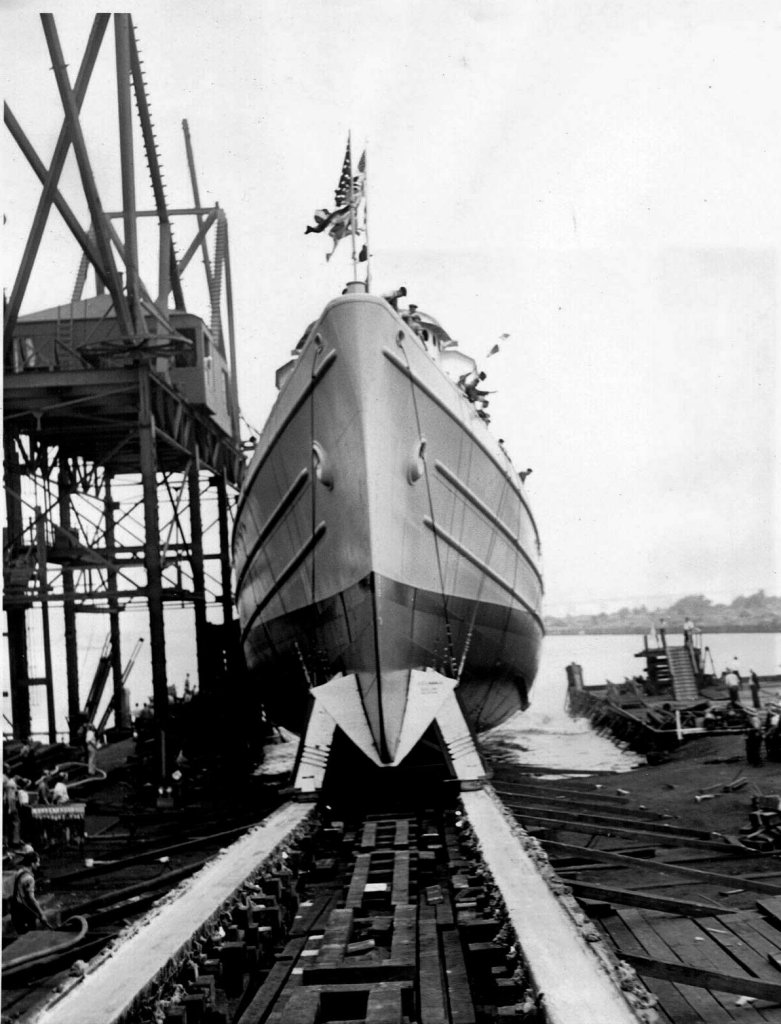
The U.S. Navy fleet tug USS Navajo (AT-64), lead ship of her class of 28, is launched by the Bethlehem Steel Corp. (Staten Island, New York, U.S.A.).
The Royal Navy auxiliary minelayer HMS Port Quebec (M 59) is launched by Joseph L. Thompson & Sons (Sunderland, England, U.K.).
The Marine Nationale (French Navy) Élan-class aviso dragueur de mines (minesweeping sloop) L’Impetueuse is launched by At. & Ch de France (Dunkirk, France).
The Royal Navy Illustrious-class aircraft carrier HMS Formidable (67) is launched by Harland & Wolff Ltd. (Belfast, Northern Ireland).

 History Diaries