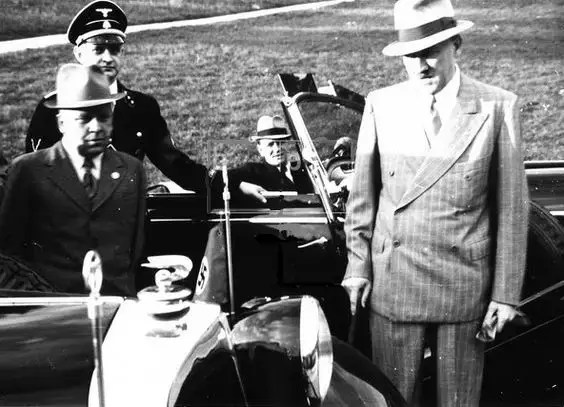
Germany reveals its demands on Poland: it wants Danzig and the Polish Corridor. After a three-day wait following the conversations between Joachim von Ribbentrop and Count Clano, the German and Italian Foreign Ministers-a wait obviously designed to confuse, unnerve and draw out the other side-Germany today began to reveal her terms for a settlement with Poland and at the same time initiated a political and propagandistic offensive for putting them into effect. The most significant thing about these terms is that they now go beyond the Danzig issue and categorically raise the problem of the Polish Corridor [the Polish Province of Pomorze], which had been dropped in recent months and which involves the problem of a new partition of Poland. As outlined by the Wilhelmstrasse spokesmen and used an the basis of the press campaign that started with a bang today, these terms may be described as follows:
- The unconditional return of Danzig to the Reich, with economic facilities, including a free port, for Poland.
- “A far more solid and more substantial solution” of the Corridor problem than the “extraterritorial corridor through the Corridor” that Chancellor Hitler proposed to a “friendly” Poland earlier this year, although Poland’s right to “free and secure access to the sea” is still acknowledged by Germany.
Whereas these terms are purposely kept vague because they are designed to raise the whole problem of a new German-Polish settlement and provide a basis for discussion, their general trend, revealed more precisely in the implications of the press campaign than in official comment, is obvious.
They are designed to pave the way for the return of all or most of the territories taken from Germany and allotted to Poland by the Treaty of Versailles, in return for which Germany promises Poland free and secure access to the sea, presumably along the lines conceded to Lithuania, which after the surrender of Memel received a free port in Memel and free access to it. In framing these terms the Wilhelmstrasse takes its legal stand on the note of Secretary of State Robert Lansing of November 5, 1918, which the Germans characterize as a “preliminary peace treaty,” to which they agreed and which, with some exceptions extraneous to the present issue, proclaimed Woodrow Wilson’s Fourteen Points as binding for all the allied and associated powers.
Therewith, the Wilhelmstrasse argues, the allied and associated powers also accepted the Thirteenth Point, which provided for “an independent Polish State” that should include territories inhabited by indisputably Polish populations to which free and secure access to the sea would be assured and whose political and economic independence and territorial integrity would be guaranteed by international covenants, but which provided for nothing more.
A Polish soldier was killed 20 yards (18 m) inside the Danzig border. Polish sources said he had crossed over by mistake and was shot without receiving any kind of warning beforehand. In retaliation, Polish military guards were given orders to shoot on sight any uniformed German or Danzinger in Polish territory.
The Nazis, it is felt in Warsaw, are deliberately increasing the tension between Poland and Danzig and will try to provoke incidents on the frontier, at least for the duration of their propaganda campaign for a “just settlement” of the Danzig problem, calling for the return of Danzig to the Reich with a minor concession to Warsaw. The new scheme is bound to fail, it is maintained. No settlement is possible that gives the Reich control of Danzig and the mouth of the Vistula.
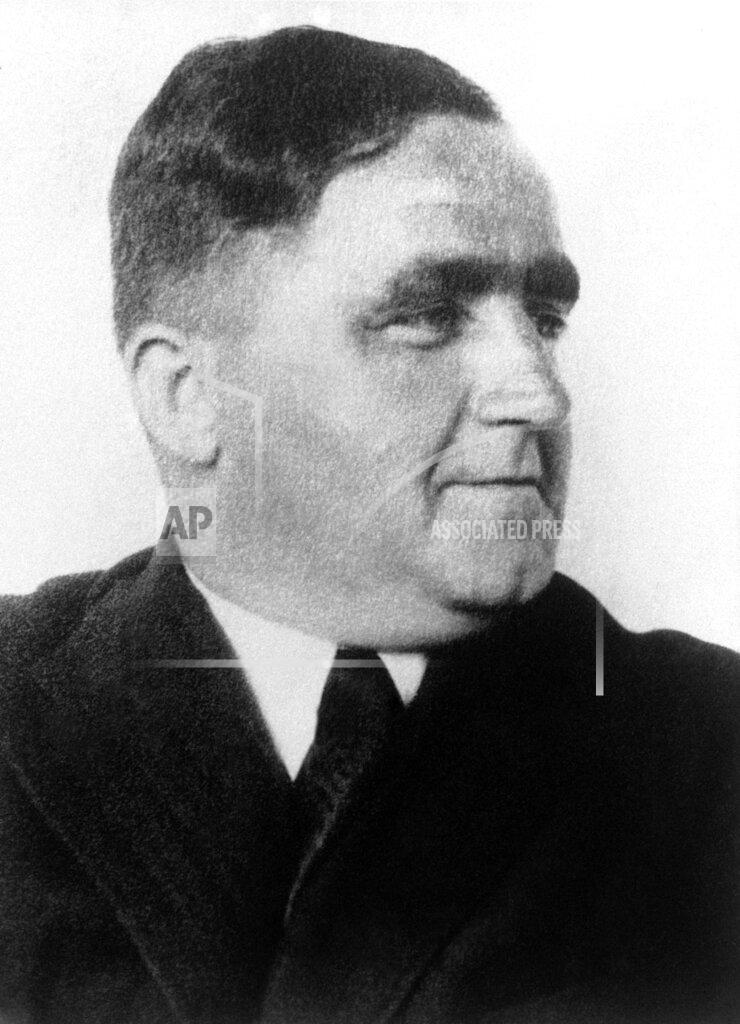
The leader of the German minority in Poland, Senator Rudolph Wiesner, head of the pro-Nazi Young German Party, was arrested today in Katowice and accused of contacts with an organization which, according to a communiqué, was responsible for spying and terrorist activities in Polish Upper Silesia. The headquarters of this organization was in German Upper Silesia and it had many agents among the German minority. These agents supplied the organization with military information and smuggled cars and documents across the frontier.
Nearly 100 men, mostly German-Polish citizens, but also several Reich Germans, were arrested. The offices of the Young German Party in several towns were raided by the police and the party was dissolved. The pro-Nazi trade union was also banned. One of those arrested was Paul Kaleta, who is suspected of the murder of a Polish policeman in Polish Upper Silesia. Senator Wiesner was appointed to the Senate by President Ignaz Moscicki. He now faces a death sentence or many years in prison if cooperation with the spy organization is proved.
The Reich army is ready on the Polish border, prepared to enforce Hitler’s claims. From the high Tatra Mountains in Slovakia to the Baltic, the German Army, renouncing the formality of mobilization, now is ready at any moment to enforce, if necessary, Chancellor Hitler’s demands for unconditional return of Danzig to the Reich and for the physical junction of East Prussia to Germany proper. Swiftly the region along the Moravian-Polish border in the south is being fortified. For some time mid-August has been mentioned as the time for German preparedness measures to be completed. Farmers said they had been ordered to have all their crops harvested by that time. Young army officers disclosed either that their customary August leave had been canceled or, if they were lucky enough to get a furlough, that they had to report by August 15.
Hitler closed the border with Poland at Upper Silesia, for a stretch of 70 miles.
German Foreign Minister Ribbentrop, at his Berchtesgaden-area castle located in Fuschl, receives a report from his ambassador to Moscow, Friedrich Werner von der Schulenburg, about the meeting held the previous day with Molotov in Moscow. The ambassador’s report states that Molotov received Ribbentrop’s statement of a desire for a rapprochement with the USSR “with the greatest interest” and that he would be in touch with the Germans after discussing it with Stalin.
Hitler is excited when he sees the report and tells Ribbentrop to respond affirmatively to several specific questions posed by Molotov, specifically:
Did German wish to conclude a non-aggression pact with the USSR?
Would the Germans pressure the Japanese to stop attacking the Soviets in the Far East?
Would the Germans consider a “joint guarantee” of the Baltic states?
The question of the Baltic states, of course, would be a critical part of the later treaty. Ribbentrop also puts in his reply that he would be willing to visit Moscow to finalize a deal any time after 18 August 1939.
Ribbentrop cables von der Schulenberg, telling him that all Molotov’s conditions can be met.
Baron Ernst von Weizsaecker, State Secretary in the German Foreign Office, tells Sir Neville Henderson, British Ambassador to Berlin, “that Russian assistance to the Poles would not only be entirely negligible, but that the U.S.S.R. would even in the end join in sharing in the Polish spoils.”
Captain Doenitz arrives at Kiel, the main U-boat base, and begins to implement plans for Fall Weiss (Case White) the projected attack on Poland.
Captain Gustave Bertrand of the French Signals Intelligence gives to a British Secret Service Liaison officer at Victoria Station in London a Polish-built copy of the German Enigma coding machine and much related material.
The principal theme of today’s Italian newspaper comment is how useless it is for Poland to consider war against Germany and Italy, with Great Britain and France too far away to render swift aid.
Viscount Halifax, the Foreign Secretary, went back to Yorkshire today to resume his holiday apparently unruffled by the diplomatic activity of the past few days on the part of Germany and Italy.
The Czech Government’s vigorous drive against fascist groups in Moravia has been reinforced by a whirlwind tour carried out, by Radula Gajda, leader of the former Czech fascist party but in recent months a loyal supporter of Protectorate President Emil Hacha’s National Unity party.
Denmark suspects sabotage following an air crash. Baggage is searched for explosives or flammable material.
The Swiss Federal Council has adopted a new decree designed to assure that adequate supplies of primary foodstuffs will be available in the country in time of war or economic blockade.
The British tug Cabo Sardao capsized and sank in the Tagus whilst assisting RMS Vandyck. She was refloated some months later, repaired and returned to service.
The U.S. Ambassador in Moscow, Russia warns Soviet Foreign Minister Vyacheslav Molotov that the United States believed Germany will betray the Soviet Union even if the two countries engaged in an alliance.
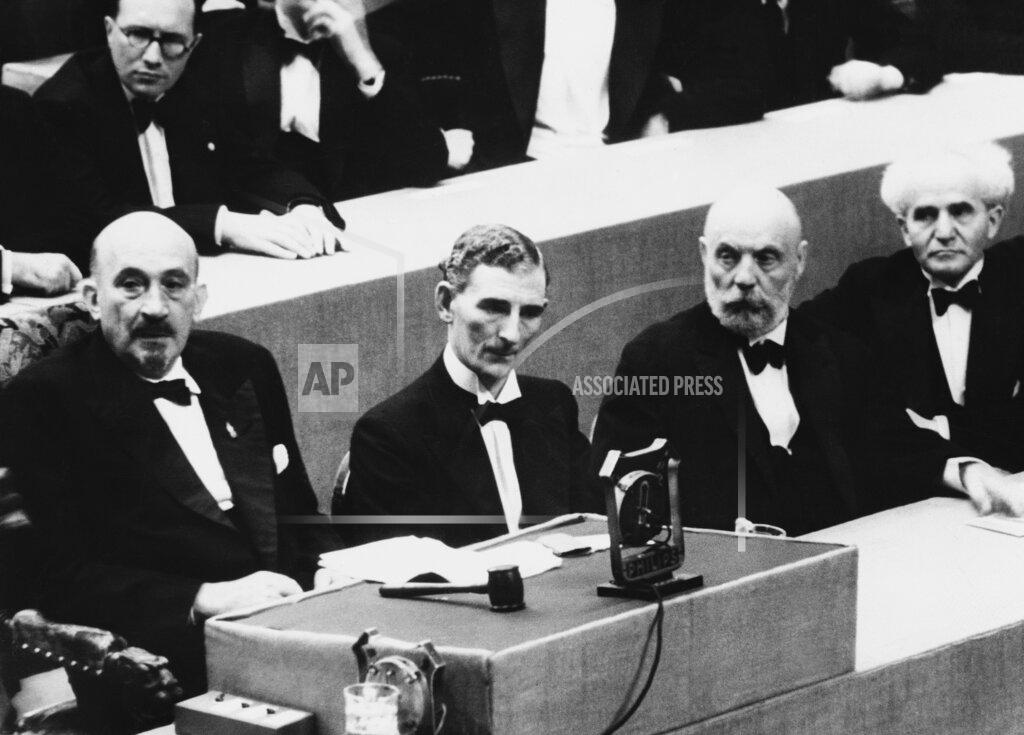
The Twenty-first World Zionist Congress meets in Geneva. It strongly opposes the British White Paper and expresses concern for the fate of Jews in Germany, Poland and the rest of Eastern Europe.
Addressing the twenty-first session of the World Zionist Congress at its opening meeting here tonight, Dr. Chaim Weizmann, president of the World Zionist Organization, defended his policy on Palestine and declared “without foundation” a suggestion that this policy was “bankrupt.”
The League of Nations’ Permanent Mandate Commission rules that the British White Paper is inconsistent with provisions of the Mandate
Isolationist U.S. Senators assail President Roosevelt, saying the President would find another foreign war desirable. President Roosevelt was pictured as “looking upon another foreign war at this time as somewhat desirable” in a statement issued today by Senator Nye of North Dakota, one of the leaders of the isolationist group in the Senate and an opponent of the Administration’s Neutrality Bill, which failed of enactment at the last session of Congress.
A fist fight between Representative Starnes of Alabama and Fritz Kuhn, German-American Bund leader, was threatened for a time today when the Special House Committee Investigating Un-American Activities resumed its sessions. The flare-up came when Mr. Kuhn banged his fist on a table and shouted “It’s a lie” to Mr. Starnes’s question whether the Bund wanted to establish the Nazi form of government in this country.
“Don’t you call me a liar,” Mr. Starnes roared back, leaping from his seat and plowing through photographers toward the end of the table where the witness had risen to his feet. One Capitol policeman. leaped in front of the Representative as another put himself in front of the bund leader. Chairman Dies pounded his gavel and yelled, “Sit down, Joe,” and Mr. Starnes returned to his seat.
Mr. Kuhn was the only witness in a day devoted to his and the Bund’s background and activities. The witness’ answers were often incomplete due in part to the fact, he said, that he has not had access to the organization’s records for several months. For a time, he explained, they were in the possession of William B. Herlands, New York City Commissioner of Investigation, while now District Attorney Dewey holds them in connection with the New York indictment charging Kuhn with misappropriation of funds.
Prospects of open union warfare in the amusement industry loomed anew last night after the Associated Actors and Artistes of America, the A.F. of L. parent of actor unions, flatly refused to accept in full the A.F. of L. executive council’s proposed settlement of the Four A’s row with the stagehands and Sophie Tucker’s American Federation of Actors.
Secretary of Labor Frances Perkins has requested officials of Armour Co. to confer with her here on the labor situation in their plants which, a delegation of packing house workers warned her today, might lead to a strike involving the entire packing industry before Labor Day.
Beset by a heavy fog on his cruise in Canadian waters, President Roosevelt reached the Cape Breton port of Sydney, Nova Scotia, in midafternoon and ordered the cruiser USS Tuscaloosa to remain overnight to await better weather.
Whether the Marxist philosophy advocates the overthrow of the government by force and violence was the main subject of inquiry today at the Harry Bridges deportation hearing in San Francisco.
The Bethlehem Steel Company today petitioned the United States Circuit Court of Appeals to set aside a National Labor Relations Board order requiring it to disestablish its employe representation plan.
The Public Works Administration ordered a 50 percent slash in its field and office forces today, and the Bituminous Coal Division dropped forty-three administrative employes, largely in the higher salary brackets.
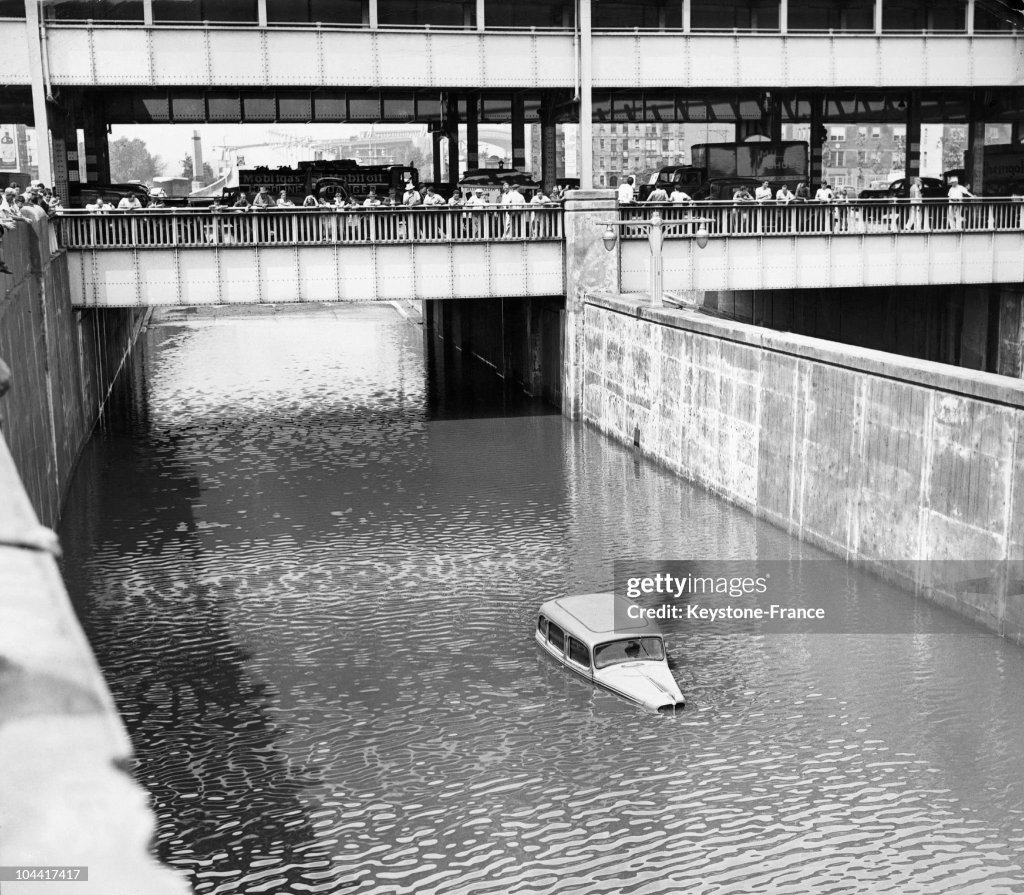
A cloudburst in New York over the Astoria and Long Island City sections of Queens at noon yesterday stopped service on one line of the Independent subway from 12:08 to 9:08 PM, brought death to a WPA worker and injuries to three of his companions and caused thousands of dollars worth of property damage.
Mayor Frank Hayes, former Lieutenant Governor of Connecticut, and nineteen others were found guilty late today of conspiring to cheat and defraud the city of Waterbury of more than $1,000,000 from 1930 through 1938.
Marius Russo hurls a four-hitter and Joe DiMaggio clouts his 17th home run of the season as the New York Yankees shut out the Washington Senators, 3–0. DiMaggio also had a double and a single.
The Cleveland Indians pounded the St. Louis Browns deeper into the cellar today with a doubleheader victory, 3–0 and 7–1. Mel Harder posted the shuout in the first game, allowing just seven hits.
The New York Giants suspend second baseman Burgess Whitehead, who bizarrely will show up the next day in full uniform at Yankee Stadium and ask to work out. Yankee manager Joe McCarthy refuses. Whitehead rejoins the Giants a few days later, but he will be suspended again in mid-September after leaving the team.
On the field, lanky Cliff Melton gets his 8th victory as the Giants down the Brooklyn Dodgers, 7–3. Melton helped his own cause with three hits.
Augie Galan whipped the Cincinnati Reds today, mostly by himself; his double and homer accounting for the 2–1 victory by the Chicago Cubs.
At Forbes Field, St. Louis Cardinal outfielder Terry Moore belts two homers, both inside-the-park, in the Cards sweep of the Pittsburgh Pirates, 4–3 and 3–0. In the next 50 years, the only National Leaguer to hit two inside-the-park in a game will be Hank Thompson, in 1950.
Secretary of State Eduardo Hay’s statement of the Mexican policy in the oil controversy caused an extraordinary wave of intransigence to sweep over Mexico today. The Senate, Chamber of Deputies, labor unions, political leaders. and newspapers vie with each other: in extolling President Lazaro Cardenas for the unyielding attitude he has maintained so far. All join their voices in an overwhelming chorus, urging him not to retreat before the “impossible” demands. of the “imperialist” companies. The opinions of those — and there are many — who fear economic consequences to Mexico of President Cardenas’s uncompromising policy are completely swamped by the cataracts of prevailing nationalism.
The State Department’s informal intervention in the Mexican oil controversy was the unwitting cause of the breakdown in the negotiations between the Mexican Government and the American oil companies, it was indicated today by Dr. Francisco Castillo Najera, the Mexican Ambassador. He referred to a project injected a fortnight ago by Acting Secretary of State Sumner Welles calling for tripartite control of the directorates of the oil companies in Mexico — three members of each board to be named by the companies, three by the Mexican Government, and three to be drawn from a panel established jointly by the American and Mexican Governments.
Argentina is preparing to lead the Latin-American countries, presenting a solid bloc against Generalissimo Francisco Franco as chief of State of Spain on his refusal to recognize the principle of diplomatic asylum. The Chilean Embassy in Madrid is harboring 17 opponents of Franco, and Franco wants them.
The Japanese occupy the Hong Kong border. They drive the Chinese 13 miles from the border of the British territory. More than 1,000 Japanese troops invaded Chinese territory adjoining the border of Hong Kong leased territory from Shumchun to Shataokok today after aircraft had scattered small guerrilla units. Only peasants futilely opposed the Japanese with weapons or farm implements. The defenders were executed immediately by the Japanese. Soldiers of the British Middlesex Regiment and the Rajputana Rifles and policemen lined the barbed wire frontier. They assisted wounded Chinese and other refugees, nearly 1,000 of whom were taken to hospital and food stations that were hurriedly erected.
The British had been warned forty-eight hours before by the Japanese who brought supplies, indicating they planned a permanent stay as neighbors of Hong Kong. Rumors that most of the invaders. were Chinese mercenaries from Shantung were not confirmed, but it is unusual for the invaders to employ so many Japanese troops in minor operations in the south. After preliminary attacks on Shumchun the Japanese ended unnecessary killing and established pacification groups in each village. They prevented villagers from escaping to Hong Kong. Toward evening they induced many Chinese to return to their homes, promising they would not be molested. The Chinese guerrillas escaped eastward toward Bias Bay, where Japanese warships have an important base.
Japanese forces drove Chinese from a thirteen-mile section of Kwangtung Province bordering British Hong Kong today in a swift mop-up operation which brought British troops into precautionary positions on this side of the boundary. Japanese officials said the drive, which gave the invaders control of all but seven miles of the Kwangtung-Hong Kong border area, was intended to cut off Chinese supply lines with this British Crown Colony.
Artillery fire was audible in outlying sections of Hong Kong at daylight as two British detachments took up positions along the border opposite the Japanese operations. Japanese infantry, artillery, and planes moved against Chinese regulars and guerrillas, who fell back with little resistance. The Japanese had landed at Namtow Peninsula, northwest of Hong Kong, before dawn. Shumchun’s fall brought fears of a shortage of fresh foods in Hong Kong because most of the colony’s fresh foodstuffs had been routed through there after the Japanese capture of Swatow, upper Kwangtung port.
Dow Jones Industrial Average: 138.47 (-2.82).
Born:
Valery Ryumin, Russian cosmonaut (Soyuz 25, 32, 34, 35,37, STS-91), born in Komsomolsk-on-Amur, Russian SFSR, Soviet Union (d. 2022).
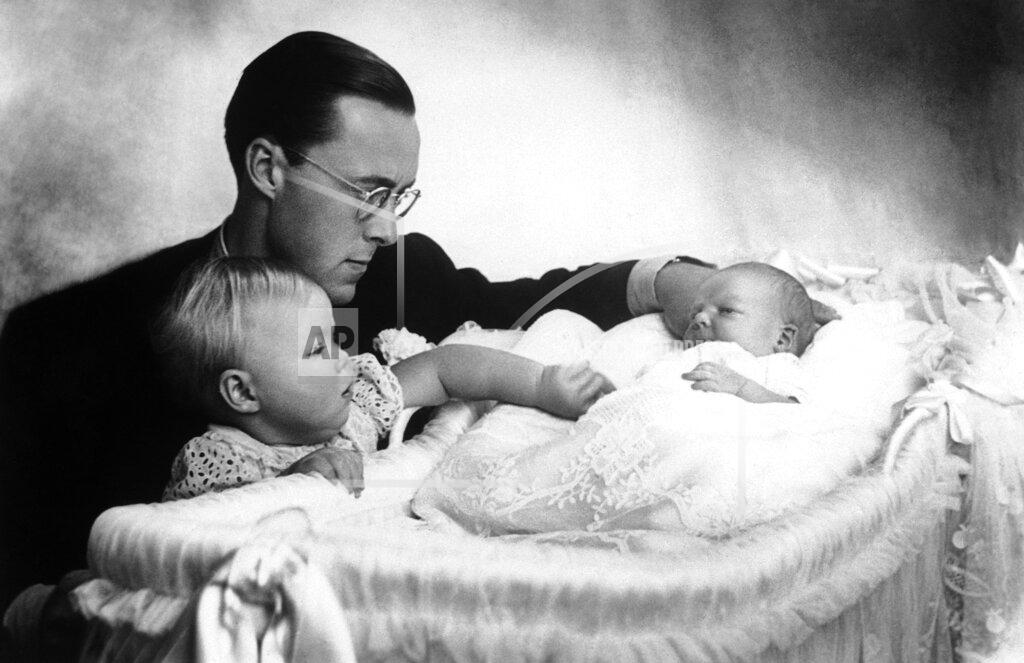
Wim Meijer, Dutch politician and Leader of the Labour Party (PvdA: 1981-82), born in Harkstede, Netherlands.
Eric Weissberg, American singer and musician (“Duelling Banjos”), born in New York (d. 2020).
Billy Joe Shaver, country musician (“When I Get My Wings”), in Corsicana, Texas (d. 2020).
Carole Shelley, actress (Gwendolyn Pidgeon-“Odd Couple”), in London, England, United Kingdom (d. 2018).
Phil Nugent, AFL safety (Denver Broncos), in Lafayette, Louisiana (d. 2019).
Sir Trevor McDonald, British newsreader and journalist, ITV’s 1st black reporter, in San Fernando, Trinidad and Tobago.
Naval Construction:
The Royal Navy Tree-class minesweeping trawler HMS Hazel (T 108) and HMS Hickory (T 116) are laid down by Henry Robb Ltd. (Leith, U.K.); both completed by Whites M.E.
The U.S. Navy Folgal 58′ class motor torpedo boat USS PT-1 is launched by the Fogal Boat Yard (Miami, Florida, U.S.A.).
The Вое́нно-морско́й флот СССР (ВМФ) (Soviet Navy) “K” (Katjusa)-class submarine K-21 is launched by Sudomekh (Leningrad, U.S.S.R.) / Yard 196.
 History Diaries