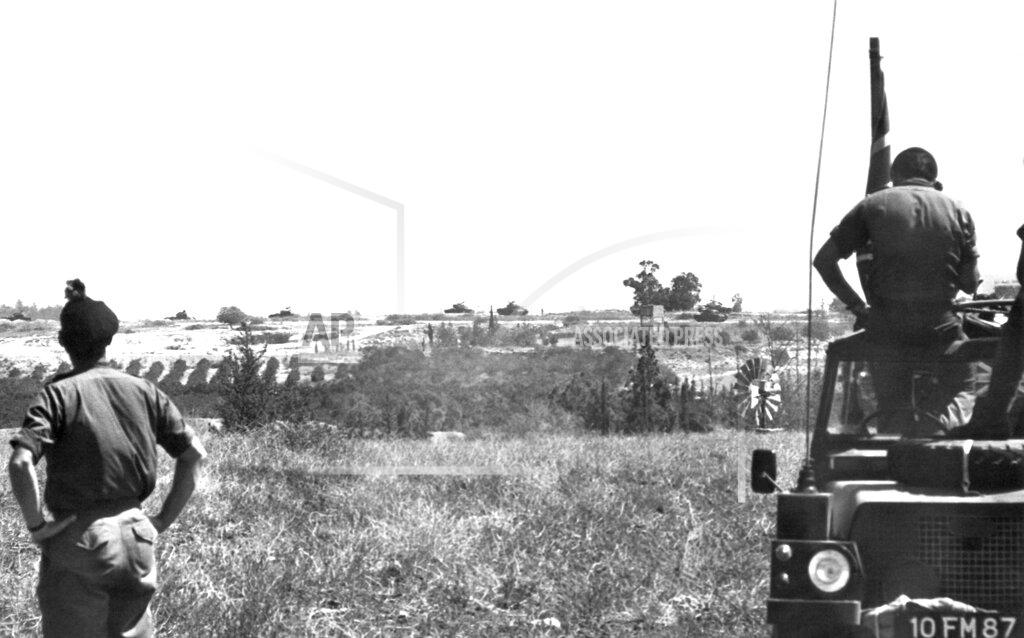
Turkey’s invasion forces completed the division of Cyprus into two areas and declared a cease-fire. They had used some 30,000 men supported by tanks, artillery, planes and warships to achieve what they had failed to win at the peace talks in Geneva. When the cease-fire was declared in effect at 6 PM, the Turks had reached their objective of dividing Cyprus into separate Turkish Cypriot and Greek Cypriot areas on the anniversary of the independence of Cyprus from Britain. Reports from around the island indicated that the ceasefire was holding in its first hours except for some sporadic firing in the Nicosia area.
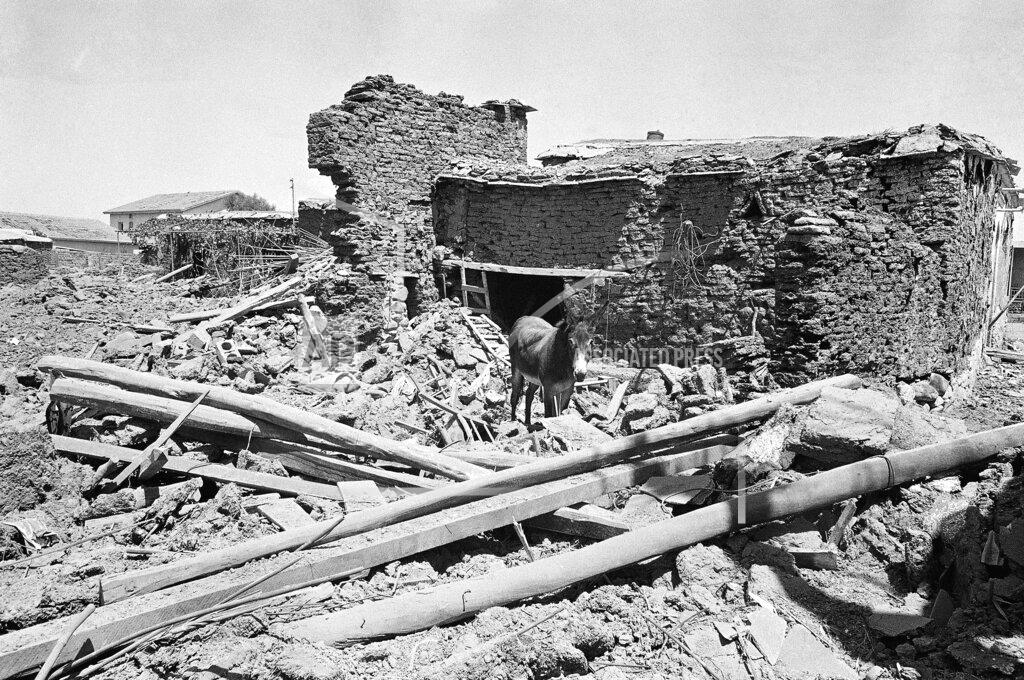
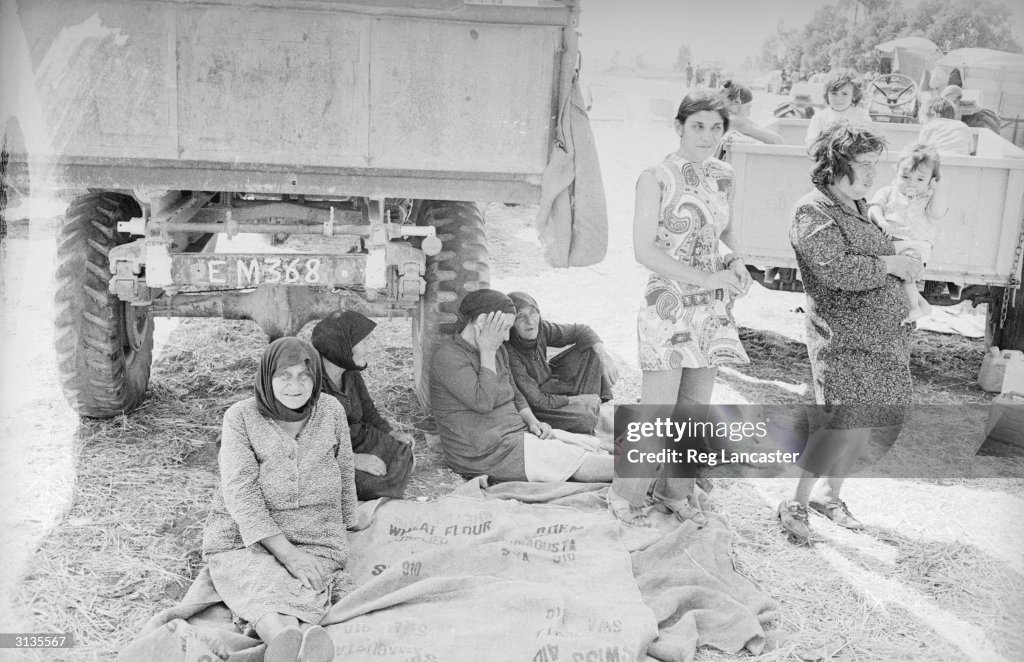
Turkey first sent invasion forces to Cyprus on July 20, but the all‐out offensive to divide the island — along a line from Famagusta in the east through Nicosia to Lefka in the west — did not begin until the peace talks in Geneva collapsed early Wednesday. Beaten and bewildered Greek Cypriots, driven from their homes by advancing Turks, clogged roads to the south. Greek Cypriot national guardsmen who had fled southward in trucks, cars, jeeps and buses were halted along roadsides, in fields or under clumps of trees, not knowing where to go or what to do. The President of Cyprus, Glafkos Clerides, and his Government left Nicosia, but, after retreating for just six hours to the southern coastal city of Limassol returned here shortly before the cease‐fire.
Turkish forces completed their drive to the east coast of the island Thursday night when armored columns entered Famagusta. The drive to the west coast was completed yesterday. In the morning, Turkish forces seized Morphou, then drove farther south and west to include such communities as Lefka, where there are many Turkish Cypriotes, Liminitis and Karavostasi on the coast.
In the Nicosia area in the center of the line, some of the heaviest firing since Wednesday went on steadily most of the day as the Turks appeared to be seeking to establish control west of the city around the international airport, now occupied by United Nations peacekeeping units. Intensive gunfire across the so‐called Green Line, separating the Turkish Cypriote and Greek Cypriote sectors of the capital, necessitated the evacuation of the British High Commission building after it was hit by mortar several times. The Turkish Cypriote area is in the northern part of the city, the Greek Cypriote in the south. Just after 6 PM, the heavy firing stopped and some two hours later the cease‐fire appeared to be holding, up except for some sporadic small‐arms shooting.
Premier Bulent Ecevit said that Turkey, having agreed to a cease-fire in Cyprus after all present military objectives had been achieved, was now prepared to resume negotiations in Geneva with Greece and Britain on the island’s political future. He said that the military action of the last few days had “eliminated a number of obstacles on the road to negotiations” and that he was prepared to meet personally with Premier Konstantine Karamanlis of Greece “whenever he wishes.”
He said that Turkish forces, which launched an offensive Wednesday morning with air support from bases on the Turkish mainland, had extended their control from the major port of Famagusta, on the southeast coast, to Lefka, a large Turkish Cypriote enclave on Morphou Bay on the northwestern side of the island. The Turks broke off negotiations with Britain and Greece in Geneva early Wednesday, then resumed military operations. Turkish officials said that the Greeks had refused to discuss a political settlement and had insisted on discussing only a cease‐fire line around positions occupied by the original Turkish landing force that invaded Cyprus on July 20.
“We have to be friends with Greece,” he said. “Our interests lie in this friendship. Despite whatever hard feeling may exist as a result of the events in Cyprus, we must be able to reestablish friendly and close relations.”
Premier Konstantine Karamanlis of Greece rejected a Turkish proposal for resumption of the Cyprus peace talks in Geneva and also turned down an American invitation to go to Washington to discuss the crisis with President Ford. Another Athens government statement said that the invitation had been made by Secretary of State Kissinger by telephone. In Washington, Mr. Kissinger told reporters that he would be willing, if asked, to go to Cyprus to help arrange a political settlement, but that he would “very much prefer to conduct the negotiations here in Washington.”
A senior Greek official said Athens felt that Washington had favored Turkey in in the Cyprus crisis and could not serve as an impartial mediator. Referring to Mr. Kissinger, the official aded: “I am a diplomat, so let me say that he showed an aloofness which did not contribute to a peaceful development of the matter — on the contrary.” Of the Turkish proposal that the Geneva talks be resumed next week, the Greek official said: “Now we are told we should negotiate. But what does that mean? It means we should come along and sign a paper and say that everything is all right. The only choice we have is to say, ‘yes, we agree, we accept the situation.’ And we won’t do that.”
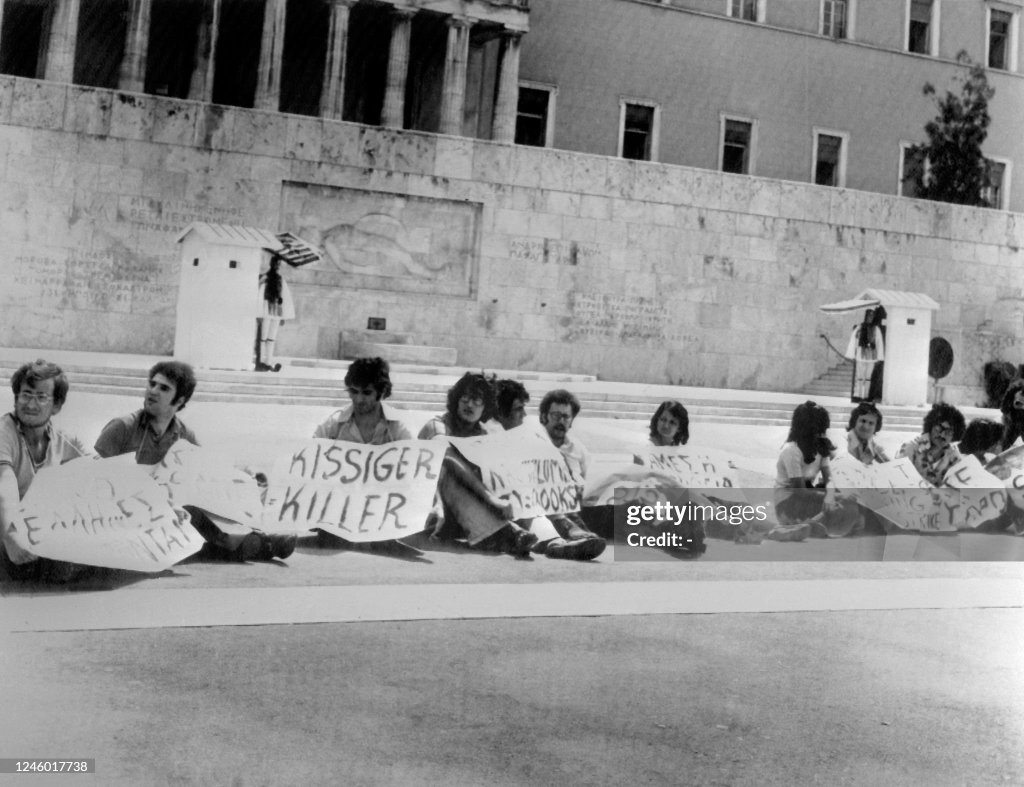
Meanwhile, demonstrations by students in several major Greek cities indicated that the anti‐American mood of recent days was growing. In Athens tonight, policemen stopped several thousand youths from marching on the United States Embassy, but before they were dispersed the young people shouted such slogans as “Kissinger the killer” and “Americans go home.” At the Athens airport, a crowd estimated at more than 10,000 gave an emotional welcome, to Andreas Papandreou, the former American college professor who is now one of Greece’s most virulent critics of the United States and the Atlantic alliance. Greece decided early Wednesday to withdraw her troops from the alliance.
The United Nations Security Council adopted a French resolution tonight recording its formal disapproval of unilateral military actions taken against Cyprus. Eleven members voted for the resolution, which was drafted in daylong private consultations. The Soviet Union, Byelorussia and Iraq abstained, and China declared her nonparticipation. It was the third resolution on the crisis approved by the Council in little more than 24 hours. The Council expressed its grave concern at the deterioration of the situation in Cyprus resulting from further military operations, which, it said constituted “a most serious threat to peace and security in the eastern Mediterranean area.”
An American and a West German, both newsmen, were wounded today when their car was hit by gunfire near the Nicosia airport. The American, Serge Fliegers of the Hearst newspapers, and Robert Held of the West German newspaper Frankfurter Allegemeine, were taken to a Nicosia clinic by the resident doctor of the Hilton Hotel, which is a Red Cross neutral zone. Their condition was not immediately made known. Last week a British television crewman was killed and four journalists were injured when a press convoy ran into a Turkish minefield.
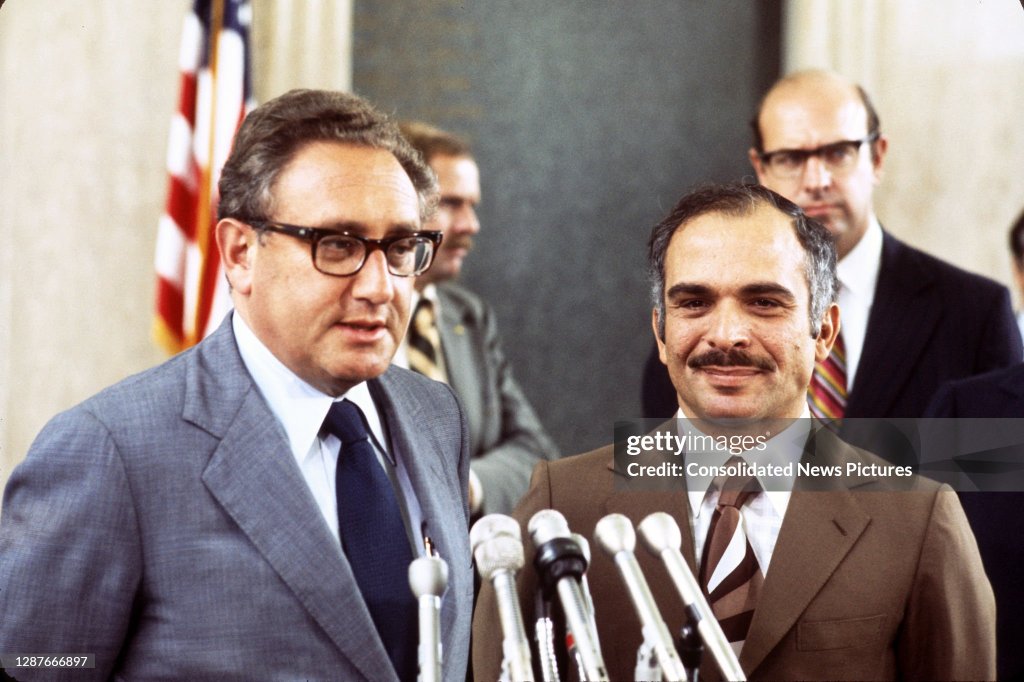
King Hussein of Jordan talked with President Ford and Secretary of State Kissinger at length today on the next stage in the resolution of the Middle East conflict — a disengagement of Jordanian and Israeli troops along the Jordan River. “We made good progress in clarifying what needs to be done,” Mr. Kissinger said after a working lunch with the King at the State Department. “The United States has an interest in progress in Jordanian‐Israeli negotiations just as it has shown in other negotiations, and we will do our best to be helpful in promoting progress.” Hussein, given a red‐carpet reception at the State Department after he arrived with a motorcycle escort, said he felt fully satisfied with the talks. “It is the common desire to see the, establishment of a just and durable peace in our part of the world,” he added.
The King was the first head of state to call at the White House since Mr. Ford took over from Richard M. Nixon a week ago. King. Hussein met with Mr. Nixon in Amman last June. The King went to the White House after briefing members of the Senate Foreign Relations Committee and the House Foreign Affairs Committee on Jorclan’s views on ways to bring about a permanent settlement. He arrived yesterday, for a two‐day visit.
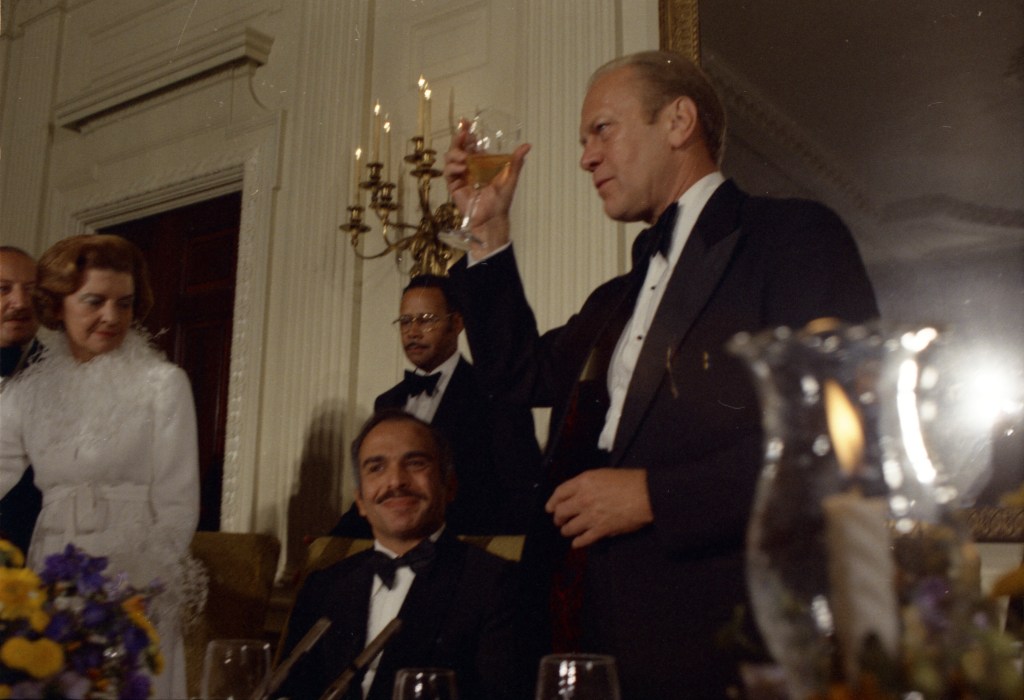
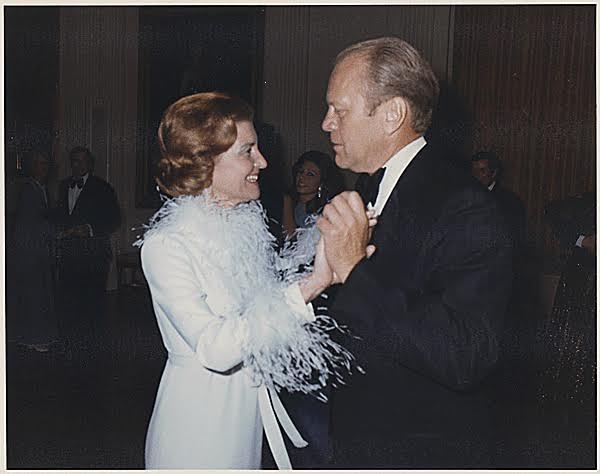
U.S. President Ford gave the first state dinner of his administration, hosting King Hussein and Queen Alia of Jordan at the White House. Some 120 guests, mostly longtime friends of the Fords from Congress and elsewhere in government, were invited for the dinner and the dancing afterward. The list included Senator Richard S. Schweiker of Pennsylvania, a liberal Republican who was on one of the Nixon Administration’s White House lists of political enemies and who had not been invited to the Executive Mansion since April, 1970.
Ethiopia’s armed forces stripped 82-year-old Emperor Haile Selassie of some of his powers as tanks, armored cars and troop carriers paraded through Addis Ababa, the capital, with a squadron of jet fighters overhead. The armed forces committee announced in a radio broadcast that it had abolished the Emperor’s crown council, court of justice, and military committee. There was no mention of a military takeover, but all indications were that the army was about to seize full power.
Persistent shelling and sporadic ground fighting continued northwest of Saigon, South Vietnam today after Communist tanks advanced closer to Saigon’s city limits than they ever had, reports from the field said. Farther north, Communist gunners pumped nearly 4,000 rounds of artillery, mortar and rocket fire at government positions in Quảng Nam Province yesterday, scene of the heaviest battles so far in a month‐long Communist campaign, the Saigon command said. Reporters were barred from the battle area just northwest of Saigon after yesterday’s thrust by tank‐supported Communist troops to within 15 miles of the city.
A command spokesman described the campaign as an apparently limited attack, which seemed to show neither the intention nor the ability for further movement south to threaten the capital. To the east of the main fighting area, reports from the field said seven Việt Cộng guerrillas were killed early this morning in an attack at a village on nearby Route 13. The Saigon command said its troops had destroyed three light amphibious tanks and captured another in yesterday’s fighting. It reported 55 Communist soldiers killed, and listed government casualties as 13 killed and 41 wounded. Closer to Saigon, a government helicopter accidentally fired at a Roman Catholic church yesterday, killing six people and wounding 56, the command said.
South Korean investigators began today to connect the would‐be assassin of President Park Chung Hee with several of the President’s adversaries — the Communists, his 1971 opponent in the presidential election, and the Japanese. Meantime, tens of thousands of mourners went to the Blue House, the presidential mansion, to pay their respects to the President’s wife, who died last night about eight and a half hours after she was shot in the head while her husband was making a speech. The Seoul district prosecutor, Kim Il Du, Said in a statement that the alleged assassin, Mun Se Kwang, a Korean in his twenties, was a dedicated Communist. He said photos of Kim Il Sung, President of North Korea, and Chairman Mao Tsetung hung in his home in Osaka, Japan.
The prosecutor, who is charged with investigating the attempt on President Park’s life, said that Mr, Mun was active in efforts to rescue Kim Dae Jung, the 1971 opposition candidate, who was kidnapped by Korean agents in Tokyo and secretly brought to Seoul last August. The South Koreans, who dislike the Japanese for their 40 years of colonial rule over Korea, also stressed Mr. Mun’s residence in Japan. It was said that he had a forged Japanese passport, that the pistol he used was stolen from a police box in Japan and that he entered the National Theater, where Mr. Park was speaking, disguised as a Japanese diplomat.
The Korean authorities, suspecting that the attack was part of a conspiracy, blocked most Japanese from leaving the country for more than 24 hours. In Japan the Government warned tourists against going to Korea.
Iraq and Japan signed a $1‐billion agreement today providing for Japanese credits to Iraq for economic development projects in exchange for crude oil and other oil products, the Foreign Ministry announced in Tokyo. The agreement, signed here today by Iraq’s Minister of Economy, Hikmat el‐Azzawi, and Japan’s Foreign Minister, Toshio Kimura, provides for a $250‐million Japanese Government credit to run for 18 years at 4 percent after seven years grace and for $750‐million in loans from Japanese banks. The commercial loans will be for 10 years, including a two‐year grace period, at 6.3 percent interest, the announcement said.
In Santo Domingo, Joaquín Balaguer was sworn in for his third consecutive term as President of the Dominican Republic. Bombs had exploded in the city during the previous night, and the country’s main opposition parties called for a two-day curfew to protest the inauguration.
Eight opposition leaders were arrested after the police uncovered a plot “to create chaos” in Peru, the Government newspaper La Crónica reported today. The eight were identified as leaders of Accion Popular, the party founded by former President Fernando Belaúnde Terry. His administration was overthrown in a military coup led by General Juan Velasco Alvarado in 1968. General Velasco has been ruling the country since. He declared Acción Popular illegal two months ago and exiled its two top leaders for demanding elections and a return to constitutional government.
Those arrested were Miguel Alva Orlandini and his brother Felipe, Professor Luis Felipe Alarco, José Terry, Mario Serrado, Ricardo Burga, Alejandro Acosta and the party’s acting secretary general, Ricardo Monteagudo, the newspaper said. The newspaper said the Police found the eight had organized a series of violent demonstrations two weeks ago to protest the Government’s expropriation several weeks ago of privately owned newspapers in Peru. Demonstrators stoned government buildings and burned vehicles for three successive nights in two Lima suburbs. More than 500 people were arrested.
Foreign Minister Mario Soares of Portugal began talks today with the Mozambique Liberation Front on the transfer of power in Mozambique. The foreign Minister, accompanied by Minister of Interterritorial Coordination, Antonio de Almeida Santos, arrived unannounced in Dar es Salaam yesterday to begin what liberation sources said were discussions preliminary to “a formal conference on independence.” Informed diplomats in the Tanzanian capital said both sides were testing each other and working out concessions before announcing a date for independence in Portugal’s East African territory.
The Popular Movement for the Liberation of Angola has rejected Lisbon’s plan for a provisional government in Angola for two or three years the Government‐owned Zambia Daily Mail said today.
All of Richard Nixon’s White House tape recordings and other documents were ordered held in custody by President Ford until legal issues involving the Watergate case are settled. The President acted through his new legal counsel, Philip Buchen, two days after Mr. Nixon’s former Watergate lawyers declared that the tape recordings and documents were his personal property and would be returned to his control. Mr. Ford reportedly was upset when he learned that the decision to return the materials to Mr. Nixon was made without full consultation with the office of Leon Jaworski, the special Watergate prosecutor.
The Senate passed a $21.2‐billion appropriation bill today with nearly two‐thirds of the money earmarked for the Veterans Administration. The total is $226.5‐million under budget requests but nearly $400‐million over the amount voted last year. Besides $14‐billion for the V.A., the bill includes $3.2‐billion for the civilian space program and $3‐billion for the Department of Housing and Urban Affairs. Also included are funds for the Selective Service System, the National Science Foundation, the Securities and Exchange Commission and other agencies.
The Senate bill would provide $364‐million more than a House‐approved version of similar legislation, and the two measures now go to conference for the differences to be reconciled. The bill first was brought before the Senate Aug. 5, but after extended debate it was sent back to the Appropriations Committee for further consideration. The committee shaved $86.6‐million off the appropriations it first proposed before returning the measure to the Senate. The measure was approved 60 to 0 the second time around.
The Senate Appropriations Committee today ignored protests from President Ford and approved a cut of almost $5‐billion in the Defense Department’s budget for the current fiscal year. The reduction was recommended by the committee’s defense subcommittee earlier this week. President Ford had expressed disappointment over that recommendation, but the committee disregarded his reservations as it passed and sent to the Senate floor a military spending bill of $82‐billion — a cut of 5.7 percent from the $87‐billion requested by the Nixon Administration earlier this year. The budget bill also orders a 25,000‐man reduction in American troop strength overseas by March 31, 1975.
The Environmental Protection Agency proposed to let states pollute their air, if they decide industrial and economic growth is more important. The Sierra Club, which had won a Supreme Court decision earlier forbidding “significant deterioration” of existing clean air, immediately promised a new court challenge.
A recent sharp rise in export orders for grain and soybeans is expected to do more damage to the consumer’s budget than the recent drought in the Midwest. Farm commodity experts believe that the volume of exports, not domestic production, had been determining the price of basic farm produce since the farm surpluses vanished in the huge sale of 19 million tons of grains and soybeans to the Soviet Union in 1972.
Gasoline prices in the New York area dropped slightly this week, but they continued to be among the highest in the country, according to the Automobile Club of New York. The club announced the results of a suraey of retail gasoline dealers at service stations in the five boroughs and as far north as Sullivan County. The Bureau of Labor Statistics said the same high prices prevailed in the northeastern New Jersey area.
Six people were killed and two were injured in an early morning fire at Moore’s Rest Home, a nursing home in Brookhaven, Mississippi. Fire that swept through a rambling frame nursing home today killed six persons and insured two others, one of them a nurse’s aide, who had gone into the building to rouse the occupants. The nurse’s aide, Chris Carnley, suffered first and second‐degree burns. The fire broke out about 2 AM and the administrator of the home, J. C. Smith, said the house “was falling in” by the time he got there 20 minutes later.
A nationwide copper strike that lasted 32 days and put nearly 23,000 workers out of work has virtually ended, with agreements on new three‐year contracts by the country’s largest producers. The Phelps Dodger Corporation, whose 6,000 employes had been on strike since July 15, reached a tentative accord late yesterday that covers mine employes in Arizona and New Mexico. Union and management officials met today on contract proposals for the Phelps Dodge refinery in El Paso, Texas. A steering committee of the National Nonferrous Conference, a coalition of 26 copper industry unions, was awaiting agreement on a contract for the El Paso operation before passing on the entire pact to union locals for final ratification.
The diagnoses of five cases of malaria this summer in a three county area in northern Sacramento Valley have led California officials to move to prevent a smoldering “brush fire” from becoming a “forest fire.” Epidemiologists are taking blood‐samples from residents in a house‐to‐house search for cases of the parasitic infection and are spraying insecticide to kill the mosquitoes that are spreading the disease in an agricultural area growing rice and buying peach farms. Malaria is resurgent in their native northern India, But the officials said that they, had not discounted the possibility that immigrant workers from Mexico or the Philippines might have been the source of the outbreak.
Four of the five cases probably, occurred within five miles of each other, Dr. Ronald R. Loberto an epidemiologist in the California State Health Department, said yesterday. The expansion of rice paddies to cover 90,000 acres, he said, increased humidity in the valley, changing the ecology and apparently allowing mosquitoes to live longer and fly farther. The outbreak, California’s first in 17 years, is occurring 30 miles from where Malaria was, a scourge of gold miners in 1849. Also, it comes as medical educators and researchers are being accused of neglecting tropical medicine despite the fact that jet airplanes are encouraging people to work and play in each other’s countries.
Former Senator Karl Mundt of South Dakota, staunch anti-Communist who figured in the Alger Hiss and McCarthy hearings in the year following World War II, died today. He was 74 years old.
American punk rock band “The Ramones” concert debut at CBGB’s in New York City.
In the first of two at Shea Stadium, the New York Yankees edge the Chicago White Sox, 9–8, in 13 innings. Dick Allen homers in the top of the 13th off Sparky Lyle, but Thurman Munson wins it with a 2–run walkoff homer off Terry Forster. Jorge Orta has 5 hits for Chicago, including 2 homers. It is the third time this season he amasses five hits, one short of the Major League record. The Sox take the second game, 4–2, behind Stan Bahnsen’s 4+ innings of relief.
The Baltimore Orioles blanked the Kansas City Royals, 1–0. Ross Grimsley held the Royals to three hits to win his 14th game (against 10 defeats), matching his previous major league high with Cincinnati in 1972. It was the lefthander’s third shutout of the year and his 15th complete game. Rich Coggins gave Grimsley the only run he needed in the fifth when he singled to score Brooks Robinson from third base.
Juan Beniquez dropped a bases‐loaded single into right field, with none out‐in the ninth inning to score Doug Griffin with the deciding run, as the Boston Red Sox squeaked by the Minnesota Twins, 3–2. Griffin held up at third base until he was sure Bobby Darwin would not catch the ball. Darwin’s throw home was ahead of Griffin, but Glenn Borgman could not handle the one‐hop toss and Griffin scored easily. Diego Segui, Boston’s fourth pitcher, picked up his sixth triumph in 10 decisions in relief of Juan Marichal. Marichal, who had won three straight games since coming off the disabled list, had a 20‐inning scoreless string snapped by Tony Oliva’s run-producing single in the first.
Jeff Burrough’s three‐run homer (No. 23) capped a seventh‐inning rally that gave the Texas Rangers a total of seven unearned runs and a 7–3 victory over the host Cleveland Indians. Burroughs, who was hitless in 13 previous times at bat against Cleveland pitching this season, ran his runs ‐ batted ‐ in total to 99, and Jim Bibby, with relief from Jim Merritt and Steve Foucault, picked up his 17th triumph against 14 defeats, An error by Dick Bosman (5.2) led to the big Texas rally. The Indians chased Bibby when Tom McGraw hit a two‐run single in the seventh.
Two teams with but a single thought — making up ground in the pennant race — put their thinking on the line tonight at Riverfront Stadium. In the end, New York arm power proved mightier than Cincinnati brain power as the Mets beat the Reds, 2–1, in 12 innings. Jerry Koosman, who started, Bob Miller, who relieved, and Tug McGraw, who finished, stifled the vaunted Red attack on 10 hits, eight of them singles and many of them scratch hits. McGraw gained the verdict, his fourth against six losses. For the second straight game, Rusty Staub batted in the winning run, his single to left field in the 12th inning scoring Bud Harrelson, who had led off with a one‐base hit. They were only the sixth and seven hits for the weak-hitting Mets, whose pitching lately has been sensational. In four games against the top‐ranked Reds and Los Angeles Dodgers, they have allowed just four runs.
At Three Rivers Stadium, the Pittsburgh Pirates beat the Dodgers, 5–2, sending Los Angeles to its fourth straight defeat. Dock Ellis, making a complete turnaround from his early season efforts, stopped the Dodgers on five hits, and Al Oliver scored three runs. All this added up to Pittsburgh’s ninth victory in the last 11 games and 23rd of their last 33 as the Pirates continue a strong bid for a fourth Eastern Division pennant in the last five years. Ellis, whose won‐lost record is now 9–8, won his sixth straight game. He led, 3–0, on a one‐hitter into the sixth inning and had retired 14 successive Dodger batters before Don Sutton (10–9) beat out a hit in the sixth that started the Dodgers toward two runs.
Dave Cash tripled in two runs in the ninth and scored on a passed ball as the Philadelphia Phillies beat the Atlanta Braves, 6–3. The Phils started their rally with one out when Ralph Garr misplayed Bill Robinson’s tly ball for a three‐base error. After Bob Boone fanned, Tommy Hutton walked and Cash followed with his three‐bagger. Cash then scored on Vic Correll’s fourth passed ball of the game. Ron Schueler pitched four innings of hitless relief when Steve Carlton suffered a hamstring pull in his left leg in the third.
In St. Louis, the Cardinals edged the San Francisco Giants, 2–1. Joe Torre’s two‐run single in the ninth inning with the bases loaded culminated the Cardinal rally, and Lou Brock moved closer to the season stolen base record of 104 when he stole his 81st base of the season. Bob Gibson went all the way for his seventh triumph in 17 decisions, scattering nine hits, including Chris Speier’s seventh homer in the eighth.
Dow Jones Industrial Average: 731.54 (-6.34, -0.86%).
Born:
Krisztina Egerszegi, Hungarian swimmer, winner of five Olympic gold medals (1988, 1992 and 1996) with three in the 200m backstroke; in Budapest, Hungary.
Didier Cuche, Swiss Olympic alpine skier, 2009 World champion in the super giant slalom (super-G) competition; in Le Pâquier, Neuchâtel, Switzerland.
Ryan Longwell, NFL kicker (Green Bay Packers, Minnesota Vikings, Seattle Seahawks), in Seattle, Washington.
Roger Cedeño, Venezuelan outfielder (Los Angeles Dodgers, New York Mets, Houston Astros, Detroit Tigers, St. Louis Cardinals), in Valencia, Venezuela.
John Snyder, MLB pitcher (Chicago White Sox, Milwaukee Brewers), in Southfield, Michigan.
Died:
Karl Mundt, 74, U.S. Senator for South Dakota 1948 to 1973, and U.S. Representative 1939 to 1948.
Adolph Murie, 74, American conservationist and wildlife biologist.
Robert Cruickshank, 74, Scottish bacteriologist.

 History Diaries