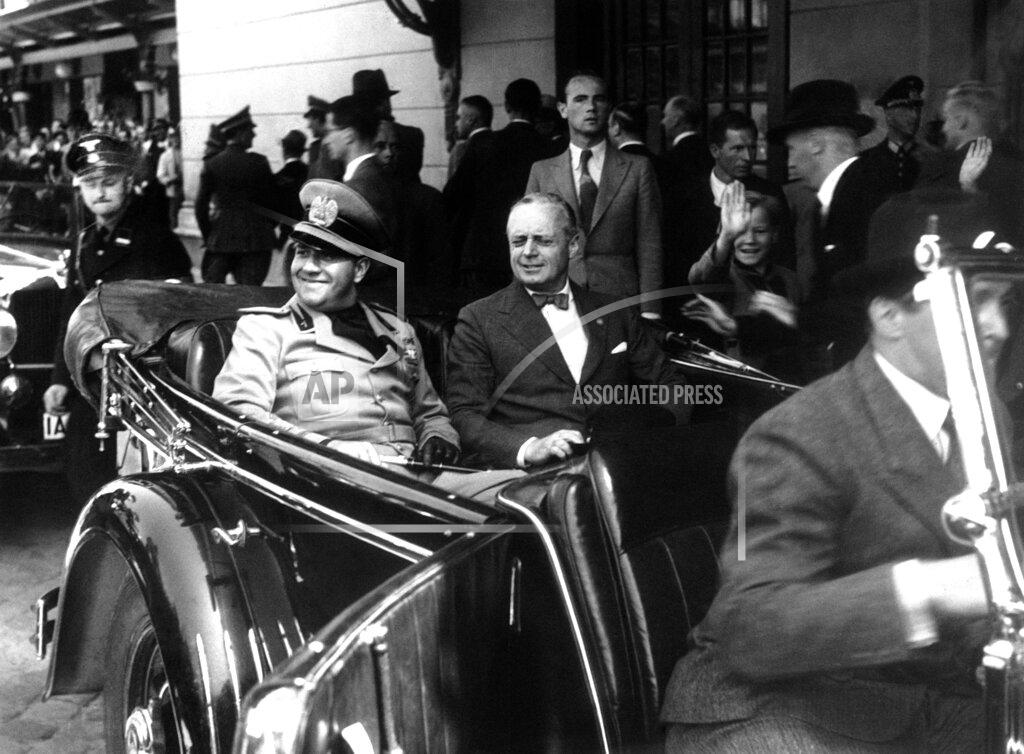
“We want war.”
The die has been cast.
German Foreign Minister Joachim von Ribbentrop confers with Italian Foreign Minister Ciano. Ciano soon realized that Germany was serious in its willingness to risk starting a general war. When Ciano asks whether Germany wants the Corridor or Danzig, Ribbentrop replies “Not that any more. We want war.” In his diary Ciano writes “The decision to fight is implacable. He [Ribbentrop] rejects any solution which might give satisfaction to Germany and avoid the struggle.” This was not welcome news for the Italians, who were unprepared for war and did not think that the Axis powers would fare well if Britain and France came to the aid of Poland.
One of the “consultations” provided for in the Italo-German alliance for the purpose of keeping the Axis partners informed took place this afternoon when Foreign Minister Joachim von Ribbentrop and Count Ciano, the Italian Foreign Minister, conferred at the “German Summer Foreign Office” in Castle Fuschl in Salzburg. Although official quarters maintained that the meeting was designed merely to survey foreign policy problems of immediate concern to both countries, the accelerated press tempo relative to Poland and the unexpected presence in the vicinity of Salzburg of two men vitally interested in the solution of the Danzig problem, leads to the belief that action of some sort may not be far off. It should be recalled, furthermore, that meetings between Count Ciano and Herr von Ribbentrop usually result in positive pronouncements.
The reported arrival in Munich, which is but a short motor ride from Salzburg, of Professor Karl J. Burckhardt, League of Nations Commissioner in Danzig, was the first surprise. Professor Burckhardt, who is stationed in Danzig and consequently has the opportunity to discuss the situation with Poland’s diplomatic representative there, reportedly has gone to Munich to be on hand should his consultative services be required. The likelihood that the commissioner made the Munich trip without at least the tacit acquiescence of the British Foreign Office, moreover, is doubted here.
The second surprise was the announced return to Munich of Albert Förster from Danzig. It is assumed that the Free City Nazi leader is on hand for consultation. Chancellor Hitler, meanwhile, is at Berchtesgaden, not far from Salzburg or Munich, where tomorrow he will be host at luncheon to Count Ciano and Herr von Ribbentrop. The press, meanwhile, infers that the meeting of the Foreign Ministers is concerned alone with Danzig. Furthermore, the increased press notice given to alleged Polish atrocities committed on Germans tends to focus attention exclusively on the Free City.
How much the presence of Herr Förster and Professor Burckhardt represents window dressing for matters more imminent, however, remains to be seen. Nevertheless, following the visit of Count Stephen Csaky, Hungarian Foreign Minister, to Castle Fuschl Tuesday, allegedly to discuss the National Socialist movement in Hungary and German penetration generally and the possibility of Hungary’s adhering to the Axis military pact, it is believed here that Hungary is an integral part of the Foreign Ministers’ agenda.
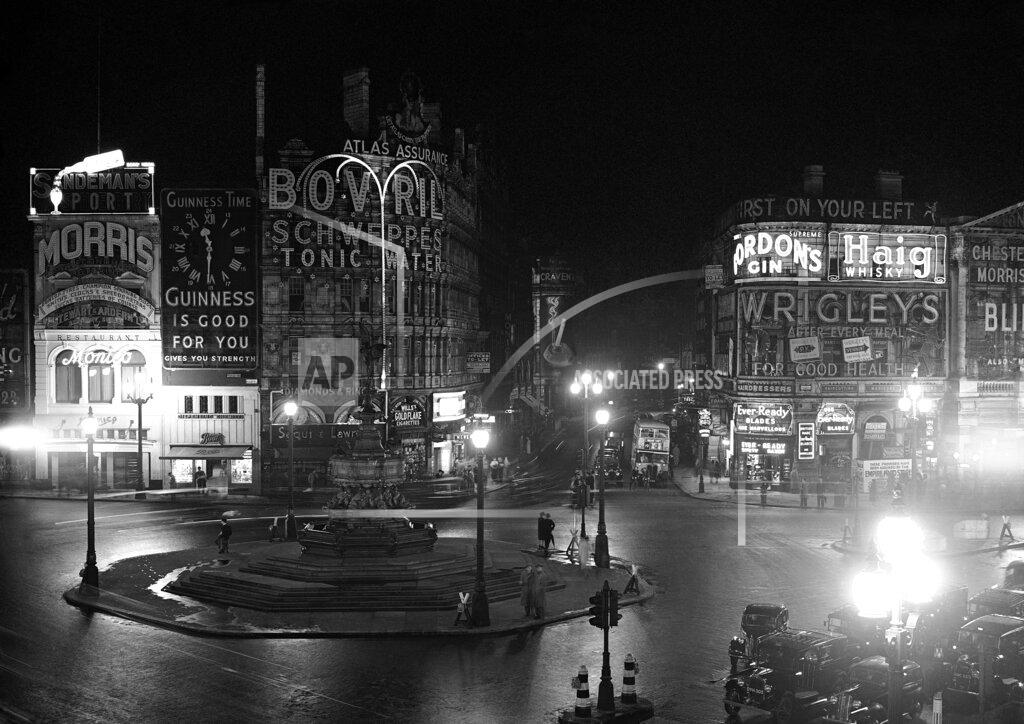
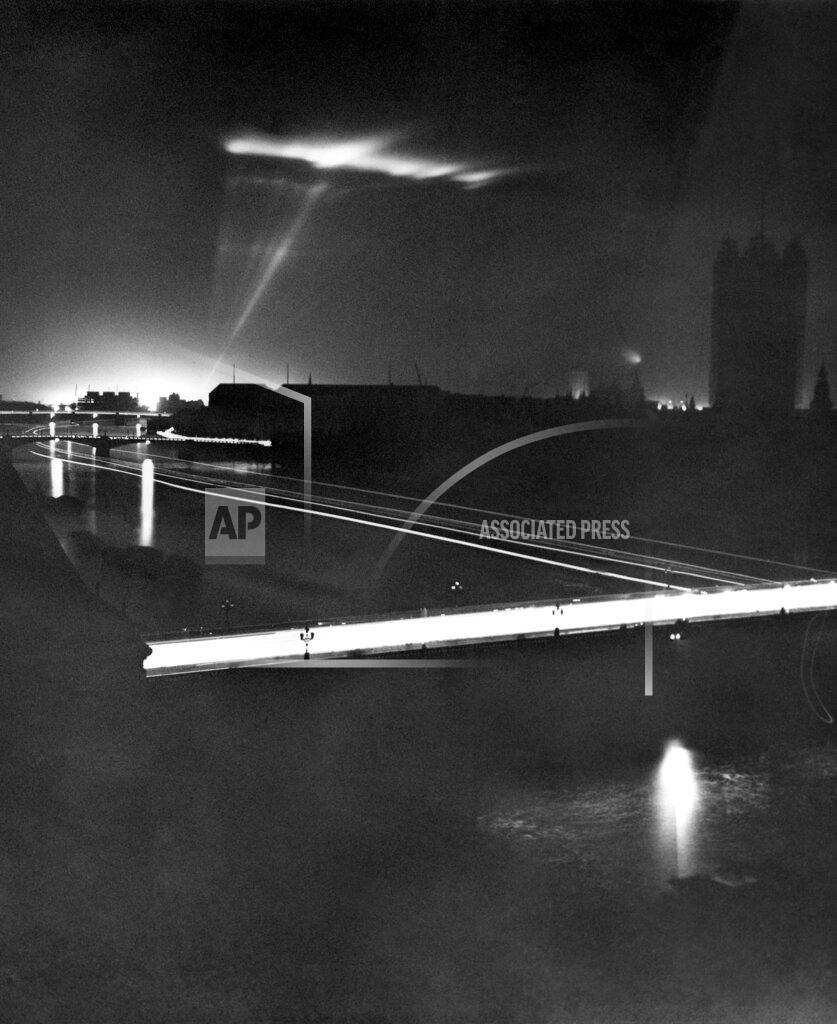
Starting at midnight, half of England went dark for four hours in a test to determine how effectively the country could shroud itself from enemy planes. Night-time air war exercises are conducted over England on a larger scale than any time since WWI. 500 aircraft (bombers with fighter support) sweep in from the east to attack Birmingham, Rochester, Bedford, Brighton and Derby. 800 defenders take off to challenge the attackers. Defending forces are largely successful in beating off the attacking forces. Bombers approaching London have particular difficulty because of a balloon barrage above the capital
Austria’s Catholic prelates meet with the Reich’s.
Yugoslavia calls up four army units; maneuvers are seen as a response to pressure from Germany and Italy. Yugoslavia today summoned four classes of army reservists for maneuvers of 500,000 men along her Italian and German borders. Diplomats interpreted this as a reply to renewed pressure by the Rome-Berlin Axis. Two days ago it was reported authoritatively that Yugoslavia had rejected Italian-German demands for her “benevolent neutrality” in case of war, including the right to use her territory for the passage of Axis troops.
As notices went to the reservists, ordering them to report August 20, it was disclosed that the full strength of the Yugoslav Army will be concentrated in Slovenia for an annual theoretical test of national defense. Slovenia is Yugoslavia’s northern province, lying between German Austria and Italy’s Adriatic ports, Trieste and Fiume.
The choice of Slovenia for the greatest peacetime maneuvers in Yugoslav history followed the construction of fortifications along the northern frontier. The German minority there is organized into a Nazi society, which has been vigorously opposed by the Slovenes, one of the three Yugoslav peoples. Concerning the reported “benevolent neutrality” demands, Yugoslav leaders said acceptance would mean forced exploitation of Yugoslav resources for Germany and Italy with national sovereignty impaired.
Premier Dragisha Cvetkovich flew to Trieste for a conference today with representatives of the Italian Government. It is believed his hand will be strengthened in any discussions with Italians by the imminence of a final home rule agreement with Yugoslavia’s 5,000,000 Croats, assuring a united Yugoslavia in time of crisis.
Croat circles at Zagreb were optimistic that suspended negotiations between Premier Cvetkovich and Dr. Vladimir Matchek, Croatian peasant leader, would be resumed. next week. Before suspension of the conferences several days ago Dr. Matchek declared that unless Croatia received home rule she would secede, which, he added, would probably mean war.
A number of Jews were severely beaten and left bleeding on sidewalks and three synagogues were sacked by a mob in Bratislava, Slovakia late tonight. Windows of the principal synagogue were smashed, doors were wrenched from hinges and the interior was ransacked. Objects of worship were piled in the street and burned. Because of the danger to neighboring buildings the synagogue was not set on fire, but the mob broke water pipes and flooded the basement. The attack lasted more than an hour. The police dispersed the crowd shortly before midnight. Similar attacks were made on two other synagogues. “Ill treatment of Aryans by Jaws for some days previously” was stated to be the reason for the excesses.
Italy girds its army and calls up officers. A marshal says the defenses along the French border are strong enough to bar an invasion. The classes of 1902 and 1910 were called to the colors today to replace those of 1901 and 1912, who are being discharged. At the same time officers and noncommissioned officers belonging to the classes of 1902, 1903, 1904, 1905, 1906 and 1910 are being mobilized.
The Italian cargo ship Alga ran aground on the Meloria Bank. She is refloated the next day.
The Yugoslavian cargo ship Sveti Duje struck rocks at Point Silo and was beached in Split Bay. She was refloated on 16 August and drydocked for repairs after discharging her cargo.
A Lockheed Super Electra (leased from British Airways) was flying from London to Zurich, with a stop at Basel, on Imperial Airways’ Britain to Switzerland service. While cruising at 10,000 feet over France trouble with one of the Electra’s engines was experienced and the aircraft was unable to maintain height. At 3,000 feet the engine caught fire and a wheels down forced landing was carried out in a field at Saint-Sauveur, Luxeuil-les-Bains, France. The undercarriage collapsed but the aircraft remained upright, and captain Ben Prowse and First-Officer A.C. Wincop were able to exit the cockpit, sustaining burns from nearby flames, and release the passenger door enabling the occupants to get out. The aircraft was consumed by fire.
Mendelssohn Co. suspended payments today, twentyfour hours after the death of its chief, Fritz Mannheimer. The firm will apply for an official moratorium. The unexpected disclosure of the firm’s difficulties stunned Amsterdam financial circles.
Secret courts-martial held at Algeciras recently passed many death sentences upon Spaniards who had openly expressed disapproval of Generalissimo Francisco Franco’s regime and General Gonzalo Quiepo de Llano’s dismissal. These Spaniards, who were executed at dawn Monday, were chiefly residents of the neighboring towns of San Roque and Algeciras. Although the greatest secrecy was maintained in official quarters, relatives and friends of those executed learned with the greatest indignation that the death sentences. had already been carried out. Unrest in the neighborhood is declared increasing. The authorities, fearing disturbances, are said to have ordered large numbers of troops confined to their barracks at Algeciras and nearby towns. The authorities, presumably with a view to camouflaging this unrest, have decided to hold a bull fight at Algeciras on Sunday. Three renowned matadors have been ordered to take part, each to kill two bulls. A military band has been ordered to play.
The British-French military mission finally arrives in Moscow. It is agreed to start talks the next day; by then it will be too late. Approaches are already quietly underway between Germany and Russia.
Russian composer Sergei Rachmaninov’s last appearance in Europe at the Lucerne International Music Festival.
President Roosevelt is ready to call Congress if war threatens. If a world crisis occurs, he will convene a special session. President Roosevelt gave virtual notice today that he was prepared to recall Congress in special session to consider lifting the mandatory arms embargo provisions of the Neutrality Act if it appeared likely that another war was imminent in Europe or the Far East.
When that time came, Mr. Roosevelt said, it would be his purpose to recommend a return through legislation to the traditional principles of international law as the most effective method of keeping America out of war. He left no doubt of his determination to break definitely and permanently away from the idea of legislated and enforced neutrality. On the basis of information available to the government, there seemed no likelihood of Congress meeting again before January, he indicated. At the same time he emphasized that this forecast might change overnight, and make a call for a special session imperative.
Nevertheless the impression obtained by those who heard his unprompted remarks on the subject of neutrality was that Mr. Roosevelt was not unduly disturbed over the possibility of a Nazi-Danzig crisis of sufficient proportions to precipitate war and that he expected the state of affairs in the Far East to continue much as they had been.
Before boarding a warship in New York City tomorrow for a ten-day cruise in North Atlantic waters, President Roosevelt said he would confer by telephone with Secretary Hull. He has been in constant touch with the State Department since his departure from Washington on Monday night and will continue to be while on his vacation voyage. During his press conference remarks, the President referred to many things, such as appointments, politics and reportorial flings. He spoke of dangers in attempted interpretations of his own plain statements in words of one syllable on matters of political moment and of threats to the Social Security system by grab-bag amendments calling for unwarranted Federal contributions.
Because he brought up neutrality himself as the conference was about to adjourn, the chief interest was in his discussion of this subject. He said that reports were gaining circulation that he contemplated calling Congress in extra session and that he was mentioning the subject now because it might come up again during his absence. Then it was that Mr. Roosevelt said there was no present prospect of an extra session of Congress, but that it might be summoned back to Washington post-haste should war in Europe or the Far East appear imminent.
Supporting President Roosevelt’s message of last night, in which the President warned the national con- vention of Young Democratic Clubs of America that the party could not win the election next year by nominating a conservative Presidential candidate or adopting a “straddle-bug” platform, Senator Barkley declared today at the convention that those who believed the Democratic National Convention would name a candidate or adopt a platform even remotely repudiating the President should consult an alienist.
This assertion by the Kentuckian, majority leader of the Senate, “keynote” orator at both conventions which nominated Mr. Roosevelt for President and generally regarded as a spokesman for the President, was followed by a spirited demonstration. Although not more than 500 young men and young women attended the day session, at which Senator Barkley spoke, they more than made up for lack of numbers by their enthusiasm and the strength of their cheering. They pounded on their seats with miniature baseball bats, which had been distributed by a Louisville sports goods firm. and finally raised their State standards and marched around Duquesne Garden, stamping with their feet in cadence on the concrete floor.
Although it has been understood by those in charge of the convention that President Roosevelt did not wish any third term declaration, either by resolution or by speakers, Senator Lee of Oklahoma declared in a speech that the people were calling for Mr. Roosevelt to lead them in a battle for social justice and economic liberty in a contest between men and money. “The drums of public opinion are sounding the long roll, young Democrats of America,” Senator Lee said. “Now is the time to unleash the devil dogs of democracy and set them baying on the trail of the Wolf of Wall Street. America, now is the time to unsheathe the sword of human rights. Now is the time to raise the banner of Roosevelt for 1940.” As Senator Lee, speaking with the fervor of an old time evangelist, called for the nomination of President Roosevelt for a third term, even putting forward a suggestion to draft him, those in the audience, numbering at the time several thousand, leaped to their feet and cheered. Continued cheering followed each remaining point in Senator’s Lee speech. Delegates and spectators rose and cheered him when he finished.
Solicitor General Robert H. Jackson gave impetus to the third-term movement by declaring that the demand for the President to run again was “the people’s answer to the efforts of reactionary politicians to eliminate the Roosevelt ideas from the 1940 campaign by nominating candidates of both parties who are opposed to them.” “The people who are demanding Roosevelt in person do so not only from personal loyalty but also because they fear that this is the only way they will have a chance to express themselves for a continuance of his social philosophy, which they regard as the vital issue of American democracy today,” he said.
President Roosevelt attacked today the principle of disproportionate Federal contributions to States for old-age insurance as the opening wedge for nationalization of Federal-State contributory systems for health, education and other purposes and as a lop-sided idea for helping out the less wealthy States.
Thirty-five thousand National Guardsmen from New York, New Jersey and the New England States will report to their home armories either at midnight tonight or early tomorrow morning prepared to travel by rail and road to Plattsburg, New York, for two weeks of grand maneuvers.
The largest number of workmen in the history of the country is now employed in navy yards building a billion dollars’ worth of the fighting ships authorized by Congress in the program to make the American Navy the equal in tonnage and strength of any navy in the world.
A U.S. Army Air Corps bombing plane of the B-18A type, taking off for a local training flight, crashed and burned at Langley Field, Virginia today, killing its crew of two commissioned officers and seven enlisted men. After takeoff from Langley, while climbing to a height of 150 feet, one of the engines failed. The crew attempted to return when control was lost. The airplane crashed, bursting into flames. All nine occupants were killed.
The New York Yankees tagged the forlorn Philadelphia Athletics with their seventh straight reverse at Shibe Park today. The 9–5 victory boosted the world champions’ margin over the idle Boston Red Sox to six games.
Pitching with only two days of rest, Big Bill Lee hurled the Chicago Cubs to a 3–2 victory today, yielding only six hits to the Pittsburgh Pirates in their series opener.
A complete breakdown of the negotiations between the Mexican Government and the American oil companies over their expropriated properties was implied tonight by Dr. Francisco Castillo Najera, the Mexican Ambassador.
The Norwegian cargo ship Fernglen ran aground on the Quita Sueño Bank, Colombia. She was refloated on 23 August.
The fate of thirty-six Americans at Kaifeng, in China, remained uncertain as efforts by United States diplomatic officials to obtain action by the Japanese proved of no avail. The combined efforts of a score of United States diplomatic and consular officers had failed so far today to penetrate the mystery surrounding the reported detention of Americans at Kaifeng.
In Washington it was announced that American exports of war planes to Japan had been virtually non-existent for more than a year, ever since Secretary Hull made his plea to manufacturers not to export such craft.
British “face” in the Far East suffered yet another blow today with the news that four Chinese accused of murdering a Japanese-supported Chinese official would be handed over to a local court in Tientsin, in accordance with a Japanese demand. The four men have been held in the British Concession at Tientsin and the refusal to hand them over was one of the pretexts for the Japanese blockade with all that followed. The announcement here today emphasized that the case of the Chinese was entirely distinct from the “local issues” now being discussed. in Tokyo between Foreign Minister Hachiro Arita and the British Ambassador, Sir Robert Leslie Craigie. It was stated that the decision to surrender the men was made purely on the legal merits of the case and that political considerations did not enter into it.
Nevertheless, impartial observers in London do not doubt that this is part of the general rear-guard action that British diplomacy is fighting in the Far East while Britain’s hands are tied in Europe. Regardless of official statements, it is looked upon as another move to placate Japan and perhaps to help in lengthening the Tokyo discussions until after the “danger period” in Europe has been passed. The four Chinese involved were accused of complicity in the murder last April of S. G. Cheng, a minor Chinese official in the Japanese-sponsored regime at Tientsin. Britain had refused to surrender them to a local court — under Japanese jurisdiction — without legally valid evidence that they were implicated in the crime.
Further immigration of Jewish refugees in the section of Shanghai’s International Settlement north of Soochow Creek was banned today by the Japanese Navy, effective August 21.
Three thousand British troops from India reinforce Singapore.
Dow Jones Industrial Average: 137.29 (+0.04).
Born:
Chuck Hinton, NFL defensive tackle (Pittsburgh Steelers, New York Jets, Baltimore Colts), in Raleigh, North Carolina (d. 1999).
Ronnie Dawson, American rockabilly guitarist (Rockabilly Hall of Fame, 1998), in Dallas, Texas (d. 2003).
Attila Bozay, Hungarian composer, in Balatonfűzfő, Hungary (d. 1999).
Died:
Jean Bugatti, 30, French-Italian automobile designer, died in a car crash.
Naval Construction:
The Royal Navy Tree-class minesweeping trawler HMS Fir (T 129) is laid down by A & J Inglis Ltd. (Glasgow, Scotland); completed by Aitchison Blair.
The Kriegsmarine (German Navy) Type IXB U-boat U-124 is laid down by AG Weser, Bremen (werk 956).
The Royal Navy Net-class boom defense vessel HMS Signet (Z 10) is commissioned.
The Вое́нно-морско́й флот СССР (ВМФ) (Soviet Navy) Project 7-class (Gnevny-class) destroyer Ryany (Рьяный, “Spirited”) is completed.
The U.S. Navy Sims-class destroyer USS Hammann (DD-412) is commissioned. Her first and only commander is Commander Arnold Ellsworth True, USN.

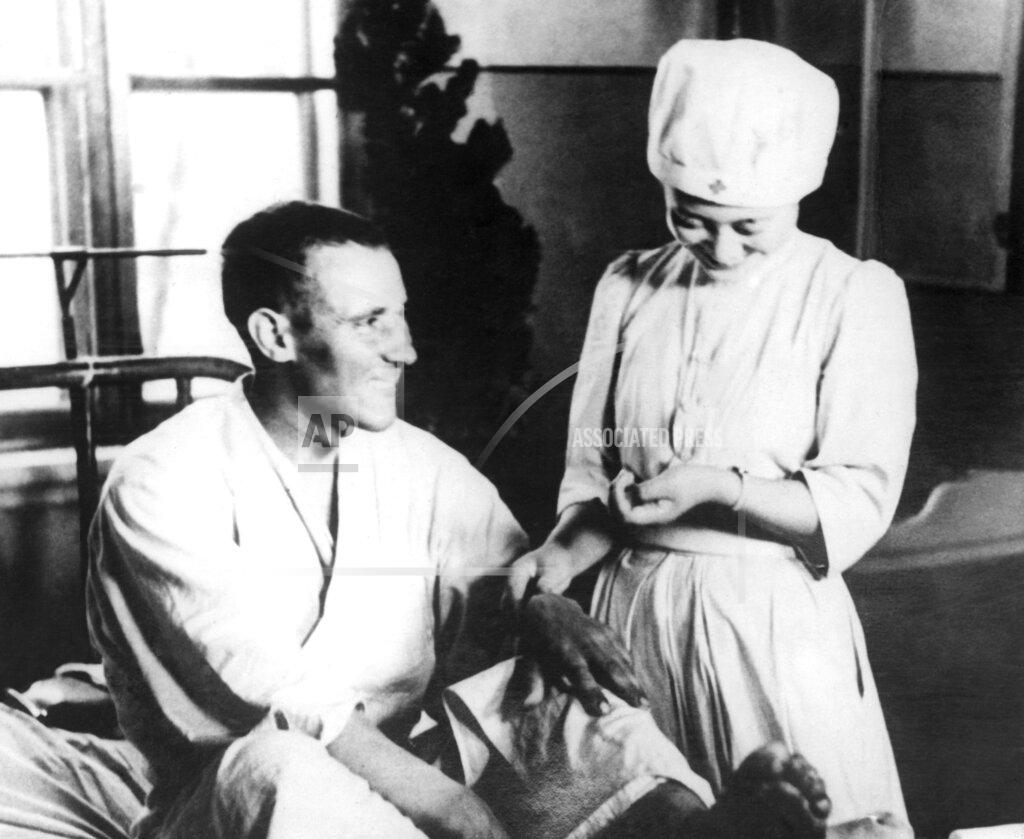


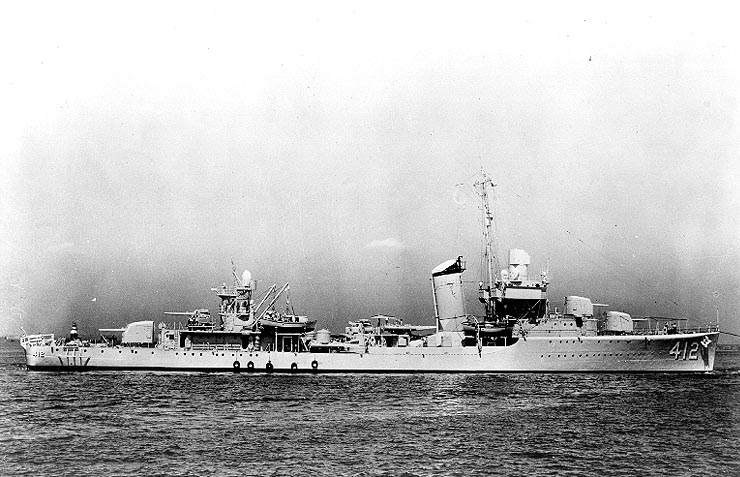
On 7 December 1941, 30 minutes after receiving news of the Attack on Pearl Harbor, the Hammann and the other ships in the North Atlantic Patrol left Reykjavík and steamed for the United States. On 17 December, she arrived in Norfolk, Virginia, for fuel, supplies, and new crew. Shortly thereafter, she steamed around Cape Hatteras for Charleston, South Carolina. From there, in early January, she rendezvoused with USS New Mexico (BB-40) and the troop transport President Hayes to escort the pair through the Panama Canal for San Diego and later San Francisco. On 22 January 1942, she arrived in Pearl Harbor and joined Vice Admiral Frank Jack Fletcher’s Task Force 17 for action in the South Pacific.
The destroyer took part in training maneuvers in the New Caledonia area during early March, and on 27 March the Task Force departed for the Coral Sea. Hammann acted as screening ship and plane guard for Lexington, Returning to Tongatapu on 20 April, the Task Force sortied again into the Coral Sea on 27 April for a surprise air raid on Japanese Invasion forces on Tulagi.
While screening the carriers during the air raids of 4 May, Hammann was directed to rescue two fighter pilots downed on Guadalcanal, some 40 miles (65 km) to the north. Steaming at full speed, the destroyer arrived at dusk and sighted a marker on the beach, which proved to be a parachute. The motor whaleboat was put over the side, but dangerous surf prevented it from landing. Consequently, the pilots were recovered with the use of lines from the boat. This accomplished, an attempt was made to destroy the wreckage of the aircraft, but the rough water made this impossible, and Hammann returned to Lexington’s screen from this successful operation that night.
On 8 May came the main action of the Battle of the Coral Sea, the first naval engagement fought entirely on both sides between aircraft and ships. During the exchange of air attacks, Hammann screened the carriers, firing at Japanese torpedo planes as they attacked. Just as the torpedo planes retired, dive bombers appeared, one exploding a bomb a scant 200 yards (200 m) off Hammann’s starboard bow. Lexington, which had taken two devastating torpedo hits to port, was first thought to be under control, but a large internal explosion shortly before 1300, followed later by others, sealed her fate. As the order was given to abandon ship, Hammann, Morris, and Anderson stood by to receive survivors. The destroyer picked up nearly 500 men from the water before “Lady Lex” went down the night of 8 May, torpedoed by Phelps.
The Battle of the Coral Sea, which checked the Japanese advance to the southeast, was over, but new demands called Hammann to the north. Under urgent orders from Admiral Chester Nimitz to meet a new threat, Hammann moved to Pearl Harbor with the Task Force, arriving on 27 May. After making repairs, it got underway on 30 May and was just in time to take part in the Battle of Midway.
Lost 6 June 1942.
During the air battle on 4 June, Hammann screened Yorktown, helping to shoot down many of the attacking aircraft. However, the carrier took two torpedo hits and, listing heavily, was abandoned that afternoon. Hammann picked up survivors in the water, including Yorktown’s skipper, Captain Buckmaster, and transferred them to the larger ships. Efforts were mounted to save the stricken carrier on the next morning. A skeleton crew returned on board the Yorktown, and attempts were made to tow her to safety. Hammann came alongside on 6 June to transfer a damage control party. The destroyer then lay alongside, providing hoses and water for firefighting, power, and other services while tied up next to the carrier.
The salvage party was making progress when the protective destroyer screen was penetrated by Japanese submarine I-168 after noon on 6 June. Four torpedoes were fired; one missed, two passed under Hammann and hit Yorktown, and the fourth hit the destroyer amidships, breaking her in half.
As the debris from the explosion rained down and the ships lurched apart, it was apparent that the Hammann was doomed. Life rafts were lowered and rescue efforts by surrounding ships commenced. The Hammann sank, bow first, in just four minutes. During that time, Chief Machinist Mate Daniel William Carlson was able to launch a life raft, pass out life vests, and help others over the side of the ship to safety. Following the sinking there was a violent underwater explosion, the likely cause of which was the destroyer’s depth charges and torpedoes. The explosion caused many deaths in the water, bringing the death toll to 80. Survivors were taken aboard the destroyers Benham and Balch.
Hammann’s skipper, Commander Arnold True, was awarded the Navy Cross and a Navy Distinguished Service Medal for his performance while in command of Hammann at Coral Sea and Midway. Ensign Theodore E. Krepski was awarded the Navy Cross for his actions rescuing sailors abandoning the Lexington at Coral Sea. Hammann also received two battle stars for her service in World War II.
 History Diaries