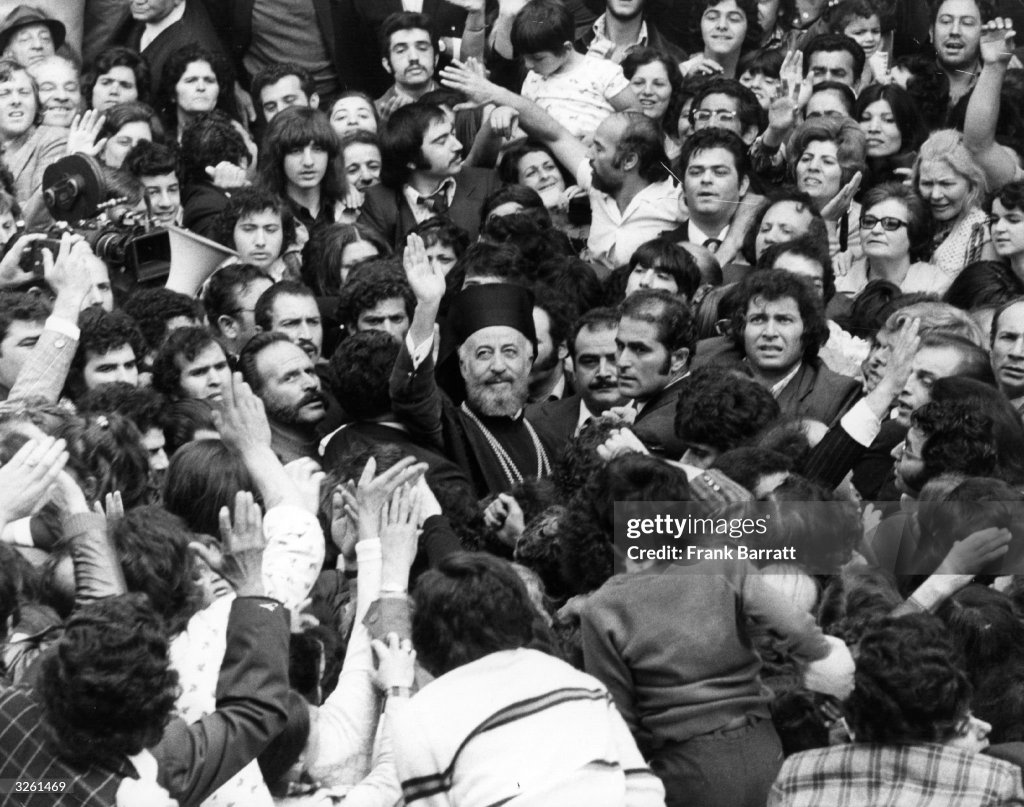
United Nations sources said that Greek Cypriote National Guard contingents began withdrawing from occupied Turkish Cypriote enclaves, beginning in the Limassol area. Greek Cypriote government sources said that this was a first step toward strengthening the cease-fire agreement reached by the Foreign Ministers of Greece, Turkey and Britain, who are meeting in Geneva. Meanwhile, Greek Cypriotes criticized the United States and Britain for what they believe was complicity in the Turkish invasion of Cyprus.
The Greek Cypriot authorities also agreed to release tonight, through the International Red Cross, 13 Turkish prisoners. They were to be freed in the Turkish, sector of this capital. The 13 prisoners, including a colonel, two majors and a captain, were captured during the fighting against the Turkish forces. Their release was said to be a goodwill gesture by the Greek Cypriot National Guard. National Guard sources said that the colonel and two Turkish non‐commissioned officers had been captured in civilian clothes in a private automobile behind Greek lines and could have been executed as spies.
Meanwhile, Greek Cypriotes were voicing strong criticism of Britain and the United States. Newspapers and individuals accused the two nations of having allowed Turkish forces to invade the island, which is divided between an ethnic Greek majority and an ethnic Turkish minority, and to seize control of the Kyrenia area on the northern coast. Apogevmatini, an afternoon newspaper that reflects Government views, said that the United States had “placed a stilleto in the irresponsible, bloodstained hands of the Turks and struck it with their hands into the back of the Greek Cypriote people.” Agon, a morning newspaper, attacked the British for not having used the 5,000 troops and the jet aircraft at British military bases here to “prevent the Turkish invasion.”
East Germany indirectly warned West Germany not to retaliate against East German interference with traffic to West Berlin. There have been reports that the West German government was considering canceling some agreements on trade with the East. But a Communist news agency warned that such an action would be a breach of the 1972 good-neighbor treaty and “would not remain without consequences.” Traffic from West Germany has to go through East Germany to get to Berlin and it is this traffic that the Communists have been interfering with.
The police arrested 20 people in London today in protests marking the third anniversary of internment without trial in Northern Ireland. Among those held were men wearing black berets and sunglasses — commonly recognized as the attire of the parading Irish Republican Army — who headed a march through London streets. A spokesman for the protest’s organizers, the Irish Political Hostages Campaign, told newsmen that most of the people arrested were detained as the march of 400 people began in Hyde Park.
Demonstrators, mostly women and children, sought to walk to Long Kesh internment camp seven miles outside this city, but were stopped by soldiers. After shouting abuse at the troops, they turned back. The chanting marchers, who carried posters with the names of internees, were mostly Roman Catholics, according to reports here. When they passed a Protestant housing development both sides threw stones. A high fence along the highway prevented serious incident.
Pope Paul VI said the teaching of agnostic values is causing frustration among young people and leading some of them to acts of terrorism. Speaking during his Sunday blessing at his summer residence at Castel Gandolfo, the Pope criticized “a certain resignation to moral and social pessimism” which led some young people to “insane enterprises.”
A Soviet musician, Georgi Ermolenko, 18, a student at Moscow State University, sought political asylum in Australia, police reported. While awaiting a flight home from a conference of the International Society for Music Education at Perth, he asked a police officer for asylum. The Foreign Affairs Department will study his request.
A collision between two buses on the Ankara-Istanbul highway near Bolu, Turkey, killed 21 people and injured 41.
Israel announced today plans to conduct a one‐day, nationwide call‐up of military reservists to test procedures in the event of renewed war with the Arabs. The Israeli Cabinet said that Defense Midister Shimon Peres had ordered the call‐up “to test the efficiency of the method of mobilizing the reserves.” No date was specified. Premier Yitzhak Rabin assured the Cabinet that President Ford would continue former President Richard M. Nixon’s policies for a Middle East settlement, the Government said.
Egypt’s Foreign Minister, Ismail Fahmy, arrived in Washington for talks with Secretary of State Kissinger — and probably President Ford — that American officials hope will remove uncertainties about the next round of Middle East negotiations.
Syrian President Hafez Assad will take over leadership of the cabinet from Premier Mahmoud Ayoubi in a shakeup in the next few weeks, according to a Cairo magazine. The magazine said Assad wants to take charge of the government in order to carry out two major tasks-the search for a Middle East peace and economic reconstruction in Syria.
Emperor Haile Selassie of Ethiopia would lose all the autocratic power he has held for nearly 45 years over the government and armed forces under a new draft constitution now being studied here, according to reliable sources. The draft, the text of which has not been published, was drawn up by a 30‐member commission after six months work. It is being studied by government leaders before being submitted to Parliament. If the proposed Constitution is passed by Parliament in its present form, the sources said, Ethiopia’s 82‐year‐old leader would become a constitutional monarch and the center of power would move from the palace to Parliament. A new Premier would be elected by Parliament for a four‐year term and he would be responsible solely to the legislative body, and not to the Emperor.
For the second day in a row, Communist forces launched rocket attacks on the Biên Hòa Air Base, 14 miles north of Saigon, the South Vietnamese command reported. No casualties or damage in the daylight attacks were listed. In the Central Highlands, more than 2,000 shells hit a government ranger camp which has been under pressure for more than a week, but no casualties were reported. Meanwhile in Cambodia, at least 50 persons were killed or wounded when Communist-led insurgents fired more than 100 rockets and shells at an isolated provincial capital, the high command reported.
China is encouraging strong Atlantic Alliance defenses in Western Europe and discouraging any immediate withdrawal of U.S. troops, says Senator Henry M. Jackson (D-Washington) who recently returned from a trip to China. This will help blunt what the Chinese see as Soviet policy directed in part at encirclement and isolation of China, Jackson indicated. Likewise, he said, the Chinese do not now criticize the U.S.-Japan security treaty or the presence of American bases in Japan. Other areas in which the Chinese see a Soviet threat are Yugoslavia, the Asian Subcontinent and the Persian Gulf.
In front of an audience of 20,000 at an air show in northern Japan, 23-year-old skydiver Nobutaka Yoshinoya fell 1 mile (1.6 km) to his death after his parachute struck the parachute of another skydiver and failed to open properly.
At least five people were killed when left‐wing guerrillas staged synchronized attacks on army and police posts in central Argentina today, military sources reported. They said two army officers had been kidnapped in the raids. The sources said members of the outlawed Peoples Revolutionary Army had attacked a military arms factory in Villa Maria, 140 miles south of Córdoba, and escaped with weapons and uniforms. A gang linked to the group seized a motel next to the factory early this morning, rounded up the employees and guests and set up communications equipment. Shortly afterward, about 60 guerrillas dressed in army uniforms attacked the factory and fought a gun battle with guards. Two army officers, not yet identified, were abducted during the fighting.
At about the same time, other guerrillas attacked military and police posts in the province of Catamarca, northwest of Córdoba, and exchanged fire with troops and policemen. It was the worst outbreak of guerrilla violence since President Isabel Martinez de Perón assumed power on the death of her husband, Juan, six weeks ago. Two policemen and one of the guerrillas were killed in the fighting at the motel and factory. Three members of the group were captured. The sources said the guerrillas fled from the factory in waiting vehicles, taking an unknown number of dead and wounded with them.
Portugal will ask the United Nations tomorrow to recognize the Republic of Guinea-Bissau and admit it to membership. Portugal’s representative at the United Nations, Dr. Jose Viega Simao, will present a letter from Portugal’s Foreign Minister to the Security Council expressing Portugal’s readiness to recognize the independence of her former territory at an early date. In another step toward dismantling its 500-year-old African empire, Portugal sent an envoy to the United Nations to argue for U.N. admission of Portuguese Guinea after Portugal grants it independence, which has been promised although no timetable has been set. About 90 nations already recognize Guinea-Bissau, the portion held by local liberation fighters opposed to Portuguese rule. The U.N. Security Council was expected to take up the matter today.
An Air Mali Ilyushin Il-18V turboprop airliner crashed and killed 47 of the 60 people on board when it ran out of fuel because of a navigational error. The aircraft, which was taking Muslim pilgrims to Mecca, went down near Linonghin, about 25 miles (40 km) east of Ouagadougou, Upper Volta. The plane crashed during an attempted emergency landing on the highway between Niamey and Ouagadougou. 13 people survived.
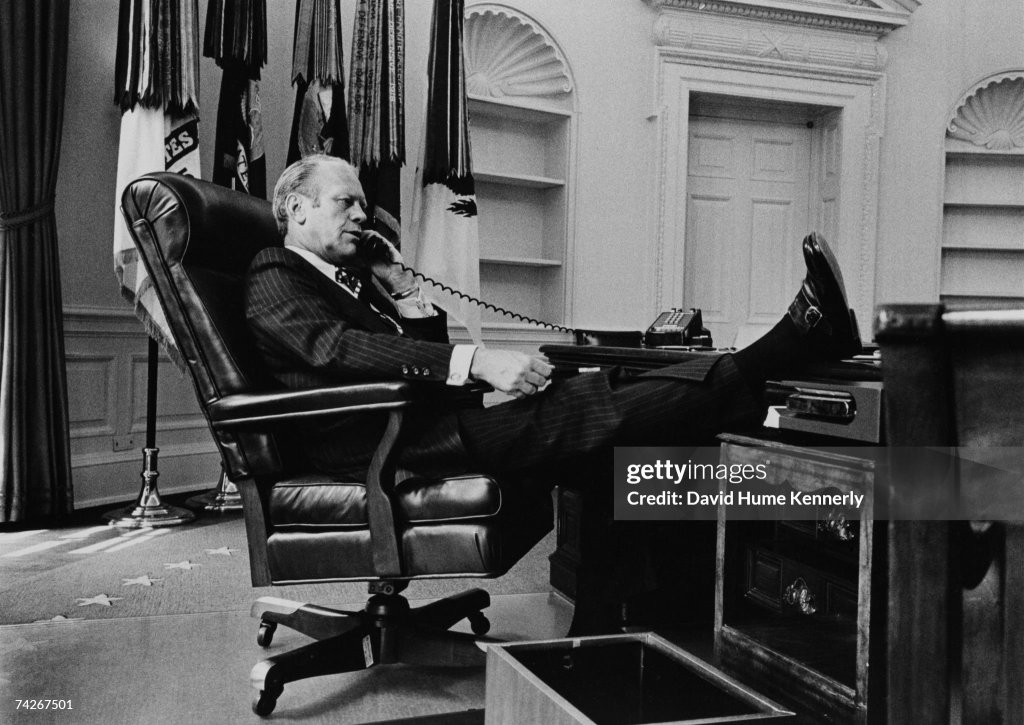
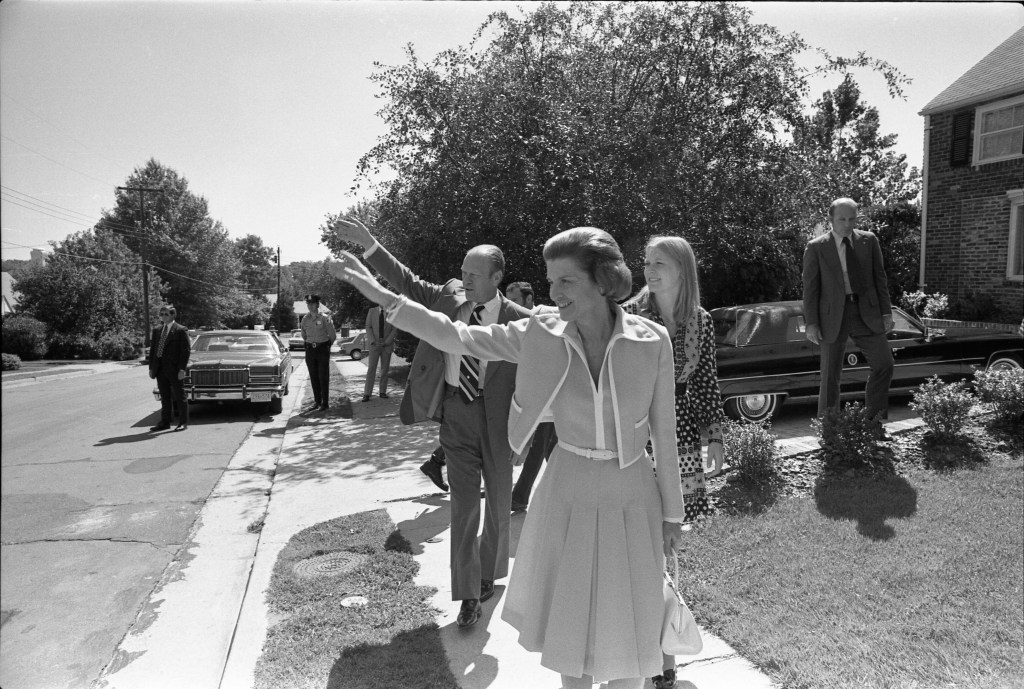
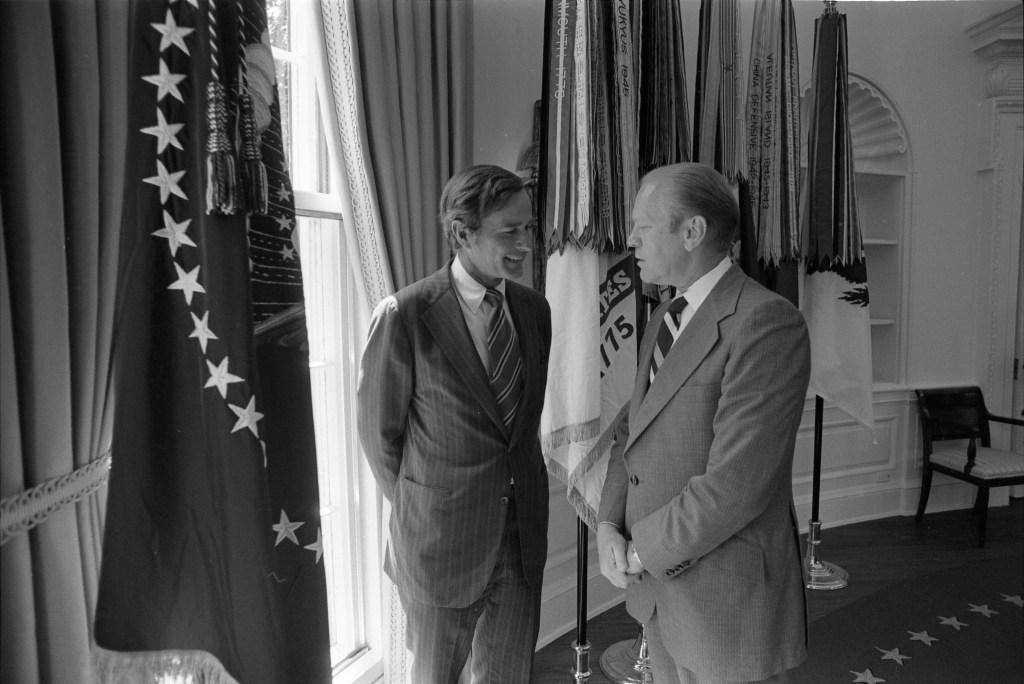
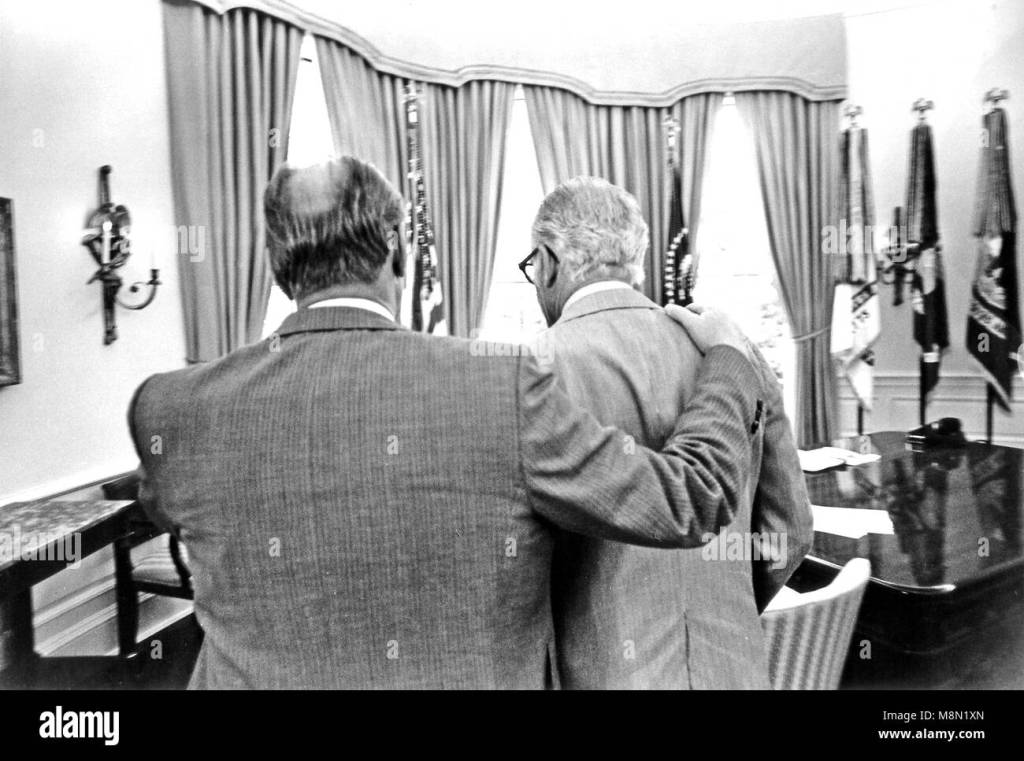
President Ford went to church, but spent the rest of Sunday at the White House conferring with Republican leaders about the choice of a Vice President and working on the speech he will make at a joint session of Congress tomorrow night. He had a series of half-hour meetings with his party’s leadership in the Senate and the House, as well as discussions with Secretary of State Kissinger, Melvin Laird and Bryce Harlow, both former presidential advisers, and with George Bush, chairman of the Republican National Committee. But most of his time was spent in talks with Senators Hugh Scott, Robert Griffin, Barry Goldwater and John Tower, and Representatives John Rhodes, Leslie Arends, Elford Cederberg and Barber Conable. These men form the Republican hierarchy in Congress and also are old friends of the President.
Mr. Ford’s aides said that the new President would, make an appeal for national unity tomorrow in his 9 PM speech, which will be televised. They said he would also emphasize the stability of the Government, promise White House cooperation with Congress and make a plea for mutual, cooperation from the legislators. The speech is also expected to deal with the economy and the new Administration’s perspective on inflation and how to combat it. Most observer believe Mr. Ford’s approach will differ little from former President Richard M. Nixon’s reliance on reductions in Government spending and his continuing of high rates of interest.
The outlines of the Ford presidency are slowly emerging at the White House in the first hectic and unseated days of transition. While Mr. Ford searches for a Vice President, his transitional team of four former congressional colleagues is dealing with the problem of molding the tightly run White House to fit the “personal and peculiar working habits” of the President.
An analysis of Richard Nixon’s last days as President finds that he did not fall from power. He slid, gradually and certainly, toward his decision to resign. It took 15 days. An almost eerie accumulation of inescapable ironies lay behind Mr. Nixon’s stoic resignation announcement last Thursday. It began with a unanimous ruling by the Supreme Court. It ended in the solitary surrender of the President to his fate. But mostly it turned, slowly and painfully, on a campaign among those who had sought at first to save Mr. Nixon to persuade him at least that his Presidency could not, and perhaps should not, be salvaged.
The final push in Congress to oust Mr. Nixon was prompted by his chief defense attorney, James D. St. Clair. He encouraged the diminishing corps of anti‐impeachment members of the House to re‐evaluate their defense of Mr. Nixon and reportedly he twice issued discreet warnings to Mr. Nixon that professional ethics might force him to abandon the President as a client. The Army general whom Mr. Nixon promoted to White House chief of staff,. Alexander M. Haig Jr., joined Mr. St. Clair and others in a concerted effort aimed at persuading the Commander in Chief to abdicate. And, in what must have been the most caustic irony of all, the electronic taping system that Richard Nixon implanted in the White House to record the zenith of his career provided the documentation that wrecked it.
Hugh Scott, the Senate Republican leader, said that be had found growing bipartisan opposition in Congress to the possible criminal prosecution of former President Nixon for his role in the Watergate cover-up. He said that he had spoken to most of the leaders of both parties in the Senate and the House and concluded that “most of them would wish that nothing further happens” to Mr. Nixon. “Most of them are enormously compassionate,” he said. “In fact, I know of none who aren’t. Everyone hopes that we can say enough is enough, this is the end.” Mr. Scott, whose visit to the White House on Wednesday with news of Mr. Nixon’s badly diminished support in the Senate apparently played a central role in Mr. Nixon’s resignation. the next day, has previously expressed his belief that the loss of his office amounted to punishment enough.
At Patricia Nixon Historical Park in Cerritos, California, former First Lady Pat Nixon’s childhood home was firebombed, causing $2,000 in damage. The green‐shuttered home where Mrs. Richard M. Nixon spent her girlhood was firebombed early today, the police said. The fire in the 4.4‐acre Patricia Nixon His. torical Park was discovered by a newspaper boy shortly after 6 A.M. a spokesman said. “An unidentified flammable liquid was poured on the south wall of the recreation hall attached to the home,” he said. Firemen extinguished the blaze quickly. The authorities said they could determine no motive. The home would be destroyed by fire in 1978.
Oregon state Senator Betty Roberts, a Portland lawyer, was chosen to replace the late Wayne Morse as the Democratic nominee in the race for U.S. senator. Morse won the nomination in the May primary and died July 22 at 73. Senator Roberts was chosen by the state central committee, which balloted four times before giving her a majority. She defeated three men, including state Senate President Jason Boe, of Reedsport, who lost to Morse in the primary. If she defeats Senator Robert W. Packwood in the fall election, Mrs. Roberts will become the second woman senator in Oregon history. Maurine Neuberger won election to the Senate to complete the term of her husband, who died in office in the 1960s.
Senator Russell B. Long (D-Louisiana), Rep. Wilbur D. Mills (D-Arkansas) and Rep Martha W. Griffiths (D-Michigan) said Congress would pass a national health insurance bill this year. But Russell B. Roth, immediate past president of the American Medical Association, said, “We’re not ready for it yet.” Caspar W. Weinberger, secretary of health, education and welfare, said the Administration would continue to push its plan under President Ford as it had under Richard M. Nixon. Reminded that as a congressman Mr. Ford had opposed Medicare, Weinberger said that, unlike Medicare, the Administration bill has effective cost control. The group was taking part in a health discussion on the NBC program Meet the Press
New Jersey officials, charging that nine out-of-state television stations whose broadcasts are seen in the state show no interest in covering New Jersey activities, say they plan to challenge the license renewals of all of them. Six of the stations are in New York City and three in Philadelphia. Aides to Governor Brendan T Byrne, instructed to institute legal research into the filing of the complaint with the Federal Communications Commission, said papers would be filed in six months.
Heavy rains poured down for the fourth consecutive day on farm and pasture land that until last week had been starved for moisture. But the steady drenching came too late to revive burned or stunted crops and led to fears that it could do more harm than good. A source said heavy rains falling on powder-dry soil created a danger of erosion. Thunderstorms ranged again from the Gulf Coast states, including southeast Texas and Florida, and into the Upper Great Lakes region. Other states in the storm path were Kentucky, Mississippi, Michigan, Illinois, Missouri, Arkansas, Oklahom,a and Montana.
The government’s next crop report, due sometime today, is being awaited eagerly by economists, farmers and consumers alike. The report will provide the Agriculture Department’s best estimate of how much corn, wheat and soybeans the nation will harvest this year. It will be the first report since the drought that hit the Midwest, cutting into the crops that are used to feed dairy herds, chickens, beef cattle and hogs.
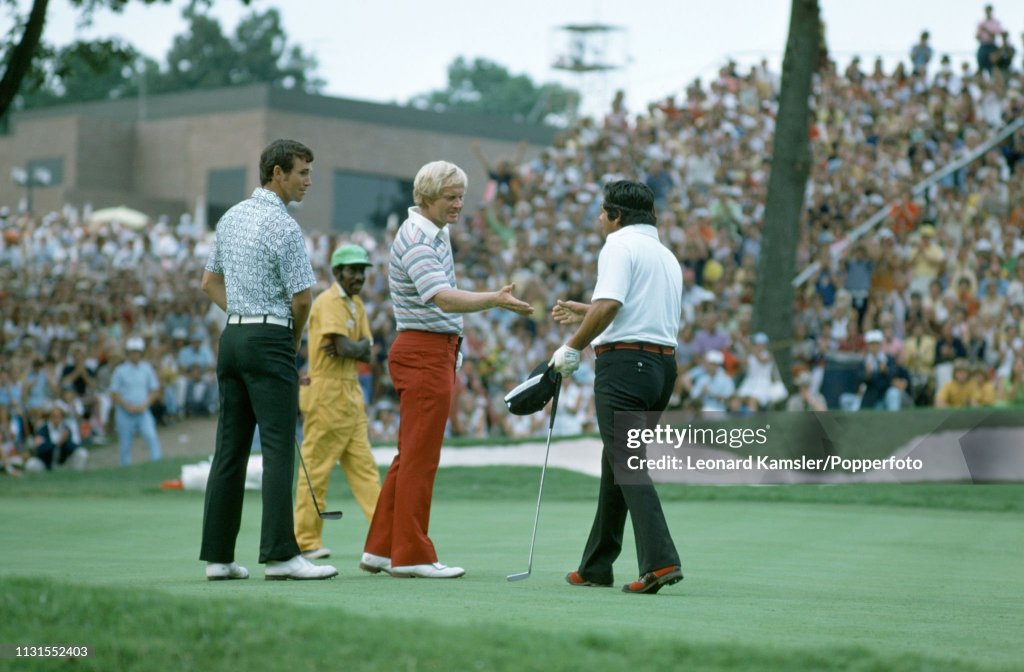
PGA Championship Men’s Golf, Tanglewood Park: Lee Trevino wins the first of his 2 PGA Championships, 1 stroke ahead of defending champion Jack Nicklaus.
The National Football League Players Association agreed, yesterday to suspend its strike for 14 days, effective Wednesday, and asked members to report to training camps then. The strike started July 1. Contract negotiations will resume Thursday.
The Baltimore Orioles presented Harmon Killebrew with a check for $150 yesterday, lined up outside their dugout and tipped their hats to the Minnesota Twins’ slugger. It was their way of helping to celebrate Killebrew Day in Bloomington, Minnesota. Afttr the emotional pregame ceremony that honored the 38-year-old Killebrew on his 2,300th major‐league game (21 seasons), he returned the honors to the Orioles. But not in the way they would have liked it. Killebrew hit two run‐scoring singles to lead the Twins to a 5–4 victory. It was Minnesota’s fourth straight triumph and Baltimore’s fourth straight defeat. Killebrew singled home a run in his first trip to the plate and triggered a three‐run fifth‐inning rally with another run‐scoring hit as the Twins tagged Ross Grimsley, a 13‐game winner, with his 10th loss.
The Cleveland Indians edged the Chicago White Sox, 3–2. While Gaylord Perry continues in a pitching slump, with six straight losses after 15 straight victories, his brother, Jim, gained his 12th victory with relief help from Tom Buskey. It was the 207th career triumph for Jim, who has the most victories among active pitchers in the league. Charlie Spikes collected two hits for the Indians, including his 16th homer. Dick Allen of the White Sox hit four singles to increase his batting average to .306.
Juan Marichal, out of action most of the season with a recurring back problem, turned back the clock to his pitching days with San Francisco Giants, and stymied the A’s for eight innings as the Boston Red Sox beat Oakland, 2–1. It was his third straight victory, the fifth in six decisions this season and the 243d of his career. It tied him with Bob Gibson of the St. Louis Cardinals for the most triumphs by an active pitcher. Marichal’s eight shutout innings gave him a string of 20 straight without allowing a run.
The Texas Rangers downed the Detroit Tigers, 9–0. Jim Bibby blanked Detroit on four hits and Dave Nelson homered and drove in four runs. Bibby struck out four and walked three. The shutout was his fifth of the year, tops in the American League.
Willie Stargell collected four hits, including a three‐run homer, his 19th of the season, and Dock Ellis won his fifth straight game as the Pittsburgh Pirates walloped the San Diego Padres, 8–1. Ellis scattered eight hits for his eighth triumph in 16 decisions. Richie Zisk’s eighth‐inning single off Rusty Gerhardt, the third of the Phdres’ four pitchers, raised his batting average to .409 against lefthanders.
Cincinnati’s Big Red Machine clanked and rumbled in sunny Shea Stadium yesterday, flattening the New York Mets, 10‐4, with blunt efficiency. A crowd of 40,588 was hardly seated before the Reds had scored four runs off Jerry Koosman. Thereafter there was never any doubt that Cincinnati would take its second decision in a three-game series and remain 5½ games behind the Los Angeles Dodgers, the National League’s Western Division leaders, who also won yesterday. The Mets, whose dream of repeating their mini‐miracle pennant dash of last season is becoming more improbable every day, fell 15 games under the .500 mark, 9½ games behind the St. Louis Cardinals. They lost to the Reds for the seventh time in nine meetings this season.
The Los Angeles Dodgers beat the St. Louis Cardinals, 3–1. Steve Garvey enjoyed a perfect day at the plate in the meeting between the Dodgers, the Western Division‐leader, and the Cards, the Eastern Division pace‐setter. Garvey’s triple, double and single raised his season average to .324. Don Sutton limited St. Louis to five hits for his fourth successive pitching victory and his 10th in 18 decisions. Sutton had lost six straight games between May 14 and July 25.
The San Francisco Giants swept a doubleheader from the Chicago Cubs, winning, 5–3, and 6–4. A two‐out, two‐run single by Tito Fuentes, a pinch‐hitter, and two homers by Garry Maddox, including a leadoff homer in the ninth inning enabled the Giants to sweep a doubleheader and extend the Cubs losing streak to seven games. Mike Caldwell, who went back on the pitching rotation July 13 after he recovered from an elbow injury, picked up his 11th victory in 14 decisions. It was his fourth straight triumph since he was activated. Rob Sperring drove in two runs for the Cubs with his first two major league hits, a double and a homer. Gary Matthews’s homer won the opener.
Born:
Audrey Mestre, French world-record setting freediver who set a women’s record of descending to 130 meters (430 ft) on one breath of air in 1999, but later died while trying to break the absolute world record of 160 meters (520 ft); in Saint-Denis, Seine-Saint-Denis, France (d. 2002).
Chris Messina, American actor (“The Mindy Project”), in Northport, New York.
Hadiqa Kiyani, Pakistani pop singer-songwriter, and guitarist (“Sohnya”; “Tuk Tuk”) , in Rawalpindi, Pakistan.
Died:
José Falcón (born José Carlos Frita Falcão), 29, Portuguese matador, was killed in the ring during a bullfight in Barcelona, Spain.
Christian Fouchet, 63, French politician who was the last colonial governor of French Algeria before independence in 1962, died of a heart attack.
Maria Petrovna Maksakova, 72, Soviet Russian opera mezzo-soprano who appeared with the Bolshoi Theatre.
Jan Tschichold, 72, German-born typographer and graphic designer, creator of the Sabon typeface.
Compton Bennett, 74, English film director known for The Seventh Veil.

 History Diaries