22 days to war in Europe.
Poland rejects Germany’s protest of August 8, 1939 concerning Polish economic reprisals against Danzig and informs the Germans that it would consider as an aggressive act any German intervention that endangered Poland’s legal, rights and interests: “…the Polish Government will consider as an aggressive act any possible intervention of the Government of the Reich which may endanger these rights and interests.”
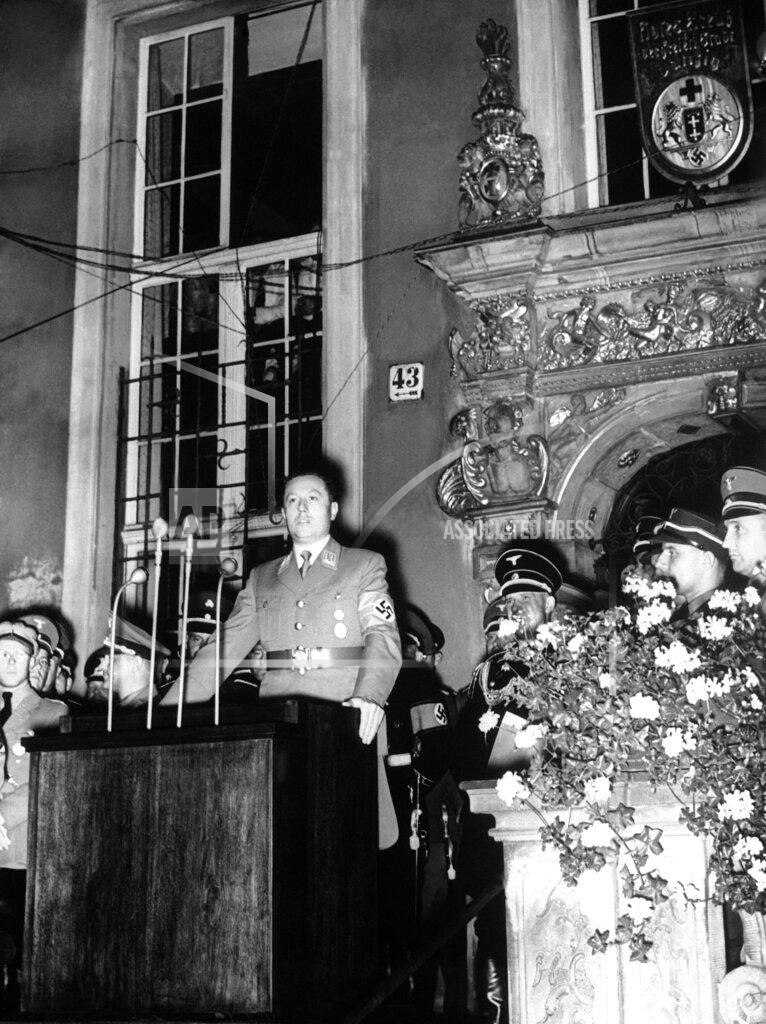
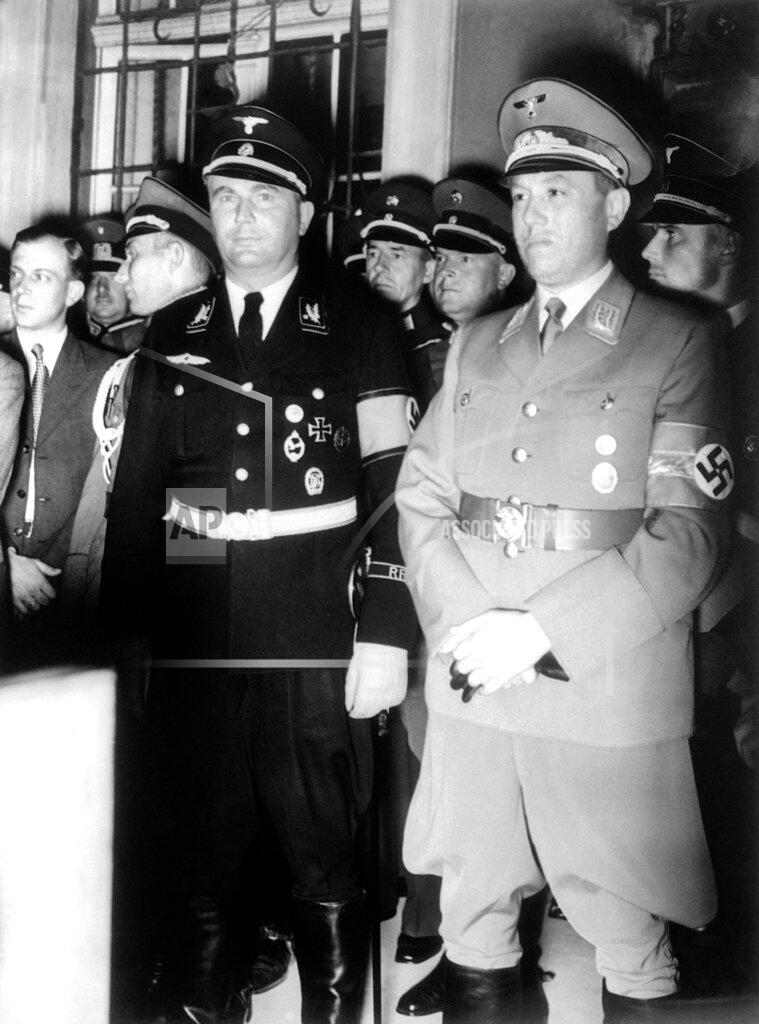
Gauleiter Förster warns his Danzig Nazis to be prepared for anything. Hurling defiance at “the cannon of Marshal Smigly-Rydz” and by implication warning Poland of a fourth and final partition, Albert Förster, the Danzig Nazi leader, in a speech at a mass rally in the medievally picturesque Long-Market here tonight, served notice on the world that Danzig wants to return to Germany. He expressed the hope that the day might not be far distant when Danzigers would meet again to celebrate their reunion with the great German Reich. The mass rally, called after Herr Förster’s return from his conference with Chancellor Hitler and organized with National Socialist thoroughness to embrace all Danzigers, was ostensibly a protest meeting against Polish “war agitation” and supposed aggressive designs on Danzig and German territory generally.
But by the fully anticipated response of the masses, which roared with laughter or indignation at the Polish “war threats” and constantly set up a chorus of “We want to go home to the Reich!” the rally did in fact turn into a popular and direct plebiscite at which there were only ayes and no nays. And the only factor that somewhat interfered with the impressiveness of this demonstration — at least to a seasoned observer of National Socialist mass meetings — was that the pace in the mass response was unmistakably set by well-drilled Hitler Youth voices.
At the same time, despite some. sharp passages, Herr Förster’s speech was rather milder than anticipated. He disclaimed any “sensations” in advance and from the practical political aspect left things exactly where they were. As a matter of fact, according to authoritative information, Herr Förster returned from Berchtesgaden with instructions to avoid any incidents that might precipitate. a conflict, for one reason because Danzig is merely part of a vastly larger political problem embracing Europe and the world.
This confirms the opinion that the time for a real showdown on the Danzig issue has not yet come, even though it may not be far off. As a result it is confidently expected that negotiations for a settlement of the “margarine war,” which, however, involves questions both of Danzig’s militarization and of Poland’s customs sovereignty over Danzig and which led to a Polish ultimatum last Saturday, will begin next week.
And inasmuch as, in contrast to Berlin, National Socialist quarters here no longer deny that the serious consequences of the Polish ultimatum were averted only by “unilateral accommodation on the part of Danzig,” tonight’s demonstration also assumes the nature of a cover for that retreat. In other words, it is to be demonstrations but also negotiations.
The Polish foreign minister, Colonel Josef Beck, says peace is still possible.
Karl Burckhardt, Commissioner of the League of Nations in Danzig, is summoned to see Hitler at Berchtesgaden
Alfred Naujocks, a young SS secret-service veteran and member of the SD since its founding in 1934, is personally ordered by Reinhard Heydrich to prepare to fake a Polish attack on the radio station at Gleiwitz near the Polish border at the opening of war. “Practical proof is needed for these attacks by the Poles for the foreign press as well as German propaganda,” Heydrich tells Naujocks. (Alfred Naujocks, in a sworn affidavit, Nuremberg, November 20, 1945).
Germany resumes gibes against U.S. President Franklin Roosevelt. The press says his failures stir him to incite Poland.
A Nazi general asks labor to remain calm, stressing the fraternity of worker and soldier and assuring them that Hitler would not lead them into war lightly, only as last resort.
In Berlin, Julius Schnurre, head of the Economic Policy Department of the German Foreign Ministry, picks up discussions with Georgi Astakhov, Charge d’Affaires of the Soviet Embassy, sounding out the possibility of a pact between Germany and the Soviet Union
The British Foreign Office learns that Germany will be in a state of complete military readiness on August 15.
The Reich’s aim to control Hungary is now seen; Britain believes Germany will seek to “coordinate” the nation for strategic purposes.
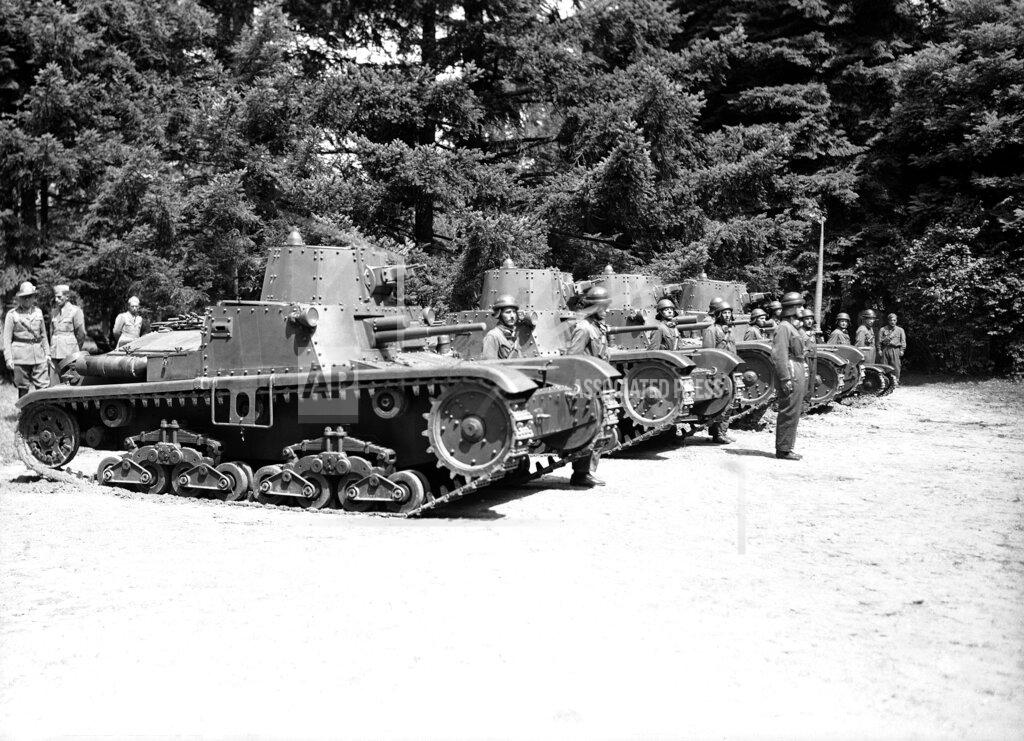
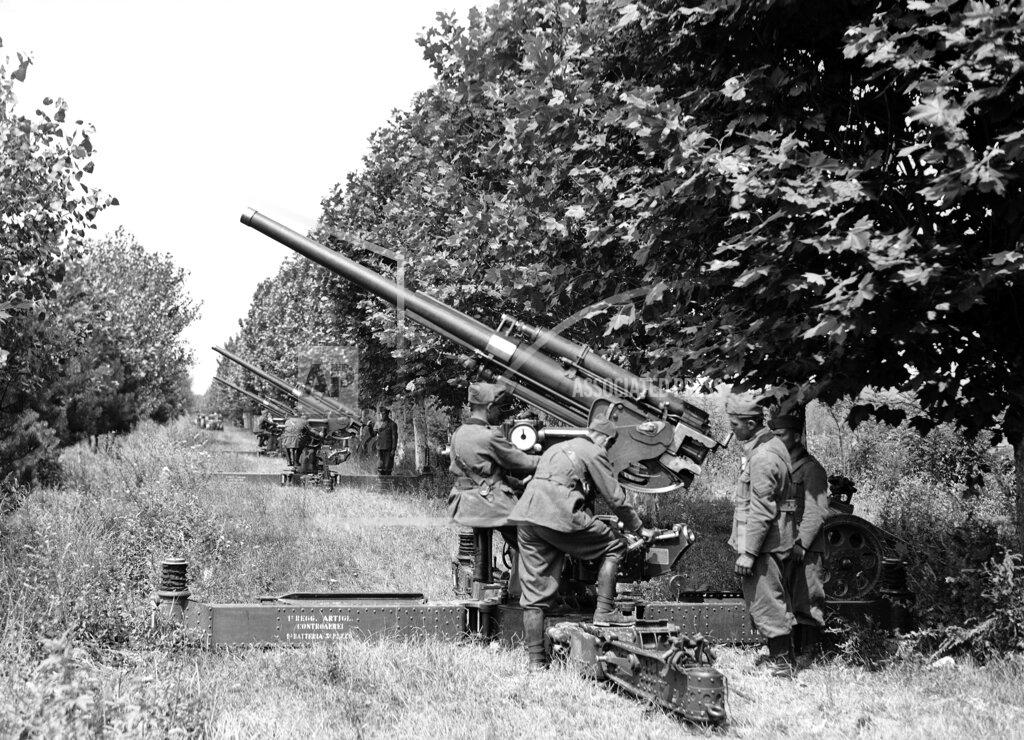
Italy, concerned, does not want Budapest to become totally under Reich rule and pushes prudence on Danzig. Count Ciano, the Italian Foreign Minister, departed this evening for Salzburg, where an important meeting with Foreign Minister Joachim von Ribbentrop of Germany will take place tomorrow. The last time the two met — in May — a military alliance was signed, and this time again it is indicated that developments of great interest to Europe will follow.
Three things are certainly on the agenda — Danzig, Hungary and Japan. Afterward it is possible that Count Ciano will see Premier Dragisha Cvetkovitch of Yugoslavia either in Trieste or in Rome. As far as Danzig is concerned, one may take it as fairly certain that the Italian Foreign Minister will again counsel prudence on Premier Mussolini’s behalf, as indeed. he has been counseling ever since the Danzig situation became acute. Italy is committed to go to war at Germany’s side if one starts over the Free City. But that does not mean that Italy wants to see a conflict either over Danzig or anything else.
The Hungarian question is another on which Rome is likely to suggest going easy, but with much less emphasis. There have been many observers in recent weeks predicting that when trouble starts it will be over Rumania, not Danzig, and if so, Hungary, Bulgaria or both would provide a lever. However, before that happens Hungary must “go Nazi,” and there are rumors that Germany feels the time is nearly ripe. Here in Italy there is no objection to Budapest going completely totalitarian, but there is a natural desire not to see Hungary come entirely under Germany’s sway. The Hungarians are caught firmly by the Axis, but they have thus far been able to move along it, so to speak, in the direction of Italy. If a Nazi government were imposed, it is feared such a state of affairs would end.
On the question of Japan’s adherence to the Axis the two statesmen will certainly see eye to eye. Toshio Shiratori, the Japanese Ambassador to Rome, had a long talk with Count Ciano yesterday afternoon. There is no question of the former’s keen desire to see Japan join a military alliance, but he and the military clique he represents are meeting opposition from Tokyo, while the Axis powers themselves are wondering whether they are not getting a bit more than they bargained for. One cannot conceive Germany or Italy pledging to go to war if Japan is attacked unless all have decided that a world war is inevitable — and there is no reason to suppose that they have.
Yugoslavian Premier Dragisha Cvetkovitch took off shortly before noon today in an army bomber for Fiume, Italy. From there he planned to go immediately to Trieste for discussions in which it was said he would declare rejection of the reported Italo-German demands for use of Yugoslav territory in wartime.
Citizens of the Protectorate of Bohemia and Moravia were ordered to turn in all arms and explosives to the government. Failure to comply could be punishable by death.
Jews begin to be expelled from the Czech Protectorate.
Czechs flee a Reich train. They break windows and escape to Poland despite guards.
Dirk Jan de Geer became Prime Minister of the Netherlands.
Quakers help Spaniards in France find housing.
Delegates of the joint British-French military mission spend the day sightseeing in Leningrad. They board a train to Moscow and will travel there overnight.
Two hundred and ninety-seven refugees from Austria and Czecho-Slovakia were escorted into Haifa harbor in Palestine this morning by the Coast Guard after they had drifted all night in five small rowboats. Included in the group were sixty women and thirty children, a number of whom were infants. These refugees sailed on a steamer from a Bulgarian port a fortnight ago. The steamer debarked the group into five boats outside territorial waters and sailed away. Men rowed the boats until they reached the harbor. The police at Haifa had no choice but to allow the immigrants to come ashore. They received shelter at an immigrants’ home of the Jewish Agency for Palestine, where they enjoyed their first good meal in a fortnight.
President Roosevelt warns the Democratic Party not to name a conservative for the 1940 election. President Roosevelt served notice tonight that he would not support for President a conservative Democratic nominee or one who gave merely lip service to his policies. In a message to the national convention here of the Young Democratic Clubs of America he declared that the Democratic party could not win next year’s Presidential election if it nominated conservative or “lip service” candidates on a “straddle-bug” platform. The President asserted that he personally would find it impossible to have any active part in such an unfortunate suicide of the old Democratic party, but added that he believed the Democratic National Convention would see the wisdom of giving the voters the opportunity to maintain the policy of moving forward with a liberal and humanitarian program.
Responsibility for keeping the Democratic party liberal, he said, rested largely with the younger men and women of the nation. President Roosevelt’s assertion that he would not support a conservative or “lip service” Democratic. Presidential candidate, if the 1940 party convention should nominate one of that type, brought loud cheering. It was interpreted to mean that he was definitely opposed to the nomination or election of any man who did not support the Roosevelt policies in the main.
With the Administration forces. seemingly in complete control of the Young Democrats’ convention, it is expected that its program will be in accord with President Roosevelt’s wishes. There will be no third term resolution and no resolution endorsing any Presidential candidate. The constitution of the Association of Young Democratic Clubs prevents such action and there will be no serious attempt to change this provision of the constitution. This does not mean that a majority of the delegates would not favor a third term but that it is the general understanding that the President does not wish any such action.
The convention, however, undoubtedly will adopt a resolution expressing strong approval of the Roosevelt policies. This was foreshadowed in tonight’s “keynote” speech by Senator Claude Pepper of Florida, who declared that, irrespective of a third term for Mr. Roosevelt himself, the Young Democrats of America demanded a “third term for Roosevelt’s ideals.” That is the keynote of this convention,” Senator Pepper said.
It was significant of the temper of the delegates and spectators that they arose spontaneously as the Florida Senator called for a third term for “Roosevelt’s ideals,” without hearing the word “ideals.” Inquiry among the delegates showed that they believed that they were cheering a declaration for a third term for the President.
In a foreword to a six-volume governmental history of the American wars with the Barbary States, the first volume of which was published yesterday, President Roosevelt warns that diplomacy without a navy to back it up is not much of a guarantee so far as the international relations of a country are concerned. He cited the wars with the Barbary States as an instance where diplomacy “woefully failed.”
President Roosevelt completed action today on another large number of bills, including the $185,000,000 third deficiency appropriation, with its $119.000.000 for the Commodity Credit Corporation, which he signed. Among five measures vetoed by the President was one providing a two-cent letter rate for all Queens County, New York. He vetoed a similar proposal in June, 1938.
The loss of postal revenues involved, what he called “the almost hopeless task” of educating the public as to the territory entitled to the proposed local rate, and the objection to “piecemeal legislation” on postal rates were cited by Mr. Roosevelt as reasons for his veto of the Queens measure. Another vetoed measure would have extended the time within which applications for benefits under the World War Adjusted Compensation (Bonus) Act might be filed. Mr. Roosevelt criticized Congress for its frequent resort to this extension practice.
Intensive research into far-flung economic fields, including those of government spending and lending and national income, have been outlined by Harry L. Hopkins, Secretary of Commerce, for his staff.
American actors threaten to bolt the AFL. Arbiters are named and a move to the CIO is suggested.
The United Mine Workers of America, controlled by John L. Lewis, gave more than $420,000 toward “New Deal” campaigns in 1936 and lent the Democratic National Committee an additional $50,000 in that year, according to reports filed with the clerk of the House.
Congress has done much by its recent conservatism to encourage business, but not enough to enable it to assume responsibility for recovery unaided by further positive action, says Avery Coonley, president of the National Association of Manufacturers.
A New Jersey court upholds the right of the school board to discriminate against married women when giving out pay raises.
Contracts for aircraft and engines amounting to more than $85,000,000, the largest peacetime arms order for the War Department, were announced today by Louis Johnson, Acting Secretary, Equipment to be provided by the government, for which separate contracts will be let, will increase the completed cost of the planes to more than $100,000,000. Contracts to be let in the near future will bring the value of all aircraft and aircraft equipment contracted for under the Supplemental Aircraft Appropriations Act to about $175,000,000, a record-breaking figure. The first contracts let under the new law involved about $50,000,000, at the time the largest in the history of the air service.
The contracts were with ten corporations, six of them aircraft makers and the other four engine manufacturers. Although the number of each item of equipment ordered was not disclosed, the contracts covered four-engine and two-engine bombardment planes, advanced, basic and primary training and interceptor planes. The cost of the planes, not including the equipment to be supplied by the government, was fixed at $64,113,000. Engines will cost $21,865,000.
The Bell P-39 Airacobra fighter enters production with a U.S. Army order for 80 aircraft. The type will prove to have limited performance at altitude and will find restricted employment by the USAF, but will prove useful to the Soviet Red Air Force as a low altitude fighter in the poor weather of the skies over the USSR.
The Boston Red Sox extended their winning streak to five games today as they came from behind once more to nip the Philadelphia Athletics, 7–5, and sweep the four-game series.
With the Red Sox beating the A’s, 7–5, to sweep their series, the New York Yankees knuckle under by the same score to Dutch Leonard and the Washington Senators. Leonard is now 4–0 over New York. The Yankees lead over the Red Sox is now 5 ½ games.
Tommy Bridges put down a ninth-inning rally today as the Detroit Tigers took the third and deciding game of the series with the Chicago White Sox, 4–3.
The league-leading Cincinnati Reds booted home three unearned runs to help the Chicago Cubs to a 6–4 triumph today in their series final. The defeat cut the Reds’ first-place margin over the idle Cardinals to seven and one-half games.
Mel Ott’s 22nd homer of the season helps lift the New York Giants to a 6–3 win over the Boston Bees. Lefthander Cliff Melton gets the win for New York.
At Rochester, the Red Wings (the AAA International League) bombard Jersey City, 26–1. Si Johnson coasts to his 19th win.
Mexico’s new proposal for a solution of the oil expropriations controversy is entirely unacceptable to the major American companies involved, it was said here yesterday following a conference between the officials of the companies.
The belief was expressed in Japanese Government circles today that conversations between Great Britain and the United States were delaying resumption of the stalemated BritishJapanese negotiations to settle the Tientsin question.
Dow Jones Industrial Average: 137.25 (-2.50).
Born:
Charles Rose, American politician (Rep-D-North Carolina, 1973-1997), in Fayetteville, North Carolina (d. 2012).
Kate O’Mara, English actress (Caress Morell-“Dynasty”), in Leicester, England, United Kingdom (d. 2014).
Johnny Lewis, MLB outfielder (St. Louis Cardinals, New York Mets), in Greenville, Alabama (d. 2018).
Charlie Shoemaker, MLB second baseman (Kansas City A’s), in Los Angeles, California (d. 1990, suicide).
Died:
Carlo Galimberti, 45, Italian Olympic champion weightlifter, died of burns sustained in the line of duty as a firefighter five days earlier from a boiler explosion. Two other firemen, Aldo Parora and Anselmo Pasi, also died.
Naval Construction:
The Вое́нно-морско́й флот СССР (ВМФ) (Soviet Navy) “S” (Stalinec)-class (3rd group, Type IX-modified-2) submarines S-15, S-16, S-17, and S-18 are laid down by Krasnoye Sormovo (Gorkiy, U.S.S.R) / Yard 112.
The Royal Navy Hunt-class (Type I) escort destroyers HMS Mendip (L 60) and HMS Meynell (L 82) are laid down by Swan Hunter and Wigham Richardson Ltd. (Wallsend-on-Tyne, U.K.): Wallsend.
 History Diaries